I’m up early every weekday morning pulling together all the news and information you need to start your day. I find the stories unique to Juneau or Southeast Alaska that may linger or become food-for-thought at the end of your day. What information do you need from me to give your day some context?
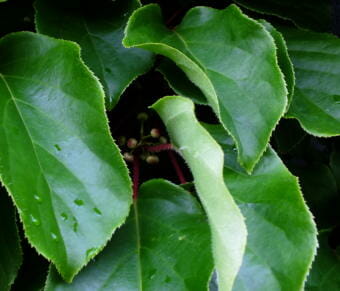
A kiwi plant climbs up the side of the building at the KTOO Agricultural Test Station and Garden of Science! (Photo by Matt Miller/KTOO)
Many garden plants get too tall or too heavy to support themselves over the entire season.
That’s why Master Gardener Ed Buyarski says it’s important that we do our best to lift them up as they grow.
Keeping plants off the ground helps with pollination, air circulation, and prevents slugs from chewing up the leaves.
“And, to make it easier for us to pick them,” Buyarski said.
Buyarski says he may use alder sticks, reclaimed fencing poles, string and netting, a trellis and tomato cages to support plants.
Without any support, tomato plants will get too heavy and fall over when they start fruiting out.
Other plants, like peas, kiwi and cucumbers, will actually twine themselves around another support or have tendrils that reach out to climb higher.
“They keep going up and up,” Buyarski said. “If (peas) are not given support, then they flop (over) or they grab onto each other and you get this tangled mass.”
Buyarski also uses old t-shirts to make slings for his cucumbers so they can grow long and straight. Cucumber fruit may curl and become susceptible to fungus if they rest on the ground.
Even flowers need a little help staying upright. Buyarski says delphiniums and peonies will fall over if too much rain accumulates in the flowers.
A wet Welcome to Juneau sign, taken on June 3, 2020. (Photo by Jennifer Pemberton / KTOO)
Last month was the second-wettest June ever in Juneau with 7.3 inches of rain. That’s just shy of the June 2014 record of 7.48 inches.
“It is well above normal,” said Kimberly Vaughan with the National Weather Service in Juneau. “The normal for the month of June is 3.24 inches. So, we’re just slightly over four inches above normal for the month.”
Vaughan said June is normally one of the driest months of the year. But there was a lot of moisture that flowed in from the Gulf of Alaska.
There were also 25 days in June in which measurable amounts of rain fell at the Juneau airport. That ties the record set in 1949.
But Vaughan said even that tied record comes with an asterisk.
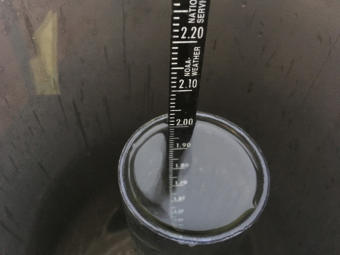
National Weather Service rain gauge as it measured rainfall at KTOO studios on Dec. 29, 2018. (Photo by Matt Miller/KTOO)
“Every day except the 30th of June had some sort of precipitation, a trace or more,” Vaughan said. “So, actually there was only one day in June without any precipitation.”
Vaughan said it will likely be warm and dry in Juneau over the next week, and she warns of potentially increased fire danger as vegetation begins drying out.
A woman leaves the Dimond Courthouse in Juneau on Feb. 27, 2017. Jury trials have been suspended since March, due to the COVID-19 pandemic and court officials said they could look vastly different when they resume. (Photo by Jeremy Hsieh/KTOO)
When Alaska Court System officials suspended all jury trials in March because of the pandemic, it included an upcoming trial for Mary Ferguson’s sexual harassment lawsuit against her former employer, the Sitka Police Department.
“So, I definitely felt devastated because this has already been going on two years,” she said.
Many Alaskans’ court cases have been thrown into legal limbo because of the COVID-19 pandemic. There have been no jury trials in state courts for three months, and they won’t resume until at least September, if then.
Angie Kemp, the state’s top prosecutor for northern Southeast Alaska, said they’ve been reaching out to victims waiting for trial in their cases.
“By and large, the feedback I’ve gotten is typically very understanding. They understand there’s a lot of uncertainty in what’s coming,” Kemp said.
She expects that when jury trials do resume in state court, there will be a big bottleneck.
Alaska Supreme Court Chief Justice Joel Bolger said suspending most court proceedings starting in March was the safe thing to do.
Alaska Supreme Court Chief Justice Joel Bolger addresses the Alaska Federation of Natives convention on Oct. 18, 2019. (Photo by Wesley Early/KOTZ)
“We felt like our position was different than the local hardware store, for example. In a lot of our court proceedings, we require people to come to court. We require juries to come to court. We require prisoners and other defendants to come to court. And so we have a special obligation to protect those people,” he said.
Now, he expects a slow, step-by-step approach in resuming trials. He said there are several options courts are considering.
In addition to wearing a mask, everyone may be required to have a health screening before entering a courthouse. Plexiglass barriers may be installed in courtrooms. Prospective jurors may be questioned one at a time by attorneys instead in a room packed with dozens of others. Jurors may spread out in a vacant courtroom during deliberations.
“I think different judges will use different approaches and we’ll learn from each other,” Bolger said.
There may be more teleconferenced or videoconferenced testimony, especially from out-of-state witnesses unable to quarantine in Alaska before a trial.
“Our own geographic challenges have really helped us to be prepared in doing things remotely. Many other courts in other states have not allowed a telephonic appearance until now,” Bolger said.
Robert Henderson, assistant professor of legal studies at the University of Alaska Anchorage Justice Center, expects some legal challenges if trial witnesses testify remotely. Every defendant has a constitutional right to be physically present to confront their accuser in court.
“Is a witness testifying via videoconference, is that meeting the confrontation requirement of the Constitution? That’s one. The second is: Can a jury accurately assess the credibility of a witness who’s testifying, either through telephone testimony or through videoconferencing, video testimony?” Henderson said.
He also expects challenges from defendants who believe they’ve been harmed because their constitutional rights to speedy trials have been violated; Alaska’s 120-day speedy trial rule is currently suspended.
As an alternative to trial, he said prosecutors may resolve backlogged cases other ways, like negotiating plea deals on lesser charges.
Defense attorney James Christie was preparing for a high-profile homicide case in Anchorage when trials were suspended. He said when trials do resume, it may be harder for him to select a diverse jury of a defendant’s peers. He’s worried juries will be filled by more retired or independently wealthy Alaskans instead of — for example — working class Alaskans, especially those who lost their jobs during the pandemic.
“Asking those people, working class people, to come and miss out on their opportunity to start earning for their family while they are on jury service is going to be a really tough, tough ask,” he said.
Meanwhile, former Sitka police officer Mary Ferguson said the delay is not helping her in her lawsuit against her former employer. Her attorneys still send her bills for working on the case, and witness memories are fading.
“If I were to have my trial in May, no matter the outcome, then I could better plan my next steps, my next journey, my next chapter in life. I feel like this is just a big weight on my shoulders. It’s tough battle, you know. A tough fight,” Ferguson said.
She said she’s trying to be patient. Her trial is now scheduled to start September 21st, but she knows it may get pushed back even further.
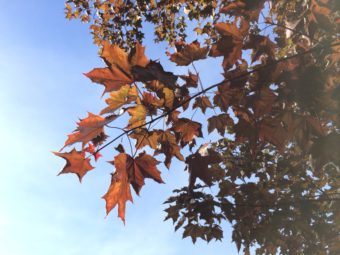
North Douglas maple tree. (Photo by Matt Miller/KTOO)
Pruning trees and bushes can be a perennial activity for any active gardener.
Master Gardener Ed Buyarski answers more pruning questions in the latest episode of Gardentalk.
Richard writes: “When is the best time to prune your tree? I’ve got a sugar maple.”
And, Helen writes: “When is it OK to prune and shape a Japanese maple? I live in central New Jersey.”
Buyarski said now and into July is actually a good time to prune maples for shaping because it will not stimulate a lot of new growth.
“If it’s too tall and people might want to prune for branches going wider,” Buyarski explains.
For Japanese maples, he says there are a variety of YouTube and other video tutorials on creative shaping of trees.
For maples, don’t leave any stubs and cut as close to the main branch as you can.
Buyarski also suggests making sure that all of your pruning tools are sharp. It will be easier to make nice, clean cuts.
If you are pruning a tree way up high, then he also recommends recruiting someone to help as a safety person and as a ground-level spotter on the best branches to cut.
Annette writes: “When is the best time to prune azaleas and gardenias?”
Buyarski said azaleas and rhododendrons, a somewhat-related shrub, should be pruned right after they’re done blooming and when new shoots start emerging which will flower next year.
“The fading flower remnants, which we would also want to clean off, snap off those, deadhead basically, that we will want to do that while we’re pruning,” Buyarski says. “So, that timing is good.”
Buyarski says pruning azaleas and rhododendrons is exactly the opposite of avoiding leaving stubs while pruning maples. Hidden buds will later pop out on a bare azalea and rhododendron branch.
He said he has no experience with gardenias and is not able to provide advice for that shrub.
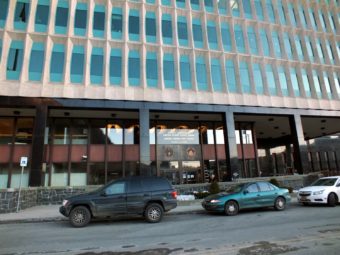
Robert Boochever U.S. Courthouse is located on the ninth floor of the Hurff Ackerman Saunders Federal Building in Juneau. (Photo by Matt Miller/KTOO)
To prevent the spread of COVID-19, anyone entering a federal courthouse in Alaska must wear a mask or face covering or they will not be allowed inside.
U.S. District Court Judge Timothy Burgess issued an order on Monday. It applies to all employees and visitors at least two years old entering federal courthouses in Anchorage, Fairbanks and Juneau, unless they have a doctor’s note about a medical condition that prevents them from wearing a mask.
Employees in a private office or workspace with at least six feet of distance from others can temporarily remove the mask while working in that space.
In addition, Burgess’s order also prohibits entry for anyone with COVID-19 symptoms, anyone who has been in self-isolation or self-quarantine within the last 14-days, and anyone who in the last 14-days has been in close contact with someone diagnosed with the disease.
The order is in effect until August 3rd.
Editor’s note: The image in this story has been updated to reflect the federal courthouse in Juneau.
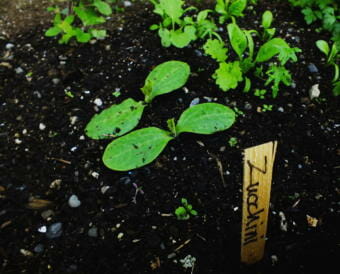
Zucchini sprouts grow in KTOO’s Agricultural Test Station and Garden of Science (Photo by Matt Miller/KTOO)
The gardener’s battle against pests is never ending.
In this episode of Gardentalk, Master Gardener Ed Buyarski has some advice for dealing with a few of this spring’s pesky bugs.
Listener Mary writes: “What insect control measures are recommended to control insect predation on currant bushes (aside from safer soap)?
Products like Bacillus Thuringiensis or BT are effective for controlling caterpillars, but Buyarski said, so far, it appears that it is only available on-line.
Buyarski said a solution of one to two tablespoons of safer soap or dish soap to a quart of water is usually most available and easiest. A shake of Tabasco can add a little repellant.
“Spray the topside and underside of leaves,” Buyarski said. “You need to get this stuff on the little caterpillars to kill them.”
Buyarski also said notched rhododendron leaves can signify the presence of rhododendron root weevils. They usually crawl up the trunk and move out to the branches to chew on the leaves.
He recommends trimming up the lower branches so they don’t touch the ground and don’t allow the larvae to have easy access to the leaves.
Products like Tanglefoot Tangle-Trap are available on line. But he also suggests a DIY alternative of wrapping the trunk with tape and coating it with something sticky and gooey like vaseline to trap the bugs.
As is the case with slugs, cleaning up dead vegetation and other debris in the yard and garden can remove the pests’ hiding places.
Buyarski also answered a question about the use of old tires as garden planters.
Tires may be fine for non-edible flowers. But he doesn’t recommend them for growing vegetables because chemicals used in the tire-making process could leach out into the soil and be taken up by the plants.
Close
Update notification options
Subscribe to notifications
Subscribe
Get notifications about news related to the topics you care about. You can unsubscribe anytime.