Matt Miller

Morning Host & Local News Reporter

I’m up early every weekday morning pulling together all the news and information you need to start your day. I find the stories unique to Juneau or Southeast Alaska that may linger or become food-for-thought at the end of your day. What information do you need from me to give your day some context?
Weekend warm spell breaks temperature records throughout Southeast Alaska

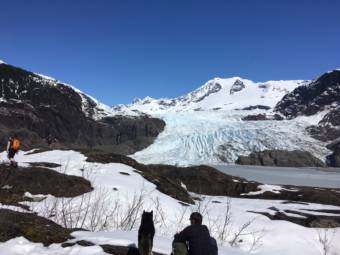
Mendenhall Glacier
Mendenhall Glacier as seen from near the West Glacier Trail on April 18, 2021. (Photo by Matt Miller/KTOO)

The sudden switch to spring weather brought temperatures in the low 60s to the low 70s throughout Southeast Alaska. Some communities broke old temperature records over the weekend and right into Monday.

Pete Boyd of the National Weather Service in Juneau said April was a wild weather month with longer than expected snowfall.

“Just getting these warm spells are not that rare,” Boyd said. “However, we normally get them a little bit earlier. We just happen to see a big flip.”

“So, this is definitely an unusual weather pattern that we’ve been seeing with such cold and snowy weather just before we get such a big warm-up,” he said.

Boyd said the warm-up was caused by a high-pressure system as warm winds in the mountains blew down into valleys.

It’s expected to be cooler throughout the panhandle Tuesday and Wednesday.

Juneau, Gustavus, Ketchikan, Sitka and Yakutat all set new record high temperatures on Monday. Ketchikan was the warmest at 67 degrees. Juneau’s 65 degrees on Monday broke last year’s record of 62.

Klawock was the first in the state to reach 75 degrees on Sunday while Thorne Bay topped out at 73. Ketchikan’s high temperature of 72 shattered the record of 64 degrees set back in 1934. Juneau peaked at 68.

On Saturday, Yakutat set a new record of 67 degrees. Juneau hit 70 for the first time this year and broke the old record of 60 set back in 1953.

‘Bonus weekend’ in the sun planned for Eaglecrest Ski Area in Juneau

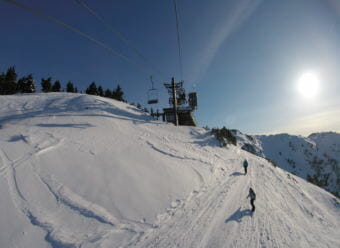
Snowboarders head down upper Hillary‘s run after getting off the Ptarmigan chairlift at Eaglecrest Ski Area in March 2018.
Snowboarders head down upper Hillary‘s run after getting off the Ptarmigan chairlift at Eaglecrest Ski Area in March 2018. (Photo by Matt Miller/KTOO)

Juneau’s Eaglecrest Ski Area will be open for one last weekend.

Manager Dave Scanlan said last Sunday was supposed to be the last official day of operation, but they’ll be open for a few more days of sunny, spring skiing.

“We are doing an extra special bonus weekend as really a big thank you to all of our guests and regulars that enjoy the mountain. And (we’re) just so appreciative of everybody,” Scanlan said. “This winter, everybody was so great following our COVID mitigation protocols and wearing masks and really supporting us throughout the entire season.”

But, not all the chairlifts will be running. Scanlan said many of their employees have already made other employment or vacation plans. The Ptarmigan and Porcupine chairlifts will be running from 9 a.m. to 4 p.m. on Saturday and Sunday.

The rental shop will only be open to previous renters by appointment. There will be no food service and no ski and snowboard lessons. But lift tickets will be 30% off.

Scanlan said they had a successful season, partly because of the second highest seasonal snowfall on record.

“We’re probably around 180 inches at the top of the mountain. We’ve had a little bit of snow settlement,” Scanlan said. “But we’ve officially broken through the 500 inches of snow at the top of the mountain for the season.”

Another big factor in the ski area’s most successful year in recent history actually was the pandemic drawing new people up to the mountain.

“This was a really safe option for families to come out and get some exercise and share some good times together,” Scanlan said. “So with COVID, there wasn’t a lot of other activities to do with a lot of indoor locations being restricted.”

Warm temperatures, precipitation prompt avalanches in downtown Juneau

April 13, 2021 Mt. Juneau slide
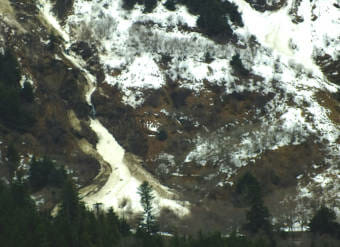
View of the April 13, 2021 slide off Mt. Juneau that occurred just north of the main Behrends Avenue avalanche chute. (Photo by Matt Miller/KTOO)

There were avalanches off of Mt. Juneau Tuesday. Juneau residents reported hearing them overnight. But considerable avalanche danger remains in downtown Juneau.

According to Tom Mattice, City and Borough of Juneau emergency programs manager, there was no damage to any houses downtown.

“You can see that the Behrends Avenue path had a big avalanche,” Mattice said. “The White Subdivision had an avalanche that cleared out the entire upper path and came down within 150 feet of homes.”

“And other areas on Mount Juneau, including Chop Gully that comes down across the Flume Trail had small avalanches,” Mattice said. “But there’s still a tremendous amount of snow up high.”

The White Subdivision avalanche was about a foot deep. The Behrends Avenue avalanche was about two to three feet deep, but it didn’t occur along the main avalanche path.

“The path that slid into the Behrends run out actually started to the left of the Behrends’ starting zone,” Mattice said. So, it really didn’t even affect the danger from the mass of the Behrends’ starting zone.”

Mattice said there’s still a lot of this season’s snow on the top of Mount Juneau.

He said Tuesday night’s slides were likely prompted by warming temperatures and an inch of precipitation earlier this week.

Meanwhile, the state Department of Transportation plans avalanche control activities on Gastineau Peak Thursday afternoon, weather permitting. Thane Road will be closed from 3 to 6 p.m. Thursday, maybe longer if heavy equipment has to clear the road of any avalanche debris.

Juneau urban snow avalanche path
Juneau urban snow avalanche paths (Courtesy CBJ)

Capital Transit’s first battery-electric bus enters service in Juneau

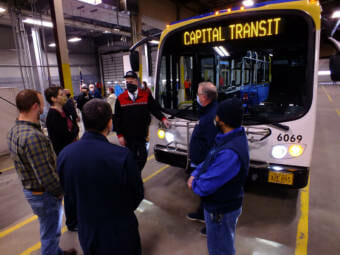
Gov. Mike Dunleavy, wearing a Capital Transit cap, talks with employees during a ribbon-cutting on April 8, 2021 for the first battery-electric public transit bus. (Photo by Matt Miller/KTOO)

Capital Transit riders in Juneau will notice something brand new and very cool this week. The first battery-electric bus in the fleet entered service Wednesday on the Mendenhall Express route. It’s one of the first electric public transit buses in Alaska.

Hal Kulm, a driver and supervisor with Capital Transit, said he can actually hear conversations in the back of their brand new battery-electric bus.

Capital Transit’s Hal Kulm talks with a passenger on the first battery-electric bus. (Photo by Matt Miller)

“It is really quiet. It doesn’t rattle near as much,” Kulm said. “It’s a carbon-fiber body. It’s not a metallic body. So, it definitely does dampen the noise a little bit.”

Kulm is completely unflappable, simultaneously providing commentary to passengers over the PA system and paying attention to traffic despite all the distractions. The only other sounds we hear are the bus’s interior ventilation fans and — sometimes — a very faint whirring sound of the bus’s electric motors.

“I haven’t touched my brakes once since we’ve been on this run,” Kulm said to the passengers over the PA. “Everything is just done automatically, or just the brakes are engaged as soon as we let off the accelerator. So, it’s recharging as we’re going.”

Kulm said he and other drivers like the bus. It’s a smooth ride and it actually accelerates better than a diesel.

And, here’s a surprise about the range. It takes about four hours to recharge. And then, it can go all day.

“I have driven it on the equivalent of an eight-hour route and I had 25% power left over after an eight-hour day,” Kulm remembered. “And that was on a 40-degree day when I did it. It wasn’t a warm day by any means. So, it is very capable of running a route for us.”

Kulm gave preview rides during a ribbon-cutting ceremony last week that included Gov. Mike Dunleavy, state and local officials, and local renewable energy advocates.

Let's go for a ride
From left, Proterra’s Mark Hollenbeck, City and Borough of Juneau assembly member Maria Gladziszewski, City Manager Rorie Watt, and Mayor Beth Weldon go for a ride on Capital Transit’s first battery-electric bus on April 8, 2021. (Photo by Matt Miller/KTOO)

Mark Hollenbeck of bus manufacturer Proterra said they put the bus’s batteries under the floorboards between the wheel wells.

“We don’t put batteries on the roof,” Hollenbeck said. “And we don’t put batteries in the rear, which is the most high impact of all. Because most transit buses when they get into an accident, they’re rear-ended.

“Battery packs are extremely heavy, and putting them on the roof messes with your center of gravity,” Hollenbeck said. “Our batteries being in the floor of the bus reduces the center of gravity and creates a better ride.”

In addition to less noise, better ride, and no emissions, battery-electric buses have a fraction of the moving parts that usually wear out or need repair.

E-bus charger
The charger for Capital Transit’s first battery-electric bus. (Photo by Matt Miller/KTOO)

Still, Katie Koester, head of the City and Borough of Juneau’s Engineering and Public Works Department which oversees Capital Transit, said there’ll still be plenty of things to keep their mechanics busy.

“The reality is there’s not a lot of regular maintenance that is needed on the electric systems themselves,” Koester said. “That’s one of the beauties of an electric bus, right?”

“You’re not changing the oil and doing things like that,” Koester said. “But there’s still a lot of systems on this bus that are like any other bus, and the heating and the cooling and the hydraulics to get the ADA accessibility.”

Koester said the bus and its charging station totaled nearly a million dollars. It was covered by the Federal Transit Administration’s Low- or No-Emission (Low-No) Grant Program and from the $8.125 million that was Alaska’s share of the Volkswagen Settlement Fund. That was after the automaker got caught installing software to cheat on diesel emissions.

“And here behind the Heritage [Coffee] is going to be our new Valley transit center,” Kulm said during a short drive on a Mendenhall Valley bus route. “And so we are going to have 30 park-and-rides back behind here.”

Photog face off
Photographers face off while getting pictures of Capital Transit’s new battery-electric bus on April 8, 2021. (Photo by Matt Miller/KTOO)

“We’ll come back in here, we’ll load up. All of our Valley transfers will be at this location. We will have charging stations for electric buses here,” Kulm predicts. “This is going to be a full-fledged, lovely transit center.”

Seven more buses are on order, paid for by the federal Low-No grants and a CBJ match.

At 35 feet long, they’ll be five feet shorter than the first bus so they can better navigate through Douglas Island neighborhoods.

Proterra’s Mark Hollenbeck said the battery-electric buses have a minimum usable life of 12 years.

Phasing out Capital Transit’s existing diesel buses when they come to the end of their life is part of a CBJ goal of using 80% renewable energy by 2045.


E-bus photo op
Gov. Mike Dunleavy pauses for a photo op inside Capital Transit’s first battery-electric bus with state Senator Jesse Kiehl of Juneau and Juneau Mayor Beth Weldon. (Photo by Matt Miller/KTOO)

Juneau miners are getting vaccinated, with help from their employers

Greens Creek Mine
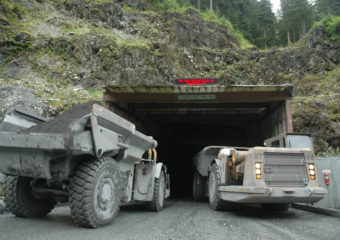
Greens Creek Mine. (Photo courtesy Hecla Mining Company)

Operators of two large mines near Juneau said at least a quarter of their personnel is already partially vaccinated. Anyone 16 or over who lives or works in Alaska is eligible for a vaccine.

Mine operators said they don’t have any incentive program to encourage workers to get vaccinated. Instead, they help with scheduling appointments and providing transportation to vaccination clinics if it’s in the middle of a work shift.

Rochelle Lindley of Coeur Alaska’s Kensington Mine north of Juneau said the timing is a challenge. They must plan around workers’ three-week on, three-week off schedule whether they live in Juneau or out of state.

“Some people are commuting, some people are here in town,” Lindley said. “Our staff is working really hard to try and accommodate those schedules, working on logistics with employees, the scheduling, working out transportation, hotels if needed, meals, and then working with some local clinics to schedule vaccination appointments for our employees.”

Lindley said 370 people work at Kensington Mine.

Hecla Mining Company’s Mike Satre said out-of-state workers typically quarantine in Juneau for five days before heading out to the Greens Creek Mine on Admiralty Island. He said quarantine protocols may eventually be relaxed for those who are fully vaccinated.

“Ultimately, we hope that when we have a substantial number of vaccinated employees at the mine that’s going to coincide with a substantial number of vaccinated residents, and whether it’s the state or the city, we’ll be able to make changes in travel and testing requirements,” Satre said.

Satre said 450 people work at Greens Creek Mine.

Lindley said about 25 employees tested positive at the mine site or while in quarantine back in August. But she said they haven’t had any similar outbreaks since they instituted “robust testing strategies.”

Satre said they had an “amazingly low” number of positive cases detected in quarantine.

Alaska Supreme Court restores access to public employee and teacher retirement benefits

Justices Winfree and Fabe
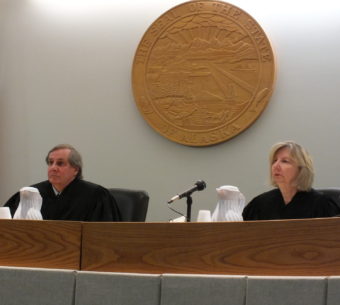
Alaska Supreme Court Justice Daniel Winfree and then-Chief Justice Dana Fabe listen to oral arguments in Peter Metcalfe v. State of Alaska in Feb. 2015. (Photo by Matt Miller/KTOO)

The Alaska Supreme Court says the Legislature violated the state constitution when it arbitrarily limited when some public employees could return to work and resume making retirement contributions. The decision provides a second chance for many as 78,000 Alaskans to get back into the state’s coveted and most generous retirement plan.

“I was very pleased to learn that on Friday, the [Alaska] Supreme Court reaffirmed the Constitution, that it’s not constitutional for the legislature to try just, by legislation, overcome a promise in the Constitution,” said Peter Metcalfe of Juneau.

Metcalfe had brief stints working for the state in 1972 and 1980 and qualified for what later was known as Tier I in PERS or the Public Employees’ Retirement System. Tier I was the golden ticket for public employees in Alaska, maybe in the country at the time.

It was a defined benefit retirement plan which included guaranteed income for life for a retired employee. It included inflation and cost-of-living adjustments, and medical coverage for a public employee or teacher – and their dependents – when they retired as soon as age 50.

Click to view PERS Plan Comparison Chart courtesy of Division of Retirement and Benefits

In 2005, the Legislature shut all of that down. They closed the first three tiers of PERS and TRS, the Teachers’ Retirement System, to new members. They also created a new defined contribution retirement plan, referred to as Tier IV with benefits that were not as generous.

But lawmakers also imposed a deadline for former employees who cashed out their retirement contributions when they left. They could requalify as Tier I as long as they returned to work by 2010 and paid back their cash out.

And that deadline is where lawmakers broke the promise made to state employees.

“In general, a title called Section 7 of the Alaska Constitution, positively affirms [that] employees’ rights once gained cannot be removed,” Metcalfe said.

In a split 3 to 2 opinion issued on April 2, justices with the Alaska Supreme Court ruled in Metcalfe’s favor.

Now, as many as 78,000 Alaskans could buy their way back into the state’s more generous retirement benefit programs.

Metcalfe said he really doesn’t plan to work for the state — a requirement for him to buy his way back into the Tier 1 benefit program. But that wasn’t the point.

“It is a principle,” Metcalfe said. “I don’t think the legislature or the governor should be willy-nilly trying to limit benefits, or freedom of speech or anything else that is protected in the Constitution.”

Choates, Wakley, Davis
Attorneys (from left) Mark Choate, Jon Choate, and Kevin Wakley along with Larry Davis of Alaska Division of Retirement and Benefits, prepare for oral arguments in Peter Metcalfe v. State of Alaska before the Alaska Supreme Court in Feb. 2015. (Photo by Matt Miller/KTOO)

Metcalfe’s attorney, Mark Choate, said he remembers when lawmakers were debating the changes to the retirement program.

“When the legislature did this in 2005, there was a lot of pushback, I think, within the legal community, people giving advice, saying ‘This is not right. You can’t do this. It’s contrary to the Constitution,’” Choate recalled. “And the legislature chose to do it anyway because they thought it would save them a lot of money. And maybe, nobody would do anything about it.”

Choate said the decision applies to any former employee who cashed out and has yet to return to work or who already returned to work under a less-generous retirement plan.

The eight-year-old class action lawsuit was previously considered by the lower courts twice already and twice appealed to the Alaska Supreme Court.

Two retired justices were brought in to hear it. Choate said two current justices had to recuse themselves during the latest appeal because they also worked as state employees earlier in their career.

Site notifications
Update notification options
Subscribe to notifications