Northern Journal

Japanese smelting giant pulls out of major Southeast Alaska mining project

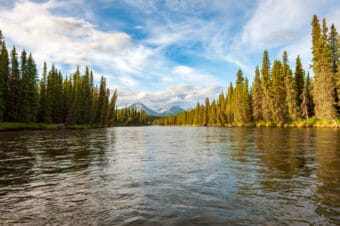
The Palmer project would sit in the watershed of the Chilkat River, pictured here. (Scott McMurren/Flickr under Creative Commons license 2.0)

A potential copper and zinc mine has fueled intense political debate in a small Southeast Alaska town for years.

Now, the multinational metals company that’s been bankrolling the exploration project is stepping away, raising questions about the project’s future.
In a deal announced this week, Dowa Metals and Mining, a Japanese company, will give up its roughly 70% interest in the Palmer Project near the Southeast Alaska communities of Haines and Klukwan.

Taking over is American Pacific Mining Corp., a Canadian company that owns no operating mines and instead focuses on exploring deposits that could become mines later on. It’s set to take full ownership of the project by the end of the year, up from its current 30% minority stake.

The copper and zinc project, at least in the immediate future, will lose the backing of a large company with a steady revenue stream: Dowa runs Japan’s largest zinc smelter and has been searching for new sources of the mineral.

American Pacific expects to have about $12 million on hand — in the ballpark of one year’s work at Palmer. It’s touting the transaction as a good deal for its shareholders, because it will get full control of the project plus $10 million in cash.

In exchange, Dowa will have the option to acquire up to half of the zinc concentrate produced by a future Palmer mine, American Pacific’s announcement said.

A spokesperson for American Pacific declined to comment. Dowa could not be reached for comment.

The deal came about because the two companies had different objectives, American Pacific executives said in a video presentation this week.

Dowa, the executives said, was mainly focused on supplying its smelting operations in Japan and was eager to move the project past the study phase.

American Pacific, they added, wanted to spend more time doing exploratory work that could lead to a bigger, more lucrative project once it’s built.

“Dowa really wanted to push this toward production,” said Warwick Smith, American Pacific’s chief executive.

His company, he added, thought the project “could become much, much larger.”

Palmer is still years away from becoming an operating mine; the economics of commercially mining its deposits have not yet been analyzed in depth, beyond a preliminary assessment published in 2019. While mining projects are still in exploration, it’s common for them to change hands, or for major investors to pull out and new ones to replace them, according to industry experts.

The project sits near a glacier above a tributary of the Chilkat River — a major salmon-bearing waterway upstream from Haines and the Tlingit village of Klukwan. And for years, it has generated intense debate — and litigation — in the watershed.

The area, with about 2,500 people, is known for its politically engaged and polarized citizenry, as well as stunning scenery at the northern end of the Inside Passage. Some residents support natural resource extraction; others fiercely oppose the Palmer Project.

Tensions around the development have spilled into recent disputes over millions of dollars worth of municipal infrastructure projects, including work on a road that provides access to the Palmer site and a dock that some residents say could aid the project.

The Palmer claims have been studied for their mineral potential for decades.

Dowa struck its first agreement to participate in the project’s development in 2013 and took a majority stake in 2021.

Initially, Dowa’s involvement was seen by some observers as a boost for Palmer. The company appeared eager for ore concentrate to feed its zinc smelter in Japan, and it had cash reserves to support development work like helicopter-supported drilling and construction of a worker camp.

“Every year the project continues to get financed and ownership gets more consolidated, it does become more likely to happen,” Jim Kuipers, a Montana-based mining consultant who was hired by an environmental group to analyze Palmer, told the local newspaper, the Chilkat Valley News, in 2021.

Since then, Dowa has poured tens of millions of dollars into the project, including some $14 million in the past two years, according to an American Pacific filing with Canadian securities regulators.

In May 2023, an executive at Dowa Metals and Mining’s parent company said the firm was “enthusiastic” about moving ahead with exploration at Palmer, according to the transcript of a corporate strategy briefing.

Gershon Cohen, a 40-year Haines resident who’s fought Palmer for years, said the company’s exit raises more questions than it answers.

“It is shocking, to say the least, that they would be walking away from all that investment,” Cohen said. “It really begs the question: Why?”

In a prepared statement, Cohen’s advocacy group, Alaska Clean Water Advocacy, cited American Pacific’s small size and limited cash reserves and said the company has “one year to find a new major investor to replace Dowa.”

Richard Clement, a Haines Borough Assembly member, said he wasn’t especially surprised by the change in ownership.

“Resource exploration is risky business, and not all companies are willing to take a lot of risk,” said Clement, who has worked in resource development. “It’s very common for their ownership to be traded dramatically in the exploration phase. So, it’s really not a big surprise to see a change in who’s funding the project right now.”

Northern Journal contributor Max Graham can be reached at max@northernjournal.com. He’s interested in any and all mining related stories, as well as introductory meetings with people in and around the industry.

This article was originally published in Northern Journal, a newsletter from Nathaniel Herz. Subscribe at this link.

America needs antimony for weapons and solar panels. The mining industry is looking to Alaska.

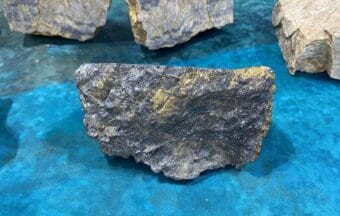
A chunk of stibnite, which contains more than 70% antimony, from Felix Gold’s Treasure Creek project near Fairbanks. (Photo by Max Graham/Northern Journal)

Alaska’s next hard-rock mine might not produce silver or copper, but antimony: a little-known mineral that’s an essential ingredient in modern weapons and energy infrastructure.

Despite its widespread use in missiles, flame retardants, and solar panels, no mines in the U.S. currently produce antimony.

China is the world’s primary producer and the United States’ biggest supplier, as it is for many other key industrial minerals. But it set new limits on antimony exports in September, citing national security concerns.

Now, eyeing funds available from the U.S. Department of Defense, two publicly traded Australian companies hope to open what they describe as small antimony mines in Alaska within the next few years.

“Antimony is a special beast. It’s national security. It’s a strategic metal for the United States,” said Joseph Webb, executive director of one of those companies, Felix Gold.

China’s restrictions are unsettling U.S. officials at a time when demand has soared. Antimony-laden arms are flowing to Ukraine and Israel, and businesses are manufacturing more and more solar panels, including some with antimony. The mineral hit record high prices in September.

That rise in demand, coupled with a strain on supply, has boosted mining companies’ interest in Alaska as a place to produce it. America’s antimony resources are concentrated in just four states, according to federal data, and Alaska holds several significant deposits.

A map created by Alaska’s Division of Geological and Geophysical Surveys showing antimony prospects, occurrences and historical mines.

“We think Alaska is going to play an important role,” Webb said.

The buzz around Alaska’s potential to supply the country with this seemingly obscure yet widely used element underscores how the state’s mining industry is looking to capitalize on increased demand, and government support, for domestic mineral production.

China is currently the dominant global producer of numerous essential minerals, and U.S. policymakers have been pushing for more diverse supplies amid increasing political tensions with the Asian nation.

Alaska could be a source of many of those materials, government geologists and industry leaders say. It’s thought to hold deposits of 49 of the 50 minerals, like antimony, that the U.S. Geological Survey considers “critical” to the American economy and national security.

Webb’s company, as its name implies, has been largely focused on finding gold, which is not on the geological survey’s “critical minerals” list. But the company announced this fall that it could also start commercially mining antimony at its Treasure Creek site near Fairbanks as early as next year.

Meanwhile, another Australian company that’s also mostly targeting gold, Nova Minerals, says it discovered antimony at an exploration project on state land across Cook Inlet from Anchorage. It’s now looking at the possibility of extracting and even refining the mineral there.

And U.S. Antimony, an American company that operates the country’s only antimony smelter, recently staked nearly 4,000 acres of claims around a World War I-era antimony mine in Alaska’s Iinterior, some 20 miles southwest of Tok.

The company’s refinery, in Montana, is running at only 50% capacity, according to co-chief executive Gary Evans.

“We could use material yesterday,” Evans said on a recent call with investors.

Like Nova and Felix, U.S. Antimony is also looking to the federal government for support.

Though the Pentagon has not yet subsidized any Alaska antimony projects, it has invested directly in other projects targeting “critical minerals.” If awarded money, Nova or Felix would become the second company in Alaska in two years to receive Defense Department dollars intended to boost mining in the state.

The Pentagon last year announced a $37.5 million grant for Graphite One, a Canadian company that hopes to mine America’s largest known deposit of graphite, on the Seward Peninsula north of Nome. Like for antimony, the U.S. has heavily relied on China for graphite, a key component of electric vehicle batteries.

Defense Department officials have also directed some $75 million to a proposed antimony and gold mine in Idaho.

A piece of ore from the Stibnite Creek antimony prospect in the Alaska Range. (Alaska Division of Geological and Geophysical Surveys)

Antimony is a shiny silver metalloid, an element that’s almost but not quite a metal.

It’s often used to harden and strengthen actual metals, like lead. And though it’s best known for its use in ammunition and flame retardants, it’s also in a long list of other products, including smartphones and batteries.

A significant fraction of the country’s antimony supply, about one-fifth, comes from recycling. But the vast majority is imported: Nearly two-thirds of the antimony consumed in the U.S. between 2019 and 2022 came from China, according to the geological survey.

China’s new export limits “will put a real squeeze on the U.S. and European militaries,” an analyst told Reuters in August.

Until the 1980s, the U.S. was a major antimony producer. Production tended to ramp up during times of war — including, at various points, at some 25 sites across Alaska, from Ketchikan in the southern end of the state to the Brooks Range in the Arctic.

During World War II, the Stampede Mine, located in what’s now Denali National Park, accounted for three-fourths of the country’s antimony production, according to a white paper prepared this fall by the Alaska Department of Natural Resources.

“It’s all over the place,” said Dave Szumigala, the state geologist who wrote the white paper. “I’ve probably been at over 60 prospects where I’ve picked up a chunk of antimony.”

Still, Szumigala said it’s an open question if the state’s deposits are substantial enough for modern day companies to mine them profitably. Doing business in Alaska can be more costly than in other states because deposits are often in remote areas and lack road access and other infrastructure.

The state’s white paper says near-term production of antimony in Alaska is “unlikely” due to long lead times and other obstacles.

One of the state’s largest known antimony reserves that’s not bound up in a national park is at the historic Scrafford Mine near Fairbanks, Szumigala said.

Scrafford is one of two dormant antimony mines encompassed by Felix Gold’s Treasure Creek project, which spans about 45 square miles.

Antimony was once mined in large quantities in Alaska mines before production centralized in China. This photo shows antimony ore awaiting shipment from Alaska’s Interior on the Tanana Valley Railroad in the early 20th Century. (Alaska’s Digital Archives, Coleen M. Platner collection, UAF-1986-46-CO)

That project is generating some local opposition, in part because mining could occur within a few miles of a Fairbanks-area subdivision.

“I would argue that developing a mine — whether it’s for gold or antimony — right across the road from a neighborhood is a pretty inappropriate area,” said Katie McClellan, who works with a Fairbanks-based conservation group, Northern Alaska Environmental Center. “We would not be in support of that kind of development.”

McClellan also said she’s concerned that federal funding intended for antimony production could have a side effect of advancing Felix Gold toward larger-scale mining for gold.

“Antimony is kind of the foot in the door,” she said.

Both Felix and Nova Minerals, the company with the project outside Anchorage, have mostly been focused on gold. Antimony is often found near gold, and both companies have recently started promoting their antimony prospects as well, with the market surging and government interest growing.

They are now pitching stand-alone antimony mines separate from any major gold mining that could occur on their claims later on.

That concept is distinct from the Pentagon-subsidized Stibnite project in Idaho. The development, which could cost as much as $1.8 billion, would be a big gold mine that also would target antimony — though active commercial production there is still several years away.

Nova Minerals’ concept at its Estelle project, on state land at the end of the proposed 100-mile West Susitna access road, is an antimony mine with a much smaller size and associated investment.

“Everything is much smaller,” Christopher Gerteisen, the company’s chief executive, said in an interview.

Initial startup costs could be as low as $25 million, and the company could begin production within 18 months of receiving a grant, Gerteisen said. Nova is still waiting for a funding decision from the Defense Department.

An agency spokesperson declined to comment.

Felix Gold announced recently that it could begin antimony production by the end of 2025. That “ambitious” target could be possible, said Webb, its director, because Felix has historical data from the dormant mine and is anticipating a very small-scale operation.

“Ultimately, we’ll need to go through the due process required by the regulatory bodies to ensure we’re taking every appropriate step through this,” he said.

Northern Journal contributor Max Graham can be reached at max@northernjournal.com. He’s interested in any and all mining related stories, as well as introductory meetings with people in and around the industry.

This article was originally published in Northern Journal, a newsletter from Nathaniel Herz. Subscribe at this link.

Above Stikine River, Canadian government boosts huge mining project you’ve probably never heard of

The lower Stikine River is seen in British Columbia, Canada, in an undated photo. (Photo by Marek Stefunko/Getty Images Plus)

A major copper-and-gold mining project in the rugged mountains of northwestern British Columbia — upstream from a Southeast Alaska fishing town — is poised for a boost from the Canadian government.

Canada’s department of natural resources last month announced that it plans to inject about $15 million U.S. into a massive copper and gold development just 25 miles from the Alaska border. The project is perched above tributaries of the Stikine River — a major salmon-bearing waterway that flows into Alaska’s Inside Passage between the small towns of Wrangell and Petersburg.

The public funds would pay to build a key 27-mile stretch of road at Galore Creek, which is evenly owned by two major mining corporations, Teck and Newmont. The project is located within the traditional territory of the Tahltan First Nation.

Galore Creek sits on more than 600 square miles of mineral claims, including areas directly alongside the glacially fed Stikine.

The new government-funded road, providing access to a proposed processing site, “will help unlock the project and the broader region’s substantial critical mineral potential,” Bernard Wessels, an executive at Newmont, said in a prepared statement last month.

Canada’s push to help Teck and Newmont unearth some 12 billion pounds of copper and 9 million ounces of gold at Galore Creek is part of a bigger effort by the country’s federal government and British Columbia’s provincial government to promote mining in the remote, largely roadless mountains near the Alaska border.

In the past three months, Canada and B.C. have announced that they’re directing roughly $185 million toward mining-related infrastructure in the area. A good chunk of that money comes from a national $1 billion fund intended to boost production of minerals that Canadian officials have deemed critical for energy and national security.

The investments have added to concerns long held by Alaska Native leaders and conservationists who live and fish downstream of Galore Creek and other projects that are under development.

“Rather than honoring Indigenous sovereignty and its treaty obligations, Canada is staging our traditional homelands and waters to be the sacrifice zone to benefit the British Columbia mining industry and its shareholders,” Richard Chalyee Éesh Peterson, president of Southeast Alaska’s largest tribal government, the Central Council of the Tlingit and Haida Indian Tribes of Alaska, said in a statement to Northern Journal.

Multiple rivers in the region span the U.S.-Canada border, and tribal governments and environmental groups on Alaska’s coast fear that new mines in northwest B.C. could pollute those rivers and harm lucrative and culturally vital fisheries. Concerns mounted over the summer after a cyanide spill at a major Canadian gold mine in the watershed of the Yukon River, Alaska’s biggest transboundary waterway.

Following that spill, Alaska’s congressional delegation sent a letter to the Biden administration urging the president to support “binding and enforceable international protections and financial assurances for any potential impacts in transboundary watersheds,” including the Stikine.

But the letter stopped short of calling for some of the measures requested by Southeast Alaska tribes and advocates.

Those include a permanent ban on dams holding back mining waste above transboundary salmon-bearing rivers. They also include a temporary pause on mineral exploration, development, and permitting on the Canadian side of those watersheds until Canada and the U.S. reach an agreement on protections developed with Indigenous governments. .

The tribally led Southeast Alaska Indigenous Transboundary Commission has said that Canada and B.C.’s regulatory systems don’t adequately protect transboundary rivers and traditional lands — and that those governments have failed to obtain consent from Alaska tribes.

“This isn’t something that they’re building in some far-off area. It’s literally in our backyard,” Esther Aaltséen Reese said of Galore Creek. Reese is the commission’s president and the administrator of the tribal government in Wrangell, the Wrangell Cooperative Association.

In addition to the Galore Creek road, Canada’s federal government intends to spend money on highway upgrades and a study of power transmission lines linking northern B.C. and the Yukon Territory. That infrastructure is intended to support copper, molybdenum, nickel, cobalt, tungsten and zinc mining projects, according to Natural Resources Canada.

In particular, according to a spokesperson for the federal agency, the highway upgrades could aid seven mining projects in B.C. Those include Galore Creek; another big copper and gold project near the Stikine River called Schaft Creek; and KSM, an enormous proposed gold and copper mine in the transboundary Unuk River watershed, south of the Stikine.

The power line project, meanwhile, could support eight mining projects in various stages of development in the Yukon Territory, including a few in the transboundary Yukon River watershed. It could also benefit two more mineral developments in northern B.C., according to the agency.

Natural Resources Canada says the highway project would also boost public safety by widening shoulders, creating new pullouts and expanding Wi-Fi access on three roads in northwest B.C.

A transmission line runs along Highway 37 in northwest British Columbia. To boost the mining industry, Canada’s federal government and the B.C. provincial government are funding upgrades to the highway and assessing whether to extend the power line. (Max Graham/Northern Journal)

Those improvements have been endorsed by representatives of several First Nations in the region — including the Tahltan, whose traditional land covers a large swath of northwest B.C.

But the Tahltan Nation also wants to “control the pace and scale of development in our territory,” said Beverly Slater, president of the Tahltan Central Government.

The mining industry has provided jobs for many Tahltan citizens, Slater said in a phone interview, though she also emphasized the need to protect water and animals like moose, elk, and salmon.

“We’re not unlike other nations having to respond to the encroachment of the mining industry and demand for critical minerals,” Slater said. “Yet we’re trying to protect as much as we possibly can for future generations.”

The Tahltan government is currently negotiating with the B.C. government to establish a joint framework for reviewing proposed changes to the Galore Creek project. That would be the third in a series of joint decision-making agreements between the provincial and First Nation governments on mining projects in Tahltan territory.

In 2006, Tahltan leaders signed an agreement with NovaGold, a company with offices in Salt Lake City and Vancouver that owned half of Galore Creek at the time.

The agreement, which the project’s owners say is still in effect, guaranteed minimum annual payments of $1 million to a Tahltan trust fund, or as much as a 1% royalty on mineral sales revenue once the mine is operating. It also calls for cooperation between the First Nation and the company during the environmental review and permitting process.

Galore Creek received a key environmental approval in 2007, paving the way for construction of an open-pit mine. But development stopped by the end of that same year, owing to higher-than-anticipated costs.

At the time, Teck and NovaGold predicted that building the mine could cost $5 billion.

NovaGold, which also owns half of the Donlin Gold project in Southwest Alaska, agreed in 2018 to sell its stake in Galore Creek to Newmont, an American company, for up to $275 million.

Teck, which owns the other half of Galore Creek, is headquartered in Canada but also operates the huge Red Dog mine in Northwest Alaska, in a partnership with the Alaska Native-owned corporation NANA.

Galore Creek Mining Corp. — the joint venture between Teck and Newmont — is now working on a new study of the project’s potential. It’s due to be completed next year, according to the company’s website.

The company also says it intends, by the end of this year, to seek regulatory approval for a number of changes to the original project, including increased production and a new location for storing waste.

A Galore Creek spokesperson did not respond to requests for comment.

A spokesperson for British Columbia’s Ministry of Environment and Climate Change Strategy declined to comment, citing a policy in the run-up to the province’s Oct. 19 election.

That agency oversees environmental assessments for major mining projects in the province.

“I can see where Canada has a lot to gain,” said Brenda Schwartz-Yeager, a lifelong Wrangell resident who runs riverboat tours on the Stikine River. “But we stand everything to lose here.”

The Stikine is “one of the last great really wild rivers left on the planet,” she added. “So it’s a bit of a conundrum, right?”

Northern Journal contributor Max Graham can be reached at max@northernjournal.com. He’s interested in any and all mining related stories, as well as introductory meetings with people in and around the industry.

This article was originally published in Northern Journal, a newsletter from Nathaniel Herz. Subscribe at this link.

Data centers face growing opposition Outside. Gov. Mike Dunleavy wants them in Alaska.

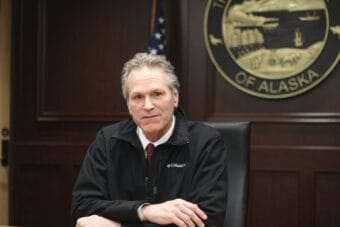
Alaska Republican Gov. Mike Dunleavy sits in the Cabinet Room at his Anchorage office Tuesday. (Photo by Nathaniel Herz/Northern Journal)

Amid a growing backlash to the factory-sized data centers that power the global internet, Republican Gov. Mike Dunleavy has started pitching his state as a new home for the industry — citing Alaska’s cool temperatures and abundant land and water.

In the past few weeks, Dunleavy has formally invited more than a dozen tech businesses to build “data farms” in Alaska, including affiliates of Microsoft, Facebook and Amazon. He also personally accompanied executives from a major data firm, Las Vegas-based Switch, on driving tours of potential sites in the Fairbanks and Anchorage areas.

In an interview, Dunleavy described Alaska as having an abundance of the natural resources that data firms are increasingly under fire for consuming in the Lower 48.

He also said that demand for electricity from new data centers would strengthen the economic case to build a multibillion-dollar natural gas pipeline to urban Alaska from the North Slope oil fields — a project long sought by the state that’s so far been thwarted by insufficient demand.

“We just need an anchor tenant or so, and that’s it,” Dunleavy said.

Companies have eyed Alaska as a site for data centers for more than two decades, dating back to 2001, when a firm called Netricity was studying a project on the North Slope.

Dunleavy’s new push comes as the industry — and its sharply increasing use of power and water — faces growing skepticism across the rest of the country, where some 5,000 facilities have been built.

Forecasts say the growth of artificial intelligence will supercharge demand. One executive has warned that without more efficient operations, data facilities supporting AI could use up to 25% of power in the U.S. by 2030 — more than six times what they use now.

A satellite view of one of Google’s data centers in Oregon, on the banks of the Columbia River. (Google Maps, data from Google, Airbus, CNES/Airbus, Maxar Technologies, USDA/FPAC/GEO)

Texas Republican Lt. Gov. Dan Patrick recently said that the industry produces few jobs relative to the “incredible demands” it places on the power grid. “Texans will ultimately pay the price,” he added.

Residents in Northern Virginia are suing to block one complex, saying data centers are driving up the price of land. Atlanta’’s city government last month banned the facilities in certain areas, citing the potential for them to crowd out housing and pedestrian access.

Dunleavy said Alaska doesn’t face the resource scarcity driving some of the opposition, and that its cold temperatures would reduce the need for cooling.

“We have more available fresh water than just about every other state,” he said. “We have copious amounts of land.”

What the state doesn’t currently have, he added, is extra power.

Alaska’s urban electric utilities currently face an impending shortage of the natural gas they use to generate most of their power — but they also don’t collectively consume enough fuel to attract investors in the proposed gas line.

Data centers would boost consumption, Dunleavy said. They could also tap into Alaska’s significant potential to generate electricity from renewable sources like wind and water, Dunleavy added, as tech businesses are increasingly trying to power their data hubs with green energy.

Microsoft, for example, has pledged to be carbon negative by 2030; it’s working with another company to revive the shuttered Three Mile Island nuclear power plant in Pennsylvania to power its AI and cloud computing centers.

Dunleavy is an enthusiastic user of artificial intelligence technology — he’s been known to pull out his phone during meetings to interrogate ChatGPT, the chatbot developed by OpenAI.

His bid to boost the data industry in Alaska prompted mixed reactions among those tracking the Alaska energy and technology industries.

A representative of the Alaska Public Interest Research Group, a nonprofit that advocates for equitable, affordable, and reliable energy in the state, said the group “welcomes industry in Alaska that does not cause harm.”

But she also suggested that data centers in Alaska would not be enough to make the proposed gas pipeline pencil out.

“Courting new industry to legitimize economically unjustifiable energy projects is a misuse of public time and money that distracts from viable energy solutions,” Natalie Kiley-Bergen, the group’s energy lead, said in an email.

Another energy expert, Antony Scott, said he thinks the most logical concept for industry is to build data centers adjacent to the North Slope oil fields. There, they could tap into abundant natural gas without the need for a pipeline to urban Alaska that would run hundreds of miles and cost billions of dollars.

Carbon emitted from the power plants running North Slope data centers could potentially be deposited back into depleted pockets of the oil fields. That could in turn capture federal tax incentives, said Scott, who spent more than a decade working for the state trying to secure gas contracts to support construction of the pipeline.

“It’s the only sensible location. I actually think it’s a pretty good idea,” said Scott, now an analyst with Renewable Energy Alaska Project, another advocacy group. “Not a lot of downside if someone else will put up the money for the new generators needed to run the server farms and the new carbon capture technology — which is not a small lift.”

One expert says that Alaska’s North Slope oil fields, pictured here, could support development of data centers. (ConocoPhillips photo)

Dunleavy said he’d like to see data centers developed in both urban Alaska and on the North Slope, with the urban locations supporting jobs and potentially adding students to the state’s shrinking school system. “What we’re hearing is that depending on the outfit, it will vary,” he said.

One obstacle in both areas is ensuring reliable connections to the rest of the world, said Ethan Berkowitz, a former Anchorage mayor. He’s now working with a company, Far North Fiber, that hopes to build a subsea cable linking Europe to Japan while passing along the Alaska coast.

Some of the cables currently linking the North Slope with urban Alaska, and connecting urban Alaska to the rest of the U.S., are aging and would need to be replaced to support modern data centers, Berkowitz said.

But otherwise, the concept makes sense for Alaska’s economy, he added.

“This would put us on the cutting edge again,” he said.

Nathaniel Herz welcomes tips at natherz@gmail.com or (907) 793-0312This article was originally published in Northern Journal, a newsletter from Herz. Subscribe at this link.

Editor’s note: This story has been updated to remove an assertion that Alaska’s existing fiber optic cables lack redundancy.

Dozens of fish died near Kensington mine; months later, regulators haven’t determined what killed them

One of the dead fish, a Dolly Varden, discovered by state biologists near a Juneau area gold mine in August. The biologists noted hemorrhaging near the head. (Alaska Department of Fish and Game photo)

On the morning of Aug. 9, state biologists discovered dozens of dead fish in a creek near the Kensington gold mine in Southeast Alaska.

Scientists from the Alaska Department of Fish and Game say their observations — and the fact that the die-off occurred downstream of a wastewater treatment plant at the large mine — suggest that the event stemmed from a water quality problem. Mine workers also used an unapproved explosive at Kensington a day before the dead fish were found, according to federal officials.

But nearly two months later, state regulators at the Department of Environmental Conservation say they still haven’t determined what killed the fish, including Dolly Varden char, a small freshwater species called slimy sculpin, and one pink salmon.

DEC, which regulates mining wastewater and investigates chemical spills, is still waiting for water quality data from the mine’s operator, according to Gene McCabe, the director of the agency’s water division.

“Of course, everybody involved has hunches,” McCabe said. “They have thoughts. They have likely causes. But none of that is substantiated yet.”

An aerial view of part of Southeast Alaska’s Kensington gold mine. (Photo by James Brooks)

Coeur, the multinational company that operates Kensington Mine about 40 miles north of Juneau, is “still awaiting results from multiple independent laboratories with varying timelines,” company spokesperson Rochelle Lindley said in an email this week.

She would not say exactly when Coeur expects to receive results from the different labs.

Tribal governments and other observers in the area of the mine, meanwhile, say that they’ve received little information from state regulators.

A few days after the incident, the U.S. Forest Service, a federal agency that manages the land around Kensington, notified leaders of the region’s largest tribal government, the Central Council of Tlingit and Haida Indian Tribes of Alaska. The agency also, a few days later, provided them with some preliminary information, according to Jill Weitz, who works in government affairs for Tlingit and Haida.

While Weitz said she appreciated the federal notification, she has been frustrated by what she described as a lack of communication from state agencies. Officials from Chilkoot Indian Association, another tribal government in the area, also said the state did not formally alert them to the spill.

It’s the second time this year that tribal officials have raised concerns about their access to information after an incident in the vicinity of Kensington.

In March, Tlingit and Haida’s president, Richard Peterson, urged state and federal regulators to improve communication after the tribe was not notified — for a month — about a January tailings spill at the mine, which appears to be unrelated to the August fish kill.

“The lack of timely communication and transparency in such matters undermines our ability to effectively respond and protect our tribal citizens and ancestral lands,” Peterson wrote.

The idea that the state hasn’t kept local tribes apprised is “problematic,” said state Sen. Jesse Kiehl, a Democrat from Juneau — though he added that state agencies have provided information to his own office. He also applauded Coeur for being the first to notify him and for being responsive to questions.

The biologists from the Department of Fish and Game discovered the dead fish during a routine salmon survey in Sherman Creek, which flows into the Inside Passage between Juneau and the towns of Haines and Skagway to the north.

Kensington mine’s wastewater discharge into Sherman Creek. (Alaska Department of Fish and Game photo)

Coeur discharges treated mine water directly into Sherman Creek, at a point above where the fish appear to have died. Other Dolly Varden were found alive above the mine’s discharge, the biologists wrote in a Sept. 6 report.

Of the dead fish the scientists collected, there was “no obvious body composition or cloudiness in the eyes, suggesting recent death,” wrote one of them, Erika King. They also saw hemorrhaging on multiple Dolly Varden.

Immediately, King wrote, the biologists notified a Coeur official and asked the company to take water samples. The official reported no unusual operations at the water treatment plant, and company staff collected more dead fish samples.

The circumstances  — multiple species of fish dead below the treatment plant outfall and none dead above — “strongly suggest water quality or toxic issues delivered by the treatment plant effluent,” according to a state pathologist, Ted Meyers, whose findings are appended to King’s report. Meyers ruled out infection as the cause of death.

The department’s lab work did not involve water quality or fish tissue testing for toxic chemicals, according to Department of Fish and Game spokesman Joe Felkl.

Whatever killed the fish appeared to be a short, isolated episode, Coeur and state biologists said.

In August, Lindley, from Coeur, told Northern Journal that the company immediately notified regulators when the fish were discovered, coordinated with agencies to send samples to third-party labs for testing and was continuing to monitor the stream.

McCabe, from the state Department of Environmental Conservation, said it’s standard practice across the state for mining companies to collect and self-report water quality data. Their monitoring and testing plans must be approved by state regulators, he added.

“All routine water quality testing has been within permit parameters,” Lindley said in an August email.

Coeur did not respond to follow-up questions this week about an unapproved explosive that was reportedly used underground at Kensington on Aug. 8, the day before the biologists’ discovery. The explosive was noted in an August email from the Forest Service to tribal officials.

A Forest Service spokesperson this week referred requests for information to Coeur.

McCabe said the agency did not have enough information to say whether use of the explosive could be tied to the dead fish.

“At this point, without any water quality data, it’s pure speculation,” McCabe said. “We want to avoid speculating about any potential link or cause until we have some data to evaluate.”

Northern Journal contributor Max Graham can be reached at max@northernjournal.com. He’s interested in any and all mining related stories, as well as introductory meetings with people in and around the industry.

This article was originally published in Northern Journal, a newsletter from Nathaniel Herz. Subscribe at this link.

In internet-less Sitka, it’s both ‘mayhem’ and a ‘golden moment’

A visitor relaxes at the Sitka Sound Cruise Terminal. (Jeb Sharp/KCAW)

In the Southeast Alaska town of Sitka, some hospital surgeries are on hold.

Many shops and restaurants are operating on a cash-only basis. Contact with the outside world comes mostly through satellites.

For the past week, a break in the sole cable that provides Sitka’s internet and phone service has wreaked havoc on residents and businesses — and, at the same time, effectively launched a massive social and economic experiment: What happens for 8,000 people who have deeply integrated the internet into their lives, when the switch gets flipped off?

On the one hand: It’s an enormous pain.

“It’s mayhem,” said Rebecca Himschoot, the independent lawmaker who represents Sitka in the Alaska House. “It’s just been shocking how dependent we are on the internet and how hard it is to do daily functions without it.”

On the other hand: It’s a blissful reprieve from modernity.

“All over town, you see people walking around more, going to people’s homes, hanging out and talking,” said Jessica Ieremia, the director of Sitka’s library, which has a satellite unit that’s made it a hub for residents seeking internet. “We’ve been hearing that constantly from people, how nice it is. They’re like, ‘If I could just figure out the finances part.’”

The Great Sitka Outage of 2024 began late in the last week of August, when telecommunications firm GCI detected a break in the sole fiber optic cable connecting the town, on the outer coast of Baranof Island, to the outside world. Cell service, texting and internet all went down.

Kari Cravens, of Ashmo’s food truck in Sitka, takes cash from Jacil Lee, a cruise ship passenger stopping in town last week. Many business owners in Sitka are unable to accept credit and debit cards amid an outage in most phone and internet communications. (Sitka Sentinel, republished with permission)

Since then, GCI says it has restored a bare minimum of voice and texting capacity using microwave and satellite services. But residents say service remains sporadic and dysfunctional.

Rumors have proliferated about the cause of the break, which, according to GCI, was somewhere between Sitka and Angoon, an Indigenous village to the northeast, toward Juneau.

But details won’t be available until, at the earliest, a ship hired by the company has arrived and begun repairs. The work could take up to six days, said Jenifer Nelson, a GCI spokeswoman.

She added, chuckling, that company officials have not considered the possibility that Elon Musk was responsible for the break.

Nonetheless, the tech mogul’s satellite internet company, Starlink, appears to be a prime beneficiary. Starlink’s sleek satellite receivers have been proliferating in Sitka over the past week.

A Juneau-based regional tribal government, the Central Council of Tlingit and Haida, sent about 15 Starlink units to Sitka the day after the outage, the Sitka Sentinel newspaper reported.

They were distributed to hospitals, schools, city government and rescue services, the council said in a statement. Others went to the local public radio station, KCAW, and to the Sentinel.

Those weren’t the only Starlink units to land in Sitka after the break.

While some businesses and residents already had Starlink before the outage, others went to great lengths to acquire them afterward.

With no systems available to purchase in Sitka, Keith Grenier hopped on a jet to Seattle. He and his business partner at a mechanical contracting business bought eight Starlink units there before flying home and “handing them out to all of the people who were behind.”

Even getting on the plane in Sitka, however, was challenging. Grenier said he drove out to a remote part of town where his phone could receive data, pulled up his boarding pass on the Alaska Airlines app and took a screenshot that he could use to get past security.

Sitkans congregate outside the town library to tap into free Starlink-based internet. (Photo by James Poulson/Sitka Sentinel, republished with permission)

“It was, like, three hours of trying to navigate this stuff just to leave the island,” he said. “There were rumors about having to have a paper boarding pass.”

Grenier’s home, and driveway, are now hotspots for friends and family in need of cell and internet service.

Other residents are holding out as conscientious Starlink objectors, refusing to send money to a company owned by Musk — a billionaire who’s increasingly aligned his politics with Donald Trump’s.

For those without access to Starlink units, however, keeping up normal business can be a huge hassle.

Numerous companies are accepting only cash, while others collect customers’ credit card information, then bring their payment processing devices to Starlink hotspots every hour or day to run the transactions. Himschoot said she heard from a business owner who had one of those purchases declined.

“It’s one bagel sandwich,” she said. “But that’s a real hit when your margin’s really slim.”

There are long lines for cash at the bank, Himschoot added. She’s also worried about constituents who may miss deadlines to apply for or renew state benefits and services. And, she added: How do elders connect to the van service to get to health care?

Certain elective procedures at Sitka’s hospital, run by the SouthEast Alaska Regional Health Consortium, are also still on hold, especially for “patients with complex medical needs that require telemedicine support,” according to a consortium spokesman.

It’s important for people outside Sitka to know “that this is a really, really big deal,” Himschoot said. “It has been really hard on the community.”

Nelson, from GCI, said the company understands the outage is “super, super frustrating.”

“We really do appreciate the community’s and our customers’ patience as we are working to fully restore this as quickly as we can,” she said.

GCI is providing its customers with a free month of service, she said. The company is also offering people what Nelson called “alternative entertainment,” since they “don’t have access to their technology.” It’s providing free admission one day this weekend to Sitka’s athletic and wellness center, as well as to a dance performance the weekend after.

The library, meanwhile, has become the local watering hole, attracting scores of visitors with its free, Starlink-based internet.

“People are hanging around our building 24 hours a day,” said Ieremia, the director. “They’re parking out on the street; the parking lot is full.”

Between last Thursday and Sunday, nearly 900 people updated their library cards, she added, and DVDs and books have been flying off shelves.

“People were hustling all over town to find a DVD player,” Ieremia said.

While the communications blackout has been “devastating” for residents who work from home, she said, it’s also brought people together, with the library full of visitors “talking and sharing stories and giving advice.”

“For three minutes of texting, you end up with an hour of conversation with people you haven’t seen for a while — they’re all there,” Himschoot said. “People are just spending a lot more time doing what we used to do without the internet.”

The outage has gotten Sitkans thinking — about tighter cell phone restrictions in school, even about whether there could be one day a week of community wide internet disconnection or abstention. That kind of idea might be a political nonstarter, Himschoot said, but for now, she added: “It’s kind of a golden moment, in some ways.”

Read local coverage of the outage at the Sitka Sentinel and KCAW.

Nathaniel Herz welcomes tips at natherz@gmail.com or (907) 793-0312This article was originally published in Northern Journal, a newsletter from Herz. Subscribe at this link.

Site notifications
Update notification options
Subscribe to notifications