NPR News

KTOO is the NPR member station in Juneau. NPR offers its members radio and digital stories.

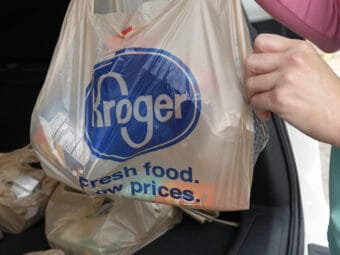
Will the feds block a grocery megamerger? Kroger and Albertsons will soon find out

(Rogelio V. Solis/AP)

Will America’s two largest grocery store chains get to become one?

That’s the question before U.S. regulators, who are deciding whether to block Kroger’s $24.6 billion purchase of Albertsons. Several state attorneys general, too, have signaled they might sue to halt the deal.

At stake is a shakeup of the U.S. grocery landscape, where the companies say they face stiffening competition from Amazon, Walmart, Costco and even dollar stores. Employees, state officials and some lawmakers have argued the tie-up would reduce options for shoppers and workers, farmers and food producers.

Kroger, the biggest U.S. supermarket operator with 2,719 locations, owns Ralphs, Harris Teeter, Fred Meyer and King Soopers. Albertsons, the second-largest chain with 2,272 stores, owns Safeway and Vons. Kroger employs about 430,000 people; Albertsons 290,000.

The chains overlap particularly in Western states. The companies tried to assuage regulators’ concerns about diminishing grocery competition in those markets by agreeing to sell up to 650 stores as part of the deal.

However, antitrust experts in the Biden administration in the past have expressed skepticism about whether divestitures can sufficiently protect competition — on prices, jobs or terms for suppliers, for example. The regulators have also pushed for tougher scrutiny of megadeals, making this merger a high-profile test.

The Federal Trade Commission has been reviewing the proposed deal for over a year and is expected to make its call as early as this month. A lawsuit to stop the deal would not be a shocker. In May 2023, Kroger CEO Rodney McMullen said the grocery chains “committed to litigate in advance” if federal regulators or state attorneys general rejected the deal.

Combining forces to compete with Walmart

Ohio-based Kroger and Idaho-based Albertsons say together, they’d be in a stronger position to compete against Amazon online and Walmart in physical stores. The latter is the nationwide leader in groceries, selling more than Kroger and Albertsons combined.

“This merger will help protect the local community grocery stores that people love,” Albertsons CEO Vivek Sankaran said in his testimony at a Senate antitrust hearing in 2022.

The companies also argue that together they would be able to lower prices and pay higher wages. They emphasize that they offer union jobs, in contrast to their rivals.

Yet, the United Food & Commercial Workers Union, which represents more than 350,000 workers across the two grocery chains, opposes the merger. At public forums around Colorado, for example, workers noted it could become more difficult to negotiate a union contract with an even bigger, more dominant employer.

“The areas [our members] are concerned with are what happens to competition and food prices,” UFCW International President Marc Perrone said, adding that his members also worried about the long-term prospects for their current collective bargaining agreements.

Will selling off stores satisfy regulators?

Grocery competition historically gets assessed on a local level: Will shoppers in a given area have fewer options after the merger? Trying to address this, Kroger and Albertsons in September agreed to sell at least 413 stores in locations where they overlapped to C&S Wholesale Grocers, a supplier company that also runs some Piggly Wiggly supermarkets.

C&S agreed to buy retail locations in Arizona, California, Colorado and Wyoming, as well as some private brands, distribution centers and offices. The company said it was “committed to retaining” the stores’ existing workers, pledging to recognize the union workforce and keep all collective bargaining agreements.

Perrone said his union welcomed this decision, but remains concerned about the merger’s approval hinging on the sale to the much-smaller C&S:

“Can they operate efficiently and be competitive to where the customers, over the long haul, will stay with them?” he said.

Many antitrust experts in recent years have questioned the effectiveness of such divestitures.

For instance, when Albertsons merged with Safeway in 2015, the FTC required it to sell off 168 stores as part of the deal. Within months, one of its buyers filed for bankruptcy protection and Albertsons repurchased 33 of those stores on the cheap.

“Over time, there has been some skepticism about how well divestitures work,” said Kathleen Bradish, acting president of the American Antitrust Institute, which advocates for tougher scrutiny of mergers. “The divestitures that were deemed acceptable in the past may not be acceptable [now].”

Indeed, federal antitrust regulators last year updated their guidelines for policing mergers to include, for example, greater focus not only on how deals affect prices or consumer choice but also suppliers or workers.

Copyright 2024 NPR. To see more, visit https://www.npr.org.

Former top NRA official admits wrongdoing in New York corruption case

Joshua Powell, a former top executive at the NRA, is pictured. Powell has admitted wrongdoing and agreed to pay $100,000 ahead of a civil corruption trial. (The Washington Post via Getty Images)

A former top executive at the National Rifle Association, Joshua Powell, has admitted wrongdoing and agreed to pay $100,000 on the eve of a civil corruption trial of the organization’s top executives set to begin on Monday.

The settlement announcement from the New York state attorney general’s office on Friday came the same day that NRA CEO Wayne LaPierre, 74, announced his resignation from the organization after more than three decades.

“Joshua Powell’s admission of wrongdoing and Wayne LaPierre’s resignation confirm what we have alleged for years: the NRA and its senior leaders are financially corrupt,” New York Attorney General Letitia James said in a statement.

In her civil lawsuit, James has accused top NRA leaders of misusing more than $64 million in cash donated by gun owners.

The suit claims LaPierre and others used the money to pay for private jets, lavish vacations, and to fund no-show jobs for friends and allies. Powell was previously named as one of five defendants; the trial against four remaining defendants is expected to go forward as scheduled.

LaPierre and the NRA have denied any wrongdoing.

Powell was head of operations and chief of staff to NRA CEO Wayne LaPierre, but in recent years he broke with the group, emerging as a critic of the pro-gun organization’s fundraising tactics and publishing a tell-all book in 2020.

“The finances of the NRA are in shambles,” Powell wrote, portraying the NRA as part of “the grifter culture of Conservative Inc.”

In a 2020 interview with NPR, Powell said that under LaPierre’s leadership, the NRA tried to radicalize gun owners in order to raise more money.

“The term ‘pour gasoline on the fire’ is from Wayne’s lips to God’s ears … it’s very easy to raise money off of fear,” he said.

The NRA, meanwhile, has portrayed this lawsuit as a political effort by a Democratic state attorney general to weaken the once-powerful gun organization.

Those arguments were rejected during a lengthy appeals court process, which cleared the way for Monday’s trial.

In a statement Friday, the NRA said LaPierre was stepping down for health reasons.

“I will never stop supporting the NRA and its fight to defend Second Amendment freedom,” he said. “My passion for our cause burns as deeply as ever.”

During his time at the helm of the NRA, LaPierre moved the organization to the right, taking a hard-line stance against gun regulation even as mass shootings and gun violence surged in the U.S. Firearms are now a leading cause of death for young Americans.

In a statement on Friday, the head of the Brady gun control advocacy organization, Kris Brown, issued a statement saying the “NRA is on the ropes” because of its legal troubles.

“Wayne LaPierre spent three decades peddling the big lie that more guns make us safer,” she said in a statement.

Copyright 2024 NPR. To see more, visit https://www.npr.org.

Before a door plug flew off an Alaska Airlines plane, an advisory light came on 3 times

This photo released by the National Transportation Safety Board shows a gaping hole where the paneled-over door had been at the fuselage plug area of an Alaska Airlines flight Jan. 7, 2024, in Portland, Ore. A panel used to plug an area reserved for an exit door on the Boeing 737 Max 9 jetliner blew out Jan. 5, forcing the plane to return to Portland International Airport. (AP)

An advisory light on the Alaska Airlines plane that lost a piece of its fuselage last week had come on during previous flights, preventing the aircraft from being used on long flights over water, the National Transportation Safety Board said.

Additionally, the flight crew and attendants described the atmosphere aboard last Friday’s Alaska Airlines-operated Boeing 737 Max 9 flight as chaotic, “loud” and “very violent” once a door plug flew off and left a vast hole on the side of the plane. The flight carrying 171 passengers and six crew safely returned back in Portland, Ore. There were no injuries.

A door plug is used to fill a doorway and held together by 12 stop fittings, which prevent the door plug from becoming dislodged. In this case, the plug was not used for a functional door, NTSB Chairperson Jennifer Homendy said at a Sunday news conference.

The door plug was found in the backyard of a Portland schoolteacher named Bob, Homendy said. Two cell phones were also found – one on the side of the road and the other in a yard, she added.

@strawberr.vy Girls’ trip turned into emergency landing trip… #alaska #alaskaair ♬ original sound – vy ?

An advisory light came on during 3 previous flights

On three flights prior to Friday’s, the plane’s auto pressurization fail light came on, Homendy said.

The flights happened on Dec. 7 of last year, and then on Jan. 3 and Jan. 4 — just prior to last Friday’s flight. The light coming on is “very benign,” Homendy said, and it was tested by maintenance crews and reset.

“We don’t know that there was any correlation of the two,” Homendy said. “It could be entirely separate.”

Alaska Airlines then temporarily restricted the plane from being flown over water to Hawaii, so that it could be easily accessible to an airport. The airline requested that maintenance crews examine the light. However, they had not been fulfilled before the plug came off.

The moment the door plug broke

When the plug flew off, the flight crew reported hearing a loud bang, Homendy said at the news conference.

The crew immediately put on their oxygen masks. Their quick reference checklist flew out of the cockpit door, which had flung open and jammed the door to the bathroom, which was empty. Instead, the captain handed the quick reference handbook to the first officer, who had jolted forward, causing her headset to come off. The crew put their oxygen masks on and turned on the speakers to alert those in the cabin.

The circuit breaker to the cockpit voice recorder was not pulled, so the recorder was therefore empty, Homendy said.

“Communication was a serious issue,” Homendy said. “The flight attendants reported that it was difficult to get information from the flight deck, and the flight deck was having trouble also communicating.”

The NTSB has interviewed two flight attendants who were at the front of the plane and will interview the two who were in the back of the plane on Monday.

The plane seats 178 people. The 171 people on board included four unaccompanied minors and three babies, who were in the laps of caregivers, Homendy said.

Homendy applauded the work of the flight crew and attendants.

“After this explosive event occurred suddenly, the flight attendants were very focused on what was going on with those children,” Homendy said. “Were they safe? Were they secure? Did they have their lap belts on, and did they have their masks on? And they did.”

Homendy pointed out that the NTSB, as well as the Federal Aviation Administration and Alaska Airlines, encourages caregivers to purchase seats for infants under age two and safely strap them into a car seat.

Damage to the interior

The plug was positioned in row 26, on the left side of the plane. No one was seated in the two seats adjacent to the door, seats 26A and 26B. The headrests on both of those seats are gone and the tray table on the back of 26A is missing. The seats have been sent to NTSB to be inspected.

There was a lot of damage to the paneling and trim around the area. The seal to the window was undamaged, Homendy said.

“Those are all not critical to the structure of the aircraft, so I just want to emphasize that,” she said.

The NTSB is investigating the functionality of an oxygen mask that was still in its ceiling panel. Homendy said it either did not deploy or someone must have put it back up after the incident.

There was additional damage in rows 1 through 4, 11 and 12, 25 through 27 and 31 through 33. There was no damage to the exterior of the plane, Homendy said.

What’s next in the investigation

NTSB teams spent Sunday documenting damage to the frame. They have looked for paint transfers and are sending some components, such as the stop fittings, to a laboratory to be examined, where the NTSB will search for things like fractures and shears under a microscope.

The corresponding door plug on the right side of the plane will also be inspected.

The FAA has grounded 171 models of the Boeing 737 Max 9 planes and mandated they be inspected immediately. Alaska Airlines has grounded all of its models of that plane.

“Safety is our top priority and we deeply regret the impact this event has had on our customers and their passengers,” Boeing said Saturday. “We agree with and fully support the FAA’s decision to require immediate inspections of 737-9 airplanes with the same configuration as the affected airplane. In addition, a Boeing technical team is supporting the NTSB’s investigation into the Jan. 5 accident. We will remain in close contact with our regulator and customers.”

“My heart goes out to those who were on this flight – I am so sorry for what you experienced,” Alaska Airlines CEO Ben Minicucci said in a statement. “We are working with Boeing and regulators to understand what occurred tonight, and will share updates as more information is available.”

Copyright 2024 NPR. To see more, visit https://www.npr.org.

FAA orders grounding of certain Boeing 737 Max 9 planes after Alaska Airlines incident

The first Alaska Airlines passenger flight on a Boeing 737-9 Max airplane takes off on a flight to San Diego from Seattle-Tacoma International Airport in Seattle on March 1, 2021. (Ted S. Warren/AP)

The Federal Aviation Administration on Saturday ordered the grounding and immediate inspection of about 171 Boeing 737 Max 9 aircraft worldwide after a mid-flight emergency late Friday involving one of the planes operated by Alaska Airlines.

“The FAA is requiring immediate inspections of certain Boeing 737 MAX 9 planes before they can return to flight,” the agency’s administrator Mike Whitaker said in a statement.

The decision comes after an Alaska Airlines flight was forced to abruptly land in Portland, Ore., on Friday night. Along with the FAA, the National Transportation Safety Board is also investigating the incident.

On Friday night, Alaska Airlines grounded and ordered a fleet-wide inspection of its Boeing 737 Max 9 aircraft. On Saturday, United Airlines also suspended service on some of its Boeing 737 Max 9 aircraft per the FAA’s request. The airline told NPR the grounding will cause about 60 flight cancellations on Saturday.

Southwest Airlines and American Airlines told NPR they do not carry Boeing 737 Max 9s. While they do carry Boeing 737 Max 8s, both airlines said the model does not raise any concerns.

“The MAX -8 aircraft in our existing fleet and the -7 in our future fleet do not have the exit door plug involved in the Friday evening event. Our fleet and operation are unaffected,” a Southwest spokesperson said in a statement.

Meanwhile, India’s aviation regulator ordered the immediate inspections of all Boeing Max 737 aircraft owned by domestic operators, Reuters reported. None of India’s air operators are believed to carry the model that abruptly landed in Portland on Friday.

The incident comes less than four years after Boeing Max aircraft were allowed to fly passengers in the U.S. All Boeing Max planes were grounded worldwide in 2019 after two deadly crashes involving Max 8 jets.

Last week, Boeing urged the FAA to check its 737 Max jets for loose bolts after the discovery of at least two planes with improperly tightened nuts.

In a statement, Boeing spokesperson Jessica Kowal said the company supports the FAA’s call for inspections.

“Safety is our top priority and we deeply regret the impact this event has had on our customers and their passengers,” Kowal said. “In addition, a Boeing technical team is supporting the NTSB’s investigation into last night’s event. We will remain in close contact with our regulator and customers.”

What happened Friday night

Alaska Airlines Flight 1282 took off from Portland, Ore., shortly after 5 p.m. PST Friday, bound for Ontario, Calif. According to social media posts, it appeared that a window and piece of fuselage had broken off midair — leaving a gaping hole on the plane’s left side.

Oxygen masks were deployed as the aircraft quickly returned to Portland International Airport at 5:26 p.m. PST, according to FlightAware.com. The flight had 171 passengers and six crew members on board. No casualties or serious injuries were reported.

KPTV reported that the local fire department arrived on scene and treated minor injuries. At least one person needed further medical attention.

“We are working with Boeing and regulators to understand what occurred tonight, and will share updates as more information is available,” Alaska Airlines CEO Ben Minicucci said in a statement.

The airline grounded all of its Boeing 737 Max 9 aircraft late Friday until it could inspect each plane. On Saturday, Alaska Airlines said it had completed inspections for more than a quarter of its planes and there were “no concerning findings.”

The company added that it will return planes to service after their inspections are completed “with our full confidence.” The airline expects inspections on all 65 of its Boeing 737 Max 9s to be completed in the next few days.

Boeing 737 Max’s troubled history

The aircraft’s safety problems were under global scrutiny after deadly crashes in Indonesia in 2018 and Ethiopia in 2019 — which killed a total of 346 people. After a worldwide halt in 2019, Boeing 737 Max completed its first U.S. commercial flight in December 2020.

Investigators determined that the company’s newly rolled-out flight control system was partly to blame. In both incidents, the system known as MCAS acted on a faulty sensor and forced both planes to erroneously nosedive even as the pilots attempted to regain control.

But it wasn’t just manufacturing flaws. A report by the Department of Transportation’s inspector general found that the company failed to tell regulators about critical changes it made to its flight control system. The report concluded that Boeing did this in order to expedite the plane’s certification process.

In 2021, Boeing agreed to pay more than $2.5 billion to settle a criminal charge related to the crashes. Under the deal, Boeing was ordered to pay a criminal penalty of $243.6 million while $500 million went toward a fund for the families whose loved ones were killed in the crashes. Much of the rest of the settlement was marked off for airlines that had purchased the troubled 737 Max planes.

Copyright 2024 NPR. To see more, visit https://www.npr.org.

Respiratory illnesses are on the rise after the holidays

After holiday shopping and celebrations, cases of respiratory illness are on the rise across the United States. (Bloomberg via Getty Images)

In most U.S. states, respiratory illness levels are currently considered “high” or “very high,” according to data from the Centers for Disease Control and Prevention.

A few respiratory viruses have been driving the upward trend. “The influenza virus is the thing that’s really skyrocketing right now,” says Dr. Steven Stack, public health commissioner for the state of Kentucky and president of the Association of State and Territorial Health Officials. “Influenza is sharply escalating and driving more hospitalizations.”

Nationally, levels of respiratory syncytial virus (RSV) appear to have plateaued and possibly peaked, while COVID-19 levels are elevated and are expected to climb higher.

“After the holidays, after we’ve traveled and gathered, we are seeing what is pretty typical of this time of year, which is a lot of respiratory viruses,” says Dr. Mandy Cohen, director of the CDC. “We’re seeing particularly high circulation in the southeast, but no part of the country is spared.”

Staggered start for viruses this season

The flu is coming in later this season, compared with the 2022-2023 season, when “RSV and flu really took off right at the same time along with COVID,” says Marlene Wolfe, assistant professor of environmental health at Emory University and a program director at WastewaterScan. “All three of those together were pretty nasty. This year, there’s more of an offset.”

That has been good news so far for hospital capacity, which has remained stable this season, meaning that people who are quite ill and need medical care are generally able to get it.

Some hospitals in different parts of the country — from Massachusetts to Illinois to California — are starting to require masks for staff again and in some cases for patients and visitors.

Vaccines can still help

Health officials say that getting the latest flu and COVID-19 vaccines now can still protect people this season. While Stack, with Kentucky’s Department for Public Health, encourages seasonal preventive shots for everyone 6 months and older, he says it’s particularly important for “everybody who is elderly — and not even old elderly — like young elderly, 60 and older,” since they are more likely to get very sick from these viruses.

CDC data shows that fewer than half of U.S. adults have gotten a flu shot this fall and winter. That’s still better than the vaccination rate for this season’s COVID-19 booster, which fewer than 20% of U.S. adults have gotten, even though COVID-19 remains the bigger danger.

“The thing that is putting folks into the hospital and unfortunately taking their lives — the virus that is still the most severe [at the moment] — is the COVID virus,” says the CDC’s Cohen, citing the latest weekly data showing 29,000 new COVID-19 hospitalizations and 1,200 COVID-19 deaths in the United States.

Beyond vaccines, health officials say there’s still a place for masking as a preventive measure.

Early testing can aid treatment

Those who are sick should stay home and watch their symptoms. If they progress beyond a runny nose and a light cough “to body aches, fevers, difficulty moving through your day, a heavier runny nose, a worsening cough … [those more severe symptoms] should trigger you to go get tested,” says Cohen.

Getting tested and diagnosed early, with COVID-19 or the flu, can help those at risk of serious illness get access to prescription pills that can reduce their chances of ending up in the hospital.

Flu and COVID-19 vaccines, tests and treatments should be covered by health insurance.

For those who are uninsured, the government is also offering a program called Test to Treat that offers free tests, free telehealth appointments and free treatments at home.

Cohen says people can protect themselves over the next few weeks by staying aware of what’s happening in the community and their individual circumstances. “You want to know what’s happening in your community,” she says. “Is there a lot of virus circulating? And then, what are the tools that I could layer on to protect myself, depending on who I am, my age, my risk, as well as who I’m around?”

The CDC has maps of COVID-19 hospitalizations down to the county level on its website, and it provides weekly updates on respiratory viruses nationwide. Cohen says there are many tools — including vaccines, masks, rapid tests and treatments — available to help people reduce their risks this season.

Copyright 2024 NPR. To see more, visit https://www.npr.org.

Americans on Medicare now get better access to mental health care. Here’s how

A new law brings in changes for mental health patients and providers. (Christophe Archambault/AFP via Getty Images)

Starting Jan. 1, the more than 65 million Americans who rely on Medicare will have better access to mental health coverage.

Medicare now covers therapy appointments with licensed marriage and family counselors, and licensed professional counselors. These are two types of therapists who make up around 40% of the Master’s level mental health providers in the country, according to the American Counseling Association.

Victoria Kress, a professor at Youngstown State University and a licensed professional counselor, spoke with All Things Considered host Juana Summers about how this new law could affect patients and providers.

This interview has been lightly edited for length and clarity.

Interview highlights

Juana Summers: This seems like a bit of an obvious solution to me, I have to say. There’s a big group of people out there who need access to mental health care — and by that I mean Medicare recipients — and there’s another big group of providers who are able to do so. So why did it take so long do you think for this law to pass?

Victoria Kress: There have been many iterations of licensure and legislation that have been put forward, and many different legislative techniques and strategies that have been applied to try to get us at the table and to get this passed.

I think it was really money. When I would sit with legislators, the first question they would would ask is, “What is this costed out as? How is this going to impact us fiscally?” Obviously, when you have easier access to care and more people providing services, that’s going to increase the cost.

I think with COVID, with the pandemic, it really put a spotlight on mental health needs. And many people started to realize how critically important access to care is around mental health issues. And because of that, I think legislators felt an increasing pressure to provide access to care for those on Medicare.

Summers: We should just be frank here. The need for mental health care in this country is incredibly stark. The Department of Health and Human Services estimates that 169 million Americans are living in an area with a mental health provider shortage. So how much of a dent could this change make in what seems like massive need?

Kress: It’s profound. Yes, about half of America lives in an area with a severe shortage of providers. And I can tell you, as someone who works in an urban area, even in the urban areas they’re really walking the line and struggling to find enough providers to meet the demand for our services.

So 18% of Americans receive Medicare, and they’re going to overnight have access to so many more providers. So it’s really exciting, particularly when you think about the rural areas, where one in three people receive Medicare services, and there’s such a severe shortage of providers, it’s really going to be helpful to them.


Listen to All Things Considered each day here or on your local member station for more interviews like this.


Something else that we also don’t think a lot about is addictions. Many people in America struggle with addictions. Many older adults and people with chronic disabilities struggle with addictions. About a third of all inpatient hospitalizations for opioid use disorder are paid for by Medicare. And counselors are the primary provider of all addictions counseling services. So it’s been so difficult for people to access addictions care. And now with counselors being able to provide the services that we’re trained to provide, it’s really going to open up opportunities for people to access addiction services as well.

Summers: Medicare reimbursement rates are significantly lower than what many therapists can charge out of pocket. I mean, a single session can cost hundreds of dollars for in demand providers. Are you concerned that even though they’re able to, counselors now might not want to accept Medicare because of the lower payment rates?

Kress: Yeah, absolutely. And also with the legislative change, counselors, marriage and family therapists will be being paid about 75% of what a psychologist would make. And so that’s also a deterrent there.

So it’s going to be an ongoing issue to try to get providers to sign up for Medicare reimbursement. But you know, we also have challenges in terms of continuing to encourage people to go into the mental health helping professions. And educators have a responsibility to continue to pull folks in and to train them to meet the demand that’s out there. Counseling is actually one of the most needed professions right now, there’s a severe shortage all over the country.

Summers: I want to acknowledge here before I ask this question that, of course, senior citizens are not the only Medicare recipients, though they do make up the vast majority of that population. And we know that their mental health care needs are complex and seniors have faced obstacles to receiving mental health care for years. To what degree do you think that Medicare coverage from professional counselors and family therapists could help bridge the gap for that specific population?

Kress: Counselors are uniquely trained to meet the needs of older adults. As counselors, we receive training and counseling for people across the lifespan. But we’ve not been able to work with older adults, despite our training, because of difficulties with Medicare reimbursement. So this is really exciting.

One of the things that makes counselors unique from other mental health professionals is that we have a focus on mental health. And what that means is we focus on people’s strengths, their resources and their capacities within themselves, within their families, within their communities and within society. And we focus on those and we pull those into our treatment plans and how we go about helping them make the changes that they want to make.

So I think our focus on developments, our focus on mental health, our focus on being holistic, our focus on wellness is really unique to the older adult population. I think it really resonates with them. And I think that our presence in this market is going to be really well received.

Copyright 2024 NPR. To see more, visit https://www.npr.org.
Site notifications
Update notification options
Subscribe to notifications