
ProPublica

ProPublica is an independent, non-profit newsroom that produces investigative journalism in the public interest.
The FBI Built a Database That Can Catch Rapists — Almost Nobody Uses It

The Federal Bureau of Investigation created the Violent Criminal Apprehension Program, or ViCAP, but the database is hardly used. (Public Domain photo)

QUANTICO, Va. — More than 30 years ago, the Federal Bureau of Investigation launched a revolutionary computer system in a bomb shelter two floors beneath the cafeteria of its national academy. Dubbed the Violent Criminal Apprehension Program, or ViCAP, it was a database designed to help catch the nation’s most violent offenders by linking together unsolved crimes. A serial rapist wielding a favorite knife in one attack might be identified when he used the same knife elsewhere. The system was rooted in the belief that some criminals’ methods were unique enough to serve as a kind of behavioral DNA — allowing identification based on how a person acted, rather than their genetic make-up.

Equally as important was the idea that local law enforcement agencies needed a way to better communicate with each other. Savvy killers had attacked in different jurisdictions to exploit gaping holes in police cooperation. ViCAP’s “implementation could mean the prevention of countless murders and the prompt apprehension of violent criminals,” the late Sen. Arlen Specter wrote in a letter to the Justice Department endorsing the program’s creation.

In the years since ViCAP was first conceived, data-mining has grown vastly more sophisticated, and computing power has become cheaper and more readily available. Corporations can link the food you purchase, the clothes you buy, and the websites you browse. The FBI can parse your emails, cellphone records and airline itineraries. In a world where everything is measured, data is ubiquitous — from the number of pieces of candy that a Marine hands out on patrol in Kandahar, to your heart rate as you walk up the stairs at work.

That’s what’s striking about ViCAP today: the paucity of information it contains. Only about 1,400 police agencies in the U.S., out of roughly 18,000, participate in the system. The database receives reports from far less than 1 percent of the violent crimes committed annually. It’s not even clear how many crimes the database has helped solve. The FBI does not release any figures. A review in the 1990s found it had linked only 33 crimes in 12 years.

Canadian authorities built on the original ViCAP framework to develop a modern and sophisticated system capable of identifying patterns and linking crimes. It has proven particularly successful at analyzing sexual-assault cases. But three decades and an estimated $30 million later, the FBI’s system remains stuck in the past, the John Henry of data mining. ViCAP was supposed to revolutionize American law enforcement. That revolution never came.

Few law enforcement officials dispute the potential of a system like ViCAP to help solve crimes. But the FBI has never delivered on its promise. In an agency with an $8.2 billion yearly budget, ViCAP receives around $800,000 a year to keep the system going. The ViCAP program has a staff of 12. Travel and training have been cut back in recent years. Last year, the program provided analytical assistance to local cops just 220 times. As a result, the program has done little to close the gap that prompted Congress to create it. Police agencies still don’t talk to each other on many occasions. Killers and rapists continue to escape arrest by exploiting that weakness. “The need is vital,” said Ritchie Martinez, the former president of the International Association of Law Enforcement Intelligence Analysts. “But ViCAP is not filling it.”

Local cops say the system is confusing and cumbersome. Entering a single case into the database can take an hour and hits — where an unsolved crime is connected to a prior incident — are rare. False positives are common. Many also said the FBI does little to teach cops how to use the system. Training has dropped from a high of about 5,500 officers in 2012 to 1,200 last year.

“We don’t really use ViCAP,” said Jeff Jensen, a criminal analyst for the Phoenix Police Department with 15 years of experience. “It really is quite a chore.”

The FBI has contributed to the confusion by misrepresenting the system. On its website, the FBI says cases in its database are “continually compared” for matches as new cases are entered. But in an interview, program officials said that does not happen. “We have plans for that in the future,” said Nathan Graham, a crime analyst for the program. The agency said it would update the information on its website.

The agency’s indifference to the database is particularly noteworthy at a time when emerging research suggests that such a tool could be especially useful in rape investigations.

For years, politicians and women’s advocates have focused on testing the DNA evidence in rape kits, which are administered to sexual assault victims after an attack. Such evidence can be compared against a nationwide database of DNA samples to find possible suspects. Backlogs at police departments across the country have left tens of thousands of kits untested.

But DNA is collected in only about half of rape cases, according to recent studies. A nationwide clearinghouse of the unique behaviors, methods, or marks of rapists could help solve those cases lacking genetic evidence, criminal experts said. Other research has shown that rapists are far more likely than killers to be serial offenders. Different studies have found that between one-fourth to two-thirds of rapists have committed multiple sexual assaults. Only about 1 percent of murderers are considered serial killers.

Studies have questioned the assumptions behind behavioral analysis tools like ViCAP. Violent criminals don’t always commit attacks the same way and different analysts can have remarkably different interpretations on whether crimes are linked. And a system that looks for criminal suspects on the basis of how a person acts is bound to raise alarms about Orwellian overreach. But many cops say any help is welcome in the difficult task of solving crimes like rape. A recent investigation by ProPublica and The New Orleans Advocate found that police in four states repeatedly missed chances to arrest the former NFL football star and convicted serial rapist Darren Sharper after failing to contact each other. “We’re always looking for tools,” said Joanne Archambault, the director of End Violence Against Women International, one of the leading police training organizations for the investigation of sexual assaults. “I just don’t think ViCAP was ever promoted enough as being one of them.”

The U.S. need only look north for an example of how such a system can play an important role in solving crimes. Not long after ViCAP was developed in the United States, Canadian law enforcement officials used it as a model to build their own tool, known as the Violent Criminal Linkage Analysis System, or ViCLAS. Today, the Royal Canadian Mounted Police maintains a database containing more than 500,000 criminal case profiles. The agency credits it with linking together some 7,000 unsolved crimes since 1995 – though not all of those linkages resulted in an arrest. If the FBI collected information as consistently as the Mounties, its database would contain more than 4.4 million cases, based on the greater U.S. population.

Instead, the FBI has about 89,000 cases on file.

Over the years, Canada has poured funding and staff into its program, resulting in a powerful analytical tool, said Sgt. Tony Lawlor, a senior ViCLAS analyst. One critical difference: in the U.S., reporting to the system is largely voluntary. In Canada, legislators have made it mandatory. Cops on the street still grumble about the system, which resembles the American version in the time and effort to complete. But “it has information which assists police officers, which is catching bad guys,” Lawlor said. “When police realize there’s a value associated with it, they use it.”

The ViCAP program eventually emerged from the fallout shelter where it began. It set up shop in an unmarked two-story brick office building in a Virginia business park surrounded by a printer’s shop, a dental practice and a Baptist church.

In a lengthy interview there, program officials offered a PowerPoint presentation with case studies of three serial killers who were captured in the past eight years with the help of the ViCAP program. They called the system “successful.”

“We do as good a job as we possibly can given our resources and limitations,” said Timothy Burke, a white-haired, 29-year agency veteran who is the program manager for ViCAP. “As with anything, we could always do better.”

Pierce Brooks was the father of the system.

A legendary cop, he had a square jaw, high forehead and dead serious eyes. During 20 years with the Los Angeles Police Department, he helped send 10 men to death row. He inspired the fictional Sgt. Joe Friday character in Dragnet. And he became famous for tracking down a pair of cop killers, a hunt chronicled in Joseph Wambaugh’s 1973 non-fiction bestseller, “The Onion Field.” “Brooks’ imagination was admired, but his thoroughness was legend,” Wambaugh wrote.

In the late 1950s, Brooks was investigating two murder cases. In each, a female model had been raped, slain and then trussed in rope in a manner that suggested skill with binding. Brooks intuited that the killer might commit other murders. For the next year, he leafed through out-of-town newspapers at a local library. When he read a story about a man arrested while trying to use rope to kidnap a woman, Brooks put the cases together. The man, Harvey Glatman, was sentenced to death, and executed a year later.

The experience convinced Brooks that serial killers often had “signatures” — distinct ways of acting that could help identify them much like a fingerprint. An early adopter of data-driven policing, Brooks realized that a computer database could be populated with details of unsolved murder cases from across the country, then searched for behavioral matches.

After Brooks spent years lobbying for such a system, Congress took interest. In July 1983, Brooks told a rapt Senate Judiciary Committee audience about serial killer Ted Bundy, who confessed to killing 30 women in seven states. The ViCAP system could have prevented many of those deaths, he said. “ViCAP, when implemented, would preclude the age-old, but still continuing problem of critically important information being missed, overlooked, or delayed when several police agencies, hundreds or even thousands of miles apart, are involved,” Brooks said in a written statement.

By the end of the hearing, Brooks had a letter from the committee requesting $1 million for the program. Although the program was endorsed by then-FBI director William Webster, agency managers weren’t particularly thrilled with the new idea.

The FBI grafted ViCAP into a new operation — the Behavioral Analysis Unit. The profilers, as they were known, were later made famous by Thomas Harris’ “The Silence of the Lambs” as brainy crime fighters who combined street smarts and psychology to nab the worst criminals. But at the time, the unproven unit was seen as a kind of skunk works. The FBI housed it in the former fallout shelter — “ten times deeper than dead people” as one agent later recalled. It was a warren of rooms, dark and dank. Others referred to the oddball collection of psychologists, cops and administrators as “rejects of the FBI” or the “leper colony,” according to “Into the Minds of Madmen,” a nonfiction account of the unit. Still, the new program captured the imagination of some. Murder mystery author Michael Newton penned a series of novels which, while not quite bestsellers, featured the heroic exploits of two ViCAP agents “accustomed to the grisly face of death and grueling hours on a job that has no end.”

Brooks was the first manager for the ViCAP program. The agency purchased what was then the “Cadillac” of computers — a VAX 11/785 nicknamed the “Superstar.” It filled up much of the room in the basement headquarters and had 512KB of memory. (An average household computer today has about 4,000 times more memory.) Brooks was “ecstatic” when the system finally came online on May 29, 1985, according to the account. His enthusiasm was not to last.

To get information into the database, local cops and deputies had to fill out by hand a form with 189 questions. The booklet was then sent to Quantico, where analysts hand-coded the information into the computer. It was a laborious process that flummoxed even Brooks. He had a hard time filling out the booklet, according to one account — as did officers in the field. Only a few hundred cases a year were being entered.

Enter Patricia Cornwell, the bestselling crime author, famous for her novels featuring Dr. Kay Scarpetta, medical examiner. In the early 1990s, she visited the subterranean unit during a tour of the academy. She recalled being distinctly unimpressed. An analyst told her that ViCAP didn’t contain much information. The police weren’t sending in many cases.

“I remember walking into a room at the FBI and there was one PC on a desk,” said Cornwell, who had once worked as a computer analyst. “That was ViCAP.” A senior FBI official had told Cornwell that the academy, of which ViCAP was a small part, was in a financial crunch. She contacted Utah Sen. Orrin Hatch, a friend, and told him of the academy’s troubles. In 1993, Hatch shepherded a measure through Congress to put more money into the academy — and ViCAP.

As the money made its way to the bomb shelter, the FBI conducted a “business review.” It found that local cops were sending the agency only 3 to 7 percent of homicides nationwide. The miniscule staff — about 10 people — could not even handle that load, and was not entering the cases on a timely basis. Cops on the street saw the system as a “black hole,” according to “Cold Case Homicide,” a criminal investigation handbook.

The FBI decided to kill the program. They picked Art Meister to be the hit man.

Meister spent much of his career at the FBI busting organized crime, beginning at the New Jersey field office. He rose through the ranks to supervise a national squad of more than 30 agents, investigating mob activities at home and overseas. He had no real experience with behavioral analysis or databases. But he did have an analytical approach that his superiors admired. They gave him instructions: “If it doesn’t work, do away with it. Kill it,” recalled Meister, now a security consultant with the Halle Barry Group.

Meister heard plenty of complaints. At one conference of police officers from across the country, a cop pulled Meister aside to talk about the program. “I’ve used it and all it gives me is bullshit leads,” the officer told him. “The general perception was by and large that the program didn’t work,” Meister said.

But instead of killing ViCAP, Meister became the system’s unlikely champion. Even with its small staff, the program was connecting far-flung law-enforcement agencies. The 189 questions had been slimmed to 95 — making it easier to fill out the form. Meister used the new funding from Hatch’s bill to reach out to 10 large jurisdictions to persuade them to install terminals that could connect with the database. By 1997, the system was receiving 1,500 or so cases per year — a record, though still a fraction of the violent crimes committed.

Meister saw the potential for the database to help solve sexual-assault crimes. He pushed the development of new questions specifically for sexual-assault cases. They weren’t added to the system until after his departure in 2001. “I felt it would really pay off dividends,” Meister said. “There are a lot more serial rapists than serial killers.”

But he found it difficult to make headway. Top officials showed no real interest in the program. After all, it was designed to help local law enforcement, not the agency. Meister called ViCAP “the furthest planet from the sun” — the last in line to get funds from the FBI. His efforts to improve it “were met with skepticism and bureaucratic politics. That’s what drove me nuts,” he said.

By the time he left, the program was muddling along. “ViCAP never got the support that it needs and deserves.” Meister said. “It’s unfortunate.”

On July 13, 2007, at 4 in the morning, a 15-year-old girl was sleeping in her bedroom in Chelmsford, a former factory town in northeastern Massachusetts bisected by Interstate 495.

She was startled awake when a man dressed in black with a ninja mask pressed his hand against her face. He placed a knife to her throat and told her “If you make any noise, I’ll fucking kill you.”

The girl screamed, rousing her mother and father. The parents rushed in, fighting with the man until they subdued him. Adam Leroy Lane, a truck driver from North Carolina, was arrested. In his truck, Massachusetts police found knives, cord and a DVD of “Hunting Humans,” a 2002 horror film.

Analysts for ViCAP, which has a special initiative to track killings along the nation’s highways, determined that the Massachusetts attack was similar to an earlier murder that had been committed in New Jersey. Acting on the tip, New Jersey state police detectives interviewed Lane in his jail cell. Lane confessed to killing Monica Massaro, a 38-year-old woman, in her home in the town of Bloomsbury — just a few blocks off Interstate 78. Lane, dubbed the Highway Killer, was connected via DNA samples to a killing and a violent attack in Pennsylvania; both women lived near interstates. Lane is now serving a life sentence in Pennsylvania.

New Jersey State Police Detective Geoff Noble said his case had been stalled. But once ViCAP connected Noble to Massachusetts police officers, they provided him a receipt that placed Lane at the truck stop in the small town where Massaro was killed. And when Noble confronted Lane, the killer started talking. Under a state attorney general’s directive, all New Jersey law enforcement agencies are supposed to report serial crimes to ViCAP. “The information provided by ViCAP was absolutely critical,” Noble said. “Without ViCAP, that case may have not ever been solved.”

FBI officials said the case, one of three success stories provided to ProPublica, showed the critical role of the database. (The other two: The case of Israel Keyes, a murderer who committed suicide after his arrest in Alaska in 2012 and has been linked to 11 killings; and that of Bruce Mendenhall, a trucker now serving a life sentence in Tennessee who was linked to the murder of four women in 2007.) “Given what we have, it’s a very successful program,” Burke said.

But in a dozen interviews with current and former police investigators and analysts across the country, most said they had not heard of ViCAP, or had seen little benefit from using it. Among sex-crimes detectives, none reported having been rewarded with a result from the system. “I’m not sending stuff off to ViCAP because I don’t even know what that is,” said Sgt. Peter Mahuna of the Portland, Oregon, Police Department. “I have never used ViCAP,” said Sgt. Elizabeth Donegan of Austin, Texas. “We’re not trained on it. I don’t know what it entails or whether it would be useful for us.”

Even Joanne Archambault, the director of the police training organization who sees the potential of ViCAP, didn’t use it when she ran the sex-crimes unit at the San Diego Police Department: “In all the years I worked these crimes, we never submitted information to ViCAP,” she said. “As a sex-crime supervisor, we invested time in effort that had a payout.”

Local authorities’ skepticism is reflected in the FBI’s statistics. In 2013, police submitted 240 cases involving sexual assault to the system. The FBI recorded 79,770 forcible rapes that year. Local agencies entered information on 232 homicides. The FBI recorded 14,196 murders.

“It’s disappointing and embarrassing,” said Greg Cooper, a retired FBI agent who directed the ViCAP unit before becoming the police chief in Provo, Utah. “The FBI has not adequately marketed the program and its services. And local law enforcement has not been committed to participating.”

Not all rapes or murders involved serial offenders, of course. But with ViCAP receiving information on only about 0.5 percent of such violent crimes, it struggles to identify those that do.

“Cops don’t want to do more paperwork,” said Jim Markey, a former Phoenix police detective and now a security consultant. “Anytime you ask for voluntary compliance, it won’t be a priority. It’s not going to happen.”

But at some agencies where ViCAP has been incorporated into policing, commanders have become staunch defenders of its utility. Major J.R. Burton, the commander of special investigations for the Hillsborough County Sheriff’s Office in Tampa, Florida, said detectives at his agency are mandated to enter information on violent crimes into the database. “I love ViCAP,” said Burton, who served on a board of local law enforcement officials that advises the FBI on the system. “There’s many cases where you don’t have DNA. How do you link them together?”

Burton said he understood the frustration that other police experience when they get no results back from the system. When pressed, Burton could not cite any investigations in his jurisdiction that had benefitted from the database. But he said the time and effort to use the system was worth it. “It allows you to communicate across the nation, whether serial homicide or serial rapist,” Burton said. “That’s awesome in my book.”

FBI officials said they had taken steps to address complaints. In July 2008, the program made the database accessible via the Web. Police can now enter their own searches, without having to rely on an FBI analyst, through any computer with an Internet connection. The program has also whittled down the number of questions. Graham says he tells police that it should take only about 30 minutes to enter the details of a case. “I tell them if they can fill out their taxes, they can fill out the ViCAP form,” Graham said.

In November 1980, children began vanishing across Canada.

Christine Weller, 12, was found dead by a river in British Columbia. A year later, Daryn Johnsrude, 16, was found bludgeoned to death. In July 1981, six children were killed in a month, ages six to 18. They were found strangled and beaten to death.

The killer: Clifford Olson, a career criminal, who eluded capture in part because the different jurisdictions where he committed his crimes had never communicated.

The murders prompted Canadian police officials to create a system to track and identify serial killers. After an initial effort failed, the Royal Canadian Mounted Police sent investigators to study the ViCAP program. They returned troubled by some aspects. The FBI system was not being used by many police agencies. Nor did it track sexual assaults. The Mounties decided to improve on the U.S. system by developing their own behavioral crime analysis tool — ViCLAS.

The ViCLAS system has three advantages over its American cousin: people, money and a legal mandate. More than a hundred officers and analysts work for the system, spread across the country. It’s funded at a reported cost of $14 million to $15 million per year. The most important development was that over the years, local legislative bodies passed laws making entry mandatory. All Canadian law enforcement agencies now file reports to the system.

The agency also greatly expanded the list of crimes that can be entered. Any crime that is “behaviorally rich” — usually an incident involving a criminal and a victim — can be entered into the database. It also created stringent quality control. A Canadian analyst who uncovers a link between crimes must submit the findings to a panel for review. Only then can the case be released to local agencies — reducing the chances for bad leads.

Today, Canada’s system has been repeatedly endorsed by senior police officials as an important tool in tracking down killers and rapists. The agency routinely publishes newsletters filled with stories about crimes that the system helped to solve. One study called ViCLAS the “gold standard” of such systems worldwide. The Mounties now license ViCLAS for an annual fee to police forces in Belgium, the Czech Republic, France, Germany, Ireland, the Netherlands, New Zealand, Switzerland and the United Kingdom.

The volume of information submitted has made the all the difference, Lawlor said. The system works when enough agencies enter cases to generate results. But agencies are reluctant to enter cases until they see results. “It’s a catch–22 situation,” Lawlor said. “If nothing goes in, then nothing can go out.”

When Burke, ViCAP’s program manager, speaks at national law enforcement conferences, he asks how many people in the audience have heard of his program. Typically only about one-half to two-thirds of the hands go up. A smaller percentage say they actually use it.

“We don’t have a club to force them to sign up with us,” Burke said.

The program’s main goal now is to ensure that the 100 largest police agencies in the country are enrolled. About 80 are. The agency continues to slowly develop its software. Training occurs monthly to encourage more participation.

The FBI doesn’t see the need for major changes to ViCAP, Burke explained. “It’s still supportive,” Burke said. “It’s still viable.”

Ryan Gabrielson contributed to this report.

ProPublica is a Pulitzer Prize-winning investigative newsroom. Sign up for their newsletter.
Read original story – Published July 30, 2015, 6 a.m.
This story was co-published with The Atlantic.
The FBI Built a Database That Can Catch Rapists — Almost Nobody Uses It

Agent Orange Act Was Supposed to Help Vietnam Veterans — But Many Still Don’t Qualify

Five decades after the Vietnam War began—and four decades after it ended— veterans exposed to the chemical brew dubbed Agent Orange are still fighting for compensation and benefits for themselves and their children.
And it turns out, not all veterans exposed to Agent Orange are being treated the same.

The fight is playing out in the halls of Congress, in courtrooms and at veterans meetings across the country.

Agent Orange is the name given to a mixture of toxins used during the Vietnam War to remove leaves from trees and bushes, leaving the enemy more exposed. (It got its name from the orange stripes on barrels containing it.)

All told, about 9 million military personnel served on active duty during the Vietnam era, but most were not stationed in the country. Of those, some 2.6 million were potentially exposed to Agent Orange, the U.S. Department of Veterans Affairs estimates.

The VA began receiving claims related to Agent Orange exposure in 1977, according to a November 2014 report from the Congressional Research Service. In 1991, Congress passed the Agent Orange Act, which said that certain diseases tied to chemical exposure would be presumed to be related to a vet’s military service and would make the vet eligible for benefits. The list has grown over time and now includes various cancers, diabetes, Parkinson’s Disease, peripheral neuropathy and heart disease, among others.

To get these benefits, though, veterans “must have actually set foot on Vietnamese soil or served on a craft in its rivers (also known as ‘brown water veterans’),” the Congressional Research Service wrote. Those who instead spent time on deep-water Navy ships (called “Blue Water Navy” veterans) do not qualify unless they can show that they spent time on Vietnam land or rivers, the report said.

Below are various groups who receive Agent Orange benefits or are seeking them.

Those Who Served in Vietnam

Since 2002, more than 650,000 veterans have been granted benefits because of their Agent Orange exposure, the VA estimates. (The department did not keep data prior to then.)

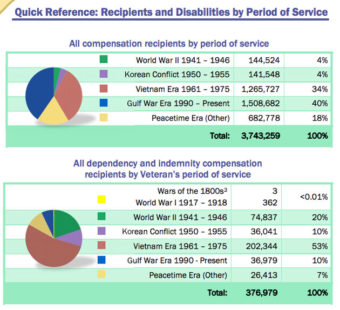
According to the VA’s annual benefits report, it spent nearly $1.3 billion on compensation for Vietnam era veterans in fiscal year 2013, the most recent year for which data is available. That is about one-third of the $3.7 billion in compensation provided that year for all veterans. That figure includes monthly cash compensation payments, but not health care services.

The VA’s website says that: “For the purposes of VA compensation benefits, Veterans who served anywhere in Vietnam between January 9, 1962 and May 7, 1975 are presumed to have been exposed to herbicides, as specified in the Agent Orange Act of 1991. These Veterans do not need to show that they were exposed to Agent Orange or other herbicides in order to get disability compensation for diseases related to Agent Orange exposure.”

Veterans can obtain information on the VA’s website, where they can also file claims for benefits.

ao-benefits-630Air Force Personnel Exposed to Contaminated C-123 Aircraft

In June, the VA expanded benefits to Air Force and Air Force Reserve personnel who served as flight, medical and ground maintenance crew members on C-123 aircraft that were used to spray Agent Orange. These troops, estimated to number between 1,500 and 2,100, will be eligible for benefits if they have a health condition from the same list that applies to on-the-ground troops.

This followed a report earlier this year from the national Institute of Medicine, which found that “some reservists quite likely experienced non-trivial increases in their risks of adverse health outcomes.”

“Opening up eligibility for this deserving group of Air Force veterans and reservists is the right thing to do,” VA Secretary Robert A. McDonald said in a statement in June.

Two other senators, Richard Burr, R-N.C., and Jeff Merkley, D-Ore., had long pushed the VA to provide benefits to C-123 veterans.

“The effort of these veterans to secure overdue VA care and benefits for harmful exposure to Agent Orange has not been one of the agency’s finest hours,” Burr said in a statement. “This frustrating, four year process has laid bare the lengths that the VA will go to disregard science and the facts of the historical record. I am pleased Secretary McDonald has chosen to finally do the right thing for these ailing veterans, but it shouldn’t have been this hard or taken so long.”

Blue Water Veterans

The VA does not currently provide Agent Orange benefits to an estimated 90,000 “blue water” veterans who say they were exposed to the chemical in their drinking water while working on Navy ships off the coast of Vietnam.

In 2002, a VA report found there was insufficient evidence to connect health problems of blue water sailors with chemical exposure aboard ships, establishing the basis for denying benefits to vets who didn’t set foot in Vietnam. That decision was upheld by a federal appeals court in 2008. A 2011 report by the Institute of Medicine, however, identified several “plausible routes” for Agent Orange exposure through the water distillation process aboard Navy ships, as well as through the air.

Such vets can only receive Agent Orange-related benefits if they show “on a factual basis” that they were exposed to the chemicals during their military service.

Following the decision last month to grant Agent Orange benefits to C-123 crews, Sen. Kirsten Gillibrand, D-N.Y., said the VA should do the same for blue water Navy vets. Bills introduced in the Senate and House this year would extend presumptive Agent Orange health coverage to sailors who served in territorial waters as far as 12 miles from the Vietnam coast.

“We owe it to the veterans who bravely served our country and have fallen victim to Agent Orange-related disease to enact this legislation that will provide the disability compensation and healthcare benefits they have earned,” Gillibrand said in a statement.

In April, the U.S. Court of Appeals for Veterans Claims struck down VA rules that denied presumptive Agent Orange compensation for sailors whose ships docked at the harbors of Da Nang, Cam Ranh Bay and Vung Tau. Those ports, the court determined, were in the Agent Orange spraying area. The VA is not appealing the ruling.

Those Who Served Elsewhere

Veterans who served in or near the Korean demilitarized zone between April 1968 and August 1971 and who have a disease associated with Agent Orange are entitled to benefits under VA rules that took effect in 2011.

The VA acknowledges that vets stationed at Air Force bases in Thailand between 1961 and 1975 may have been exposed to Agent Orange, which was sprayed along the perimeters of the installations. But those who served at bases in Thailand must prove they performed duties that may have led to exposure.

Lawyers who routinely argue on behalf of Vietnam-era veterans seeking benefits say it can be difficult to satisfy the VA’s requirement for proving exposure in Thailand. For example, Army veterans must produce documentation showing their duties sent them to the outskirts of a base, either through written orders, statements from fellow veterans, or through photographic evidence, lawyers said.

Children of Veterans

For decades, Vietnam veterans have voiced concern that their Agent Orange exposure has led to health issues for their children and grandchildren. Over the past three years, Vietnam Veterans of America has recorded hundreds of testimonials from offspring of Vietnam veterans who believe their health has been affected by a parent’s exposure. The VA, though, says there’s insufficient research to make a scientific connection.

Despite that, the VA provides benefits for a limited number of birth defects in children of Vietnam veterans, including spina bifida for children of all vets (male and female) and 18 other health conditions solely for children of female vets. To date, about 1,200 children with spina bifida have received those benefits, along with 14 children of female veterans with other covered birth defects, according the VA.

In its most recent report to the agency, published in 2013, the Institute of Medicine concluded that “a connection between toxin exposure and effects on offspring, including developmental disruption and disease onset in later life, is biologically plausible.” The report recommended further study.

Bills pending in the Senate and House would create a national research center to study medical conditions that arise in the descendants of those exposed to toxic substances during military service, not only in Vietnam, but also in the Gulf War, Afghanistan and Iraq.

“When an individual serves their country in the military, I would assume that they recognize the challenges and the sacrifices that they may make,” said Sen. Jerry Moran, R-Kan., during a Committee of Veterans Affairs hearing last month. “When something happens to them, it’s a terrible thing. But I cannot imagine the pain or concern that comes to a father or a mother who now sees the consequence of their military service now affecting their children or their grandchildren.”

The legislation has the backing of many veterans organizations, but the VA opposes the bill. Rajiv Jain, a VA assistant deputy under secretary for health, told lawmakers last month that other federal agencies are better suited to research the effects of toxic exposure. Further, Jain testified, “a proposed center focusing solely on military toxic exposures would likely not have the statistical basis to support conclusive findings.”

Are you a Vietnam veteran? ProPublica and the Virginian-Pilot are interested in hearing from veterans and family members for our ongoing investigation into the effects of Agent Orange on veterans and their children. You can help inform our reporting by completing this short, confidential questionnaire. Here’s a look at just a few of the nearly 1,500 stories people have shared with us so far. Help us investigate by sharing your story now at www.propublica.org/agentorange or hamptonroads.com/agentorange.

Read Original Article – Published July 17, 2015, 4 p.m.
Agent Orange Act Was Supposed to Help Vietnam Veterans — But Many Still Don’t Qualify

How Much Acetaminophen a Day is Safe? Canada May Decide It’s Less

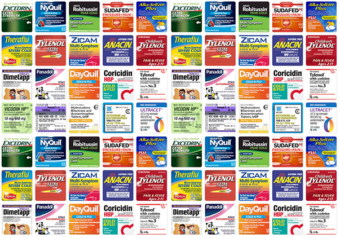
Many common over-the-counter drugs, like the ones shown, contain acetaminophen. (Image from ProPublica)

Canada’s top health agency is considering lowering the maximum recommended daily dose of acetaminophen, the active ingredient in Tylenol and other pain relievers.

Citing the risk of liver damage from overdosing on the popular pain medication, Health Canada announced it will review changes to labels, the creation of an educational awareness campaign and possible revisions to dosage recommendations.
Acetaminophen is considered safe when taken at recommended doses. Tens of millions of people use it weekly with no ill effect. But in larger amounts, especially in combination with alcohol, the drug can damage or even destroy the liver. In severe cases, acetaminophen overdose can cause death.

“Our goal is that we will have fewer effects on liver, less hospitalization, less instances of unintentional overdose, and we have more people that are informing themselves about all the products that they use, not just acetaminophen,” Supriya Sharma, senior medical adviser for Health Canada’s Health Product and Food Branch, told the Toronto Star, in an interview.

The announcement comes after the Star published a lengthy investigation last year on the potential dangers of acetaminophen. The Star, which was assisted in its reporting by ProPublica, found that acetaminophen use in Canada had been responsible for hundreds of deaths, tens of thousands of hospitalizations and tens of millions of Canadian dollars in health-care system costs over the last decade.

An earlier ProPublica investigation done in collaboration with This American Life examined the toll of acetaminophen in the United States. The investigation found that 1,500 people in the U.S. had died and tens of thousands more had been hospitalized as a result of overdosing on acetaminophen over the past 10 years.

ProPublica and This American Life also found that the Food and Drug Administration had delayed implementing safety measures for decades. McNeil Consumer Healthcare, the Johnson and Johnson unit that makes Tylenol, had worked to repeatedly block tougher safety warnings on its billion-dollar product.

Both investigations found a common problem known as “double dipping.” Acetaminophen is present in hundreds of over-the-counter medicines. Thus, people may take several medicines containing acetaminophen — say Tylenol and Theraflu — and not realize that they have exceeded the maximum recommended daily dose of acetaminophen, which is four grams, or eight 500-mg pills.

Another problem with acetaminophen: While generally recognized as safe and effective, the drug has a narrow safety margin — the dosage that can help is relatively close to the dosage that can begin to affect liver function. Some studies have suggested that liver damage can result from taking a few additional pills over the recommended daily dose for several days.

Canada and the United States are among the few industrialized nations in the world to allow unlimited access to acetaminophen. Countries such as Britain, France and Germany restrict access to the amount of acetaminophen that can be purchased, as well as the amount of medicine in an individual pill.

In response to the ProPublica story, McNeil said the company has always put consumer health first and that Tylenol is safe as long as it is used as directed.

After a 2009 FDA hearing in which experts raised new concerns about acetaminophen safety, McNeil changed the label on its Tylenol product to recommend no more than 3 grams, or six extra-strength tablets, per day.

The company maintains that acetaminophen’s safety compares favorably with other over-the-counter pain medications. (The FDA recently announced additional warnings about the risk of heart attacks of taking non-steroidal anti-inflammatory drugs, or NSAIDs, found in popular brands such as Advil.)

“McNeil takes acetaminophen overdose very seriously, which is why we have taken significant steps over the years to mitigate the risk,” the company wrote in an emailed statement.

“We will continue to work hard to educate and warn consumers of the dangers of acetaminophen overdose, reminding them to read the labels on all medicines before taking them, to take medicines only as directed and to be aware that any medicine they take has risks.”

The FDA did not respond to a request for comment on Friday. The agency has previously acknowledged that its procedure for regulating over-the-counter drugs, known as the monograph process, is cumbersome and slow. More than 38 years have passed since the FDA first began hearings on acetaminophen, and the FDA has yet to issue final guidelines on the safe use of the drug.

Last year, the agency announced that it would begin to review the monograph process in order to improve it.

It has yet to take any action.

ProPublica is a Pulitzer Prize-winning investigative newsroom. Sign up for their newsletter.

Read Original Article – Published July 15, 2015, 12:08 p.m.
How Much Acetaminophen a Day is Safe? Canada May Decide It’s Less

Popular Blood Thinner Causing Deaths, Injuries at Nursing Homes

When Loren Peters arrived in the emergency room in October 2013, bruises covered his frail body, and blood oozed from his gums.

The 85-year-old had not been in a fight or fallen down. Instead, he had been given too much of a popular, decades-old blood thinner that, unmonitored, can turn from a lifesaver into a killer.

“My goodness, I’ve never seen anything like it,” recalled Lorna Finch, Peters’s daughter, of the ugly purple bruise that sprawled from the middle of her father’s stomach to his hip. “It was just awful.”

Peters took Coumadin at his Marshalltown, Iowa, nursing home because he had an abnormal heart rhythm, which increases the risk of stroke. It’s a common precaution, but the drug must be carefully calibrated: too much, and you can bleed uncontrollably; too little, and you can develop life-threatening clots.

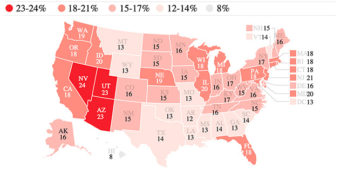
Percentage of nursing home patients receiving at least one dose of anticoagulants per week. Includes Coumadin, warfarin, heparin and other new anticoagulants. Data is for first quarter of 2015. (Graphic by The Washinton Post/source Centers for Medicare and Medicaid Services)

When nursing homes fail to maintain this delicate balance, it puts patients in danger. From 2011 to 2014, at least 165 nursing home residents were hospitalized or died after errors involving Coumadin or its generic version, warfarin, a ProPublica analysis of government inspection reports shows. Studies suggest there are thousands more injuries every year that are never investigated by the government.

“It’s an insidious problem,” said Rod Baird, president of Geriatric Practice Management, a firm that creates electronic health records for physicians working in long-term care facilities. Because it’s so easy to get wrong, “Coumadin is the most dangerous drug in America.”

Nursing homes around the country are routinely cited for lapses that imperil residents, from letting those with dementia wander off to not stopping elders from choking on their food. For years, advocates, researchers and government officials have worried about the overuse of antipsychotic medications that can put elderly patients into a stupor and increase their risk of life-threatening falls. A national initiative helped reduce the use of such drugs among long-term nursing home residents by 20 percent between the end of 2011 and the end of 2014.

But the dangers of the widely used Coumadin have drawn relatively little scrutiny, perhaps because the drug has clear benefits. Still, improper use has caused some patients incalculable suffering and, in some cases, greatly hastened deaths.

Dolores Huss, an 89-year-old grandmother of eight, died from internal bleeding after a San Diego facility gave her an antibiotic that multiplies the effects of Coumadin then didn’t alert her physician that she needed additional blood tests to measure how long it was taking her blood to clot.

Shirley Reim, recovering from hip surgery, was hospitalized with blood clots in her legs after a Minnesota nursing home failed to give her Coumadin for 50 days in a row and also didn’t perform the blood test ordered by her doctor. She suffered permanent damage. Details of the cases come from government inspection reports and lawsuits filed by the patients’ families, which were settled confidentially.

Periodic inspections document hundreds of additional errors that were caught early enough to prevent serious harm, but the real toll is likely much higher, experts say.

A 2007 peer-reviewed study in The American Journal of Medicine estimated that nursing home residents suffer 34,000 fatal, life-threatening or serious events related to the drug each year. North Carolina data shows more medication errors in nursing homes involving Coumadin than any other drug.

Despite such evidence, Coumadin deaths and hospitalizations have drawn only limited attention from the Centers for Medicare and Medicaid Services, the federal agency that regulates nursing homes. Federal officials haven’t tallied Coumadin cases to see the full extent of the damage or identify common problems involving the use of the drug. Neither has the American HealthCare Association, the trade group for nursing homes.

The government investigates incidents like the one involving Peters that trigger complaints or surface in routine inspections. Sometimes, CMS slaps homes with “immediate jeopardy” citations, fining them and threatening to cut off federal funding if quick action isn’t taken. Villa del Sol, where Peters lived, received such a citation related to his care and was fined $33,345.

More commonly, though, homes are not fined and are simply asked to correct the problems and put policies in place to keep them from happening again, ProPublica’s analysis shows.

Last year, the Department of Health and Human Services identified Coumadin and other anticoagulants as one of the drug categories most frequently implicated in “adverse drug events,” calling on government agencies to work on solutions. In a statement, CMS, which is part of HHS, said it is raising awareness of such events, training its inspectors to do a better job at identifying them and working with nursing homes to prevent them.

In Peters’s case, no one at the nursing home conducted the blood test needed to see the effect Coumadin was having, even as bruises spread across his body over a two-week period, government inspectors later found. Peters never recovered, dying a few days after he was brought to the hospital.

Villa del Sol recently changed its name to Hawkeye Care Center Marshalltown. Doug Johnson, president of the home’s parent company, Hawkeye Care Centers, declined to comment by e-mail. “We adhere to privacy rules and practices and do not comment on litigated matters.”

A Breakthrough Drug, With Risks

Coumadin’s roots go back to the 1940s, when scientists at a nonprofit affiliated with the University of Wisconsin at Madison — the Wisconsin Alumni Research Foundation — came up with a rat-and-mouse killer called warfarin, a play off the nonprofit’s initials.

It was derived from a chemical in spoiled sweet clover that had caused cattle to bleed to death after dehorning, castration and other procedures. The substance disrupted the clotting process, so that animals hemorrhaged internally and died.

In the 1950s, drugmaker Endo Laboratories began selling warfarin for human use under the brand name Coumadin. It is in a category of drugs known as anticoagulants. An early user was then-President Dwight D. Eisenhower, who was prescribed the medication after having a heart attack.

Coumadin was a breakthrough for patients with an array of heart troubles associated with blood clots. These include abnormal heart rhythms, along with pulmonary embolisms and deep vein thrombosis.

But the drug interacts badly with certain foods and medications, particularly antibiotics, and it requires regular blood tests to ensure it’s working as intended. The test measures the time it takes for blood plasma to clot.

In Medicare’s prescription drug program, known as Part D, 2.4 million seniors and disabled people filled at least one prescription for warfarin, the generic of Coumadin, in 2013, making it one of the most-used drugs. About 280,000 were prescribed brand-name versions, Coumadin and Jantoven. Many people, including health inspectors, continue to call the generic versions Coumadin because it is so well known.

About 1 in 6 of the nation’s 1.3 million nursing home residents take an anticoagulant, according to federal data from earlier this year; the majority are believed to be on Coumadin or its generic.

Newer anticoagulants, including Eliquis, Pradaxa and Xarelto, have entered the market in recent years and, in some ways, are easier to use than Coumadin. Patients taking these drugs don’t need regular blood tests and don’t have to avoid certain foods.

But unlike Coumadin, the effects of which can be reversed with vitamin K, there currently is no antidote if patients taking the newer drugs begin bleeding uncontrollably.

Some doctors also are reluctant to use the new drugs on seniors, particularly those with multiple health problems, because they carry their own risks, including gastrointestinal bleeding.

‘Perfect Setup for Bad Things’

Coumadin is tricky to manage even for otherwise healthy patients who don’t live in nursing homes. A study published last year by the lab company Quest Diagnostics found that patients taking Coumadin or its generic had lab results showing that the drugs had the desired effect only 54 percent of the time.

A 2011 report in the New England Journal of Medicine found that the drug accounted for some 33,000 emergency hospitalizations among the elderly from 2007 to 2009, more than twice as many as the next highest drug, insulin. The study did not look exclusively at nursing home residents.

Given Coumadin’s challenges — and the coordination required among doctors, nurses, pharmacists and laboratories – nursing homes are the “perfect setup for bad things happening,” said Jerry Gurwitz, chief of geriatric medicine at the University of Massachusetts Medical School. Since the 1990s, when he first wrote about the problems of Coumadin in nursing homes, “very little, unfortunately, has changed,” he said.

Federal inspection reports repeatedly cite the same types of problems: patients not getting the drug as ordered, or given the wrong doses, or given without a doctor’s order.

A Texas nursing home resident received Coumadin for 34 days “without a physician order or adequate monitoring.” Blood was pooling in his mouth when he was sent to the hospital. A patient at a Minnesota home needed three surgeries for a blood clot in the left leg after not receiving 17 doses of the medication.

The drug most commonly involved in nursing-home medication errors also presents the highest rate of serious errors. Top five drugs of numerous medicines cited; data from fiscal year 2012. (Graphic by The Washinton Post/source Medication Error Quality Initiative)

Failure to monitor the drug can lead to dangerous side effects. At a North Carolina home, a patient on Coumadin wound up in the hospital after no clotting tests were done for a month. An internal review found that a nurse “mistakenly put the February labs on the wrong month.”

Sometimes, the tests were done, but nursing homes didn’t alert doctors when the results were abnormal. At a Maine nursing home, a doctor wasn’t told when lab results showed a resident’s blood took too long to clot. Days later, when staff assisted the resident to the bathroom, the resident passed out and had no heartbeat. It is unclear if the resident survived.

In several cases, patients taking Coumadin fell, and nursing homes were cited for not doing enough afterward to ensure their safety. In Arkansas, a resident on the drug fell and hit his head during exercise class. A nurse said she didn’t call his doctor because the doctor “didn’t like to be called at night unless it was an emergency.” The resident died from the consequences of massive bleeding in the brain.

Vigilance Difficult to Enforce

Most patients who are taking Coumadin need it, experts agree. But problems with monitoring occur even at facilities trying to be vigilant.

A report published last year in The Consultant Pharmacist journal found that 12 New York nursing homes given tools to improve how they handled patients on Coumadin — including staff education programs — largely failed to improve their management of the drug.

“Improvements were not seen despite active intervention,” the report’s authors wrote. “If long-term care facilities are unable to voluntarily implement necessary improvements, then regulatory changes may be necessary to assure patient safety regarding anticoagulant use.”

David Gifford, senior vice president of quality and regulatory affairs at the American Health Care Association, said Coumadin errors can’t be viewed in isolation. “Those that approach one area at a time, they’re chasing their tail and they’re not going to see improvements,” he said. “This week, the soup du jour is Coumadin errors … then next week, it’s insulin errors.”

The association recently announced a quality initiative aimed at, among other things, reducing “unintended health care outcomes” — a broad category that covers various types of errors, including those involving medication.

Some long-term care associations say it would be better for CMS to work with the nursing home industry to change its practices rather than to take each incident in isolation, using citations and other sanctions to bring homes in line. Another concern is not to discourage doctors from prescribing Coumadin.

“It may be distorting a little bit to look at the immediate jeopardy outcomes [cited by regulators] without looking at the overall population that’s on it and needs to be on it,” said Cheryl Phillips, senior vice president of public policy and advocacy at LeadingAge, an association of nonprofit senior service organizations. “In fact, to not put people on blood thinners is a huge risk and in many cases malpractice.”

‘Things Didn’t Get Any Better’

Peters, a retired factory worker, moved into Villa del Sol in 2011 with his wife of more than 60 years, Arleta, who had fallen and could no longer walk on her own.

In September 2013, during a weeklong hospital stay, Peters was diagnosed with a variety of abnormal heart rhythms and sent back to the nursing home on Coumadin, the government’s inspection report said.

Both the hospital and Peters’s doctor left instructions for the nursing home to give him a particular test to assess his clotting rate. But it was never done. Instead, the staff gave him a different test intended for patients taking heparin, another blood thinner.

One nurse told inspectors that “it never occurred to her to look to see if the blood work was for what the physician ordered.” Another said “it never occurred to her that this resident was on Coumadin” and needed his blood monitored, according to the government report.

In the first two weeks of October, staff members made several notes in Peters’s chart about bruises on his body. Several entries mentioned scattered bruising; one noted a large bruise on the right abdomen that was purple in the center, green and yellow on the outside. The nurses decided among themselves that the bruises must have been from the lift they used to transfer him, the inspection report said.

Peters was taken to the emergency room after midnight on Oct. 15, 2013, because of the bleeding from his gums. There, a quick test showed that his blood took so long to clot that he might never stop bleeding on his own — a result his doctor told inspectors she’d never seen before.

The doctor later told an inspector that Peters’s bruises were so “horrible” she asked the hospital to take pictures of them. (Photos were taken, said Jeffrey Pitman, an attorney for Peters’s family.)

“They had to have noticed the bruises, and why didn’t they do something about it?” said Finch, Peters’s daughter, who is considering a lawsuit against the home.

At the hospital, doctors gave Peters vitamin K to try to counteract the Coumadin.

He grew confused, agitated, almost belligerent. He had trouble breathing.

“It just got to a point where things didn’t get any better,” said Finch, 59. “I asked his doctor: ‘What really is going on here? Do we have any hope of getting Dad back?’ [The doctor] said, ‘You know he’s pretty weak.'”

As hopes for Peters faded, his wife, too, became ill and was taken to the same hospital. Peters’s family decided to move him to his wife’s room so they could be together for his final hours.

When Peters was wheeled into the room, he was “pretty much unresponsive,” inspectors wrote. “However, when they put [his] spouse’s hands in [his], the resident woke up and was able to talk.”

He died the next morning; Arleta, three weeks later.

“When Dad passed away, she quit,” Finch said. “She just broke down and she screamed, ‘I am so mad at him, he didn’t take me with him.'”

Look up a nursing home’s record using our Nursing Home Inspect tool. This story was co-published with The Washington Post.

Read Original Article – Published July 12, 2015, 7 p.m.
Popular Blood Thinner Causing Deaths, Injuries at Nursing Homes

Industry Payments To Nurses Go Unreported In Federal Database

Following the money trail is pretty easy with doctors, but nurses are another story. Adrianna Williams/Getty Images
Following the money trail is pretty easy with doctors, but nurses are another story.
Adrianna Williams/Getty Images

A nurse practitioner in Connecticut pleaded guilty in June to taking $83,000 in kickbacks from a drug company in exchange for prescribing its high-priced drug to treat cancer pain. In some cases, she delivered promotional talks attended only by herself and a company sales representative.

But when the federal government released data Tuesday on payments by drug and device companies to doctors and teaching hospitals, the payments to nurse practitioner Heather Alfonso, 42, were nowhere to be found.

That’s because the federal Physician Payment Sunshine Act doesn’t require companies to publicly report payments to nurse practitioners or physician assistants, even though they are allowed to write prescriptions in most states.

Nurse practitioners and physician assistants are playing an ever-larger role in the health care system. While registered and licensed practice nurses are not authorized to write prescriptions, those with additional training and advanced degrees often can.

A ProPublica analysis of prescribing patterns in Medicare’s prescription drug program, known as Part D, shows that these two groups of providers wrote about 10 percent of the nearly 1.4 billion prescriptions in the program in 2013. They wrote 15 percent of all prescriptions nationwide (not only Medicare) in the first five months of the year, according to IMS Health, a health information company.

For some drugs, including narcotic controlled substances, nurse practitioners and physician assistants are among the top prescribers.

“Nurse practitioners see patients, order tests, recommend procedures and prescribe medications,” Dr. Walid Gellad, an associate professor of medicine at the University of Pittsburgh and co-director of its Center for Pharmaceutical Policy and Prescribing, wrote in an email. “It seems straightforward to think that their relationships with the pharmaceutical and device industries are of as much relevance as physicians, dentists, chiropractors, etc.”

He added, “If the purpose of the act is to shine a light on the relationship between industry and the health care sector, then you’ve left out an important component of that sector.”

When the Sunshine Act was drafted, those involved say, nurse practitioners weren’t part of the discussion. “Physician groups were among the stakeholders who were very engaged,” said Allan Coukell, senior director for health programs at the Pew Charitable Trusts. “Nursing groups weren’t part of the policy discussions and weren’t ultimately covered by the law.”

Still, Coukell said, “to the extent that a lot of prescribing now is done by health professionals who aren’t physicians, and a lot of marketing is directed at them, they ideally should also be part of the disclosure.”

Asked whether payments to these providers should be reported, a spokesman for the Centers for Medicare and Medicaid Services, which manages the disclosure system, said: “Nurse practitioners and physician assistants are currently not covered recipients under the statute for Open Payments.”

A representative of the Pharmaceutical Research and Manufacturers of America, the industry trade group, declined comment.

Although payments to nurse practitioners are not required to be reported under the law, a handful of companies did so anyway. Of the 606,000 providers who received payments in 2014, several hundred self-identified as nurse practitioners or physician assistants. The rest were doctors, dentists, optometrists, podiatrists and chiropractors. (Some of the self-identified nurse practitioners and physician assistants actually appear to be doctors, but have misclassified themselves.)

Alfonso was employed as an advanced-practice nurse at Comprehensive Pain and Headache Treatment Center in Derby, Conn. An investigation revealed that she was a heavy prescriber of Subsys, an expensive drug used to treat cancer pain, the U.S. Attorney’s Office for Connecticut said. Between January 2013 and March 2015, she wrote more than $1 million in Subsys prescriptions to Medicare patients alone, more than any other prescriber in Connecticut, prosecutors alleged.

“Interviews with several of Alfonso’s patients, who are Medicare Part D beneficiaries and who were prescribed the drug, revealed that most of them did not have cancer, but were taking the drug to treat their chronic pain,” the U.S. attorney’s office said in a press release.

Prosecutors said Alfonso was paid as a promotional speaker by Subsys’ maker, Insys Therapeutics Inc., for more than 70 dinner programs at a rate of about $1,000 per event. “In many instances, the dinner programs were only attended by Alfonso and a sales representative for the drug manufacturer,” the U.S. attorney said in the release. “In other instances, the programs were attended by individuals, including office staff and friends, who did not have licenses to prescribe controlled substances. For the majority of these dinner programs, Alfonso did not give any kind of presentation about the drug at all.”

The charge against Alfonso carries a maximum sentence of five years in prison and a fine of up to $250,000. Sentencing is scheduled for September.

Alfonso could not be reached for comment and her attorney has not returned a phone call. A phone call to Insys was also not returned, though the company said in a statement to The New York Times that it was committed to promoting Subsys “lawfully and appropriately.”

A ProPublica report last year identified Alfonso as among the top 20 prescribers nationally of the most-potent controlled substances within Medicare’s Part D program in 2012. At the time, we noted that she had been reprimanded and fined by the Connecticut health department in July 2014 for allegedly failing to examine a patient before prescribing/refilling narcotics.

Elissa Ladd, an associate professor of nursing at the MGH Institute of Health Professions in Boston, surveyed 263 nurse practitioners several years ago about their interactions with the pharmaceutical industry. Her survey, published in 2010 in the American Journal of Managed Care, found that nearly all had regular contact with drug company sales representatives. Nine in 10 believed that it was acceptable to attend lunch and dinner events sponsored by the industry.

Ladd said she supports mandatory disclosure of payments for nurse practitioners and physician assistants.

“Nurse practitioners think that they’re somewhat immune to this but I think that we’re no different than any other provider,” she said. “If nurse practitioners were reported on, I think that would be a huge concern for them. I don’t think they want to be perceived in a negative light.”

Look up your doctor in our Dollars for Docs interactive database to see if he or she has received payments from drug or device companies in 2013-2014. Also read our story about doctors who had the most interactions with industry.

Copyright 2015 ProPublica.
Read Original Article – July 6, 2015, 10 a.m.

Overuse, Safety Questions Cloud Advair’s Ascent to Asthma Blockbuster

Scenes from Advair's Las Vegas launch. (Image courtesy of ProPublica)
Scenes from Advair’s Las Vegas launch. (Image courtesy of ProPublica)


Advair is one of the biggest blockbusters in pharmaceutical history.

The asthma drug has generated more than $80 billion in global revenues for its maker, GlaxoSmithKline, since its U.S. approval in 2000. With its distinctive purple inhaler, Advair has helped legions of asthma sufferers achieve control of their symptoms.

But recent federal research suggests that a significant percentage of asthma patients begin using Advair inappropriately, taking on what the drug’s label describes as an increased “risk of asthma-related death” from one of its two ingredients.

Concerns about that ingredient — salmeterol — emerged in a 1993 study, and more troubling results became known in early 2003. But it took the Food and Drug Administration seven more years to require Glaxo and makers of drugs similar to Advair to launch studies big enough to assess the risks.

Results aren’t due until 2017. Meantime, millions of patients on the drugs — a class long dominated by Advair — remain exposed.

Portions of Advair’s story have been told before, but a ProPublica examination, based on previously undisclosed or overlooked documents, shows that the traditional guardians of U.S. drug safety — manufacturers, regulators, doctors and the courts — have repeatedly failed to stop misuse of Advair or unlock its secrets.

Before Advair’s approval, a Glaxo scientist told the FDA that it wasn’t appropriate for patients with mild asthma. The agency agreed, a Glaxo document states, but it took five years to make that clear on the drug’s label.

When a handful of state Medicaid agencies moved to limit access to Advair, based on concerns about misuse, Glaxo lobbied aggressively to stop what was viewed internally as an “infestation” of such policies.

And Glaxo has faced scores of lawsuits and claims brought by people whose relatives have died while taking Advair, quietly settling some when pushed to the brink of disclosing sensitive documents.

Through it all, Glaxo’s muscular Advair marketing machine, abetted by broad doctor and patient support, has continued to chalk up huge sales.

Glaxo paid $700 million in 2012 to settle federal civil allegations that unlawful promotion of Advair contributed to extensive misuse, but regulators reported last year that overutilization remained a problem even after more urgent warnings to doctors and patients in 2010.

Glaxo vigorously denied the false-marketing claims brought by the Justice Department. The British-based company said it has changed its practices by ending certain financial payments to doctors and eliminating targets for sales reps. Its marketing policies, for Advair and other drugs, have always required that the company follow FDA rules, Glaxo said in a statement.

The company said Advair is safe when used properly and that dozens of studies have shown its “positive safety profile” and superiority to other asthma treatments. There have been no asthma-related deaths in more than 15 years of Advair trials involving 30,000 patients, Glaxo said.

“We are proud to be in the forefront of research and development in the respiratory field and to have helped millions of patients with asthma,” the company said, adding that patients could suffer if they stopped taking Advair because of too much emphasis on risk.

The FDA said in a statement that Advair “was approved more than a decade ago based on evidence that supported its safety and efficacy.” Although it later required warnings and new trials, the agency said it still believes the benefits of Advair and similar drugs are substantial.

Some 3,500 people die from asthma every year in the United States. Although no deaths have been definitively linked to Advair, in 2003 Glaxo shut down a study of salmeterol earlier than originally intended after 13 patients died.

An FDA scientist later summarized the results: one excess asthma death for every 1,300 users of salmeterol. A prominent FDA epidemiologist, Dr. David Graham, even called for Advair and similar drugs to be banned for treating asthma, calling their ongoing use a “natural experiment.”

But Graham was in a distinct minority; others in the agency said that Advair’s benefits outweighed any risks, which could be managed.

That was also the predominant view among asthma specialists and researchers — although a few broke from the pack. Within the latter group was Dr. Fernando Martinez, a prolific asthma researcher who runs a top respiratory center at the University of Arizona.

Martinez helped lead calls for the large-scale trials the FDA eventually required for Advair and similar drugs. His center treats thousands of patients, and as a youth he watched his mother suffer with the disease.

Martinez felt that Advair was appropriate for many patients. But he was also concerned about the consequences of over-medicating and felt the need to speak out.

Without answers from the ongoing safety trials, he said in an interview, “You are putting at risk people who do not even need the medicine.”

A ‘Very Successful’ Label

Asthma is among the most common chronic diseases in the world, affecting roughly 25 million Americans, including 7 million children.

It causes sufferers’ airways to narrow and become inflamed, impairing breathing and causing bouts of wheezing, gasping and sleepless nights.

Some patients, about 35 percent, have only intermittent symptoms, according to the Centers for Disease Control and Prevention. Those with persistent asthma can be diagnosed as mild, moderate or severe.

There is no cure. Overall, asthma deaths are relatively rare. They declined from 2001 through 2009, according to the CDC, but have subsequently nudged upward. More than 400,000 people are hospitalized in the United States each year for acute attacks.

Before Advair, patients often had to juggle more than one medication to keep their symptoms in check. Studies show that many asthma sufferers didn’t follow their doctors’ orders and ended up undertreated.

Advair was designed to address those problems. It combined two established ingredients — a corticosteroid to reduce inflammation and salmeterol to open airways — in one simple inhaler.

Advair’s two main components had each previously undergone clinical trials to prove their safety and efficacy before winning regulatory approval. Still, questions arose about the safety of salmeterol, one in a class of asthma medications called long-acting beta-agonists, or LABAs.

A 1993 study found that patients in the United Kingdom taking Glaxo’s salmeterol-only drug, Serevent, had a higher rate of asthma mortality, although the finding wasn’t statistically significant. The FDA approved Serevent, but when reports of asthma deaths came in soon after, Glaxo began a large-scale safety study.

That research was still in progress in 1999, when Advair came up for approval. Glaxo submitted results from small trials that showed its combination drug was effective and had no serious adverse effects.

The FDA also had to consider which patients should get the drug and how to describe the appropriate population under the “usage” section of Advair’s label.

The issue arose at a 1999 meeting of experts the FDA had convened to seek advice about the label and other matters. For those with only “mild asthma” controlled by a single medication, the “combination therapy would be inappropriate,” Dr. Tushar Shah, then Glaxo’s director of respiratory clinical research, stated at the session.

Yet the language Glaxo proposed for Advair’s label wasn’t nearly as direct — it did not specifically rule out mild asthma. Particularly for family physicians and other non-specialists, it offered “a fairly vague statement,” observed Dr. Michael Niederman, chief of pulmonology at Winthrop-University Hospital in Mineola, New York.

Dr. Robert Meyer, then director of the FDA’s pulmonary division, agreed with Niederman, but others argued that physicians needed flexibility.  Meyer cautioned that it wasn’t the FDA’s role “to be either tacitly endorsing or restricting the practice of medicine.”

He said the FDA hoped to work with Glaxo “to perhaps better define the population” of patients for Advair. When the agency’s medical review was completed in January 2000, the author wrote that the FDA would revise Advair’s package insert to “clarify” the matter.

That August, the FDA approved Advair as generally safe and effective. But the label’s “usage” section simply said Advair was for “maintenance treatment of asthma in patients 12 years of age and older.”

Inside Glaxo, officials were aware that the “FDA is not comfortable that Advair be used or promoted for mild disease,” according to a company memo written on the eve of the FDA’s decision.

Citing the broad “usage” wording, the memo states, “This is clearly a very successful outcome.”

‘We Can Make Some Millionaires’

On an April day in 2001, more than 2,000 Glaxo salespeople flocked to the Paris Las Vegas hotel for events to launch Advair. Spotlights swirled and the room glowed purple, matching a giant replica of the drug’s inhaler.

Jim Daly, the Glaxo manager nicknamed “Mr. Advair,” took the stage sporting a purple tie. “There are people in this room who are going to make an ungodly sum of money selling Advair,” he told the cheering throng.

The 50 salespeople who persuaded physicians to prescribe the most Advair would get $10,000 bonuses on top of healthy commissions.

“I think we can make some millionaires out there,” declared Glaxo’s then-president of pharmaceutical operations, David Stout.

Stan Hull, the company’s senior vice president at the time, rhetorically asked the crowd, “What patient is not appropriate for Advair?”

According to the label’s “usage” language, virtually all asthmatics over 12 were potential Advair customers. Yet treatment guidelines generally called for starting patients with mild or intermittent asthma on other drugs, such as Glaxo’s Flovent, the steroid component of Advair.

Glaxo had strong incentive to prefer patients get its new drug — Advair sold for much more. (Currently, it can cost more than $300 a month, about 50 percent more than Flovent.)

Despite its higher price, Advair won over doctors and patients almost immediately, surpassing even the ambitious sales goals set in Las Vegas. Some 10 million prescriptions were dispensed in the drug’s introductory year. In 2002, Advair amassed $1.4 billion in sales.

One of those early prescriptions went to Lisa Wade, an athletic high schooler who lived in the rural town of Leesport, Pennsylvania.

Lisa’s symptoms had included a few serious asthma attacks a year — “not that bad,” according to her father, Jeff, who managed computers at a bank.

“The selling point was convenience,” said her mother, Mary Kay, an emergency room nurse.

For several months after Lisa started Advair, her symptoms stayed about the same. But beginning in the spring of 2002, her flare-ups increased in severity and frequency, scaring her family.

On the night of Sept. 17, Lisa was home alone, filling out a college application on her computer, when a serious attack struck. She managed to call 911 before collapsing. It took the ambulance just four minutes to arrive, but Lisa couldn’t be revived.

Mary Kay was on duty at the ER when they brought in her daughter. Just past midnight, doctors pronounced Lisa dead. It was three weeks after her 17th birthday.

In their grief, the Wades set about researching Advair. Spurred by a news article, Mary Kay learned about studies linking salmeterol with an increased risk of death. She called the FDA, which collects reports on bad drug reactions, to explain what happened to Lisa, saying she’d heard about 12 similar deaths.

“The guy said to me, ‘I guess your daughter just made it 13,’ ” Mary Kay recalled.

The Wades sued Glaxo for wrongful death in Philadelphia’s common pleas court. The company denied liability.

As part of the litigation, Lisa’s body was exhumed and autopsied, but even that didn’t bring certainty about the cause of death. The report, by a forensic pathologist, concluded Lisa died of “acute cardiac arrhythmia and heart failure due to complications of bronchial asthma or its therapy.”

In a statement to ProPublica, Glaxo said, “We are prohibited from discussing any specific patient, his or her asthma condition, prescription drug use and a host of other critical factors that may be useful in evaluating medical causation and alternative medical causation.”

The Wades’ case was settled confidentially.

A Call To ‘Clear the Air’ About Excess Deaths

As the Wades sought answers about their daughter, the asthma community got a jolt. Glaxo halted its salmeterol safety trial earlier than expected.

Begun in 1996, the study was known by the acronym SMART and had become the biggest asthma drug trial ever conducted, involving 26,000 patients. But after 13 patients on salmeterol died and participation flagged, the study’s safety board recommended either enrolling more patients or closing it down.

In January 2003, Glaxo ended the trial and notified the public and health-care providers of the results: The rate of asthma-related death for patients on salmeterol was four times higher than for patients on a placebo.

To Arizona researcher Martinez, the demise of SMART struck like a “lightning bolt.” He had started out as an Advair fan, “happy with the medicine,” as he put it. Although Martinez still believed Advair was the best choice for some patients, the salmeterol risk was troubling.

Compounding the issue, Glaxo’s initial analysis of the SMART results made the numbers look better than they were.

Without telling the FDA, the company included patient outcomes that occurred up to six months after the study period ended. The effect was to boost the number of asthma deaths for patients on placebos, shrinking the gap with salmeterol.

The FDA noticed, and Glaxo had to resubmit its results. The agency later called the initial analysis “artificial.”

In a statement about the matter, the company said it “actively communicated the outcomes to regulatory bodies and other stakeholders, and the information was promptly made public.”

Within months, the FDA approved new warnings for packaging on all LABA drugs, including Advair.

By early 2005, the SMART study was still being widely debated in the asthma community. The FDA invited Martinez and other experts to help decide what to do next.

In private discussions with the FDA, Glaxo had argued that the steroid ingredient in Advair ameliorated the risk of the salmeterol compound. The agency had rejected that contention as unproved.

That July, the agency convened its Pulmonary-Allergy Drugs Advisory Committee to consider whether additional warnings were needed.

As the discussion unfolded, one panelist — David A. Schoenfeld,a Harvard professor of medicine and statistics — calculated the risk of death for salmeterol users, based on SMART. He put it at one excess death for every 700 patients with a year of exposure.

The figure alarmed members of Glaxo’s team, who worried that the estimate “might appear in the public domain without appropriate caveats” and be a “disservice to patients.” Instead, the company cited studies where it didn’t “see an attributable risk of that sort.”

A company presenter, Dr. Katherine Knobil, said there were too few deaths during SMART to provide “any clear explanation of the results.”

Martinez acknowledged Glaxo’s theory that Advair’s steroid ingredient might offset the risk of salmeterol. But he said SMART wasn’t designed to answer that question. “I do not think that the data, as I see it today, justifies saying that this risk is decreased by steroids,” he told the group.

Instead, Martinez suspected drugs like salmeterol might be backfiring in a small population of patients, including those with rare genetic variations. For that population, “the main expression of the disease is severe attacks that are not only not controlled by these medications,” he said, “but may be rendered worse” by them.

Martinez came away convinced that the answer was more research — and that the drug makers should be digging deeper.

That December, he took the unusual step of publishing an essay in the New England Journal of Medicine. “Until the manufacturers of these drugs undertake the appropriate studies needed to clear the air,” Martinez wrote, the safety of drugs like Advair “will remain uncertain.”

Doctors ‘Aren’t Going to Listen’ to the FDA

The FDA did not order studies. But the month before Martinez’s article appeared, the agency did revisit Advair’s broadly worded label.

In late 2005, the drug regulator required new “usage” language saying “physicians should only prescribe” the drug to patients whose asthma wasn’t already controlled by inhalers like Flovent, or whose asthma “clearly warrants” more than one medication.

Publicly, Glaxo executives shrugged. Although manufacturers can’t promote drugs for off-label use, doctors are free to prescribe them as they see fit.

The revised label “is not going to have a big effect” on Glaxo’s blockbuster drug, CEO Jean-Pierre Garnier told Wall Street analysts in January 2006. Doctors, he said, “are not going to listen to the FDA.”

Inside Glaxo, executives weren’t as sanguine.

The company’s marketers had been targeting “high volume Medicaid” doctors to boost Advair sales, according to documents in the Justice Department case that were unsealed at ProPublica’s request.

A top company executive had even boasted about the results in a briefing for investors, the documents show.

After the FDA’s label changes, though, Medicaid officials in Arkansas moved to limit access to the drug. A state analysis confirmed that most Medicaid patients with mild cases of asthma were getting Advair despite treatment guidelines saying they shouldn’t.

“People were being treated with the most expensive, the most risky combination, jumping right to the top of the mountain with no evidence they needed it,” said Dr. Mark Helm, who headed the Arkansas study.

Arkansas’ Medicaid program started requiring doctors to get prior approval before prescribing Advair. The change dramatically cut prescriptions without adverse health consequences to patients, Helm said.

But when Helm and his colleagues began sharing their approach with Medicaid officials in other states, Glaxo launched a counteroffensive to make sure that what happened in Arkansas stayed in Arkansas.

After Ohio proposed restrictions, a company lobbyist reported testimony from a doctor who called them an “unnecessary burden” that would be “dangerous for patients,” an April 2007 email chain shows.

Ohio ultimately adopted limits, but the company’s opposition strung out the debate for an additional three months. The delay was valuable enough to Glaxo that executives nominated those involved for “Spirit Awards,” according to one of the company emails.

After a few years, only eight states restricted Advair in Medicaid.

Responding to questions about lobbying, Glaxo said in a statement that it has worked with many states to “assure the availability” of drugs, including Advair, and that it disagrees with efforts that “deny treatment to appropriate patients as recommended in national guidelines.”

In the Courts, A Fight Over Disclosure

Glaxo fended off one threat. Now its lawyers grappled with another: A growing stack of lawsuits had been filed against the company blaming Advair for deaths or harm from severe asthma attacks.

In the summer of 2006, a case in rural Alabama took on added importance as plaintiffs’ attorneys pushed for the disclosure of a cache of internal Glaxo documents about Advair.

The plaintiff was an Alabama truck driver named Earl Faulk, who contended that the death of his 20-year-old son, Marcus, was linked to use of Advair and Serevent.

The company’s attorneys resisted Faulk’s demand for documents, saying Glaxo had already released more than 1 million pages. The additional documents included private communications between the company and its attorneys and should not have to be turned over, they argued.

The decision fell to Christina Crow, a lawyer engaged as a special master by the judge presiding over the case.

Crow questioned Glaxo’s claim of attorney-client privilege. The documents “weren’t seeking advice,” she said in an interview. “They seemed to be copying an attorney just so privilege could be invoked.”

Crow ordered the company to hand over more than 100 documents.  Before the records could change hands, however, Glaxo and the Faulks resolved the case confidentially.

Other cases also ended abruptly after lawyers sought the same cache of documents, according to one plaintiff’s lawyer, Lynn Seithel. A former Republican legislator in South Carolina, Seithel estimates she “worked on about 250 cases” involving Advair. None went to trial, records show.

As in the Wades’ lawsuit, Glaxo denied liability and said it could not comment about the cases or their resolution.

Crow may be the only person outside Glaxo or its attorneys to have seen the documents Faulk sought.

“I learned a lot about asthma and Advair,” Crow said. While she is prohibited from disclosing what they say, Crow said it was a relief that members of her family “don’t have the disease or take the medicine.”

‘How Can We Justify Exposing Millions?’

The legal settlements kept some of Advair’s secrets out of view, but they didn’t diminish the debate over its safety.

In December 2008, the dispute spilled out into full view when FDA scientists split over whether Advair should still be approved to treat asthma. The agency declined to make officials available for interviews.

Martinez was in attendance as the FDA convened three different advisory groups to discuss what to do about long-acting beta-agonists like salmeterol, the Advair ingredient linked to asthma deaths.

With more than 3 million asthma users, Advair dominated all combination LABA drugs. The medications are also used to treat chronic obstructive pulmonary disease (COPD), but an increased mortality risk hasn’t been demonstrated for COPD.

The FDA’s Dr. Andrew Mosholder recounted the findings from SMART, the study Glaxo had shut down five years earlier: Salmeterol was linked to one excess asthma death for every 1,300 patients in the 28-week trial. Expressed in terms of a full year, that is the equivalent of the one-in-700 estimate that Harvard’s Schoenfeld cited in 2005.

Graham, part of a surveillance and epidemiological team with Mosholder and others, said there was no evidence the risks for Advair weren’t as high or worse. Taking on his agency, he said the FDA should have ordered Glaxo to do a large safety trial “many, many years ago.” The company “apparently didn’t volunteer” to do one either, he noted.

“How can we justify exposing millions to what we must conclude is an extremely high risk of death?” Graham said, referring to Advair and other combination LABA products.

He and Mosholder couldn’t, Graham said. The two recommended that the FDA no longer endorse the drugs for asthma care.

The stance put them at odds with the FDA’s pulmonary experts. Dr. Badrul Chowdhury, head of the agency’s pulmonary division, countered that taking Advair away could make things worse.

Chowdhury said asthma deaths had trended down since Advair hit the market.  Patients might turn to less-effective drugs or make more frequent use of rescue inhalers, which also carry a mortality risk, he said.

“This shift will not reduce mortality, but may increase it,” Chowdhury said. He also cited an FDA meta-analysis of multiple studies that collectively suggested Advair was safer than other LABA drugs. Any risks can be managed with appropriate labeling, he said.

In a statement to ProPublica, Glaxo said excess asthma deaths like those seen in the SMART study “would have suggested a significant increase in asthma fatalities rather than the observed decline” in recent years.

Advair supporters — from families with asthma-stricken kids to physicians — also defended the drug at the FDA meeting.

Ultimately, the advisers went with Chowdury. Martinez joined a unanimous vote affirming that Advair’s benefits outweighed any risks in adults. By a narrow margin, the group also backed continued use by children.

Four months later, another influential voice entered the debate.

Dr. Jeffrey Drazen was both editor-in-chief of the New England Journal of Medicine and a veteran asthma researcher at Harvard Medical School. Years of inaction on the issue of LABA safety studies disappointed him.

In an editorial, Drazen and a co-author from Canada wrote that if drug makers didn’t launch new trials to address the matter, the FDA should force them to do so. “As members of a community of physicians, we must demand that such studies be done, be done soon, and be done correctly,” the two wrote.

With sales of Advair and similar drugs topping $6 billion a year, even a big trial would cost the equivalent of only a couple of weeks of profits, they said.

It took nearly a year for the FDA to move.

In February of 2010, the agency required Glaxo and three other manufacturers to conduct studies large enough to measure the risk of asthma death and life-threatening hospitalizations for their drugs.

The trials were part of a larger FDA safety initiative that also took on the issue of misuse.

Advair had been on the market for almost a decade. Utilization studies confirmed what Helm found in Arkansas — that Advair was being prescribed inappropriately to most of the patients who got it.

The FDA initiative included stronger language on the drugs’ labels, emphasizing that they should only be prescribed if other therapies were inadequate and that they should be discontinued as soon as possible.

Marketing and ‘Massive Overutilization’

While the FDA’s regulators moved forward, its investigators began working with federal prosecutors on a probe that had Glaxo and Advair quietly in its crosshairs.

Years earlier, current and former Glaxo sales reps had filed lawsuits under the U.S. False Claims Act, alleging the company had unlawfully marketed several of its drugs and defrauded federal health programs.

The Justice Department eventually joined the cases, providing the plaintiffs access to millions of records subpoenaed from Glaxo.

Initially, the case had focused on other Glaxo products. But in 2009, at a meeting with government prosecutors in Boston, the whistleblowers’ lawyers laid out evidence that Glaxo marketed Advair to mild asthmatics, despite knowing it might not be appropriate, court documents show.

One Glaxo memo from 2004 explained how to overcome doctors’ concerns that “Advair is too much medicine for my ‘mild’ patients.” Another echoed the question a Glaxo executive posed at the Las Vegas launch: “Why aren’t all asthma patients on Advair?”

In 2011, the Justice Department filed — still under seal — a civil fraud complaint alleging, among other things, that Glaxo had unlawfully promoted Advair, exposing patients to “significant safety risks without demonstrated treatment benefits.”

The result was ” massive overutilization of Advair” by people who, according to federal treatment guidelines, shouldn’t have been taking it, the government’s case alleged.

Relying in part on the subpoenaed Glaxo documents, the complaint estimated the misuse at between 50 percent and 90 percent. Moreover, Glaxo had promoted Advair over its less-expensive Flovent, even when Flovent was medically appropriate, the government said.

The allegations didn’t become public until the summer of 2012, when the government and Glaxo settled. Although Glaxo denied wrongdoing with regard to Advair, the company agreed to pay more than $700 million related to the drug, part of a $3 billion deal involving eight medications.

“The settlement was a way to resolve the government’s allegations and move forward,” the company told ProPublica.

Glaxo also agreed to reform its marketing practices. It changed bonus arrangements for its sales force in 2011 and last year committed to end the practice of paying doctors to speak on behalf of its drugs. “We’ve taken responsibility for past conduct, learned from our mistakes and have changed as a company,” Glaxo said in a statement.

News accounts of the July 2012 settlement focused mostly on Glaxo’s other drugs, rather than Advair, which largely retained its halo among doctors and patients. Sales exceeded $4 billion in the United States that year, more than five times what Glaxo paid to resolve the government claims.

A Genetic Clue, Years After A Pitch

The FDA-ordered safety trials began in 2011, and Glaxo said it is “working diligently” to meet the agency’s mandate.

In response to critics like Drazen, Martinez and Graham, who say the company should have initiated a trial, Glaxo said in a statement that none of the drug makers doing studies had done so as they “awaited the direction” of the FDA.

Glaxo said there have been no asthma deaths in the trial. The company also said results for adult and adolescent subgroups should be ready this fall, which would make Glaxo the first to report its findings. A separate pediatric study is expected to be completed ahead of the FDA deadline, the company said.

As part of the trial, Glaxo said it collected genetic data for further research, even though the FDA did not require it.

Eight years ago, however, the company passed up a chance to pursue a line of genetic research that has since proved fruitful.

In 2007, Glaxo sent Martinez an email inquiring about his interest in investigating whether genetics might explain severe asthma attacks in patients taking LABA drugs.  Martinez wrote back, asking “how seriously GSK [Glaxo] would want to pursue these issues.”

He proposed a study of rare gene variants, saying it could put Glaxo “at the forefront of severe asthma genetics,” according to emails obtained under Arizona public records law. Glaxo scientist Steve Yancey later visited Tucson to meet Martinez, who was paid a small consulting fee.

Glaxo and Martinez never teamed up. But last year, Lancet Respiratory Medicine, an arm of the prestigious British medical journal, published a study that was essentially the same as the one Martinez had proposed.

The authors found that patients with rare genetic variations who took a LABA drug had twice the rate of asthma-related hospitalizations and a higher incidence of asthma attacks.

American taxpayers financed the research through federal grants.

Asked why Glaxo didn’t follow up with Martinez, the company said it lacked a sufficient genetic database at the time. Glaxo said it now has enough data for its own study and expects results this fall.

Misuse of Advair and other drugs with long-acting beta-agonists persists, according to a team of FDA and independent researchers.

Their lengthy, little-noticed study, released in January 2014, examined the effect of the label changes and patient guides the FDA mandated in 2010. It found little or no impact: The portion of patients who inappropriately started taking LABAs held at about 27 percent. The length of time patients used the drugs didn’t budge, either.

The findings came two years after Glaxo sent the FDA its own utilization study, contending that a decline in Advair prescriptions between 2005 and 2011 demonstrated that its safety communications were working.

Martinez noted that the biggest declines were in pediatric dispensing, while adults accounted for more than 80 percent of Advair users in Glaxo’s study.

In an email, Glaxo criticized the FDA’s study because it relied on insurance claims data, which don’t reflect asthma severity or other factors a doctor might consider when prescribing Advair. “It is the physician who is best suited for making the correct decision about which therapy to initiate for a patient,” the company said.

About one out of every six Americans with asthma takes Advair or a similar drug, according to the FDA study. Although competitors have taken some of Advair’s market share, with sales dipping to $3 billion last year, it remains the top-selling combination asthma medicine.

Drazen, the Harvard asthma expert, said doctors remain loyal to Advair because they see patients get better. “One of the reasons it’s hard to convince lung doctors of the risk is that the drug is so effective,” he said.

A few who’ve been affected by Advair need no convincing about risks.

Tim and Sarah Passons’ daughter, Brennan, was a straight-A student at Queen of Angels Catholic School north of Atlanta. She had taken Advair continuously for four years when, on an October night in 2011, she couldn’t breathe and was rushed to the hospital.

Brennan died in less than an hour, her parents said. An autopsy showed that her airways were filled with mucus. She was 11 years old.

Like the Wades a decade earlier, the Passonses scoured FDA material and talked to health-care professionals to find an explanation. They also looked at the Justice Department case.

Sarah Passons came to believe that Advair contributed to Brennan’s death — and that the FDA, Glaxo and the medical community had failed to adequately communicate the drug’s true risks.

Now, the family is encouraging pharmacies to do more to alert patients about the medication risks listed in drug package inserts. Advair’s insert, including a medication guide for patients, is more than 60 pages long.

Inserts can go unread, as the patient representative at the FDA’s 2008 advisory meeting acknowledged.

“I have to tell you,” said Andrea Holka, a Nebraskan with two asthmatic sons, “we’ve been taking different medications for the last 10 years for asthma, and I have yet to actually, embarrassedly, sit down and read an entire patient insert.”

The Passonses set up a modest foundation and website to educate others.

Said Sarah: “I don’t want to see another child die.”

Editor’s note: The Sandler Foundation, the largest donor to ProPublica, also contributes to research into asthma, primarily through the American Asthma Foundation and the Sandler Asthma Basic Research Center at the University of California, San Francisco.

More stories like this: See Jeff Gerth’s reporting on Tylenol and its narrow margin of safety.

ProPublica is a Pulitzer Prize-winning investigative newsroom. Sign up for their newsletter.

Read Original Article – Published May 19, 2015, 5:15 a.m.
Overuse, Safety Questions Cloud Advair’s Ascent to Asthma Blockbuster
This story was co-published with The Daily Beast.

Site notifications
Update notification options
Subscribe to notifications