Rashah McChesney

Daily News Editor

I help the newsroom establish daily news priorities and do hands-on editing to ensure a steady stream of breaking and enterprise news for a local and regional audience.

‘Half-melted boots and buckets’: Juneau campers fight wildfire until help arrives

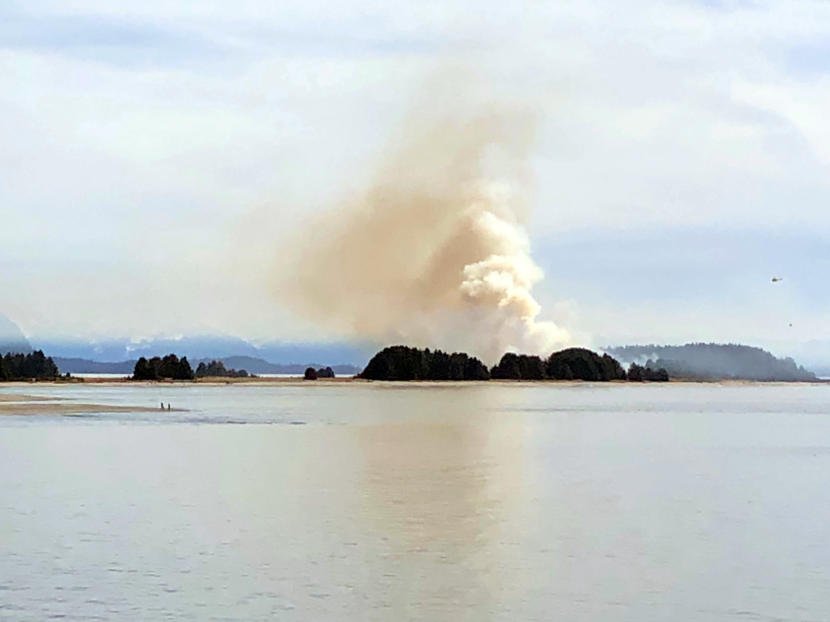
A wildfire started near Eagle Beach on Saturday, May 9, 2020 in Juneau, Alaska. (Photo courtesy Christy Ciambor)

Updated post — 9:30 PM

Firefighters with the U.S. Forest Service have largely contained a wildfire near Eagle Beach in Juneau, though they’ll be out to check on it again on Sunday.

Witnesses say they saw the fire on Saturday morning. Several groups were camping on the point at Boy Scout Beach.

“We just noticed some smoke and it was kind of high up in the grass,” said Blaine Scharen. He was camping with his wife and some extended family.

Scharen said it was pretty clear that the fire had gotten out of control. He and his brother-in-law threw on their boots and ran over to the next campsite to see what was going on.

“And at that point there was a ring of fire maybe 30 feet across. And so we ran back [to their campsite] and told all the kids to stay away. And then my wife joined in also and we got all the totes and buckets we had and started trying to contain it from going down to where we were” he said.

Calls about a brush fire on the beach started rolling in to Capital City Fire/Rescue at about 11:30 a.m. Saturday.

That’s about the time Juneau’s Police Department and Capital City Fire/Rescue and Juneau-area residents started posting on social media as well.

Those were passed along to the Forest Service which handles all of the wildland firefighting in the area.

Rob Berney, a Juneau-area fire supervisor for the Forest Service, said firefighters headed out with a helicopter and later in a boat to get to the remote beach.

But, it took about an hour and half to get there. And, in the meantime, Scharen says more than a dozen people jumped in to try and contain the flames.

“We started digging with our hands and trying to dig a line across to keep it from spreading,” he said. “Then it started to get a bit bigger. And then some of the trees, the spruce trees started lighting up. So we’re smacking spruce trees, using the buckets to try and pat stuff out. Everybody’s feet and boots were half-melted and buckets and tubs were all melted.”

Pictures from the air show a long, black smoldering strip running along the beach. Berney said it burned more than 15 acres — “when you consider an acre being a football field, that’s quite a bit of ground.”

And, it burned for a while. As the sun set Saturday, it was still smoldering. Berney said part of the problem is that they had to ground the helicopter for some time because someone was flying a drone around while Forest Service firefighters were trying to work.

Someone ran up and down the beach, asking groups of people if they knew where it was coming from. Berney said he’s not sure they ever found out who was piloting the drone.

But, he said, it’s dangerous for helicopters to operate near them.

“It doesn’t take much to bring a helicopter down out of the sky. There’s a lot of moving parts on those things and if a drone or anything comes in contact with the rotors … it’s a bad, bad thing.”

And it’s scary for pilots.

“He’s already, you know, distracted with, you know, 300 gallons of water and a long line hanging underneath him. Just, that’s the last thing a pilot needs when he’s up there trying to do the job. Worrying about a drone and where that’s at.”

Berney said this type of fire is not uncommon.

“This time of year before all of the grass gets green again, you got a huge component of dead dry grass that makes up places like those tidal flats or along the beaches or road sides or you know, meadows or whatever. It’s mainly just dead dry grass at this point,” he said.

The National Weather Service office in Juneau issued a notice on Friday of increased fire danger for Southeast Alaska.

That’s because of the warm, windy weather forecasted to last through the next few days. The agency warned that wildfire fuels, like grasses, will be impacted the most and urged people to take extra caution with open fires.

Both Berney and Scharen said they weren’t positive exactly how the fire started, though Berney said it was definitely caused by people.

Scharen said he’d heard that a child may have inadvertently started it; there are similar rumors on social media.

“What I heard was, they asked him to go get the lighter out of the tent so they could make a campfire. And on his walk back he lit a piece of grass on fire or something and then it just got out of control quick,” he said. “Totally an accident, it’s something, something I could have very easily done when I was a kid. You don’t realize how quickly it gets out of hand.”

He said after the firefighters showed up, he and his family were able to back up and watch them work. They watched the helicopter bucket dip into the channel, lift up high into the air and then pour over the fire. And, they were able to use it as a teachable moment for the kids.

But, he also said it was a lesson for them too.

“We talked about it after the fire got out,” he said. “You know we had a fire last night and wood pops and embers fly up and it just … it could have very easily been us or anybody having a fire. We didn’t think about it at the time but then afterwards we were like ‘holy cow.’”

No one was injured. Though Scharen said the hair’s all singed off of his legs and he’s got a sunburn.

But, he said, it felt good to be part of a community effort to fix something that had gone so horribly wrong.

“It was pretty nice to see.I wish I would have gotten a couple of their names,” he said. “Everybody just kind of sprung into action. People covered in black soot and, you know, stuff’s getting ruined, totes and buckets getting ruined. Everybody kind of rallied together, definitely kept it from being a lot worse than it would have been if nobody was out there.”


Original post

The U.S. Forest Service is working to contain a wildfire near Eagle Beach in Juneau.

That’s according to social media posts from Juneau’s Police Department and Capital City Fire/Rescue. 

On social media, Juneau residents first reported seeing the fire around 1 p.m. on Saturday. Residents described fast-moving flames overtaking beach grass and trees.

It’s not clear how the fire started. Neither Capital City Fire/Rescue nor the Forest Service immediately answered calls for more information. 

The National Weather Service office in Juneau issued a notice on Friday of increased fire danger for Southeast Alaska. 

That’s because of the warm, windy weather forecasted to last through the next few days. The agency warned that wildfire fuels, like grasses, will be impacted the most and urged people to take extra caution with open fires. 

This story has been updated.
As Alaska starts to reopen, it’s already too little, too late for some small businesses

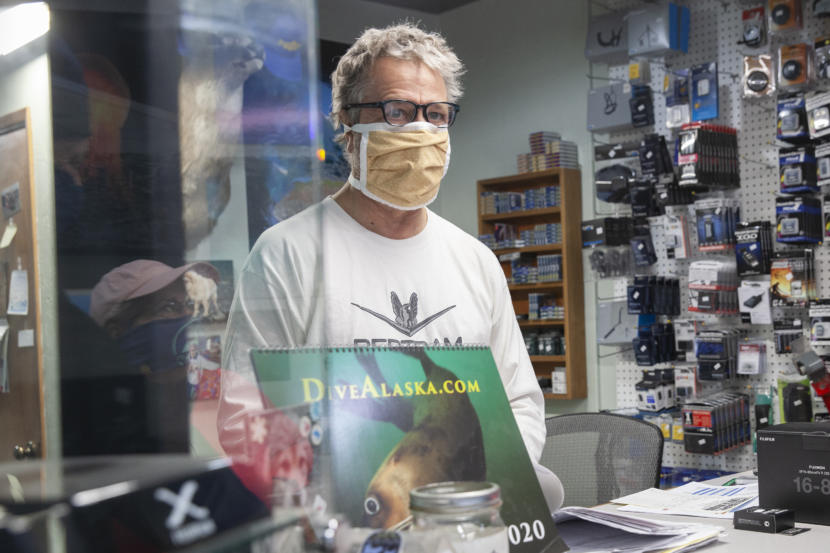
Art Sutch talks to customers during one of his last days operating a brick and mortar camera shop on Saturday, April 25, 2020, in Juneau, Alaska. (Photo by Rashah McChesney/KTOO)
Art Sutch talks to customers during one of his last days operating a brick and mortar camera shop in Juneau on Saturday, April  in Juneau.  After 25 years in downtown, Sutch is closing his store. He said the COVID-19 pandemic is partially to blame. (Photo by Rashah McChesney/KTOO)

Last Friday, as state lawmakers heard from economists and analysts about the health of Alaska’s economy, a shop in downtown Juneau opened its doors for one final sale. 

This shop and a lot of others like it around the country are financially fragile, operating with just enough to cover one or two months of being closed. As the state takes steps towards reopening businesses, some are finding that the COVID-19 pandemic has already robbed them of that possibility. 

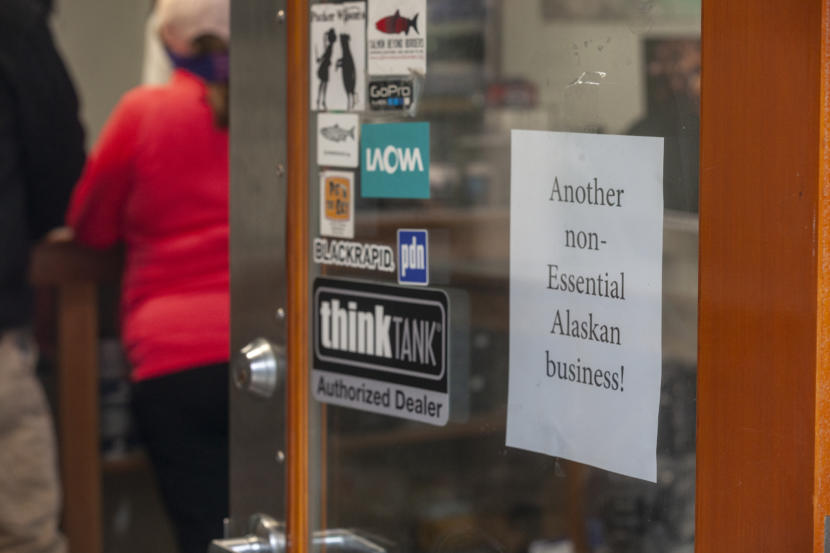
Art Sutch Photography and Digital Imaging is a  small camera shop about midway up a hill on Seward street in downtown Juneau.

Inside, there are these big prints on the walls including unreal, deeply blue shot from the inside of an ice cave. There’s a big printer in the back for his imaging business. And, there’s usually a dog or two inside. He’s had enormous Tibetan Mastiffs for years. 

There are a handful of people in the shop on Saturday — looking to pick up a few pieces of gear. But, it really seemed like they came in to talk to him. 

He’s having a sale, getting rid of as much of his stock as possible, at cost. Because, whatever he doesn’t sell — he has to cram into his garage. After 25 years — Sutch calling it quits.  At least, on the retail side of his business. 

There are more factors in that decision than just the COVID-19 pandemic. It is not easy to operate a small town brick-and-mortar camera shop. 

“You know how people correlate everything to that movie the Perfect Storm? Well this was the perfect storm,” Sutch said with a wry smile.

In the past few years, he’s seen cellphones wipe out his low-end point and shoot market and he’s competing with internet retailers who can undercut him on cost. 

“Unfortunately the internet isn’t taxed. So the internet can beat me by just not having sales tax,” he said.  “People shop photographic equipment like you wouldn’t believe. I have people that stand in front of me with their cellphone, as I’m telling them the price of my gear to compare it with everyone else’s.”

The bottom line is that his profit margins are slimmer now than they used to be. He was finding ways to make it work, to change with the times.

“I had employees when the business was doing really good, I could afford them. But since then it’s just been me,” he said.

There are some months in the winter he doesn’t take a paycheck. That’s one of the reasons he’s been able to stay open. 

Dave Harris, Art Sutch and Isabel Lee talk about a camera package during one of Sutch’s last days operating a brick and mortar camera shop on Saturday, April 25, 2020, in Juneau, Alaska. (Photo by Rashah McChesney/KTOO)
Dave Harris, Art Sutch and Isabel Lee talk about a camera package during one of Sutch’s last days operating a brick and mortar camera shop in Juneau. (Photo by Rashah McChesney/KTOO)

But this year, everything just fell apart. He said he posted a loss for the first time in 25 years last year. Then, coming out of a slow winter season, he had to close his shop for an entire month. He’s had no income, and the COVID-19 pandemic shut down everything that was keeping him profitable.

“Prior to that, I was looking at a good summer. I had 26 cruise ship weddings booked and it was like watching dominoes fall. Everyone’s pretty much cancelled or be rescheduled for next year,” he said.

After that, the decision to close became just simple economics. 

“I’d be digging myself in deeper by keeping the store open. Because I incur like $1,500 – 2,000 a month in overhead. And, with no business, it just didn’t make any sense.”

Sutch is not the only small business owner with these slim margins. 

A team of researchers at the National Bureau of Economic Research surveyed nearly 6,000 (5,800) businesses in April. They asked owners about their finances and the impact of the COVID-19 crisis. 

That survey suggests that a lot of small businesses across the country are financially fragile. Three-quarters of them said they only had enough cash on hand to cover two months of expenses. 

That means the longer they’re closed, the more likely it is that they’ll need to take out loans — or cut deeply into things like payroll to keep from shutting down.

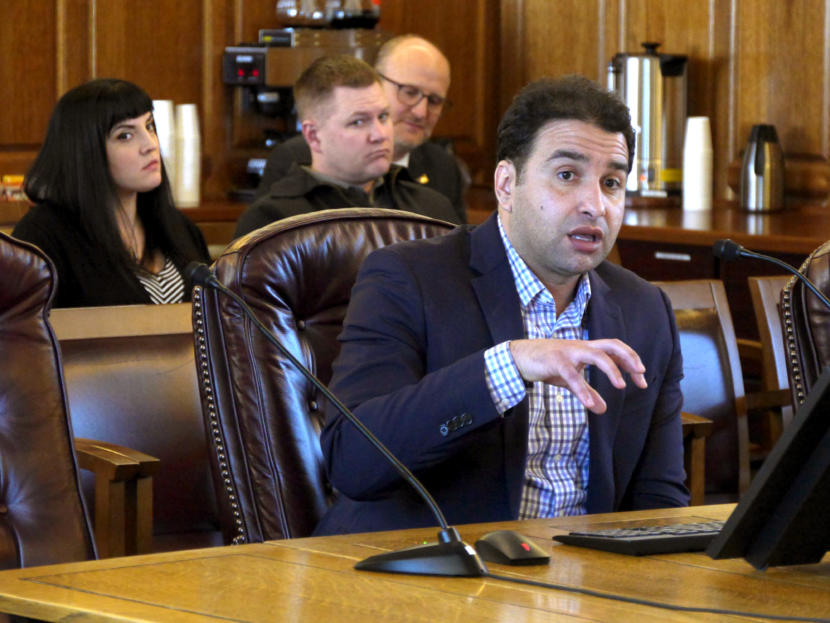
Economist Mouhcine Guettabi, gives a presentation about Alaska’s economic outlook to the House Finance Committee on March 7, 2019. Guettabi is an Associate Professor of Economics at the Institute of Social and Economic Research, University of Alaska Anchorage. (Photo by Skip Gray/360 North)

“I, as all of you, have been referring to the economy as either being frozen or in a coma,” said Institute for Social and Economic Research Economist Mouhcine Guettabi.

During a meeting with state lawmakers last week, he laid out pretty clearly some of the reasons the pandemic closures are expected to have long-lasting effects on businesses in Alaska. 

It’s disrupting the cycle of how some Alaskan businesses generally turn a profit. Because parts of the economy kind of freeze every year. Sutch always has a slow winter, but he adapted.

“I would bank all my wedding money and shoot money in a separate account from my checking account and that’s what would carry me through the winter,” he said.

The thaw is supposed to come with the waves of tourists. The state’s economy gets this big bump in activity in June, July and August. Sutch books destination shoots, weddings, underwater trips and more people come wandering up Seward Street into his shop. 

Guettabi says that’s probably not going to happen — at least not at the same scale this year.

It’s impossible to know exactly how much money is going to be lost this year. Or, to know right now how much was lost during the last month of closures. But, Guettabi pulled last year’s numbers and did some rough estimates about the state’s GDP.

Think of GDP as basically the value of all the goods and services produced in Alaska. 

“GDP for the second quarter, that’s April through June, would be $2 billion less than the previous year, just from the direct effects,” he said.

Direct effects are things like the immediate financial hit taken by retail businesses, hospitality and leisure, transportation. 

If you account for the indirect effects — that’s, all of the places the people directly affected are now not spending money — Guettabi said the GDP is about $4 billion less than last year for the current quarter. Not July and August which, in Juneau, are huge months of economic activity.  

Guettabi also told lawmakers that he hadn’t accounted for the price of oil in his calculations. At last count, a barrel of Alaska North Slope crude was going for less than $9. Guettabi said losses in that industry are going to dwarf the impacts that COVID-19 has had on the state’s GDP. 

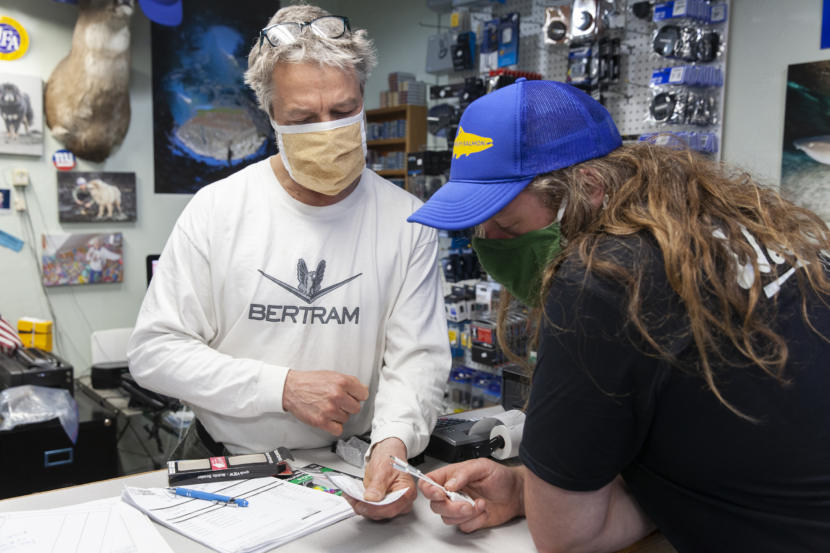
Art Sutch talks to Kyle Willingham about camera card adaptors on Saturday, April 25, 2020, in Juneau, Alaska. Sutch is closing his brick-and-mortar camera shop in downtown Juneau after 25 years in business. (Photo by Rashah McChesney/KTOO)
Art Sutch talks to Kyle Willingham about camera card adaptors on Saturday in Juneau. Willingham and Sutch also talked about fishing together this summer. (Photo by Rashah McChesney/KTOO)

All that is to say that Sutch looked at the numbers and they didn’t add up anymore. 

So he’s packing up and moving out of the store this week. He’ll be working from his home studio. He says he’ll probably have one of the more fun summers he’s had in years because he’ll actually have free time to go and play. Chances to go and shoot more too.

The thing is, the loss of the camera shop downtown is bigger than just the gear he sold.

Sutch is kind of a camera consultant. The phone rings throughout the day, or people just stop into the shop. They want to know how to tweak settings, or why they can’t do certain things. They want advice on which lenses to buy.

Right on cue, the phone rings while he’s talking about closing his shop. He answers. Pauses for a second, then settles in.

“No problem, what’s your question?” he asks.

He waits a minute or two. Then launches into an extremely detailed explanation of how to change a setting on a lens to make it communicate better with a camera. Sutch knows how the industry works and how to fight for customers when they need to get gear repaired. That’s gone too.

He said he and his family will still be in town and he has a message for the community.

“Juneau, I’ll still be around. You can ask questions. You can stop me on the street. I’m not going to be unapproachable,” he said. “And I’ll miss you guys.”

Alaska’s confirmed COVID-19 cases climbed for 6 weeks. On Friday, they stopped.

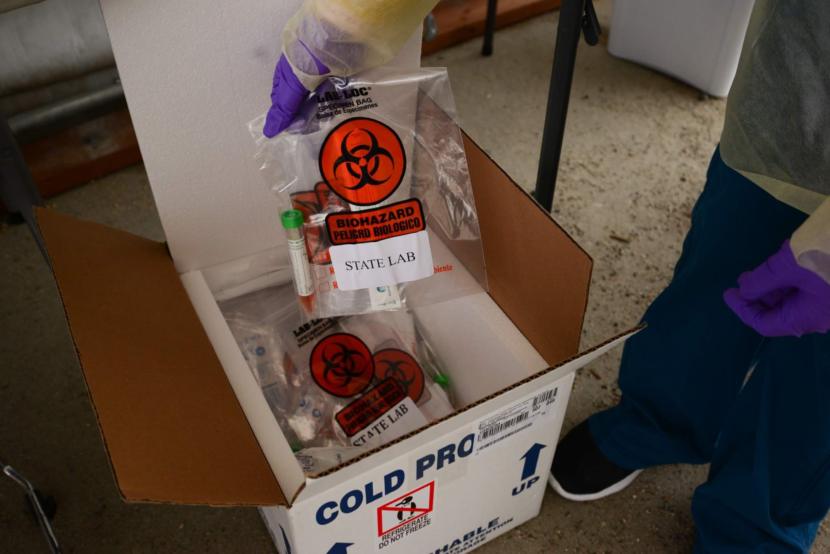
A clinician pulls a sterile COVID-19 screening kit from a box at SEARHC’s drive-up clinic in Sitka on Friday, March 20, 2020. (KCAW photo/Berett Wilber)
A clinician pulls a sterile COVID-19 screening kit from a box at SEARHC’s drive-up clinic in Sitka on Friday, March 20, 2020. A Sitka resident tested positive  (KCAW photo/Berett Wilber)

After 41 straight days of climbing COVID-19 infection numbers, the state of Alaska reported no new confirmed cases of the virus on Friday. 

According to Saturday’s update, which reflects data through Friday, nine more Alaskans have recovered from the virus. That brings the state’s total to 217, or about two-thirds of the 339 people who have been tested positive for the virus. Nine people have died. 

However, the reprieve won’t last, as a resident of a Sitka long-term care center tested positive for the case Saturday. 

Alaska Chief Medical Officer Dr. Anne Zink said in a prepared statement that the zero reported cases Friday are a moment to celebrate. 

“But it doesn’t mean we can let our guard down,” she said.

The state is also reporting that several thousand more tests have been performed than were reported in the past several days, bringing the state’s total to more than 15,700.  

The change is not because of a substantial increase in testing, however. Instead, the Department of Health and Social Services attributed it to a data error in a media release. 

That omission didn’t impact the response to positive test results as each one of those was still reported to state epidemiologists, the department said. 

More Alaskans have recovered from COVID-19 than are currently sick with it, but what does that mean?

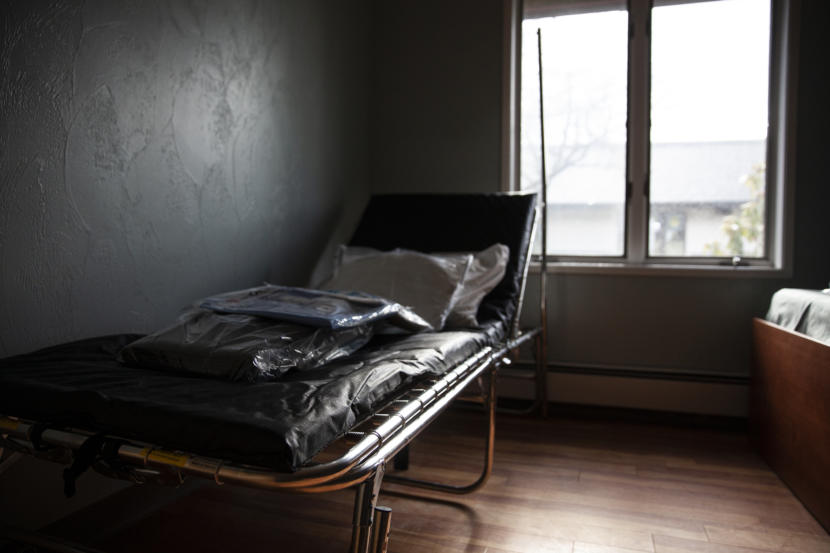
A cot inside of the Rainforest Recovery Center on April 7, 2020 in Juneau, Alaska. City officials converted the drug and alcohol rehabilitation center into an emergency spillover shelter for COVID-19 patients at Bartlett Regional Hospital. The shelter is designed to house patients who don’t need critical medical care. (Photo by Rashah McChesney/KTOO)

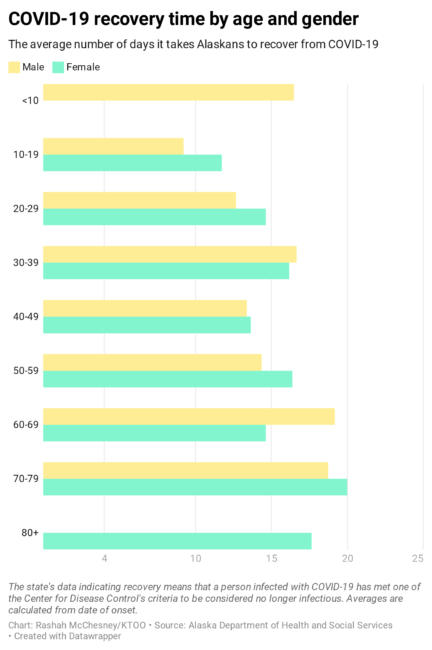
More than 60% of Alaskans who have been diagnosed with COVID-19 have recovered.  

But the state’s data shows that recovering from the virus can take anywhere from four days to more than a month. 

The state’s chief medical officer, Dr. Anne Zink, said there are a couple of explanations for the wide range of times that it takes to get over the virus.  

One, is when a person gets tested.

“Sometimes we see people at the end of their disease, or they’ve been sick for awhile,” Zink said during a Wednesday evening press conference. “That’s when they get tested. That’s what you see in the data by somebody may be diagnosed one day and then five days, six days later they’re cleared.”

Another reason recovery times are so different is that there are two ways that doctors in Alaska decide that someone has officially recovered. 

The state follows guidelines from the Centers for Disease Control and Prevention to determine when someone is no longer infectious. There’s clinical recovery and test-based recovery.

To be clinically declared disease-free — a patient has to be a week from their onset date. That onset date is not necessarily the same as the day a person tests positive for the virus. It’s the date the state determines is when they most likely got sick with the virus. 

So, one week from the onset date — and then 72 hours without symptoms. 

“So if you meet both of those criteria, then you’re clinically clear and recovered,” Zink said.

But, you can also be declared COVID-19 free through testing.  Zink said that takes two separate nasal swabs to see if someone still has the virus. 

“Then, if someone has cleared twice with two negatives that are split 24-hours apart, that’s another way to clear someone,” she said.

So technically, someone can test positive for the virus, then test negative twice in a day and be cleared rapidly. 

On average, it has taken Alaskans a little over two weeks to recover from COVID-19.

Alyse Galvin has outraised Don Young in US House race

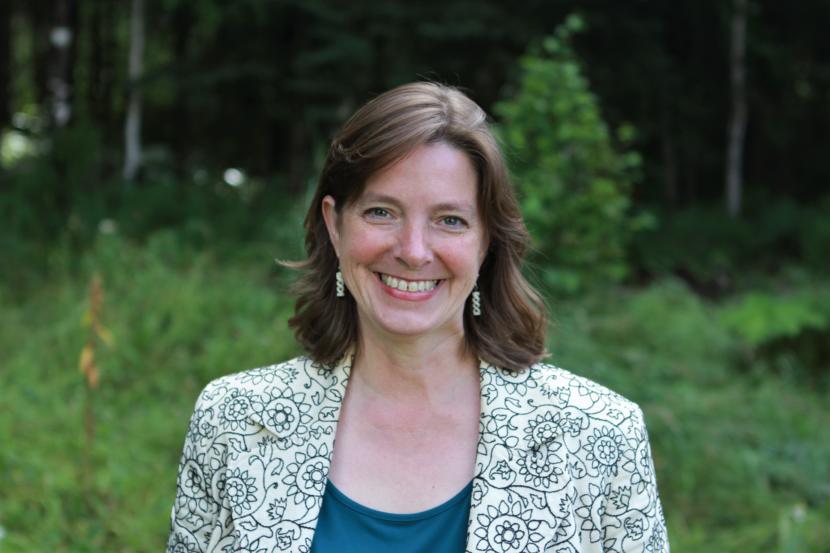
Independent U.S. House candidate Alyse Galvin. (Photo courtesy Emily Russell/Alaska Public Media)

U.S. House candidate Alyse Galvin raised more than twice as much money as incumbent Congressman Don Young during the first three months of the year.

Galvin, an independent endorsed by the Alaska Democratic Party, raised half a million dollars, according to her latest campaign finance report, covering the first quarter.

Young, the most senior Republican in Congress, reports receipts of a little more than $200,000 for the same period. Looking at the whole 2020 campaign, Galvin has also outraised Young, though not as dramatically: $1.3 million versus $1 million.

About 45% of Young’s campaign money comes from other committees, including PACs associated with corporations, unions and trade associations. Galvin has received PAC money, too, from abortion-rights groups and unions, but the contributions amount to less than 3% of her total.

This is Galvin’s second run at Young. She also outraised him in the 2018 campaign, but lost by seven percentage points.

Young’s campaign manager, Truman Reed, said by email that the congressman is hitting his fundraising targets.

Alaska businesses got $922 million from PPP before the federal well ran dry

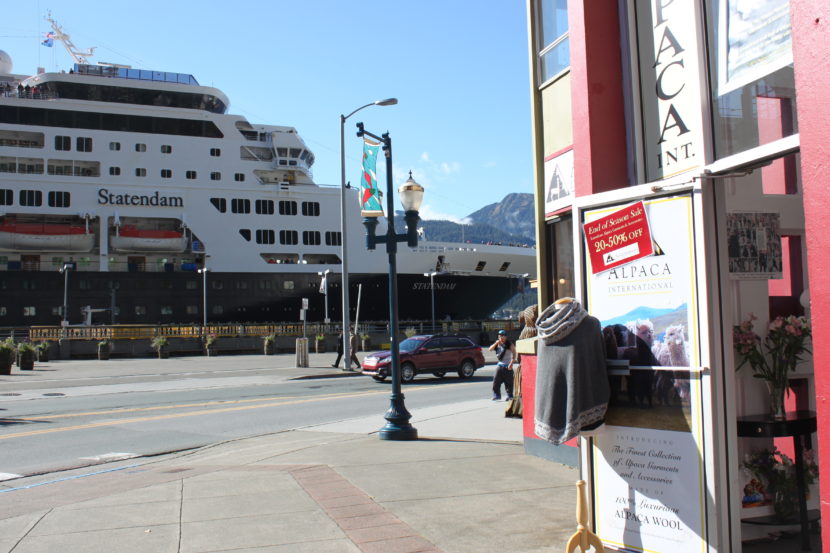
The storefront of Alapaca International in downtown Juneau. Owner Zia Boccacio was one of many who testified about their financial hardship during a townhall with Alaska’s U.S. Senators on Thursday. (File photo/KTOO)

Nearly 5,000 Alaska businesses got money from the the Paycheck Protection Program before the federal loan guarantees hit the statutory limit this week.

The average loan amount was $190,000, for an Alaska total of $922 million, according to the Small Business Administration.

The program, also known as PPP, is a big part of the CARES Act, the coronavirus relief bill Congress passed last month. Thousands of businesses in Alaska have been looking to the low-interest loan program as a lifeline, especially because the loans convert to grants if the money is spent on payroll and other qualifying expenses.

Alaska businesses began getting their PPP disbursements last week. Many more have submitted applications.

Northrim Bank Chief Operating Officer Michael Martin said Thursday that funds are still on the way for some applicants.

“If your loan officer – not just for Northrim, but if any bank has called you and said ‘yes, we do have an authorization ‘… (or) ‘your loan was approved by the SBA,’ then it’s just the workflow of getting the money out into people’s accounts as quickly as possible,” Martin said.

The staff at Northrim and other banks are working long hours and will be disbursing money over the weekend, too, Martin said.

As for the applications that the Small Business Administration did not approve before the money ran out, Martin said the banks will hold on to them. Congress and the Trump administration are talking about another round of funding.

“I know there’s probably great despair or fear or panic for those folks who haven’t heard from their financial institution or who have heard that their application has not been approved, but I think there is more to come on this,” Martin said.

Michael Martin is chief operating officer of Northrim Bank (Photo courtesy Northrim)

SBA District Director Nancy Porzio confirmed PPP applicants don’t need to fill out forms again, but she suggests they contact their bank to ask about their status.

Another coronavirus relief fund that ran dry is the SBA’s Economic Injury Disaster Loans. SBA spokesman Kevin Wynne said people who submitted applications while the website was still accepting them should hold on to their confirmation numbers. If Congress appropriates more money, approved applicants will be in a queue to receive EIDL funds, which may include a $10,000 cash advance.

Alaskans also began receiving direct federal assistance this week. That’s the payment of $1,200 per adult and $500 per child that most Americans will receive.

But many households and business owners have yet to get any financial help from the programs that were suppose to quickly compensate for the economic shutdown.

Zia Boccacio from Juneau said her business, like so many others, is a product of creativity and a lot of hard work.

“For me, personally, it’s my American dream,” she told Alaska’s U.S. senators in the teleconference Thursday. Her voice broke and she apologized. “One that, for no fault of mine, I’ve seen escaping from my hands.”

Site notifications
Update notification options
Subscribe to notifications