I help the newsroom establish daily news priorities and do hands-on editing to ensure a steady stream of breaking and enterprise news for a local and regional audience.
The Juneau police officer who shot and killed a man while responding to a 911 call last month has returned to duty.
Juneau Police Department spokesperson Erann Kalwara said that Officer James Esbenshade is currently assigned to administrative duties. That could be anything from catching up on paperwork to working the front desk at the police station.
“He’s not on patrol, he’s not in uniform,” Kalwara said.
It’s a normal part of the process for Juneau police officers who are involved in a shooting.
“It is healthy for the officer to gradually get back into the position instead of going right back into uniform and patrolling the street,” Kalwara wrote in an email.
Esbenshade has been with the Juneau Police Department for more than a decade. He was responding to a 911 call on Dec. 29 when he encountered Kelly Michael Stephens on Cinema Drive in the Mendenhall Valley.
Police said Stephens threatened to kill Esbenshade and swung a rope with a chain attached to the end at the officer. Police said Esbenshade warned Stephens to stop before he fired one shot, hitting the 34-year-old tattoo artist in the stomach.
Juneau police consulted with Alaska State Troopers investigators after the shooting. However, both Kalwara and a spokesperson for the state troopers said that the Juneau Police Department is leading its own investigation.
That investigation has not been completed. Kalwara said Juneau police plan to hold another press conference when they finish it.
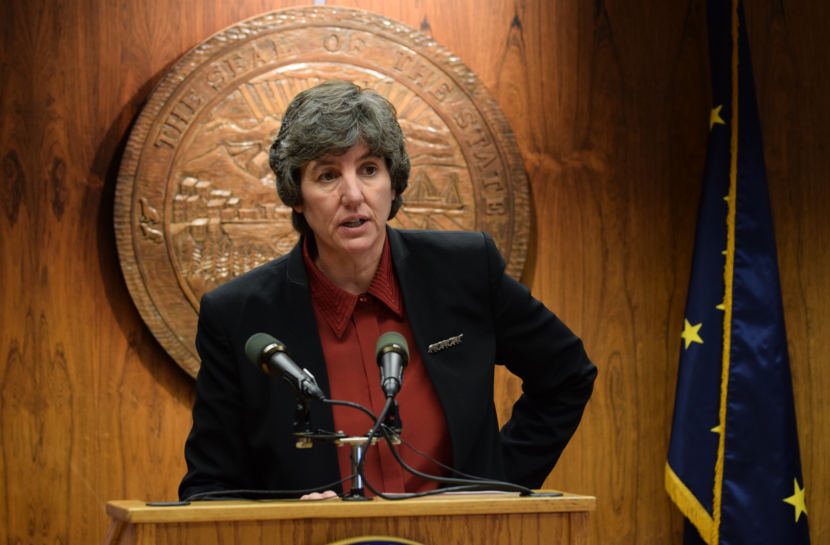
Pat Pitney fields questions from reporters at a press conference called by Gov. Bill Walker, Feb. 5, 2015. (Photo by Skip Gray/360 North)
The Alaska Legislature has found a replacement for longtime finance director, David Teal, who retired last month.
The bipartisan, bicameral Legislative Budget and Audit Committee met on Jan. 24, and announced that they’d hired Juneau resident Pat Pitney.
Pitney will step into the role that Teal held for 22 years.
Rep. Chris Tuck, who chairs the committee, cited Pitney’s extensive experience in state finances in a media release, saying she’d be able to immediately take over for Teal “because she knows the budget process, she knows how the Legislature works and she has the temperament and demeanor to work with people to solve problems.”
Pitney said she’s looking forward to starting her new job and feels well-prepared.
“I’ve worked with the Legislature, you know, pretty much throughout my entire career, starting with the university,” she said. “So it’s nice to be able to continue to serve during this time in Alaska’s fiscal challenge.”
Pitney was former Gov. Bill Walker’s director of the Office of Management and Budget. Before that, she was the point person on the budget for the University of Alaska Fairbanks.
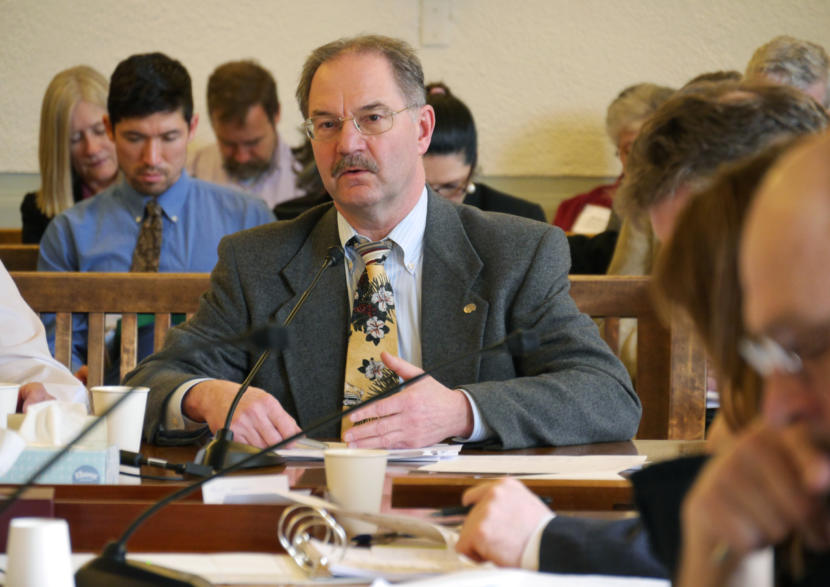
Legislative Finance Director David Teal testifies before the Senate Finance Committee on April 3, 2017. (Photo by Skip Gray/360 North)
Teal has known Pitney for 20 years and said they’ve worked well together. He said she’s well-positioned to continue on the tradition of avoiding taking sides in policy debates.
“I don’t think that Pat’s ever been partisan, so I don’t think she’s going to have any big problem,” he said.
Teal said Pitney is coming into the job at a time when lawmakers are grappling with contentious financial issues.
“I think we all know what the biggest thing is: It’s the dividends versus deficits trade-off, right?” he said.
The finance director doesn’t tell the Legislature what to do; rather, they provide lawmakers with nonpartisan information that they need to make those decisions.
“I don’t want to say we don’t advise, because I think that we do,” Teal said. “When people ask us about something, our answer is never ‘you should do this.’ It’s, ‘OK, here are your options. Here are the pluses and minuses of these options, so make up your mind. We’re not going to do it for you.'”
Teal left in December, well before Pitney was tapped for the role. But, he said if he’d left a note behind when he walked out of his office for the last time — it would have had this advice:
“I think that some of (Legislative) Finance’s credibility depended on being able to be in front of a committee and answer whatever is thrown in front of you and you can’t do that without granular detail,” he said.
That’s a challenge that Pitney said she’s ready to tackle.
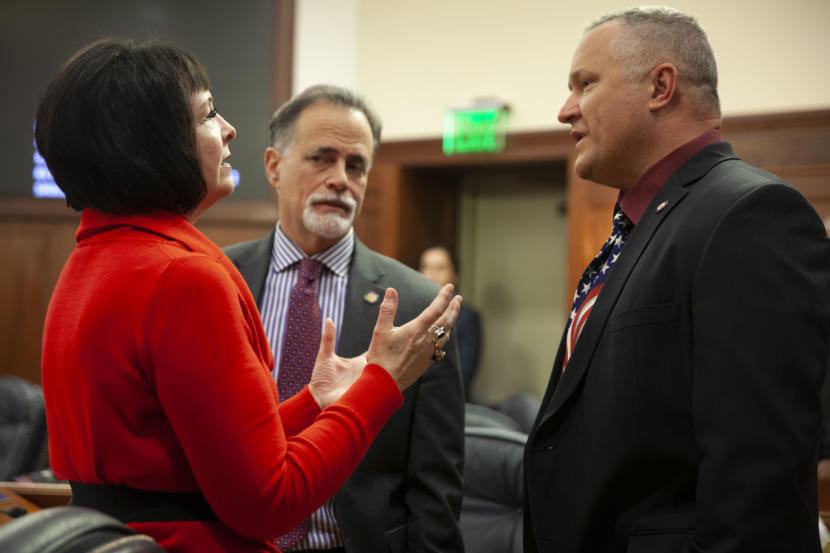
Sens. Shelley Hughes, R-Palmer, Peter Micciche, R-Soldotna, and Mike Shower, R-Wasilla, talk before a floor session on Tuesday, Jan. 21, in Juneau. (Photo by Rashah McChesney/KTOO)
The Alaska Legislature convened in Juneau on Tuesday, Jan. 21. Senate leaders spent the first six hours of the day in closed-door meetings. The full Senate met late in the afternoon and ultimately voted to strip three members of their committee chairmanships.
At its core, the Senate Majority caucus fractured over the permanent fund dividend amount — though none of the members who were stripped of their leadership positions on Tuesday have formally left the caucus.
“We stood for the permanent fund dividend and right now I don’t think it looks all that good for it,” said Wasilla Republican Mike Shower.
Shower, Palmer Republican Shelley Hughes and Eagle River Republican Lora Reinbold broke from their caucus on a vote that set last year’s dividend amount. Each wants a dividend funded under the traditional formula set in state law.
Senate President Cathy Giessel says there are rules to being in the 14-member majority caucus and legislators agree to them when they join.
Senate President Cathy Giessel, R-Anchorage, and Sen. Bert Stedman, R-Sitka, talk before a floor session on Tuesday, Jan. 21, in Juneau. (Photo by Rashah McChesney/KTOO)
“You know, it’s just like sitting in an exit row on a jet. You choose to sit on that exit row. There are rules you have to follow and the flight attendant will ask you, will you comply by the rules? And you have to verbally answer ‘yes’. If you say ‘no’ that’s fine. You just get a different seat on the plane,” Giessel said.
When asked if she is the flight attendant in her metaphor, she said “I guess. Perhaps.”
“I don’t intend to be the flight attendant that says ‘alright you’re going to have to to move’,” she said. “It was actually a leadership decision.”
Those committee leadership positions control legislation and are instrumental brokers of power in the Capitol.
Reinbold says there has been a dramatic shift in power in the Senate.
“I believe this is a defining moment in the history of Alaska, where there’s a major shift to the left,” she said.
This isn’t the first time Reinbold has been punished for voting against the budget. In 2015 while she was a representative, she was stripped of most of her committee assignments after voting against the operating budget in the House.
In 2017, Hughes voted against the budget. She and then-Sen. Mike Dunleavy left the majority in order to do so.
Gov. Mike Dunleavy said in a Tuesday morning interview that it can be difficult for legislators to balance the caucus’s needs against their own.
Senators head into negotiations on Tuesday, Jan. 21, in Juneau. Mike Shower, R-Wasilla, (left) was stripped of most of his committee positions by Senate leadership for violating the rules of the caucus. (Photo by Rashah McChesney/KTOO)
“They owe their loyalty to their constituents,” he said. “The caucus contract was developed to help run business. When the caucus concept runs well, it runs well. It works for everybody. Sometimes it doesn’t. But that’s a decision that, you know, the current Legislature’s going to have to decide if they’re having questions about their caucus system.”
Giessel said after the vote that she’s not expecting any more changes.
KTOO and Alaska Public Media reporter Andrew Kitchenman contributed to this report.
Correction: Sen. Lora Reinbold represents Eagle River which is in Anchorage, not the Matanuska-Susitna Borough. The headline and story have been updated.
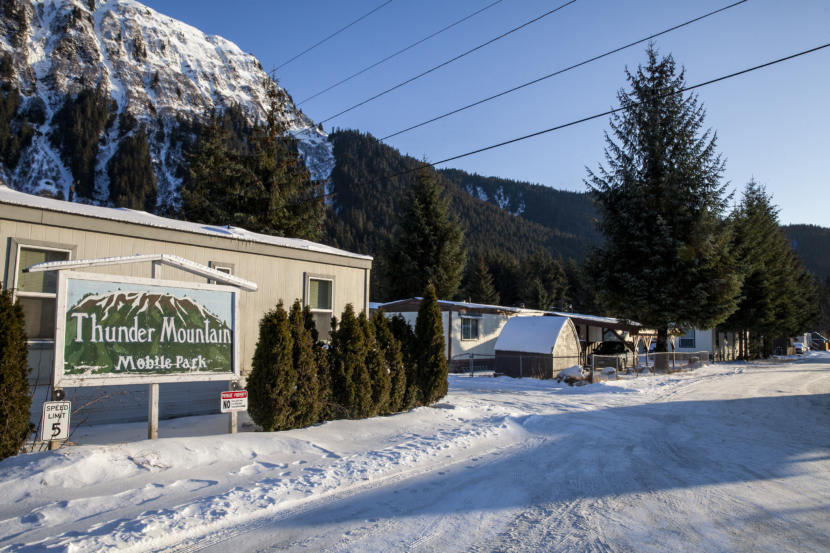
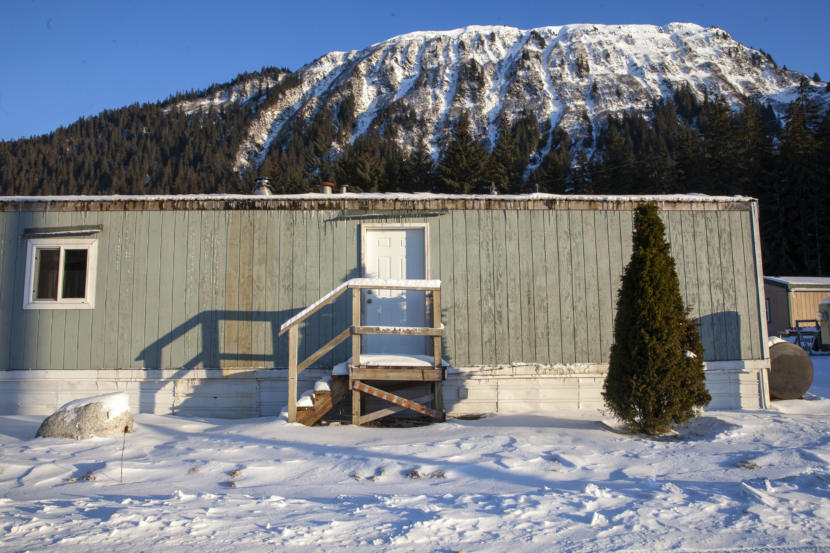
The sun sets on Friday, Jan. 17, at the Thunder Mountain Mobile Park in Juneau. Residents are under a boil water notice after several days of low-pressure. (Photo by Rashah McChesney/KTOO)
On Jan. 12, water pressure at Juneau’s Thunder Mountain mobile home park dropped to a trickle.
It took days to get fixed, and now they have to boil the water to use it. Some residents say they’re frustrated with how the situation was handled.
Lori James lives with her family in the Thunder Mountain Mobile Park. She answers a knock at the door with a quick “just a minute” before her teenage son opens it. Her husband lives there too. She has a 4-year-old grandson in the home, and another granddaughter in diapers lives there as well.
It’s cozy, warm and pleasantly noisy inside as her grandson runs around the kitchen. She points to the stove where she’s been boiling water to make food.
She says living without water — or with water she has to boil — is complicated. But it isn’t the first time, and they’re somewhat prepared. She swings open a cabinet door to show the 5-gallon jugs under her sink. The bottom shelf of the fridge is full of water jugs and juice as well.
But even with that stockpile, there are other problems. She can’t do laundry. It’s hard to stay clean. They were using baby wipes to bathe the kids.
“It was really inconvenient, you know. Sunday afternoon is when the water pressure started going,” she said. “That’s when I said, ‘OK guys that’s it, everybody get your shower.’ Because I know we’re going to be out. We could be out for three days.”
James is talking about Sunday, Jan. 12. That’s when water pressure started to drop in the mobile home park. It got to the point where some residents say they had just a trickle coming through their faucets for days.
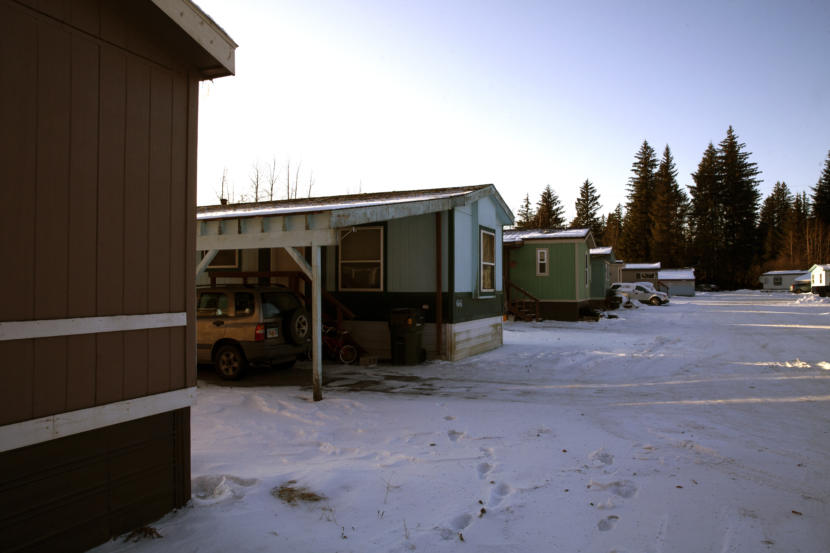
The road outside of Lori James’ home, where residents reported several days of low-flow water followed by a boil water notice on Friday, Jan. 17, at the Thunder Mountain Mobile Park in Juneau. (Photo by Rashah McChesney/KTOO)
To understand what happened, it’s helpful to know that the mobile park is on a self-contained water system.
Wright Services Inc. owns the park and several other properties in Juneau. General Manager Chuck Collins said there are about 100 homes in the mobile park. They’re not connected to city water — it’s all well water. And if one person’s pipes freeze, or there’s a break, it takes just a few hours to drain the holding tanks that supply the whole park.
“Many of us have lived in a home where, if we were taking a shower and somebody flushed the toilet, all of the sudden we get a little hot water burn because the pressure on the cold side went down. Just imagine that on a larger scale, and that’s what we have,” Collins said.
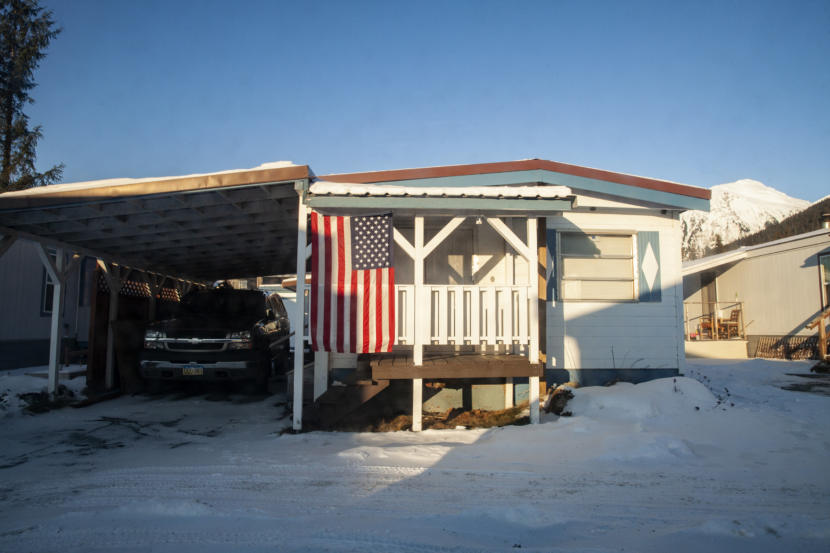
The sun sets on Friday, Jan. 17, at the Thunder Mountain Mobile Park in Juneau. Residents had low water pressure for days and are now under a notice to boil any water they use. The neighborhood is not connected to city water. (Photo by Rashah McChesney/KTOO)
This isn’t the first water disruption that the mobile home park has had, or even the first since Wright Services took over management of the property. Collins said this time there were two leaks, and it took a few days to find and fix them. One of the leaks was just off of a main supply line. He said that’s no individual homeowner’s fault, just a break in a line.
But he said that some residents don’t know how to care for their pipes in the winter.
The city sent out a notice advising homeowners to run their water to keep pipes from freezing. That tip works well in a lot of other places in Juneau, but not in the Thunder Mountain park. It lowers everyone’s water pressure.
The last time there was a major leak at the park was 2018. Wright Services passed out bottled water to residents. Collins said they gave out some shower vouchers to the nearby swimming pool too.
But they didn’t do that this time. He said that’s because technically no one ran out of water.
“This time, everybody always had water so, while nobody is happy with me — and I don’t want to pretend like they are, and I don’t blame them any — they always had water, so they could cook, clean,” Collins said. “You know, it might take an hour to fill a toilet. It’s regrettable. I wouldn’t want anybody to go through that at all. I don’t wish that on anybody.”
The sun sets on Friday, Jan. 17, at the Thunder Mountain Mobile Park in Juneau. Residents had low water pressure for days and are now under a notice to boil any water they use. The general manager for the park owner, Wright Services Inc., said cold weather causes low-flow issues in addition to some residents leaving their water running to keep pipes from freezing. (Photo by Rashah McChesney/KTOO)
That sentiment is deeply frustrating for Angel Brown, another mobile park resident.
She and other residents said they couldn’t do anything with that trickle of water. And it’s the property manager’s responsibility to provide usable water for the residents.
“We still can’t drink it. Cook with it. Brush our teeth with it. Technically wash dishes with it,” Brown said.
Brown has lived in the mobile park for about a decade. When asked about the low water pressure, she went around the back end of her mobile home and pointed to an access panel. There’s insulated skirting around the bottom of her home, and she said there’s heat tape wrapped around her pipes as well.
When she moved in, Brown said the former owner and manager of the park gave her a long lecture on the park’s atypical water system.
“How it’s under pressure, it’s a pressure pump. We have our own well, we’re not on city water and how to maintain that,” she said.
Brown said that since Wright Services took over the park, a lot of new residents have moved in, and she doesn’t think they’re getting the same kind of education about the water system that she did.
Brown said she had to go without a full shower for five days. She’s frustrated because she said she called several times to find out what was going on and felt like she was being brushed off. She talked to people who were on the property trying to find and fix the leaks, and she said they told her that it would be fixed “in an about an hour” three different times.
“I just didn’t feel my concern was being taken seriously,” she said.
Her water pressure is back, but there’s a notice from the state to boil it. That notice was issued by the state’s Department of Environmental Conservation. It’s a precaution — essentially when the water pressure gets as low as it did in the park, the lines can get contaminated.
That notice will be in effect until bacteria testing results come back from the lab. That will likely happen this week.
Brown said she understands that people might think that going without water for a few days is no big deal. But she said that’s not really the point.
“It’s more than inconvenient when it doesn’t work,” she said. “And I’ve been criticized for complaining about a First World problem. But I’m in a First World. I live in a First World. I pay. You know, I bought my trailer. I bought my washer and dryer. I pay lot space rent. I pay for this service, and to have it out for four days is super frustrating.”
Both Brown and James said they want there to be more transparency in the way that Wright Services communicates about water and other issues in the park.
Meanwhile, Collins said there’s the possibility that the park could connect to city water as a backup to its current system. They’re in the early planning stages now, but it will take time and money to integrate the two systems. And it likely won’t happen in 2020.
James has her hands full with her grandkids. And it’s hard to get updates on what’s going on.
She said it would make things a lot easier if the property manager would give out information more quickly — something as simple as a Facebook page for residents to keep them updated about problems.
Unlike Arduin, Steininger is a lifelong Alaskan and has been with the Office of Management and Budget for several years.
Dunleavy spokesperson Jeff Turner sent a written statement saying that Steininger’s experience in finance and state government make him a good choice to run the office. He added that he has the institutional knowledge and relationships with staff to “lead the department through the challenges of creating a sustainable and affordable state budget.”
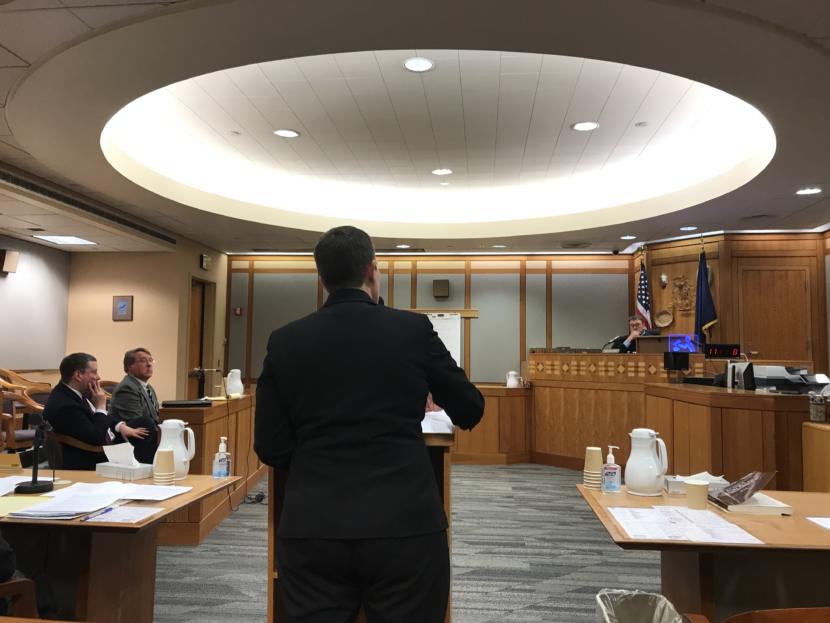
Assistant Attorney General Margaret Paton-Walsh argues in Superior Court on Thursday, as Judge Eric Aarseth, right, and attorneys for Stand Tall with Mike look on. (Photo by Casey Grove/Alaska Public Media)
Anchorage Superior Court Judge Eric Aarseth has once again issued a stay that halts the organization Recall Dunleavy from gathering signatures to hold a recall election, pending a decision from the Alaska Supreme Court. (Read more)
Anchorage Superior Court Judge Eric Aarseth, in his second reversal in as many days, has revoked an order pausing the campaign to recall Alaska Gov. Mike Dunleavy, saying he’d issued it accidentally. (Read more)
Original story
A Superior Court judge in Anchorage issued an order that temporarily halts an effort to recall Gov. Mike Dunleavy.
The order effectively prevents the Recall Dunleavy campaign from gathering signatures until the state’s Supreme Court reviews the case.
The group defending Gov. Dunleavy, Stand Tall With Mike, filed a brief last week telling Anchorage Judge Eric Aarseth that its efforts would be “irreparably harmed without a pause.”
“There are four charges that the Superior Court ruled should go before the voters,” said Craig Richards, Stand Tall With Mike’s attorney. “It simply makes sense that we make sure that those are the ultimate ones that survive before people sign it. Otherwise the validity of the signatures will get muddied.”
Judge Aarseth had ruled in early January that recall proponents should be allowed to gather signatures. He gave the state’s Division of Elections a Feb. 10 deadline to provide the group with petition booklets.
At the time he said “this court does not intend on granting a stay of that process,” according to the Anchorage Daily News.
This ruling runs counter to that statement. But, Richards says he wasn’t surprised by the order.
“Just the nature of how this is teeing up and the very good chance that the Supreme Court will review this rapidly,” he said. “The judge has been very good about getting out all the orders in the case very soon, within almost a day or two of when the requests for them are filed.”
The recall campaign, by Tuesday afternoon, had already filed a motion asking Aarseth to reconsider his ruling, noting that he granted Stand Tall With Mike’s request for a pause without hearing counter-arguments from Recall Dunleavy.
In a prepared statement, Recall Dunleavy’s campaign manager, Claire Pywell, stressed that Aarseth’s order Tuesday did not affect his underlying judgment that the recall grounds were valid.
“Recall Dunleavy intends to pursue all necessary procedures at every level to guarantee that Alaskans will have the opportunity to sign the recall petition as soon as possible,” she said.