Rashah McChesney

Daily News Editor

I help the newsroom establish daily news priorities and do hands-on editing to ensure a steady stream of breaking and enterprise news for a local and regional audience.

LGBTQ activist reports threats and a violent attack on the Kenai Peninsula

Tammie Willis staffing a Pride table during Pride in the Park in 2019 in Soldotna, Alaska. (Photo courtesy Tammie Willis)
Tammie Willis staffs a Pride table during Pride in the Park in 2019 in Soldotna, Alaska. (Photo courtesy Tammie Willis)

A Kenai Peninsula woman is in hiding after a violent assault in her Sterling home.

She said she’s being targeted because she’s gay and wants other people in the LGBTQ community on the Kenai Peninsula to be warned that they could be danger.

The first sign of trouble for Tammie Willis came on Nov. 14. She left a gym in Soldotna and she noticed that a piece of notebook paper had been shoved under the hood of her red pickup truck

She unfolded it to find a profanity-laced note, a homophobic slur and a threat.

Willis said she was shocked, but she didn’t take it seriously.

“I was just like, who does this in this time? It’s 2019. Who is seriously doing this? My wife had to convince me that I needed to take it to the police station,” she said.

(Photo courtesy of Tammie Willis)

She took it to the Soldotna police.

“He took a picture of the letter and told me that it was written by a coward and that cowards rarely follow up on their threats,” Willis said.

But, about a week later she was driving to work along her usual route and she saw a truck parked in the shadows along the road.

“It looked like there was a figure in the back of the truck. And as I approached it, I was trying to kind of get an idea of what the guy was doing in the back of the truck,” Willis said. “I saw him raise his hands over his head and then the next thing I know, my windshield shattered.”

She swerved, got control of the truck and kept driving until she got to Kenai Peninsula College, where she works as the Associate Director of Residence Life. She called the Soldotna police again, this time a different officer responded. Willis said, it felt like she was being stalked. But, the officer she talked to told her it was random.

“That it wasn’t connected to the letter, even though I told him about the letter. His reasoning was that it was dark out and there’s no way that anyone would have known that was my truck if I was being targeted,” she said.

After the note, she’d stopped going to the gym. She changed her habits again after her windshield was shattered. She stopped going to work at the same time every morning. She took different roads to get there.

But, a few weeks later, she was getting ready for work in her home in Sterling. She remembers that she’d just put her shoes on. The power went out. She walked out through her garage to see if her neighbor’s power was out and was pushed back into the garage.

She fell. As she was trying to get up, she felt a burning sensation in her arm. Then something sharp pressed against her chest.

“I grabbed the thing and it turned out that it was a knife that cut my hand,” she said.

The stabbing stopped but then her attacker started punching her. Her head bounced off of the cement. Her glasses flew off. She said the attack lasted for several minutes.

“Then all of the sudden it just stopped and he left,” Willis said.

Her wounds are extensive. It took 20 staples to close the cuts in her left arm. She has stitches in her breast. She has a concussion. Dark purple bruises balloon across her legs, stomach and face.

This time it was Alaska State Troopers who responded. She told them about the note.

They followed the blood trail in her garage and found the knife she was stabbed with.

Trooper spokesperson Ken Marsh said that investigation is still open. No one has been arrested.

Meanwhile, Willis has left her home. Her world has gotten much smaller.

“I feel like I’m always looking over my shoulder. I don’t go anywhere without an escort. In a lot of ways, I feel like I’m in prison because I don’t have have freedom of movement like I used too,” she said.

To her, it’s clear that the note, the windshield, the stabbing — they’re all linked.  Each happened as planning for a local LGBTQ-friendly event called Pride in the Park is ramping up. She’s widely known as an organizer for that event.

She is frustrated with how long the investigations are taking — though she’s careful to say that she doesn’t feel discriminated against by law enforcement. But that frustration boiled over and she made a Facebook post on Christmas Eve. It has been shared almost 6,000 times. Many in the comments are calling it a hate crime.

But, it’s not that clear cut for law enforcement. Soldotna police have already closed their investigations into the first two incidents. They don’t know who did it.

And they didn’t investigate as a hate crime.

“We investigated it as a criminal mischief, the first one with the note would be like a suspicious incident — the other one would be a criminal mischief,” said Soldotna Police Chief Pete Mlynarik.

It’s difficult in Alaska to prosecute a hate crime. In fact, it’s not really a crime you can commit at all. It’s essentially something that gets tacked on to another crime and can affect how harsh a penalty is.

Also, sexual orientation is not protected under state criminal law. The statute lists race, sex, color, creed, physical or mental disability, ancestry or national origin.

All that aside, Willis says she wants queer communities on the Kenai Peninsula to be warned that there’s a threat.

Mlynarik said he’s not ready to do that, in part because it’s not clear if someone has something against Willis specifically or with the whole LGBTQ community.

“To say a whole community is at risk, you know you don’t want to alarm somebody for any reason, regardless of that circumstance or another one if you don’t have all the facts out there,” he said.

Meanwhile, Willis is still — essentially — in hiding. She goes to work at Kenai Peninsula College, but she stays in places where people don’t have easy access to her.

She said she’s in an uncomfortable position — to be so clearly in danger, but also to feel responsible for informing her friends and the queer community on the Kenai Peninsula that they could be in danger.

In response to the attack, Pride in the Park has organized a townhall meeting on Jan. 4 at 2:30 p.m. at the Soldotna Public Library. They’re inviting elected officials and law enforcement and hoping to talk about safety in the LGBTQ community on the Kenai Peninsula.

Murkowski says she’s not sure how she’ll vote on Trump impeachment case

President Donald Trump congratulates U.S. Sen. Lisa Murkowski on passage of a bill to open the coastal plain of the Arctic National Wildlife Refuge to oil drilling. Rep. Don Young and Sen. Dan Sullivan flank Murkowski at the mic. (Video screenshot courtesy White House)
President Donald Trump congratulates U.S. Sen. Lisa Murkowski on passage of a bill to open the coastal plain of the Arctic National Wildlife Refuge to oil drilling. Rep. Don Young and Sen. Dan Sullivan flank Murkowski at the mic.  (Video screenshot courtesy White House)

Sen. Lisa Murkowski, R-Alaska, isn’t saying how she’ll vote on President Trump’s fate when his impeachment case comes to the Senate.

“What I’m going to demand is that the process is full and fair, and what I will tell you is that I will commit to the one oath that I, as a sitting senator, am required to make,” she said.

Murkowski spoke at a luncheon at the Hotel Captain Cook in Anchorage on Friday.

National news outlets often list her among a handful of Republicans who might vote with Democrats on impeachment. Murkowski votes against Trump’s position more than the average Republican senator, and she has criticized the president on occasion. But she describes impeachment as a harsh tool not to be used lightly.

“For those who have already decided that this president should’ve been impeached a long time ago, you all have your right and your views on that. For those who don’t feel he’s done anything wrong, that everything was perfect, you have your right. You have your views on that,” she said.

But Murkowski said she’s in a different category, as one of 100 Americans who will take an oath before deciding the impeachment case.

“I will be asked to say, ‘I will do impartial justice according to the Constitution and laws, so help me God.’ And that is what I’m going to do,” she said.

To remove the president, Democrats would need 20 Republican senators to cross the aisle, and so far, they don’t have any.

Where Murkowski’s independence is more likely to be a factor is in votes on whether to call witnesses. Democrats need only four Republicans to vote with them to prevail on votes about the rules.

Dunleavy’s ferry budget ‘will provide significantly less service’

Angoon
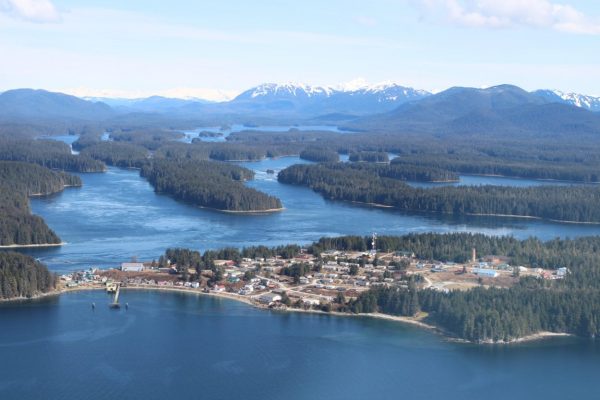
Angoon, pictured here in 2017, is home to about 460 people. Currently, the town relies on a seaplane base for air travel. (Photo by KCAW Raven Radio)

Gov. Mike Dunleavy’s proposed ferry budget would be a slight increase in spending on the Alaska Marine Highway System. But senior state transportation officials warn that long gaps will be the new normal.

“AMHS will provide significantly less services, leaving many communities without service for up to six months,” reads page 6 of the governor’s transportation operating budget released earlier this month.

The $49.9 million appropriation would be slightly more than the previous year. But there will be long lulls between ships.

“Communities will have service gaps. There’s no doubt about that,” said Department of Transportation Deputy Commissioner Mary Siroky. “But I don’t know if a service gap is going to be six months, five months, four months; we don’t have that figured out.”

That’s been the reality for coastal communities on Prince William Sound and smaller Southeast town like Angoon.

Angoon Mayor Joshua Bowen said the city recently hired a private boat to take residents to Juneau for groceries and other supplies. Its 450 residents hadn’t seen a ferry for more than a month.

“We spent $13,100 chartering those two catamarans,” he said.

Some 47 passengers shelled out $75 for a one-way ticket — more than they would’ve for a state ferry — but, that didn’t cover the cost of the charter.

The city lost about $8,000 on the venture. It won’t be repeated any time soon. Bowen said the private sector can’t fill the gaps left by the state ferry service.

“I don’t see it working without some sort of subsidy,” Bowen said. “For the smaller towns that just don’t have the numbers.”

The ferry Tazlina was able to make a couple recent runs to Angoon. But only after the state brought heavy equipment to operate Angoon’s broken ramp.

Normally this isn’t necessary. The ferries LeConte and Aurora are designed to handle these small docks without assistance. But in a cost-cutting move, the state laid up the Aurora rather than fix it. And the LeConte is out for repairs until May.

Siroky said budget realities mean fewer ferries are the new normal.

“There is no way that the marine highway system will be able to provide the kind of service they did the year before this,” she said.

Last year, Dunleavy’s austere budget proposal would have shut down the ferries in October. That didn’t happen. Instead, he reached a deal with lawmakers who slashed ferry funding by $43 million. Legislators later tried to add $5 million back to the ferry budget — Dunleavy vetoed it.

But that initial threat to end ferry service and the compromise budget that’s led to less service has been widely unpopular in coastal communities.

Now the governor’s facing a recall campaign. He’s changed his chief-of-staff, budget director and he’s also changed his tack.

Reporters at the governor’s mansion holiday party in Juneau asked about the state of the ferries. He said that help could be on the way.

“We’re looking at the possibility of getting some help there with $20 million dollars out of the [Legislative Budget & Audit Committee),” the governor said.

The Legislative Budget & Audit Committee reviews budget requests from the executive outside of the normal budget process.

“We’re looking at coming up with some solutions, long-term solutions for the marine highway system,” Dunleavy said. “We know it’s important to the people of Alaska, especially on the coast that use it.”

The Dunleavy administration commissioned a $250,000 private consultant study to remake the Alaska Marine Highway System. It was delivered in October. But the state has pushed back its public release until January.

Siroky couldn’t confirm the governor’s numbers. She said she understands her agency is asking for something closer to $5 million.

“The department is working on a supplemental budget request that I don’t know where that $20 million number came from,” she said.

Meanwhile, Angoon is doing what it can to keep goods and people moving. Bowen said a city-owned excavator is being repaired. The hope is that it can operate the ramp without the state’s help so the Tazlina ferry will be able to return next month.

“We’re not just sitting here feeling sorry for ourselves,” Bowen said. “We’re trying to figure out ways that we can help the state help us. And we understand that it’s, you know, it’s an expensive thing. And, and we’re just trying to do our part to keep the ferries rolling.”

But fewer and fewer ferries are rolling.

The Tazlina is being pulled out of service on January 19 for modifications so it can sail with a smaller crew. That’ll leave just two ferries: the Lituya running between Ketchikan and Metlakatla. And the mainliner Matanuska crisscrossing Southeast.

But that larger ferry can’t get into to coastal towns with small docks: communities like Angoon, Tenakee Springs and Pelican.

Those towns will likely go without service until at least May.

Former adviser to Gov. Bill Walker buys Cook Inlet gas producer for $15 million

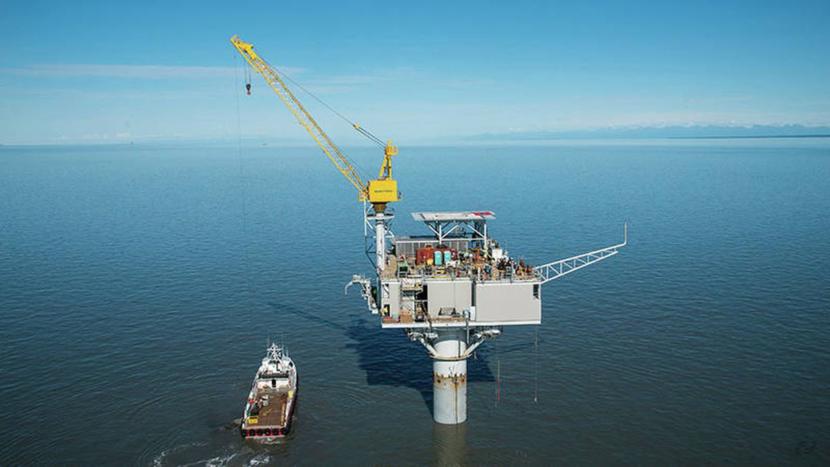
Furie Operating Alaska’s Julius R Platform, installed in 2015 in Cook Inlet. Furie filed for bankruptcy on Aug. 9 and was purchased at a court auction by former Gov. Bill Walker’s oil and gas adviser John Hendrix for $15 million. (Photo courtesy Anchorage Daily News via Furie Operating Alaska)

It appears Furie Operating Alaska LLC will have a new owner but someone who is familiar to Alaska.

Alaska’s Energy Desk reporter Rashah McChesney talked to Alaska Journal of Commerce Reporter Elwood Brehmer about the deal.

Hex LLC won a Dec. 5 bankruptcy auction to purchase the small Cook Inlet natural gas producer for $15 million, according to court filings.

Hex LLC submitted its initial filings for a business license with the state Commerce Department Nov. 23 and is owned by former Gov. Bill Walker’s oil and gas adviser John Hendrix, according to those filings.

Hendrix was general manager of Apache Corp.’s operations in Cook Inlet prior to working in the Walker administration.

Houston-based Apache left Alaska in 2016 as the company prioritized its global operations during the bottom of the downturn in oil prices.

Texas-based Furie filed for Chapter 11 bankruptcy protection Aug. 9 in federal Bankruptcy Court for the District of Delaware. According to the company’s bankruptcy petition, Furie owed lenders approximately $440 million when it filed for Chapter 11 protection and was also owed roughly $105 million in refundable tax credits from the State of Alaska.

Hendrix did not return calls seeking comment in time for this story.

Furie operates the Kitchen Lights Unit in central Cook Inlet and has contracts to supply Homer Electric Association and Enstar Natural Gas. Furie also signed a contract with Chugach Electric Association in 2017 to supply the Anchorage electric utility with firm gas shipments beginning in 2023.

The company installed the Julius R platform in the Kitchen Lights field in 2015, which at the time was the first new development platform the Inlet in several decades.

Furie officials said in 2017 they planned to work on developing oil prospects in the Kitchen Lights gas field, but those plans were largely scuttled because of the state’s delay in repaying millions of dollars in oil and gas tax credits the company earned for its previous work, according to the company’s filings with the state Division of Oil and Gas.

In late 2017, former Natural Resources Commissioner Andy Mack issued a default notice to Furie for allegedly not conducting the work the company claimed it would in prior development plans. Furie’s work in 2018 was sufficient to resolve the default, according to Oil and Gas records.

The financial challenges were nearly continuous for the company, which had net gas sales of $25.4 million and absorbed a net loss of $58.5 million in 2017, according to the bankruptcy filings. The situation worsened in 2018 when the company sold $42.8 million of natural gas but took a loss of nearly $152 million.

Furie lost $21.4 million in the first quarter of 2019, when a freeze-up in a gas production pipeline kept the company from supplying HEA and Enstar with gas for more than a month. Once gas deliveries resumed, Furie was only able to supply Enstar with less-than-contracted amounts for several months as well.

The utilities purchased gas from other area producers and drew on reserves stored in the Cook Inlet Natural Gas Storage Alaska facility commonly known as CINGSA.

Alaska Pipeline Co., a sister company to Enstar under joint owner SEMCO Energy Inc., filed a letter with the bankruptcy court Dec. 17 claiming the company’s rights to secure assurances that Hex LLC can meet the terms of Furie’s gas contract.

The letter states that APC is in discussions with Hex to obtain the assurances it needs that Hex can perform under the contract.

This story was originally published by the Anchorage Daily News and is republished here with permission.

Newscast – Tuesday, Dec. 17, 2019

In this newscast:

  • It’s the deadline for comments on the Roadless Rule,
  • At Alaska Native Heritage Center people representing the Gwich’in, Inupiat, Yu’pik, and Koyukon cultures gather to translate census materials,
  • Bethel elementary school principal accused of online enticement of a minor and transferring obscene material to a minor appeared in court,
  • Alaska Airlines’ embargo on new freight shipments from certain Bush communities has been lifted.

Lawmakers quiz state regulators on $5.6 billion Hilcorp, BP deal

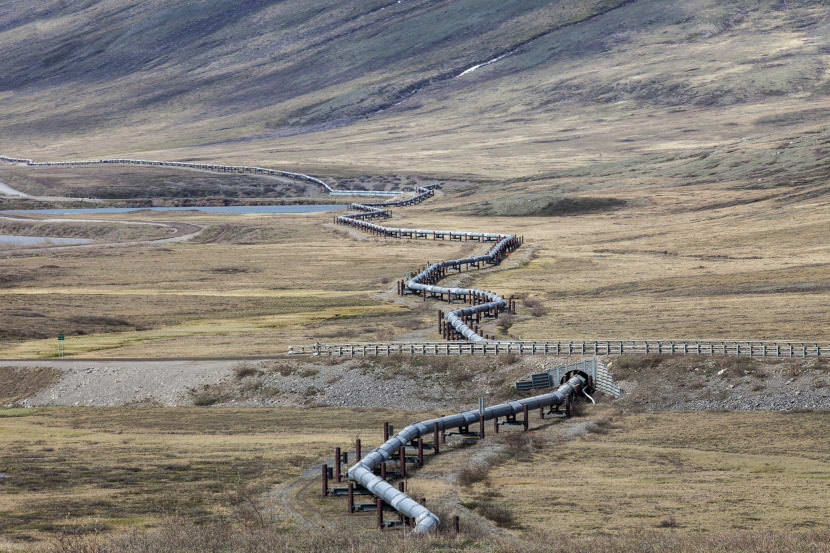
An above-ground section of the Trans-Alaska Pipeline System near the Toolik Lake Research Station in the North Slope Borough. (Photo by Rashah McChesney/Alaska's Energy Desk)
An above-ground section of the Trans-Alaska Pipeline System near the Toolik Lake Research Station in the North Slope Borough. BP is proposing to sell its share in the pipeline to the private, Houston-based company Hilcorp. (Photo by Rashah McChesney/Alaska’s Energy Desk)

Lawmakers had the chance to probe state regulators about the pending sale of BP’s Alaska assets to Hilcorp. 

The $5.6 billion deal was announced in late August, but there are several regulatory hurdles to be cleared at the state and federal level before it can go through. 

Fairbanks Sen. John Coghill chaired the Anchorage meeting.  He said this is the first of many meetings lawmakers will hold to learn more about the sale.

“We’re just now discovering what this deal looks like and the financial assurances. We’re going to be talking about taxes, we’re going to be talking about all kinds of things,” Coghill said. “This was just for us to hear how our state sees this as the state’s best interests, how we’re looking into it, where our legal challenges are, where our economic study needs to fall.”

House and Senate Resources committee members asked about everything from layoffs to whether Hilcorp has the financial resources to manage the assets it wants to take over. 

A lot more than a quarter-stake in the Prudhoe Bay oilfield could change hands. There’s also a 32 percent stake in the Point Thompson gas field on the North Slope, leases in the Arctic National Wildlife Refuge from the Arctic Slope Regional Corporation, and stakes in the Trans-Alaska Pipeline, the Aleyeska Pipeline Service Company and the Valdez terminal. In addition, half of the Milne Point field and the half of the offshore Liberty Project would change hands in the transfer. 

The state has contracted with an economic consulting firm to help model and identify risk in the deal.

Corri Feigi who heads the state’s Department of Natural Resources, said BP and Hilcorp would would like the deal to go through by mid-2020. But, it could take longer.  

“The State of Alaska doesn’t have a timeline or a clock ticking on our review. It will take the time that it takes for the state to undertake its due diligence and get to the point that we can either say ‘this transaction is in the state or the public’s best interest or it is not,'” Feigi said. “We are charged with the responsibility of ensuring that the state and the public interest are protected both in this transaction and then moving forward.”

State regulators say they’re stress-testing the Houston-based company to see if it can handle the financial and operating burden. 

Site notifications
Update notification options
Subscribe to notifications