Rashah McChesney

Daily News Editor

I help the newsroom establish daily news priorities and do hands-on editing to ensure a steady stream of breaking and enterprise news for a local and regional audience.
It’s hurry up and wait for state gasline corporation’s federal permitting schedule

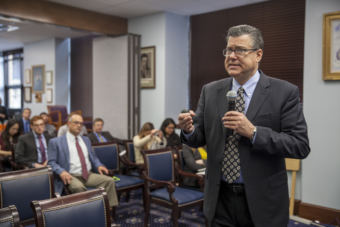
Alaska Gasline Development Corporation President Keith Meyer gives a lunchtime update on the Alaska LNG project on Thursday, January 25, 2018, in Juneau, Alaska. (Photo by Rashah McChesney/Alaska's Energy Desk)
Alaska Gasline Development Corporation President Keith Meyer gives a lunchtime update on the Alaska LNG project on Thursday, January 25, 2018, in Juneau, Alaska. (Photo by Rashah McChesney/Alaska’s Energy Desk)

In mid-January, Alaska’s gasline corporation filed tens of thousands of pages of documents with the Federal Energy Regulatory Commission (FERC).

Now, the state is waiting for the commission to make a decision on if, and when, the state can get to work on its massive liquefied natural gas (LNG) export project.

Last week, the head of Alaska’s gasline corporation landed in Juneau for two days of meetings with lawmakers and updates on the Alaska LNG project.  In between those meetings,  Alaska Gasline Development Corporation (AGDC) President Keith Meyer sat down to answer some questions on the federal permitting process.

In mid-January, the state corporation announced that it finished several months of work filing responses to questions FERC had on its application for the Alaska LNG project. Those questions were on everything from impacts on Alaska native culture to how the project could impact fish in the water bodies it crosses. 

With those answers, the application has ballooned from 36,000 pages that the state corporation filed last year — to a current total just shy of 100,000 pages.

Now, Meyer and the state corporation are hoping that the federal commission will put out a schedule for completing that environmental review. 

And that could happen, or the federal commission could just come back to the state with more questions. 

The state corporation is on a tight deadline to get that permit. Meyer said he wants to start construction in the second half of 2019.  They’re trying to build a facility on the North Slope, an 800-mile long pipeline and a large plant in Southcentral Alaska and bring it online right around 2025.  Meyer calls that a “window” when global natural gas demand is projected to skyrocket. 

And that federal schedule will be packed with public comment periods, outside review of the project, and there will be other federal agencies that want permits. Some analysts have said it could take years to get through that process.

Meyer said he thinks the federal commission can get through an environmental review, on what is likely the largest project in its history, in 11 months.

“We certainly think that’s possible. Where there’s a will there’s a way. So we hope there’s a will,” he said.

That’s because Meyer said huge portions of the projects 800-miles of pipeline have already been studied.

“With this project, the corridor is an existing corridor that we are going down. It already has a pipeline in it. The oil pipeline has a road in it and then we deviate from the pipeline corridor and follow road and rail. So it’s all existing corridors,” he said.

Additionally, the Army Corps of Engineers has been working with the state on another, smaller gas pipeline project.

“It’s basically the same route,” he said.

Meyer said that means the environmental review work doesn’t need to be duplicated.

“What we really want FERC to do is take a look at the work done by the Army Corps and use that as the starting point rather than start everything from scratch,” he said. 

As the state corporation moves forward with its federal regulatory process Meyer says it has also picked up negotiations with the gas producers on the North Slope.

BP, ConocoPhillips and ExxonMobil were originally partnered with the state in developing this project — but pulled out in 2016 citing a tough global market. The companies still control the natural gas on the North Slope, a federal export permit and some of the land needed for the project. The producers have met with Gov. Bill Walker in recent weeks and Meyer said they are motivated to get the pipeline into the ground so they can sell their gas.

“We don’t expect them to be a big investor in the project, but it’s material and we have support from all of them,” he said. “They want to get the gas supply agreements done, as do we.”

There are some other potential snags. The Matanuska-Susitna Borough and City of Valdez are fighting to get the project re-routed.  

But, Meyer says he doesn’t want to change the project now.

“That’s the horse we’ve picked and that’s the one we’re going to ride to the finish,” he said.

Higher oil prices help, but don’t solve the state’s budget problem

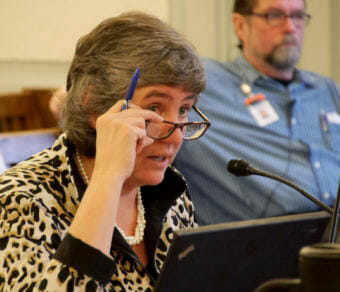
Budget Director Pat Pitney in the Senate Finance Committee, Feb, 3, 2016. (Photo by Skip Gray/360 North)
Pat Pitney, Director, OMB, in Senate Finance, Feb, 3, 2016. (Photo by Skip Gray/360 North)

It’s the year of the budget at the Alaska legislature.

And while lawmakers debate new taxes and drawing from the Permanent Fund, oil prices marched steadily upward in January.  Two days ago, the price of Alaska’s oil jumped up above $70 dollars per barrel for the first time in three years.

And, that’s big news in Juneau. Some senate Republicans point to those rising oil prices as an argument to bolster their reluctance to vote for an income tax.

It’s big news for Alaska too. Because that’s right about the price point when the state starts making nearly $70 million dollars for every dollar the price increases. But that  doesn’t go far when you’re facing a budget deficit in the billions. Sure, the gap between what the state spends and what it makes starts closing faster. And that price is much higher than the $56 per barrel the state projected for the next year. 

State Tax Division Director Ken Alper said if prices stay in that range through next June, the state expects to bring in about $200 million more than previously thought.

“That will cover a little less than one-tenth of the deficit which is estimated at about $2.5 billion,” he said.

That deficit has been hounding lawmakers for years now. They’ve cut the budget. They’ve argued over new taxes. Meanwhile, they’ve been drawing billions out of the state’s savings accounts for the last four years.

“We’re getting near the bottom of the barrel of those funds,” Alper said.

Tax Director Ken Alper
Tax Director Ken Alper with the Department of Revenue speaking on oil tax credits to state lawmakers this February, 2017.  (Photo by Skip Gray/360 North)

Alper said there really isn’t enough money left in those savings accounts to cover the budget deficit for another year.

Alper said lawmakers are realizing that the Permanent Fund’s earnings are the most promising source of money to pay the bills. But spending money from Alaska’s Permanent Fund earnings to pay for state government is unprecedented. And negotiations over how to tap into the Permanent Fund are tense.

Budget gridlock has brought the state to the brink of a shutdown twice in the last three years. 

There is a chance that the legislature could cobble together just enough money to cover next year’s budget deficit without taxing Alaskans or tapping into the Permanent Fund.

It turns out that one of those other savings accounts — the Constitutional Budget Reserve — isn’t completely tapped. It will have about $2.1 billion dollars in it by the end of this fiscal year. Add that to the $200 million the state could bring in from higher oil prices and that budget gap gets much smaller.

But, state budget director Pat Pitney said it would be a bad idea to drain that budget reserve. 

“We don’t want to spend that down to zero. That is the shock-absorber account for the state’s finances,” she said.

Pitney said that budget reserve is the savings account the state uses to cover the gap between when its income rolls in and when it has to pay its bills. It’s basically the state’s cash flow account. Spend that down to zero and if something goes wrong, like widespread damage from an earthquake or a tsunami, there’s nothing to fall back on.

There are a few other places lawmakers could look for more money. But, they could be as politically unpopular as tapping into the Permanent Fund. One would be to drain the $1 billion the state has in the Power Cost Equalization funds — that subsidizes the high cost of rural energy in the state.  The other is about $300 million used to fund merit scholarships for Alaska college students.  

But Pitney said that pulling together one more year of balancing the budget on savings doesn’t solve the problem of the state having a budget that is tied so firmly to oil prices.

“And hoping for the next dollar of oil is, is just putting our future on hold,” she said.

Pitney said the reality of a week or a month of higher oil prices can be totally outweighed by a month of low oil prices. She said the state is past the time when it can hope for oil prices to save it.

Five rules for investment from Alaska’s Permanent Fund Corporation

An Alaska Permanent Fund Corp. sign in the office in Juneau, March 14, 2016. (Photo by Skip Gray/360 North)

Each year, Alaska’s Permanent Fund Corporation invests billions in private companies and risky startups and digs into venture capital. It’s a relatively new and, so far, really successful strategy for making money for Alaska. But, how do they pick the next big winner out of a sea of potential companies?  

Stephen Moseley is just your average fast-talking, New York investment banker type of guy.  Except, he’s not in New York anymore. He’s four hours behind the market in Juneau. 

I visited his blindingly white office in a glass and stone block building, just outside of downtown, where the first thing I noticed was his filing system — manila folders in neat stacks along one wall. The second? A very fancy desk.

He laughed and leaned over to press a button.  “It’s the best thing, isn’t it? not only is it a stand-up desk, it’s electronic.”  As it hummed into an upright position, I asked about his investments.

Moseley is the Director of Private Equity and something called Special Opportunities for the Alaska Permanent Fund Corporation.  And, he agreed to give me a sneak peak into his portfolio.

But, first, a bit of wrangling.

“Well, before I reveal those important secrets, I should ask what sort of…because everyone will copy me,  you know,” he said, laughing. “What are the ground rules. Is this all on the record?”

See, portfolio managers — like fishermen — don’t like to give away their secrets.  They want to show you the big fish they caught; they don’t don’t want to tell you where or how they caught it.

With $11.5 billion in his back pocket, and an eye for risk, you might think it would be a little easier to talk him into investing in your project.

So, I tried. I pitched the idea of delivering fast food, tacos specifically, to people in New York — via drone.

“Well, first, I’d need tacos in my hand to think that through,” Moseley joked.

But then, he quickly changed his mind. “I think there are rules that would actually prevent me from enjoying the tacos,” he said.

So rule one? No bribes.

“We can get tacos some other day, but it doesn’t sell taco investments,” he said.

And, the drones don’t sell it either.

“There’s a lot of cool technology out there in the world,” he said. “Much of it will never be realized, or profitable. We’ve got to think of it first as investors.”

Rule two? It can’t just be a interesting gadget; it’s got to have staying power.  

And, it doesn’t matter how cool Moseley might think drones are, he won’t just funnel money into his favorite things.

“So the emotional reaction has no value,” he said. “There’s even sort of a cost to it, right?”

Rule three? Don’t let your emotions get in the way.

“My wife’s a psychologist she’d be really disappointed to hear me say that emotions don’t matter. Or even that they get in the way,” he said. “But I think that’s the honest reality. Because, not only do we need to find great investments, but we’ve got to sort through all the bad investments. And that’s why the process is so important.”

Ok, so my idea for taco-drones is a dud. But, really it should be. It doesn’t meet any of the markers fund managers look for in a good investment idea.

And while it’s hard to pinpoint exactly what “good” means to Moseley, his team’s portfolio has some big success stories. And, it has made more than $1 billion for the fund.

I asked Moseley’s boss, Permanent Fund Chief Executive Officer Angela Rodell what exactly her team is looking for in an investment idea. 

Alaska Permanent Fund Corporation CEO Angela Rodell stands in the corporation headquarters, Aug. 9, 2017. (Photo by Andrew Kitchenman/KTOO)

She says, right out of the gate, the idea has to be big enough to make a difference in a $63 billion fund. 

So, rule four – Any investment needs to be $25 million or more.

“That’s the low bar,” she said. “I mean we have looked at investments that are lower than that but they have to have sort of other unique qualities to them and by that I mean they’re rapidly scalable.”

So that’s pretty basic.  But, the next hurdles start to sound a lot like fund managers looking for those fishing holes we were talking about earlier.

Like, is the idea in an innovative technology sector? An emerging market? What’s the political situation? How about the regulatory environment?

Fund managers are eyeing global growth.  Rodell says, they’re looking for projects in places they’re expecting  to gain a lot of value in the next few years.

“They are in China, India, Africa, South America,” she said. “They just have characteristics that make it more difficult. They’re more difficult to invest in, from a legal standpoint but they’ve got an interesting aspect.”

Most of these rules are unwritten. One investor told me that as soon as you come up with some hard and fast rules for investing, some good idea or project comes along that breaks all of them.

And, among those unwritten rules, there’s one that’s kind of elusive.  And that’s because it really isn’t one that the Permanent Fund Corporation came up with. It’s more of a house rule.

And that house rule is something that a lot of state-owned funds deal with. I call it “at a state-owned corporation, the legislature reigns supreme.”  That’s a working title.

What it means is that when this state struggles to pay its bills, lawmakers start eyeing the Permanent Fund. Right now, Alaska has a $2.5 billion hole in its budget and it isn’t likely to be filled anytime soon. The legislature has already used most of its savings to cover that gap for the last few years, so there has been a lot of talk of tapping into the Permanent Fund’s investment earnings.  Right now, the Permanent Fund’s investment strategy is to invest in things with long-term returns: five years, 10 years, 20 years. It’s spread out across stocks and bonds and real estate and public and private investments. That kind of diversity is designed to limit loss.

But it isn’t designed to be a short-term piggy bank. So what would the corporation do if the legislature came looking for quick cash?   

“Easy thing to do is to sell stocks,” Rodell said. “It’s very liquid. Or sell bonds. And, if we were all in a private equity portfolio, we wouldn’t be able to do that. It would be very challenging. We could get some portion of it, because it’s not completely illiquid, but it is not designed to react to a short term event.”

Rodell said the possibility that the corporation could need to come up with billions in cash — it fundamentally changes how and what fund managers invest it. It’s something that Rodell has to keep in the back of her mind when the corporation is considering new investments and new strategies.

There is one last rule.  

And, it’s one that Rodell says can be the hardest for fund managers to follow.  

Rule number five is the rule of The Gambler.  

“Knowing when to hold ’em and knowing when to fold ’em, right?” she said. “I hate to go back to ‘The Gambler’ but it really does take a remoteness, you know, and objectivity to also sell because investors obviously can get really attached to some of their investments. At times it’s just the nature of it because you’ve done so much work and due diligence to get into an investment.”

Rodell said there are two types of selling.

The first is when an investment has made all of the money it can for the Fund. 

“Let somebody else try to make money off of it,” she said.

And the second? Well, that’s one that Rodell says can be the hardest for fund managers to deal with. And it’s part of her her job to let them know:  

“This thing is a dog! And it needs to go,” she said.

When an investment tanks, an investor has to know when to cut their losses and walk away.

$63 billion and counting: How long can Alaska’s Permanent Fund keep growing so fast?

The Alaska Permanent Fund Corp.'s exterior sign, March 14, 2016. (Photo by Skip Gray/360 North)
The Alaska Permanent Fund Corporation. (Photo by Skip Gray/360 North)

Alaska owns a massive investment account, and lately, it has been growing rapidly.

In the last fiscal year, Permanent Fund Corporation Chief Executive Officer Angela Rodell said the corporation is up 12.5 percent.

“We made $7 billion dollars,” she said.

Right after the last big global financial crisis in 2008, Alaska’s sovereign wealth fund had about $25 billion dollars in it.  And today, Alaska’s Permanent Fund has $63 billion in it. It doubled in size in less than a decade. 

Rodell highlights two things when she talks about the growth. The first, money grows money. The more you have, the more you make.

The second is a bit more complicated.  The answer starts in 1976.  That was the year Alaskans decided they wanted to put away some of their oil wealth.

Bob Maynard was a young oil and gas attorney with the state, working on the legal language that would eventually create the Permanent Fund.  That language sticks out for him, because it’s one of the first things he brings up when asked about his decades working with and for the Permanent Fund corporation.  

Alaska Permanent Fund Executive Director Angela Rodell at the corporate office, March 14, 2016. (Photo by Skip Gray/360 North)

His big contribution?

“If you look at the opening phrase of the Permanent Fund amendment, it’s grammatically tough. A bunch of us were in the (Attorney General’s) office  arguing about how you phrase that opening phrase. The mineral royalties, rents, etc. There’s no good way to do that.  And, at one point someone put in an Oxford comma …  And, I think I successfully argued to take that out.”

Maynard says he’s actually a fan of the Oxford comma. He just doesn’t like to see it misused.

So, when the fund was first created. The state kept it on a tight leash. Fund managers were only allowed to invest in things that were specifically written into state statute. And that list of things was short, Rodell said, real short.

“The list included bonds, treasury bonds. And that was it,” she said.

Treasury bonds are pretty safe, barring double-digit inflation it’s easy to count on getting your money back. Rodell says there’s nothing wrong with them but with low risk, comes low reward.

Over time the state loosened up the restrictions on investing the Permanent Fund.  It took nearly ten years before managers were allowed to invest in stocks. Several years later, they were allowed to invest outside the U.S.

Maynard says it was a slow opening up to the market.

“Essentially, you’re investing with some hands partly tied behind your back,” he said.

Each time something new was added to that list, the fund took on more complex projects. Then, in 2005, the legislature finally got rid of the list. They replaced it with a mandate to invest responsibly.

This is the second moment Rodell points to as key to the fund’s explosive growth. Finally, investment managers were able to dig into some investments that that were riskier — but, came with greater rewards.

Now, the fund that grew from Alaska’s oil wealth is everywhere: stocks, bonds, real estate, hedge funds, infrastructure. It has also showered money on biotech companies doing cutting-edge drug and cancer research.

And, with each new deal, investors have to become experts in each type of investment.

Maynard spent decades with the Permanent Fund, watching this complex investment strategy unfold. Now, he’s the Chief Investment Officer at Idaho’s Public Employee Retirement System.  He said, so far, Alaska’s Permanent Fund investment managers are holding their own. 

“They keeping up with the competition … they’re in the pack of large, multi-billion dollar institutions and that’s a pretty fast pack,” he said.

But, in the long run, he wonders if the benefits of a complex investment strategy are worth the potential downsides. And, he isn’t just talking about the Permanent Fund, because what they’re doing is pretty standard.

“I tend to be a curmudgeon in the industry … the benefits of complexity have yet to be fully proven,” he said. “The argument for doing that is that the complexity does give a more stable, more broadly diversified platform that, when you have another collapse, the Permanent Fund will not be as exposed.”

But, he said that the more complex an investment strategy gets, the more moving parts, the more likely it is that something could go wrong.

Maynard is hardly the only one thinking about this. Lawmakers and Permanent Fund managers have been talking about this for decades.

But, looking beyond how the fund should be invested, Maynard said there are some built-in stumbling blocks in just being a state-owned fund.

“Just to keep up with the pack, you’ve got to be able to have the resources, the knowledge sources and the internal expertise,” he said.

There has been a lot of turnover at the corporation in the last decade. Maynard said that kind of brain-drain can make it difficult to maintain a complex strategy.

“If you have to continually refresh that expertise because people keep leaving, at some point, you may stumble on that,” he said.

Another potential issue is that all of those investment managers are state employees. Alaska’s in a recession. That means cost-cutting, de facto hiring freezes and travel bans.

And, they have state employee salaries. Some estimates are that Permanent Fund Corporation employees are paid about a quarter of what people in their same positions make in the rest of the country.

There is one final risk to highlight. It’s a big on one on Angela Rodell’s mind. In fact, a lot of people who watch the market are talking about.

“So there’s there’s the nervousness that happens when you’re hitting day after day record values,” she said. “When is this going to go wrong?”

The U.S. has been in this period of steady economic growth. Analysts call it a bull market. That bull has been running for a long time, nearly nine years. It’s the second longest run in history.

That’s when people like Rodell start worrying.

“So clearly, the thing we’re most concerned about is … that this robust market that we’ve all been watching for awhile now is going to have an event, like a tech bubble or a housing bubble,” she said.

That market correction could be incredibly painful for Alaska’s bottom line.
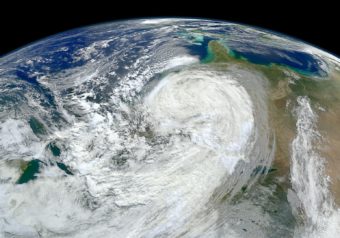
The last time the housing bubble popped, the country slid into a recession and the Permanent Fund took a big hit.   

If the same thing happened again, the fund could lose more than a third of its value.

Is Alaska’s climate risk, a credit risk?

Arctic sea ice is seen from a NASA research aircraft on March 30, 2017, above Greenland. A top Interior Department scientist who tracks Arctic conditions says he was demoted by the Trump administration for speaking out on climate change.
Arctic sea ice is seen from a NASA research aircraft on March 30, 2017, above Greenland.

In late November, one of the world’s largest credit rating agencies announced that climbing global temperatures and rising sea levels would have an economic impact on the U.S. In short, climate change could become a credit rating problem for some U.S. cities and states.

But even though Alaska is warming nearly twice as fast as the rest of the United States and dozens of towns and villages are at risk of destruction — the state’s credit might not be affected.  

From rising sea levels, to droughts and flooding to wildfires and more frequent hurricanes — Moody’s makes it clear that the changing climate can have a very real impact on a budget.

The global credit rating giant put out a climate change impact report in late November. In it, analysts say that if federal, state and local governments don’t adapt and develop strategies to cope with these changes — credit ratings could take a hit.

In Alaska, some of these changes are hugely visible. Villages like Newtok and Shishmaref are losing ground to melting permafrost and erosion. Glaciers are receding. Arctic temperatures are rising. Sea ice is melting. Gov. Bill Walker called the state ‘ground zero’ for climate change.

Moody’s report highlights that Alaska has been more affected by climate change than any other U.S. state.  

But, that doesn’t mean that the state’s climate risk — is a credit risk.  

Deven Mitchell is the State Investment Officer in the Department of Revenue. He handles the state’s credit rating.  He said there’s a difference between an economic perspective, and a human one.

“While it’s obviously devastating if you’re living in a community that’s experiencing erosion and loss of land due to changing climate and your community is in danger of disappearing, well yeah that’s a very important issue to deal with. But from an economic perspective, we’re not generating any revenue from an economy than exists in those communities and so it doesn’t impair our state’s ability to pay its bills,” Mitchell said.

The state’s ability to pay its bills is, really, the only thing that factors into its credit rating. To be clear, Mitchell said he thinks considering the effects of climate change requires a lot of nuance.  And, he isn’t weighing-in as for — or against — state or federal policy around it.

What he is saying is that the Moody’s report is looking at climate change from a purely economic perspective. And when you do that, he said Alaska is in a pretty unique situation. One where the effects of climate change are very, very obvious.  But, the impact on the state’s credit rating is vague.

For instance, if the federal government steps in and helps the villages relocate, Mitchell said that’s revenue.

“If you spend $100 million to relocate Shishmaref or Newtok then that’s going to be money that goes into folks in Alaska’s pocket as they help to accomplish that work,” Mitchell said. “Which is, maybe something from a human perspective you would wish to avoid, but from an economic perspective — could be beneficial.”

There are ways that a changing climate could impact Alaska’s bottom line. 

“If there was going to be something that destroyed the Trans-Alaska pipeline, that’s obviously the state’s biggest exposure from a monetary perspective,” he said.

That doesn’t mean that the state isn’t concerned about the economic impacts of climate change.

The fishing industry is the first thing that Mitchell brings up as a potentially huge problem for Alaska.  

The state has the most productive fishing industry in the country. It generates nearly $6 billion in economic activity in the state, each year. That’s just commercial fishing. That doesn’t factor in guides and sport fishermen and charters.

For Alaskans living in Kodiak, Unalaska or Sitka and King Cove — warming and ocean acidification could drastically alter their traditional fisheries.

“As the ocean changes, what are those impacts going to be? The difficulty is that nobody knows right now, but being aware of it and being aware of how fisheries might evolve is obviously going to be pretty important,” he said.

Mitchell said there are some big unknowns when it comes to the changing climate.  And the state could take a hit financially, but for now it’s credit rating is looking pretty safe.

Walker appoints former Attorney General to Permanent Fund Corporation’s board

Gov. Bill Walker and Lt. Gov. Byron Mallott at Perm Fund Q&A
Gov. Bill Walker, right, and Lt. Gov. Byron Mallott listen to Attorney General Craig Richards as he presents information to lawmakers at a Q&A session with the governor and key cabinet members to discuss plans for reorganizing the Permanent Fund, April 20, 2016. (Photo by Skip Gray/360 North)

A man who helped craft a plan to use Permanent Fund earnings to fund state government, has been appointed to the Permanent Fund Corporation’s board.

Gov. Bill Walker appointed Craig Richards to the board on Dec. 28. 

The board is responsible for setting policy for the corporation. Board members are appointed by the governor. With Richards’ appointment, five of its six members are Walker appointees.

Richards is currently the vice president and general counsel for the Bering Straits Native Corporation. He was also the state’s Attorney General until June of 2016 when he abruptly resigned that post.

Walker credits Richards with helping to develop the Permanent Fund Protection Act. That proposal is currently in front of the legislature. It would use Permanent Fund earnings to fund state government and cap the dividend program.

Richards was previously on the Permanent Fund Corporation board from 2015 to 2016.

He will take over the seat that was held by Larry Cash.

Site notifications
Update notification options
Subscribe to notifications