I help the newsroom establish daily news priorities and do hands-on editing to ensure a steady stream of breaking and enterprise news for a local and regional audience.
An oil rig contracting for BP looms on the horizon at Prudhoe Bay this spring. Oil revenue still makes up the bulk of Alaska’s income, the state’s revenue forecast predicts that oil prices remain too low to cover the state’s budget for the foreseeable future. (Photo by Elizabeth Harball, Alaska’s Energy Desk)
Alaska’s Department of Revenue released its fall revenue sources book on December 12.
Department of Revenue Commissioner Sheldon Fisher sent the book to Gov. Bill Walker’s office. And along with it, he sent a letter saying that while the state is forecasted to make more money this year than it did last year, it is still spending more than it makes.
The state continues to rely heavily on energy to fund government operation. That means oil prices are an important number in in calculating in the state’s future budgets. Next year, the Department forecasts an average price of $56 per barrel.
That’s up slightly from its spring oil price prediction. According to the report, oil markets seem to be stabilizing. The department expects annual prices to hold at about $60 per year for the foreseeable future.
But oil prices would likely need to be at least $90 per barrel to balance the budget next year.
Fisher wrote that he believes using a portion of the Permanent Fund’s investment earnings to pay for state government is necessary to balance the budget.
One bright spot in the prediction is that oil production has increased for the last two years. The Department of Revenue predicts that it will bump up again in 2018, before dropping in 2019.
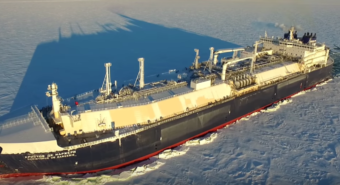
Time lapse video of the Yamal LNG plant construction from Russian natural gas giant Novatek.
A Russian competitor to Alaska’s proposed LNG pipeline loaded its first cargo last week. The trading arm of Malaysia’s Petronas bought its first shipment.
Russian gas giant Novatek reported that Russian President Vladimir Putin traveled to the remote Arctic Yamal Peninsula for the ceremonial opening of the plant.
The $27 billion liquefied natural gas project is heavily funded by partners in China. It is coming online in stages. When completed, it will be almost as large as the Alaska LNG project.
Last week, Alaska Gasline Development Corporation President Keith Meyer said that Russia’s project is competition.
Alaska Gasline Development Corporation President Keith Meyer, Alaska Gov. Bill Walker and Department of Natural Resources Commissioner Andy Mack discuss meetings with potential buyers of Alaska’s LNG during a press conference on Sept. 30, 2016 in Anchorage. (Photo by Rashah McChesney/Alaska’s Energy Desk)
“No question about it. And Russia is close to China, they’re building pipelines,” Meyer said. “So, they will be getting supply from Russia. Russia now has an Arctic project and they’re talked about more.”
But, he said Alaska has an edge.
“When a large utility looks at Russia versus Alaska, again Alaska stands pretty tall from a reliability and certainty standpoint and a supply security standpoint,” Meyer said.
Meyer said Sinopec, a Chinese oil and gas company that has signed an agreement to explore Alaska’s LNG project, also has a deal on a pipeline to deliver gas from Russia.
Alaska Gasline Development Corporation President Keith Meyer, Alaska Gov. Bill Walker and Bank of China Executive Vice President Yingxin Gao, talk during a visit to Beijing where Alaska and China inked a deal to explore building a liquified natural gas pipeline. (Photo courtesy Alaska Governor’s Office)
Over the last several weeks, there have been several announcements from the state’s gas line corporation.
The Alaska Gasline Development Corporation spent at least $2 million marketing Alaska’s megaproject this year. And so far, it has signed agreements to explore the project with potential partners and possible customers in China, South Korea, Japan and Vietnam.
It has spent another $1 million on promotional handouts, trade shows and communications.
But, back in Alaska lawmakers are still pushing for more. They’re asking questions about the money being spent and what may come back in to the state.
The state’s gasline corporation has a transparency problem. It’s either being forced to give up too much information, hurting its chances of being competitive in the global liquefied natural gas market. Or, the corporation with the highest paid state employee at its helm, isn’t disclosing enough about what it’s doing with the state’s money.
This isn’t a new argument. The 40-year history of the Alaska North Slope gas project has become something of a political football, never making it into the end zone. But, it’s communication issue is relatively new since the state got involved as a project partner several years ago.
It came up during a Dec. 7 board of directors meeting.
“You know, it’s interesting to me that you believe, I believe, the board believes, the governor believes, the president believes that this project is real,” said board member Marc Luiken. “And really, China. You know, entities in China, entities in Korea, Japan, Vietnam, believe this project is real.”
He said in Alaska, it seems that people don’t believe the project is real. He said that calls for a deliberate, aggressive communication strategy.
“The commercial effort, the regulatory effort, the engineering effort, are all very important also,” Luiken said. “But we need to help Alaskans believe this project is real.”
But transparency is a fundamental tension of a public corporation. It’s supposed to act like a business. That means some things have to be secret. But, it’s spending the state’s money. That means that some things can’t be secret.
Calls for transparency and more information have gotten louder since the state took over the project from North Slope oil and gas producers a year ago. They’ve gotten so loud that last year, the legislator who helped to create the state corporation, launched an audit of its spending.
Sen. Anna MacKinnon, R-Eagle River, chairs the Senate Finance committee. She said her committee has been asking the same questions for a long time. How much will the state’s gas be worth? And, after all of that debt is paid, what will be left for Alaskans?
So far?
“We are not getting the information that we’ve requested,” MacKinnon said. “You certainly don’t want to show your hand in the cost scenario when you’re negotiating with someone. These are sensitive issues. But the finance committee is going to need to see those numbers.”
Sens. Anna MacKinnon, R-Eagle River and John Coghill, R-North Pole, during the fifth special session of Alaska’s Legislature in the last two years on July 11, 2016 in Juneau. (Photo by Rashah McChesney/Alaska’s Energy Desk)
What’s left over once the owners of the gas and the project financiers take their cut — that’s an important number for lawmakers. It helps them decide whether the pipeline and LNG export project is a good deal for the state.
The state’s share of the profit happens to be one of the few things corporation can play with to cut the price of gas to Asian buyers. Cutting the state’s share lowers the cost to LNG customers and makes it more competitive in a tough market.
MacKinnon said, she wants to see the bottom line.
Putting the state’s money on the line in a multi-billion commercial project, that’s a hard choice for a lot of lawmakers. It’s unfamiliar territory. It’s relatively easy to the see the benefit of putting state money into a highway or a school. Pumping millions, maybe billions, in to a giant risky gasline isn’t as clear cut.
“I want to see that there’s a profitable project here,” MacKinnon said. “And I need some guarantee — from someone that the finance committee believes — that this project can economically benefit the people of Alaska.”
That sentiment of wanting more detailed financial information from the gasline corporation, it’s not universal.
Rep. Geran Tarr, D-Anchorage, said some of the information lawmakers are asking for, it just isn’t possible to know until the final contracts are drawn up.
“At some point we do have to trust that these are professionals that know how to do the day to day management,” Tarr said. “Because really, the state legislature cannot micromanage this project, right?”
That’s not to say that Tarr has no questions for the corporation. But, she’s thinking about ways she can get them answered that won’t require divulging them to the public.
“I’m considering signing a confidentiality agreement so that I can see more of the paperwork,” she said.
Other lawmakers have done it. According to the corporation, Senate Resources chair Cathy Giessel, R-Anchorage, and her staff member Akis Gialopsos have signed them. So has Bruce Tangeman, a staff member for Sen. Pete Kelly, R-Fairbanks. So far, none of them have requested access to any further information, according to an email from the Governor’s office.
But, it’s not likely that the tension over what should be communicated — and what shouldn’t — is going to ease up anytime soon.
That breakdown in communication, it came up again this week.
This past Monday evening, about a dozen lawmakers legislators gathered in person and by phone at a three-hour House Resources Committee meeting in Anchorage, to hear an update from the state corporation. At about 8 p.m., two hours into the meeting, Rep. Lance Pruitt, R-East Anchorage, asked a question.
Not about finances or transparency. This one was about basic project management and construction cost risk.
“What happened to FEED?” Pruitt said.
That’s Front End Engineering and Design. It’s basically all of the homework that has to get done before you start building a project. It’s the final blueprint and every construction detail, schedule and cost estimate. The more time you spend on it, the fewer surprises there are on the test. In this case, Alaska’s final exam grade is based on the risk of construction delays cost overruns.
Before the state took over, this was supposed to be a two-year process that could cost more than $1 billion to get through. At the end of it, project partners would look at the data and make a final go or no go decision.
But, when the state took over, the model changed. Corporation President Keith Meyer said now, instead of doing the engineering and design work in-house they’re planning to wrap it all into the construction bid. Basically, the state will get a final investment decision from its partners. Then it’ll ask for what it wants built, the contractor will engineer the job and put it together.
That didn’t sit well with Pruitt.
“This is a huge, huge change. I mean, I understand what you’re indicating,” Pruitt said. “But, the turnkey might work for an LNG plant. But, we’re talking about an 800 mile pipeline. You can’t turnkey that thing.”
Meyer said there are pros and cons to both models. But, either way, Pruitt said that change should have been communicated clearly.
“We are the decision-makers ultimately. We’re the ones that are going to commit the billions of dollars that are necessary. They’ve got to communicate to us,” he said in a later interview.
So far, all of the state corporation’s agreements have been non-binding. None of the potential partners or customers are spending money to move the project forward. And that leaves lawmakers to decide if they want to put more money into the effort.
But so far, many lawmakers have said they aren’t sure the project is far enough along to merit getting any more money.
Alaska Gov. Bill Walker speaks at a press availability in Anchorage about the recent developments on a Chinese deal for Alaska LNG on Tuesday, Nov. 21, 2017, in Anchorage, Alaska. (Photo by Wesley Early/Alaska Public Media)
Walker, and Alaska Gasline Development Corp. president Keith Meyer, talked about what they hope will come out of the agreement.
Meyer said Alaskans will see significant progress on the proposed gas pipeline mega-project next year.
“There’s going to be trips to China, trips from them to Alaska,” Meyer said. “So a lot of due diligence, a lot of papering. We’ve got a multinational, multi-billion dollar purchase agreement, lending agreement, investment agreement. We’ve got a regulatory process that we’re trying to get through by the end of next year.”
Alaska Gov. Bill Walker peeks out for a photo after a group signs an agreement to study a partnership between China and Alaska to build a gas pipeline megaproject on Nov. 9, 2017, in Beijing, China. (Photo courtesy Alaska Governor’s Office)
The other parties to the agreement are three Chinese government-owned entities that could act as customers, investors, and partial owners of the project.
Under the agreement, Alaska and the China will work together to develop a plan that could make Alaska’s LNG megaproject feasible. That framework gives China the opportunity to take 75 percent of the liquified natural gas produced by the project in exchange for providing 75 percent of the funding to build it.
The remaining portion of the funding to build the project, or about $11 billion, would be paid for by the gasline corporation and its partners. According to a media release, the corporation envisions getting that funding from a combination of Alaska Native Corporations, cities and private investors, issuing tax-exempt bonds and state money.
Meyer said the Chinese partners have visited Alaska and are considering the project carefully.
“They’re down to the point where they’re actually smelling the core samples. These folks are serious about this project. We have an electronic data room that they have spent hundreds of hours in, in due diligence,” he said. “Their government folks have talked to our government folks, not just the state folks but the federal folks to see — is the U.S. going to be receptive? Is the US Congress going to be receptive? And they’ve gotten positive feedback on that.”
The agreement calls for the group to make a final decision to partner on the project by the end of 2018. In its current form, the project is estimated to cost $43 billion to build and could temporarily add 12,000 jobs to Alaska’s economy.
Alaska Public Media’s Wesley Early contributed to this report.
Prudhoe Bay at night on Jan. 28, 2013. (Creative Commons photo by jweston_40)
Last week, during a press conference on a new gas pipeline partnership signed in Beijing, Alaska Gasline Development Corporation President Keith Meyer said he expected to release the agreement documents in a week.
But, Corporation spokesperson Jesse Carlstrom turned down a request for the agreement and emailed that he doesn’t know when it will be made public.
Walker’s administration also signed a memorandum of understanding with PetroVietnam that has not yet been released.
That leaves lawmakers and analysts to speculate on what exactly the mystery-deal could mean for the state.
Scott Shields is an oil and gas consultant from Houston-based Morgan Shields. He’s been in the oil and gas industry for decades, and has worked for Exxon and Enron. And he’s consulted for at least a dozen LNG companies. He said he’s pretty familiar with Alaska’s gasline corporation head Keith Meyer and the mega-project itself.
Shields argued that projects like Alaska’s are all about probability.
“All development projects start low probability,” he said.
And for Alaska’s mega project, there are big hurdles that will lower that probability — make it less likely it will be built. A big one is cost. It’s going to be hugely expensive to build. Right now, estimates are that it’ll cost about $43 billion.
But, Shields said there are other things that raise the odds.
For one, the state is on board. A state-led project can chase down some creative, possibly tax-exempt financing options.
Shields said because the deal is with China, and includes a potential investor, a customer and a business partner, that also increases the project’s chances.
If China-owned corporations are going to invest in the project and buy gas, they might accept a higher price for the gas. The money could come out of one pocket, and go right back into the other.
“It might be a little bit high but i’m also the investor and the investor also gets the uptick from the price, if it is too high,” he said.
After the state signed the agreement, Gov. Bill Walker said this is different from past gasline deals– because it’s high level engagement with the global gas market.
But, this isn’t the state’s first brush with a gasline. There have been projects in the works for decades.
Former Republican lawmaker Mike Hawker left the legislature in 2016. Before that, he’d been in the thick of oil and gas legislation for 14 years. He’s watched a lot of gasline proposals come alive, and fizzle out. He helped create the state’s gasline corporation.
The first thing he said? Stop calling this a deal.
“A deal is a deal when there is the funding in place to move forward to the next stage of the project development … Really getting into the nitty gritty of laying out the plans for the project,” Hawker said.
He’s not convinced that the new agreement is anything to get excited about.
“We don’t have any facts,” he said. “All we have is an allegation made by members of the executive branch members of AGDC that they have some kind of agreement to agree upon something in the future…. I would suggest that that’s pretty indicative that there is no serious progress on this project.”
When there isserious progress, Hawker said, Alaskans will know because the international business and finance communities will be all over it — fighting to be part of a massive economic venture.
There is another potential snag that could lower the probability of the project moving forward- the Alaska legislature. Alaska’s has a multi-billion-dollar hole in its budget and lawmakers are looking for places to cut. Last year, the Senate voted unanimously to strip $50 million from the corporation’s budget. Members of the state House tried to cut its budget too.
They have continued to grill the gasline corporation about how and where and why it’s spending millions of dollars to get the gasline built.
During a recent corporation update to the legislature, Senator Natasha von Imhof, R-Anchorage, said she was frustrated by how difficult it is to get basicinformation on the structure of the project from corporation employees.
She said she finally settled on pulling numbers from publicly available documents and crunching them herself to figure out how much money the corporation has left to spend.
But, after the announcement in China — von Imhof said she applauds Walker and corporation president Keith Meyer for the agreement. She said the international attention is great.
“And so now we’ve just upped the probability a little bit, because we have interest,” she said. “But we’re still pretty low. It just takes time to continue marching forward.”
But even with the better odds, it still might not be enough to convince lawmakers to funnel more money into the gasline project. Von Imhof said it was still to early in the process to allocate more money to the gasline corporation.
It may be early, but Meyer said there are some deadlines for the new pipeline partnership. The state wants a final investment decision by early 2019, so it can get shovels in the ground and bring the pipeline online by 2025.
Alaska Gasline Development Corporation President Keith Meyer, Alaska Gov. Bill Walker and Department of Natural Resources Commissioner Andy Mack discuss meetings with potential buyers of Alaska’s LNG during a press conference on Friday, Sept. 30, 2016 in Anchorage. Walker and Meyer signed an agreement in Beijing to partner with three China-owned entities to advance the project. (Photo by Rashah McChesney/Alaska’s Energy Desk)
Alaska will stay in the lead and continue writing the checks on its gasline megaproject.
But Alaska Gov. Bill Walker and state gasline corporation head Keith Meyer say they are encouraged by a deal they signed in Beijing.
As U.S. President Donald Trump and Chinese President Xi Jinping looked on, Alaska’s trade delegation signed an agreement with a China-owned oil giant Sinopec, in addition to one of the country’s banks and a sovereign wealth fund.
Meyer said the state had been trying to woo companies in China for six months.
“We’ve been through the courtship, we are now engaged,” Meyer said.
The deal links Alaska’s gas pipeline project to Sinopec as a potential buyer, The Bank of China as a potential lender and the Chinese Investment Corp, a sovereign wealth fund, as a potential investor.
An estimated $250 billion in deals and agreements were signed during Trump’s visit to China this week. This is among the largest.
For now, Meyer said Alaska will stay in control of the project — and the state hasn’t asked for any financial help from its new partners. He said the states aims to hammer out a final agreement in a little over a year.
Alaska wants a final investment decision by 2019 so it can break ground and bring the project online by 2025.
Some analysts said that schedule may be too ambitious.
Kerry-Anne Shanks, head of Asia gas and LNG research for Wood Mackenzie, an energy research and consulting company, said it will likely take a few years before the project is ready for a final investment decision.
Larry Persily, former federal pipeline coordinator for Alaska, said the agreement is non-binding and not much different than agreements the state has signed in the past.
“MOU’s, letters of interest, letters of intent — they’re made up names. They’re don’t mean anything, legally,” Persily said. “You could call it a joint development agreement or a MOU or a memorandum of cooperation. I look more at what’s underneath it.”
“Are they going to start paying a share of the development costs? No. Well, okay, that tells me they’re still holding back but they want to learn more.” Persily added.
Hugo Brennan, an Asia analyst for Verisk Maplecroft, wrote in an email that the deal is politically expedient.
“Its non-binding nature gives Sinopec the flexibility to quietly back away from the deal down the line. Beijing is mindful of the need to maintain varied commodity import routes,” Brennan wrote.
There are other hurdles ahead.
Alaska doesn’t control the gas. The top three producers on the North Slope — BP, ConocoPhillips and ExxonMobil — do.
Until last year, those three companies were partnered with the state in developing the pipeline. But they stopped pursuing the project and let the state take over. At the time, they cited unfavorable market conditions.
Even though their gas is crucial for a final project, Walker said they didn’t have much to do with the deal with China.
“This agreement is for an infrastructure project and the producers absolutely transitioned over to us in February of 2016,” Walker said. “So the producers don’t really have a role in the infrastructure portion of this. We’ll certainly continue to negotiate with them on the gas offtake, without question.”
Dawn Patience at BP wrote in an email that the company looks forward to understanding the terms of the agreement and the role envisioned for gas resource owners. Natalie Lowman at ConocoPhillips emailed that the company supports the state’s plan to try and push the project forward — and it intends to sell its gas.
At ExxonMobil, Aaron Stryk wrote in an email that the announcement from China could create opportunities to sell Alaska’s gas.
“We look forward to further discussions with the state and AGDC to understand the details of the announcement and progressing mutually agreeable terms for a gas sale and purchase agreement,” Stryk wrote.
The state’s gasline corporation has had an increasingly troubled relationship with Alaska’s legislature, which funnels money into the corporation and the project.
Last year, lawmakers in the House and Senate attempted to defund the agency and cut its budget. They also have repeatedly asked for more information and transparency from the state-run project.
Sen. Cathy Giessel, R-Anchorage, who heads the powerful Senate Resources Committee, said she still needs more details.
“I take the role, in this scenario, of a loan officer at a credit union,” Giessel said, “and you come to me with this great idea with lots of backup, and my answer to you is, ‘boy that sounds like a great idea — I’m going to dig into the details and we’ll talk again.’”
After the announcement and a closed-door briefing Wednesday, some lawmakers sounded more optimistic.
Rep. Geran Tarr, D-Anchorage, said the deal is a positive step. Tarr heads the House Resources Committee, and while she said she is encouraged, she’s not sure the deal is enough to convince the legislature to funnel more money into the gasline corporation.
“I think at this point the feeling in the legislature is the remaining $70-80 million is what AGDC has to work with to get to a decision point,” Tarr said.
A substantive deal on the state-run gasline project could be a game-changer for Alaska’s struggling oil-based economy. The pipeline would cost at least $43 billion dollars to build and its construction would temporarily add thousands of jobs to the state’s economy.
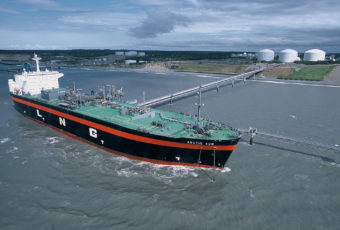
The more than 800-mile-long pipeline would connect two oceans, piping natural gas from Prudhoe Bay to the Kenai Peninsula before liquefying it, loading it onto tankers and shipping it to Asia.
Editor’s note: A previous version of this story incorrectly described the form the natural gas from Prudhoe Bay would be in, as it is shipped down the pipeline. It would not be converted to LNG until it reached the Kenai Peninsula.
Close
Update notification options
Subscribe to notifications
Subscribe
Get notifications about news related to the topics you care about. You can unsubscribe anytime.