Sheli DeLaney

KTOO

Garden Talk: March 2, 2022

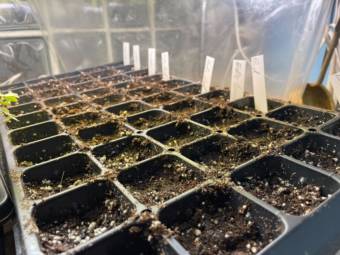
On this week’s episode of Garden Talk, Ed Buyarski reminds us that it’s time to start seeds for spring and summer planting. He shares tips on seed selection, lighting, and transplanting.

Family, friends to host fundraiser for Juneau business owner recovering from emergency surgeries

Flyer with details of the fundraiser for Maria Bailey (Image courtesy of the Black Awareness Association of Juneau)

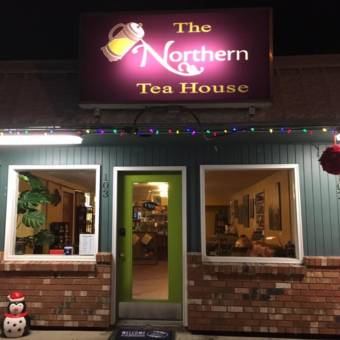
Family and friends of Maria Bailey, “tea mistress” of the Northern Tea House in Juneau, are asking the community for help. Bailey was medevaced to Anchorage on Sept. 18 after she suddenly collapsed while closing down her shop.

At the hospital, it was discovered that Bailey had suffered a thoracic aorta dissection and needed two emergency surgeries. Due to COVID-19 protocols in place, visitors are restricted, but family members in Juneau connected with the care team and received regular updates.

Tasha Bailey, Maria Bailey’s sister-in-law, said Maria is now in a physical therapy and recovery unit.

“She responded to verbal commands and gave the thumbs up,” Tasha Bailey said.

However, the prognosis and timeline for her recovery is currently unknown. For that reason, family and friends are holding a fundraiser this weekend to help offset the medical expenses.

“It first started off just as let’s do a dessert auction. Everybody loves dessert,” Tasha Bailey said. “And so I reached out to a lot of our local businesses and they graciously donated dessert, and then the word got out and people asked to donate more … and so because it got so big, we’ve moved it to an online auction.”

This weekend’s fundraiser is one of many efforts made by family and friends to raise and manage funds for Maria’s expenses. Tasha Bailey says she’s grateful for all of the help.

“You know, this is why we live in this community because they show out their support for their community members and their local businesses,” Tasha Bailey said.

The virtual dessert and silent auction to benefit Maria’s recovery will take place this Saturday from noon until 5 p.m. Participants can bid and donate online, or visit the Northern Tea House at 9310 Glacier Highway to view items in person.

Maria Bailey is also a part of the team that produces the series “Culture Rich Conversations” on KTOO’s Juneau Afternoon. Along with other members of the Black Awareness Association of Juneau, Maria has helped to host, facilitate, edit and book guests on the show.

In her latest project, Juneau artist Lily Hope will mentor weavers and address threats to use of traditional materials

Lily Hope, winner of the SHIFT: Transformative Change and Indigenous Arts award from the Native Arts and Cultures Foundation (Photo credit: @SydneyAkagiPhoto)

Chilkat weaver Lily Hope is one of 15 people to win a $100,000 SHIFT award. The Transformative Change and Indigenous Arts Award is a new program from the Native Arts and Cultures Foundation.

Hope is mentoring weavers and addressing Indigenous land sovereignty in her project and will split the funds with her partner organization Goldbelt Heritage Foundation.

KTOO’s Sheli DeLaney sat down with Hope to find out more about her project.

Read a transcript of the conversation with minor edits for clarity.

Sheli DeLaney: Hi, Lily.

Lily Hope: Hi, thanks for having me.

Sheli DeLaney: Would you please tell me about the grant that you were recently awarded by Native Arts and Culture Foundation?

Lily Hope: My project is “Protecting the Material Sovereignty of Our Indigenous Homelands.” And my work is to find someone to fill my shoes, but also to navigate the climate change and hunting restrictions that we have here in Southeast Alaska — with the cedar stands that are freezing to death, essentially, and the mountain goat that we can only hunt during a short window of time, with a smaller volume of hair. We have been making Chilkat dancing blankets for hundreds of years, using mountain goat hair and cedar bark. It’s pretty difficult to hunt a mountain goat, that’s one thing. But the other part is that we are allowed to hunt in the fall time before our mountain goats have built up a winter bulk of hair, which means we have to kill more goats to get the same volume of hair that we would have gotten if we killed a single or two in the springtime. So my hope is that we can negotiate with the powers that be to allow us and Indigenous hunting rights outside of our Department of Fish and Game parameters.
Mountain goat fleece and yellow ceder root being prepared for warp (Photo credit: @SydneyAkagiPhoto

Sheli DeLaney: The other part of your project will focus on mentorship. Who are the weavers that will be learning from you?

Lily Hope: That isn’t public knowledge yet. There are a couple of weavers who have pretty much proven themselves in self drive. And I’ll say that that is one of the top things that I look for now in apprentices. Those two weavers are working every day in the art form in Chilkat, and I’m excited to partner with them.

Sheli DeLaney: So how does this award, this grant, rank among some of the other accolades you’ve received in your career?

Lily Hope: It is the largest dollar value grant that I’ve ever received. It’s blowing my mind, and I spontaneously break into gratitude tears on the regular.

Sheli DeLaney: What are some of the challenges you foresee as you complete your projects?

Lily Hope: Accessibility and sheer volume of hours of processing the work. Not just getting the hide off the mountain, but how many hours are we going to spend fermenting the hide and then hand-pulling it off of the hide and then brushing it, washing it, carding it — like, all the things. My impetus to go back and try out mountain goat — because I haven’t done it in my lifetime, that I know of, in this life — my impetus to go back to that mountain goat and really make a whole Chilkat dancing blanket purely of mountain goat and yellow cedar is that Teri Rofkar’s DNA robe that she finished in 2016, 2014? The robe she finished that was completely made of mountain goat has a second skin feeling when you drape it on your shoulders. It wants to be danced, it wants to be worn by human beings, it wants to come alive.

Lily Hope, winner of the SHIFT: Transformative Change and Indigenous Arts award from the Native Arts and Cultures Foundation (Photo credit: @SydneyAkagiPhoto)

Sheli DeLaney: Do you think that is something that you will achieve as an outcome of this project? Or maybe just get a step closer to?

Lily Hope: I’m not going to add anything else to this project. But yes, I hope that we secure enough hunting allowances and protect enough cedar, or amass enough cedar, I don’t know, to make that a possibility in the next five years. And if we if we can’t secure the goats that we need, what is the alternative? Is there one?

Sheli DeLaney: Do you expect pushback or resistance from some of the bureaucracies that you’ll have to engage with?

Lily Hope: I don’t anticipate a lot of pushback. I think of myself as a pretty decent negotiator and/or listener. And I believe in the goodness of people, and that when we’re asking for things, we’re really expanding our relationships as we move through this work. So I feel like Teri Rofkar has already built a relationship and that the precedent has been set for her and a couple of other hunters in Sitka, Alaska to go up and get these goats. So I feel like it’ll be kind of like picking up where my clan sister left off. Hopefully. I’m hopeful. I’m Lily Hope, and I’m hopeful.

Juneau poetry event spotlights forced displacement of Native people

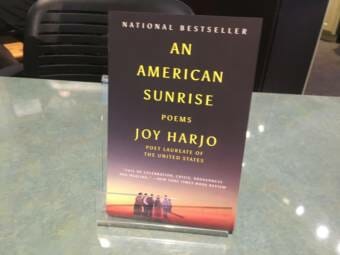
Free copies of “An American Sunrise” by Joy Harjo at the Juneau-Douglas City Museum (Sheli DeLaney/KTOO)

Juneau Public Libraries has selected “An American Sunrise” by Joy Harjo for its Big Read program — a kind of community-wide book club.

The launch event at the Juneau-Douglas City Museum featured samples of Harjo’s poetry read out loud and one of the last chances to view the “Echoes of War” exhibit about the internment camp at Funter Bay.

A storm raged outside but it didn’t stop determined, dripping patrons from tromping into the City Museum to celebrate the poetry of Joy Harjo, the first Native American U.S. poet laureate.

“I’ve read Joy Harjo before, I was really interested in her new book of poetry,” said Keira Koch, one of the first attendees to arrive at the event. “And I’ve never been to the City Museum because of COVID and the pandemic, so I thought this was a great way to get some Joy Harjo in but also visit a place I haven’t been.”

Because of the pandemic, the museum wanted to avoid gathering people inside to hear readings of Harjo’s poetry. Instead, they created a “soundscape” of her poems to play on a loop through the overhead speakers. The soundscape featured 22 recordings of poems from An American Sunrise, recited aloud by local writers, actors and artists.

Jared Olin, an actor who recorded a Joy Harjo poem for the event’s soundscape (Sheli DeLaney/KTOO)

Jared Olin is an actor who is currently doing an artistic apprenticeship at Perseverance Theater. He recorded a reading of the poem “Beyond” in Harjo’s native language of Mvskoke (Muscogee).

“I took a course on her native language,” Olin said. “My native language is Denaakk’e and that’s of the Koyukon-Athabascan people, and we have the same pronunciations, we have the same sounds in our languages.”

The soundscape of “An American Sunrise” was not only a celebration of Harjo’s poetry, it was also meant to augment the exhibit “Echoes of War: Unangax̂ Internment During WWII,” now in its final days at the City Museum.

“Echoes of War” told the largely ignored story of Unangax̂ people who were forcibly removed from the Pribilof islands and held at Funter Bay in Southeast Alaska from 1942-44.

The poems and the exhibit both spotlight the history of forced displacement of Native people.

Jonas Lamb teaches English at the University of Alaska Southeast.

“I just caught the tail end of a poem that was speaking to these green hills, which reminded me of our rainy landscape here, thinking about how foreign that could have been to the Unangax̂ people who were displaced here or relocated here.” he observed.

Lamb joined the libraries’ effort in order to introduce his first-year students to Harjo’s poetry as well as the history of the Unangax̂ internment.

“Harjo’s work really explores this idea of just being dispossessed of your land and of your culture and of the place where you draw strength,” he added.

Free copies of “An American Sunrise” are available at all three locations of Juneau Public Libraries. The audiobook can be checked out on the libraries’ mobile app — it’s read by the author herself.

The last day to view the “Echoes of War” exhibit is Saturday, Oct. 16.
Show interrupted: Juneau artist Mercedes Muñoz finds success online after COVID shuts down exhibits

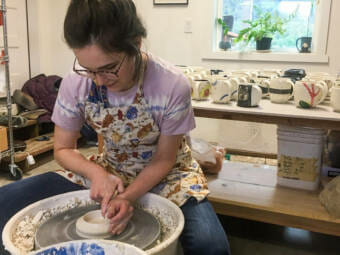
Mercedes Muñoz works at a pottery wheel in her home studio. (Sheli DeLaney/KTOO)

When the COVID-19 pandemic cut her last gallery show short in 2020, a Juneau illustrator and ceramics artist turned to social media to exhibit her work.

Now, Mercedes Muñoz is selling out to fans all over the nation.

Her studio is in Lena Cove, on a quiet street about 25 minutes from downtown Juneau. It’s a serene setting, with trees and salmonberry bushes all around and a great view of the water. Her wheel is in the center of the space, surrounded by shelves packed with neat rows of glazed pottery. Muñoz works primarily with porcelain, so her finished pieces are mostly white. But much of her work is decorated with cheerful illustrations, like ocean waves, fruit slices and even a dog’s backside.

“Porcelain is this really white, beautiful clay body that lends itself to detailed illustration,” she said. “And the end result allows me to take a functional form, and my love of illustration as well, and really meld those two mediums together.”

Once the illustration is etched onto the clay, Muñoz adds more texture and color.

“I paint [wax resist] on the areas where I don’t want glaze to stick to,” she said. “Sometimes when I do the clear glaze over it, it can get a little bit more blurry. So I’ve been really into that juxtaposition of the bare porcelain with the glazed surface.”

She points out how this technique was used on one of her finished pieces, a small ceramic platter. It’s smooth and shiny, except where little watermelon slices have been painted bright pink and green on the parts without glaze. The end result really pops against the white background.

Mercedes Muñoz points out the different textures in one of her finished pieces, a white porcelain platter decorated with painted watermelon slices (Sheli DeLaney/KTOO)

Muñoz’s last exhibit in Juneau was cut short by the pandemic. Ever since, she has been focused on growing her digital presence. She started by creating a website, then posting photos and videos to Instagram. Muñoz used these platforms to promote her work, and also her local partnerships. Amalga Distillery commissioned mugs for their (sold out) Neighborhood Hygge Kits.

https://www.instagram.com/p/CEsgRTZj06K/

She was awarded an Adaptation and Innovation grant from the Alaska State Council on the Arts for artists who have had to change the way they practice in response to the pandemic. She used it to collaborate with Juneau photographer Nathan Kelley. He made a series of short artist films that showcased Muñoz’ work and her process. All of this added to her growing online profile. At some point along the way, she gained almost 2,000 followers on Instagram.

Whenever Muñoz releases a small batch of her work online, it sells out. Quickly.

“Since I’ve been doing it virtually, it’s been almost a year now, and I’ve been releasing small bodies of work every few months. And now, still delivering a lot of work throughout Juneau but I’ve started shipping outside of Juneau and all over the country too,” she said. “So it’s been a whirlwind and so exciting and such a lemonade out of lemons situation for me.”

People waiting in line outside of Mercedes Muñoz Ceramics at her in-person release on July 24, 2021. (Sheli DeLaney/KTOO)

On the day of her first in-person show after more than a year, parked cars crowded both sides of the road, and a long line of people stood in her driveway. Shoppers in masks were allowed to enter an open tent in small groups to allow for distancing.

The show opened at 10 a.m., but Christina Schulte was in line by 9:30 a.m., fully aware of how quickly items could go and not wanting to miss out. And a lot of other people showed up early, too, willing to stand in the rain and wait their turns.

Schulte said she has tried to buy pieces from Muñoz’ virtual releases.

“Her online shows have all sold out in about two minutes,” Schulte said. “You have to be super ready to just hit refresh until you can buy the one thing you want and just hope that you get it because sometimes it will sell out from under you.”

Christina Schulte (left) and Karinne Wiebold (right) had their hands full of purchases after viewing work from the new release by Mercedes Muñoz on July 24, 2021. (Sheli DeLaney/KTOO)

It appeared that Muñoz’s analogue release was no exception.

Sales were brisk, and the following Monday a post from her Instagram account announced that even though this was the largest body of work she had ever released, there wasn’t a single piece left. This show, too, had sold out.

https://www.instagram.com/p/CRzCaOLoc2f/?utm_source=ig_web_copy_link

Site notifications
Update notification options
Subscribe to notifications