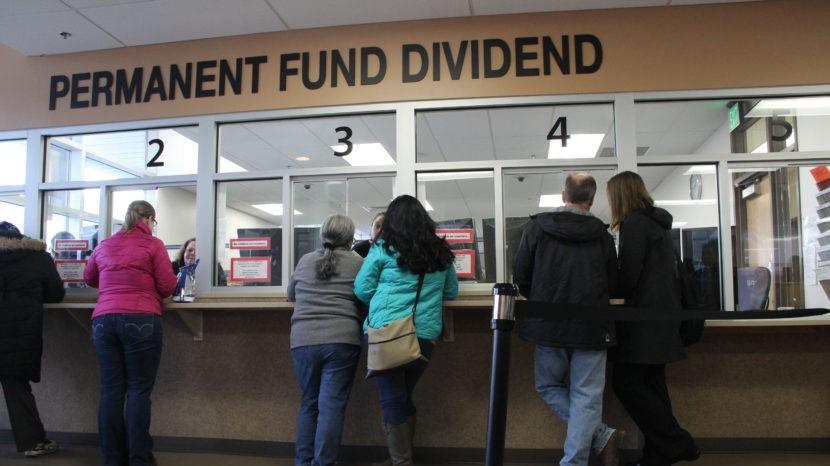
Alaskans who have not filed their Permanent Fund Dividend application yet have been given a small reprieve due to COVID-19 concerns. The deadline to file for the 2020 PFD has been extended to April 30.
State PFD offices have been closed to the public since mid-March due to concerns over the spread of the coronavirus, prompting the extension.
The state Permanent Fund department says filing online is easiest, and payments for online applicants will be issued on Oct. 1.
Paper applications are available on the state website. Applications must be postmarked by April 30 and mailed to a PFD office. PFD checks for paper applicants will be disbursed Oct. 22.
According to the budget passed by the legislature March 29, this year’s PFD will be $1,000. Gov. Mike Dunleavy has not signed the budget yet.
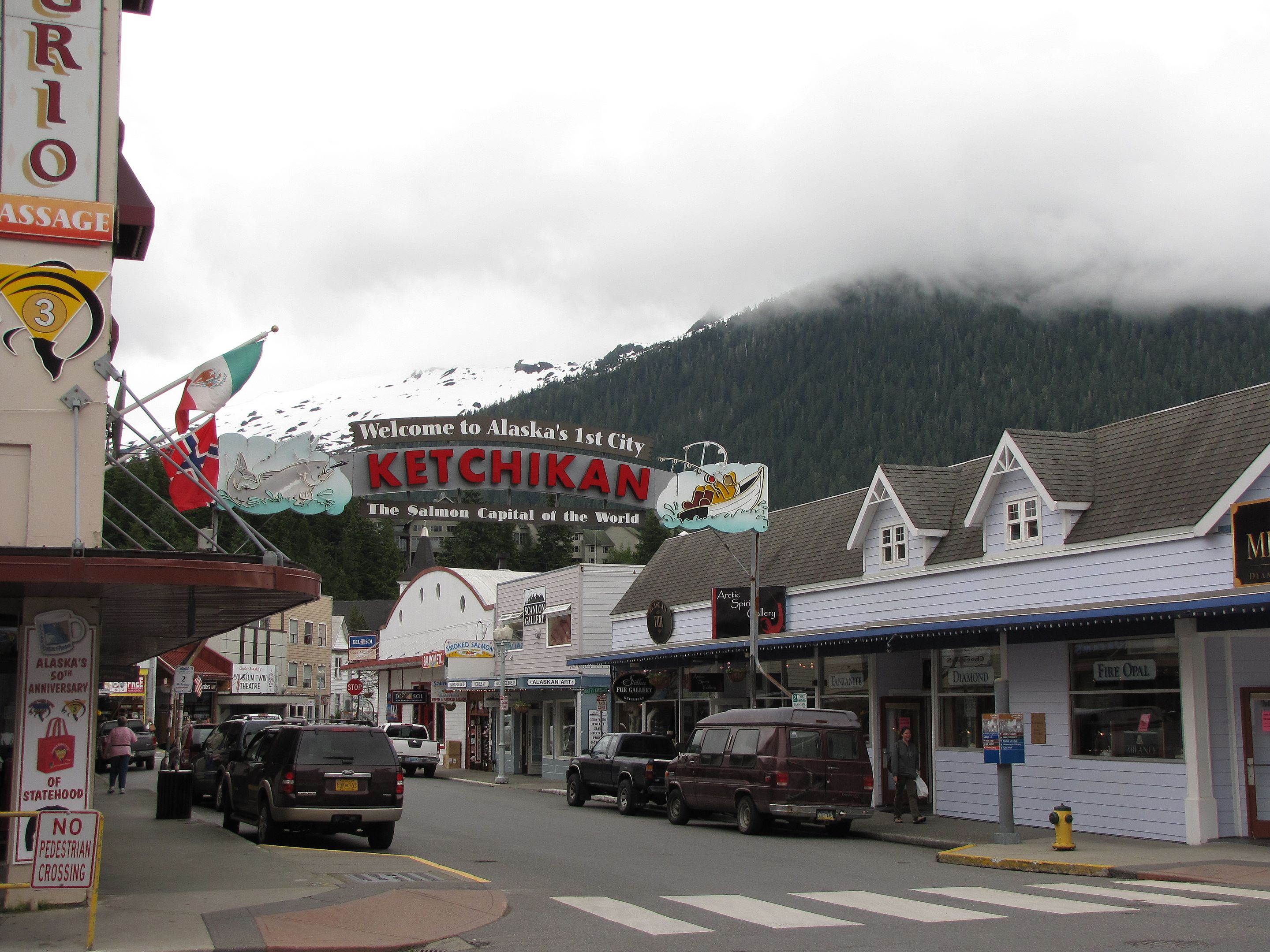
Ketchikan sign, which arches over Mission Street. Front Street is in the immediate foreground. June 12, 2009. (Creative Commons photo by Bill Price III)
So far, at least 100 people in Ketchikan have been tested for coronavirus. Of those, 13 have tested positive as of Tuesday evening.
Most of the cases are thought to stem from one or two people who brought the virus back from a trip. But has anyone tested positive without a clear sense of where they caught it?
After someone tests positive for coronavirus, state health officials classify them in one of three ways.
First, there’s “travel-related.” That’s when they believe they caught it while out of town — that’s pretty self-explanatory.
If someone catches it from someone else who’s tested positive — like a coworker, friend or family member — that’s called “close contact.”
But if someone hasn’t recently traveled out of state or been in close contact with someone known to have the virus — and thus, officials can’t pinpoint the source of the infection — the state calls it a “non-travel” case. The Centers for Disease Control and Prevention call it “community transmission,” or “community spread.”
Why is that important? Because it means there are unknown contagious people infecting others within the town. And that makes it a lot harder to curb the virus’s spread.
Last Thursday, Alaska’s state epidemiologist said in a release that state health officials had “convincing evidence of community transmission” in Ketchikan, Anchorage and Fairbanks.
But officials in Ketchikan disagreed. According to their tracking, everyone who had been diagnosed with COVID-19 in Ketchikan had either recently traveled out of state or been in contact with someone who had.
So who’s right? It comes down to a single case.
“We did some background checking on that, talked to (the state section of) epidemiology today, and the difference in the reporting has to do with the way that their contact investigation and follow-up goes,” said Abner Hoage in a Tuesday news conference call. He’s in charge of Ketchikan’s response to the COVID-19 pandemic.
Here’s what happened: One person who tested positive — let’s call them Alex — was in direct contact with another confirmed case — let’s call that person Barbara. Alex and Barbara worked together in the same building and frequently saw each other.
“Initially, they attributed this case to a close contact,” he said.
But during state public health officials’ follow-up investigation, they discovered that Alex couldn’t have caught it from coworker Barbara — the dates didn’t match up.
“So it may appear that he is part of the cluster. But the timing of onset means that he isn’t,” Hoage said.
So where did Alex catch the coronavirus?
“His most likely source appears to be another coworker who was symptomatic early, and that person was a roommate or close friend and had been traveling internationally,” Hoage said.
Let’s call Alex’s roommate (or close friend) Charlie. Hoage said Charlie had the symptoms of COVID-19, but he couldn’t get tested. A shortage of test kits meant only people who fell under narrow criteria were tested. And Charlie didn’t qualify.
So while health officials think Alex probably caught the virus from Charlie, they don’t know for sure. Because Charlie was never tested.
“Because you don’t have the hundred-percent confirmation that where we think it came from actually is where it came from,” Hoage said.
And that means that Ketchikan has seen its first case of community spread.
But here’s the good news: Drastic measures aimed at curbing the spread of COVID-19 in Ketchikan appear to be showing some early success.
As of Tuesday evening, Ketchikan has seen 13 people test positive for the coronavirus — with no cases added to the tally since Saturday.
Nine of those 13 have recovered, leaving only four active cases, Hoage said.
So does that mean all this “hunker down” stuff is working? Hoage thinks so.
“And we thank everyone for the work that they’re doing and the sacrifices they’re making. But now’s not the time to let up on that,” Hoage said. “Now’s the time to double down on that.”
Hoage cautions that Ketchikan’s testing capacity is still limited, and that makes it difficult to track the virus.
But there’s good news on that front, too: More test kits are coming to Ketchikan.
Hoage said that local authorities have 160 test kits, with 100 more expected in the coming days. Another 600 are scheduled to be delivered within the next couple of weeks. With the stock of testing supplies expanded, Hoage said more people should qualify for tests in the near future.
And beyond that, Dr. Peter Rice with the PeaceHealth Ketchikan Medical Center said the hospital recently received a newly-developed rapid testing platform from diagnostic manufacturer Qiagen.
“That will allow us here to run the COVID test ourselves, and that will have a turnaround time of about two hours,” Rice said Tuesday.
That’ll allow doctors to make informed decisions about how to treat and isolate each patient before they get a chance to infect others in the community.
At this point, PeaceHealth said they’re just waiting for the reagents to get started.
The Juneau Assembly approved an emergency measure Wednesday night to make up to $3 million of public money available as low- or no-interest loans to qualified businesses. (Read more)
Original story
Small business owners in Juneau could soon be eligible for city-funded loans, but not yet.
The Juneau Assembly discussed an emergency resolution Tuesday night that would provide $3 million in budget reserves to the Juneau Economic Development Council for distribution as loans.
Despite a vote of 6-3, the resolution failed by one vote. There’s a higher bar for emergency appropriations to pass the Assembly — this needed seven votes to pass.
Mayor Beth Weldon and Assembly members Loren Jones, Carole Triem, Rob Edwardson, Wade Bryson and Alicia Hughes-Skandijs voted in favor. Michelle Hale, Maria Gladziszewski and Greg Smith voted against the resolution.
The Assembly can still reconsider the resolution at Wednesday’s special Assembly meeting. Several Assembly members said they supported the idea behind it, but they wanted more time to examine the details.
Assembly member Carole Triem worked on the resolution with Mayor Beth Weldon and city staff. She said businesses in Juneau need immediate relief due to forced closures, and this is one way to help.
In order to apply, businesses cannot have more than 25 employees and must demonstrate that they have been adversely impacted by the COVID-19 pandemic.
Businesses with 10 or fewer employees would be eligible for a maximum loan of $25,000. Businesses with 11 or more employees are eligible for a maximum loan amount of $50,000.
Business owners awarded loans would be required to make a good faith effort to maintain their payroll the same as before the COVID-19 pandemic.
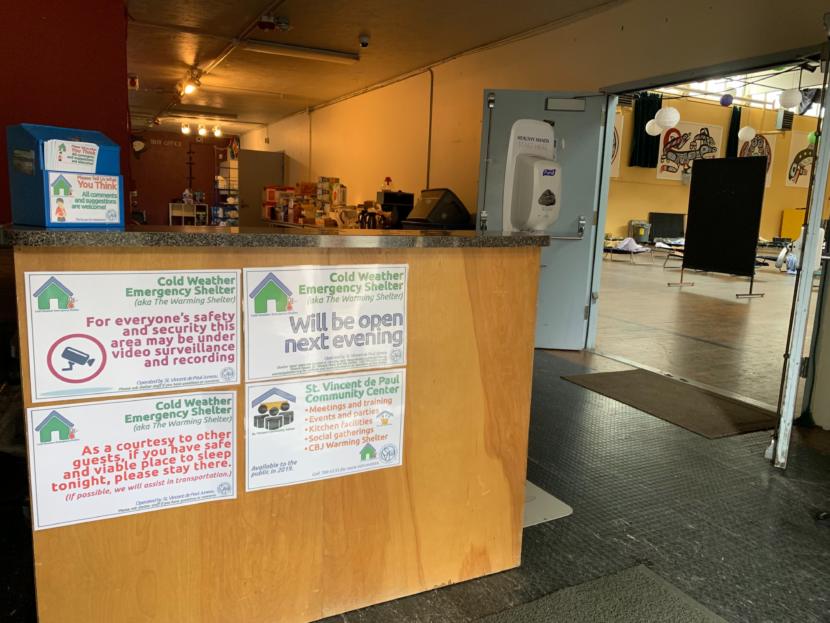
Guests to the city’s cold weather shelter have their temperature checked by staff upon arrival. (Photo by Adelyn Baxter/KTOO)
For now, visitors to the city’s cold weather emergency shelter will have a warm place to go during the day due to low temperatures and a statewide shelter-in-place order.
While the shelter inside the Juneau Arts and Culture Center is being cleaned during the day, Centennial Hall will be open. Visitors are still required to observe social distancing while inside.
People experiencing homelessness were exempt from both the city and statewide stay-at-home orders last week. With the shelter typically open overnight from 11 p.m. to 7 a.m. and other public buildings closed, many homeless community members have nowhere else to go.
The shelter is operated by St. Vincent de Paul under contract with the City and Borough of Juneau. It provides a warm place to sleep during the winter and recently moved to the JACC to allow more space between cots.
In past years, the shelter only opened on nights when the temperature was below freezing. Last winter, the shelter opened for a total of 79 nights.
So far this winter, it has been open almost every night.
“No one was expecting this,” Ringle said.
The shelter regularly sees between 30 and 40 people a night. Staff screen guests or symptoms when they enter the building. Anyone with a high enough temperature is evaluated by public health professionals.
Ringle said one guest was tested for COVID-19, but the results came back negative. That person was kept isolated while they waited for the test results and has since been allowed to return to the shelter.
“No one who gets tested is allowed back in (until we know the results),” Ringle said.
Guests who stay overnight receive dinner and breakfast. St. Vincent’s will now provide lunch with the help of community partners.
Ringle said the extended hours will last at least through Friday.
The shelter typically operates from November to April. St. Vincent’s contract lasts through April 15, but Ringle said they are negotiating a possible extension with the city.
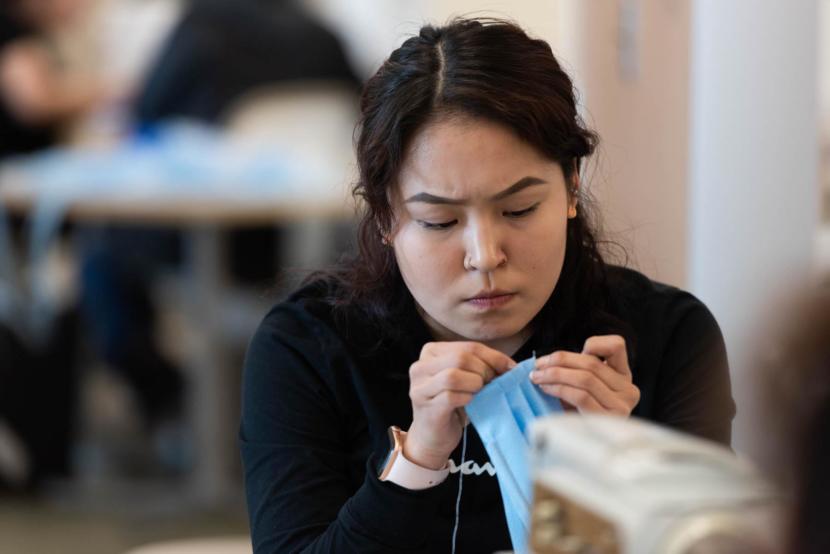
Dental Assistant Apprentice Mikayla Kassaiuli sews a mask for medical providers in case protective gear runs out during the COVID-19 outbreak. March 26, 2020 in Bethel. (Katie Basile / KYUK)
Hospitals nationwide lack enough face masks to protect their healthcare workers from the coronavirus. Thankfully, the Yukon-Kuskokwim Health Corporation doesn’t have that problem yet. No cases of the virus have been diagnosed in the region. To remain ahead of the curve, YKHC is distributing kits for community members to assemble masks.
When YKHC suspended elective dental procedures on March 18 to slow the spread of the coronavirus, the hospital’s dental staff suddenly had some extra time. They wouldn’t be seeing many patients for a while, and they noticed piles of a certain kind of light blue material lying around.
“It’s a material that we use to wrap medical and surgical instruments in when we sterilize them,” explained YKHC Interim Public Relations Director Mitchell Forbes.
The material does not filter viruses and is no substitution for an N-95 mask. But it is medical-grade and used throughout the hospital. The dental staff wondered if could they use it to make medical masks. They found a mask pattern online, consulted with YKHC medical leaders on a design, and developed a prototype.
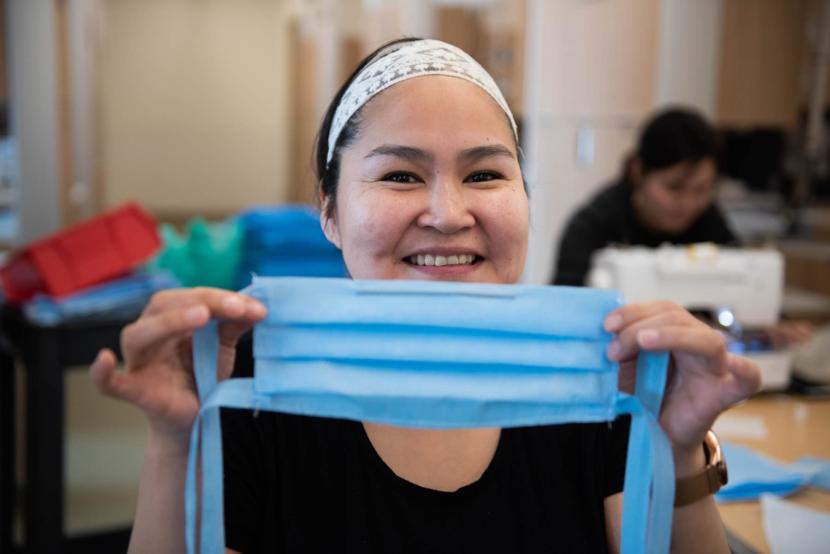
“The masks now look like a normal, simple, surgical mask,” Forbes described. “It’s two sheets of this medical sterilization material sewn together, and the really nice thing about them is they’re made of material that does go into our sterilizer.”
Which is where the masks go after they’re made.
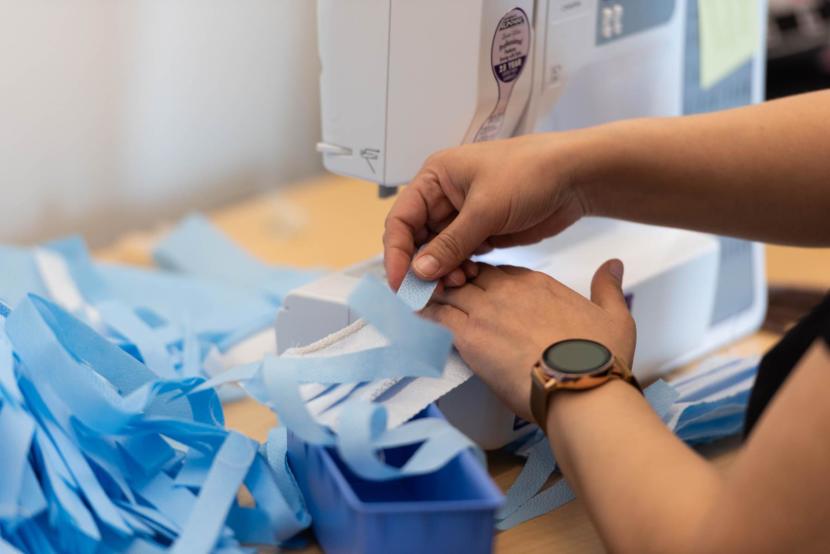
After dental clinics were mandated to close for elective dental procedures, YKHC Dental staff put together a factory-like assembly line to make protective masks for doctors and nurses. Bethel, Alaska on March 26, 2020. (Katie Basille / KYUK)
YKHC transferred sewing machines from its prematernal home to its dental clinic. A dozen dental assistants formed a factory line and began assembling the masks. Meanwhile, on social media, community members were asking if they could make masks for the hospital. The internet is filling with images of people sewing fabric masks, but YKHC is not accepting those and does not allow their providers to wear them. The woven cloth can harbor pathogens, and their effectiveness has not been proven.
To harness this community energy, YKHC is supplying mask-making kits using its medical-grade material. Each kit can produce 10 masks and contains precut squares of the material, long strips to tie the mask around the head, and accompanying instructions. The most complicated part of the process is incorporating the mask’s three pleats. All the assembler needs is thread and a sewing machine.
The masks will be used as needed, likely on patients who come to the hospital or in village clinics with respiratory illnesses.
Dental Assistant Supervisor Lucy Patrick shows off a completed mask she and her team made out of surgical wrap. Despite mandated closures, YKHC Dental staff in Bethel are staying busy making protective gear for medical providers. March 26, 2020. (Katie Basile / KYUK)
The number of confirmed COVID-19 cases in Alaska grew to 133 by Tuesday, up 14 from the day before, according to the Alaska Department of Health and Social Service’s count that’s updated daily.
Another four of the newly-diagnosed Alaskans are from Juneau, two are from Anchorage, two are from Eagle River and one is from Kenai, according to the health department.
Two more Alaskans had also been hospitalized with the disease by Tuesday, bringing the total hospitalizations to nine, said Gov. Mike Dunleavy at a Tuesday evening news conference.
“Thank goodness, there’s no new deaths,” Dunleavy said.
Three Alaskans died in March after testing positive for the disease — two in the state and one out of state.
More than 4,500 coronavirus tests have been performed in Alaska by Tuesday, Dunleavy said.
Of the 14 new cases, two are in adults older than age 60, 10 are ages 30 to 59 and two are ages 19 to 29, the health department reported.
Five of the cases are close contacts of previously-diagnosed people. Two are travel-related and seven are still under investigation, according to the department.
Oil and gas company BP also announced Tuesday that a worker at Prudhoe Bay had tested positive for COVID-19. It’s the first confirmed case of the illness at the massive oil field in northern Alaska.
Gov. Mike Dunleavy’s latest COVID-19 press conference is scheduled for 5 p.m.
He tweeted that he and other officials will discuss stabilizing the state’s economy.
Tonight, at approximately 5 p.m. members of my cabinet, AK public health officials & I will be giving an update on the actions the State is taking to stabilize Alaska’s economy during the #COVID19 outbreak.
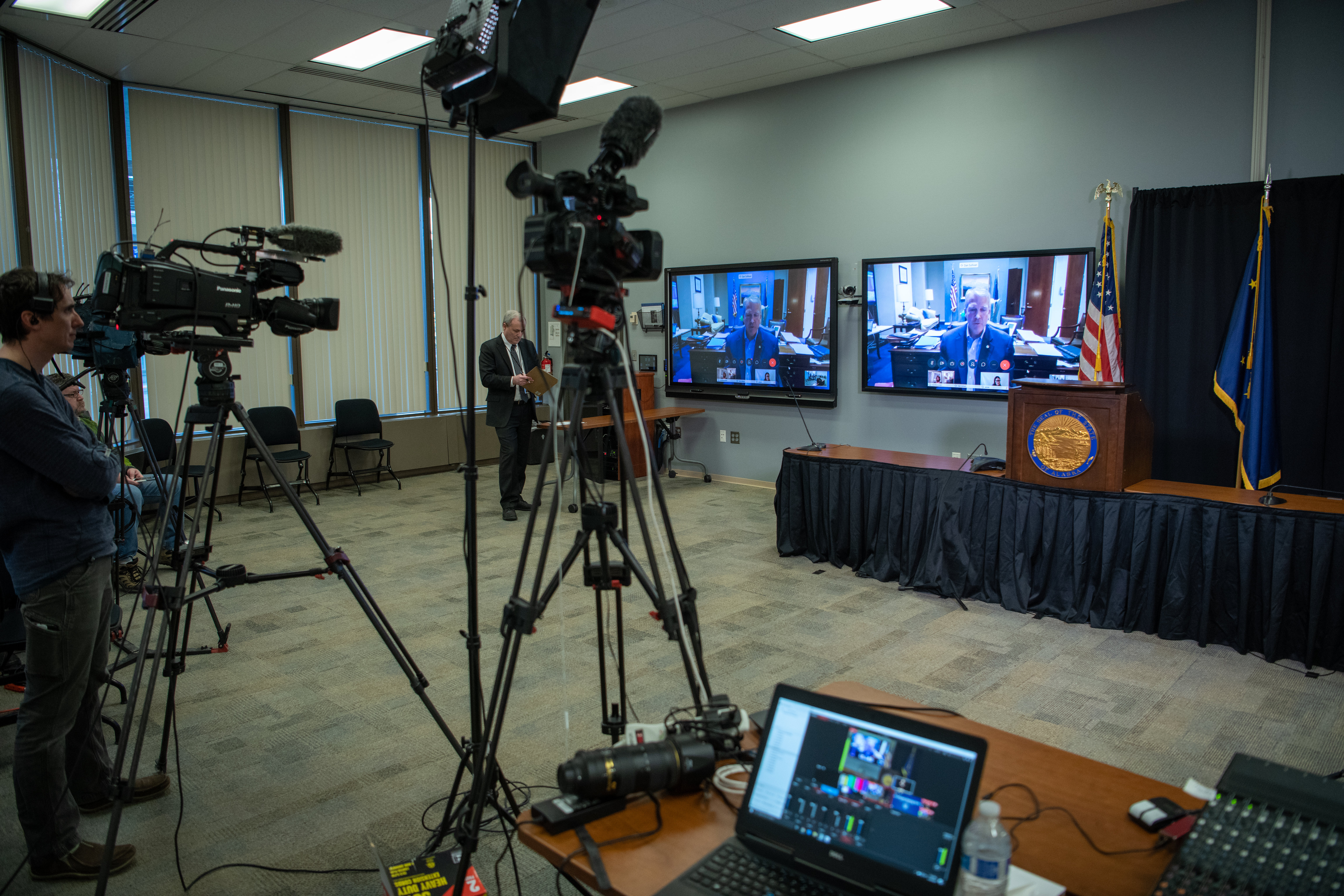
The governor’s press team stands by for a press conference in the Atwood Building in Anchorage on Monday. (Creative Commons photo courtesy Alaska Governor’s Office)
A press release says to expect Chief Medical Officer Dr. Anne Zink, Labor Commissioner Tamika Ledbetter, Commerce Commissioner Julie Anderson, Natural Resources Commissioner Corri Feige, Environmental Conservation Commissioner Jason Brune and Administration Commissioner Kelly Tshibaka.
Alaska-specific COVID-19 resources and information are available at coronavirus.alaska.gov.