Alaska coronavirus news

Live updates and information on COVID-19 in Juneau and Alaska

Alaska National Guard calls up members for state coronavirus response

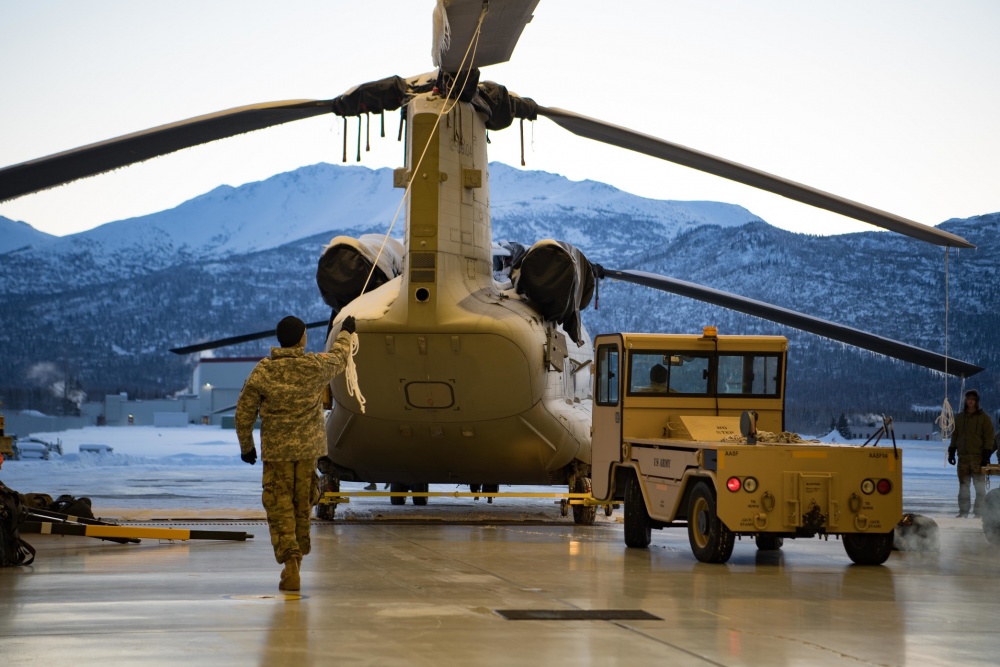
Members of the Alaska Army National Guard prepare CH-47 Chinooks on Feb. 24 at Joint Base Elmendorf-Richardson, en route to Deadhorse. (Public domain photo by Tech. Sgt. Amy Picard/U.S. Air Force)

The Alaska National Guard is mobilizing to assist with the state’s coronavirus response, putting dozens of volunteer Guard members on active duty.

The Guard’s planes and helicopters could be key to helping sick people in rural Alaska, said Jeremy Zidek, public information officer with the state Division of Homeland Security and Emergency Management.

“Transporting patients to advanced medical facilities is the primary thing that they’re preparing for right now,” Zidek said.

The state is coordinating with the Coast Guard and air ambulance services, as well as private air carriers that have already been used to fly test kits and personal protective equipment around Alaska, Zidek said.

The state’s Unified Command could call on the Guard to transport supplies by air or land, to build temporary shelters or produce clean drinking water, and, generally, to have manpower available for a wide range of tasks, Zidek said.

Members of a separate but related volunteer group, the Alaska State Defense Force, have been working at an Anchorage warehouse to help organize personal protective equipment and other supplies from the national stockpile — things like gloves, visors, gowns, masks and hand sanitizer — and putting them into loads for shipment, Zidek said. They’ve also been helping distribute declaration forms for people entering the state who must quarantine themselves and declare where they are doing so under the state’s coronavirus health mandates, he said.

Orders for bigger missions will come from the governor, likely at the request of local governments in need, Zidek said.

“And when their local capabilities have been overwhelmed, then we look at utilizing other state agencies or the Alaska National Guard to fulfill that mission,” Zidek said. “In some cases, we may be able to call upon a private industry to do that. But often during disasters, the Guard has to come in and fulfill those critical roles.”

The Guard has called up 65 members since last week, according to Alaska National Guard Lt. Col. Candis Olmstead. About 700 Guard members have filled out paperwork making them eligible to be put on active duty at a moment’s notice, Olmstead said.

“When you join the National Guard, you know that you could be called in times of emergency or natural disaster to help your state,” Olmstead said. “And that’s what’s happening right now.”

They’re a volunteer force, meaning they have volunteered their time, but Olmstead noted that active-duty Guard members do get paid.

“It’s a wonderful option at this time, when so many people have been laid off from their jobs,” she said.

The Guard’s aircraft include a variety of fixed-wing aircraft and helicopters — everything from massive C-17 Globemaster transport planes to HH-60 Pave Hawk helicopters used in wilderness or battlefield rescues, Olmstead said.

The helicopters, in particular, could be useful in rural Alaska, where areas to land a plane can be limited, Olmstead said.
 

Gustavus hunkers down with no confirmed COVID-19 cases

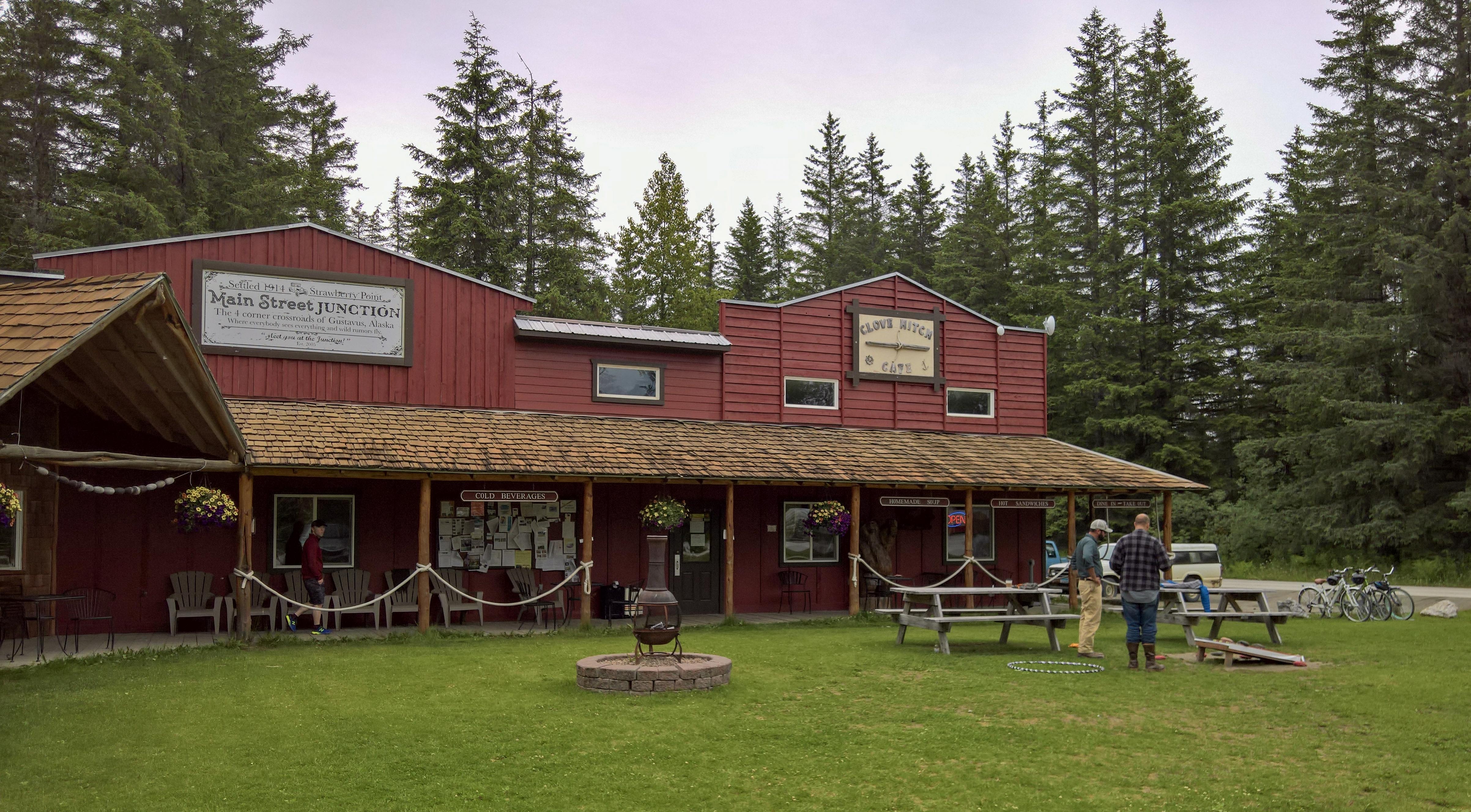
Four Corners, pictured here on June 29, 2017, is Gustavus' most prominent intersection.
Four Corners, pictured here on June 29, 2017, is Gustavus’ most prominent intersection. (Photo by Jeremy Hsieh/KTOO)

COVID-19 doesn’t appear to have gotten to Gustavus.

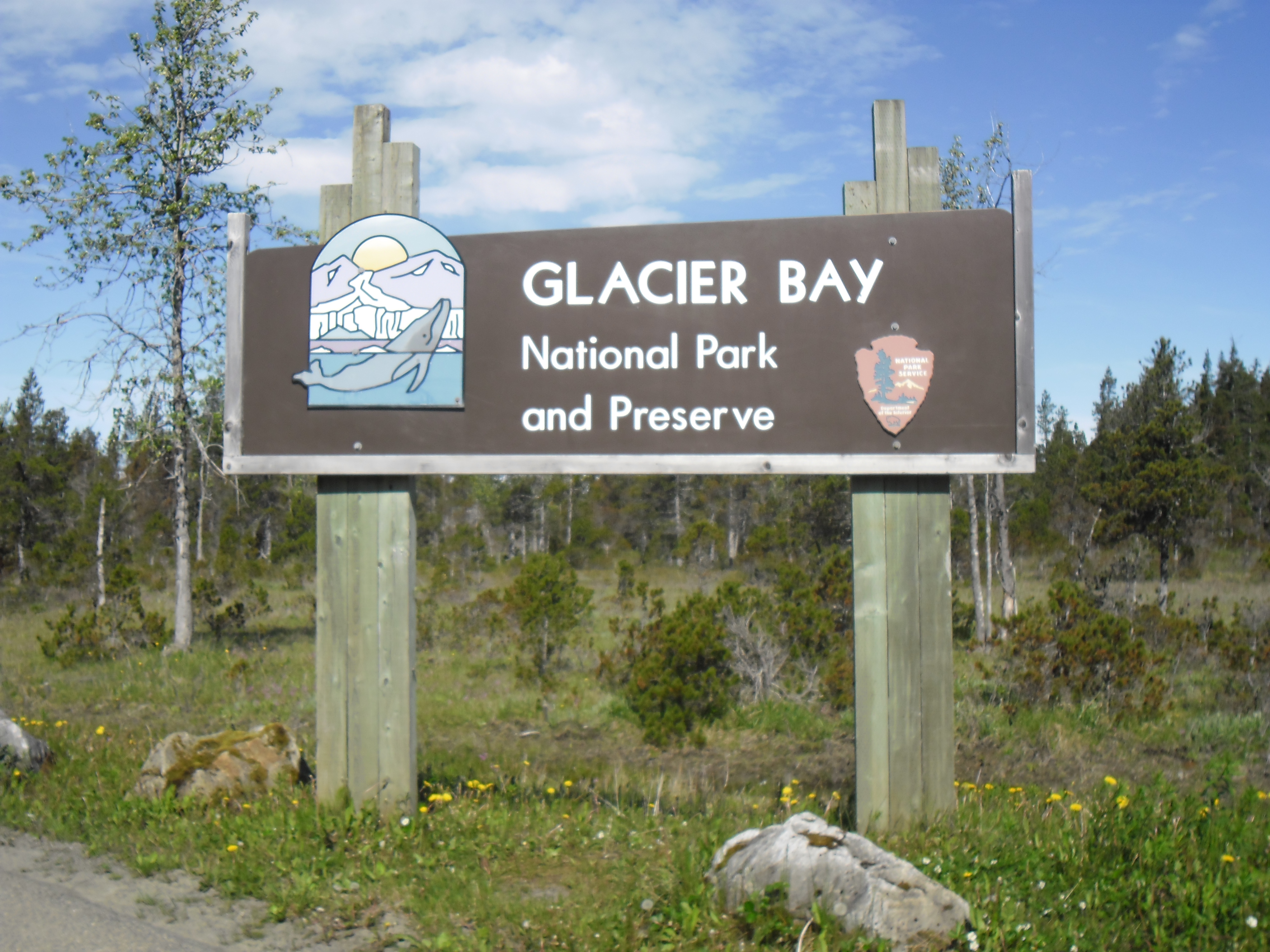
City officials stepped up preventative measures after Juneau, the region’s main hub, confirmed its first case in March. The town of about 500 and Glacier Bay National Park and Preserve are hunkered down.

Gustavus Mayor Calvin Casipit said, under the circumstances, spirits in town are good. He hasn’t seen hoarding issues.

“If you have to social distance, this is a good place to do it,” he said.

Casipit, who’s quarantining himself because he was traveling as public health mandates went into effect, said the town has made a lot of changes to keep municipal services running with minimal interaction. Staff haven’t been cut.

Glacier Bay National Park and Preserve saw 432,414 visitors in 2011. (Photo by Lisa Phu/KTOO)

Cruise ships aside, Gustavus is the main jumping-off point for visiting Glacier Bay National Park. With travel restrictions and a suspended cruise season, visitor services this summer will be very limited.

Park Superintendent Philip Hooge said he’d usually have about 60 seasonal workers coming on. This year, he thinks it’ll be about half. If they’re coming from out of town, they’ll have to quarantine for 14 days.

“I think as a community, we’re, you know, we’re used to a little bit of separation,” Hooge said with a chuckle.

The park service still intends to issue boater and backcountry permits beginning in May. Outdoor spaces remain open. But public health mandates from the governor’s office ban nonessential travel. So the park, for now, is accessible for fun only to locals.

You can still visit vicariously. The park has a webcam with views of Bartlett Cove’s inner lagoon and the Fairweather Range.

Hooge said there is concern about living at the end of a long supply chain. He called the ferry system reductions, flight reductions and pandemic a “triple whammy.”

COVID-19 is also affecting cross-border activities in Glacier Bay National Preserve. The preserve is a chunk of the coast to the northwest of the park, where the Alsek River flows into the Gulf of Alaska. It’s closer to Yakutat than it is to Juneau.

Due to the border closure with Canada, the park service says recreational permits and commercial rafting is suspended in the preserve. Authorized commercial fishing and subsistence activities are still OK in the preserve.

Dozens of Alaska villages to lose air service as Ravn announces huge cuts

In Anchorage, passengers board a RavnAir Group flight bound for Unalaska. Ravn and Alaska Airlines suspended their partnership for the Unalaska-Anchorage route following Ravn’s fatal PenAir plane crash on Oct. 17, 2019. (Photo by Laura Kraegel/KUCB)

Alaska’s largest rural air carrier, RavnAir Group, says it’s cutting its service by 90% amid a coronavirus-driven crash in revenue — a move that could leave dozens of rural villages with deeply diminished air service for passengers and no other reliable link to the road system.

The company, until this week, served 115 communities across nearly the entire state, from the North Slope to the Yukon-Kuskokwim Delta to the Aleutian Islands.

In a prepared statement, RavnAir Group said it’s shrinking its fleet of planes from 30 to three.

“RavnAir Group today announced that due to the dramatic and continuing 90% reduction in passenger revenue bookings resulting from the COVID-19 coronavirus, it has been forced to take further actions to drastically cut costs,” the statement said.

In a prepared statement. Gov. Mike Dunleavy said that “the aviation industry is working cooperatively to ensure essential passenger service, bypass mail and freight service is maintained to their communities during these uncertain times.”

“This morning, I also spoke with officials from the United States Postal Service and they assured me they are working with contract carriers to maintain scheduled service to rural areas,” he said. “The importance of the supply chain to rural Alaska communities is a priority for my administration.”

REAL ID deadline extended to October 2021 as coronavirus limits DMV access nationwide

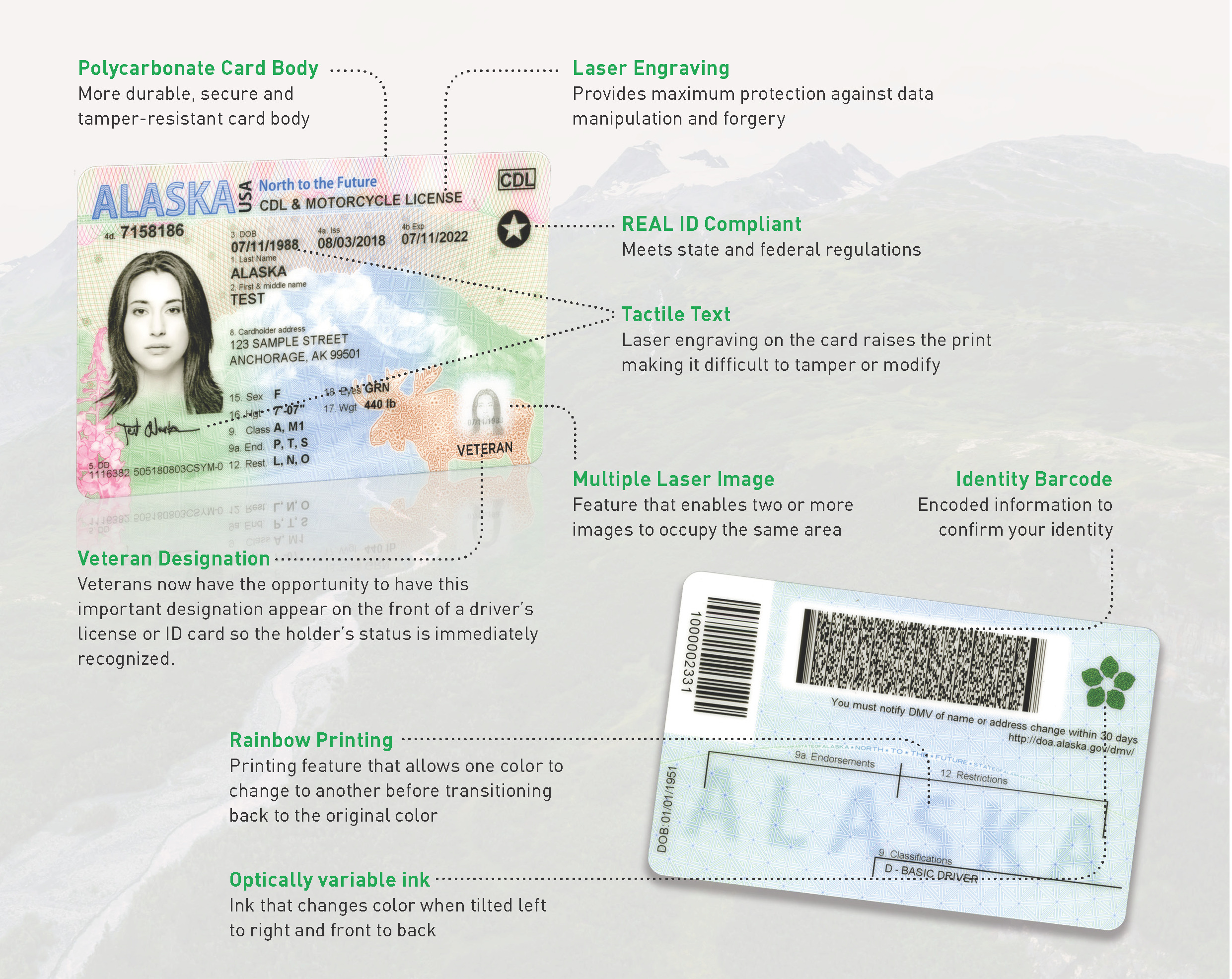
A diagram shows the features on Alaska's new REAL ID.
A diagram shows the features on Alaska’s new REAL ID. (Graphic by Alaska Division of Motor Vehicles)

The U.S. Department of Homeland Security has extended the deadline for getting a REAL ID to October 2021.

The federally-compliant REAL IDs were set to be required by October of this year for anyone traveling by plane throughout the United States.

Rural Alaskans have had a hard time getting their IDs, because many don’t have access to a state Division of Motor Vehicles office. Now, the coronavirus pandemic is making access difficult for people throughout the United States, too.

In a statement, acting Homeland Security Secretary Chad Wolf said, “States across the country are temporarily closing or restricting access to DMVs. This action will preclude millions of people from applying for and receiving their REAL ID.”

Wolf said the extension will give the government time to work with Congress to get the IDs issued as soon as possible once the coronavirus health crisis subsides.

Those wishing to apply for a REAL ID must have a birth certificate or passport and a valid document with their Social Security number on it, like a Social Security card or a W-2 form. They also need two documents with their physical address on them, including mortgage and bill payments, rental or land ownership documents, or letters from employers or local governmental bodies. Additionally, they will need documents for any name changes due to things like marriage and adoption.


Juneau food pantries see decline in donations as demand picks up

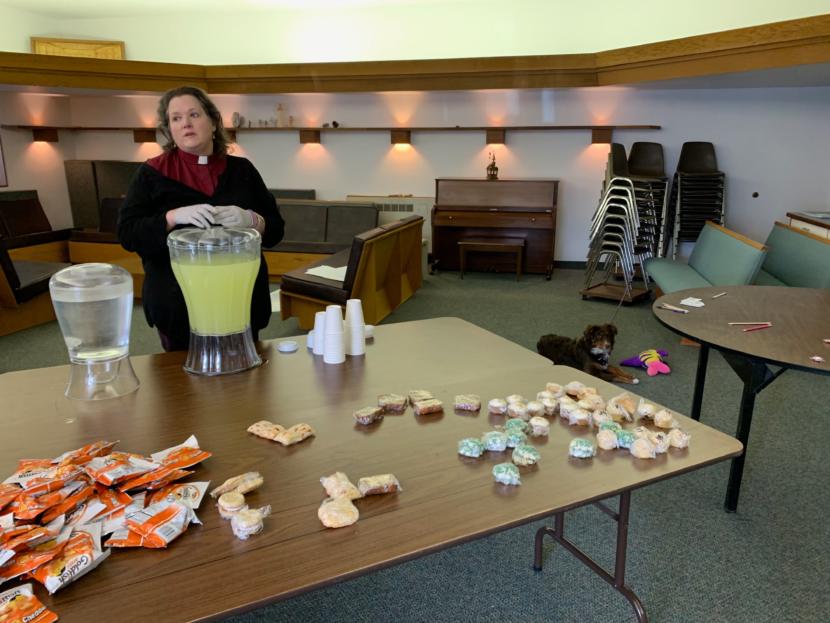
Resurrection Lutheran Church Pastor Karen Perkins and church dog Corbin watch over the snack table as Perkins signs people in for the weekly food pantry. (Photo by Adelyn Baxter/KTOO)

The economic strain caused by the COVID-19 crisis is forcing more people to look for help getting basic necessities like food.

At the same time, local food pantries are struggling to keep up with the growing demand as their own donation sources dwindle.

On Mondays, Resurrection Lutheran Church turns into a food pantry. People often line up outside before they open.

This week, despite the cold, they had to wait outside longer than usual. That’s because they want to limit the number of people inside at once.

Inside, Pastor Karen Perkins used blue tape to mark out spaces 6 feet apart. She handed each person a card with a time written on it indicating when they could come back to get their food.

“There’s certainly been an increase in the number of people who need food and the number of people who are coming to stand in line,” Perkins said. “And in the degree of frustration of not knowing where to go and what to do.”

One of those frustrated people is Mark Swieczwski. He was on his way back home to North Pole after a trip to the Lower 48 when he got stuck in Juneau.

“I missed the ferry in Bellingham to go to Whittier by one day,” Swieczwski said as he stood outside the church.

He said he caught the ferry to go to Haines instead of Whittier, but he got off in Juneau when he realized Canada had closed the border to nonessential travel. He’s not sure whether he would be allowed to cross, but said he didn’t want to chance getting stuck in Haines.

He can’t fly home, because that would mean leaving behind his truck and all the tools he needs for his concrete masonry business. He’s been camping out while he waits for the border to reopen.

“I’m stuck in this place. But I’m trying to make the best of it,” he said. “I’m not trying to make everybody else miserable because I’m miserable. Which is understandable, but you know.”

Bill Quail was also waiting his turn outside. He’s owns a local pedicab company, Southeast Alaska Express Pedicab. He ferries tourists from the docks to different spots around downtown.

Quail said money is always tight just before the tourism season starts. Except this year, he doesn’t know if it ever will start.

“I get my Social Security and my veterans pension, but it’s not enough,” Quail said. “By the time I pay my bills, there’s nothing left over.”

Both Quail and Swieczwski have found themselves in the same situation many other people are facing while the COVID-19 crisis disrupts normal life.

Unemployment claims have skyrocketed across the country as businesses close and people are left without income. Many of them are turning to food pantries to help make ends meet.

Chris Schapp manages the Southeast Alaska Food Bank, which collects and distributes food to more than 30 organizations and food pantries around town.

He said grocery stores in Juneau usually donate items to the food bank on a daily basis, but shelves are getting cleared out by folks stocking up for self-quarantine.

“We’ve just seen a major drop off in the amount of donations, and basically that’s because so many folks have been buying, and you know, preparing themselves, so that we don’t have all the things that we normally get our donations from,” Schapp said.

Individual donations are down too. Many food pantries are run out of churches that have canceled services, so parishioners aren’t dropping off canned goods like they normally do.

The Juneau Community Foundation is now fundraising to help the Southeast Alaska Food Bank buy food to keep its shelves stocked. It’s raised about $10,000 so far.

Executive Director Amy Skilbred said they’ve also donated money to the Juneau School District to help with free breakfast, lunch and weekend meals for students, and to Catholic Community Services for senior meal programs.

“It’s not just the food bank,” Skilbred said. “We know that food insecurity is elsewhere, and we encourage donations both to our food assistance plan and for people to give generously to nonprofits that are on the front line.”

Anyone can donate to the 2020 Food Assistance Fund on the Juneau Community Foundation’s website, or directly to the Southeast Alaska Food Bank through its website or by mail.


Fairbanks is now considered Alaska’s coronavirus ‘hot spot’

Fairbanks in January 2019. (Ravenna Koenig/ Alaska’s Energy Desk).

Alaska health officials are now calling the Fairbanks area the “hot spot” for the coronavirus in Alaska. That’s despite more total cases in Anchorage, where there’s also been two deaths, and a higher percentage of cases in Ketchikan relative to that city’s population.

Alaska’s Chief Medical Officer, Dr. Anne Zink, explained at a Monday evening press conference that calling Fairbanks a hot spot is about more than just the numbers. It’s based on things like the rate of infection among people who have not recently traveled or been in close contact with someone known to be infected, also known as community transmission, as well as where the disease is spreading in the city, Zink said.

“We’re looking at how many community cases we have, we’re looking at cases in high vulnerable populations, such as long term care facilities, and we’re looking at what sort of spread how many case contacts those people have,” Zink said.

According to the state, there were 40 confirmed positive tests between Fairbanks and the nearby city of North Pole, as of Wednesday, April 1. That’s after health officials reported a cluster of 15 cases at a Fairbanks medical building that’s home to an orthopedist and a physical therapist, and seven cases at the Denali Center, a facility housing senior and long-term care patients.

By the numbers, the Fairbanks area has seen the highest rate of growth of any region in the state since the global pandemic’s effects first started to be felt in Alaska.

The growth in the Fairbanks area has state and local health officials focusing their efforts, Zink said.

“We’re going to see this nationwide, and we’re going to see this throughout the state, where we have certain areas that kind of are having a certain flare, or a kind of a hot spot, and that we’re trying to put more attention and resources into, to kind of break that chain and to minimize the ongoing transmission,” Zink said.

The state’s epidemiology team is currently working most aggressively on fighting the virus in Fairbanks and spending most of its time on those cases, Zink said.

Foundation Health Partners operates the Denali Center and the only civilian hospital in town, Fairbanks Memorial. Company officials and physicians said in a Monday press conference that two patients tested positive, as well as five staff members, prompting stricter procedures around personal protective equipment and the testing of all 70-plus patients and 135 staff.

Foundation Health officials said they had received about half of the test results as of Monday.

The company said one of the patients who tested positive is in her 80s and doing well. The other is in her 50s, and though her condition worsened and she was transferred to a medical department for treatment, she is also now doing better, according to Foundation Health.

Testing in the Fairbanks area has increased as they’ve gotten more test kits and widened the scope of who they’re testing, the company said.


Site notifications
Update notification options
Subscribe to notifications