Venietia Santana, owner of V’s Cellar Door, pours a drink in 2013. Santana laid off her entire restaurant staff last month and is now applying for a small business relief loan. (Photo by Lisa Phu/KTOO)
A website went live at 5 p.m. Thursday to take in applications for small business relief loans in Juneau.
By midday Friday, dozens of completed applications had come in for the publicly financed program.
The head of the Juneau nonprofit running the program said demand is strong. At least 50 other applications were in progress.
Venietia Santana had to lay off her restaurant’s entire 10-person staff last month as COVID-19 countermeasures ramped up. She’s the “V” who owns V’s Cellar Door in downtown Juneau.
“And that was the hardest — honestly — the hardest day of my life,” Santana said. “By the third person I wrote to, my fiance had to take over ‘cause I just couldn’t — couldn’t do it.”
It’s just Santana and her fiance now, running what’s left of the business: takeout and delivery. She said they’re doing maybe $100 of business a day, working 12-hour days.
She’s still got bills to pay, like the restaurant’s lease, utilities and insurance. So she was in the virtual line to get an emergency relief loan application into the Juneau Economic Development Council.
“The goal is to first stop the fire. You know, the fire’s going, stop the fire,” she said. “There’s a bunch of bills right now that are just on hold to pay. And most people have been really good about deferring. But the bottom line is, it’s still a deferral. The bills are still adding up.”
And that’s the idea behind the loan program, said JEDC Executive Director Brian Holst: Keep these businesses going, so the eventual economic recovery is fast.
“It’s hard to start a small business, and it’s hard to keep it open. There’s a high failure rate. So the people that we’re lending to are businesses that have gone through some hurdles, and have been able to find a way to operate successfully in Juneau’s economy. For us to lose those businesses would be really hard, because it’s going to be really hard to replace them again.”
Holst said there’s strong demand and encourages patience.
Santana said the website kept freezing on her when she tried to apply — which she understands. A lot of business owners are in situations like hers.
“I was a year away from being debt-free,” she said. “And now it’s like I’m going completely backwards. So it’s like, I feel like, ‘Wow, I’m taking out loans to save my business,’ which I will do, I will fight every step of the way. I did not work this hard to give up my dream.”
A qualified local business could be eligible for up $50,000 with little or no interest. As a ballpark figure, several Juneau Assembly members talked about helping 100 local businesses earlier this week. They set aside $3 million for the quickly-set-up loan program.
Several state departments are suspending certain fees and fines through May 11 in response to the dramatic economic pressure on Alaskans.
Details of the plan were laid out by members of Gov. Mike Dunleavy’s administration during a Friday press conference centered around his economic stabilization plan — a response to the ongoing COVID-19 epidemic.
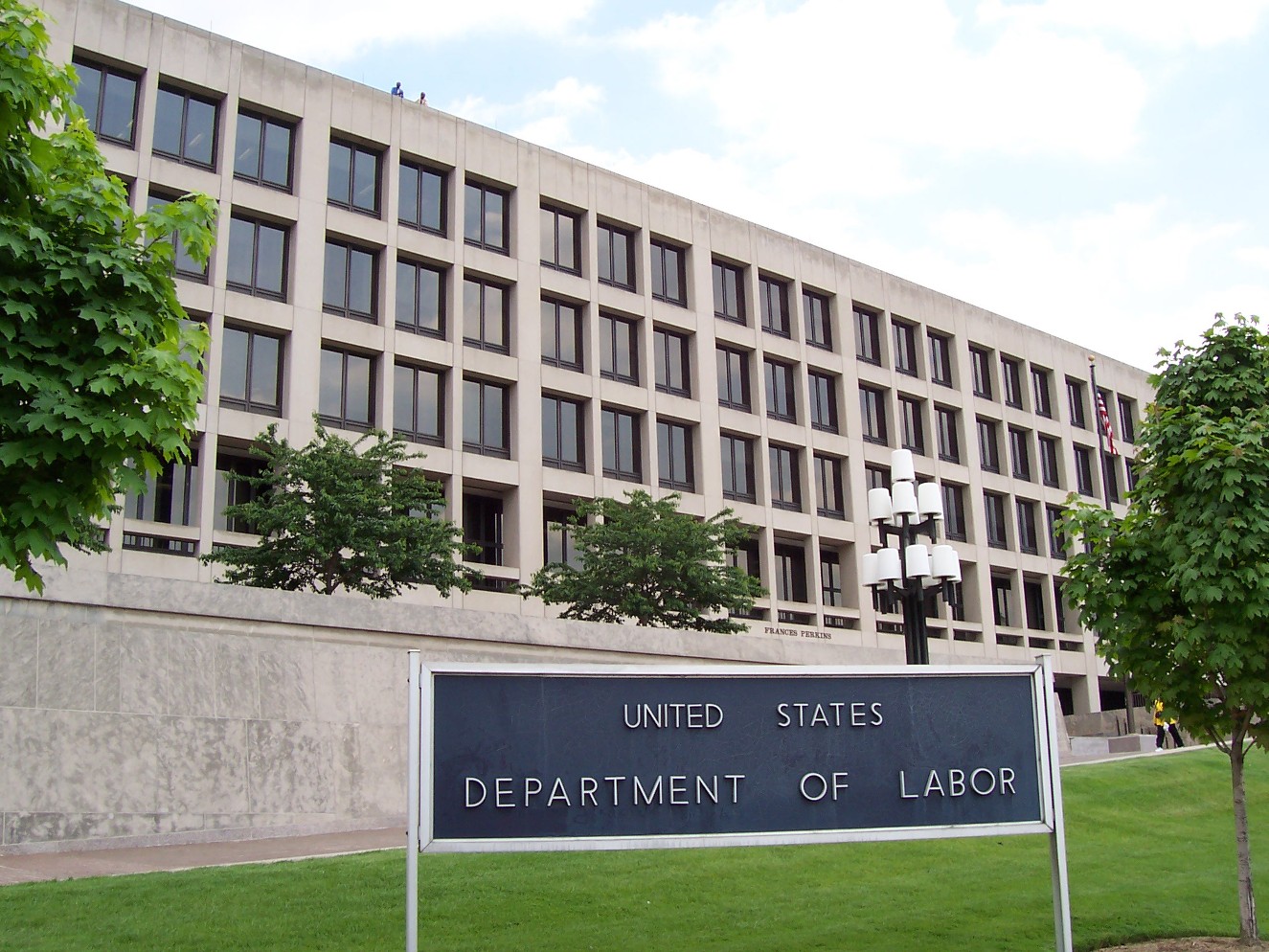
Department of Labor and Workforce Development Director Tamika Ledbetter said the state has seen a surge in unemployment claims. This week, they processed around 14,000 new applications for unemployment.
“This unprecedented turn of events has really put a strain on our unemployment system,” Ledbetter said.
People have reported long wait times, clogging up the department’s phone lines — especially from Alaskans who are unfamiliar with the state’s online web portal.
Ledbetter said they’re working to scale up the unemployment insurance office.
“I have moved staff from other divisions within the Department of Labor,” she said. “We are asking retirees to return to help us to process these claims. We’re hiring additional staff to take care of the influx of workload that we now have.”
There are also a lot of changes in the way the state collects fees and fines, including:
The Department of Environmental Conservation is deferring payments on loans to Alaska communities who borrowed money from the state to finance water and sewer system improvements.
The approximately 90,000 people who are on AlaskaCare health insurance have new telemedicine benefits and won’t pay any costs for COVID-19 treatment.
A camp is set up near the cruise ship docks on March 22, 2020, in downtown Juneau. Many cruise-related businesses are facing deep cuts and a dwindling season due to the COVID-19 pandemic. (Photo by Rashah McChesney/Alaska’s Energy Desk)
State officials also talked about several state and federal loan programs available to help businesses. But for businesses that don’t want to take out loans and may not be financially able to pay them back — Dunleavy said there may be other help on the way.
“It’s an ongoing evaluation as to what sectors in Alaska need what type of aid,” Dunleavy said. “So we’ll have more information on that probably early next week.”
The number of Alaskans diagnosed with COVID-19 grew to 157 by Friday — no new deaths were reported. The state’s chief medical officer, Dr. Anne Zink, said that figure now includes 16 people who have recovered from the virus.
Zink outlined a new health alert — recommending that Alaskans wear face coverings in public. She pointed to increasing scientific evidence that people who have no symptoms or very mild symptoms are still spreading the virus.
She stressed that the masks won’t prevent people from getting the virus. But it could prevent them from spreading it.
“We really just have to assume we all have COVID and we could be spreading it,” she said.
Zink said the masks should be worn in places where social distancing is difficult to do, like grocery stores. The health alerts are not mandates — they’re suggestions from the state to help keep people from spreading the virus.
The recommendations for wearing and caring for a mask include:
Making sure the mask covers both your nose and mouth
Keeping it it on until you get home
Removing it by grabbing the ear loops or ties that hold it on and then immediately storing it to be washed
Washing hands before touching anything else
These recommendations are new and run counter to what state and federal medical officials have said in the past. But the state’s new recommendations mirror new Centers for Disease Control and Prevention guidelines asking people to wear cloth or fabric face coverings in public.
Up until now, state and federal medical officials have avoided asking people to wear masks. In part because the country is experiencing a critical shortage of face masks.
Zink asked Alaskans to avoid seeking out medical-grade N95 masks.
“The surgical masks, we’re really making sure that people in health care who are taking care of the most vulnerable have those masks,” she said. “But I think this partnership, with people being able to make masks or even using a balaclava — some sort of way to prevent their spread will help us to get to a better point.”
Original story
Gov. Mike Dunleavy’s latest COVID-19 news conference is scheduled for 5 p.m.
The governor, Health and Social Services Commissioner Adam Crum and Chief Medical Officer Dr. Anne Zink have been holding these briefings almost daily since March 10.
They’ll be joined on Friday by members of Dunleavy’s cabinet including Labor and Workforce Development Commissioner Tamika Ledbetter; Environmental Conservation Commissioner Jason Brune; Administration Commissioner Kelly Tshibaka; Natural Resources Commissioner Corri Feige; Commerce, Community and Economic Development Commissioner Julie Anderson; and Transportation Commissioner John MacKinnon.
During these briefings, Dunleavy’s administration shares updates on the number of people in the state with confirmed cases, announces public health mandates and explains the administration’s strategy and rationale.
To date, they’ve imposed 12 public health mandates that have reshaped daily life across Alaska to combat the spread of the virus. Those mandates and other Alaska-specific COVID-19 resources and information are available at coronavirus.alaska.gov.
While it’s not a mandate, Zink said on Thursday that Alaskans should wear masks in public. This, she said, is based on data showing that COVID-19 appears to be largely spread by people who have few or no symptoms, but carry the virus.
The federal Small Business Administration says it’s ready to make immediate “loan advances” of up to $10,000 to companies hurt by the coronavirus.
But you don’t have to be a traditional company, and this is a “loan” you might not have to pay back.
It’s an overlooked feature of the $2.2 trillion CARES Act, different from the Paycheck Protection Program that’s getting more attention.
It starts with an application on SBA.gov for an Economic Injury Disaster Loan. EIDL is the Small Business Administration’s garden-variety disaster assistance, but Congress expanded the program in its COVID-19 response bill. Sole proprietors, with or without employees, are eligible. That can include landlords, vendors or self-employed contractors.
Here’s a $10,000 pro tip from Jon Bittner, executive director of the Alaska Small Business Development Center: Be sure in your application to request a loan advance.
“They call it a ‘loan advance,’ but basically, you get it whether or not you get the loan,” Bittner said, “and you don’t have to pay it back.”
This benefit wasn’t available when the state of Alaska first declared its COVID-19 disaster.
“So if you have already submitted your (EIDL) application, you really need to go back and do it again and ask for the $10,000,” Bittner said. “And that’s totally OK. They’re telling you to do that. But some people haven’t gotten the message.”
The loans themselves have a fixed interest rate of 3.75%, or 2.75% for nonprofits.
“It’s a good deal, and they’re actually not asking for the initial payment for up to, in some cases, four years,” Bittner said.
The SBA has pledged to process the paperwork and cut checks within three days.
Does that sound too good to be true? Bittner said the SBA does have some technical limitations.
“Their website crashed — I mean, almost immediately — just because nobody thought that the entirety of, you know, the United States’ population was going to try to check it out at the same time,” he said.
The CARES Act has money for the Small Business Administration to add staff, but Bittner said no one should be too disappointed if it takes more than three days to get a $10,000 cash advance.
The Paycheck Protection Program also has a grant component. That kind of government-backed loan is available through banks.
“If you use that over the next two months to pay for certain expenses, like payroll, rent, certain debt service and things like that, up to 100% of the loan can be forgiven,” Bittner said.
The Paycheck Protection loan is designed to help businesses and nonprofits keep or rehire their workers. Bittner said the forgiveness could be reduced if an employer lays off workers. And he points out, the guidelines for these programs are in flux.
Alcohol regulators and industry groups are pursuing a rule change that could alter how businesses sell booze amid statewide coronavirus closures.
The move could allow restaurants to sell beer and wine like other takeout items — something currently barred under state law.
In a separate part of the same measure, the Alcoholic Beverage Control Board is pushing for liquor stores to be able to do curbside pickup orders, which could reduce the risk that employees and the public are exposed to the virus.
First, though, state officials need to figure out if such temporary rule changes are even legal.
Glen Klinkhart directs the state’s Alcohol and Marijuana Control Office. He said when it comes to allowing to-go alcohol orders, the ABC Board’s vote on Wednesday was the start of a process, not the end of it.
“It’s a motion to ask the governor to please do so,” Klinkhart said.
But because the measure seeks to change state statutes, it needs to be looked over by the state attorney general’s office before going before the governor.
Klinkhart said the move is being fast-tracked to try and get clarity to businesses.
And the reason for that urgency is that many small businesses are desperate.
“Any little bit is worth fighting for,” said Sarah Oates, president and CEO of the Alaska Cabaret, Hotel, Restaurant and Retailers Association, a lobbying group representing the alcohol and hospitality industry.
According to Oates, to-go ordering would be a modest source of revenue for local businesses. But restaurants and bars have been hit so hard by the pandemic closures that Oates said her group and its clients are appealing to the governor for the temporary rule change.
“We’re looking at potential massive number of permanent closures in our industry, and huge financial hits to our industry for years, not just months. Because our entire tourism season is going be gone,” Oates said.
She added that her group sent out a survey to restaurants in Alaska about their business plans. In the results they got back, 14% of restaurants have already decided they will close permanently, Oates said.
That is an all-time record for Alaska, according to Patsy Westcott, director of the state’s Division of Employment and Training Services.
Outside of last week, which also broke the weekly record, the previous high was about 4,900, set back in January 2010, according to numbers from the U.S. Department of Labor.
Alaska’s numbers echo the nationwide trend: Seasonally-adjusted, over 6.6 million workers filed for unemployment benefits, nearly doubling last week’s numbers. That number also represents a near-doubling of the previous week’s numbers.
Westcott added that the surge in new claims has “severely backed up” the division’s phone lines. She encourages people to file online. She also encouraged those who are self-employed who have lost work to wait until the state has set up provisions of the recently-passed CARES Act that will provide unemployment benefits to those people.
In a quick turnaround, Juneau Karate Academy instructors Nathan Young and Sarah Young closed the public doors to their Mendenhall Valley dojo — and launched an online training academy.
Though it’s been a learning curve, students are showing up and loving the virtual training sessions.
The cool part is, if you’re stuck at home, need some physical activity and are looking to try something new, they’ve created a whole virtual training program for new students.
Video shot and edited by KTOO video producer Bethany Lowrance.
Close
Update notification options
Subscribe to notifications
Subscribe
Get notifications about news related to the topics you care about. You can unsubscribe anytime.