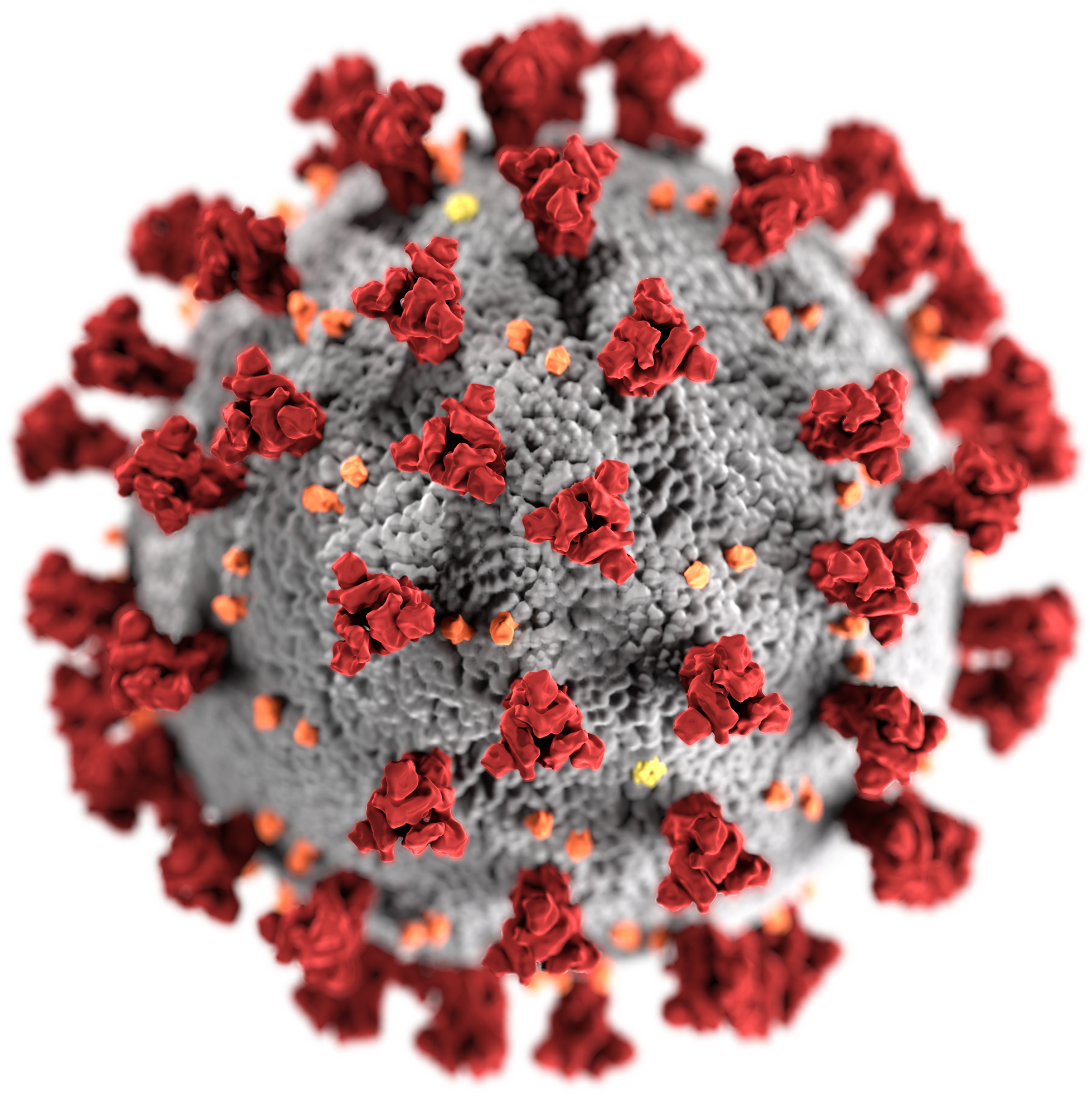
This transmission electron microscope image shows particles of SARS-CoV-2, the coronavirus that causes the disease known as COVID-19. (Image courtesy of National Institute of Allergy and Infectious Diseases Integrated Research Facility)
The first case of COVID-19 in Petersburg was identified on Sunday.
The Petersburg Medical Center informed the Petersburg Borough of a positive test result. The Petersburg Emergency Operations Center sent out Code Red text messages and emails Sunday evening to residents who are signed up for the emergency notifications.
According to the statement, the infected person is in quarantine and State of Alaska public health officials are monitoring their condition. The individual had traveled to the Lower 48, returned to Petersburg in mid-March, and quarantined at home. The person noticed mild symptoms and was tested in late March. The individual is said to be following isolation guidelines and is improving.
The Alaska Division of Public Health is investigating other people the patient might have been in contact with and will notify them if needed. Anyone who was in direct contact with the person will be in self-quarantine for at least 14 days.
Another Petersburg resident, Pete Erickson, was infected with COVID-19 while he was in Washington State getting medical treatment. Erickson eventually died, March 16 in Washington.
Petersburg’s Incident Commander, Karl Hagerman, urged the community to remain calm. He wrote in the community message that the medical center has been prepared for a positive case and was ready. He urged the community to continue with quote, “the positive and healthy behaviors that we have all been working on.”
Alaska is under a shelter-in-place mandate meaning that people are only supposed to leave their homes for essential needs. When away from home, people are asked to practice social distancing, staying six feet away from others.
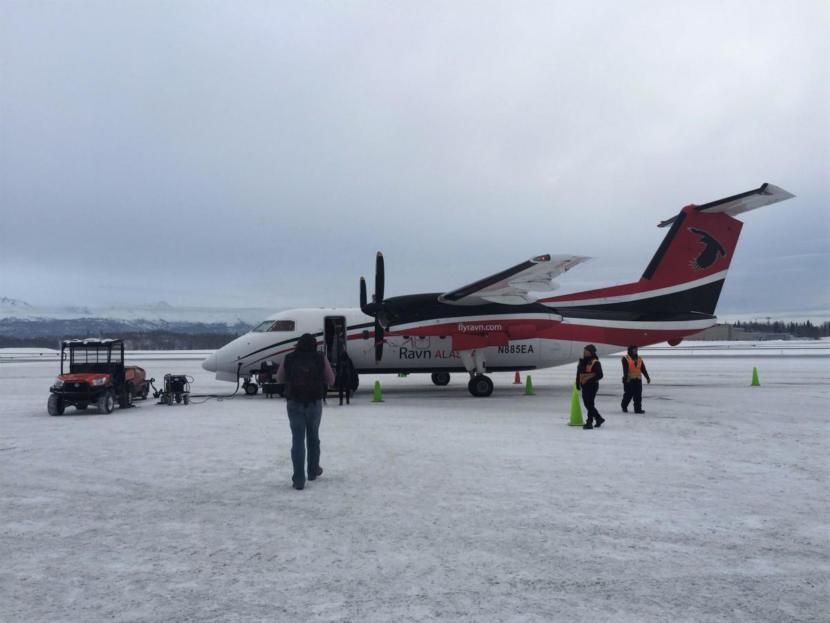
The company, which operates Ravn Alaska, Ravn Connect, and PenAir, was the largest rural carrier in Alaska, serving over 100 communities with over 1300 employees. In a statement, the company said that the decision to end service was due to a 90% drop in revenue due to coronavirus restrictions around the state.
The company said that it would be pausing the operations until it receives word about the status of the grant application it submitted to the federal government, as well as any other financial assistance it could receive from the federal government. The recently-passed $2.2 trillion CARES Act set aside over $50 billion for the airline industry.
Ravn also said that it had been in contact with other air service providers to make up for the cuts in service since it announced that it was cutting back last week.
The statement says that the company will “hit pause” until it has enough money to rehire staff and begin operating again.
This scanning electron microscope image shows SARS-CoV-2 (in yellow) — the coronavirus that causes COVID-19 — isolated from a patient in the U.S., emerging from the surface of cells (in blue/pink) cultured in a lab. (National Institute of Allergy and Infectious Diseases – Rocky Mountain Laboratories)
As of April 5, two more Juneau residents have tested positive for the COVID-19 virus. That brings the total to 14 individuals. The City and Borough of Juneau sent out a press release stating the source of the virus in both cases is pending investigation. Officials with the State Division of Public Health are reaching out to people who may have come in contact with these cases.
A 71-year-old Anchorage resident, with pre-existing health conditions, died as of Sunday. So far, six Alaska residents have died from complications resulting from COVID-19.
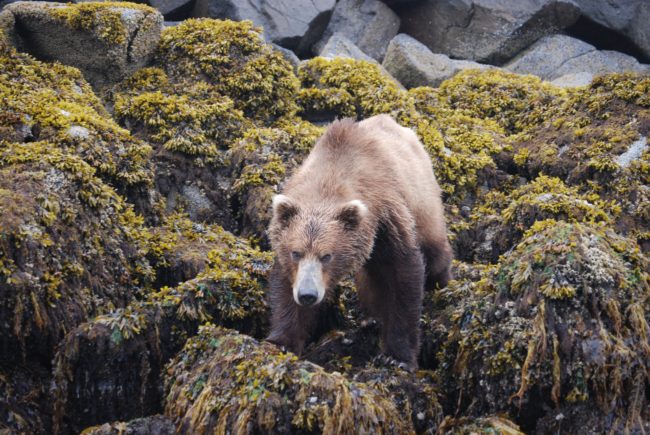
A brown bear in the Katmai area of the Alaska Peninsula, Nov. 18, 2010. (Creative Commons photo by Mandy Lindeberg/NOAA)
After announcing there would be no spring bear hunting in the state, the Alaska Department of Fish and Game has partially changed its mind. All non-resident brown and black bear hunts will remain closed through May 31. Spring bear hunting for Alaska residents remains open during that time.
“You know this was all about people moving around the state, specifically about hunters coming up from the lower 48, but also about people going from different communities in Alaska,” said Ryan Scott, assistant director of ADFG’s division of wildlife conservation.
“Right now we don’t have any concerns about bear populations. It remains to be seen how many people will take advantage of it, but it’s really good that resident hunters can get out there and take advantage of the bear opportunities.”
A Thursday letter from Fish and Game commissioner Doug Vincent-Lang reminds resident hunters to abide by health mandates, including social distancing and intrastate travel. That in-state travel between communities is prohibited except for supporting critical infrastructure or for critical personal needs.
Originally the Department closed non-resident and resident bear hunts until the end of May, via emergency order, in an effort to slow the spread of COVID-19 in Alaska. Even though Commissioner Vincent-Lang rescinded a portion of this closure, he emphasizes that general hunting has not been identified as a critical personal need, as defined by Governor Mike Dunleavy’s health mandates.
Scott said the department plans to work with the state’s Board of Game to accommodate hunters who’ve lost the opportunity.
“We recognize that there are lots of non-resident hunters planning to come to Alaska right now both for black bear hunts and brown bear hunts,” Scott said.
“We’re going to be looking for opportunities to move those permits around if we can to give those hunters the chance to come and do it again. We don’t know what it’s going to look like yet and it’s going to take some time to sort all that out. It’s important to recognize that we’ve issued drawing permits for next year already. So it’s going to take some finessing to distribute hunters across the landscape.”
Companies that accommodate out-of-state hunters can charge anywhere from a couple thousand dollars for a week-long self-guided black bear hunt to tens of thousands of dollars for a fully guided hunt from a wilderness lodge or tour boat. Brown bear hunts for non-residents are only allowed with a licensed guide or close relative who is a resident.
Eli Lucas owns Alaska Coastal Hunting, a guiding business based in Petersburg. He said the spring bear season is about half of his income for the year, but he understands the closure had to happen.
“We’ve offered refunds or switching dates but we really don’t know where to put people,” Lucas said. “We actually need more season if we’re going to put somebody to a full calendar because we don’t have room for the next years. And so, the other guides are in the same position. It’s a pretty complicated issue really.”
Outfitters, lodges, boat rentals and float plane companies will also lose business with the closure.
Fish and Game said they will announce further details in the coming days on how these spring bear hunts should be conducted by residents while complying with the Governor’s COVID-19 mandates.
Meanwhile, no closures are anticipated for other spring hunting seasons. And sport fishing remains open in Alaska with no current plans for closure.
Washington State has a temporary closure for its sport fishing along with the Columbia River in Oregon.
Community organizing has blossomed around the country in response to the COVID-19 pandemic.
“Mutual aid networks” are volunteer-led, grassroots efforts to connect people with resources that might be more difficult to access during social isolation.
Sarah Lubiner, one of the facilitators of Juneau’s burgeoning mutual aid network, said it simply on Tuesday’s Juneau Afternoon: “We’re a group of neighbors in Juneau. … We work together in solidarity to connect folks who can give things and who need things.”
The scope of Juneau’s mutual aid network includes people’s “daily, timely needs,” which have been made more difficult to fulfill due to social isolation: “Things like grocery shopping and delivery, prescription pickup, remote tutoring, checking in via phone …” Lubiner said.
“We’re not replicating the service of any direct service agencies or connecting individuals to existing organizations,” she clarified in a later interview. “We want to connect neighbors.”
How you can help
The network is entirely volunteer-led. All information can be found at the Juneau Mutual Aid website.
There are three ways anyone can get involved:
Person-to-person help: Anyone can offer resources, skills or time to others through the network. “If you have an ability to drive to the grocery store, and you aren’t immunocompromised and someone is … we can help connect those two types of people,” Lubiner provided as an example.
Neighborhood coordination: For smaller-scale neighborhood support networks, “we’re hoping to have folks act as neighborhood point-people to get groups of between five and 30 people, whether it’s your apartment building or on your street, that you reach out to, to make sure that needs are met,” Lubiner said. “If, you know, one person is going to the grocery store instead of 5 people … that’s even furthering this goal of social distancing and making sure we’re not spreading the virus.”
Resource coordination and organizing: Volunteers can coordinate requests for assistance with those who have offered to give help. Volunteers can also take charge of various behind-the-scenes coordination efforts. “We’ve had people volunteer to build the website, map out neighborhood networks,” Lubiner said. “If you want to get creative and contribute your strengths, we’re here as a platform. Just reach out.”
The mutual aid effort isn’t meant to be a last resort to supply people with resources amid scarcity. Rather, Lubiner said it’s an opportunity for anyone to feel more connected within their communities: “While we are starting this organization in a time of pandemic, we hope that it creates connection and value in the community long beyond this time.”
Lubiner closed her interview by reminding listeners of the ethos of mutual aid networks: “It comes from the idea that person-to-person connection and organizing is the root of justice, and is the way we can support in each other in hardship and day-to-day life. … We want to honor that history.”
There are more than 140 mutual aid networks across the country, self-organized by volunteers equipped with shared spreadsheets, Zoom calls and the belief that effectively responding to societal crises means taking care of one another.
Those interested in learning more and getting involved with the mutual aid network can visit juneaumutualaid.weebly.com.
This transmission electron microscope image shows particles of SARS-CoV-2, the coronavirus that causes the disease known as COVID-19. (Image courtesy of National Institute of Allergy and Infectious Diseases Integrated Research Facility)
Two more Alaskans have died of COVID-19, bringing the state’s total to five.
Additionally, 13 more people have tested positive for virus bringing the total number of confirmed cases to 171. However, the state’s Chief Medical Officer Dr. Anne Zink said Friday that figure includes 16 people who have now recovered from the virus.
To date, 16 people have been hospitalized with coronavirus-related complications.
The new cases are people who are from Anchorage, Southeast Alaska and Interior Alaska — however it’s not clear where those Alaskans are actually located as new cases are reported based on where a person lives not where they were when they tested positive.
To date, state and private labs have performed more than 6,000 tests.
Close
Update notification options
Subscribe to notifications
Subscribe
Get notifications about news related to the topics you care about. You can unsubscribe anytime.