Alaska coronavirus news

Live updates and information on COVID-19 in Juneau and Alaska

As COVID-19 cases rise, Juneau hospital staff say they’re preparing for ‘dire circumstances’

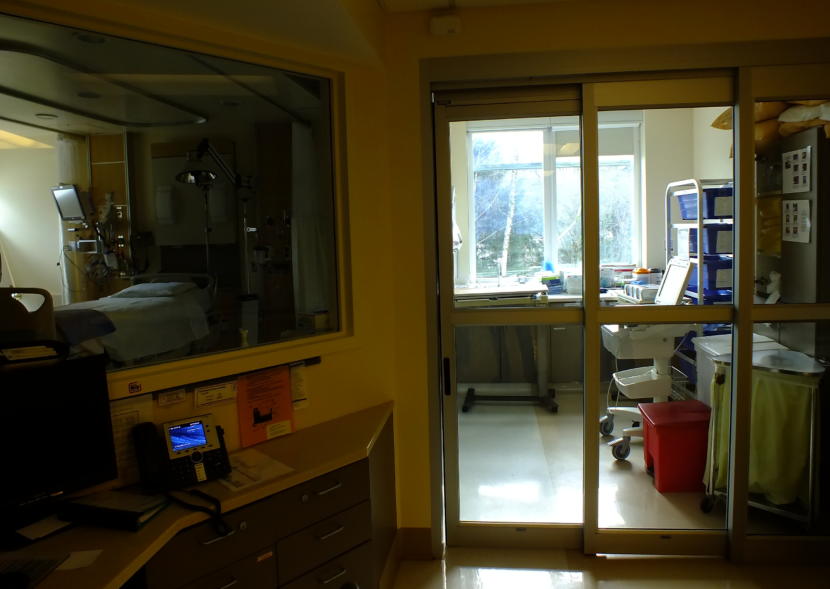
Isolation room, left, for contagious patients, and medical staff anteroom, right, at the end of Bartlett Regional Hospital’s critical care unit. (Photo by Matt Miller/KTOO)

The number of people hospitalized around Alaska with the disease caused by the coronavirus is still somewhat low compared to other states — only 23 as of Monday.

Most patients who test positive for the disease are sent home to isolate themselves. But that’s going to change as the number of COVID-19 cases go up.

At Juneau’s Bartlett Regional Hospital, staff are already preparing for a potential spike in coronavirus patients.

Stories of the COVID-19 pandemic in Lower 48 hospitals include doctors, nurses and first responders falling victim to the disease.

There’s also been the ongoing shortage of medical supplies like ventilators, masks and gowns.

And hospitals have been overwhelmed by a big surge in patients.

In Juneau, Nicole Skeek-Wheeland has similar concerns about Bartlett Regional Hospital. She worries if she gets the virus, she’ll likely end up there. After lung infections requiring a barrage of antibiotics, she’s left with a very weak immune system.

That makes her especially upset when she sees people on social media not taking the coronavirus seriously and claiming “that this is just a big hoax,” she said.

“‘This isn’t real. Don’t believe in science. Pray and send good thoughts and prayers to it,’” said Skeek-Wheeland, remembering some of the posts on social media. “We’re really putting ourselves in a really bad situation.”

Skeek-Wheeland worries that — between Juneau’s population and additional patients possibly coming in from neighboring communities — Bartlett would be quickly overwhelmed.

Skeek-Wheeland isn’t the only one in Juneau asking about Bartlett’s ability to handle a big spike in patients and whether there’s enough equipment on hand.
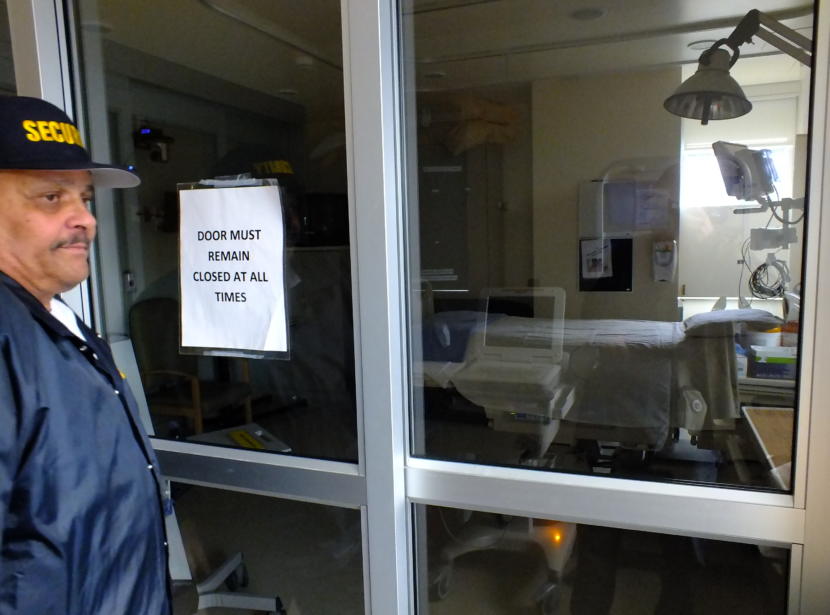
Mike Lopez, emergency management coordinator and head of security for Bartlett Regional Hospital, closes the door to the patient isolation room in the critical care unit. (Photo by Matt Miller/KTOO)

Like other hospitals around the country, Bartlett has a limited number of ventilators to help seriously ill patients breathe. Fifteen can be used immediately. About two dozen additional machines can be modified to provide oxygen to patients.

But capacity isn’t just a question of the kind of equipment the hospital has available to treat COVID-19 patients. It’s also about where they treat those patients and whether they have enough room.
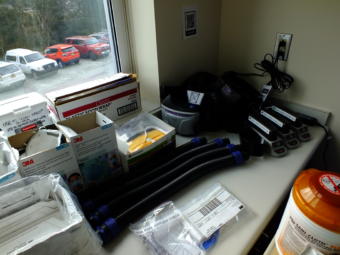
Personal protective equipment, or PPE, including parts and batteries for medical staff’s respirators, are readied for use just outside the patient isolation room in Bartlett Regional Hospital’s critical care unit. (Photo by Matt Miller/KTOO)

On a floor of the hospital for the most seriously ill patients, there are two special rooms partially enclosed in glass.

“The staff would don their PPE here,” explained Mike Lopez, the emergency management coordinator for the hospital, while standing in the first of the two glass rooms.

“And then here, they would perform patient care on a patient over here,” he said as he opened the door to the second room.

The second room is where a very ill and contagious COVID-19 patient would be treated. This area is specially designed to contain the virus, and to protect other patients and medical staff.

Inside, a whooshing sound comes from air being pulled through high-efficiency filters that remove any contagious airborne viruses.

As Lopez left the patient isolation room and the outer anteroom, a high-pitched tone sounded off.

“Shucks,” said Lopez. “Aw, we just set off the alarm.” The door to the isolation room wasn’t closed entirely.
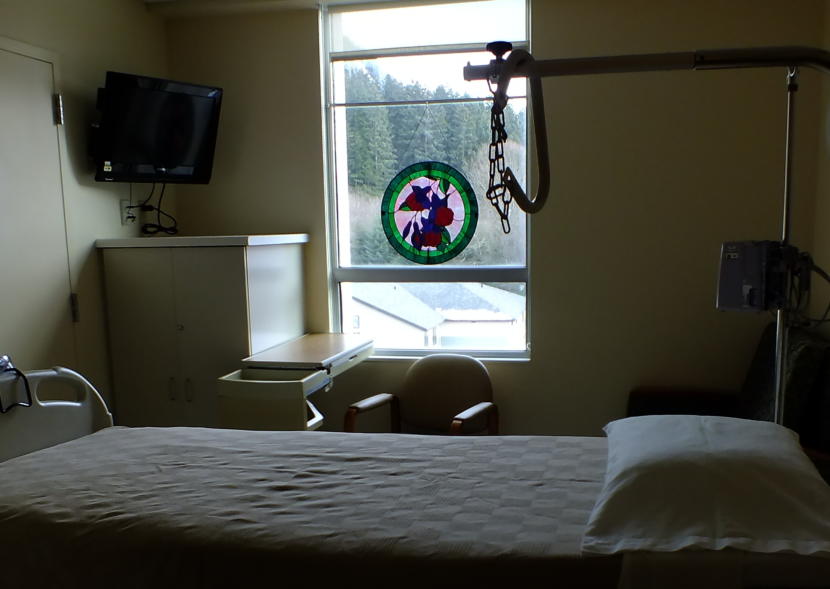
This room looks just like any other hospital room at Bartlett Regional Hospital. But you must enter through a double-set of doors, and the air is pulled through special filters that can screen out viruses. This room — and three others just like it — can isolate contagious patients who may not need the same level of care as provided in the special isolation room in the critical care unit at Bartlett Regional Hospital. (Photo by Matt Miller/KTOO)

Elsewhere in the hospital are four specially-ventilated rooms for isolating contagious patients who aren’t critically ill.

Additionally, an entire wing of the hospital has been turned into a temporary isolation ward, with portable filter machines for another eight contagious patients.
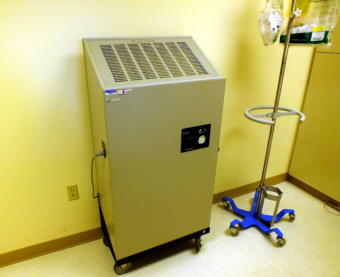
Bartlett Regional Hospital has four of these portable filter machines that have been readied for use in a temporary isolation ward. Roughly 3 feet tall, they can filter out any airborne viruses from a regular hospital room. (Photo by Matt Miller/KTOO)

Right now, Bartlett is licensed for 56 beds.

But Chief Nursing Officer Rose Lawhorne said they’re preparing to double that.

“We could fit between 90 and a hundred patients in the hospital,” Lawhorne explained.

“And then, we just reviewed our surge plan that would include Rainforest Recovery,” she said. “So, that’s now empty. We could serve another 30-plus patients over there.“

That’s for patients who don’t need critical care or who may be recovering from the coronavirus.

Lawhorne said they also have access to a portable emergency tent hospital that could isolate 16 contagious patients and supply oxygen to another 44.

In total, they could handle 190 patients.

If they still need more space, Lawhorne said they plan on using Centennial Hall or school gyms.

“So we do consider those moments where we don’t like to think about it. You know, the dire circumstances,” Lawhorne said. “We are preparing to care for our friends and neighbors who need us in a situation that we have not seen in our lifetime. And so we’re all working very hard.”

Like Skeek-Wheeland, Lawhorne has been thinking very carefully about the equipment they have and how many patients they can handle at once. That’s why Lawhorne encourages everyone to wash their hands, practice social distancing and stay home.

And there’s a big reason why that message has been drilled into Alaskans over and over again as the virus spreads.

A recent paper by the University of Alaska Anchorage describes how firm shelter-in-place measures enacted by the state and municipalities is the only effective, long-term way to limit the spread of COVID-19. And it’s the way to flatten the curve or spike of infections so that hospitals like Bartlett are not overwhelmed all at once.
 

Meet the team of Alaskans trying to trace and contain every case of COVID-19

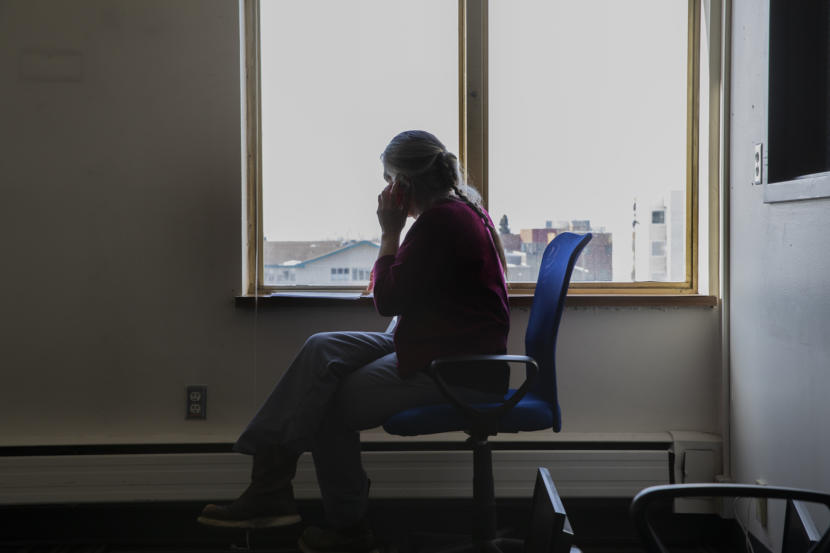
Anchorage School District nurse Elida Spiro sits in an empty room at the Anchorage Health Department Tuesday, March 31, 2020 as she makes contact with a person that has been quarantined due to possible exposure to Covid-19.

One of Alaska’s first positive cases of COVID-19 was a person who’d been to a grocery store while they were infectious.

Normally, this wouldn’t be cause for concern, given the need for prolonged exposure to significantly increase a person’s risk of getting sick. But in this case, a long wait at the checkout kept the infectious person in line for more than half an hour — potentially exposing the people behind and ahead of them to a deadly disease.

It fell to Drew Shannon, a nurse employed by the Anchorage Health Department, to find those unwitting “close contacts.” Armed with a receipt supplied by the sick person, he worked with the store to reach the two other people from the checkout line, then made sure they were quarantined to keep the disease from spreading further.

Both have now finished their quarantine without developing symptoms.

Shannon’s work is known as “contact tracing,” and it’s a critical piece of public health officials’ battle against COVID-19. The task entails finding, quarantining and monitoring people exposed to a disease, along with identifying the infection’s original source.

In Alaska, the job falls to a network of trained workers, many of whom are epidemiology staff and public health nurses from the state Department of Health and Social Services. In Anchorage, eight city nurses take on many of the cases, with support from school nurses who were reassigned after classes were canceled. One former city nurse even came out of retirement to help.

While public health experts say contact tracing is crucial to keeping COVID-19 in check, the nurses’ regular phone calls and check-ins also bring a measure of humanity and comfort to one of the groups of Alaskans with the highest risk of developing the disease.

“It’s nice to have somebody checking to see if you’re okay,” said Robert Bowles, a 60-year-old Juneau man who tested positive for COVID-19. “The fact that they were calling every day felt good.”

Contact tracing is part of what epidemiologists call “containment” — the essential work of determining where the virus already is so that further spread can be slowed.

In Wuhan, the Chinese city where the COVID-19 pandemic began, more than 1,800 teams of epidemiologists, each made up of at least five people, traced tens of thousands of contacts a day, according to the World Health Organization. Up to 5% of contacts were subsequently confirmed to have the disease.

Containment is not the only front on which authorities fight COVID-19. But the work is particularly important in Alaska because of its dispersed and remote villages that lack advanced health care infrastructure, said Joe McLaughlin, the state’s top epidemiologist. That means Alaska will continue its focus on containment even if the number of cases escalates to the point where “widespread community transmission” tests its tracking capacity, McLaughlin said.

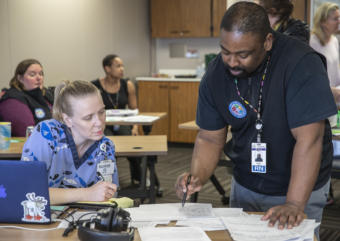
Anchorage School District nurse Bethany Zimpelman looks at informationwith Anchorage Health Department’s Michael Fritz during her shift at the Anchorage Health Department Tuesday, March 31, 2020.

For now, officials say they have enough manpower to handle the cases confirmed each day.

State nurses were checking in with more than 60 people in Ketchikan and 20 in Juneau in recent days, according to Sarah Hargrave, a Juneau-based state nurse supervisor. Anchorage city and school nurses, plus support staff, were tracking 126 close contacts and 56 confirmed cases of COVID-19 on Saturday, according to the municipal health department. (Anchorage’s figures may not include people in the city who have recovered or are being monitored by other agencies, like the military.)

Contact tracing starts with a positive test result, which is assigned to an individual nurse or trained public health official for an investigation.

Many of the state and city public health nurses have similar experience investigating other illnesses, such as tuberculosis and sexually transmitted infections like syphilis or gonorrhea. But many of those cases are easier to track than COVID-19, which can be transmitted through sometimes-invisible respiratory droplets.

“Gonorrhea, for example, the mode of transmission is pretty clear,” said Shannon, the Anchorage nurse. “With COVID-19 respiratory droplets, that could be a lot more people.”

The investigator starts by calling the patient with a series of questions about their travel and who they’ve spent time with.

In countries without the U.S.’s privacy protections, public health authorities have reviewed cellphone data, surveillance camera footage and credit card transactions to help with their contact tracing.

In Alaska, nurses can use Facebook or other social media to locate a contact, or they might ask for help from a business. And the U.S. Centers for Disease Control and Prevention has a system to find people who sat on a plane near someone later diagnosed with COVID-19.

Otherwise, information comes mostly from patients, who are generally eager to cooperate, said McLaughlin, the state epidemiologist. Their close contacts, he added, are “their friends, their family members, their co-workers.”

“They really want to help protect them,” he said.

Close contacts are defined as people who spent more than 5 or 10 minutes within six feet of the patient during their infectious period; they’re asked to quarantine for two weeks. After developing a list, nurses and support staff will then call each patient and close contact once or twice daily, asking for temperature readings and other symptoms.

Once a nurse has established a rapport, they might switch to email or texting, or even the Whatsapp messaging program. Some of the Anchorage nurses have been speaking in Spanish with families, and they’ve also enlisted a Hmong translator.

But the work goes beyond collecting data on symptoms. Nurses have helped get food to people’s homes if they’re stuck in quarantine, and they can support people emotionally at a time when they’re isolated, vulnerable or afraid.

“Some people are scared. They’ve heard the horror stories,” said Hargrave, the state nurse supervisor. “A really important part of getting through this is having some social connection and support, and to not feel alone. And we’re happy to provide that when we can.”

In Bristol Bay, spring means salmon — and thousands of fishermen from coronavirus hot spots

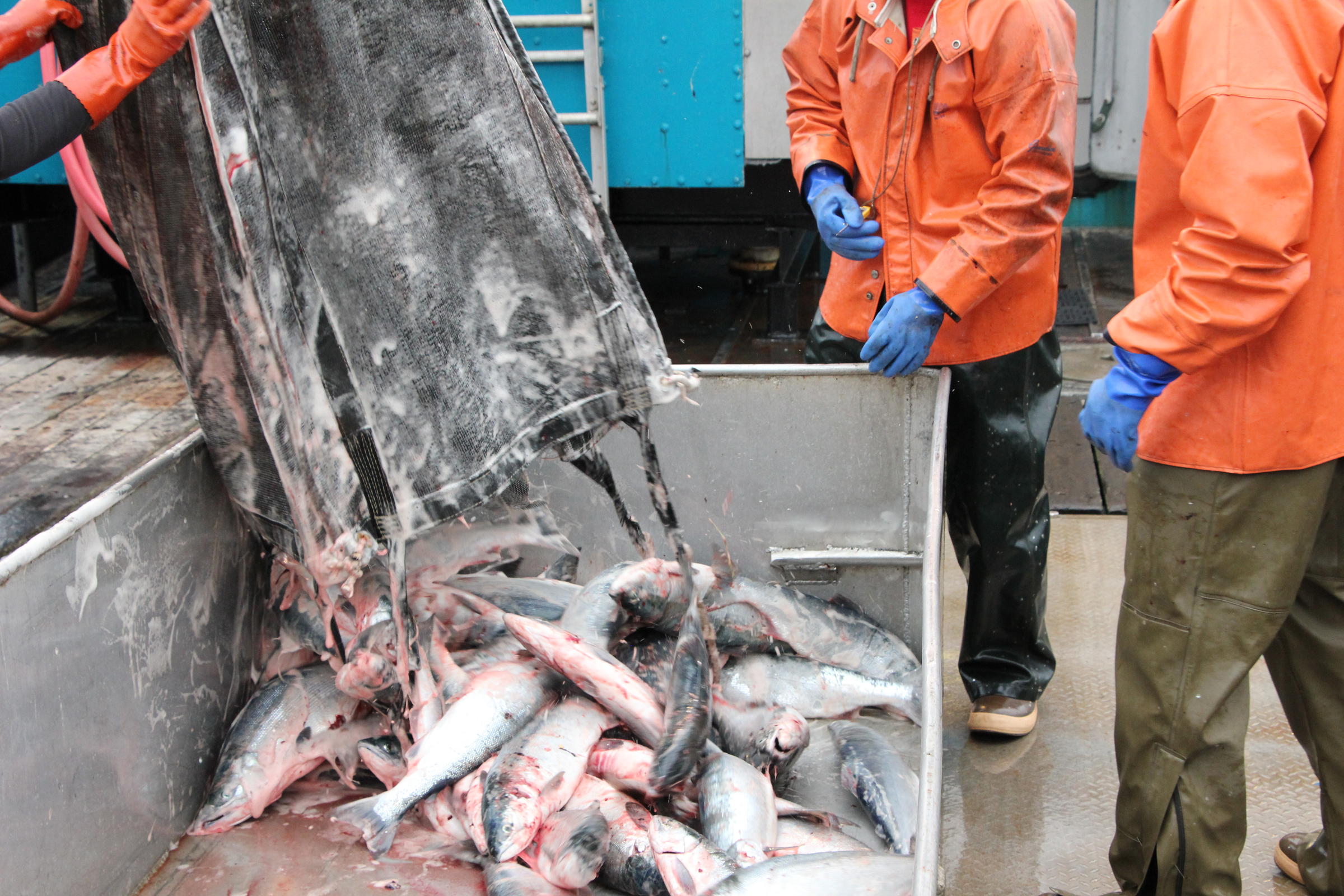
Sockeye salmon delivered in Bristol Bay. (File photo by KDLG)

ProPublica is a Pulitzer Prize-winning investigative newsroom. Sign up for The Big Story newsletter to receive stories like this one in your inbox.

Later this spring, Alaska’s Bristol Bay will blossom into one of the largest annual salmon fisheries in the world.

The regional population of about 6,600 will triple in size with the arrival of fishermen, crews and seasonal workers on jets but also private planes and small boats, many traveling from out of state.

And yet the heart of the health care system in southwestern Alaska, in a corner of the state where the Spanish flu once orphaned a generation, is a 16-bed hospital in Dillingham operated by the Bristol Bay Area Health Corp. Only four beds are currently equipped for coronavirus patients. As of Wednesday, the hospital had a few dozen coronavirus tests for the entire Florida-sized region, tribal leaders said.

If those newly arrived workers need to quarantine for two weeks, as mandated by the state, residents said it’s unclear where everyone will hunker down. Local store shelves are already bare of Clorox, Lysol and rubber gloves.

Dillingham, the largest community in the Bristol Bay region with a population of 2,300, is 320 miles from Anchorage by air.

“We’re scared. … People come from all over the world for Bristol Bay fishing,” said Gayla Hoseth, second chief for the Dillingham-based Curyung Tribal Council. “There’s 7,000 of us who live here, and this hospital cannot handle the 7,000 of us if we get sick. Imagine (when) our population triples and quadruples in the summertime.”

Compounding matters, the hospital executive who ran daily operations for the health care system is out of a job after downplaying the coronavirus threat to colleagues.

A March 16 email from the executive — which repeated a conspiratorial meme suggesting the coronavirus is somehow a politically motivated phenomenon — set flame to a deep anxiety among some tribal leaders over the vulnerability of Alaska villages in a pandemic.

“Just a reminder that FLU kills many every year!” wrote Lecia Scotford, who was the chief operating officer. (The coronavirus is not like the flu. It appears to be more contagious and more lethal.)

The message soon began to circulate in the Bristol Bay region, drawing a blistering response from some tribal and local leaders.

Robert Clark, president and chief executive of Bristol Bay Area Health Corp., said Scotford’s last day was Monday. He would not say if she was fired, citing “personnel stuff,” but said “she was separated.”

Scotford did not respond to emails, phone calls and Facebook messages requesting comment. Her email to lists of “division managers” and “department managers” within the regional health organization also emphasized the need for calm, common sense and good hygiene, and for the hospital to be prepared to serve the public.

“That (email) was very concerning to me because that kind of lets people’s guard down,” Norman Van Vactor, president of the Bristol Bay Economic Development Corp., said in a phone interview.

Bristol Bay is a magnet for people in the summer, with a seasonal migration of about 13,000 workers for the lucrative fishing season. The commercial salmon fishery here is the largest in the state, but as of 2010, about 60% of earnings went to out-of-state permit holders.

Almost all the major Bristol Bay seafood processing companies are based in Seattle, an early hot spot for coronavirus, and two thirds of Bristol Bay processing workers live in West Coast states at other times of the year, according to the Institute of Social and Economic Research at the University of Alaska Anchorage.

The Alaska Department of Fish and Game forecasts some 34.6 million sockeye salmon will be harvested there this year.

“When it comes to wild salmon, we are over half the world’s sockeye and over half of the Alaska salmon value,” said Andy Wink, executive director for the Bristol Bay Regional Seafood Development Association.

The nonprofit industry group on Thursday issued an advisory urging the fleet to delay travel to Bristol Bay until May 1.

“Keep in mind, it is possible to carry this virus without symptoms and unknowingly infect others leading to overtaxed medical capacity and/or death(s),” the advisory said. “You do NOT want to be the outsider photographed or seen around town in public spaces if this situation turns for the worst,” the group warned its fishermen.

Wink said his nonprofit is working with local governments on a plan to avoid overcrowding Bristol Bay Area Health Corp. clinics and the Dillingham hospital with sick fishermen, processors and support workers.

“We are taking the stance that we don’t want to rely on the local clinics or if we do, the need to be bolstered substantially,” Wink said.

As the health care provider for the region, Bristol Bay Area Health Corp. operates the only regional hospital and the clinics in 21 surrounding villages. It employed 470 people and reported revenue of $76.7 million in 2017, according to a tax form that Scotford submitted to the IRS.

Clark, the health corporation chief executive, said the Dillingham hospital is seeking more equipment to meet the potential for coronavirus patients among the local and visiting fishing industry patients.

Chief nursing officer Lee Yale said the hospital had 37 tests on hand as of Wednesday, and that all tests performed had returned negative. The Dillingham facility has no ICU beds, four negative pressure rooms to treat COVID patients without infecting others, plus two ventilators for the region.

“We have staffing but if they get ill we will be in a tight spot,” she wrote in an email. “(The) fishing industry will devastate our surge plan and we can not support and cover our villages if this season opens.”

Meantime, for many in Bristol Bay, the looming COVID-19 threat recalls family histories of death and loss in the face of past epidemics.

“We are the survivors of the survivors of the orphans of the Spanish flu,” said Hoseth, the Dillingham tribe second chief.

Another member of the tribe, tribal administrator Courtenay Carty, said her great-grandmother was orphaned in Dillingham by the 1919 flu and raised by family members, and her grandfather was orphaned by tuberculosis in the 1940s.

“The fact that all of our contemporary families are descendants of those children and few adults that survived 1919 is one of (the) major reasons why we are so passionate about protecting ourselves from this pandemic,” she said. “What is history to others is our tribal and familial identities.”

Her tribe declared a state of emergency because of the coronavirus on March 24, calling for a stop to all but essential travel to the city.

Clarification, April 3, 2020: This story was updated to more accurately describe who raised tribal administrator Courtenay Carty’s great-grandmother.

Filed under:


Will the oil price crash disrupt the BP-Hilcorp deal? Alaska state regulators want to know.

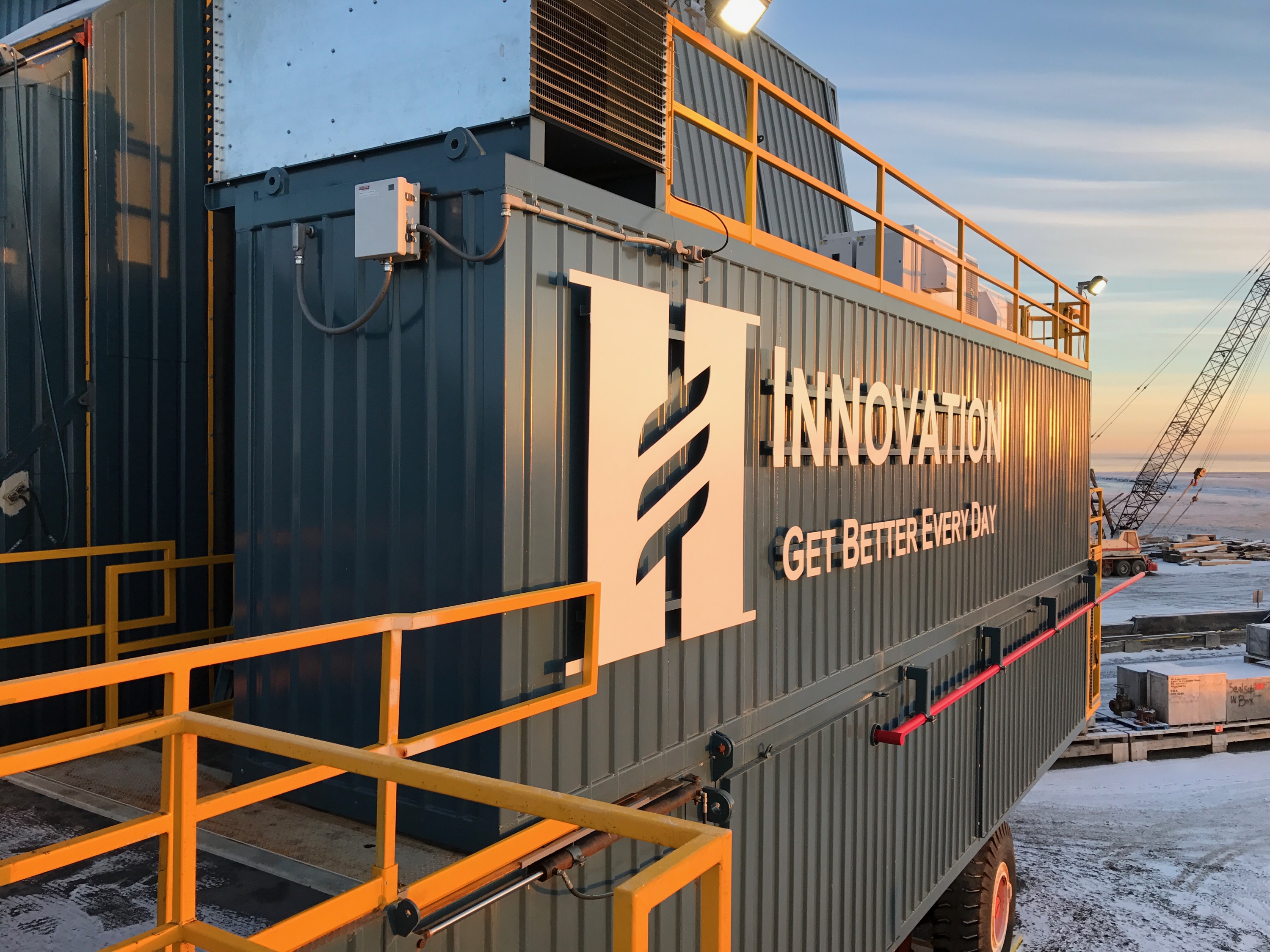
Hilcorp’s Innovation drilling rig on the North Slope. (Photo courtesy of Hilcorp)

State regulators have asked Hilcorp, the independent oil company buying BP’s Alaska assets, to disclose whether and how the pandemic-driven crash in oil prices will affect its ability to seal the $5.6 billion deal.

In an 18-page order Thursday, the Regulatory Commission of Alaska asked BP and Hilcorp affiliate companies to answer 32 different questions, including whether “recent changes in financial markets” have affected Hilcorp’s ability to finance the deal.

“If market conditions have not impaired access to capital, please explain the sources of capital for this acquisition,” the order said.

Hilcorp’s finances have become an increasing area of focus for those following the deal amid a historic crash in the price of oil last month — driven by both plummeting demand and a feud between Saudi Arabia and Russia over whether to further reduce production in response. Alaska North Slope crude prices have plummeted from $50 a barrel in early March to $22 by Friday.

Hilcorp has not said exactly how it plans to raise the full $5.6 billion, but ratings agencies have said that heavy borrowing could cause them to reduce the company’s credit rating.

Two watchdog groups also say they’re concerned about whether Hilcorp’s debt levels could affect its ability to operate safely.

In a letter to the RCA before the order was issued, the Prince William Sound Regional Citizens’ Advisory Council said the commission should require Hilcorp to file “new and updated financial statements” to reflect the “current investment environment.”

“Much has changed since Hilcorp submitted its initial financial statements and sales agreement with BP. The changes are of a magnitude that the analysis of Hilcorp’s financial fitness might be affected,” wrote Donna Schantz, the director of the council, which was created after the 1989 Exxon Valdez oil spill.

“The council is not opposed to this transaction,” she wrote. “It just wants to be sure the state conducts its due diligence responsibilities and that Hilcorp is fit and able to carry-out its significantly increased and critically important responsibilities associated with this transaction, including the prevention of oil spills and the capacity to respond if one should occur.”

The Alaska Public Interest Research Group sent a similar letter to the RCA on Friday. It praised the commission for its request for additional information about the effects of the oil price crash. But it argued that Hilcorp should still be required to provide complete updated financial statements, which the RCA has not asked for.

“Without requiring updated financials, the RCA will be evaluating a company whose past financial statements bear little relationship to reality,” said the letter, written by the research group’s policy analyst, Phil Wight.

A Hilcorp spokesperson, Luke Miller, declined to comment. The company’s founder, Jeff Hildebrand, participated in a White House meeting between President Donald Trump and oil company executives Friday, where he told the president he was there representing “the family-owned businesses that are in this industry.”

BP, in an announcement Wednesday, said its broader asset sale initiative that includes the Hilcorp deal “remains on track,” though the timing of when it receives the money from the sales “may be revised as transactions complete, particularly while volatile market conditions persist.”

“This includes the sale of our Alaskan business to Hilcorp, which we continue to expect will complete during 2020, subject to regulatory approvals,” the announcement said. “We will provide further information on this transaction going forward, as appropriate.”

In its order Thursday, the commission said it wants the additional information from BP and Hilcorp “to assist us in our analysis of whether Harvest Alaska’s proposed acquisition of BP’s Alaskan assets meet our statutory standards.” Other questions involve liability and insurance, along with the operations of pipelines that a Hilcorp affiliate is acquiring stakes in, including the trans-Alaska pipeline.

The companies’ responses are required by May 4.


Pogo mine worker tests positive for COVID-19 after 12-day shift

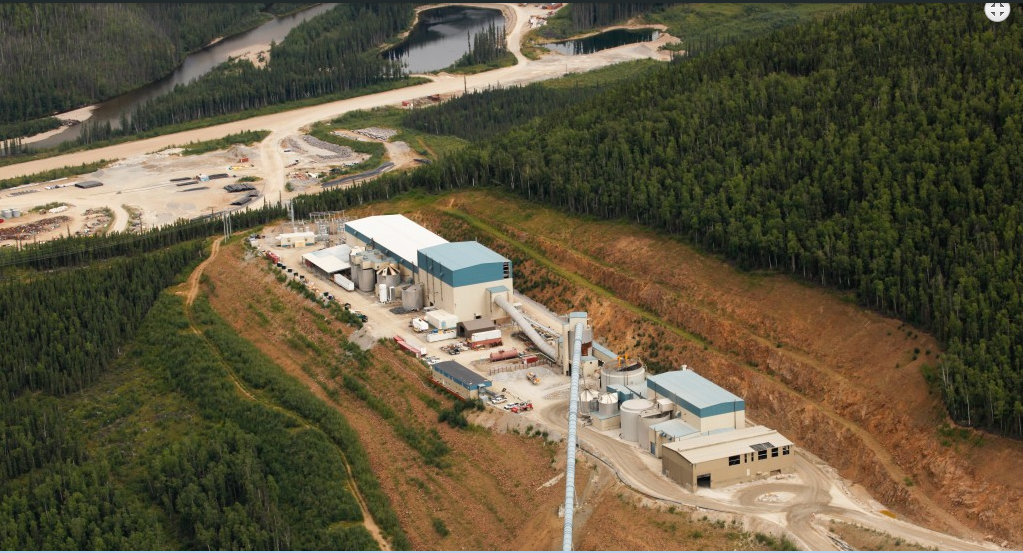
The Pogo mine and mill complex includes facilities for administrative offices, housing, meal service and emergency services. (Photo courtesy of the Pogo mine)

Update (April 16)Tim Ellis, KUAC – Fairbanks

Officials with the company that owns the Pogo gold mine in Interior Alaska say more workers have tested positive for COVID-19. (Read more)

Original story

A worker at the Pogo gold mine has tested positive for COVID-19. And he may have come in contact with up to 14 others at the mine that’s located 38 miles northeast of Delta Junction.

Pogo owner Northern Star Resources issued a news release Monday that said the worker tested positive after coming off a 12-day shift at the gold mine. The worker lives in Fairbanks and is with family and getting medical care. He hasn’t developed serious symptoms or complications, and he’ll be under observation and isolation for 14 days.

The company said eight other employees at Pogo who may have been exposed to the coronavirus were also in isolation Sunday at the mine while they were waiting for transportation from the site.

Those employees, and six others who were on leave but may also have been exposed to the virus, will all remain in isolation for 14 days and under observation and treatment if needed.

The Northern Star news release said work at Pogo mine will continue. The company said it will continue its social-distancing policies and stringent hygiene and cleaning standards. And it said “comprehensive sanitation on site” is under way.

Alaska lags far behind rest of country on census response

See the full map at www.censushardtocountmaps2020.us

Virus or not, the U.S. census is underway.

Americans are going online, on the phone and to the mailbox to complete the once-a-decade questionnaire. But so far, Alaska has the lowest response rate of any state in the union.

As of Monday, 28.7% of Alaska households have filled out their census form, well below the national rate of 42.8%.

Alaska’s sluggish response rate is alarming but understandable, said Cook Inlet Housing Authority Chief Operating Officer Gabe Layman. He’s one of the people behind the Alaska Counts campaign to improve the state’s census results.

Layman said many Alaskans have been waiting for a knock on their door.

“People in remote Alaska were not notified that they could respond online, because it was anticipated that a census-taker would be going to every single household,” he said.

That door-to-door work is on hold now, to avoid spreading the coronavirus. But Layman said you don’t need to wait for anything.

“We’re very hopeful that, as the word gets out, that people in remote Alaska and other parts of the state can self-respond, either online at 2020census.gov or by phone at 1-844-330-2020, that they’ll take the opportunity to do so,” he said.

If you get a mailer from the census, it includes a code you can use in your online form. But Alaskans do not need that code to complete the form on census.gov.

“You can simply go to the site, indicate that you want to fill out your census form online, and there’s a little prompt to enter the code,” he said. “But there is a box that you can check that just says, ‘I don’t have my code,’ and it’s not a problem.”

The form can be completed by phone, too. Layman said it takes a few minutes. He also said there’s no penalty if a household accidentally reports more than once — the census has methods of weeding those out.

Getting a full and accurate count of Alaskans is vital, Layman said, for funding schools, public health and all kinds of other programs.

“There are a lot of folks on the front lines helping battle the spread of COVID-19. One thing that we can all do from the comfort of our homes, is to hop online or to pick up a phone and complete our census,” Layman said. “And when we do that, it means we’re ensuring that critical funding flows into our communities for the next 10 years.”

While the state’s census response rate is bad, there are a couple bright spots on the Alaska map — areas where people did fill out their census forms in above-average numbers. (We’re looking at you, Forest Park neighborhood of Anchorage, and Juneau’s Mendenhall Valley.)

The state with the highest response so far? Minnesota, where more than half of the households have already responded.

Site notifications
Update notification options
Subscribe to notifications