Alaska coronavirus news

Live updates and information on COVID-19 in Juneau and Alaska

UAA study: To slow down COVID-19, Alaska will need strict interventions for months

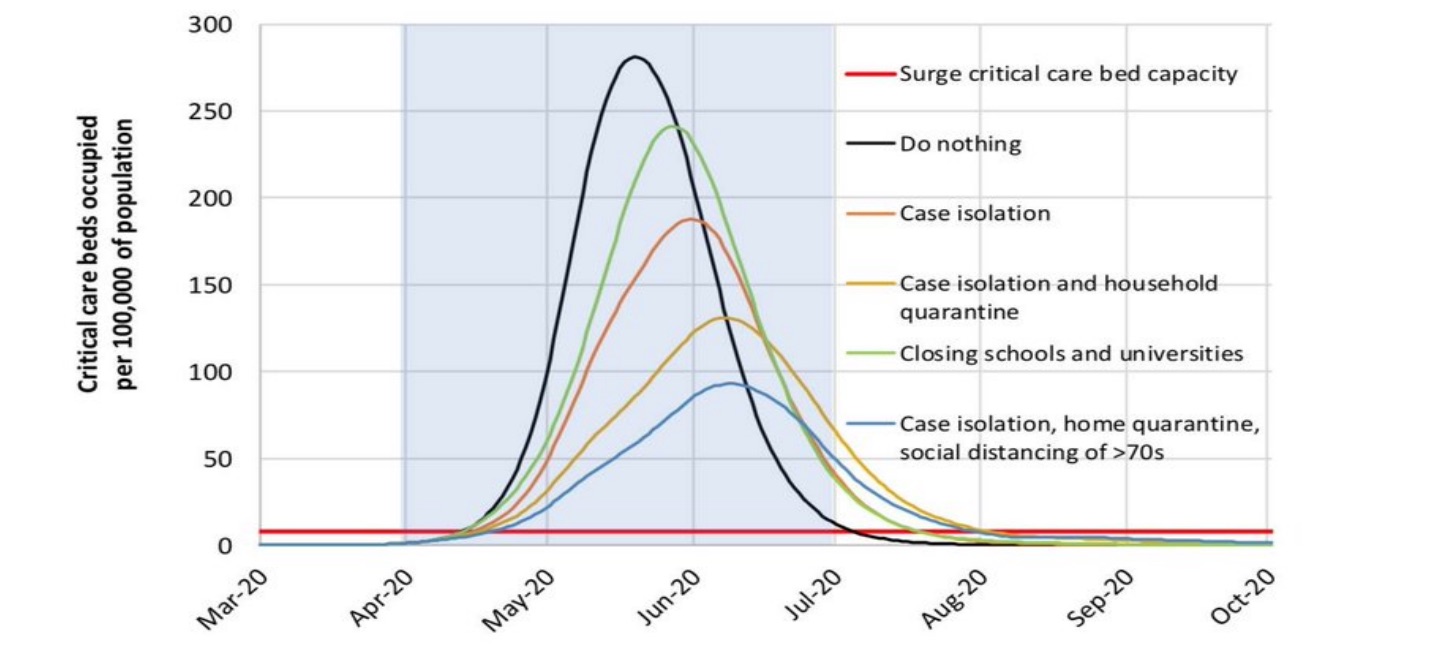
A University of Alaska Anchorage study released Monday finds that the optimal mitigation strategy, applied over three months, was case isolation, home quarantine of household contacts, and social distancing of people over 70. (Graphic courtesy of University of Alaska Anchorage College of Health’s Division of Population Health Sciences)

A new academic study of the coronavirus’s likely impacts on Alaska is clear: To prevent thousands of deaths, strict interventions will be necessary for months.

recent paper by the University of Alaska Anchorage College of Health’s Division of Population Health Sciences predicts the effects of different containment strategies could have on hospitalizations and mortality. It gives figures for Anchorage and the Matanuska-Susitna Borough, as well as the state overall.

In no uncertain terms, the study’s authors recommend maintaining firm shelter-in-place measures, similar to what’s been recently enacted by the state to curtail widespread contagion and death.

“The social and economic effects of the measures which are needed to achieve this policy goal will be profound,” the study says.

Social distancing measures like school and university closures will significantly help reduce transmission.

“The more we do to slow down (COVID-19) transmission, the more lives we save,” said Dr. Tom Hennessy during a news conference Monday morning held by the Anchorage mayor’s office.

The study is based on two different data-based models of coronavirus spread. It’s meant to demonstrate to Alaska policymakers the potential outcomes from different approaches to dealing with the virus.

“What the university team has done is incredibly helpful,” said Anchorage Mayor Ethan Berkowitz during the news conference.

“If no action is taken,” the study says, “the model predicts that new cases will rapidly overwhelm Anchorage/MatSu’s medical capacity within weeks and will result in approximately 5,800 deaths in Anchorage. Anchorage/Mat-Su currently has just over 982 hospital beds, and in this scenario, we could need capacity to care for up to 7,400 hospitalizations at the peak of cases.”

The only scenario examined in which hospital capacity is not at some point overwhelmed is a lockdown similar to the one instituted in Wuhan, the city in China that was an early epicenter of the epidemic.

Moderate social distancing measures have the potential to push out the peak of hospitalizations in the Anchorage area by three-to-four weeks and reduce the volume of hospitalizations substantially. That would buy medical providers a little bit more time, but it would still overwhelm facilities by late April.

The shelter-in-place measures outlined by the study’s authors are similar to what most Alaskans are living with right now. Berkowitz has called it “hunkering in place.”

The good news under the academic model is that the strategy is effective while it’s in place, limiting the pace of hospitalizations and deaths.

“This scenario predicts very few cases while the response is in place,” the report says.

“We have done a lot to stop the virus,” Hennessy said of the state and municipality’s approach so far, adding that, as a result, the number of deaths from the disease could ultimately be much lower.

However, should the policies be lifted all at once, the volume of hospitalizations will climb rapidly, as if no measures had been enacted at all. It would, in effect, merely put off a surge in COVID-19 cases, buying time for health care providers. That could be mitigated by a phased approach to lifting restrictions on social movement, the study says.

The predictions for the state on the whole are not significantly different. With no containment measures, the authors caution, the number of virus cases will overwhelm the state’s hospital capacity in a matter of weeks, leading to “approximately 11,000 deaths.”

Idiosyncrasies in Alaska’s geography, the small population size of many communities and its unique health care system make it harder to model than larger metro areas. The relative isolation and early adoption of containment measures, however, may help limit the spread.

In effect, the study outlines different ways Alaskans can delay the worst impacts of the coronavirus and keep medical facilities from being dramatically overwhelmed, plus some of the tradeoffs the authors believe are necessary to facilitate that.

But, they concede, the measures are no silver bullet.

Asked how long he expects the city to maintain restrictions, Bekowitz said, “We are closer to the beginning than the end.”

Hennessy echoed that perspective.

“To avoid a rebound in transmission,” the UAA study concludes,  “these policies will need to be maintained until large stocks of vaccine are available to immunize the population — which could be 18 months or more.”

 

Advice from a life coach: How to develop a ‘resilience mindset’ in times of adversity

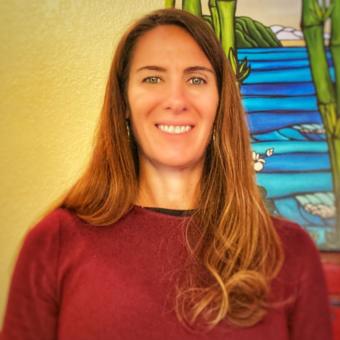
(Photo courtesy of Brandee Gerke)

“How can you make this obstacle your greatest gift?”
— Brandee Gerke

“As a life coach, I help people become clear about desired changes they want in their life,” said Brandee Gerke on Wednesday’s Juneau Afternoon. “The first thing we want to do is get people into a resourceful and positive place.”

Gerke is a Juneau-based life coach who runs Thrive Life Coaching. Gerke frames her coaching strategies around what she calls a “resilience mindset,” or the capacity to navigate change and adversity.

“We can keep moving forward in life in spite of all of these uncertainties,” said Gerke. “I’d love to see all of us come out on the other side of this experience with a stronger resilience mindset which will serve us for the rest of our lives.”

Here are two of Gerke’s strategies for reframing adversity and cultivating a resilience mindset.

Practice redirecting attention toward the good in your life

“What we think about expands,” Gerke explained.

She shared her own practice to expand joy in her life, working against the pervasive anxiety that comes from only attending to bad news.

“I would invite people to place focus on what is going right. A very common practice is a gratitude practice: Look around, pause, take a second to remember what you’re grateful for in the moment. A way to really expand the benefits of that is to share with someone else and to get their perspectives on what they’re grateful for. Those conversations will be really reinforcing on finding what’s going right,” said Gerke.

Equip yourself for the challenge of social isolation and distancing

Referring to a previous Juneau Afternoon interview with therapist Dr. Elaine Schroeder, Gerke emphasized the importance of setting up structures and resources to move through social isolation.

(Creative Commons illustration by Michael Driver)

“I have an item on my to-do list to connect with a friend every day via phone. Most people are home and more available than ever,” said Gerke.

Gerke caveats that there are limits to life coaching and self-advocacy, urging those who feel paralyzed by anxiety or depression to access a therapist.

There are also many free online resources for mental health:

  • For online therapy: BetterHelp and Talkspace.
  • For educational content: Sounds True, an online learning platform for spiritual healing, meditation and working through emotional uncertainty.

Gerke encouraged listeners to ask themselves, “How can you make this obstacle your greatest gift? Just explore that. See if there are things you can do in this time to make this time work for you,” said Gerke.

Listen to the full interview here:

Third Alaskan dies of COVID-19 as case count rises to 114

This scanning electron microscope image shows SARS-CoV-2 (in yellow) — the coronavirus that causes COVID-19 — isolated from a patient in the U.S., emerging from the surface of cells (in blue/pink) cultured in a lab. (National Institute of Allergy and Infectious Diseases – Rocky Mountain Laboratories)

Another Alaskan has died from COVID-19 as the official number of novel coronavirus cases reached 114 on Sunday, according to the Alaska Department of Health & Social Services.

It’s the third Alaskan to die from COVID-19, the disease caused by the novel coronavirus. The patient was a 73-year-old Anchorage resident who was admitted to an Anchorage hospital on March 23 and died on the evening of March 28, according to DHSS.

The total number of positive tests climbed by 12 from Saturday to Sunday.

Five of the new cases were in the greater Anchorage area — four in Anchorage proper and one in the Chugiak/Eagle River area. Another five were in the Fairbanks area, including one new case in North Pole. Two were in Southeast Alaska, one in Juneau and one in Ketchikan.

Half of the new cases were confirmed to be in close contact with previously-diagnosed patients, while just one was travel-related. The remaining five new cases are still under investigation.

According to a release from the City and Borough of Juneau on Sunday, the source of the virus for the newest case and another case confirmed on March 27 are currently under investigation.

This story has been updated. 

Coronavirus fears fuel assault on Bering Sea fishing boat, federal prosecutors charge

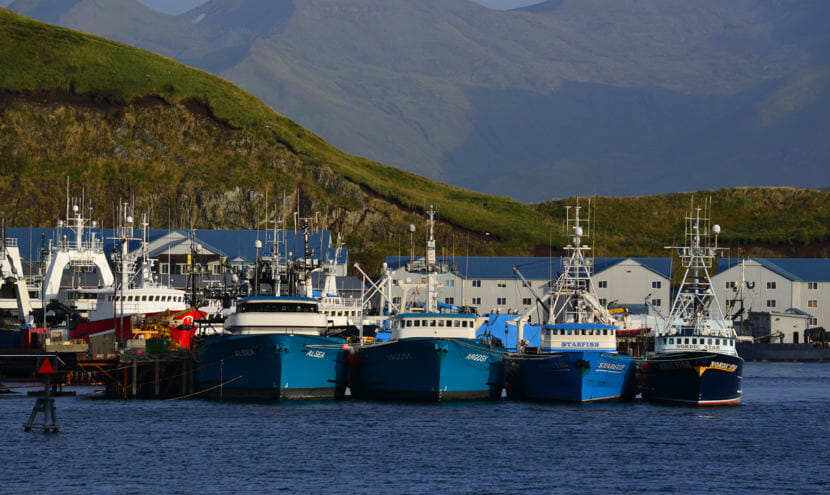
Fishing trawlers lined up in Dutch Harbor, on Sep. 24, 2013, in Unalaska, Alaska.
Fishing trawlers lined up in Dutch Harbor, on Sep. 24, 2013, in Unalaska.(Creative Commons photo by James Brooks)

Federal prosecutors have charged a worker on a Bering Sea factory fishing boat with assault after he allegedly broke the eye socket of another person who criticized him for serving food without gloves during the coronavirus pandemic.

Prosecutors say Maurice Young was a housekeeper and galley assistant on the 235-foot SeaFreeze America, which has about 65 crew members and is homeported in Seattle. At the time of the alleged assault, on Monday, the ship was underway about 120 miles east of the Pribilof Islands.

A day earlier, the victim — a processor on the vessel — criticized Young “for serving food without gloves,” prosecutors said in a court filing.

“The victim noted his concerns about the virus to the defendant,” the filing said.

The disagreement escalated, and Young suggested to the processing worker that they fight, though the worker declined, the filing said. Then, Young told a witness that it might be Young’s last day on the boat “because he planned to attack the victim,” prosecutors said.

The next day, Young approached the victim from behind and struck him in the face, then continued attacking him until a bystander pulled him off, prosecutors allege.

The victim was taken on another fishing boat to Dutch Harbor, the major fishing port in the Aleutian Islands. He was then flown to Anchorage for hospitalization and surgery for a broken orbital bone, the charging document said.

Prosecutors are charging Young with a single misdemeanor count of “assault within special maritime and territorial jurisdiction.” He’s being charged in Alaska, with an initial hearing set for June 8.

Prosecutors declined to comment. United States Seafoods, which owns the SeaFreeze America, declined to comment. Young does not appear to have hired an attorney and could not be reached.

Resident of 90-bed Fairbanks center for seniors and rehab tests positive for COVID-19

This transmission electron microscope image shows particles of SARS-CoV-2, the coronavirus that causes the disease known as COVID-19. (Image courtesy of National Institute of Allergy and Infectious Diseases Integrated Research Facility)

All 75 residents of a Fairbanks rehabilitation and senior center are being tested for COVID-19 after an elderly woman there tested positive for the disease, the center’s operators said Saturday.

The Denali Center’s 135 staff members are being tested for COVID-19, too, while residents are in quarantine and wearing masks to prevent the spread of the disease. The woman, who’s over 80, remains only mildly symptomatic, with a slightly elevated temperature that doesn’t technically qualify as a fever, officials from the Denali Center said at a news conference Saturday afternoon.

But the confirmed case still comes as frustrating and alarming news, given the serious threat that the coronavirus poses to the elderly, officials said. At the Seattle-area senior home that was an early epicenter of the COVID-19 outbreak in the U.S., 35 residents have died.

“This is the last population we would want to be infected,” Karen Perdue, a former state health commissioner and a board member of the foundation that runs the Denali Center, said at the news conference.

Foundation Health Partners, which operates the Denali Center and the Fairbanks hospital, believe the resident caught the disease from a staff member who also tested positive, FHP said in a prepared statement.

Five FHP employees have tested positive for COVID-19.

Denali Center staff has been “rigorously following” state and federal guidelines to reduce the risk to residents, FHP said. Residents were kept apart and outside visitors were not allowed into the center, FHP’s statement said.

“Maybe we could have done more. You always probably could,” Shelley Ebenal, FHP’s chief executive, said Saturday. “But I’ve got to say: Our facility has been on this, and they’ve been working hard. And yes, they’re frustrated.”

FHP officials pleaded with people in Fairbanks to do their own part to contain COVID-19, saying that those efforts could help protect Denali Center residents and other vulnerable populations.

“Our health care workers are also members of our community,” said Dr. Angelique Ramirez, a top FHP official. “And so, whatever we can do as a community to stop the spread of this disease is absolutely critical.”

After a call with state health officials Friday, FHP put in place “the most extreme and aggressive measures we’ve taken” to mitigate COVID-19’s spread at the Denali Center, FHP said.

Beyond the testing, those measures include outfitting staff with eye protection, gowns, masks, gloves and a face shield.

FHP has also done a “terminal clean” of the Denali Center, which includes removing “every detachable item” in the room for disinfection, along with cleaning light fixtures, air ducts and surfaces from the ceiling to the floor, it said in the statement.

Credit rating agency puts Alaska on ‘negative’ watch amid plunge in oil prices and COVID-19 pandemic

A major credit rating agency on Friday said it has placed a “negative” watch on Alaska’s credit rating after a plunge in world oil prices as the COVID-19 economic crash batters fishing and tourism that are critical to state revenue.

Fitch Ratings expressed concern that Alaska leaders would continue to pull large amounts from the state’s reserves, including by boosting the economy with a Permanent Fund dividend stimulus payout, according to the statement.

“Planned, significant draws on the state’s accessible reserves to balance financial operations or to fund other priorities in light of a likely extended period of weak natural resource markets and financial market volatility, will lead to a downgrade,” Fitch said in the statement.

Fitch lowered the state’s credit ratings in September, including lowering its general obligation bond rating to AA-.

A lower rating could force the state to pay more to borrow money from investors, as the market demands higher payments for bonds deemed to carry increased risk.

“We are signaling that if the state continues along the path we foresee, we could see the ratings go down,” said Marcy Block, a senior director for Fitch, in an interview Friday.

The next notch lower for the state’s general obligation bonds would be an A+, Block said.

“For a U.S. state, an A+ rating is considered low,” she said.

The state as of June 30 had about $670 million in general obligation debt that is outstanding, she said.

Also under watch for a possible lowered rating is about $1.1 billion in bonds from the Alaska Municipal Bond Bank Authority, she said. Those bonds are currently at A+.

Fitch’s negative outlook for Alaska’s credit “reflects the severe financial and economic stress the state is expected to undergo as a result of the recent plunge in crude oil prices,” the ratings agency said in the statement.

The situation is “compounded by the negative impact the coronavirus pandemic is expected have on the state’s important fishing and tourism industries.”

Further complicating the picture is the state’s reliance on the Alaska Permanent Fund earnings reserve, used to support state operations and the annual dividend, Fitch said.

The ratings agency said it will closely watch potential impacts to the reserve amid recent market volatility that has lowered the fund’s value by billions of dollars.

Losses in the fund’s reserve could be compounded if the state uses it to help pay an economic stimulus, something Gov. Mike Dunleavy and some state lawmakers have proposed.

“As the coronavirus crisis unfolded and oil prices plunged, the legislature is now debating further increases to the supplemental budget to fund coronavirus related costs as well as provide an additional $1,000 per capita stimulus payment to its residents by a further draw on the (Permanent Fund Earnings Reserve) in response to the oil price plunge and the coronavirus crisis,” the ratings agency said.

“These actions are expected to further declines to the state’s reserves,” Fitch said.

Years of cuts during low oil prices have reduced the state’s options for additional cuts, Fitch said. Recent plunging oil prices, related to the COVID-19 epidemic and a price war between Saudi Arabia and Russia, have pushed oil prices well below state revenue forecasts.

“The scale of the impact to the state’s economy and revenues, which is also expected to be negatively affected by declines in the important tourism industry from the coronavirus pandemic, is currently uncertain,” the ratings agency said.

The price for Alaska North Slope crude oil on Wednesday hit $26.73 a barrel, well below state forecasts for the year of close to $64 a barrel.

Fitch’s negative outlook may be reversed if the “state advances financial policies in the current legislative session that promote stable financial performance and make progress toward improved financial resiliency,” Fitch said.

Fitch said it will make a decision after it analyzes the state’s spring 2020 revenue forecast, expected in April.

This story was originally published by the Anchorage Daily News and is republished here with permission.

Site notifications
Update notification options
Subscribe to notifications