Alaska coronavirus news

Live updates and information on COVID-19 in Juneau and Alaska

Alaska health officials still want you to go outside. Just keep your distance.

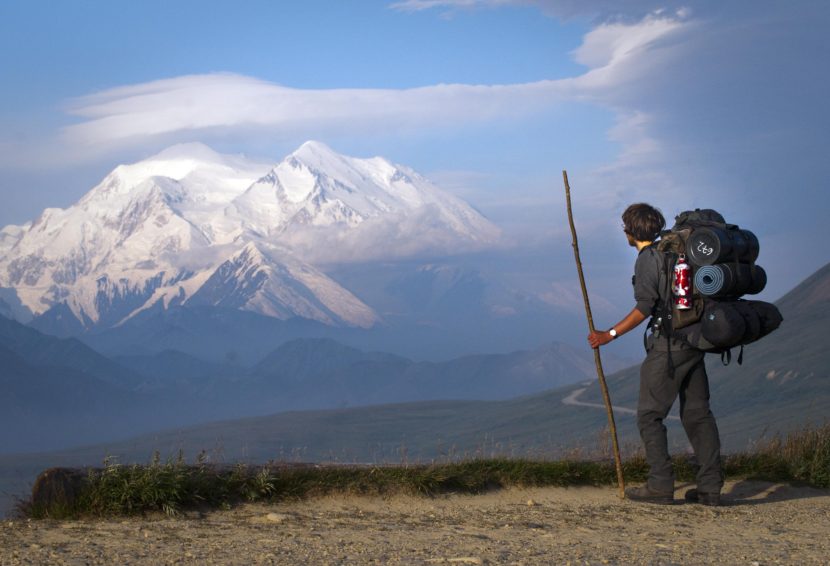
Denali and hiker backpacker
A backpacker looks at Denali in the distance in a photo dated Jan. 11, 2016. (Public domain photo by Kent Miller/National Park Service)

One of the biggest casualties of the coronavirus pandemic is fun — there are no sports, no going out to bars or movies.

But Alaska is one of the world’s premiere places for outdoor recreation, and public health officials here say that residents don’t have to stop going outside, as long as they’re careful.

“I don’t think there should be any risk, as long as people are adhering to the social distancing,” said Dr. Joe McLaughlin, the state epidemiologist. “It’s really important that people stay healthy and stay fit.”

Even McLaughlin, who’s at the forefront of the state’s response to the pandemic, is still carving out time for recreation — including a bike ride Thursday night.

“That was so, so helpful for me to just maintain my inner equilibrium,” he said. “But it’s been a little bit more difficult, recently.”

McLaughlin isn’t the only Alaskan turning to the outdoors amid the pandemic. Officials in Anchorage and other cities and towns have ordered residents to “hunker down” in their homes, but those measures still allow people to blow off steam on trails and in other public spaces. Even Gov. Mike Dunleavy’s shelter-in-place order announced Friday includes a carve out for exercise, as long as people stay six feet away from each other.

Officials said they’ve seen droves of people turning out to state parks in the past week, with the most pressure on popular trailheads in the Anchorage area like at Glen Alps, Prospect Heights and Hatcher Pass.

“I have never, ever seen it so busy, where you couldn’t find a parking spot. It was insane traffic, where people were just waiting outside to see if they could get a parking spot,” said Wendy Sailors, a state parks spokeswoman, who drove to the Prospect Heights trailhead Sunday. “There were bikes, there were skiers, there were families with kids, there were walkers, there were dogs.”

The state parks division issued a press release Friday saying that workers are doing the best they can to keep up with demand. “But they need help from the public,” it said.

Instead of picking one of the Anchorage area’s busier trailheads, Sailors suggested residents take a slightly longer drive to a place like Eklutna Lake, or to one of the many trails on the Turnagain Arm. She also said the parks are quieter early in the morning.

Meanwhile, in interviews, public health officials outlined a number of best practices and precautions that people should follow when going outside.

First, as much as it might be frustrating, they said they don’t want kids using playgrounds during the pandemic. One of the two likely ways the coronavirus spreads is on contaminated surfaces, and that’s a particular concern for children, who can be infected without showing symptoms.

“Kids have trouble social distancing — the little ones, they want to play, they don’t understand what’s going on,” said Darcy Harris, who manages the environmental health section of Anchorage’s health department. “Sharing playground equipment right now is probably not the best choice.”

It’s also not a good time to carpool to a trailhead, at least with people outside your family, given the guidelines for at least six feet of social distancing.

And McLaughlin said people should be very careful about using public bathrooms at trailheads, like Glen Alps. Those bathrooms have what epidemiologists call “high-touch surfaces” — their term for spots that lots of people can touch and potentially spread germs. And the coronavirus has also been found in poop.

After using a public bathroom, people should wash their hands; if that’s not possible, use sanitizer with at least 60% alcohol, McLaughlin said.

People should also be aware of wiping their noses with their mittens or hands while they’re outside, and try to take off their gloves before opening the door to their houses. And people should avoid spitting, or anything else that involves depositing bodily fluids directly into the environment.

“Please do not do the snot rockets and blow your nose when other people are around,” McLaughlin said. “We want people to be really mindful of how this virus transmits — and just be conscious of the ways you can prevent exposing yourself, and ways you can prevent exposing others.”

One piece of good news? Health officials don’t see pets as a source of infection. But they note that they can still carry germs, so be careful about touching your face if you’re going to play with somebody else’s dog or cat.

Other than from surfaces, the main risk of getting COVID-19 comes from “close contact” with infected people — generally defined as spending five or 10 minutes within six feet. So just remember to keep your distance when you’re outside, officials said, particularly if you see someone coughing or sneezing.

And if you have to pass someone on a narrow trail?

“If you can’t get six feet away, just sort of turn away and pass quickly,” McLaughlin said. “Whatever you can do to minimize the risk of transmission of the virus through those respiratory droplets.”
Wristbands, longer shifts, fever checks: How Alaska oil companies are responding to the global pandemic

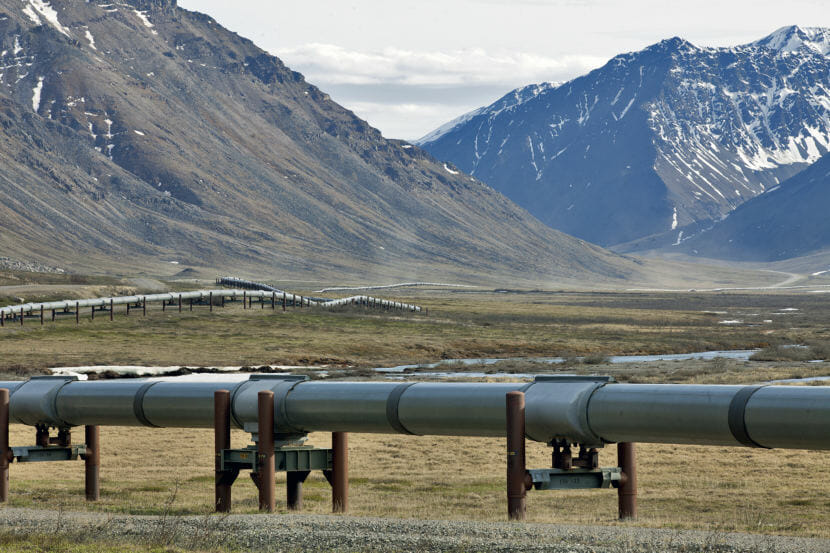
The Trans-Alaska Pipeline runs alongside the Dalton Highway near the Toolik Field Station on June 9, 2017, in the North Slope Borough. (Photo by Rashah McChesney/Alaska's Energy Desk)
The Trans-Alaska Pipeline runs alongside the Dalton Highway near the Toolik Field Station on June 9, 2017, in the North Slope Borough. (Photo by Rashah McChesney/Alaska’s Energy Desk)

About 500,000 barrels of oil continued to flow daily down the trans-Alaska pipeline this month as the coronavirus pandemic grew at dizzying speeds.

But, while work is continuing on Alaska’s remote North Slope, oil and gas companies say it’s not business as usual. They’re taking new precautions to keep the virus away.

And that includes health checks.

Workers driving the Dalton Highway to the North Slope oil fields must now have a colored wristband or a wallet-sized health card before they can travel to the oil sites beyond Deadhorse — the hub at the end of the haul road at the top of Alaska.

To get a wristband or a card, they first need a check-up, said ConocoPhillips spokesperson Natalie Lowman.

“Our medical screening process is a no-touch thermometer, so one temperature is collected per passenger,” she said. “The worker must pass all medical questions and temperature readings and those who are cleared will be given a wristband, and those are good for one day.”

https://www.flickr.com/photos/specialk80731/8229830783/in/pool-northslope
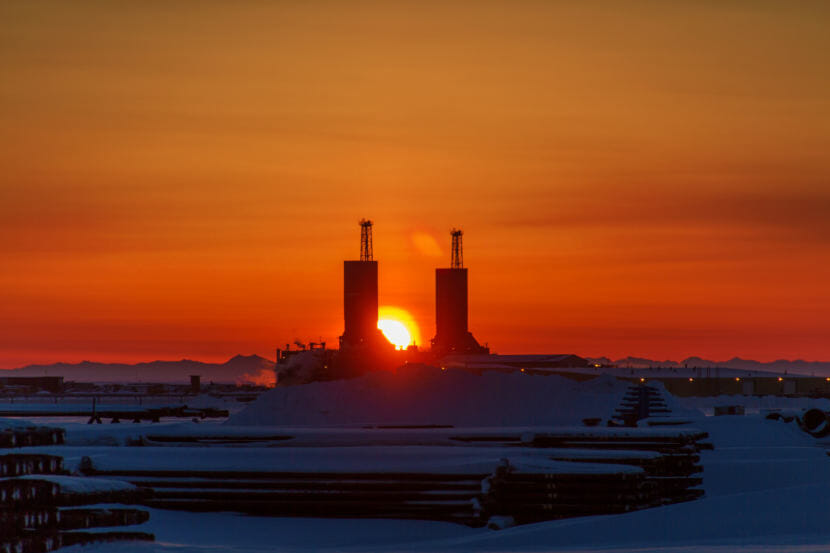
The sun rises on the North Slope behind the two Parker drilling rigs. (Creative Commons photo by Kevan Dee)

As the number of coronavirus cases in Alaska continues to increase, the checks are among several measures Conoco says it’s taking to protect its workers who temporarily live on the Slope. Other oil and gas companies in Alaska say they’re also boosting sanitation, keeping workers farther apart and reducing flights.

“We’ve got three very important priorities: protecting the health and well-being of our workforce and their families. We want to mitigate the spread of the virus, and we want to safely run our business,” Lowman said.

Lowman listed the company’s other new measures.

“We’ve limited travel to the North Slope, and we’re deferring some non-critical work to reduce the number of personnel we have on site,” she said.

Out-of-state workers must quarantine for two weeks in Alaska before traveling to the oil fields, Lowman said. To accommodate the change, Conoco recently asked its employees already on the Slope to extend their shifts by another two weeks.

Many Slope employees work two weeks straight, then go home for two weeks before flying back north again.

Lowman said Conoco has about 2,800 employees and contractors working on the Slope. This winter was supposed to be the company’s largest exploration and construction season ever.

Lowman said Conoco’s policies comply with the state’s new two-week quarantine requirement.

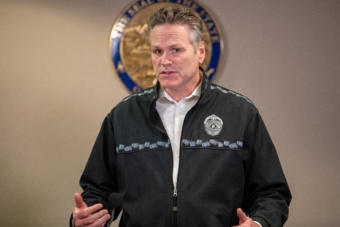
Alaska Gov. Mike Dunleavy speaks about the state's COVID-19 response from the Atwood Building in Anchorage on March 23, 2020.
Alaska Gov. Mike Dunleavy speaks about the state’s COVID-19 response from the Atwood Building on March 23, 2020, in Anchorage. (Creative Commons photo courtesy Alaska Governor’s Office)

Starting Wednesday, Gov. Mike Dunleavy began requiring people traveling into Alaska to self-quarantine for two weeks, unless they support “critical infrastructure,” including oil production. Hundreds of businesses have filed plans with the state outlining how they’ll bring out-of-state workers safely into Alaska. That includes Conoco and BP.

Oil company BP is also asking its workers to quarantine themselves for two weeks before returning to the Slope, but had planned to allow those living Outside to quarantine at their homes there. The company was also looking at flying employees directly from the Lower 48 to Deadhorse, instead of stopping in Anchorage, said company spokeswoman Megan Baldino.

However, the State of Alaska didn’t approve of that plan. Baldino confirmed on Saturday that BP will now have all of its workers self-quarantine in Alaska for two weeks before flying them to the North Slope, including its out-of-state workforce.

BP’s Prudhoe Bay workforce totals about 1,000 employees, and 39% live out of state.

“We continue to review the latest information in this dynamic situation and when necessary are updating our guidance to BP employees and contractors,” Baldino said on Saturday.

Similar to Conoco, BP has also slimmed down its on-site workforce on the Slope to essential personnel, Baldino said. BP has extended many workers’ shifts to at least three weeks. No visitors are allowed at the facilities.

Both BP and Conoco are also screening employees before they board their flights. Their temperatures are taken, and they’re asked about recent travel. Disinfection of buildings and planes has increased. BP is also currently in the process of selling its entire Alaska business to Hilcorp, which declined to comment for this story.

There are also all of the service companies operating on the North Slope, including Cruz Construction.

Cruz Construction’s work includes building ice roads and gravel pads. It also supports drilling crews, said Jeff Miller, the company’s vice president and one of its owners. He said the company has asked its Slope workers to stay weeks beyond their usual shifts, potentially until the middle of April.

“That helped mitigate the risk of bringing or introducing somebody that could have been infected from down here in the Anchorage area or the [Mat-Su] Valley area or Fairbanks, and it kept those camps safe,” Miller said.

Despite the leaner workforce on the Slope, the amount of oil flowing down the trans-Alaska pipeline each day this month has remained similar to last year’s average production.

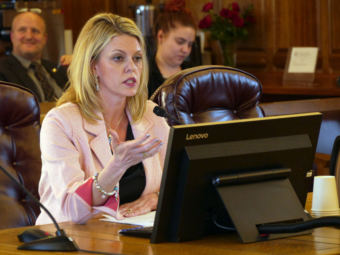
Kara Moriarty, president and CEO of the Alaska Oil and Gas Association, testifies in the House Finance Committee in the Alaska Capitol on April 11, 2018.
Kara Moriarty, president and CEO of the Alaska Oil and Gas Association, testifies in the House Finance Committee on April 11, 2018, in Juneau. (Photo by Skip Gray/360 North)

But while the coronavirus might not be having a huge impact on oil production in Alaska — at least not yet — Kara Moriarty, head of the Alaska Oil and Gas Association, said cratering oil prices likely will.

“I think a lot of people, and rightly so, are focused on the pandemic, but our industry is being hit by two different factors,” she said. “We have the coronavirus, which of course is changing people’s travel with Alaska Airlines cutting back 70% of their flights. Obviously, they’re not going to need as much jet fuel.”

There’s also the oil price war. In early March, Alaska North Slope crude sold for roughly $50 a barrel. By Friday, it was about $26.

“So it’s sort of a double hit for us as the industry adjusts,” Moriarty said.

As a result, Conoco announced it was cutting its capital spending in Alaska by roughly $200 million. That means reducing drilling and demobilizing some drill rigs, Lowman said.

“It’s safe to say that the drop in oil prices isn’t helping any of the situations that we have going on right now,” she said.

Meanwhile, Lowman said, Conoco continues to closely monitor the coronavirus pandemic and will adapt its strategy as necessary. She said the company also has a detailed plan in case an oil field worker gets sick with the virus. It includes identifying who that person had come in contact with, quarantines, medical monitoring and a possible emergency flight off the Slope.

For SNAP and WIC recipients, buying groceries during a pandemic is complicated

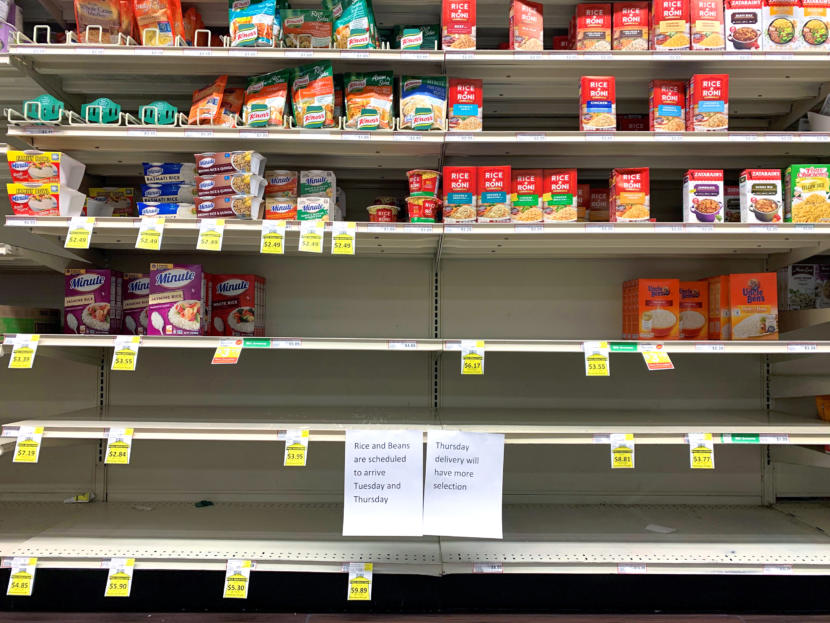
As a former WIC recipient, Nicole Church says she’s concerned about the shelves clearing out of WIC-approved items because of hoarding and panic-buying. (Photo by Rashah McChesney/KTOO)

Now that people are hunkered down because of COVID-19, more customers are buying groceries online and picking them up curbside or having them delivered — outside their local store.

But for those paying with federal assistance, the options for shopping this way are inconsistent.

Nicole Church said grocery shopping with two rambunctious 5-year-old twin boys was a challenge before the coronavirus.

“That’s under normal circumstances,” Church said. “And under these circumstances it’s even more stressful. They’re always touching things and putting their mouths on counters. I’ve decided that’s not going to happen when we’re hunkering down.”

Running low on milk and other groceries, Church decided to use Instacart to order her groceries online and have them delivered from Juneau’s Costco.

But when she tried to check out, she realized she couldn’t use her Electronic Benefits Transfer card, or EBT card, on Instacart’s payment page.

On its website, Instacart says it accepts debit and credit cards, along with Google Pay and Apple Pay. But you can’t pay with federal assistance programs like Supplemental Nutrition Assistance Program (SNAP) or Women, Infants, and Children (WIC).

That’s left Church wondering what her options are for grocery shopping safely during the pandemic. She’s a single parent — she said finding someone to watch her children can be difficult.

“We can’t be left in the dust just because it’s a challenge to put that system in place,” Church said.

Right now, there’s not a consistent framework for people paying for online orders with federal assistance, and grocery stores are individually responsible for figuring it out.

Other big-box stores in Juneau, like Fred Meyer, can’t accept online orders purchased with federal assistance either.

Vanessa Cropley, a manager at Foodland IGA, thinks maybe the websites aren’t set up to process those kinds of payments.

Foodland doesn’t even have an online ordering system. Cropley and her husband are fulfilling orders for curbside pickup the old-school way: They’re communicating with customers directly by checking emails and having conversations over the phone.

They’re basically being personal shoppers for their customers. So far, they haven’t done the shopping for anyone paying with federal assistance programs yet. But she welcomes it.

“We’re all going to figure this out together,” Cropley said. “There’s no way we can’t figure this out with one another.”

https://www.facebook.com/Dolly.Delez/posts/1293617994181766

The Super Bear Supermarket IGA store in Juneau can take online payments with SNAP benefits. But grocery stores can’t process WIC assistance for curbside or delivery orders because of federal banking laws. 

As for Church, she says a friend recently picked up her groceries. But she hopes a wider array of stores implement a way for people on federal assistance to get their shopping done while practicing social distancing.

This story has been updated. 


‘Hunker down’ doesn’t mean much when you’re homeless

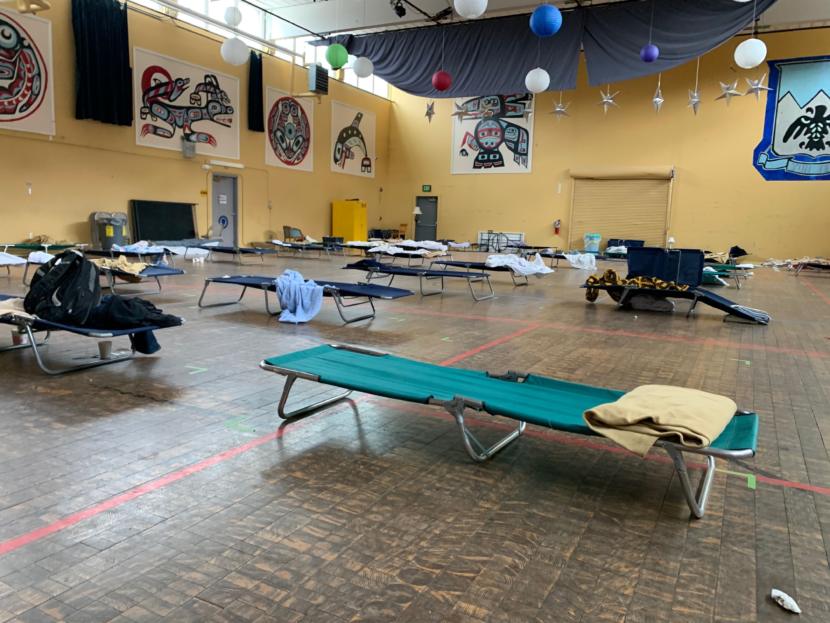
People who stay overnight at the emergency shelter inside the Juneau Arts and Culture Center use the same cot and blankets on consecutive nights. (Photo by Adelyn Baxter/KTOO)

Since Wednesday evening, Juneau residents have been required to stay home and avoid going out as much as possible, unless they work in a critical industry.

People experiencing homelessness are exempt under the city’s hunker down order and a statewide order issued Friday. For many of them, the threat of a pandemic is not as high of a priority as staying warm or getting their next meal.

Outside the Glory Hall homeless shelter in downtown Juneau, Angie is standing near the front door with pretty much everything she owns. She asked that KTOO not use her last name for privacy reasons.

She’s got a few sleeping bags she found in a dumpster. That’s all she’ll have to keep her warm for the rest of the day.

“There’s no options,” Angie said when asked where she planned to go to keep warm. “Everything is closed down here.”

Angie stayed at the city’s cold weather shelter the night before. But it’s only open from 11 p.m. to 7 a.m. That means people have to find somewhere else to go during the day.

Normally, they can head to the library — but it’s closed, along with most other public buildings.

The Glory Hall is another popular spot. It also serves meals, but staff are limiting the number of people allowed inside right now. They’re trying to  follow social distancing guidelines.

Angie said she and the other homeless people she knows are aware of the concerns about coronavirus. They’ve been told to wash their hands and stay six feet from one another. But this time of year, it’s not really possible.

“When it comes to friends, you stay close to each other, because we’ve got to keep each other warm,” she said.

Recent city surveys show that around 200 people are considered homeless in Juneau. About half of them are in transitional housing. Those facilities, like Housing First in Lemon Creek and St. Vincent de Paul Society, are under quarantine to minimize potential COVID-19 transmission.

Much of the homeless population is considered medically vulnerable.

Dave Ringle is the interim director for the Juneau chapter of the St. Vincent de Paul Society. He said the virus could be devastating in the homeless community.

“But they’re also one of the least exposed groups,” Ringle said. “They’re not traveling. Their contact with people outside of their social circle is real limited. So we’re hoping to keep it that way.”

Ringle spoke to me from a safe distance inside the emergency shelter’s new location in the Juneau Arts and Culture Center. Until last week, St. Vincent’s had operated the shelter in a building near the airport. They moved it to the JACC downtown to have more space between cots.

Shelter staff are screening everyone who comes in for the night with a thermometer. Anyone with a high temperature or symptoms consistent with COVID-19 is checked out by hospital staff, who then determine whether to test the person.

While they wait for results, that person is placed in quarantine. Social service providers and the city both contribute money for hotel rooms.

Irene Gallion is the city’s homelessness task force leader, a new role she took on under the city’s Emergency Operations Command, which is coordinating the local response to COVID-19.

“So whenever we have somebody who’s questionable, we want to be able to isolate them as soon as possible,” Gallion said.

Usually, the city opens up a public campground in the summertime as a low-cost option for the homeless and seasonal workers. The Thane Campground has portable bathrooms and sites for about 17 tents. But the location — more than a mile from downtown — made it inaccessible for some people.

At a special meeting Thursday, the Assembly approved an emergency ordinance moving the campground to a site closer to downtown. The city will continue leasing land from AJT Mining Properties Inc. for the same purpose.

Deputy Director of Parks and Recreation Michele Elfers said Friday the new site has a better access road and a flatter layout, making it safer for campers and for city staff to monitor.

“This year we’re also going to be adding some social services,” Elfers said. “So we’ll have … our homelessness coordinator with CBJ, who’s going up there regularly and meeting with all of our campers to assess how they’re doing and connect them with services as needed.”

The campground usually opens around April 15. Elfers said they are trying to work quickly, but she doesn’t know whether they will be able to open the new site by then.

“We want to get it open as soon as possible, because it is being looked at as another opportunity for people experiencing homelessness to be able to have shelter and to provide some social distancing,” Elfers said.

For the next two weeks or more, most Juneau residents will focus on staying busy and healthy at home.

Meanwhile, Angie and other homeless residents will focus on staying warm and dry during the day.

“Just keep us in your thoughts and prayers,” she said.

This post has been updated. 

Anchorage patient first to die in Alaska after positive COVID-19 test

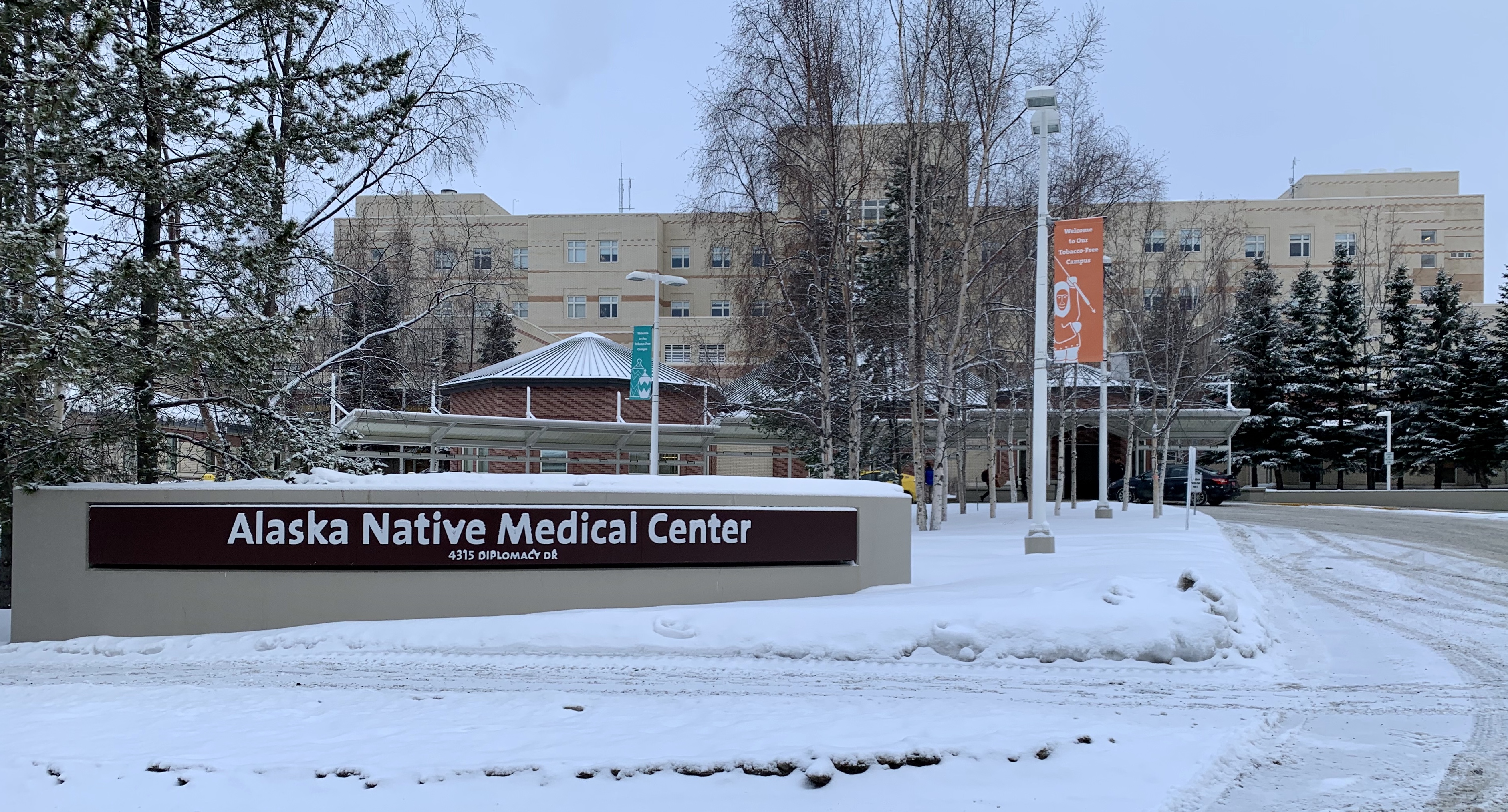
The Alaska Native Medical Center in Anchorage. (Photo by Joey Mendolia/Alaska Public Media)

The first person to die in Alaska after testing positive for COVID-19 passed away Friday at Alaska Native Medical Center in Anchorage.

State health officials said the patient was a woman in her 60s with underlying health issues. Her death came as Alaska Gov. Mike Dunleavy announced new health mandates Friday restricting Alaskans movement and travel in the state.

“We believe her death was a result of this virus,” Alaska Chief Medical Officer Dr. Anne Zink said.

Alaska Native Medical Center spokesperson Shirley Young said the patient had come to the hospital for treatment of an issue previously thought to be unrelated to COVID-19, the disease caused by coronavirus, on Monday. The patient tested positive for COVID-19 on Wednesday, Young said.

“At that time, the patient was doing well, following the self-isolating protocol in their residence,” Young said. “But shortly thereafter, the emergency department at ANMC was notified that the patient’s condition was deteriorating rapidly and advised the patient to return to the hospital.”

Hospital staff put the woman into isolation to decrease exposure to staff or other patients, Young said. After being admitted to the hospital’s negative pressure unit, the patient died on Friday.

They’re the first person to have died in Alaska after contracting COVID-19. One Alaskan died after contracting the disease on March 16 in Washington state.

The number of COVID-19 cases in Alaska continues to grow. By Friday, the state reported 85 known cases, up from 69 the day before.

This story has been updated.


‘We crossed a line today’: Dunleavy orders statewide shelter-in-place, limits travel

Update (6:13 p.m.) — Casey Grove and Tegan Hanlon, Alaska Public Media

Alaska Gov. Mike Dunleavy speaks at a news conference on COVID-19 in Anchorage on Thursday. Chief Medical Officer Dr. Anne Zink spoke remotely and appeared on a TV screen to the governor’s right. (Creative Commons photo courtesy Alaska Governor’s Office)

Alaska Gov. Mike Dunleavy on Friday announced two new mandates to further limit Alaskans’ movement and travel within the state, as the number of known COVID-19 cases continues to grow, and the first Alaskan died in the state after testing positive for the disease.

“We crossed a line today for Alaska,” the governor said.

One mandate requires Alaskans to stay in their homes and practice social distancing unless they’re essential workers, including employees in health care and government services. Under the mandate, people can go outside, but they must remain six feet or more away from individuals not in their households.

The mandate goes into effect at 5 p.m. Saturday and will be reevaluated in about two weeks, said Adam Crum, Health and Social Services commissioner.

According to an informational document from the state of Alaska about the mandate, law enforcement officials will enforce the new rules.

“Law enforcement officials will be responding to complaints and educating the public when they notice obvious violations that jeopardize the safety of individuals or the community,” it said.

At the news conference, though, Dunleavy described enforcement as Alaskans “self-policing.”

The other new mandate restricts travel between communities in the state, unless that travel is to support critical infrastructure or is for critical personal needs. That mandate goes into effect at 8 a.m. Saturday.

Alaska is up to a total of 85 known COVID-19 cases as of Friday, up 16 cases from the day before. The new cases announced Friday include nine male and seven female patients.

Dunleavy’s new mandates follow calls from doctors, legislators and others that he take further action to limit Alaskan’s movement in an effort to slow the spread of the virus. Many local leaders, including in Anchorage and Juneau, have already issued shelter-in-place or hunker-down orders for their communities.

Across the U.S., about two dozen states have ordered their residents to stay at home, The New York Times reported Friday. In more than a dozen other states without a statewide mandate, cities and counties have issued the order.

Update (5:24 p.m.)Casey Grove, Alaska Public Media

The number of COVID-19 cases in Alaska continues to grow. By Friday, the state reported 85 known cases, up from 69 the day before.

In Friday’s news briefing, Gov. Mike Dunleavy confirmed the first in-state death of a patient who had tested positive for COVID-19.

Original story — Rashah McChesney, KTOO

Alaska Gov. Mike Dunleavy speaks about the state's COVID-19 response from the Atwood Building in Anchorage on March 20, 2020.
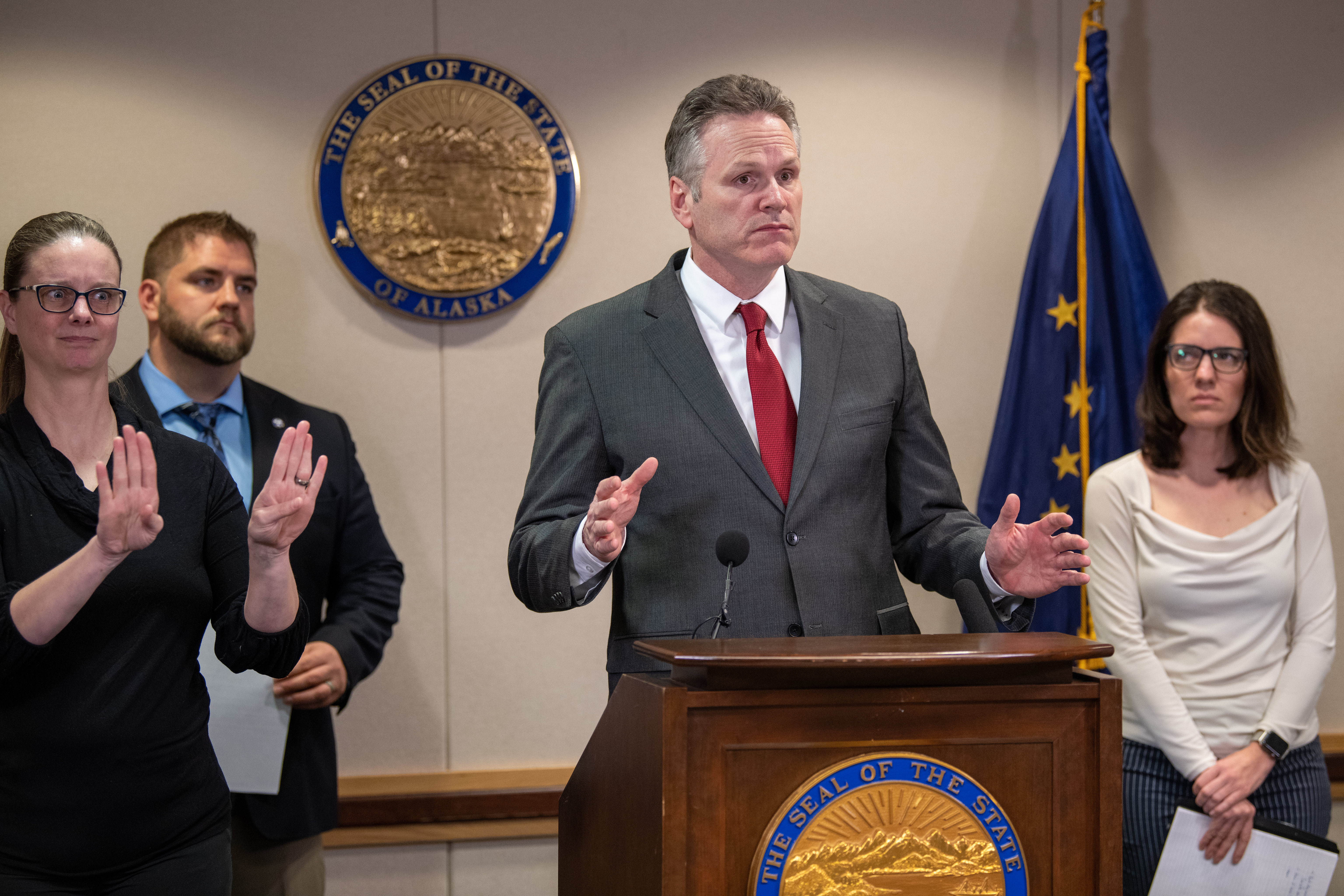
Alaska Gov. Mike Dunleavy speaks about the state’s COVID-19 response from the Atwood Building in Anchorage on March 20, 2020. Also pictured: Department of Health and Social Services Commissioner Adam Crum, Chief Medical Officer Dr. Anne Zink, and an unidentified sign language interpreter. (Creative Commons photo courtesy Alaska Governor’s Office)

Gov. Mike Dunleavy’s latest COVID-19 press conference is scheduled for 5 p.m. Friday.

The virus is spreading throughout Alaska and the rest of the country. The Associated Press reported Friday that America’s coronavirus infections have surged to 100,000 — making it the first nation to surpass that number.

To date, Alaska has reported 69 cases of people testing positive for the virus. So far, the vast majority of those patients are recovering at home. However, three people have been hospitalized, and the Anchorage Daily News reported the first in-state death due to the virus on Friday.

The governor, Health and Social Services Commissioner Adam Crum, and Chief Medical Officer Dr. Anne Zink have been holding briefings almost daily since March 10.

They’ve shared updates on the number of people in the state with confirmed cases, announced public health mandates, and explained the administration’s strategy and rationale.

To date, they’ve imposed 10 public health mandates that have reshaped daily life across Alaska to combat the spread of the virus. Those mandates and other Alaska-specific COVID-19 resources and information are available at coronavirus.alaska.gov.

On Thursday, they warned that Alaska does not have the medical infrastructure to handle a severe outbreak of coronavirus. Each repeated the warning that Alaskans need to isolate themselves to slow the spread of the virus. But they did not issue a statewide shelter-in-place order, despite growing pressure from emergency room directors and lawmakers. Several communities in the state have already issued versions of shelter-in-place orders.

Dunleavy said the state will discuss travel within Alaska Friday. He also said they’ll talk about the economic response of the virus — though that discussion will be ongoing, Dunleavy said, as details of the state Legislature’s stimulus plan emerges.

The federal government approved a $2.2 trillion rescue package on Friday that President Donald Trump signed shortly after.

You can watch Friday’s press conference live on this post, the governor’s Facebook or Livestream pages, or on 360 North television.

The headline for this story has been updated.

Site notifications
Update notification options
Subscribe to notifications