National News

Mastermind Of Great Train Robbery Dies

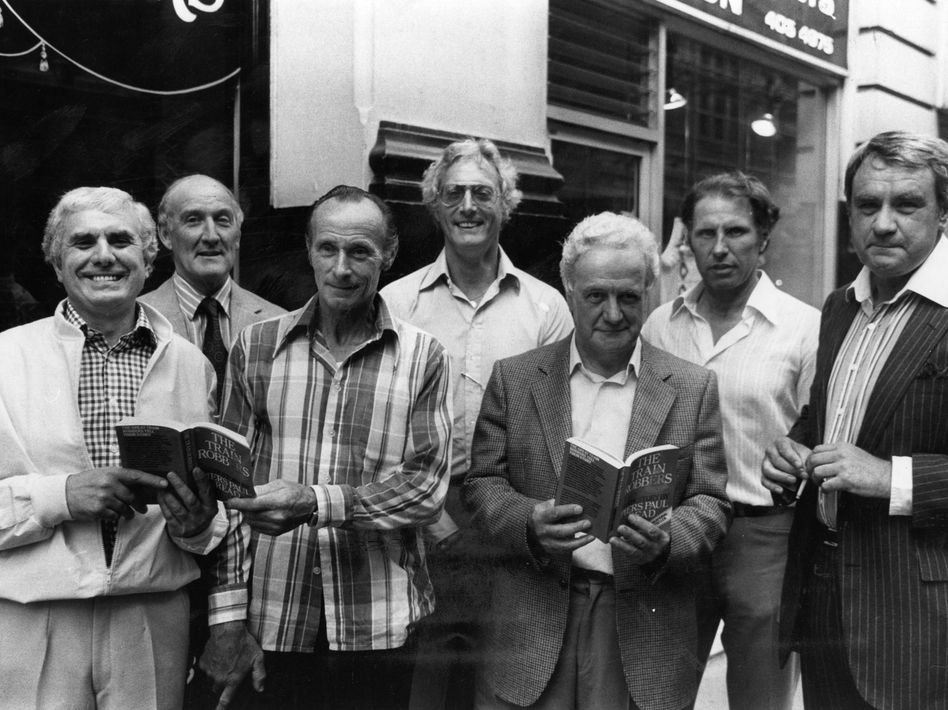
The Great Train Robbers, left to right: Buster Edwards, Tom Wisbey, Jim White, Bruce Reynolds, Roger Cordrey, Charlie Wilson and Jim Hussey, with copies of their book 'The Train Robbers' in 1979. Michael Fresco/Getty Images
The Great Train Robbers, left to right: Buster Edwards, Tom Wisbey, Jim White, Bruce Reynolds, Roger Cordrey, Charlie Wilson and Jim Hussey, with copies of their book ‘The Train Robbers’ in 1979. Michael Fresco/Getty Images

Bruce Reynolds, the brains behind the Great Train Robbery of 1963, has died at the age of 81 nearly five decades after he and his partners in crime made off with 2.6 million pounds at Ledburn, Buckinghamshire, England.

Reynolds was part of the gang that executed an elaborate scheme to swipe the cash from the Glasgow to Euston mail train. The clockwork nature of the crime, along with the fact that the bulk of the loot was never recovered and some of the robbers never captured, has made it a favorite subject of television, films, as well as popular music.

Even Leonard “Nipper” Read, the Scotland Yard detective who tracked down some of the robbers called Reynold’s death “the end of an era.”

“It was certainly a well-organized operation and Reynolds was the pioneer. It is a little piece of history,” Read said.

As The Associated Press notes “The participants became criminal celebrities — to the chagrin of the police and the family of Jack Mills, the train driver, who was hit on the head during the robbery and never fully recovered. He died seven years later.”

After the robbery, Reynolds fled England and hid out with a wife and son in Mexico and Canada until a fateful decision to return to the country in 1968. According to The Guardian:

Tommy Butler, the detective who arrested him in Torquay, greeted him with the words: “Hello, Bruce, it’s been a long time.” To which Reynolds replied: “C’est la vie.”

“Reynolds was jailed for 25 years, a sentence that even the late Metropolitan police commissioner, Sir Robert Mark, thought was excessive. In fact, one of the reasons the robbery became so well-known was the length of sentences doled out by Mr. Justice Edmund Davies, who said it was ‘a crime which in its impudence and enormity is the first of its kind in this country. I propose to do all in my power to ensure that it is the last of its kind … Let us clear out of the way any romantic notions of daredevilry.'”

Reynolds served just 10 years of the origin sentence.

His son, Nick Reynolds, said his father died after a brief illness.

Reynolds wrote “The Autobiography of a Thief” about the famous crime and his life. He also occasionally performed in his son’s rock band, Alabama 3, which produced the theme song to the television show The Sopranos.


Read original article
Mastermind Of Great Train Robbery Dies

U.S. To Give Syrian Opposition $60 Million More In Non-Lethal Aid, Kerry Says

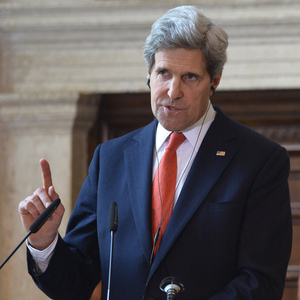
Secretary of State John Kerry during a news conference Thursday in Rome. Alberto Pizzoli/AFP/Getty Images

The Obama administration will ask Congress for an additional $60 million in aid to help the Syrian opposition council provide basic goods and services in areas under rebel control, Secretary of State John Kerry announced Thursday in Rome.

NPR’s Michele Kelemen, who is among the correspondents traveling with Kerry on his first overseas trip since becoming secretary, tells our Newscast Desk that the U.S. “is also offering non-lethal assistance to the free Syrian army — in the form of food rations and medical supplies.” She adds that “U.S. officials say that the Syrian opposition laid out many other needs in talks with Kerry and the Obama administration is ‘keeping that under review.’ ”

The BBC starts its report on the news this way:

“The U.S. is to step up its support for the Syrian opposition as it fights to topple President Bashar al-Assad, Secretary of State John Kerry says. Mr. Kerry said the US would provide ‘direct support’ in the form of medical and food supplies to rebel forces. He also promised an additional $60 million in aid to the opposition to help it deliver basic governance and other services in rebel-controlled areas. …

” ‘President Assad is out of time and must be out of power,’ Mr. Kerry said, adding that the Syrian leader could not ‘shoot his way out’ of the situation.”

As the BBC reminds its readers, “the U.N. estimates 70,000 people have died in the Syrian conflict since 2011.”

Thursday’s announcement was not quite what The Washington Post, CBS News and some other news outlets were predicting a day earlier. As we reported Wednesday, they said the U.S. was also contemplating giving rebels “equipment such as body armor and armored vehicles,” though not weapons.

Today, the Post writes that:

“Britain and other nations working in concert with the United States are expected to go further to help the rebel Free Syrian Army by providing battlefield equipment such as armored vehicles, night vision equipment or body armor. The Obama administration is weighing similar assistance, but Kerry announced only the first, small steps.”


Read original article

U.S. To Give Syrian Opposition $60 Million More In Non-Lethal Aid, Kerry Says

Bradley Manning Says He Leaked Classified Info To ‘Spark A Domestic Debate’

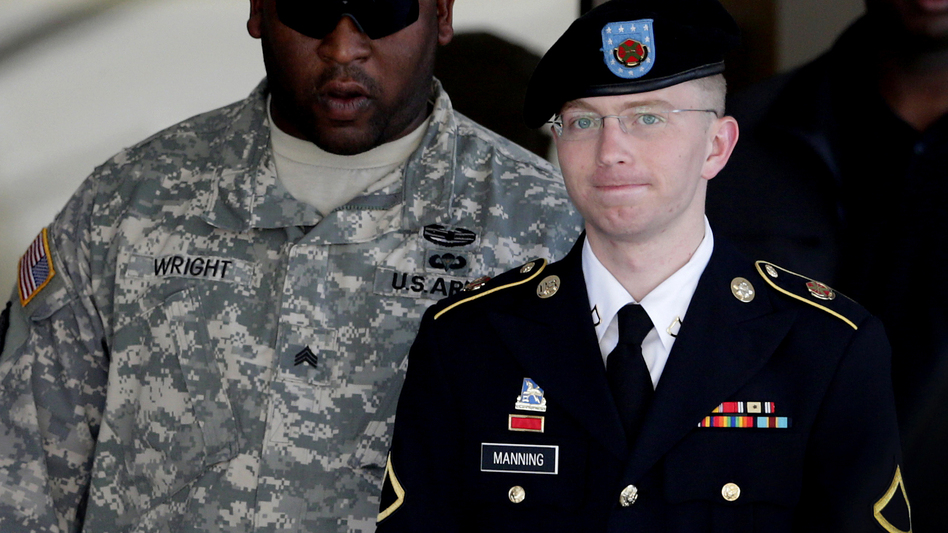
Army Pfc. Bradley Manning (right) is escorted out of a courthouse in Fort Meade, Md., on June 25, 2012. His lawyer announced that Manning, who is accused of leaking classified information to WikiLeaks, had agreed to plead guilty to lesser charges. Patrick Semansky/AP

Army Pfc. Bradley Manning revealed today that he leaked classified information to WikiLeaks because he wanted to “spark a domestic debate on the role of our military and foreign policy in general.”

As The Christian Science Monitor reports, Manning made the statement in a court filing that is part of a pretrial hearing.

Reuters reports that Thursday, Manning is expected to “read aloud from a 35-page statement defending himself in the espionage case.”

The Monitor adds:

“Manning, who has only been allowed to speak during the pretrial process once before and who has been kept largely isolated from the press, friends, and supporters during his over 1,000 days in detention since his arrest in Iraq on May 28, 2010, wants to expand on the political motives that moved him to commit his acts.

“Judge Denise Lind has ruled during the pre-trial process for Manning that he will not be allowed to testify as to his own motives for his actions, deeming that irrelevant. That has left Manning, who is charged with aiding the enemy, theft of public records, computer fraud, and 19 other charges, effectively muzzled. According to Nathan Bradley, a spokesman for the support network that is paying for Manning’s defense, his offer to plead guilty creates an opportunity for him to speak to Judge Lind in open court tomorrow.”

There were two other pieces of news to come out of Manning’s pretrial hearing:

— Tuesday, the military judge refused to dismiss charges against Manning. The AP reported the judge said Manning “has not been denied a speedy trial despite his lengthy pretrial confinement.”

— Today, the Pentagon released 84 pretrial documents, responding to Freedom of Information Act requests. The Guardian reports:

“The 84 documents released by the army include court rulings on defence and government motions, and orders that set the scheduling of the trial that is currently earmarked to begin on 3 June. But the batch constitutes only a tiny portion of the huge mountain of paperwork that has already been generated in the proceedings, including some 500 documents stretching to 30,000 pages.”


Read original article

Bradley Manning Says He Leaked Classified Info To ‘Spark A Domestic Debate’

States Take Sides As Court Revisits Voting Rights Act

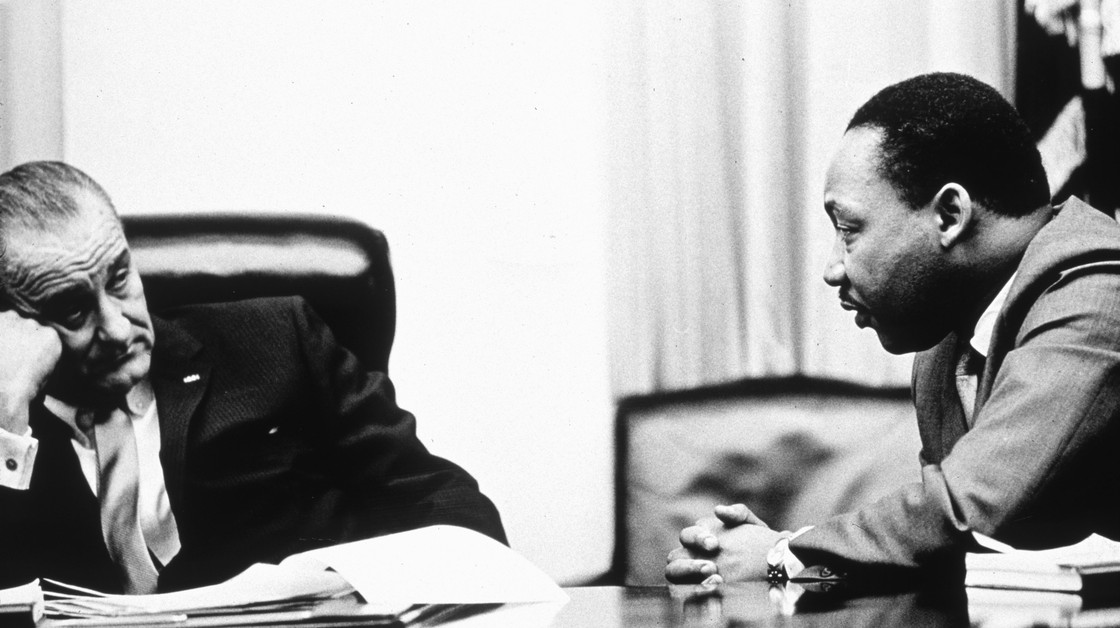
President Lyndon Johnson and civil rights leader Martin Luther King Jr. discuss the Voting Rights Act in 1965. On Wednesday, the Supreme Court hears arguments on whether a key part of the law is still needed nearly a half century after its passage. Hulton Archive/Getty Images

The U.S. Supreme Court hears arguments next week in a case that tests the constitutionality of the 1965 Voting Rights Act, the law considered the most effective civil rights statute in American history. At issue is whether a key provision of the statute has outlived its usefulness.

A staggering 49 friend of the court briefs have been filed, among them briefs from 11 states urging the court to either strike down or uphold the law. What is intriguing is that some of the states now arguing against the law were not troubled by its provisions just four years ago, the last time it was before the court.

In 2009, a small Texas utility district challenged the so-called preclearance section of the law, which requires nine states, most of them in the South, and parts of other states like California and New York, to get advance approval from the Justice Department or a federal court in Washington before changing any voting laws or regulations.

When the case got to the U.S. Supreme Court, only one state — Georgia — came out clearly against the law, claiming that the provision was unconstitutional. Alabama filed a brief echoing part but not all of Georgia’s arguments. Both emphasized that their respective states have changed dramatically since 1965, and asked the court to seriously consider the legality of the preclearance section, given its burden on covered states.

The Supreme Court in 2009 dodged the preclearance question, but the issue is back this year in a challenge brought by Shelby County, Ala. And this time seven states — Alabama, Alaska, Arizona, Georgia, South Carolina, South Dakota and Texas — are asking the court to strike down the law.

Of the seven, Arizona has made the most noticeable switch between 2009 and 2013. In 2009, Arizona joined a brief supporting the law, along with North Carolina, California, Louisiana, Mississippi and New York.

Back then, Arizona and the other states said that the preclearance section of the law was “not onerous,” and that indeed, preclearance had offered “some benefits,” for example, protecting them from expensive litigation. The states supporting the law said that although some of them had expressed initial resistance to the preclearance process when the Voting Rights Act was originally adopted, “by 2006 the process for seeking preclearance had become painless and routine.”

Today, however, Arizona is on the other side of the debate, saying something very different. The preclearance requirement, it now argues, is “arbitrary and burdensome,” and unconstitutional.

Arizona’s governor this time, as last, is Republican Jan Brewer. Though she was quite new to the job in 2009, she had previously held the job of Arizona secretary of state, the position that deals with elections.

Four other states — Alaska, Louisiana, South Carolina and Texas — also seem to have changed their tune since 2009. Back then, Louisiana supported the law, while Alaska, South Carolina and Texas were silent on the issue, taking no position. This time, Louisiana is silent, while Alaska, South Carolina and Texas are urging the Supreme Court to strike down the preclearance provision.

Among the states that are fully covered by the preclearance requirement, Mississippi seems to be the only one that has consistently supported the law. The state signed on to briefs in 2009 and again this year urging the Supreme Court to uphold the law.

New York, California and North Carolina — states that are only partially covered by the preclearance mandate — also have remained true to the positions they took four years ago. Like Mississippi, they are supporting the constitutionality of the law, declaring that it is not unduly burdensome.


See Original Story

States Take Sides As Court Revisits Voting Rights Act

Because Of Budget Cuts, U.S. Releases Hundreds Of Illegal Immigrants

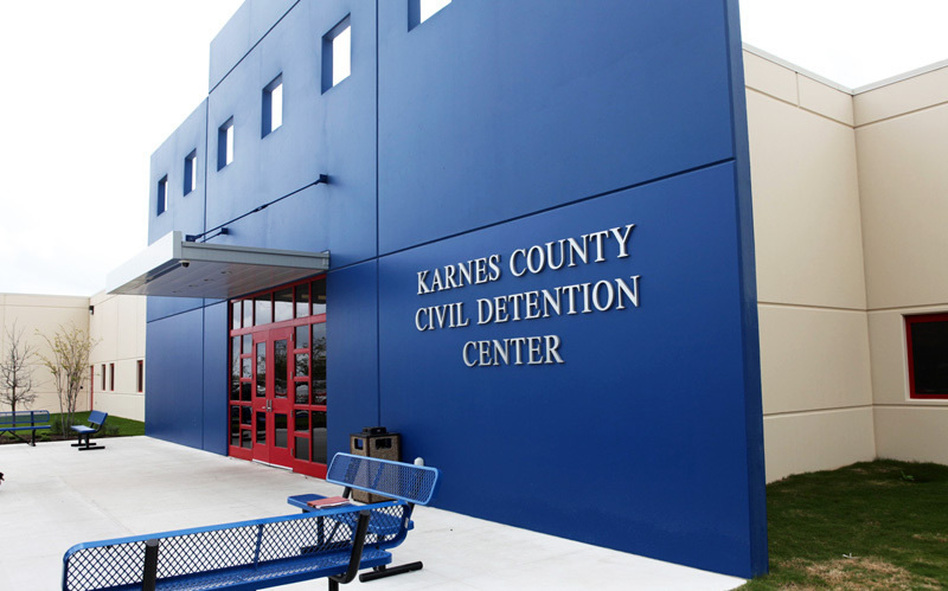
Karnes County Detention Center in Karnes City, Texas. ICE

The U.S. Immigration Customs and Enforcement (ICE) says it released several hundred detainees in an effort to prepare for the across-the-board budget cuts scheduled to go into effect March 1. More people may be released in the coming days.

“In order to make the best use of our limited detention resources in the current fiscal climate and to manage our detention population under current congressionally mandated levels, ICE has directed field offices to review the detained population to ensure it is in line with available funding,” Gillian M. Christensen, a spokeswoman for Immigration and Customs Enforcement said.

The released individuals are still under supervision and their cases will continue to be prosecuted according to ICE officials. They also have to adhere to strict guidelines including reporting schedules and monitoring, according to The New York Times.

Last year, the National Immigration Forum estimated that the cost per ICE detainee ranges $122-$164 per day. The organization also estimated that alternative methods of detention cost significantly less, between 30-cents to $14 per day per detainee.

Rep. Bob Goodlatte, a Republican from Virginia, released a statement criticizing the Obama administration for allowing the release of detainees.

“It’s abhorrent that President Obama is releasing criminals into our communities to promote his political agenda on sequestration. By releasing criminal immigrants onto the streets, the Administration is needlessly endangering American lives.”

At the daily White House Briefing Monday, Janet Napolitano, the secretary of homeland security stated:

“All I can say is, look, we’re doing our very best to minimize the impacts of sequester. But there’s only so much I can do. I’m supposed to have 34,000 detention beds for immigration. How do I pay for those?”

Advocacy groups like United We Dream, a network of youth-led immigrant organizations around the country, view the releases of low-priority detainees as a step forward in immigration reform. In a press release Carolina Canizales, Coordinator of United We Dream’s End our Pain Program stated that the enforcement focus should be on criminals and those who a risk and danger to society.

“It shouldn’t take a manufactured crisis in Washington to prompt our immigration agencies to actually take steps toward using government resources wisely or keeping families together,” Canizales said.

Napolitano said the cuts mandated by Congress this year amount to $85 billion and $1.2 trillion over the next 10- years.


Read original article

Because Of Budget Cuts, U.S. Releases Hundreds Of Illegal Immigrants

GM Denies Asking For $2.1 Million Pay Raise For CEO Dan Akerson

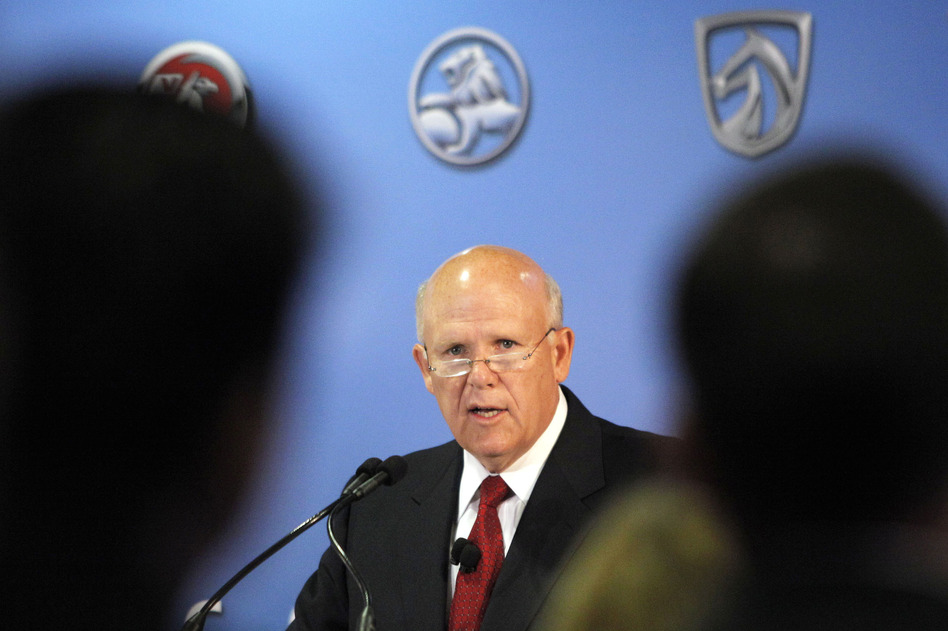
General Motors Chairman and Chief Executive Officer Dan Akerson. Bill Pugliano/Getty Images

General Motors Co. said today that its Chief Executive Dan Akerson will not take a pay raise this year.

Documents filed with the House Committee On Oversight and Government Reform showed that GM was asking the U.S. government to OK a $2.1 million raise for Akerson. The government still owns part of GM and when the automaker took a $49.5 billion bailout, it agreed to have executive pay approved by government.

Today, GM was indignant in a statement saying those figures were “false.”

“Unfortunately, someone who obviously did not understand the compensation request leaked the information in a way that misrepresented the truth in order to score political points on the eve of a congressional hearing,” GM said.

That hearing, by the way, was focused on a report issued by a Special Inspector General for the Troubled Asset Relief Program (TARP). As we reported, the IG found that the Treasury “failed to rein in executive pay at companies that received a government bailout.”

The Wall Street Journal adds:

“The Inspector General, Christy Romero, detailed how GM lobbied for higher pay for senior executives, stating that Mr. Akerson lobbied outgoing Treasury Secretary Timothy Geithner for relief from the pay restrictions imposed as conditions of the company’s bailout.

“Ms. Romero reprised her criticism in this morning’s House hearing, stating in her testimony that the Treasury should go back to its original position that executive pay at companies still on federal life supports should be limited to $500,000 a year except in unusual circumstances.”

As for Akerson’s compensation: USA Today reports he is among the lowest paid CEOs of the Big Three automakers in Detroit. Ford’s CEO got $29.5 in 2011.

The Journal points out, however, that GM is seeking raises for 18 other executives.


Read original article

GM Denies Asking For $2.1 Million Pay Raise For CEO Dan Akerson

Site notifications
Update notification options
Subscribe to notifications