Alaska

SEARHC faces $4M loss from 2011, CEO says

The new head of the Southeast Alaska Regional Health Consortium says the organization is losing money, and that difficult changes are on the way.

But in a letter to SEARHC employees, CEO Charles Clement also says organization’s long-term future is positive.

The letter says SEARHC lost more than $4 million in 2011.

Clement writes that the problems did not materialize overnight, but “are the consequences of inattention to the evolving nature of health care – the business of tribal health care specifically – and a failure to effectively manage such complex issues.”

SEARHC is a nonprofit tribal health consortium that operates in 18 communities throughout Southeast Alaska. With nearly 1,000 employees, it’s the region’s largest private employer. Headquarters are in Juneau, with a large hospital and medical campus in Sitka.

Clement started work as CEO on Feb. 6. His letter says SEARHC is facing major challenges such as the rising cost of providing health care, and limited federal compact funding. That federal money makes up nearly half the organization’s $115 million budget.

Clement calls for more innovation in delivering health care, and more responsibility in recovering expenses. His letter doesn’t provide details of how that will happen. But he writes that in the upcoming weeks and months, there will be changes, some of which will be “extremely difficult and perhaps even heartwrenching.”

SEARHC spokesman Michael Jenkins declined to comment on the letter Tuesday, but said Clement would be free for an interview next week. Jenkins says the letter is meant to provide information to staff in a transparent fashion.

The situation spelled out in the letter paints a different picture than SEARHC’s most recent annual report. In 2010, the organization saw net income of nearly $600,000, up from about $350,000 in 2009.

Then-CEO Roald Helgesen wrote in the 2010 report that SEARHC exceeded its financial goals that year, watching its programs grow as the finances stayed in balance. Patient visits were up across the board, and facilities were being renovated or expanded to the tune of millions of dollars, mostly from grants and government sources. Helgesen was not immediately available for comment.

Exactly what happened in 2011 to change SEARHC’s financial picture isn’t made clear by the letter. Clement says SEARHC needs to rebuild, but he also says he’s “incredibly optimistic” about the organization’s long term future.

In less urgent times, he says he would want to engage staff on the best ways to solve the consortium’s financial issues. But this situation is critical, he says, and the sooner changes occur, the less drastic they’ll be.

Wood-pellet heat systems pitched to lawmakers

Backers of biomass energy pitched wood-pellet heat as a money-saver during a legislative hearing today (Feb. 21st).

Alaska Energy Authority staff and others talked to the House Committee on Economic Development about the Southeast Alaska Integrated Resource Plan. The document recommends developing more pellet and other wood heat, as well as some expanded hydroelectric generation.

AEA Biomass Program Manager Devany Plentovich said high fuel prices have driven many residents to heat with electricity instead of oil.

“Unfortunately, as we’ve switched so much to the space heating, we’ve seen the reserve hydro just disappear to a remarkable rate. It’s at the point where our utilities are having to supplement the hydro during the winter season with diesel generation. And that’s very high-cost diesel generation,” she said.

Southeast lawmakers and other officials have called for more hydroprojects with more connections to more communities.

Sealaska Corp.'s wood-pellet boiler. Photo by the Alaska Center for Energy and Power - UAF.

But the resource plan calls for a larger focus on wood heat, in businesses, offices and schools. And some are already making the switch.

Plentovich said wood-pellet heat costs less than oil-powered systems, and has about the same price tag as electric ones. And, she said, boiler conversions are short-term investments.

The Sealaska building, that’s going to pay back in about four and a half years. The Kake school, if that gets funded through the renewable energy fund, that’s got about a six- to seven-year payback. The Coast Guard in Sitka is looking at about a five-year payback. So these projects have a great economic story,” she said.

Energy authority staff said pellets would be a better deal if a large manufacturing plant opened in Southeast. Now, most are shipped in from British Columbia.

Ketchikan’s Tongass Forest Enterprises just began operating a pellet plant in Ward Cove. It’s selling to local boilers, but not homes.

Several Prince of Wales Island groups have had less success. One, Alaska Mills LLC, shelved plans due to a high investment risk. Another, involving small mill owners, has not been able to find financing.

AEA Project Manager Jim Strandberg said low timber harvests are a barrier to regional pellet production.

“One of the major issues in Southeast Alaska is the ability to harvest timber. Since much of the land here is owned by the U.S. Forest Service, access will be a key driver in the ability to develop local industries,” he said.

Many of those involved in biomass say the wood for pellets would come from mill waste and logging leftovers. Other woody biomass includes chips, briquettes and traditional firewood.

The regional energy plan drew criticism at a House Resources Committee hearing earlier this month. Some speakers wanted stronger support for new hydroelectric development and a larger power grid.

Authors say it realistically considered the needs of a region where little population growth is expected.

Geologists find more volcanoes, lava, in Southeast

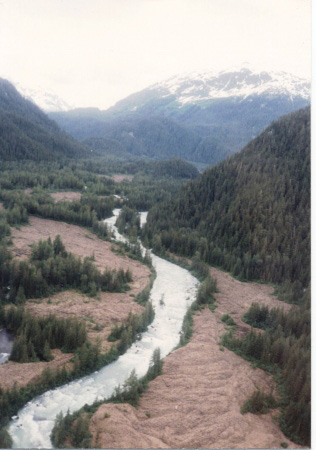
The Blue River cinder cone and lava flow, near the U.S.-Canada border northeast of Ketchikan. Photo by Jim Baichtal.

If you’ve spent any time in Sitka, you’ve probably seen Mount Edgecumbe. It’s one of Southeast Alaska’s most-viewed volcanoes, rising 3,000 feet from the ocean, only 10 miles from the former Russian capital.

It last erupted about 4,500 years ago, which is recent in the world of geology. But other volcanic sites in the region have seen more recent action. A dedicated group of geologists has spent several years searching for lava in the rainforest.

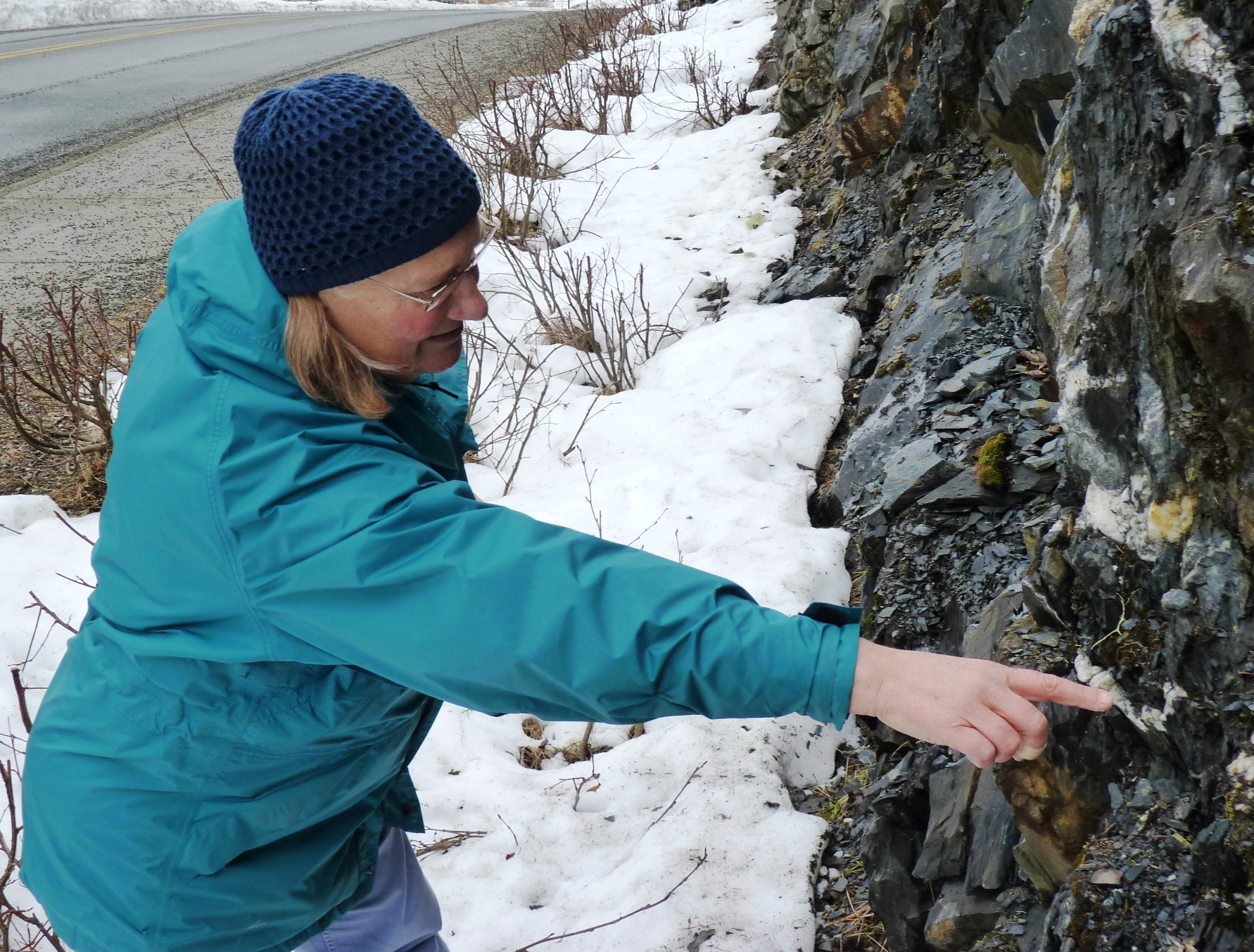
“So we are walking down the rec center road at UAS and on our right, or north side of the road, is a wondrous outcrop,” says Cathy Connor, as she approaches a rock face recently exposed by construction at the University of Alaska Southeast.

Geologist Cathy Connor points out quartz veins in a road cut near the University of Alaska Southeast Juneau campus. Photo by Ed Schoenfeld.

The Juneau geologist and geology professor points to an outcrop of asbestos, veins of quartz, and something else.

“Notice what’s happening now. What do you see up there? Do you see any change in color?” she asks as she points to a darker rock deposit.

“What I think we’re having here is just a little place where lava vented at the sea floor. And we’re getting some pillows of basalts where the magma rose, hit that cold sea floor and then gelled into a balloon or beach-ball sort of shape. And now that it’s all exposed it’s oxidizing, and making that rusty color,” Connor says.

The lava formed about a hundred million years ago, the quartz about 40 million. And that’s the same range as many similar rocks throughout the region.

But elsewhere in Southeast, volcanic activity is within the realm of human memory.

The Blue River cuts through a recent lava flow near the U.S.-Canada border. Photo by Jim Baichtal.

“The youngest basalts, the youngest eruptions that we know of, are about 110 years old,” says Susan Karl is a research geologist for the U.S. Geological Survey in Anchorage.

She says that lava, on the U.S.-Canada border northeast of Ketchikan, was dated by counting rings on trees caught in its path.

“Because they’re that young, they’re the youngest ones we know of right now, it’s certainly possible that more of these volcanoes could erupt at any time. We don’t see them as an imminent volcanic hazard. But they certainly are something we should be keeping track of,” Karl says.

“It’s quite surprising how many volcanics there are in Southeast,” says Jim Baichtal, a geologist for the U.S. Forest Service in Thorne Bay.

He, Connor and Karl have spent the past two or so years searching for new cinder cones, lava flows and other volcanic evidence.

Karl says they’ve found a dozen features, bringing the known regional total to about 50.

“Jim has given a number of talks around Southeast Alaska and shown people pictures. They’ll come back and tell us, ‘Oh, I’ve seen one like that over in this place or that place.’ And that’s actually how we’re found some of the new volcanic centers,” Karl says.

Some of what they’ve found appear to be eruptions beneath long-gone flows of ice. That interests Baichtal.

“If that‘s sub-glacial, it can actually blow a hole up through the ice, and it collapses back on itself. But as this thing continues to erupt, you may have an ice wall all the way around. And that’s what we believe Painted Peak, in behind Ketchikan, is,” Baichtal says.

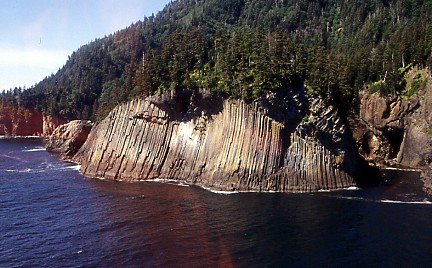
Basalt columns on Suemez Island. Photo by Jim Baichtal.

So why are there volcanics in Southeast? It’s all tied into the region’s geological history. Basically, a series of tectonic plates – slow-moving chunks of land or ocean floor – crash into, and becoming part of, our mainland.


As they collide, rub against, or slide under each other, they heat up, or create cracks that release magma.

Karl, of the U.S. Geological Survey, says the region’s volcanic centers line up along major faults – or the intersections of two faults.

“So what the faults are doing is they’re providing a plumbing system, they’re providing an avenue for these little puddles of melt under the margin to come up,” Karl says.

Chemical analysis shows the recent arrivals are part of a much-larger volcanic system stretching into parts of British Columbia and the Yukon Territory.

Back at the university rock cut, geology professor Connor points out ribbons of quartz running through a crumbly, slate-like layer. They were formed as the Earth’s crust bent and flexed, which also brought a belt of gold-bearing rock into the ground beneath Juneau.

There’s evidence that the bending and flexing may have been a result of ice-age glaciers melting fast, allowing the land to rise. Could today’s climate change-caused shrinking icefields create a similar situation?

“I suppose it’s always a possibility. You just have to hold onto your socks, and see what comes,” she says, laughing.

Leone’s attorney takes issue with admiral’s radio comments

The Coast Guard admiral in charge of Alaska has broken his public silence on charges against the survivor of a helicopter crash that killed three people from Air Station Sitka.

Lt. Lance Leone faces charges that include the military equivalent of negligent homicide. It will be up to Rear Adm. Thomas Ostebo to decide whether those charges proceed to a full court martial, get handled administratively, or are dropped altogether.

But Leone’s attorney says comments Ostebo made on a Juneau radio station compromise his ability to be fair in the case.

Ostebo appeared on KJNO’s Action Line program on Feb. 10. During the hour-long talk show, he was asked about the case against Lt. Lance Leone. Here’s some of what he said:

“I think where the American people ought to look at this, and the people here, is this isn’t a witch hunt,” Ostebo told Action Line host Murray Walsh. “This is a process that we go through, and at the end of the day the American people should feel proud of their military, that we hold folks accountable, that we thoughtfully look at these things, that we provide all the rights and support for the defendant that they deserve and have earned and are legally bound to, and have followed those rules.”

After the accident in July 2010, Leone recovered from his injuries and was cleared to return to flight, pending some training. Ostebo took command of the Coast Guard’s District 17 in May. Sometime between then and September, Leone’s orders for training were canceled, and the charges were issued.

“We came here in May and that was something we had to deal with. We’re dealing with it the way we’re supposed to,” he said. “And I understand the people of Sitka. I understand the emotion involved in this. I’m OK with that. My shoulders are big enough to handle all that.”

He said the process is ongoing, and that he has 90 days from the end of a December hearing to decide whether to proceed with the Uniform Code of Military Justice (or UCMJ) or handle the matter administratively.

News of the North, a program on KJNO’s sister station KINY, reported Ostebo’s comments. They appeared to deal mostly with the procedure of the case, and not his own opinions. But Leone’s attorney has a different interpretation.

“Very, very few commanders – in fact I cannot remember a single commander who would ever discuss an ongoing case with the media,” said John Smith, Leone’s private attorney. The retired Army colonel has practiced military law for 30 years. He said Ostebo’s assessment of the judicial process left out a third option: to drop the charges entirely.

“Well it sounds to me like Adm. Ostebo has already made up his mind. He has made up his mind that Lt. Leone will be punished either via the UCMJ or administratively.”

And Smith objects to Ostebo’s statement that the Uniform Code of Military Justice is a “lane” the Coast Guard is traveling down in order to investigate the crash.

“The military justice system is not a lane,” he said. “It is a very serious process that focuses on the alleged wrongdoings of an individual.”

Leone’s defense team maintains their client has done nothing wrong, and is only guilty of surviving the crash.

Lt. Veronica Colbath is a spokeswoman for the Coast Guard in Alaska. She says the Coast Guard can’t comment on an ongoing investigation, and that includes commenting on concerns someone raises about the case.

But she did say that Ostebo was invited on KJNO to discuss work the Coast Guard is doing in the Arctic. During the hour-long conversation, he was asked where things stood with the Leone case.

Throughout the case, the Coast Guard has told KCAW it won’t make public comments until the proceedings are settled. And Smith, on Leone’s defense team, hasn’t consented to an interview with KCAW until now.

Smith says he’s requested several meetings with Ostebo, but has been denied. He says Ostebo’s attorneys told him the admiral won’t discuss pending litigation.

If the case is sent to court martial, Smith says he could protest Ostebo’s neutrality. Such a move could send the case to a new “convening authority,” which is the person who performs Ostebo’s function in deciding whether to put Leone on trial.

But Smith also said he hasn’t committed to any specific course of legal action.

“I am intimately related and interested in taking that action which will best serve Lt. Leone,” Smith said. “And in this particular case, I believe Adm. Ostebo cannot make a fair and impartial decision.”

The officer who heard evidence in the case back in December recommended Ostebo drop the charges against Leone. But his recommendation is not binding, and Ostebo is free to pursue whatever option he deems suitable.

Bill would expand geoduck farms to Gulf of Alaska

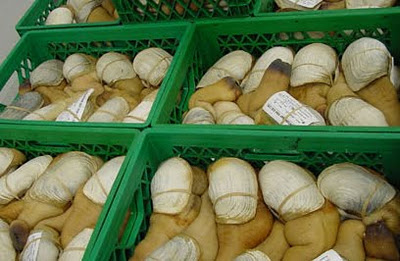
Alaska geoducks. Photo by Alaska Fish and Game Department.

Legislation allowing geoduck farming to expand north and west is moving in the state Senate.

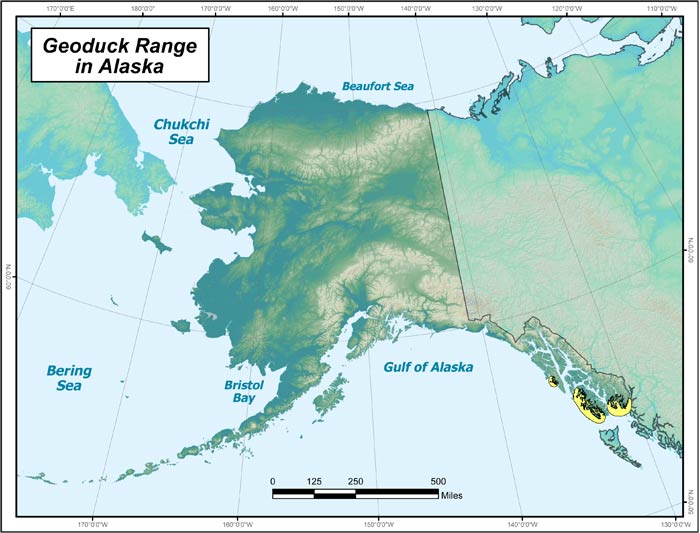
The measure would allow the large, valuable clams to be grown north of their natural realm. That ends around Juneau.

It would permit geoduck farms in Yakutat, Prince William Sound, Kodiak and other locations. Kachemak Bay is exempt because it’s been designated a critical habitat area.

House Bill 60 works on trying to promote economic development around the coast of Alaska,” said Homer Republican Representative Paul Seaton, the main sponsor.

He described the measure to the Senate Natural Resources Committee on Monday.

“It is very difficult to get a new economic base in many coastal towns, especially those that will not conflict in time with salmon and herring fishing,” he said.

A version of the bill introduced five years ago raised concerns among some biologists and lawmakers. They worried the large clams could become an invasive species, competing with other shellfish and ocean life.

But Seaton says geoducks will not spread outside farm areas.

The natural geoduck range in Alaska. Map by AK Department of Fish and Game.

“And the probability is that since the water has to be warmer before they will spawn, that they’ll be just like oysters up in Kachemak Bay where they never reach a temperature to spawn. And so we’re not talking about a proliferation of the species,” he said.

The stationary filter-feeders are farmed in subtidal areas. Larva, from a hatchery in Seward, are planted in the ocean floor and feed on their own. They need about seven years to mature, and could take longer in colder waters.

Southeast farmers recently began selling geoducks on the open market. They’re taking advantage of prices of more than $20 a pound. Larger farms raise and sell geoducks in British Columbia and Washington State.

Paul Fuhs of Sea Farms Alaska wants the same thing to happen along the Gulf of Alaska.

“If you pass this it’s not going to be a wasted effort. We would go immediately to a research permit, go in and get some in the ground and see how they grow, mortalities and things like that. We don’t have any experience with it yet, but they’re growing in Resurrection Bay water right now from the hatchery … so I don’t see any reason that shouldn’t work,” he said.

Seaton’s bill passed the House last year, but was not heard in the Senate until Monday’s hearing. After hearing about the bill, the resources panel moved it on to the chamber’s Finance Committee.

Behind the scenes of geoduck farming with Washington state’s Taylor Shellfish Farms, the biggest geoduck farmers in North America. Taylor’s farm is intertidal, while Alaska farms are subtidal.

Otter measure drops whole-pelt sales provision

Will Ware, left, and Derek Lopez display the pelt of a sea otter at the Petersburg Indian Association office in 2011. Photo by Ed Schoenfeld.

The House Resources Committee has approved a scaled-back measure aimed at increasing sea otter harvests. It’s a significant change for the resolution authored by Wrangell Representative Peggy Wilson.

Aide Arthur Martin addressed the committee on Monday.

“A concern was raised with the ability of Native peoples to sell sea otter pelts to anyone. So we removed all mention of the sale of intact sea otter pelts and crafted the language and a few changes that clarified the issue,” Martin said.

Federal rules allow only coastal Alaska Natives to kill otters. And they can only sell pelts to non-Natives that are turned into traditional clothing or crafts.

The updated resolution calls for the state to work with federal officials to update otter harvest rules. That includes allowing Natives to turn pelts into modern handicrafts. The change could encourage more hunting by providing a larger market, but not as much as whole-pelt sales.

Fishermen and divers have seen shellfish numbers drop as the voracious marine mammals expand their numbers and range. That’s led some to ask the federal government to increase otter harvests.

Sea otters rest on their backs near Sitka Sound in 2011. Photo by Ed Schoenfeld.

Sitka’s Mike Miller, of the Indigenous People’s Council for Marine Mammals, told the committee it’s a serious threat.

“There’s definitely concern in the Native community about the impact the otters have. And we need to protect both the otters, but also the resources the community relies on like subsistence and commercial shellfish and things like that,” Miller said.

Others asked the committee to drop any effort to slow otter growth. They said such actions would upset the environmental balance and inspire national protection campaigns that could hurt tourism.

“Opening the door for predator control for sea otters also opens the door for predator control on other protected species such as Steller sea lions and humpback whales,” said Tina Brown of the Alaska Wildlife Alliance.

“And if you don’t think this is the case, haven’t been listening, because people are already talking about that,” she said.

But Petersburg Vessel Owners Association Executive Director Julianne Curry said many of her members want increased harvests.

“What we’d be looking for is for coastal Natives, who are allowed to harvest under current regulations, to be able to sell a sea otter pelt to a non-Native,” Curry said.

Sponsor Wilson says she will consider further changes to the resolution.

Site notifications
Update notification options
Subscribe to notifications