A Superior Court judge has ruled against Petersburg’s legal challenge to the Alaska Redistricting Board’s plan for new legislative districts. A decision issued Monday says a new district including Petersburg, part of Juneau and several other small Southeast communities meets the requirements of the Alaska Constitution. Joe Viechnicki reports.
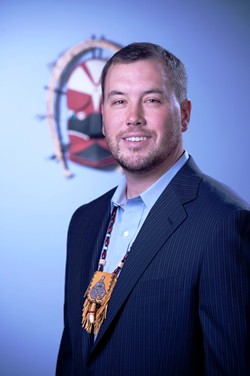
The SouthEast Alaska Regional Health Consortium has hired Charles Clement as its new President and Chief Executive Officer.
Clement replaces Roald Helgesen, who leaves at the end of the month to become CEO of the Alaska Native Tribal Health Consortium.
Clement will start the job in February and will be based at the SEARHC campus in Juneau, but he’ll oversee the entire consortium, which includes Mt. Edgecumbe Hospital in Sitka.
SEARHC General Counsel Ken Truitt will serve as interim president between Helgesen’s departure and Clement’s arrival.
The SEARHC Board of Directors announced the hire late Thursday afternoon.
Clement is currently vice president of operations and the chief operating officer for the Southcentral Foundation in Anchorage. The Foundation and Tribal Health Consortium jointly own and manage the Alaska Native Medical Center.
Clement is Tsimshian and Athabascan. He graduated from Metlakatla High School, completed his bachelor’s in economics and political science at Northern Arizona University, and has a Masters of Public Administration from the University of Alaska Anchorage.
In a SEARHC news release, Clement says he’s looking forward to moving back to Southeast Alaska.
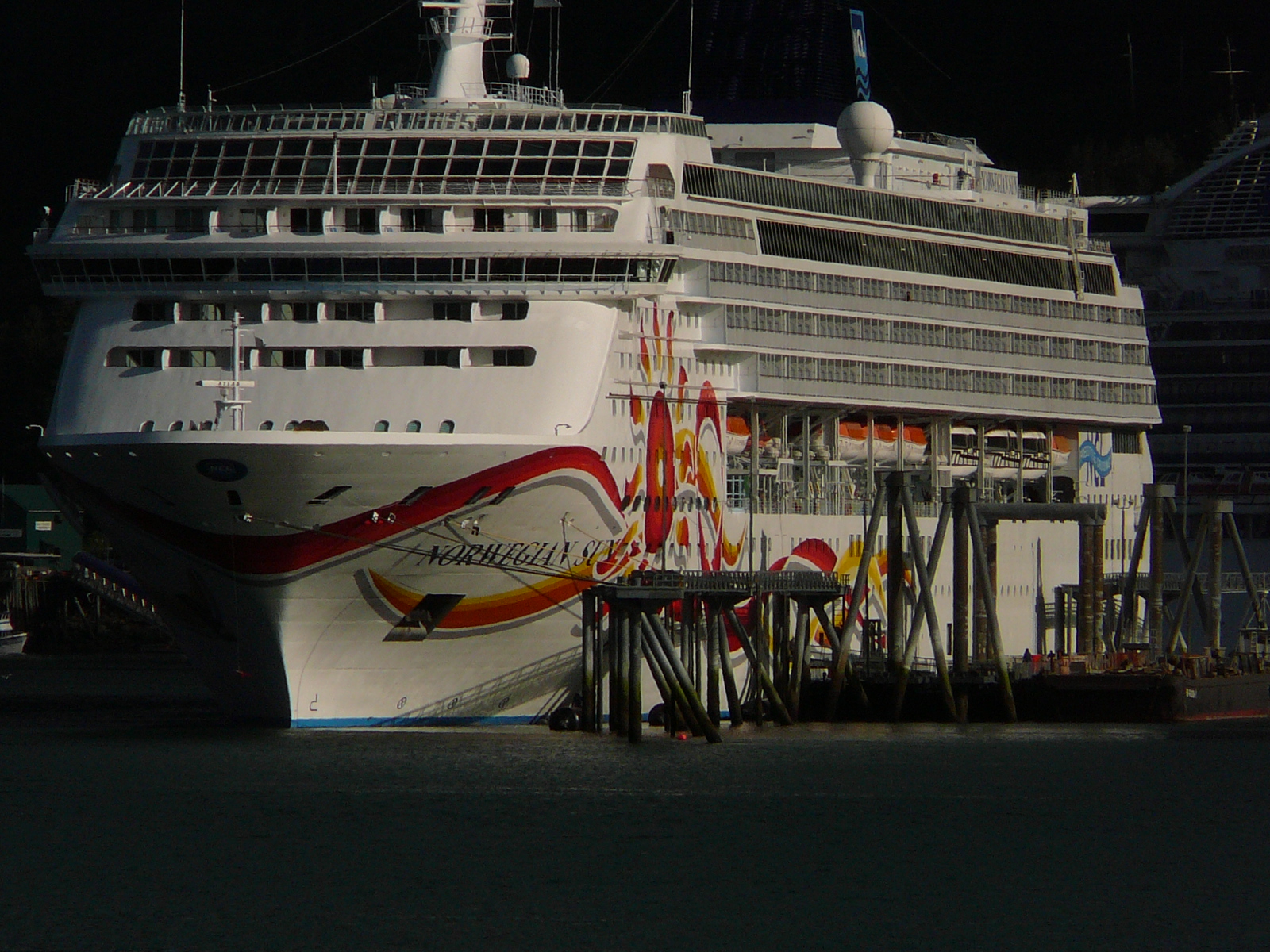
Norwegian Cruise Line says it will sail another ship in Alaska waters.
Company officials this week announced plans to return the Norwegian Sun to northern service two seasons from now. It last sailed here in 2009.
The Sun will sail from Vancouver to Whittier and back beginning in May of 2013.
The Norwegian Sun, in an earlier port call in Juneau
Northbound cruises will stop at Ketchikan, Juneau, Skagway, Glacier Bay and the Hubbard Glacier near Yakutat. Southbound itineraries will be similar, adding Hoonah’s Icy Strait Point and Tracy Arm south of Juneau, and skipping Glacier Bay.
Crane Gladding of Norwegian Cruise Line says each week-long trip will carry about 2,000 passengers. That adds up to around 40,000 for the season.
“We really feel like the time is right. And it really feels like with the cooperation of the government and the folks in Alaska that we’ve really seen a lot of improvement in the demand for the overall product,” Gladding says.
He says better marketing and improvements in docks and shoreside facilities helped his company decide to return. So did a reduction in the voter-approved cruise ship passenger fee, which dropped from $50 to about $25 dollars this last season.
Governor Sean Parnell and the Legislature credit that change for bringing more ships to the state. So does Ron Peck, of the Alaska Travel Industry Association.
“By reducing the liability on the head tax, I absolutely believe that had an impact on cruise executives decisions and that’s great news for Alaska,” Peck says.
Industry critics disagree on the reason the Sun is leaving the Baltic Sea for Alaska.
Chip Thoma, of Responsible Cruising in Alaska, says international politics, not tax cuts, are bringing ships back to the state.
“A lot of these ships from Alaska and from the Caribbean went on to Europe thinking they would do well in the Mediterranean. And of course the Arab Spring came and that was just a debacle. So all those ships are coming back to this part of the world and that’s what I attribute all of the interest in Alaska again,” Thoma says.
Norwegian already sails two larger ships on roundtrips through the Inside Passage. The Sun sailed a similar route in 2009, its last Alaska season.
Its new itinerary is one way, dropping passengers off or picking them up in Whittier, the nearest cruise port to Anchorage.
John Binkley, of the Alaska Cruise Association, says that boosts passengers’ economic impact.
“Those people then will be getting on or off the ships in Southcentral Alaska. Many of them will travel then all the way up into the Interior and other parts of Alaska and be spending more money and more time in Alaska,” Binkley says.
Industry figures show cruise capacity peaked at just over a million passengers in 2007. It stayed about the same for two seasons, then dropped to about 880,000 for last and this year.
Next year, Princess will add a seventh ship to its Alaska fleet. And Holland-America is juggling vessels to carry more passengers. That will bring total cruise capacity up to about 950,000.
The Norwegian Sun’s 2013 addition raises passenger counts another 40,000, almost reaching the historic million-cruiser high of the last decade.
Binkley says other deployment announcements could come in the next few months.
“Most of the companies have them finalized now. And then it’s just a question of what their strategy is and when they release those to the public and when they start selling those,” he says.
Alaska cruises can run from the hundreds to the thousands of dollars, depending on the choice of cabin and other amenities.
Norwegian Cruise Line’s Gladding says the Sun’s fares also depend on timing.
“There’s also great opportunities to sail in May, early June and September that offer an affordable price. So I think prices will start at about $699 per person and kind of go up from there as you get into peak times,” Gladding says.
Capacity estimates are based on two people in each stateroom. Actual numbers can be higher or lower, depending on the number of children and others along for the ride.
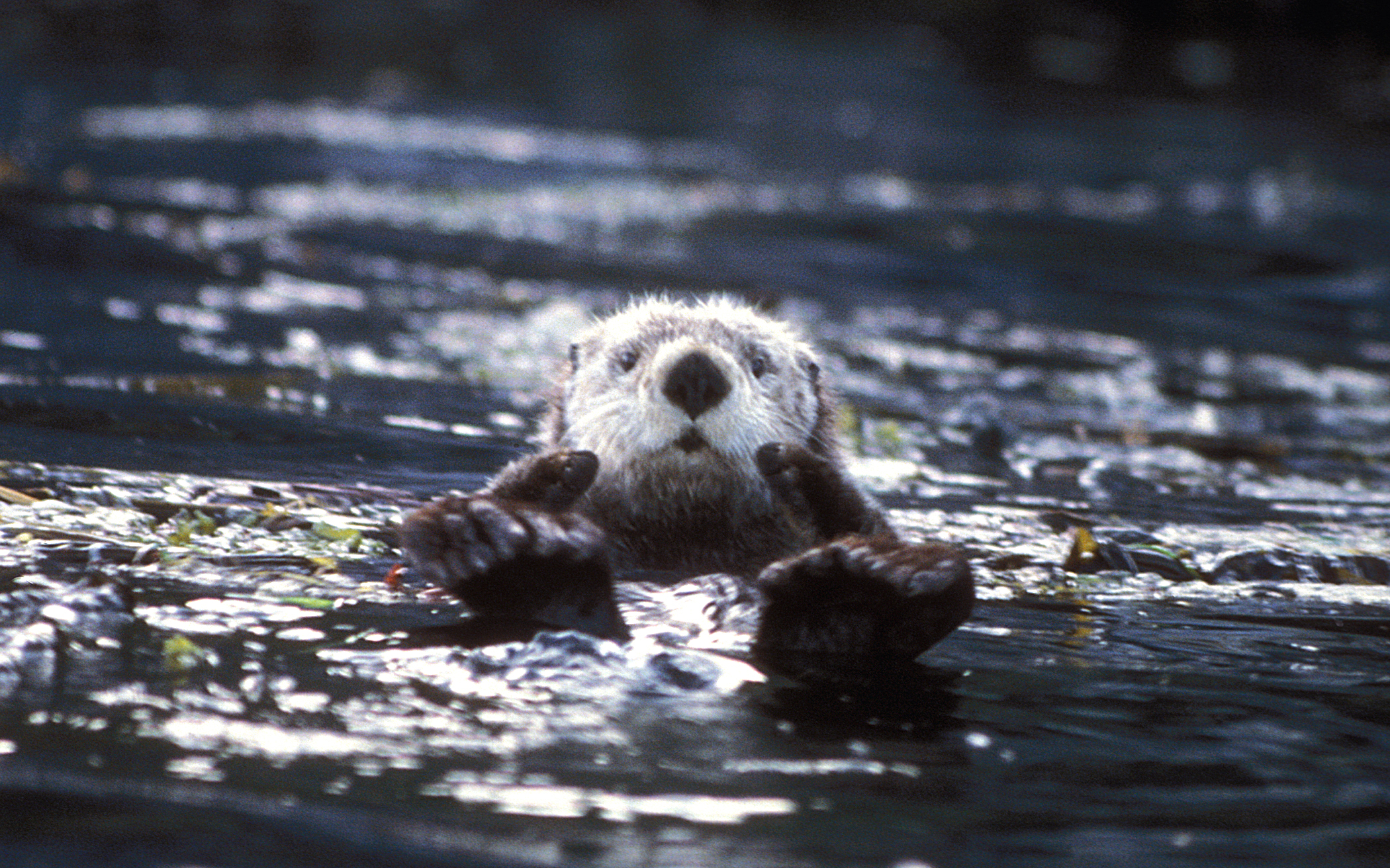
Sea otter in Glacier Bay. Photo by Riley Woodford.
The Allen Marine catamaran St. Tatiana heads along the outer coast south of Sitka near the end of this year’s tour season. It’s on one of the company’s Sea Otter Quests, and it’s having some success.
Several dozen cruise-ship tourists watch from an open deck as otters swim, dive, roll and float on their backs.
“You saw a few of them have their hind feet out of the water. That’s because there’s not so much fur around there so they don’t want to lose that heat through their body to the water because they don’t have a lot of fur around their feet,” says Naturalist Ryan Dunn.
He goes on to explain that otters have incredibly thick fur instead of blubber. Their pelts are valuable, and they were hunted to near-extinction by the early 1900s.
Otters were reintroduced to Southeast in the 1960s, and for decades, they were a rare sight. But recently, their population has boomed, mostly along the outer coast and in southern Southeast.
That means the voracious eaters are consuming more and more sea cucumbers, sea urchins and the giant clam called geoducks.
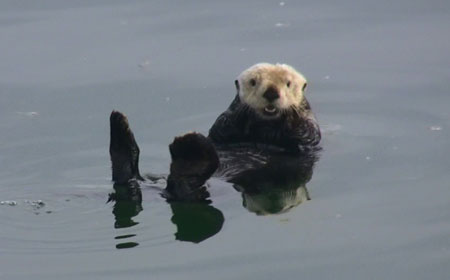
A resting sea otter. U.S. Fish and Wildlife Service digital archives.
A new report says Southeast Alaska’s sea otter boom has cost the region’s commercial divers and fishermen close to $30 million. Most is income lost as otters consume shellfish and crabs that otherwise would be harvested.
“We don’t know what’s going to happen with the dive fisheries in the long run. It doesn’t look very promising, though,” says Phil Doherty, executive director of the Ketchikan-based Southeast Alaska Regional Dive Fisheries Association.
The association recently released an economic report from the McDowell Group, a Juneau-based research firm.
The report estimates regional otter numbers will soon hit 20,000, more than double the population about eight years ago. And by 2015, it will more than triple.
“We don’t see a real management plan out there that would even slow down the growth, let alone trying to keep otters out of areas where they aren’t in yet,” Doherty says.
The report estimates otters have taken about $22.5 million dollars in the species divers harvest, plus Dungeness crab, using the wholesale value. Add in businesses that support the dive and crab industries and the figure grows to just over $28 million dollars.
That includes $9 million dollars of sea cucumbers, just over $4 million dollars in geoducks, almost $4 and a half million dollars in sea urchins, and around $5.3 million of Dungeness crab.
“That’s a very narrow way of looking at sea otters’ role in the ecosystem,” says California activist Jim Curland, who lobbies Congress to continue protecting sea otters.
He says their return to an area where they were virtually extinct is good for the marine ecosystem.
“When you have large colonies of sea urchins, which occurs when you don’t have sea otters, they can destroy kelp forests. And sea otter predation on sea urchins actually enhances the productivity of kelp forests. Scientists have documented this effect in Southeast Alaska and elsewhere over decades of studying this,” Curland says.
The Marine Mammal Protection Act bans most hunting. Alaska Natives can harvest otters for subsistence use. But they can only give or sell whole pelts to other tribal members. Other sales are allowed if the pelt is substantially altered, such as being turned into handicrafts or clothing.
Alaska’s Congressional delegation is pushing legislation that would allow Natives to sell whole pelts to anyone.
Doherty, of the dive fisheries association, says it’s unlikely to pass. But even if it does, it won’t solve the problem.
“If the Natives could sell them as a pelt, that would increase the harvest. But we feel it’s doubtful that even that new legislation would make a significant dent in the population and slow the growth down in the areas where they are most affecting our dive fishery,” he says.
A group of environmental organizations are campaigning against the legislation. Otter activist Curland says it could do a lot of damage to a species that’s recovering.
“You would open up a larger market outside of the Native subsistence hunters in Alaska. You’d start seeing pelts sold to China. They’d show up on Craigslist or eBay or whatever. And I think that demand would create a greater pressure on the hunting of sea otters,” he says.
Doherty says the dive fisheries association funded the recent report to share its concerns.
“We need to make sure everyone is fully aware of what’s going to happen with our shellfish fisheries in Southeast Alaska. And if at the end of the day, people still don’t want to react to it, and they will allow the sea otter population to wipe out the shellfish fisheries in Southeast Alaska, that’s the decision that our divers need to know so they can make a decision as to what their future is going to be,” he says.
A separate U.S. Fish and Wildlife service research effort is trying to determine the extent of sea otter population growth.
It’s shown a 13 percent boost in southern Southeast. Additional research, due out soon, will provide numbers for the northern part of the region.
Southeast commercial crabbers caught about 176,000 pounds of red king crab last month in a fishery worth nearly $1.9 million on the docks. That’s according to a preliminary estimate from the Alaska Department of Fish and Game.
Fifty-four permit holders fished the Southeast red crab season which opened November 1st and lasted just under two weeks total. More than half the boats were out of Petersburg, where Icicle Seafoods was one of the local buyers. Randy Lantigne is Icicle’s fleet manager:
It was the region’s first red king crab season since 2005. The fishery had been closed until this year because the state’s annual survey had regularly yielded low estimates of harvestable crab. Crabbers disagreed with those findings and in 2009 Department of Fish and Game biologists and fishermen began a collaborative effort to ground truth the annual results with a new method. The approach…called mark and recapture….resulted in uniformly higher numbers for each area they checked. That led the department to adjust this year’s assessment upwards enough to have a fishery which was, of course, good news for the industry.
The seasons catch of about 176,000 pounds was roughly 88-percent of the department’s regionwide guideline harvest level and about 35,000 pounds less than the 2005 catch. The GHL was split up among four separate harvest areas this year. As in the past, crabbers called in their catches so the department could estimate how much had been caught and close each area accordingly. Area 11A closed after one pre-scheduled day of fishing. Based on call-ins, the Pybus bay, Gambier Bay, Round Rock area off Southern Admiralty Island closed after three days. Excursion Inlet, Saint James bay area west of Juneau and the rest of the region — known as the non-surveyed area — stayed open for 13 days. The department’s regional shellfish project leader Joe Stratman thinks it went well. He also says they had good cooperation from the processors who helped keep the department up on what they were buying.
Fish and Game saw good catch rates were good in both 11A and the Pybus-Gambier areas. The fleet caught just under 10,000 pounds or about 110-percent of the target in 11A. The Pybus, Gambier Bay area catch was nearly 60,000 pounds or 91-percent of the department’s objective. Stratman says things were a little slower in the Excursion Inlet and the St. James bay area west of Juneau as well as the non surveyed areas. He says catch rates improved in the non-surveyed area as the season went on and the pots soaked longer, but that wasn’t the case in Excursion Inlet.
Ultimately, the Excursion and St. James area yielded about 13,000 pounds which was just 45-percent of the target. But in the non-surveyed area, the fleet landed 96-percent of the goal with 93,000 pounds of crab.
Southeast red crab was a lot more valuable this year partly because much more of it went to the live market instead of being frozen. In fact, at an average of nearly $11.00 per pound, the dock price was more than double that of six years ago when the fishery last opened. The crabs weighed an average of 8.4 pounds each this year which is a little bigger than in 2005. That works out to nearly $100 for each crab. According to Fish and Game, the entire catch was worth $1,870,000 to the fleet which is over $700,000 more than in 2005.
The survivor of a 2010 Coast Guard helicopter crash has his first day in court this week.
Lt. Lance Leone is expected to appear Wednesday before a military judge in Juneau. The Coast Guard has brought charges against Leone for the loss of a Coast Guard helicopter in July 2010, and the deaths of two of its crewmembers.
The chopper and its crew were based in Sitka, where community members who support Leone have taken up a collection for his legal defense.
KCAW’s Ed Ronco reports.
Leone is facing three charges from the Coast Guard: One says he failed to navigate away from charted hazards. Another charges him with the destruction of the chopper. Those are both misdemeanors. The third charge consists of two felony charges: It says Leone negligently caused the deaths of Petty Officer First Class Adam Hoke and Petty Officer Second Class Brett Banks. Leone is not facing charges in connection with the death of the helicopter’s commander, Lt. Sean Krueger.
Wednesday’s proceeding is called an Article 32 hearing. It’s similar to a grand jury proceeding in civilian court, with a few differences.
“Unlike a civilian grand jury, the Article 32 is an adversary hearing. The accused can be there – well, not only can be there, but can be there and represented by counsel,” says Lt. Col. John Pharr, who’s retired from the Army’s Judge Advocate General corps, and now is an attorney in private practice in Anchorage.
Pharr says in addition to Leone’s ability to be present, the hearing will include a full airing of the evidence against Leone.
“It’s a tactical decision, like any other, whether the accused would actually testify,” says Pharr. “But the military system has all the protections of the civilian system. In fact, it resembles it in more ways than it differs from it.”
Instead of a panel of grand jurors, Leone’s case will be heard before an investigating officer, in this case Capt. Andrew Norris, a Coast Guard Judge Advocate, stationed at the U.S. Naval War College in Rhode Island.
“Once the evidence has been presented, he will then write his recommendation and provide that to Admiral Ostebo, and Admiral Ostebo will then determine the next course of action to take,” says Chief Petty Officer Kip Wadlow, a spokesman for the U.S. Coast Guard in Alaska.
Wadlow is referring to Rear Admiral Thomas Ostebo, commander of the Coast Guard district that encompasses all of Alaska. Ostebo can decide to drop charges, handle the matter internally, or send the case on to a court martial, which would put Leone on trial.
While this is happening, friends in Sitka have established a legal defense fund for Leone, through the law office Pearson & Hanson. Mike Finn is one of those friends. The charges were filed on September 30th, and he says the time since then has been frustrating.
It’s hard to get answers right now,” Finn says. “There’s not a lot of people who want to talk about or that can talk about it. There’s a lot of people that want to help that can’t. So it’s just one of those things that I feel a personal interest in wanting to get the word out, and get the proper word out, and tell people some of the things going on with this case that aren’t being aired.”
Finn says he has many concerns, including a feeling that Leone is being singled out for punishment by a command that’s concerned about its safety image. And he says the charges against Leone have changed his view of the Coast Guard as an institution. His 11-year-old son has shown interest in joining, but Finn says he won’t support the decision if Leone is convicted.
That’s a different reaction than the one held by Leone’s father, George.
“I still love them. I love their mission. It is upsetting to know what’s happening at present,” says George Leone. “But I believe he will be rescued and vindicated because my son didn’t do anything wrong.”
George Leone says his son was questioned in the aftermath of the accident, and that the investigation appeared to be over. He says Lance Leone was about to get the green light to fly again.
“He got a call from Washington that his training’s been canceled,” the elder Leone says.
The charges were filed not long after. George Leone says he’s been awed by the support the community of Sitka showed in the aftermath of the crash, and the support from the Coast Guard. That support including a hospital visit from Admiral Robert Papp, the Coast Guard commandant. Papp is the highest ranking officer in the Coast Guard, and when the charges were filed, George Leone called him at home. He says he didn’t get to talk to Papp, but spoke to his wife.
“So what did I want to tell Papp when I called him? I just wanted to say ‘Thank you, thank you, for all the love and support, but I want to understand what’s going on and please stop. How can they do a tremendous investigation, they spent thousands of man hours, put together a report, and they said ‘Lance didn’t do anything wrong. They hit some wires out there,’ or whatever. And now to come up with this, when he got the green light to go flying, they’re slapping the face of all the people that did this investigative report. They said there’s nothing wrong with it. Where’s this coming from?”
George Leone might not have received an answer to that question – “Where is this coming from?” – but after Wednesday’s hearing he and his son, Lt. Lance Leone, might have a clearer idea of where it’s going.
Close
Update notification options
Subscribe to notifications
Subscribe
Get notifications about news related to the topics you care about. You can unsubscribe anytime.