Sealaska Regional Native Corporation owns about 25-thousand acres of subsurface mining rights in an area being contested by the City and Borough of Juneau and Petersburg.
The area includes Hobart Bay, where Juneau’s Native Corporation Goldbelt owns 30-thousand surface acres.
Sealaska Vice President Rick Harris says the company will follow Goldbelt’s lead in commenting on the dispute.
“We’ll support them in whatever way is necessary to achieve a result that’s best for Goldbelt’s shareholders and also our shareholders,” says Harris.
Juneau plans to file a competing petition to Petersburg’s proposed borough boundaries, which includes land previously slated for annexation to the CBJ.
So far, Goldbelt hasn’t expressed a preference for which borough, if any, the corporation’s land should be in. Earlier this month, Goldbelt Vice President Derek Duncan sent a letter to the state’s Local Boundary Commission saying it would make a statement in the near future.
Harris says sand rock and gravel are quite prevalent in Hobart Bay, and that some precious metals are nearby.
“We don’t believe that it’s on our property,” Harris says. “We think that if there’s any precious metals, they’re actually to the north of our property.”
October 26th is the deadline to submit competing petitions and opposing briefs to the state’s Local Boundary Commission on Petersburg’s proposed borough.
The CBJ Assembly plans to introduce an ordinance Monday to make its petition official.
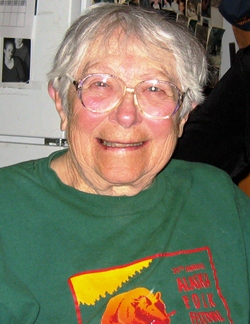
One of Southeast Alaska’s lifelong art enthusiasts has passed away. Barbara Kalen suffered a heart attack at her Skagway home Tuesday night. She was 86 years old.
Kalen was born in Skagway and spent all of her life there, save for one year of high school in California, vacations to the lower 48, and international trips to Iceland, the Galapagos and the Panama Canal. She helped reforest an area in Iceland from lodge pole pine seeds she collected in Skagway,
In the late 1980s, she took over management of Dedman’s Photo, which her mother had started in the early 1920s. She was the registered historian for the Klondike highway project, and a decades-long news stringer for publications in Fairbanks, Juneau, Whitehorse and Anchorage.
Kalen was a photographer, writer, musician, storyteller, gardener, and local legend. She’s well remembered for her dedication to the arts — music, in particular. She tried not to miss an Alaska Folk Festival and participated in numerous Juneau Lyric Opera festivals as well as other music events in the capital city.
Kalen founded the Skagway Arts Council in 1974 and was director until three years ago. About five years ago, she received an award from the Alaska State Legislature for her work in the arts.
Kalen also was fiercely interested in politics. She remained a staunch opponent to a road between Juneau and Skagway.
Memorial services are tentatively planned for next June, when more family and friends are in Skagway.
Alaska’s Timber Jobs Task Force is looking for ways to increase logging and milling employment. It recently held its fifth meeting in Coffman Cove, on Prince of Wales Island.
Governor Sean Parnell created the timber task force earlier this year after pulling out of the larger and more diverse Tongass Futures Roundtable.
One of the panel’s goals is to figure out ways to increase the amount of forest acreage that can be logged and milled.
Member Elaine Price, of Coffman Cove, is optimistic.
“There’s a market and there’s a demand, but getting a supply to create these jobs is a problem. And hopefully the governor will be able to do something about that,” Price says.
The panel met earlier this month in Price’s hometown.
State Forester Chris Maisch says members continued their examination of the realities of what’s left of the timber industry.
“We had a report on the U.S. Forest Service timber program as it exists under the 2008 Tongass Land Management Plan and some of the difficulties in terms of the amount of volume that’s being produced by the program – or the lack of it,” he says.
Timber task force members also heard about the Forest Service’s sale process.
They also expected to hear suggestions from the public, in person and through a teleconference link. But Maisch says no one testified.
“I think people haven’t had time to digest the first work products the group has put out. I expect that we’ll get more input as that becomes more widely known and available to people,” Maisch says.
The task force has already sent one background research report to the governor. It’s working on more, on available timber volume and products that can be manufactured from Alaska wood.
Maisch says the focus is on Southeast.
“But it is statewide in its charge and in different parts of the administrative order, the different tasks that are enumerated, address different parts of the state. But the majority of those tasks are focused on the Tongass,” he says.
He says the task force may recommend additions to the Southeast State Forest, established about two years ago. It also could suggest creating new state forests, which are largely managed for timber harvests.
Critics say the state and industry should have stayed in the Tongass Futures Roundtable. There, they could have continued meeting with environmentalists and other logging opponents, avoiding lawsuits and appeals that slow or block timber sales.
The governor’s office and others who withdrew say the roundtable wasn’t getting anywhere. Price, whose hometown is a former logging camp, hopes the task force will succeed.
“In Southeast Alaska we have some high unemployment in some of the rural communities. And the timber industry could solve some of that if there was a supply again,” Price says.
The next meeting is in December in Fairbanks. Members will look at woody-biomass projects in the Interior. The state Board of Forestry will meet around the same time and Maisch says he’s planning a joint session.
The Alaska Native Brotherhood and Sisterhood are becoming closer. The longtime Southeast advocacy groups voted last week to work under the same, updated constitution. Before, they were separate.
A year ago, the Alaska Native Brotherhood began revising its constitution and mission statement. They hadn’t been significantly changed for decades.
The updated version went before last week’s Grand Camp Convention in Klawock, on Prince of Wales Island. Delegates voted to approve the changes – and make them also apply to the Alaska Native Sisterhood.
“We’ve had two different constitutions, for ANB and ANS. So now this one governs both. They’re distinct bodies yet. They’re not merged,” says Dennis Demmert of Klawock, the new president of ANB’s Grand Camp, the Brotherhood’s regional organization.
“The way we do business will be pretty much the same. We’ll continue as two separate organizations, but we’ll have a single mission,” he says.
There was opposition, some of it strong.
But new Sisterhood Grand Camp President Mary Brown of Klawock says two-thirds of the delegates voted in favor.
“I feel that we are now working together as a whole and the only thing we can do from the last day of convention is to take each positive step forward to better the health, education and welfare of the people of Alaska,” Brown says.
Other changes brought the constitution and mission into the present. Demmert says some parts were outdated.
“In the earlier days there was interest because we didn’t have citizenship and we wanted citizenship. We did not have civil rights and we wanted that. And we wanted land. So those were things that were goals that have been accomplished,” Demmert says.
Earlier rules also restricted membership to Native people. The new document removes that requirement.
“A lot of non-Native people have been interested in what we’re doing. A lot of non-Native people have joined. The local camps have kind of ignored that provision, but the provision was there,” he says.
Leaders hope some of the changes will help broaden membership. James Williams of Klawock is ANB’s new Sergeant of Arms.
“We have to concentrate on how we’re going to reach our young generations to participate in this organization. Because they’re next in line, just like they told us when we were joining,” Williams says.
This year’s convention was the Brotherhood’s 99th, and focused on history. Next year it will be where the first camp, or chapter, set up shop.
“It’ll be in Sitka, and it’s going to be a very major celebration, given that we’re going into the next 100 years” says Ketchikan’s Richard Jackson, the previous ANB Grand Camp president. He didn’t run for re-election.
He says this year’s attendees heard about the organizations’ past from author Peter Metcalfe and history professor Stephen Haycox.
The Alaska Native Sisterhood formed a few years after the Brotherhood. But ANS President Mary Brown says it will be part of the ANB’s anniversary.
“As far as we’re concerned we’re one. It doesn’t matter what year we started up. But right from day one of the ANB, the sisters have been there and supported them 100 percent and we will continue to do so. We will celebrate the 100th year together,” she says.
Those at the meeting also expressed support for landless Natives, who live in communities without Native corporations. They also backed stronger subsistence rights and expressed concerns about the growing number of suicides.
The convention also recognized longtime leader Walter Soboleff, who died earlier this year at the age of 102. His position within the ANB was grand president emeritus. His successor has not been named.
The Alaska Division of Elections has rejected a recall application for Ketchikan state Representative Kyle Johansen. District One Republicans, who launched the recall effort in May, plan to meet to decide whether to appeal. KRBD’s Deanna Garrison has the story.
When you’re trying to tap geothermal energy, for heating or electrical generation, you’ve got to consider a number of factors.
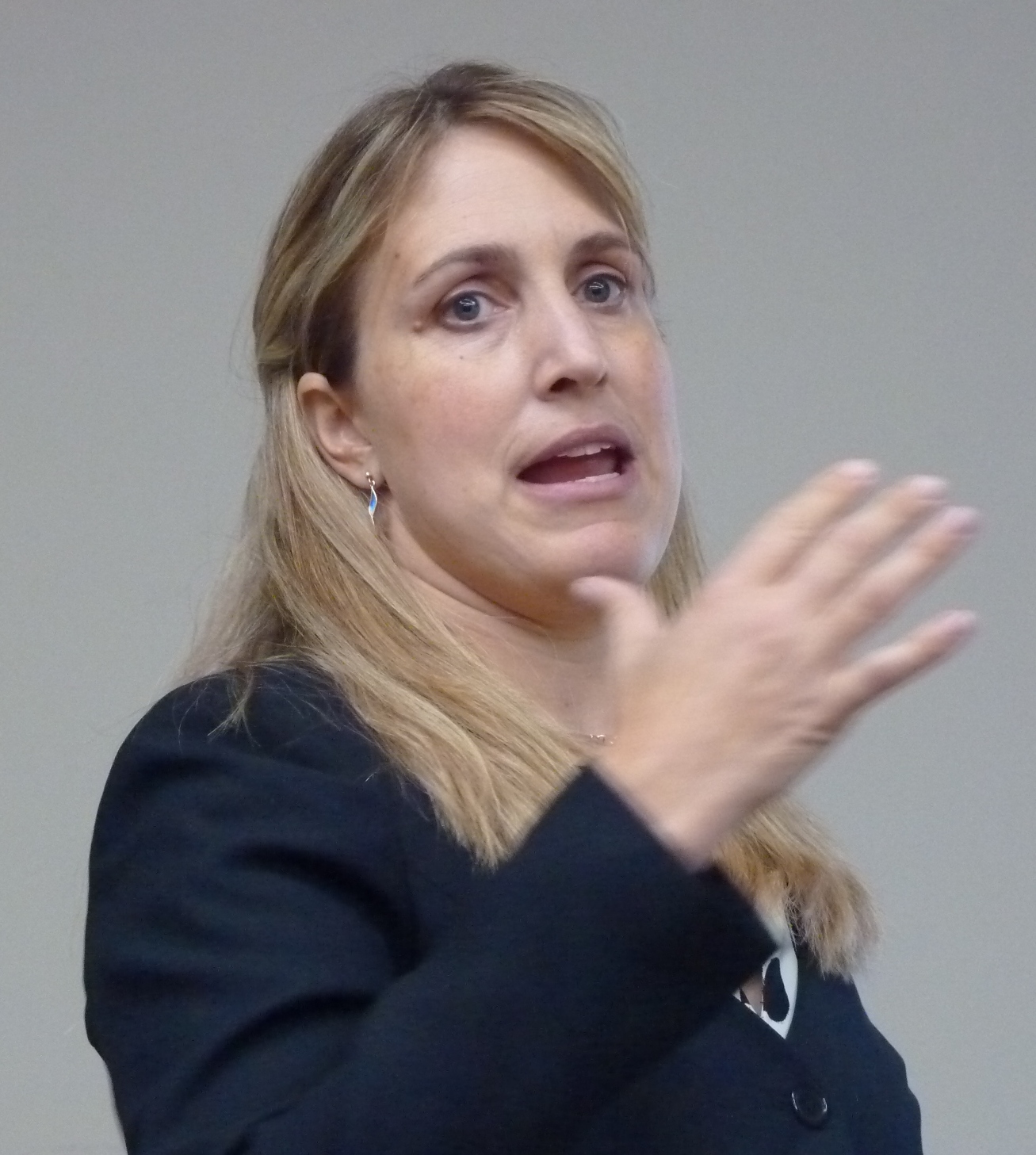
Gwen Holdmann, Center for Power and Energy, at the Rural Energy Conference.
“The temperature is the obvious one. Flow rate is really important too,” says Gwen Holdmann, director of the University of Alaska’s Center for Power and Energy. She spoke at the recent Rural Alaska Energy Conference in Juneau.
“You might have a really high temperature resource and one good example that’s pretty close by here (Juneau) is Tenakee Springs. They have a fairly high temperature but they have an extremely low flow rate,” she says.
You also need to know the extent of the hot-water reservoir, its depth and the rate it recharges itself.
Another importation factor is location. Being close to a city or transmission lines make tapping power more affordable.
That’s why the Aleutian Islands city of Akutan, and the local Trident Seafoods plant, are looking at nearby Hot Springs Valley.
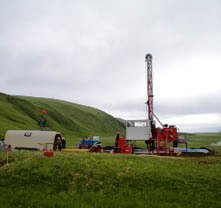
Geothermal drilling in Akutan. Photo by RMA Consulting.
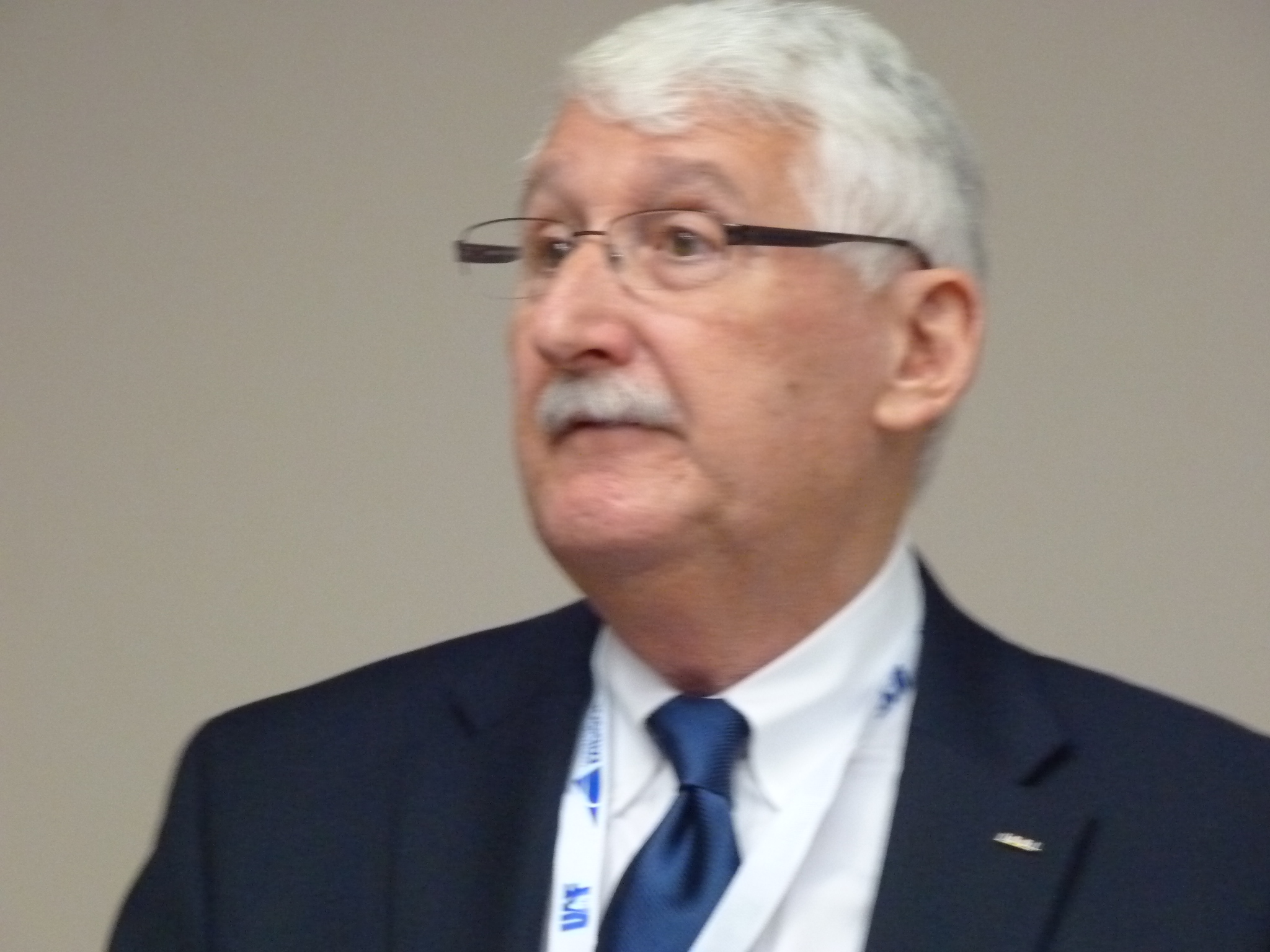
“We hit water as hot as 350 (degrees)-plus at 500 feet,” says Ray Mann, a consultant for the city of Akutan, northeast of Unalaska.
“But according to the studies that have been done that’s the outflow resource and we probably will not get the flow and the capacity we need. So we have to go further up the valley to the upflow zone. And the estimate is we could achieve anything between 15 and 100 megawatts, with a minimum of 8 megawatts, to provide power,” Mann says.
Outflow is where water comes from the ground. Inflow is the subterranean area where it travels to near the surface.
There’s been interest in the Akutan site for at least 30 years. New wells were drilled this and last year, one finding water up to 500 degrees. Deep water is under enough pressure that it does not boil off at those temperatures. And other studies further defined the resource.
Mann says the city is committed to building an approximately $60 million plant, including about 5 miles of road and transmission lines.
Consultant Ray Mann at the energy conference.
He says it could bring down power costs, from 66 cents a kilowatt-hour, without power-cost equalization, to around 13 cents per hour. Studies have shown it’s a better option than wind or hydropower.
“This has been the option because of the proximity of this resource and the size of the resource. There really aren’t that many other applications that are going to generate 7 to 8 megawatts for you the way this will do, because it’s right there and accessible,” he says.
Seven or eight megawatts is what Akutan needs, including the seafood plant. Trident is conducting its own study, and Mann says they’re working together.
He says the town already has about $10 million toward the project. It’s seeking another $15 million from government sources, and $45 million in private sector investments, which could include Trident.
Energy conference speakers say another area with a significant geothermal resource is Pilgrim Hot Springs, near Nome.
“We selected this site because we thought it was one that had potential to be developed to benefit the region,” says Gwen Holdmann of the Center for Power and Energy.
She says the former spa was first drilled in the late 1970s. She says the crew found two surprises.
“They didn’t hit bedrock, which is pretty interesting. They went down to 1,000 feet. And then the second thing that happened is that they drilled through a really shallow layer of super-hot water, up to 200 degrees Fahrenheit. That’s really hot. That’s barely below boiling temperature,” she says.
More drilling took place in the past two years. The work is not finished, but agencies think it’s worth developing. Holdmann says studies show the resource could produce more than enough electricity to power Nome.
“Right now the estimated potential for power generation is approximately 5 megawatts. We haven’t found anything to change that number at this point in time. That’s still a viable number,” Holdmann says.
A preliminary report, released about 4 years ago, estimated total cost at $50 million to $115 million, depending on the depth and generation system. A final report is due in about a year and a half.
A significant part of the expense would be transmission lines. That’s because the site is about 50 miles from Nome.
Holdmann says developers could tap the $4 or so million a year the town spends on diesel generation to help pay off construction costs.
Alaskans looking into geothermal energy are watching existing developments to see what they can learn. One point is the limits of some hot-water reservoirs.
“Geothermal is a renewable resource. You extract energy and it’s going to be replaced by a comparable amount of energy. But what renewable doesn’t tell you is over what kind of time scale and what are you actually doing to that resource,” she says.
Mongrain has studied Chena Hot Springs, east of Fairbanks. It’s home to one of the state’s best-known geothermal energy projects.
She says research have shown several underground hot water zones below the resort. And some have showed lower temperatures and pressure as more wells have been drilled and more water removed.
“We certainly have interzone mixing within the well, although some of that’s being addressed by filling the wells up with bentonite. We need to look at the data in more detail but we may also have some kind of mixing within the reservoir,” Mongrain says.
She says sealing exploratory drill holes, and lining open shafts, can help keep cold water out of hot zones. And systems where cooling water is returned underground to maintain flow need separate wells.
Further studies could lead to additional recommendations for making future systems more sustainable.
Close
Update notification options
Subscribe to notifications
Subscribe
Get notifications about news related to the topics you care about. You can unsubscribe anytime.