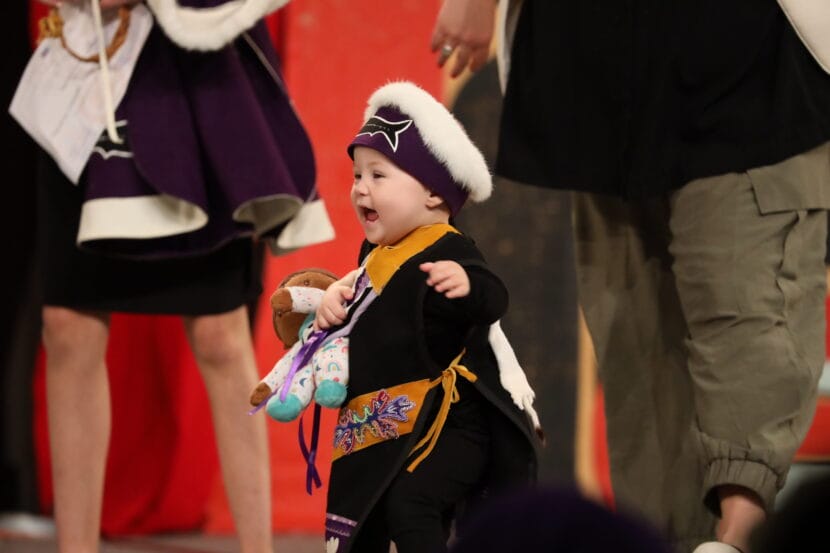
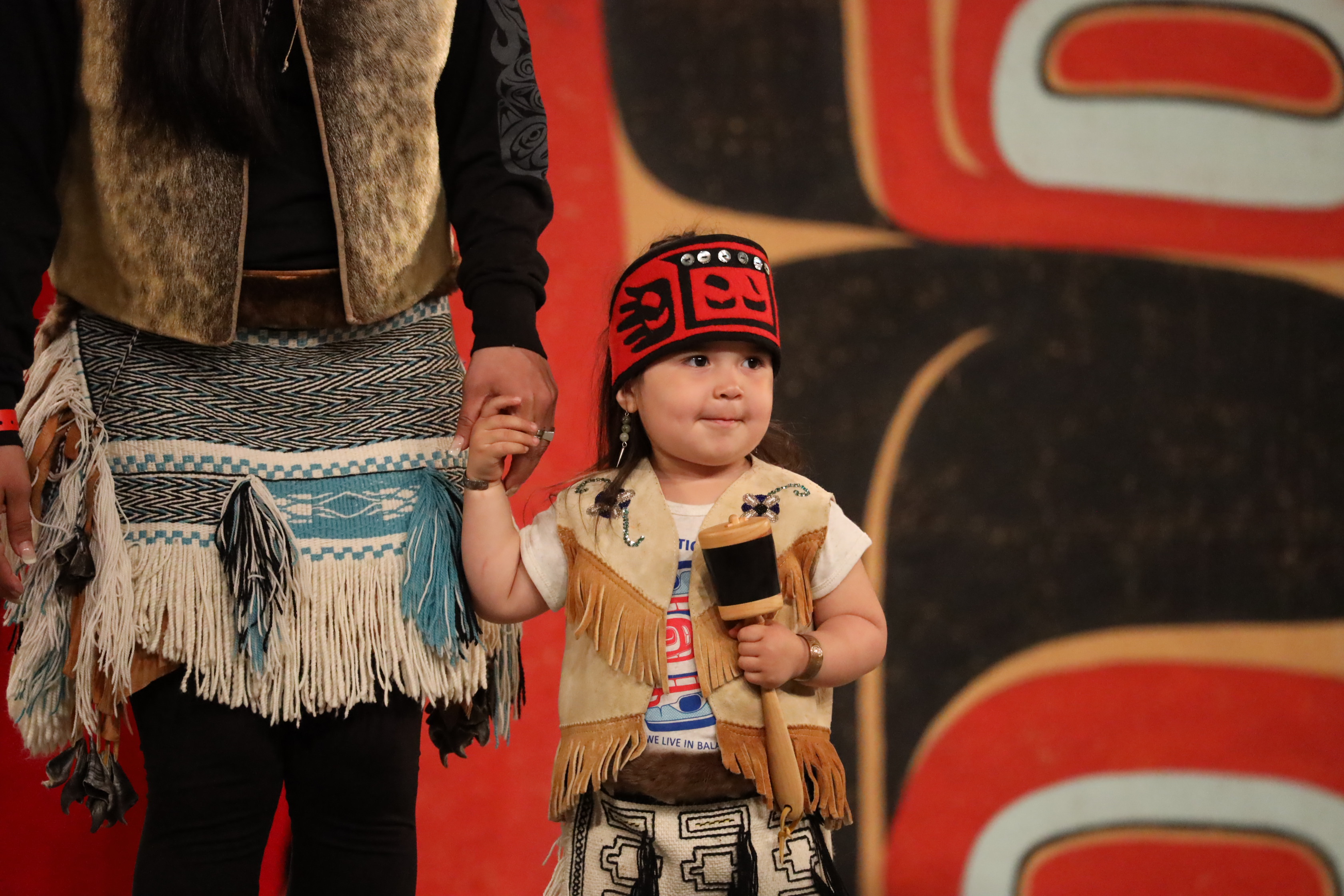
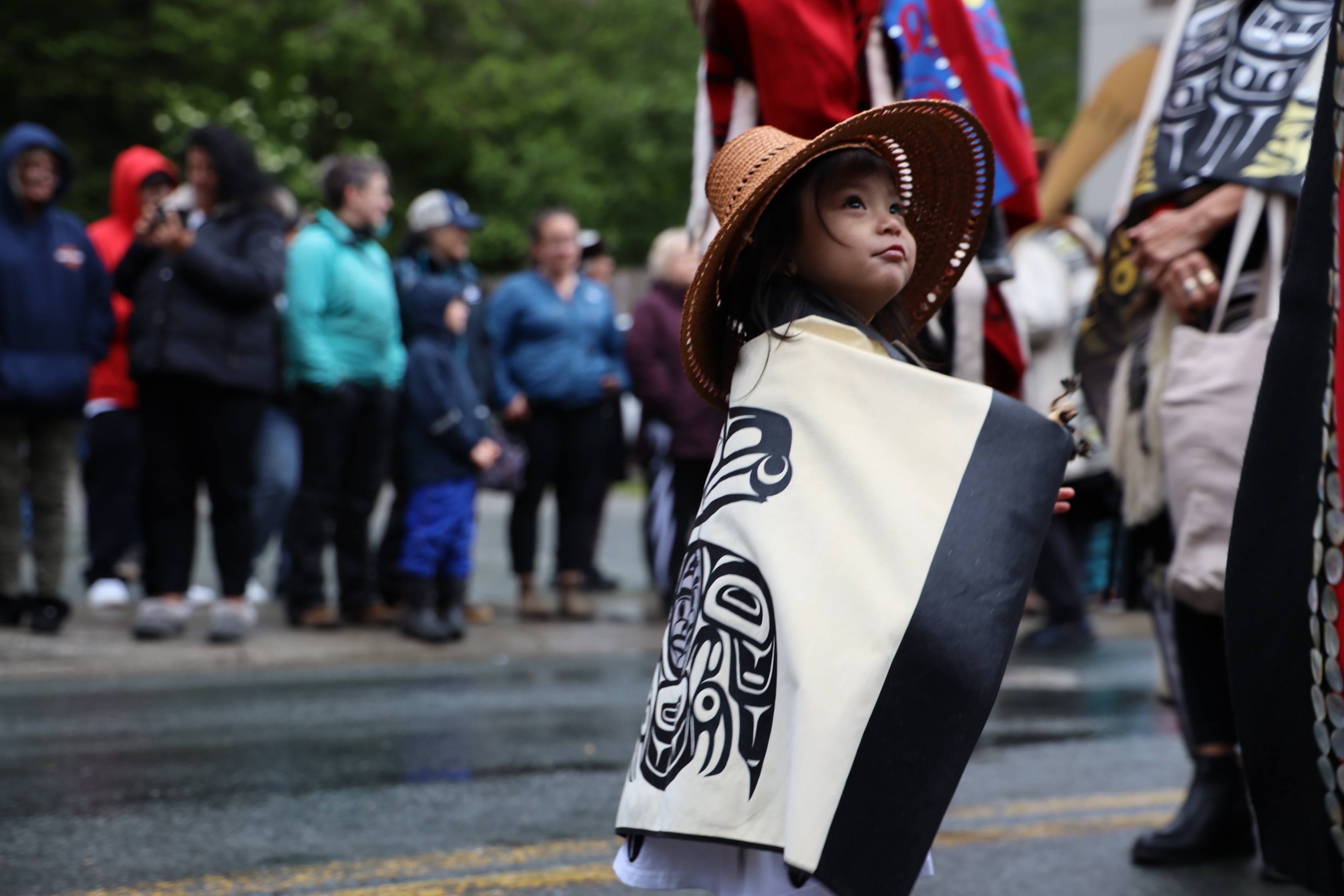
Tayana Copper-Jane Cavan Adamek walks across the stage at Centennial Hall during Celebration’s Toddler Regalia Review on Thursday, June 6, 2024. (Clarise Larson/KTOO)
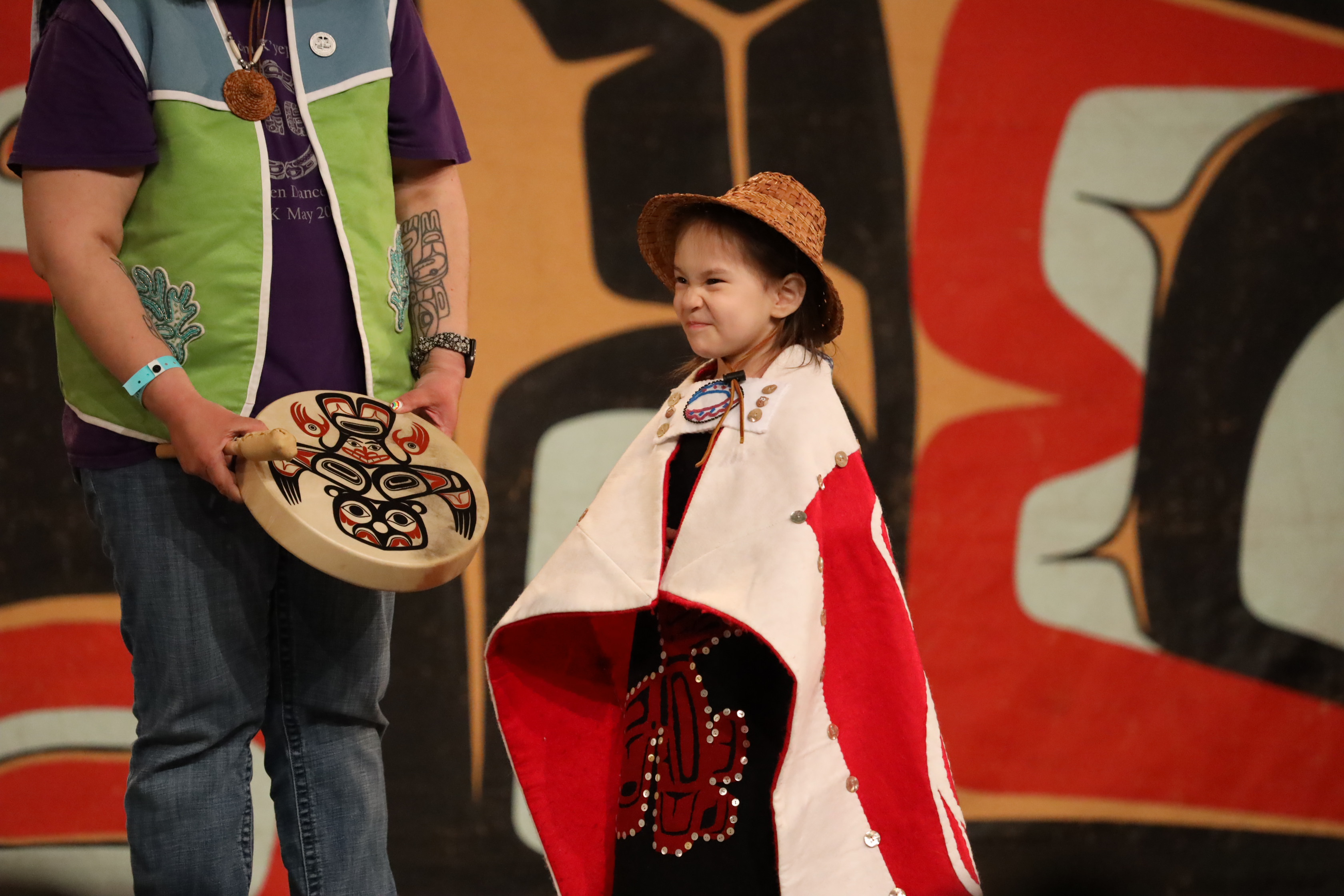
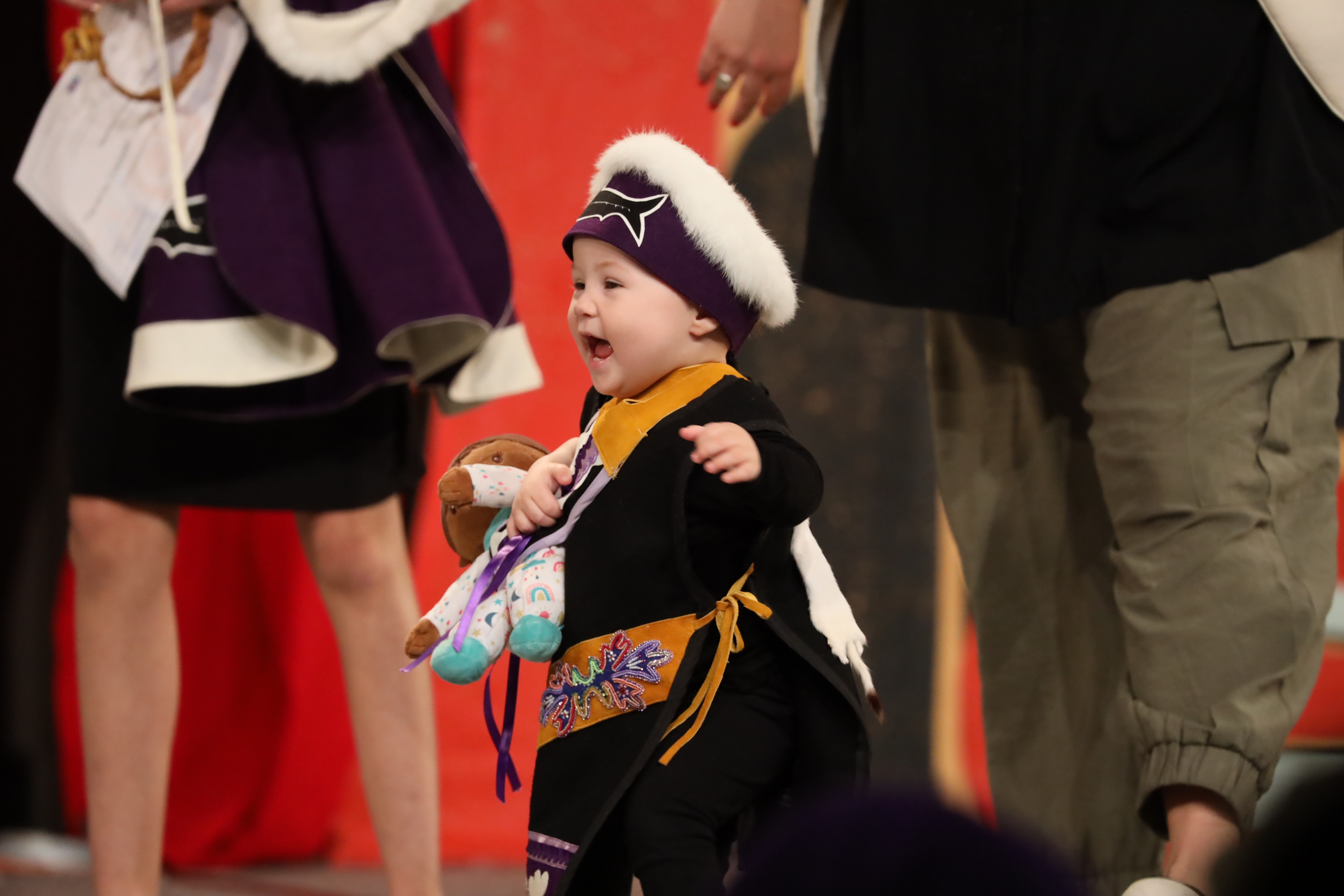
Southeast Alaska’s cutest models hit the stage at Centennial Hall on Thursday for Celebration’s Toddler Regalia Review. Celebration is the biennial festival of Lingít, Haida and Tsimshian culture in Juneau.
For many, it takes a lot of courage to get in front of hundreds of people and strut your stuff. But 4-year-old Bonnie Lewis said it was fun.
“It feeled like I was proud that there was people watching me. And I was wearing this purse, and I also was wearing my moccasins. And I was wearing my blanket that my mama made,” she said.
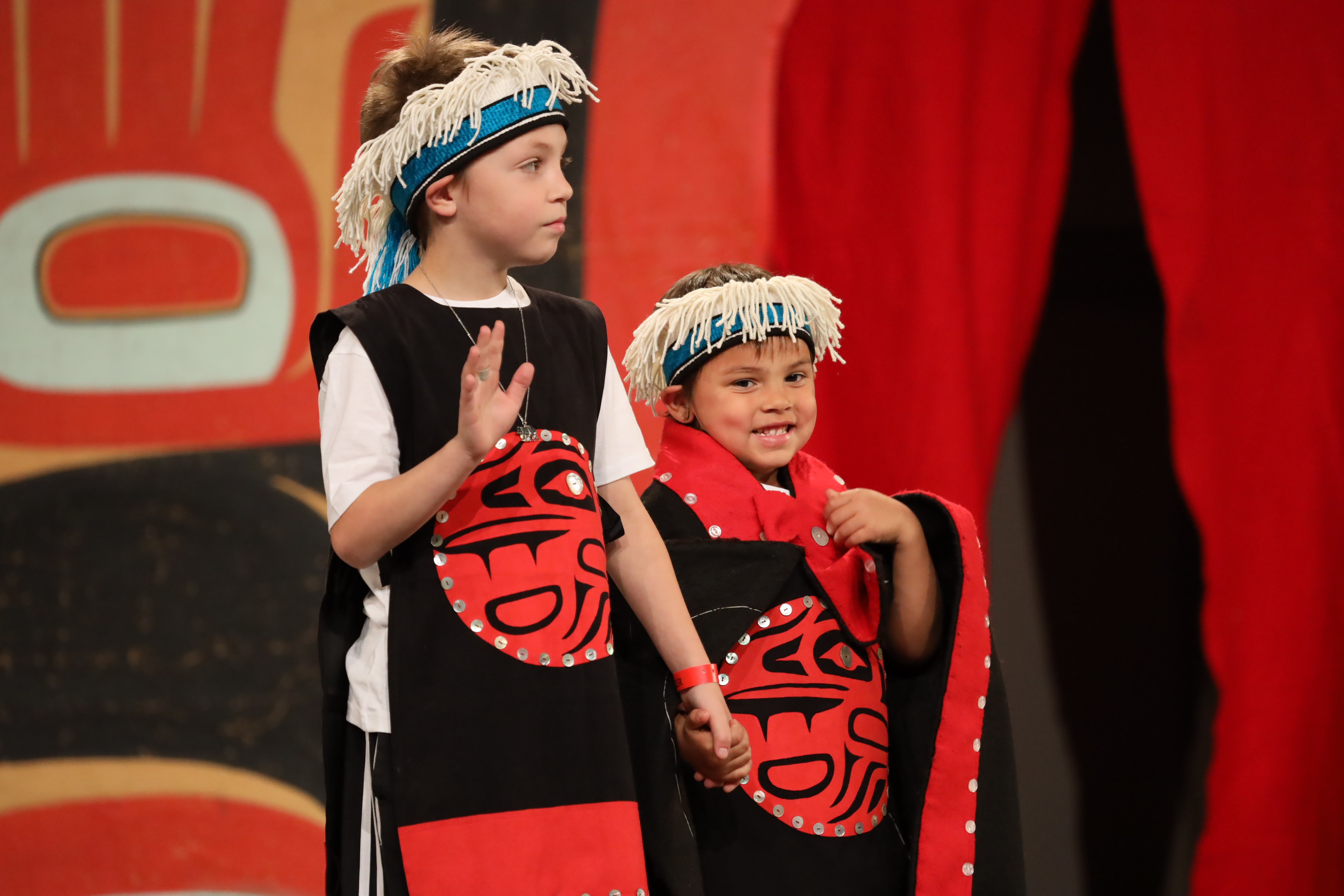
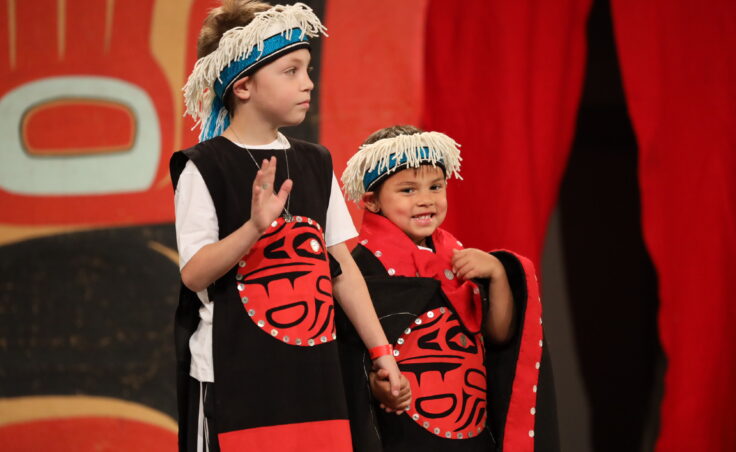
Grey and Treydan Watts walk across the stage at Centennial Hall during Celebration’s Toddler Regalia Review on Thursday, June 6, 2024. (Clarise Larson/KTOO)
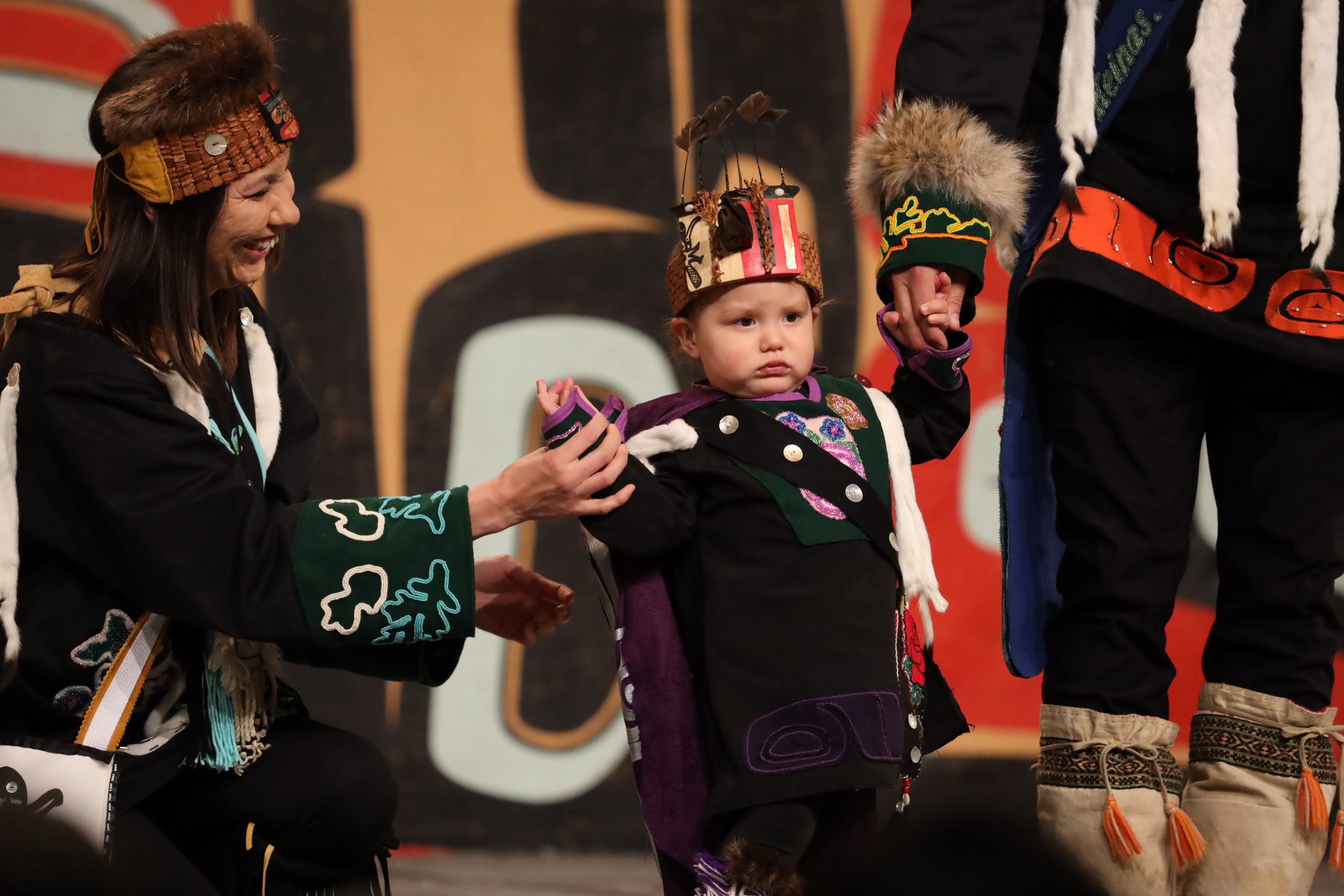
Annaleia Johnson holds her parents' hands on stage at Centennial Hall during Celebration’s Toddler Regalia Review on Thursday, June 6, 2024. (Clarise Larson/KTOO)
Nakatla Young smiles on stage at Centennial Hall during Celebration’s Toddler Regalia Review on Thursday, June 6, 2024. (Clarise Larson/KTOO)
Cattleya Budke stands on stage at Centennial Hall during Celebration’s Toddler Regalia Review on Thursday, June 6, 2024. (Clarise Larson/KTOO)
Rey Asicksik walks across the stage at Centennial Hall during Celebration’s Toddler Regalia Review on Thursday, June 6, 2024. (Clarise Larson/KTOO)
Tayana Copper-Jane Cavan Adamek walks across the stage at Centennial Hall during Celebration’s Toddler Regalia Review on Thursday, June 6, 2024. (Clarise Larson/KTOO)
Bonnie and her 2-year-old brother, Marlin, came to Celebration this week from Kake, with their parents. Her mom, Chelsea, said this Celebration is especially sweet for her.
“It’s just super special because I’ve come as a single person, but this is the first time I got to come up with my family,” she said. “So it’s really fun.”
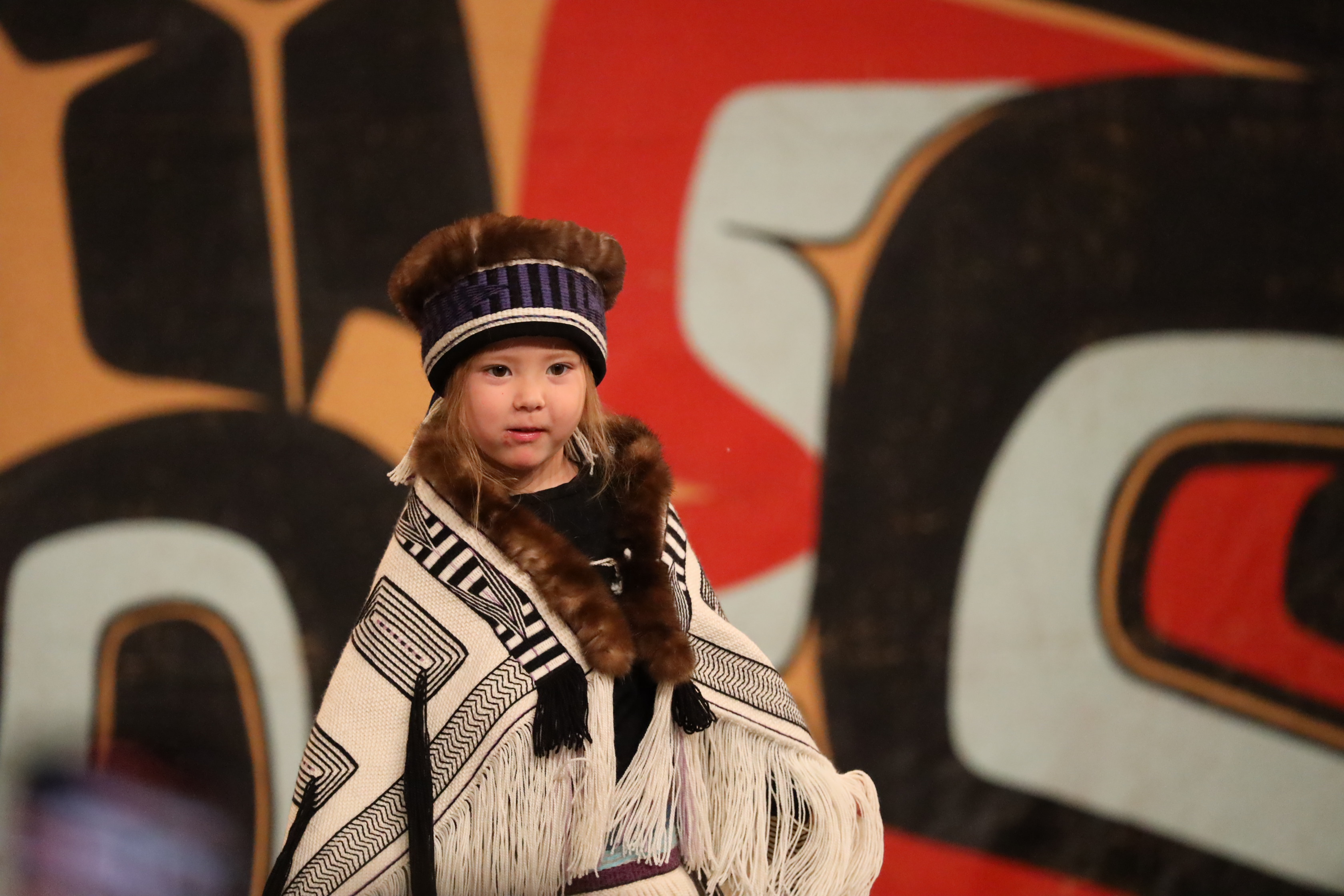
And it’s her kids’ first time partaking in the Toddler Regalia Review. It’s one of the most – if not the most – beloved events at Celebration. This year, nearly 30 toddlers participated, all between the ages of around two and five. Some wore Chilkat blankets, cedar hats, or moccasins. Others wore Ravenstail headbands or dance tunics.
In front of a crowd of hundreds, each toddler walked — or was carried — to the center of the stage at Centennial Hall. There, an emcee described their toddler-sized regalia, who made it, and what it meant.
The review is a friendly competition – technically there are no winners. But, from the cheers and smiles in the crowd to the giggles and waves on stage, it’s safe to say that everybody won.
Disclaimer: KTOO 360TV is contracted to produce television and online video coverage of Celebration.
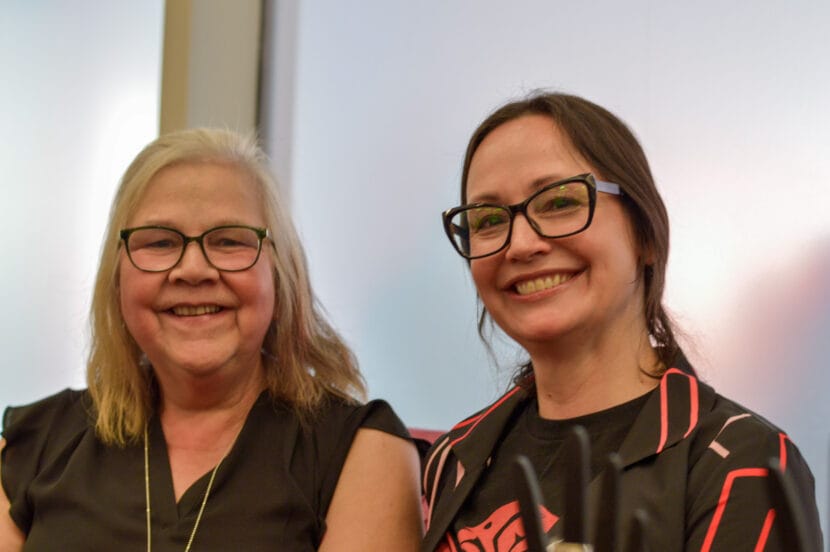
Goosh-shu Haa Jennie Wheeler and Káakaxaawulga Jennifer Younger at the Native artists’ market at Celebration. June 6, 2024. (Yvonne Krumrey/KTOO)
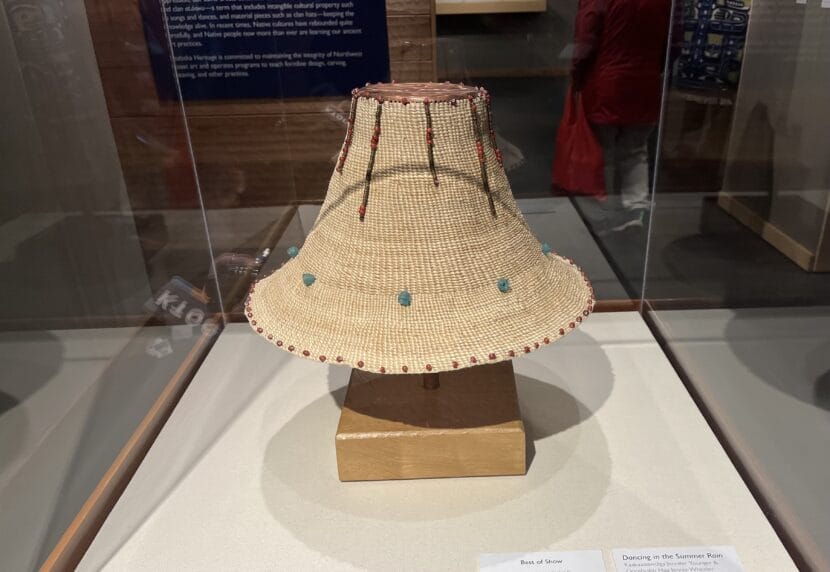
A mother-daughter duo — a weaver and an engraver — won Best of Show at this Celebration’s juried arts show. Their winning entry was a spruce root hat called Dancing in the Summer Rain.
At her table at the Celebration Native artists’ market, Goosh-shu Haa Jennie Wheeler said she was surprised to win.
“I was totally shocked yesterday when we got the award, because I really was not expecting it,” she said. “They asked me to say something. I just lost it. I was too emotional.”
She wove the spruce root hat. Her daughter Káakaxaawulga Jennifer Younger wove light blue trade beads into the sides and engraved formline flowers on the hat’s copper top. Red beads line the crown and drip down the hat.
Dancing in the Summer Rain by Káakaxaawulga Jennifer Younger and Goosh-shu Haa Jennie Wheeler on display at the Walter Soboleff Building. June 6, 2024. (Yvonne Krumrey/KTOO.
It’s not the first piece they’ve made together, but the copper crown was something Younger said she hadn’t seen in spruce root weaving before.
“I think we both just get super excited about doing something new that we hope is still honoring tradition,” Younger said. “By doing, hopefully, fine weaving, proper formline engrave design, yeah — so we just kind of just did it.”
The name of the piece — Dancing in the Summer Rain — comes from the way those new design elements come together musically.
“When I added those strings of beads on the hat, and I put it on my head, and just the sound it made — It wasn’t like a loud rattle, but it just sounded like the rain on a roof or something,” Younger said.
The hat also won the endangered arts category. Wheeler has been bringing new spruce root weavers into the practice for more than a decade now. She said she’s especially happy to teach students who come from the place that was known for the art two hundred years ago.
“I always wanted to bring spruce root weaving back to Yakutat, because Yakutat was known for the best spruce root weavers in the 1800s, and we lost it for many years,” Wheeler said. “And now I have five students born and raised in Yakutat, young adults, and they are doing really good.”
Dancing in the Summer Rain and the other winning pieces from the juried arts show will be on display in the Nathan Jackson Gallery at the Sealaska Heritage Institute Walter Soboleff building until December.
Disclaimer: KTOO 360TV is contracted to produce television and online video coverage of Celebration.
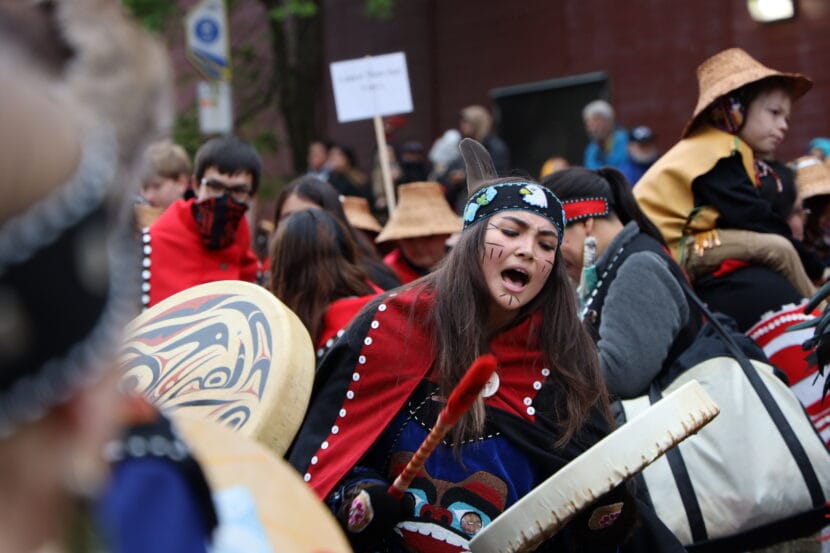
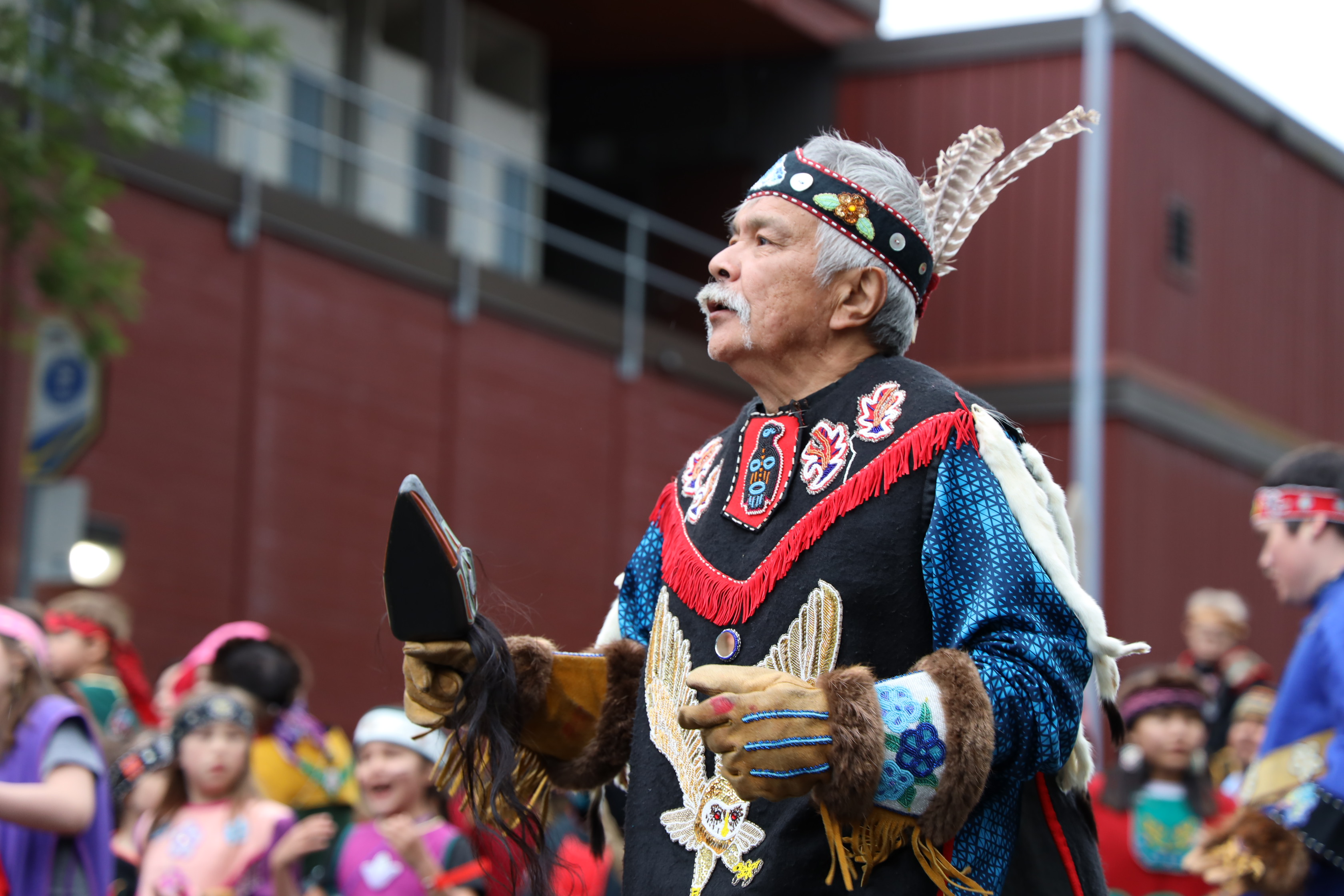
Amiah Johnson sings during a processional and grand entrance for Celebration in Juneau on Wednesday, June 6, 2024. (Clarise Larson/KTOO)
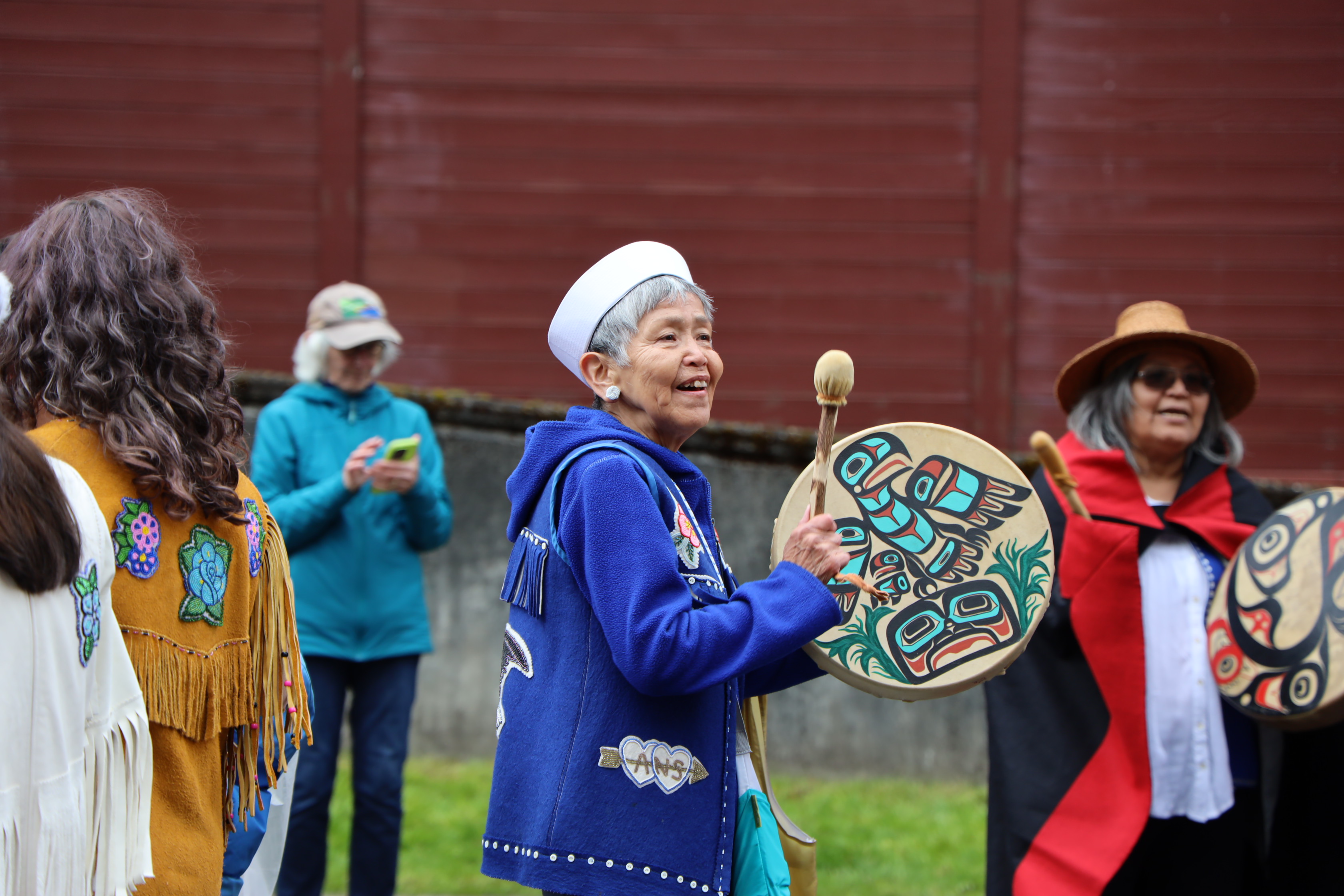
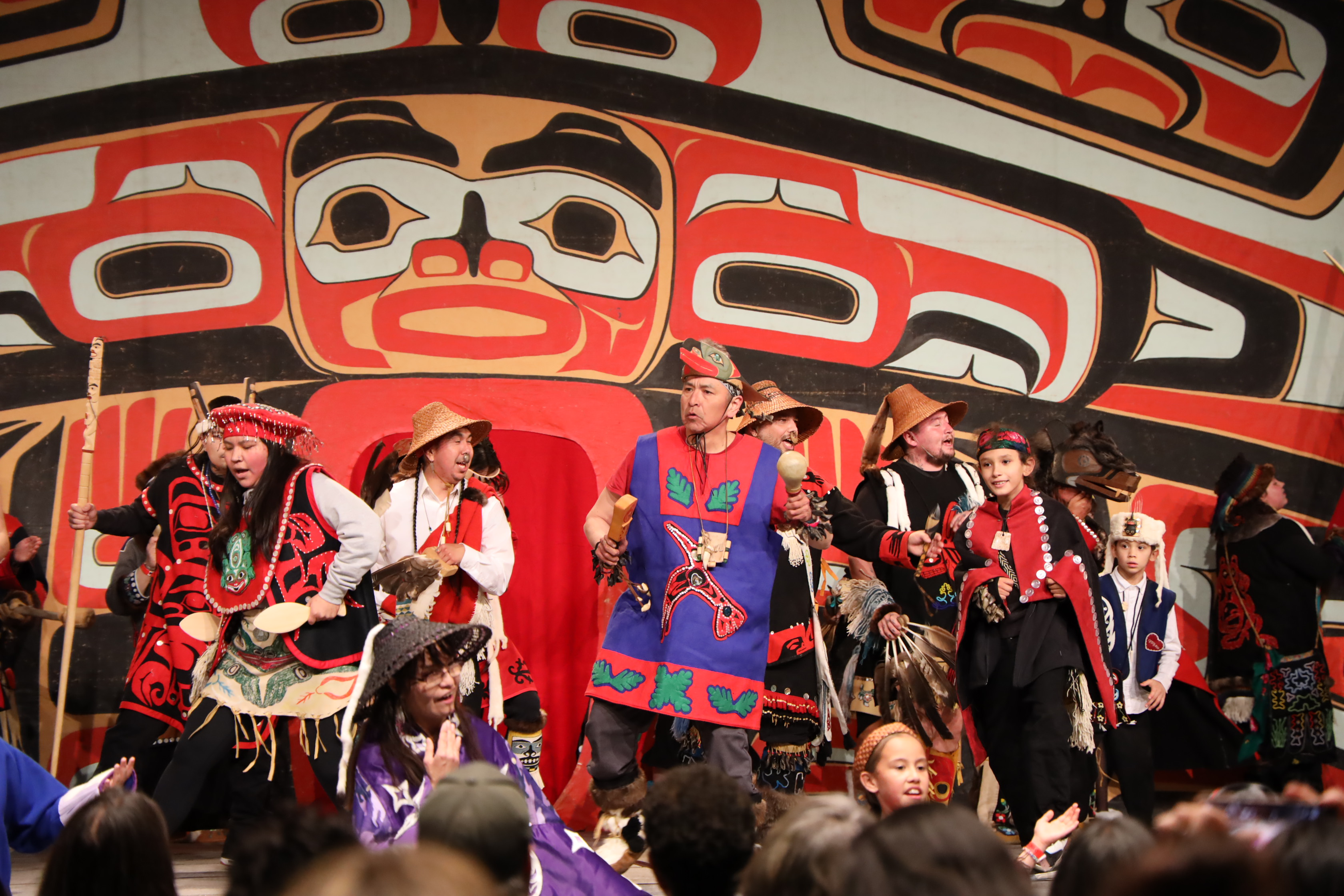
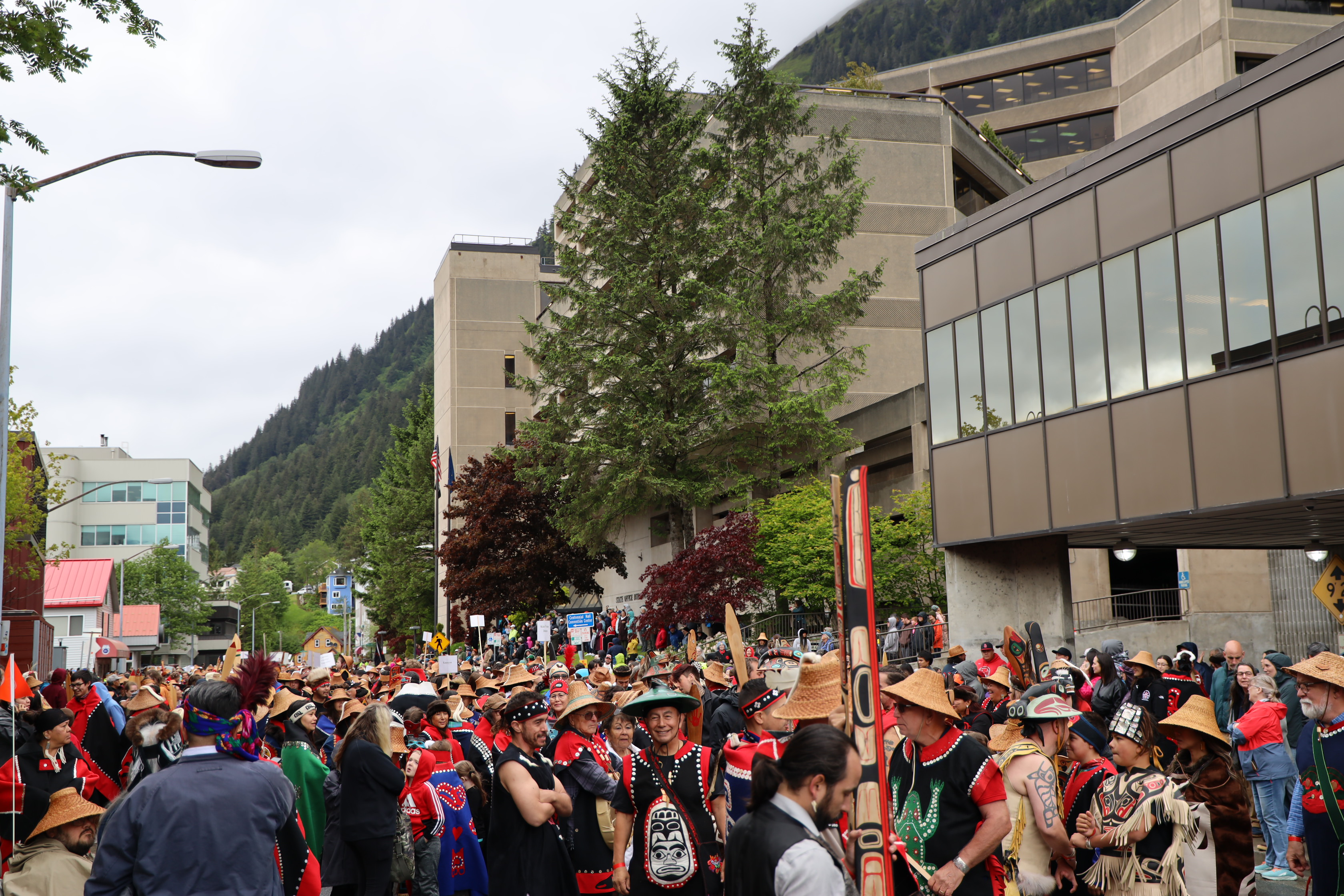
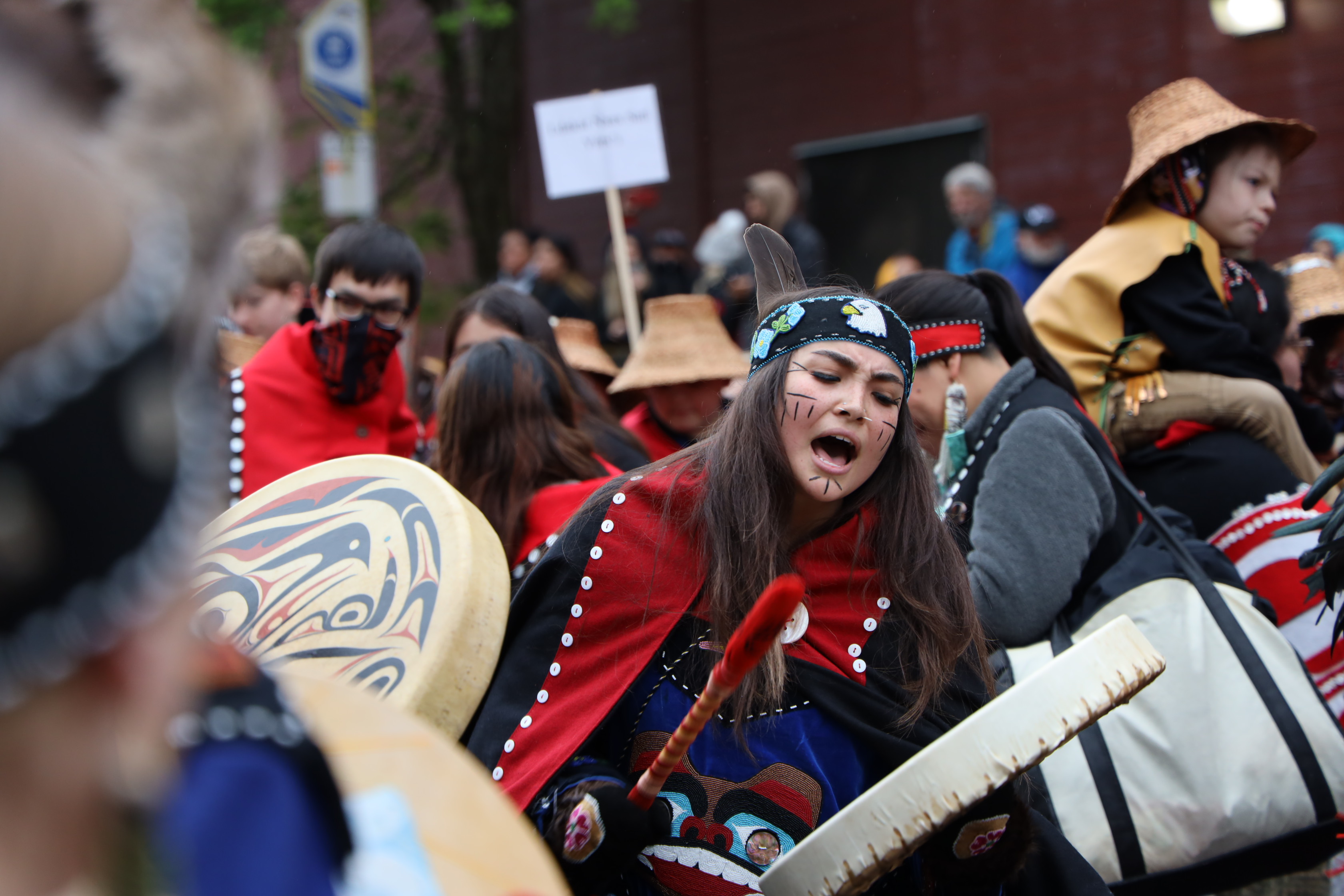
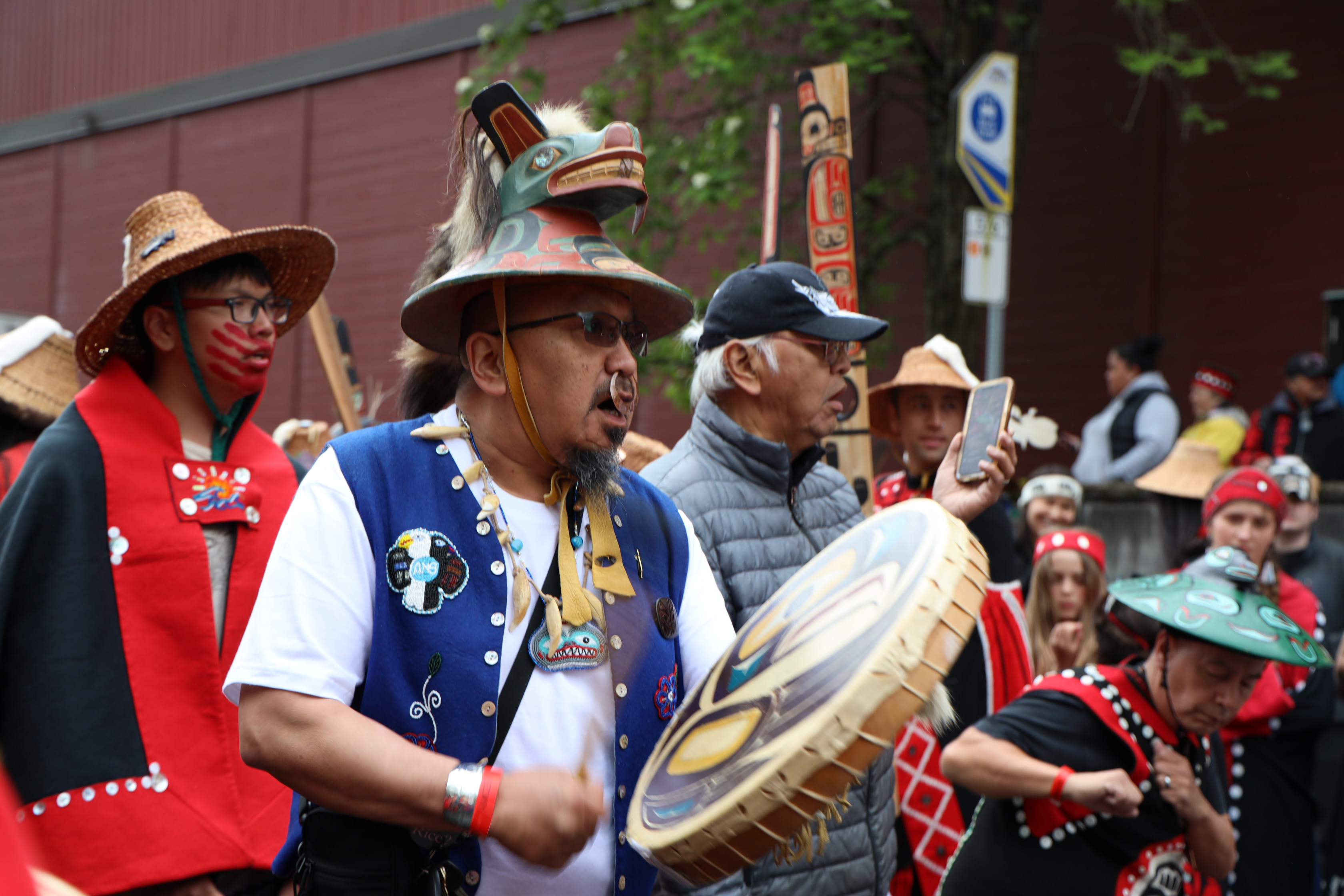
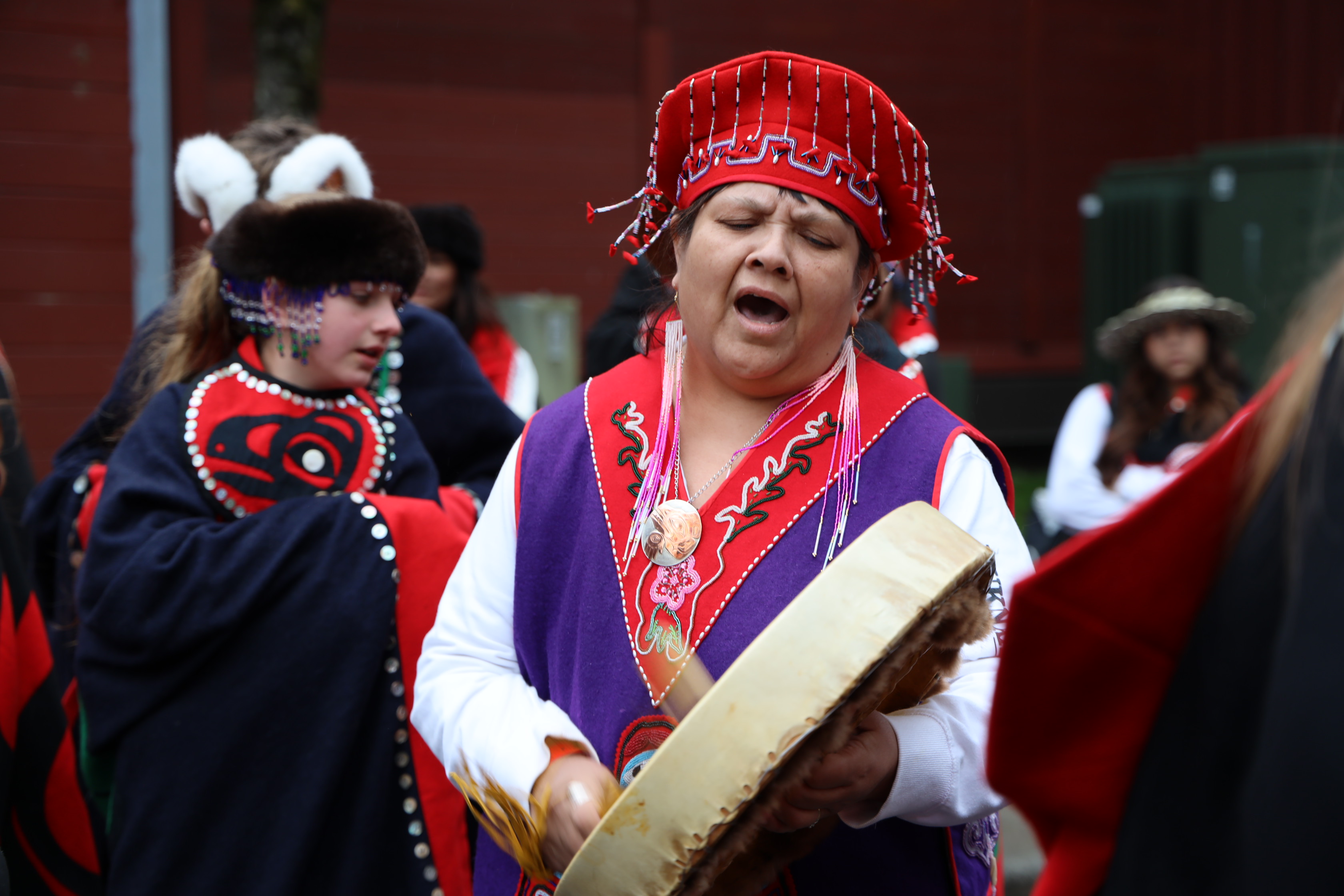
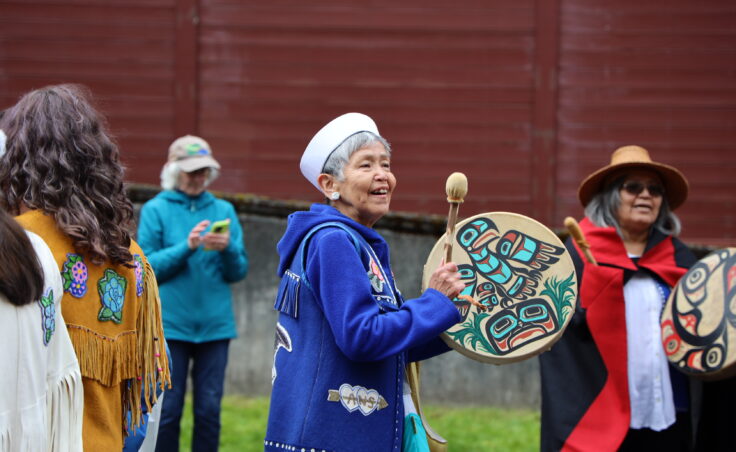
More than 1,500 Indigenous dancers from across Southeast Alaska filled Willoughby Avenue and Centennial Hall for the Grand Entrance Procession of Celebration 2024 on Wednesday.
The procession marks the kick-off of the four-day Celebration festival in Juneau — a biennial gathering that honors and uplifts the culture of Lingít, Haida and Tsimshian people.
Throughout the coming days, there will be dances, cultural demonstrations and art markets and exhibits.
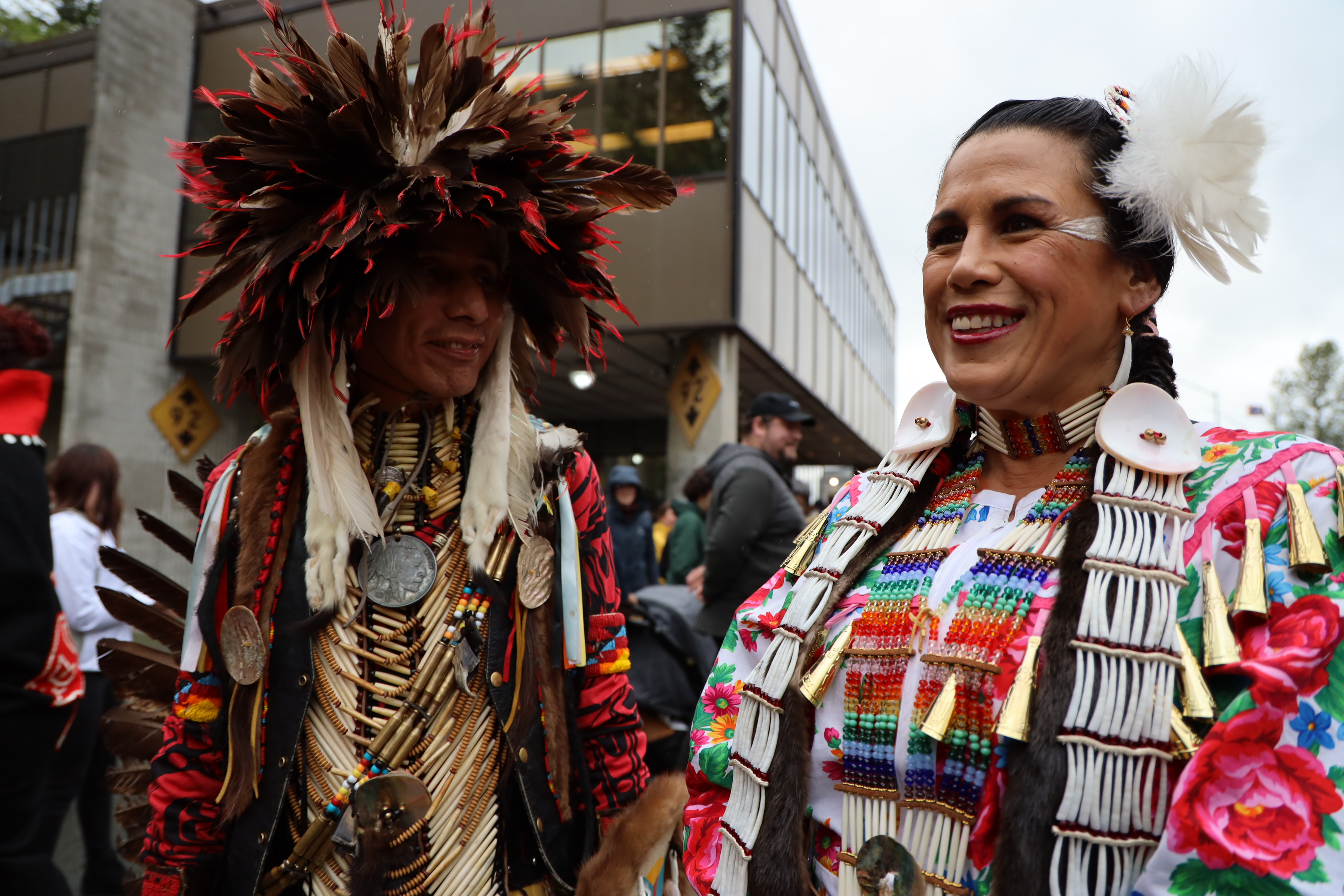
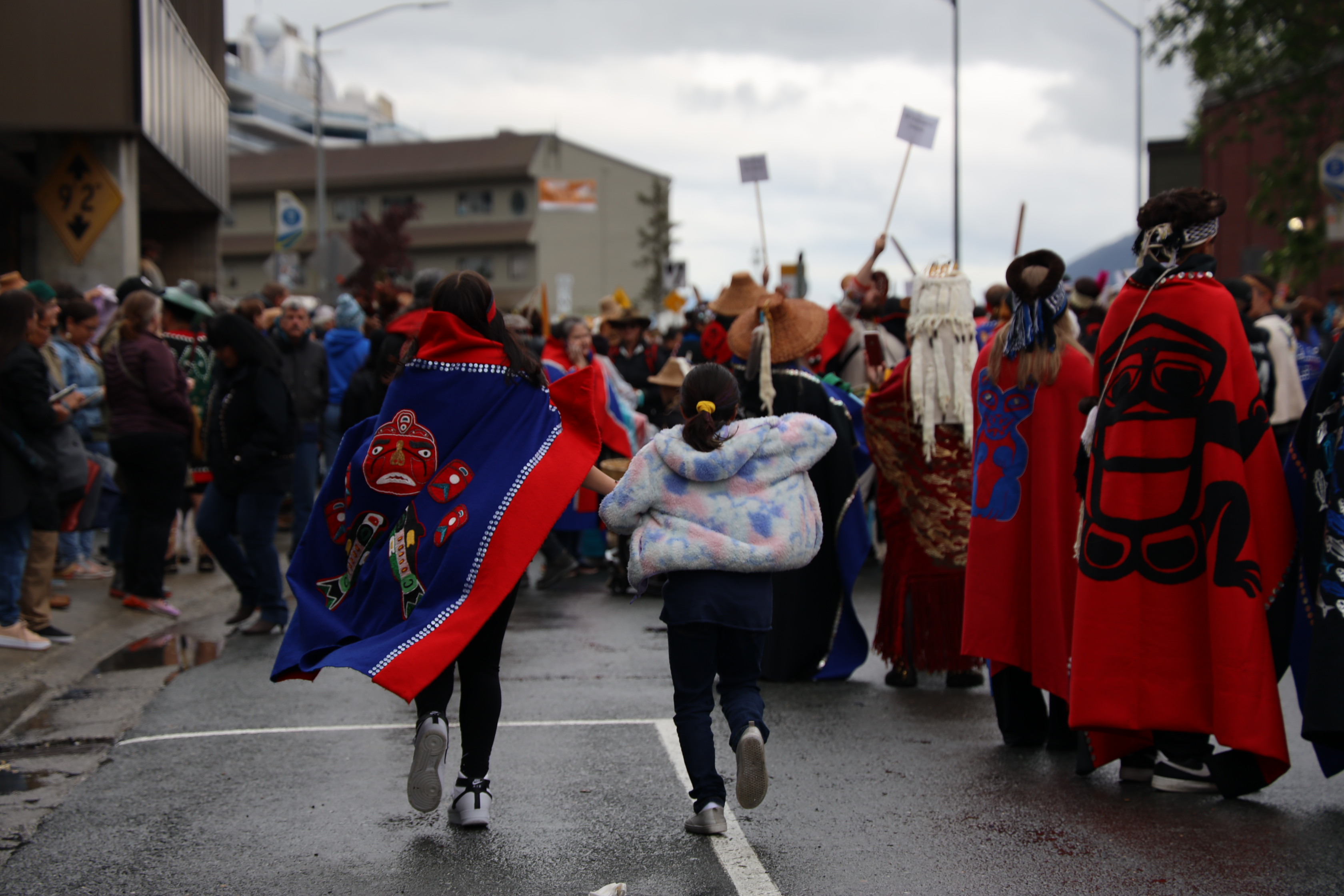
Here are some images from the grand entrance. Click on any photo for a slideshow view.
Sharon Lee sings during a processional and grand entrance for Celebration in Juneau on Wednesday, June 5, 2024. (Clarise Larson/KTOO)
Don Johnson dances during a processional and grand entrance for Celebration in Juneau on Wednesday, June 5, 2024. (Clarise Larson/KTOO)
Dancers fill the stage at Centennial Hall during a processional and grand entrance for Celebration in Juneau on Wednesday, June 5, 2024. (Clarise Larson/KTOO)
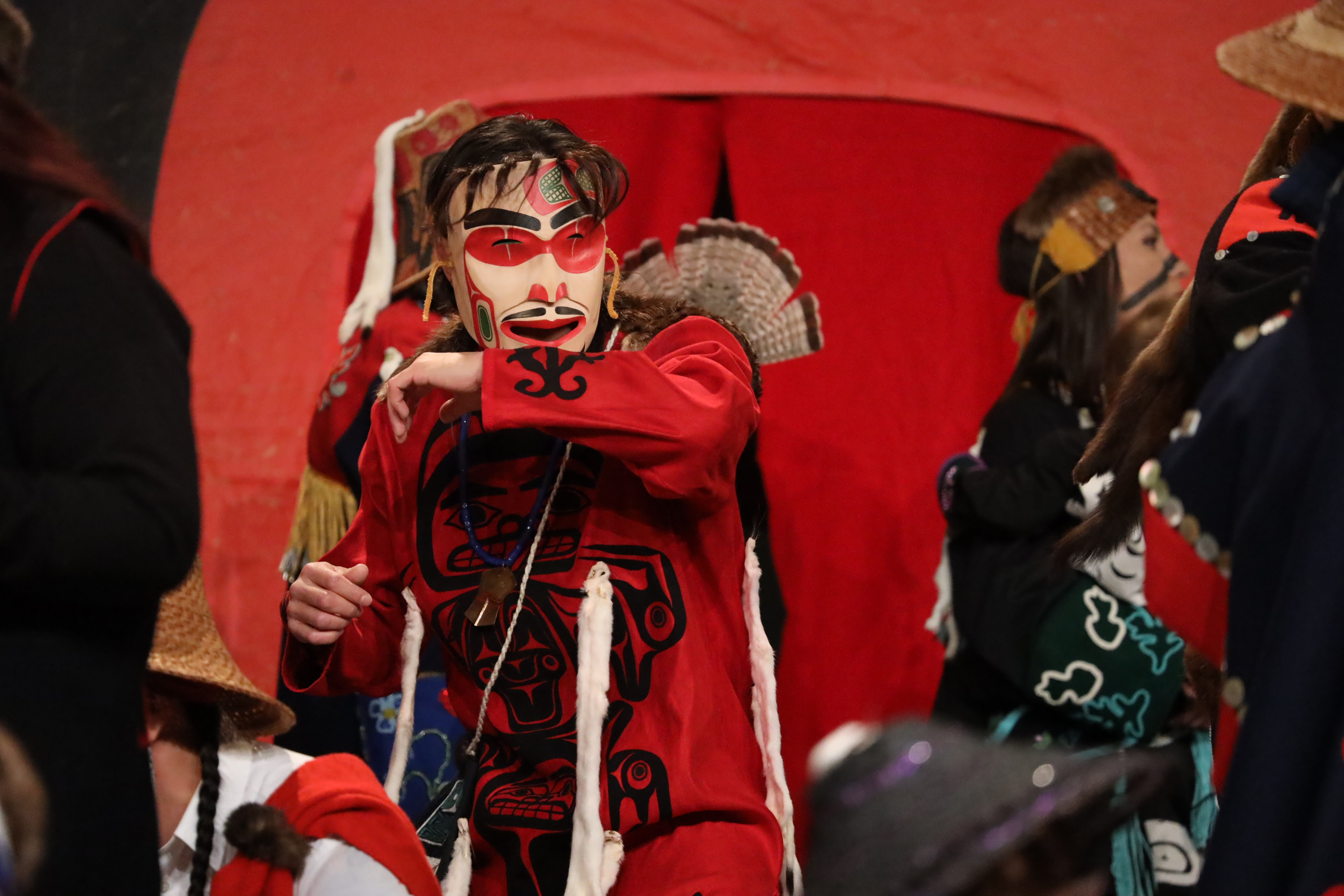
A dancer looks to the crowd while on stage at Centennial Hall during a processional and grand entrance for Celebration in Juneau on Wednesday, June 5, 2024. (Clarise Larson/KTOO)
Hundreds gather during a processional and grand entrance for Celebration in Juneau on Wednesday, June 5, 2024. (Clarise Larson/KTOO)
Shiloh Sanidad dances during a processional and grand entrance for Celebration in Juneau on Wednesday, June 5, 2024. (Clarise Larson/KTOO)
Amiah Johnson sings during a processional and grand entrance for Celebration in Juneau on Wednesday, June 5, 2024. (Clarise Larson/KTOO)
Thomas Yellow Horse Davis, left, and Kimberly Dominguez, right, smile during a processional and grand entrance for Celebration in Juneau on Wednesday, June 5, 2024. (Clarise Larson/KTOO)
People run through the crowd during a processional and grand entrance for Celebration in Juneau on Wednesday, June 5, 2024. (Clarise Larson/KTOO)
Calvin Wilson sings during a processional and grand entrance for Celebration in Juneau on Wednesday, June 5, 2024. (Clarise Larson/KTOO)
Lillian Young sings during a processional and grand entrance for Celebration in Juneau on Wednesday, June 5, 2024. (Clarise Larson/KTOO)
Disclaimer: KTOO 360TV is contracted to produce television and online video coverage of Celebration.
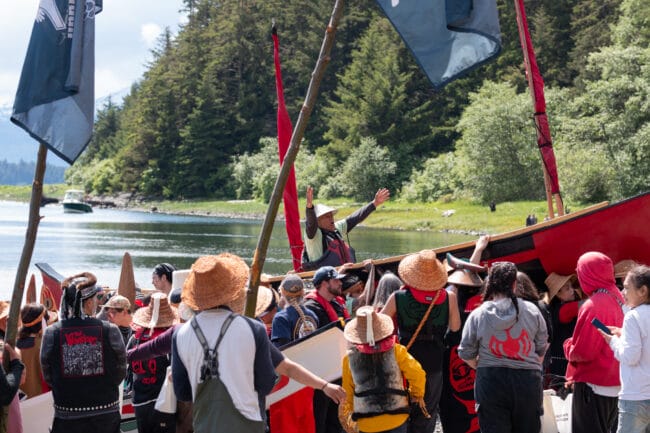
People row yaakw to shore in downtown Juneau to attend Celebration on June, 4, 2024. (Clarise Larson/KTOO)
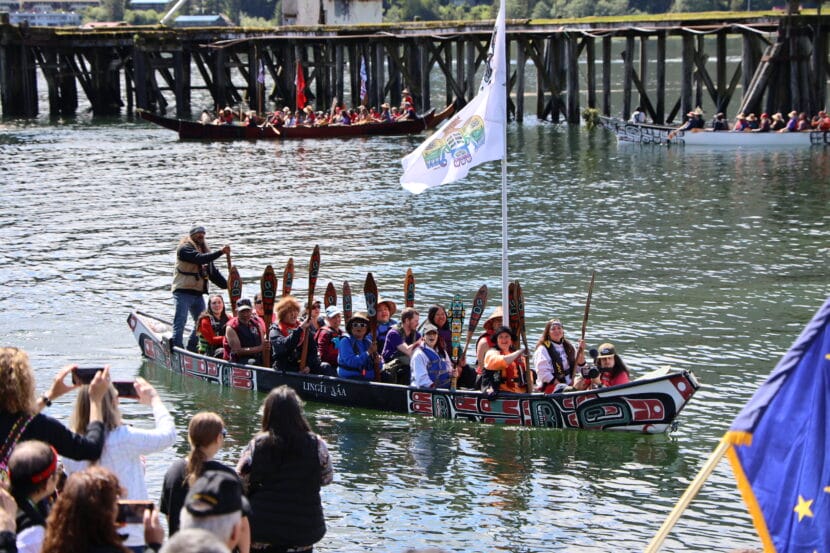
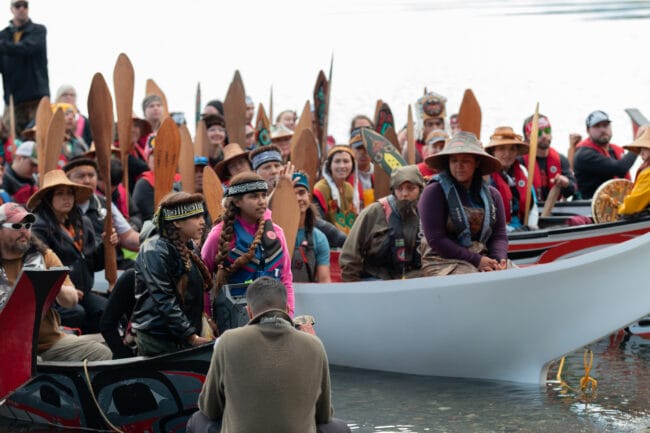
Traditional canoes — or yaakw — landed in Juneau Tuesday to mark the start of the biennial Celebration festival, a gathering of Indigenous people in Southeast that attracts thousands. The canoes came from across the region and parts of Canada, journeying for days to get here.
Eight yaakw made circles in front of a crowd waiting at Juneau’s Auke Recreation Area. Some carried over a dozen people, holding formline paddles and wearing life vests over their regalia.
Leaders on each boat asked permission to come ashore, and Seikoonie Fran Houston, an Áak’w Ḵwáan elder, asked their reason for coming. One paddler who came from Haines answered.
“We’re here for Haa Shagoon, for those before us, and for those yet to come,” he said. “For our kids and our grandchildren on the beaches, so this way of life lives on forever. Aatlein gunalchéesh.”
Wayne Price, who carved several yaakw for the landing, is carried to the Auke Rec shore in one of his canoes on June 4, 2024. (Tasha Elizarde/KTOO)
Master Carver Wayne Price made several of the yaakw landing in Juneau today. He came in on one from Haines.
“Five dugouts on one journey, all on one journey, at one time is history in the making,” he said. “How long has it been since we’ve had that kind of gathering?”
Thirteen-year-old Mallory Willard Flanery and her twin brother live in Ketchikan, but they paddled here from Kake.
Mallory and Javen Willard, from Ketchikan, greet Juneau during the canoe landing on Auke Rec. The landing on June 4, 2024 marked the unofficial start of Celebration. (Tasha Elizarde/KTOO)
“Each day would be about a couple hours, we would paddle,” she said.
But she said she wasn’t tired, and she would do it all over again.
Another group of yaakw, including members of the One People Canoe Society, finished their journey to Juneau Tuesday by landing downtown.
Roberta Jack was on the first yaakw that landed there. It was paddled by Alaska Native veterans and their families. Jack traveled from Wrangell. Three generations of her family waited for her onshore.
“I got teary-eyed,” Jack said. “I got teary-eyed to see them here, watching their grandma paddle in.”
She said she was excited to celebrate her culture, surrounded by family and friends.
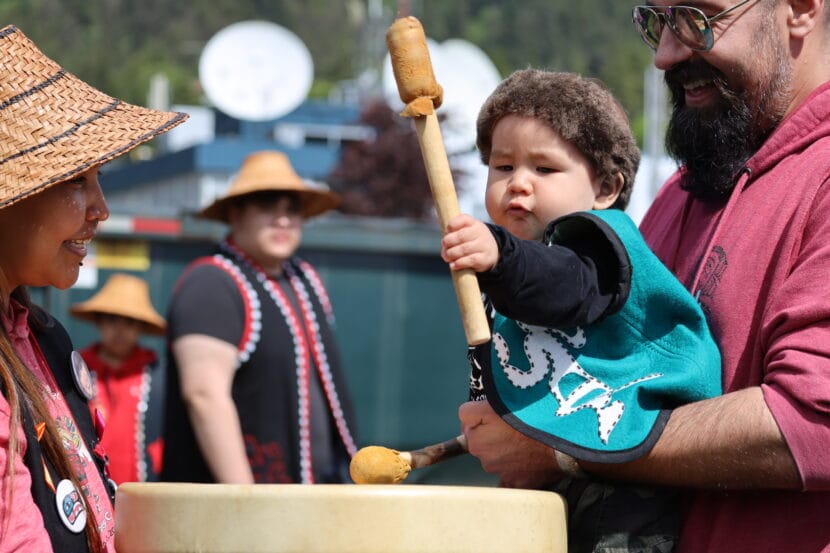
Avi Fulmer-Shakley, 1, hits a drum during the yaakw landing downtown on June, 4, 2024. (Clarise Larson/KTOO)
Her granddaughter, Summer Woodbury, stood next to her as they watched more yaakw come in.
“They’re beautiful and they’re really big and long and I like the paddles and the flags on them,” she said.
Over the coming days, events across downtown will honor and uplift the culture of Lingít, Haida and Tsimshian people through dances, cultural demonstrations and art markets and exhibits. It’s hosted by Sealaska Heritage Institute.
Disclaimer: KTOO 360TV is contracted to produce television and online video coverage of Celebration.
Amanda Wright waves to her children, Mallory and Javen Willard, as they paddle to Auke Rec. The canoe landing on June 4, 2024 marked the unofficial start of Celebration. (Tasha Elizarde/KTOO)
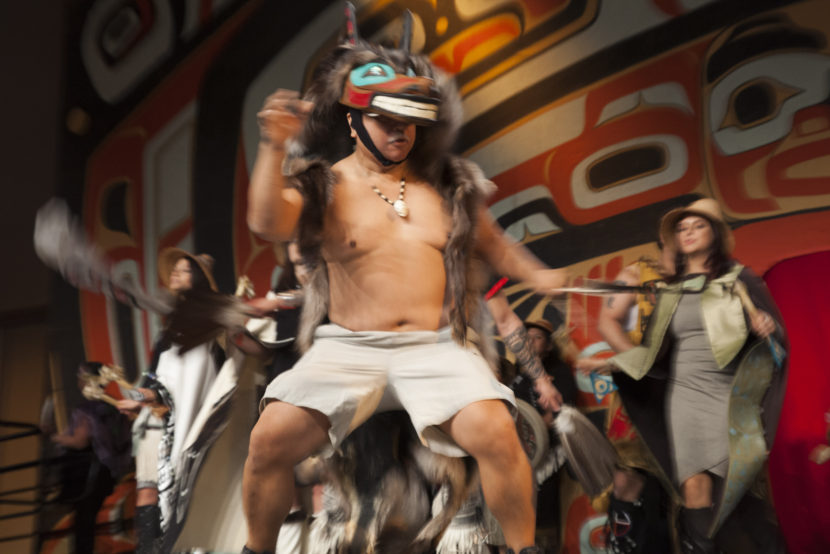
A dancer performs at the Celebration grand entrance in June, 2016. (Rashah McChesney/KTOO)
The beloved festival known as Celebration returns to Juneau this week.
Since its inception in 1982, the biennial gathering has brought Lingít, Haida and Tsimshian people together in the capital city to celebrate their cultural survival and share it with the general public.
It’s hosted by the Sealaska Heritage Institute. This year, it will happen from Wednesday, June 5 through Saturday, June 8. But the unofficial kickoff happens Tuesday, when traditional canoes — or yaakw — will land at 11:30 a.m. both downtown across from the Ramada and at Auke Recreation Area.
The heart of the four day event is dancing. Performances will basically be going on all day, every day.
This year’s event promises almost 1,600 dancers from 36 dance groups, including the lead dance group Dakhká Khwáan Dancers or “People of the Inland,” a Lingít group from Whitehorse, Canada.
They’ll head up Wednesday evening’s grand entrance parade with drumming and singing
In addition to dance, the festival features a Native food contest, a daily Native art market, an Indigenous fashion show, a regalia review and brand-new Chilkat robes on display.
There will also be an art exhibit at the Walter Soboleff Building and evening film screenings at Gold Town Theater.
Events are happening across town at Centennial Hall, Elizabeth Peratrovich Hall, the Sealaska Heritage Institute Arts Campus and the Alaska State Library.
Disclaimer: KTOO 360TV is contracted to produce television and online video coverage of Celebration.
Correction: A previous version of this story mistakenly said canoes will be landing at Douglas Boat Harbor. They will land downtown across from the Ramada instead.
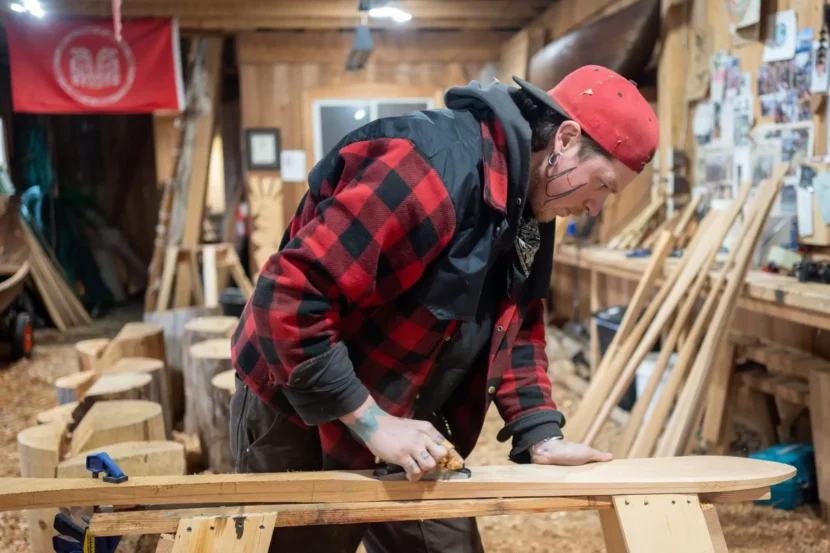
Eric Hamar hand-planes a paddle in Kasaan’s carving shed. (Jack Darrell/KRBD)
Inside Kasaan’s carving shed in early May, Eric Hamar is hard at work.
Hamar is a Haida artist and carver, and he spends his days carving in the workshop in Kasaan, a small village of about 30 people on Prince of Wales Island. The thick smell of cedar in the air, Hamar’s surrounded by canoes, paddles, a half-carved totem pole, and tools.
On this particular day, he was busy getting ready for Celebration, the huge every-other-year gathering of Indigenous people in Southeast Alaska. The event lasts four days and is the largest gathering of Lingít, Haida, and Tsimshian peoples in the world.
Hamar’s preparation for the festival is a little more involved than packing socks and a toothbrush. His task at hand was planing wooden paddles.
“Planes are kind of interesting because they’ll chirp,” he said, as he ran a hand-planer tool down the length of the paddle, laughing at its dullness. “But when they’re really sharp, and you run down a piece of wood it goes ‘chirp’ like a bird, which this one is not doing.”
Hamar is part of a group that’s making a 10-day, 250 mile journey from Kasaan to Juneau, where Celebration is held, in canoes they carved themselves.
According to Hamar, paddles aren’t his favorite thing to work on.
“I like three dimensional stuff a lot more,” Hamar said.
There’s also a large totem pole sitting on saw horses in the corner. He’s been working on that for about a year. It has three watchmen on the top and below that, the beak of a raven juts out.
“[It’s] more exciting for me as an artist,” Hamar said of the totem. “But you know, there’s something beautiful about the simplistic nature of something like a paddle as well.”
Across the room, there is a stack of rough pieces of wood carved into a paddle shape, waiting to be sanded.
“It’s pretty exciting to be going on this journey for the first time in our own canoes from our own community and meeting up with a lot of other communities on the way,” Hamar said as he worked. “I think, hopefully, it’ll bring a lot of inspiration to the people and hopefully get some folks excited about maintaining the traditions.”
Twenty-six paddlers were set to depart Kasaan in three canoes. The group is all ages.
“Well, the youngest has to be six months, because that’s my baby,” Hamar laughed.
The carver’s whole family is with him on the voyage — his mom and dad, sister and brother-in-law, and his wife and two daughters. One of the girls is six months old and the other is almost six years old.
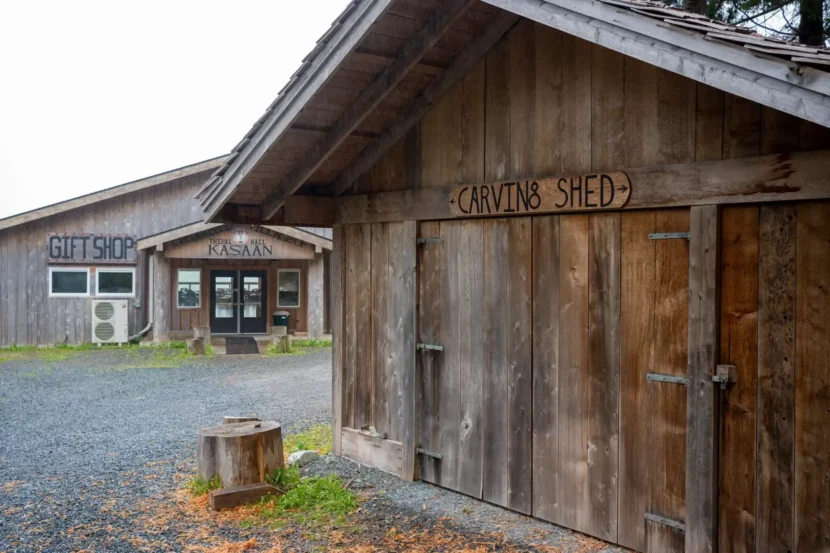
The outside of Kasaan’s carving shed and tribal hall. (Jack Darrell/KRBD)
To get to the village of Kasaan, you turn off the main route that spans Prince of Wales Island and then follow a dirt and gravel logging road for nearly an hour through dense forest and timber operations and then, suddenly, there it is.
To bolster the group, some paddlers will be coming to join them from other communities all over Southeast Alaska, and according to Hamar, a couple as far away as Seattle.
They plan to make stops in Thorne Bay, Coffman Cove, Wrangell, Petersburg and then camp the rest of the way up the coast to Juneau.
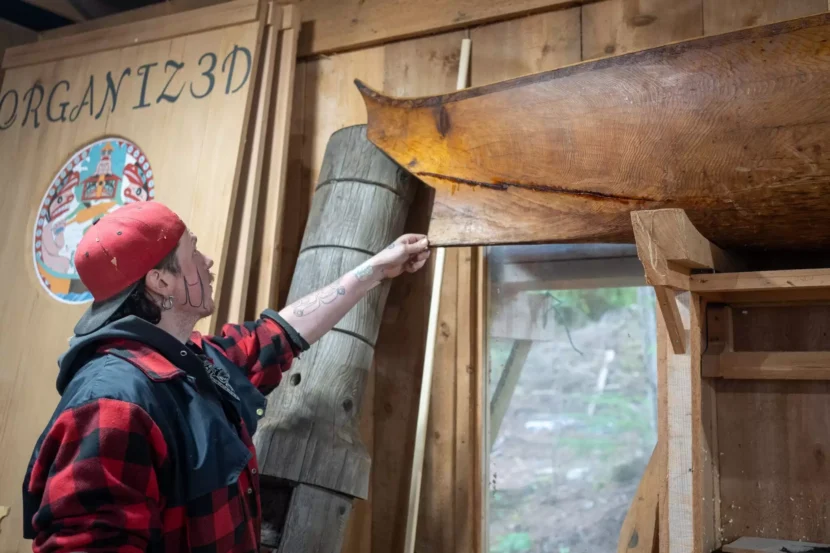
There is an 18-foot canoe hanging in the shop. Hamar said that wasn’t one of the ones headed to Celebration. It wasn’t ready yet. The wood of the canoe fanned out but then curled back in on itself like a flower that hasn’t bloomed. Hamar said it needed to be steamed.
“Basically, you just take it down to the beach and you start a big fire and you put a bunch of rocks in the fire. And then you fill [the canoe] up with saltwater. And then you put the hot rocks in there until it starts boiling and cover it with a tarp. And then it just kind of naturally falls open as the wood heats up,” Hamar explained.
Once it’s steamed, the carvers will prop the hull open with sticks so it holds its shape as the wood cools. Eventually, the seats and crossbars — called thwarts — are what will keep the wooden canoe in shape.
Finally, strips of wood are steamed in and riveted to the sides to act as ribs.
“That’s kind of the last step before finishing it with oil and paint or whatever you’re doing,” Hamar said.
Since the canoes are one large piece of wood, they’re prone to becoming overly dried out and splitting. Hamar paints the bottoms with tar to lock in the moisture.
Hamar said making a canoe is a long and difficult process. In his 20 years carving with his dad, he had built just the three hanging in the shed. He said that’s because it’s hard to find the perfect piece of wood. Plus, they aren’t something you can easily sell.
“So then the person who might be using it isn’t actually going to be able to afford it, unless it’s being sold as an art piece, which kind of isn’t the point, right?” Hamar explained, adding that the canoes require a lot of maintenance. But back in the day, people depended on them to get around.
“You [probably] would have had the time to take care of it. It was important,” Hamara said. “It’s now important in a different way, I think. It’s important for the culture and ceremonial use more than anything.”
Eric Hamar inspects the hull of one of his canoes. (Jack Darrell/KRBD)
That’s not to say that the vessels are strictly ceremonial though.
“This one is covered in pine tar, and seal oil, and blood and guts, and it’s pretty beat up and that’s why I like it,” Hamar said, pointing to a canoe he and a friend had used the previous weekend to catch a 250-pound seal. “It looks good that way! Looks like it gets used, because it does.”
Hamar’s work was interrupted by a group of students from Klawock filing into the shed. They were there to learn about sustainable harvesting and the important sacrifices that trees and animals make to provide for them.
“When we’re talking about something like a totem pole, we have to make sure that we’re not only looking after the ones that we cut down and doing a good job to make sure that — that’s why we make them look really pretty,” Hamar told the kids, gesturing at the totem pole next to him. “And you don’t want to kill something and have it just go to waste.”
Hamar isn’t just a carver. He said he loves the carving shed and his work teaching people the traditional ways. But he said that culture and artists should evolve, as well. In his free time, he is working on an art piece commissioned by the Anchorage Museum.
Celebration kicks off June 5, and Hamar had a stack of paddles to finish before his group would head out in late May. They were scheduled to launch on Saturday, May 25.
Close
Update notification options
Subscribe to notifications
Subscribe
Get notifications about news related to the topics you care about. You can unsubscribe anytime.