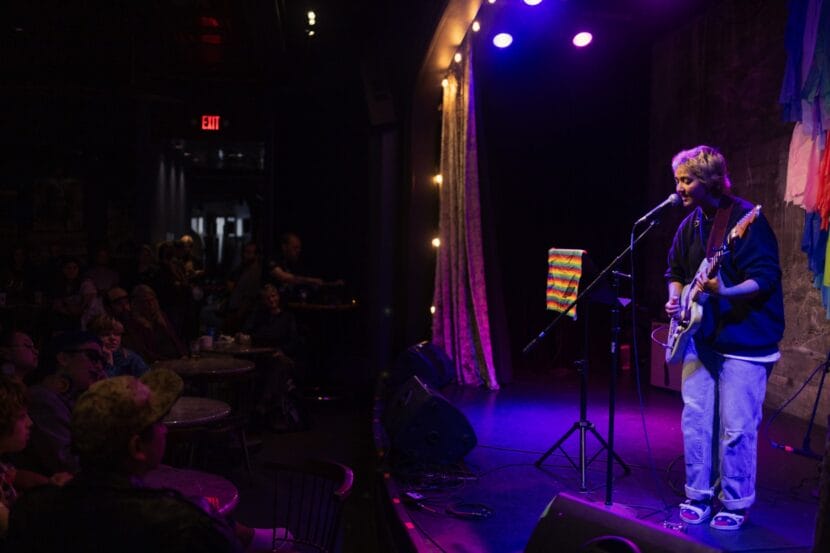
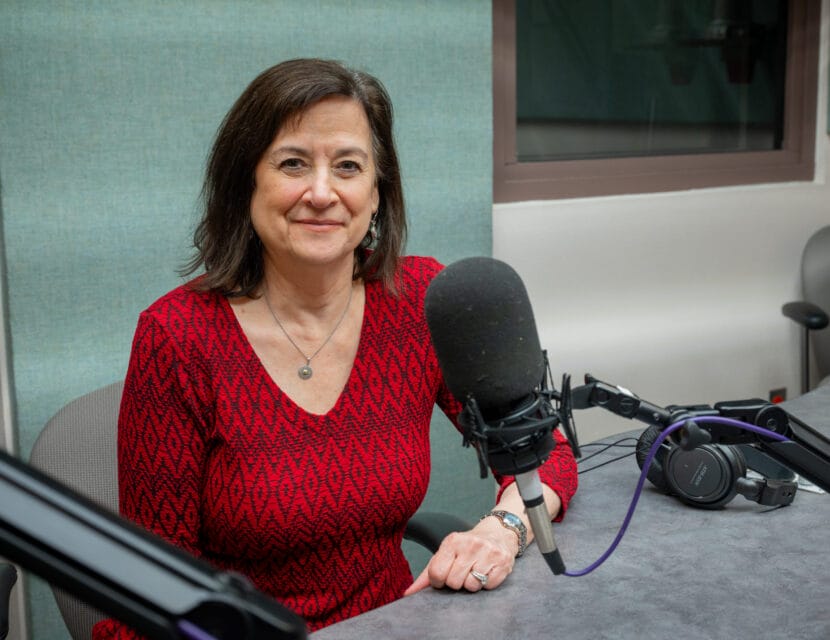
Anna Mahanor playing on stage at the Crystal Saloon in Juneau on June 30, 2023. (Photo by Ḵaa Yahaayí Shkalneegi Muriel Reid)
This is the second installment of Tongass Voices, a series from KTOO sharing weekly perspectives from the homelands of the Áak’w Kwáan and beyond.
Anna Mahanor is a musician, bartender and skateboarder here in Juneau. People may know her from her band, Rain Dogs.
Keenan Wright and Jacob Eberhardt make up the rest of the band. The Rain Dogs are putting out their first album this month. Mahanor shares how Juneau’s music scene has helped her gain confidence as a performer.
Listen:
Anna Manahor: I’m Anna Mahanor and I play in a local band called the Rain Dogs. And I moved here almost two years ago. And I moved here to kind of pursue music, and I’m becoming a little bit more confident with playing because I always used to get really nervous when I would go up on stage.
Three summers ago, I visited my best friend, who I live with now. She was working for the Forest Service. She was like, “You need to come visit. Juneauʼs sick. It’s so pretty here.”
Then when I flew into Juneau, it was like an 80-degree day, so I got totally catfished. And fast forward about a year we were planning to move to Vermont. And then she was like, “Actually, how do you feel about moving to Juneau? I got offered the same job again.” And that’s how I ended up here.
So usually what I’ve found is that it is a really cathartic release. Usually I’m pretty sad or pretty bummed. And a bit somber. And it’s like a journal entry. And you kind of just like, I start, like picking around, I’m like, Oh, I like that riff. And I have a loop pedal. So I’ll get things going on a loop pedal.
And then with the vocals, I like humming a little melody, and then I’m like, “Okay, that’s the melody.” And then I worry about the words later. Because sometimes I could be talking about my dirty socks, you know what I mean? And I’m like, I’m not gonna use these lyrics, but something that sounds similar or whatever.
I met Keenan and we played in the Folk Fest, and it was very kind of like spur of the moment, “Oh, let’s play together.” And he liked playing some of my songs. We played some open mics. And then we were like, “Let’s start a band.” And then his roommate, Jacob, who didn’t play bass at all, was like, “Iʼll play bass.” And he is actually a really, really good bass player.
It kind of turned into one of those things where we’re playing together. And they were like, “What do you want to call it?” And they said they really liked Rainier. And I was like, I really liked my dog’s name. I was like, “I really want to call it Harley Harley.” And I was like, wink, wink, and they were like, “No, weʼre not calling it your dogʼs name.” So they were like, “What about the rain dogs? Because then it’s the beer that we like to drink, and you still get a dog in there.” I was like “Alright.”
The close-knit community here has definitely made it a little bit easier to transition into feeling comfortable going up and performing. Plus, everyone is so supportive and so welcoming. And like, really, I feel like it pushes you to kind of branch out and experience doing something new that you haven’t done.
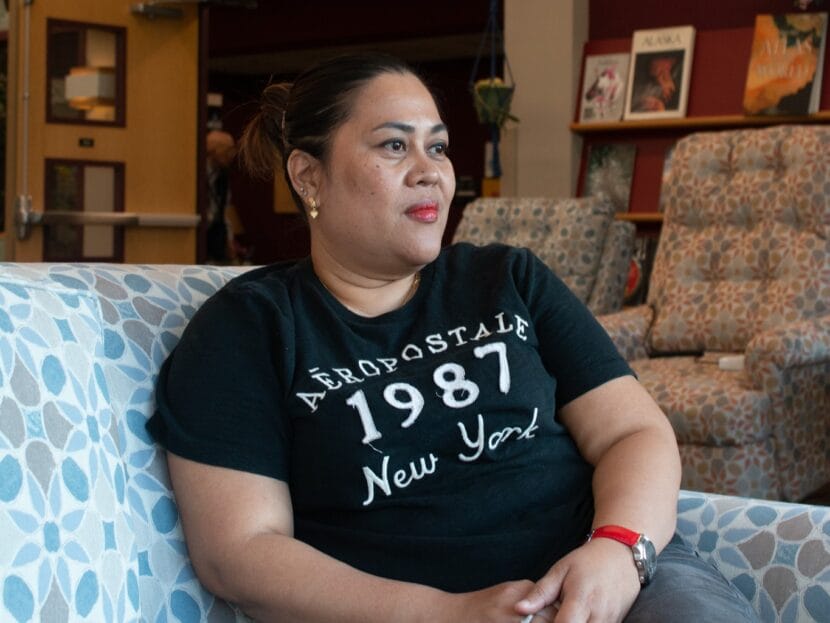
Marilyn Lumba poses for a portrait at the Pioneer’s Home in August 2023. (Photo by Tasha Elizarde/KTOO)
This is the first installment of Tongass Voices, a series from KTOO sharing weekly perspectives from the homelands of the Áak’w Kwáan and beyond.
Marilyn Lumba is the director of nursing at the Juneau Pioneer Home and an assistant professor of nursing at the University of Alaska Southeast. She began working at the Pioneer Home in 2010, just three months after migrating to Juneau from Tagum City in the Philippines. And while she loves her career now, she didn’t think health care would become her passion.
Listen:
This transcript has been lightly edited for clarity.
Marilyn Lumba: Our facility consists of four neighborhoods. So we have Twin Lakes Lodge. We have 10 residents in here.
I always like think, “Okay, what will be the best for the resident? If this is my grandpa, what I’m going to do for them to be happy?”
If you observe, we don’t have uniform. Because this is a home. In your home, you don’t wear uniform, right? So we wanted the resident to feel that this is their home. So we have cats. We have two cats. It depends on the color. If it is Ginger, of course, it’s ginger colored. And Smokey is smoky colored. And we have birds. Before, we even have fish also.
Actually, I wanted to be an accountant — a CPA, a certified public accountant. But my best friend wanted to be a nurse. I said, “Okay, let’s just be a nurse together.” Because we wanted to go together to the same school and all that. And so, I just completed it because my mom doesn’t want me to stop.
I started working here in JPH [Juneau Pioneer Home] in 2010 as an assisted living aide, and I moved here because my husband is here. Like, he petitioned me, together with my daughter. And then I become an assistant professor, in like 2019.
I made the right choice in staying as a nurse because being a nurse is not just — you know how they always say passing meds, like in elderly people? Like here, in a long term care facility, they say, “Oh, you just pass?” No, being here and being a leader, there’s a lot. Like, you have a big impact on this resident — we call them resident, we don’t call them patient.
You become their family, and you wanted — like for me because it becomes my passion — I wanted them to be successful in what they wanted. Like, the quality of life that they deserve.
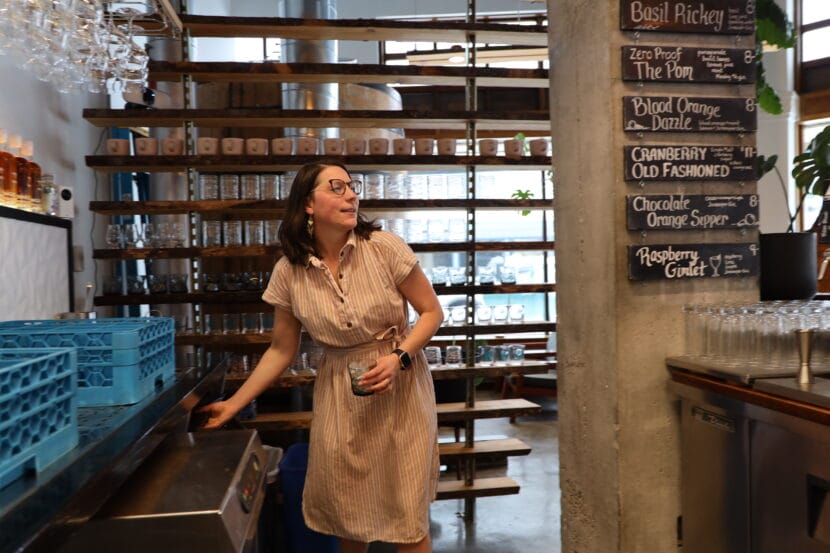
Maura Selenak fixes a gin and tonic at Amalga Distillery. Feb. 1, 2024. (Yvonne Krumrey/KTOO)
The environment of Amalga Distillery’s taproom in Juneau feels different from other drinking establishments in town. It has light wood, mid-century inspired furniture and natural light from the large, street-facing windows competes with the stylized exposed bulbs that hang from the ceiling.
The vibe of the taproom is a focus for co-owner Maura Selenak.
“When you come into our space, it’s distinctively not a traditional bar feel,” she said.” We really wanted it to be open and airy and light and welcoming,”
She said she and the staff create an environment where people can enjoy and learn about what they can do with the alcohol that Amalga makes. And now, it’s been noticed by those outside of Juneau.
Juneau’s Amalga Distillery is a semifinalist for the 2024 James Beard Awards in the category of “Outstanding Bar.” It’s their first nomination, but they’re not the first business in Juneau to be recognized for the prestigious culinary award.
At first, Selenak couldn’t believe her distillery had been nominated. She and her co-founder and husband, Brandon Howard, found out through a friend.
“We woke up and had an Instagram message from a friend saying ‘Congratulations! James Beard!’,” Selenak said. “It was shocking, we had to double check, we were like ‘is it a joke?’”
She said that even getting this far is a big enough deal for her.
“It was not even on our radar as something that was even possible for us.”
The bar category includes any establishment that serves beverages, including breweries, distilleries and even coffee shops.
The category is for “consistent excellence” in what they serve, and also “outstanding atmosphere, hospitality, and operations, while contributing positively to its broader community.”
A block away, chef-owner of In Bocca al Lupo Beau Schooler rolled out bagels in the kitchen.
The restaurant has been named a semifinalist seven times, including last year. He said the process is still a bit of a mystery to him.
“They take an open call for nominations, and they kind of narrow it down from there to their list, and then people come out and judge that list and that narrows it down to the nominees and then they come and judge again. But I don’t know who or what or when or how,” he said.
He said he thinks that the recognition is helpful for restaurants in larger cities, but here, he isn’t sure it makes a big difference.
“As far as locals go, we’ve had a lot of support from the local community so it doesn’t really change that in their eyes for us,” Schooler said.
Schooler said for him, what makes In Bocca al Lupo worthy of recognition is the staff.
“I kinda wish it wasn’t my name on there, just the restaurant’s,” he said
Selenak feels the same way. She said Amalga’s taproom wouldn’t be what it is without the staff.
The James Beard award winners will be announced this summer.
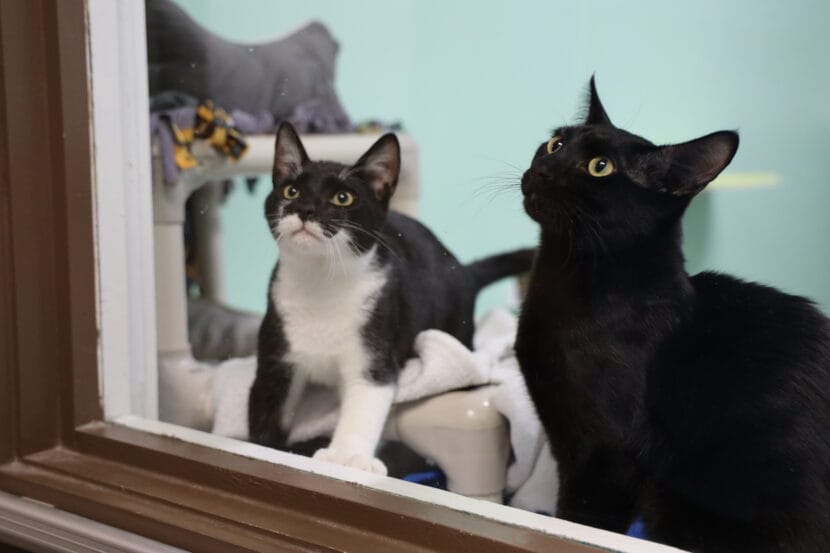
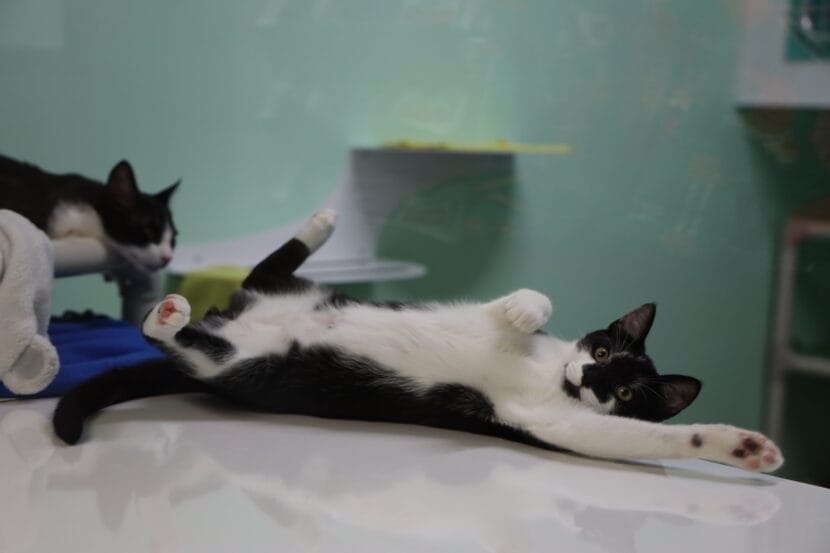
Cats look out a viewing window at Juneau Animal Rescue on Thursday, Jan. 18, 2024. (Clarise Larson/KTOO)
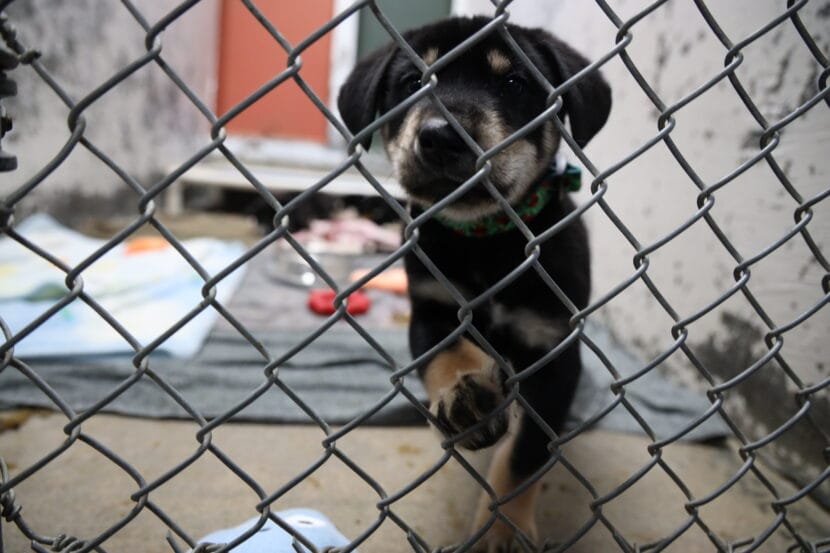
Nine puppies at Juneau Animal Rescue — all named after different Paw Patrol characters — were waiting for their forever homes last week. And they weren’t the only ones looking for new homes. The shelter is, too.
Kevin Ritchie, a member of the shelter’s board of directors, said that when the current shelter was built back in the 80s, it was designed to warehouse animals — not as a place where they could thrive.
“We want the animals in the facility to have as many advantages as possible, keeping them safe and calm and happy so they can have a good experience while they’re here and they can be at their best when people see them to adopt them,” he said.
A puppy up for adoption at Juneau Animal Rescue paws at the kennel fence on Thursday, Jan. 18, 2024. (Clarise Larson/KTOO)
He said the need for a new shelter became more urgent after the American Society for the Prevention of Cruelty to Animals inspected the facility in 2021. The group said Juneau’s shelter had extensive problems and didn’t meet national standards.
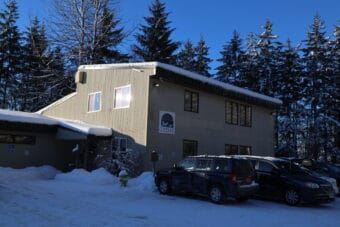
Juneau Animal Rescue on Thursday, Jan. 18, 2024. (Clarise Larson/KTOO)
Rick Driscoll, JAR’s executive director, said the shelter housed more than 420 cats and 360 dogs in the last year alone. It also provides critical medical services, like spaying and neutering. And it houses Juneau’s animal control services.
With limited space for dogs and cats, Driscoll said the shelter often finds itself at or near capacity, especially in the summer.
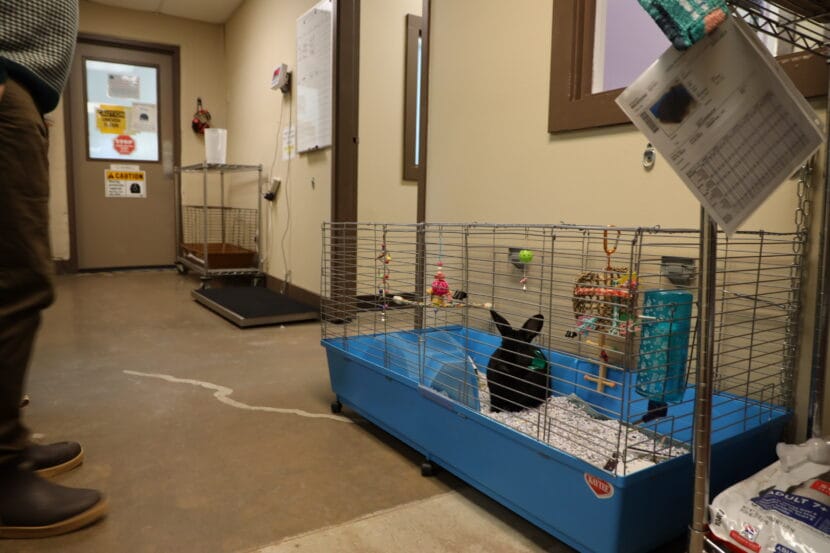
“We have no housing really for animals that are not a cat or a dog. So we basically use a hallway right now for, you know, birds, hamsters, rabbits, guinea pigs, that sort of thing,” he said. “And that’s a stressful environment for small animals to be in.”
Rasputin the rabbit sits in a cage in a hallway at Juneau Animal Rescue on Thursday, Jan. 18, 2024. (Clarise Larson/KTOO)
He said the building’s roof needs repairs, and parts of the floors are beginning to sink. The growing number of animals coming into the shelter means less storage space and less separation between types of animals.
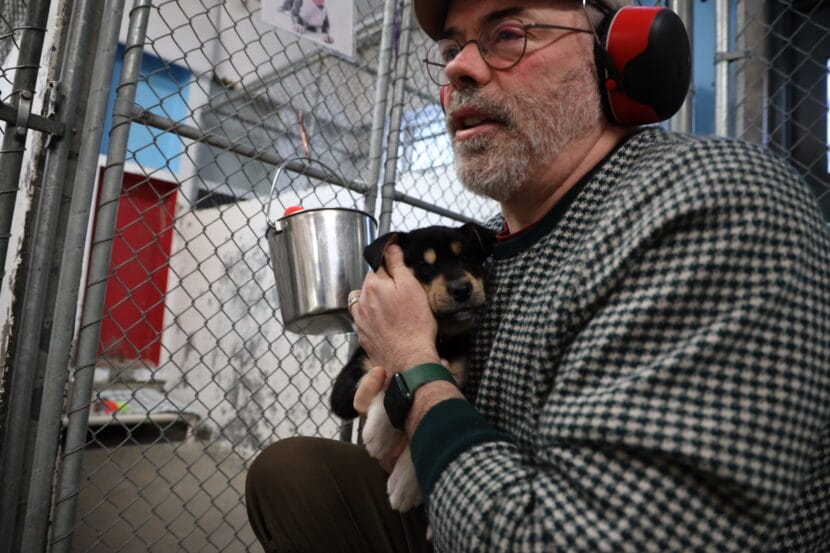
Rick Driscoll, Juneau Animal Rescue’s executive director, holds a puppy at the shelter on Thursday, Jan. 18, 2024. (Clarise Larson/KTOO)
The board’s wish list for a new facility includes a larger outdoor area with a roof and better ventilation to reduce the spread of infectious diseases. They also want double-sided cages for easier cleaning.
“To clean an animal’s cage, you literally have to somehow get the animal out of the cage, down the hall into another cage,” Ritchie said. “It can be somewhat dangerous, and certainly time-consuming.”
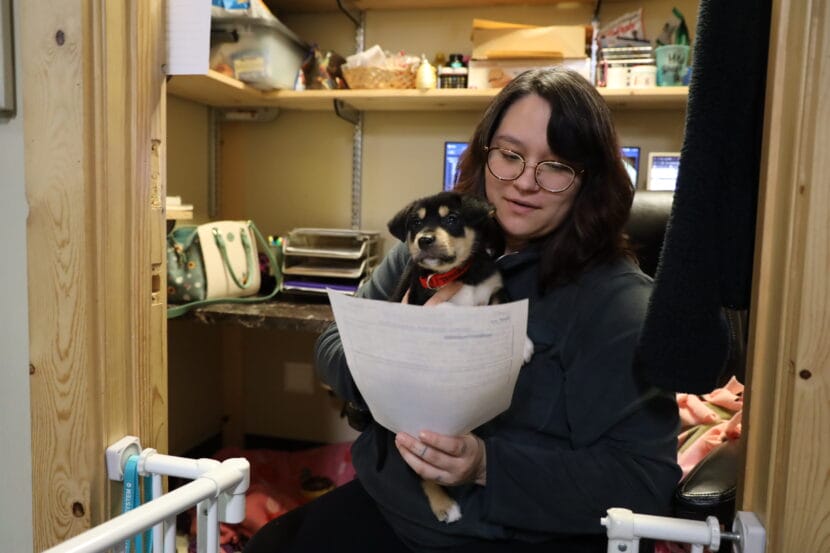
Sequoia Miller, Juneau Animal Rescue’s kennel director, holds a puppy while reading paperwork in her office on Thursday, Jan. 18, 2024. (Clarise Larson/KTOO)
The estimated cost for a new building is $15 to 20 million for construction, not including a new site. The land of the current shelter’s site was donated, and Ritchie said they hope that will happen again for the new one — which needs to be at least 2.2 acres.
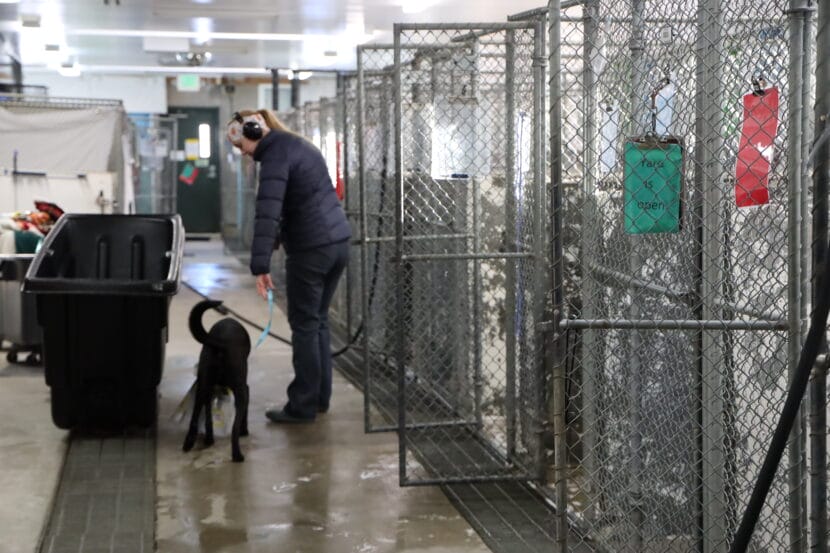
A Juneau Animal Rescue employee takes dog out for a walk on Thursday, Jan. 18, 2024. (Clarise Larson/KTOO)
“Using a facility that exists always sounds like a great idea. But basically, this would be not on the level of a hospital, but that specialized,” he said.
Ritchie said they plan to fundraise in the coming months and work with the city to find other funding sources. He said the project’s timeline will depend on how quickly they can raise the funds.
A cat look out a viewing window at Juneau Animal Rescue on Thursday, Jan. 18, 2024. (Clarise Larson/KTOO)
Maria Downey outside Alaska Public Media Studios on Tuesday, January 9, 2024. (Matt Faubion/Alaska Public Media)
Longtime Anchorage journalist and news anchor Maria Downey has announced that she will retire at the end of the month, capping more than 40 years of work in Alaska.
Downey moved to Alaska from Florida with her husband in 1981, first working as a reporter for TV station KINO before moving four years later to KTUU, now known as Alaska’s News Source, where she’s been an anchor for almost four decades. Her last broadcast at Alaska’s News Source is set for Jan. 26.
Downey says she moved to Alaska as oil money began flowing in, and the state began to see a rapid rise in wealth and population.
Listen:
This interview has been lightly edited for length and clarity.
Maria Downey: It was a great time to be a reporter because it was the boom period. So there was no hesitation to take a private jet someplace, believe it or not. CNN or NBC, whatever the affiliates were at the time, would not hesitate to spend the money. We had a helicopter at Channel 13 before many other local TV stations had it. It was a good time to report because the money was there.
Wesley Early: Can you tell me a bit about what some of your first stories were when you came to the state?
Maria Downey: I don’t remember the exact stories. But I remember my favorite stories because I loved the rich traditions and cultures of Alaska. So I typically would really try to focus on those stories. But I was also the court reporter. So there were days I was in court, and you couldn’t have cameras in the courtroom back then. So picture this: a full day in a courtroom, taking notes, and then typically a very long, and I think about it now, probably very boring, stand up (on-camera live interview) outside of the courthouse, because we couldn’t be inside. But my favorite stories from that to this day are the rich cultures and traditions of Alaska.
Wesley Early: So tell me about when you became an anchor? I imagine at the time, there weren’t a lot of female anchors in Alaska.
Maria Downey: Well there typically was. Usually the male anchor was called the “lead” anchor, which we really don’t have any longer. But when I started at Channel 13, I was mostly reporting and then I did a morning program called Good Morning Alaska. I did some co-anchoring there. But when I went to Channel 2 as a reporter, within six weeks, I was anchoring. So that was really a good move.
Wesley Early: What did you like about anchoring?
Maria Downey: So I loved being able to share all the day’s news. As a reporter, I covered consumer issues and other issues that affected individuals and their families, which I liked. But at the end of the day — literally at the end of the day and my shift, anchoring — I really liked sharing all those stories, all the stories of the day in the news, so that people were aware of what was going on in their community. And in their state and sometimes nation. We didn’t do as much national news, and we still don’t do as much national news.
Maria Downey at Alaska Public Media Studios on Tuesday, January 9, 2024. (Matt Faubion/Alaska Public Media)
Wesley Early: If my math is right, that’s more than 30 years as an anchor. And one of the things I think about, especially now, is trust in the media among people is kind of lower. People are more skeptical of the news media industry. That’s kind of a position of authority and a position of trust. Have you noticed that change, how people perceive you as an anchor over the years?
Maria Downey: We’re really lucky at our station, because we’re sort of in a unique position. We’ve been the No. 1 station, and had that really good relationship with people throughout the state, for many years. So I think we have that position, not only of authority, but trust, that some local stations don’t have because they turn over so quickly. When we go to a village, we go to rural Alaska, there’s people like meeting us at the airstrip. So when you go there, and you feel that connection. We don’t get as much of that negativity. We’re kind of in a really unique position. I’m not saying we don’t get complaints at times. But I think people, when they look at their local news, they have more of that connection than they do to national news or cable news, where they give opinions and that sort of thing. That’s not our role.
Wesley Early: Yeah. How would you explain that difference? And how would you explain how local journalists really, more than any other type of journalist, are very invested in their local communities?
Maria Downey: Well, this is our home. I know you see people coming and going throughout the years. But when you look at Jackie (Purcell), and me and Mike (Ross), and I mean, there’s people in our newsroom who have been there, like (chief photographer) Eric Sowl, for 20 or more years, for decades. Some even for three decades. It’s our community. We’re invested in it. You see us at community events with our families. So it’s really part of our fabric, too. So it would be a disservice to do anything that’s not honest and fair to our community. I think people see that. I think they see that we’re out and about and this is our home.
Wesley Early: This may seem like an odd question, I don’t know how often you’ve thought about this, but do you think about your legacy as a journalist and what you hope people look back and think about Maria Downey as a reporter, what they think?
Maria Downey: Boy, I really don’t don’t think about it, but if… I guess you can play this years from now for my obit, right? “How do you want to be remembered?”
I hope that people will remember my work as being fair and honest and caring, because it is my home. I hope that people remember that the stories we shared were not our opinions, but facts, so they can help their families and community and their state to see through certain issues and maybe even become activists in whatever they believe to make their community better and maybe start being part of the solution instead of part of the problem. Looking at ways to help, whether it’s donating their time, talent, treasure. You know, the old stewardship motto. Hopefully what we’ve done, and what I’ve done throughout the years, has helped to push people toward doing what’s right for their community and helping to solve some of the problems.
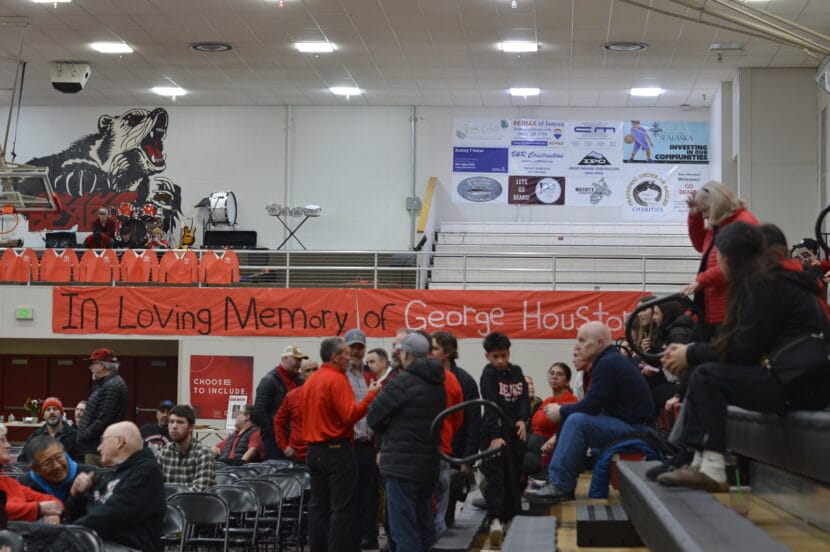
Players, fans and admirers gather on the court at Yadaa.at Kalé Juneau-Douglas High School to honor basketball coach George Houston. Jan. 8, 2024. Photo by Yvonne Krumrey/KTOO.
George Houston spent a lot of time in the gymnasium at Yadaa.at Kalé Juneau-Douglas High School over the course of his life – first as a student in the 60s, then as a gym teacher and eventually for 30 years as a basketball coach.
He died in October. In December, the gym was named after him. At a memorial on Monday, former players and friends shared his legacy.
Groups of teenagers sat with their teammates in the bleachers. Adults sat in folding chairs on the court. Everyone wore the school colors – black and red.
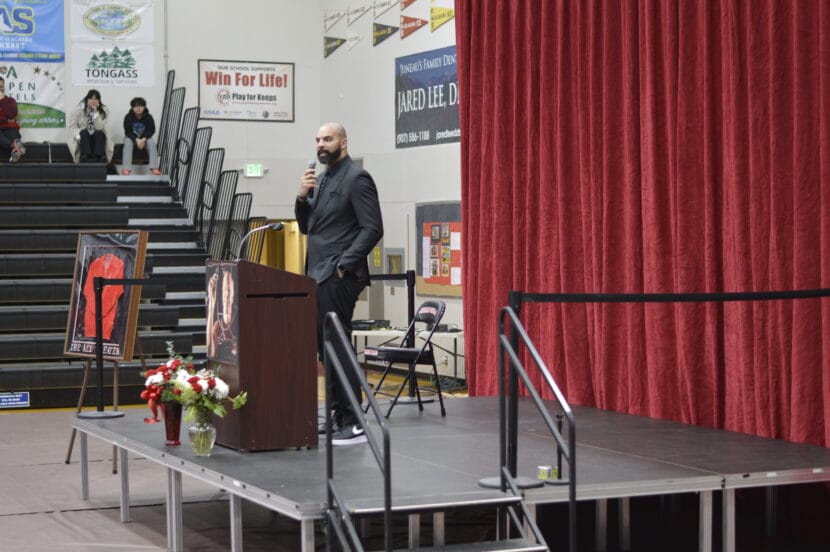
One by one, people who loved George Houston told stories about him. Like former Olympian and NBA player, Carlos Boozer Jr.
Former NBA player Carlos Boozer speaks at the memorial of his high school basketball coach George Houston. Jan. 8, 2024. Photo by Yvonne Krumrey/KTOO.
“Outside of my family, Coach was the first person that believed in me,” Boozer told the crowd. “I had a crazy obsession with basketball. I met somebody who had a crazy obsession with basketball.”
Boozer said Houston would leave him phone messages during his NBA games.
“He’d be like, ‘Great game, 25 points, and 10 rebounds. But that really wasn’t Crimson Bear defense,’” he said.
Houston’s longtime friend, Jeff Kemp, said he was picturing Houston in his usual spots in the gym.
“He would be embarrassed and sheepish with the amount of people that were here tonight honoring him and celebrating his life,” he said. “And I can see him now, peering right outside that old office door right there, thinking, ‘How the hell can I get out of here?’”
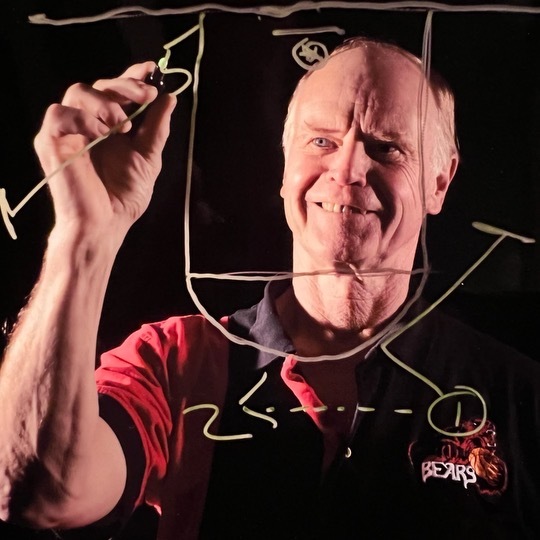
Longtime Juneau basketball coach George Houston. (Photo courtesy of Jeannie Wolfe)
Houston played basketball at JDHS as a student. In 30 years of coaching, he led teams to two state championships. Though he retired in 2006, he was still on the court most days helping out up until last summer.
Former Juneau schools superintendent Bridget Wiess grew up with Houston and witnessed his skill as a coach.
“George could have gone a lot of places to coach, at a lot of higher levels. But he was so committed to Juneau, and the kids of Juneau,” she said. “Arenʼt we the lucky ones?”
Weiss said Houston inspired her to be the kind of leader he was. “Think about George, what he was to you, and be that for somebody around you,” she said.
Houstonʼs niece Jeannie Wolfe organized the memorial. She’s a teacher now, too.
“George was family, right? First and foremost. And then as I heard more and more stories, I learned that he was more of a legend,” Wolfe said.
The service ended with a student band — the Radio Flyers — playing Neil Young’s Harvest Moon. It was Houston’s favorite song.
Close
Update notification options
Subscribe to notifications
Subscribe
Get notifications about news related to the topics you care about. You can unsubscribe anytime.