If you’re heading downtown this week, you might have your car or bus rerouted. That’s because the demolition of the Gastineau apartments began Monday.
At the site, a backhoe will punch holes in the concrete walls of the building and an excavator will peel the front structure away piece by piece.
Richard Ritter, the city’s chief architect, said North Franklin Street will be closed to keep the public safe.
“At that point they will start removing the front wall. That’s the trickiest part,” Ritter said. “They don’t want parts of the front wall to fall into the street. We do have it all restrained with cables and a demolition screen, but it’s a public safety thing.”
North Franklin will reopen tomorrow evening. But the street will be continuously closed Wednesday through 6 p.m. Sunday.
Ritter expects the initial demolition of the front of the apartments to be completed this week. The back structure will be torn down in the following weeks. The finish date is set for the end of April.
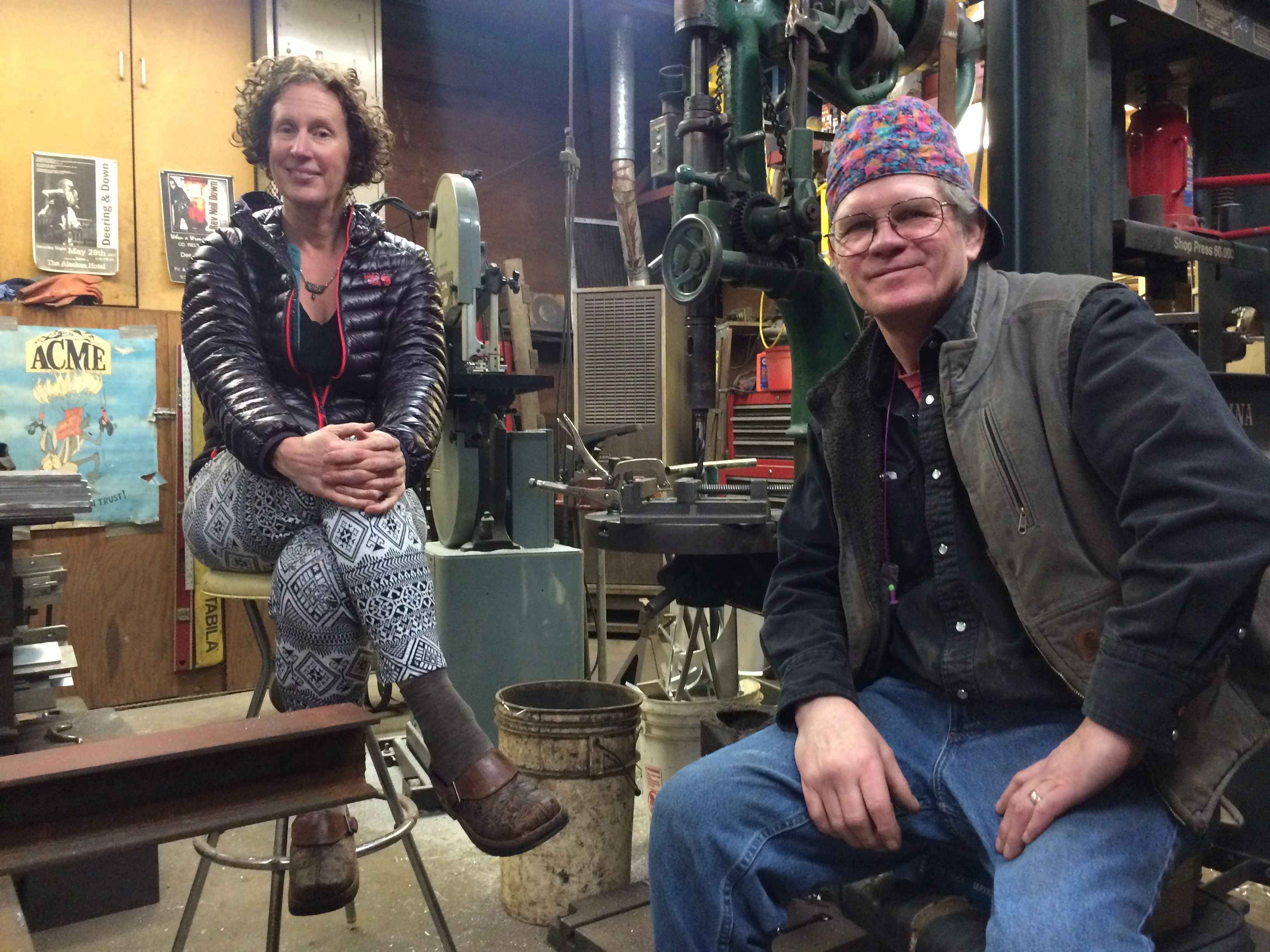
MK MacNaughton and Sherman Johnson in his shop. (Photo by Scott Burton/KTOO)
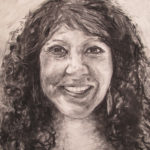
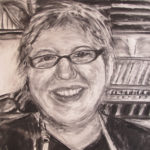
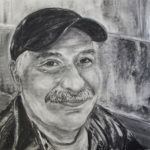
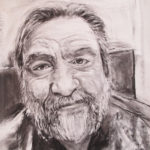
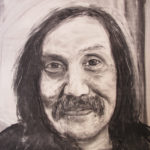
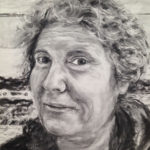
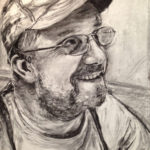
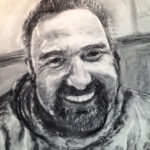
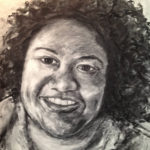
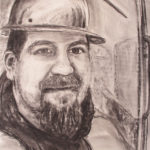
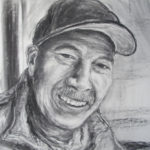
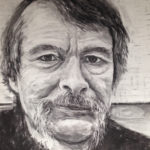
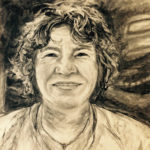
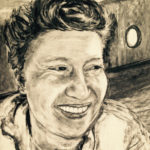
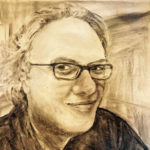
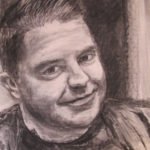
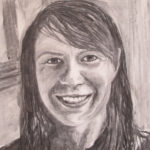
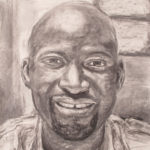
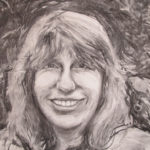
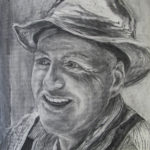
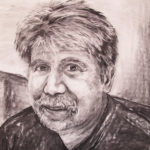
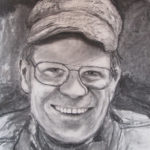
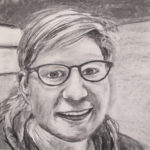
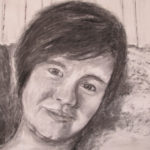
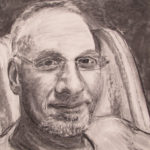
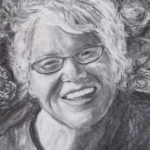
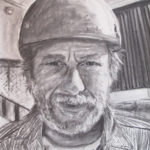
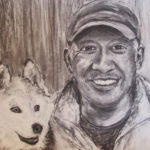
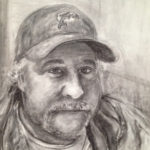
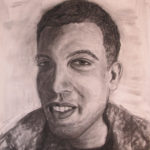
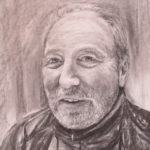
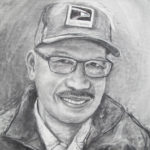
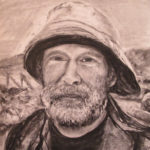
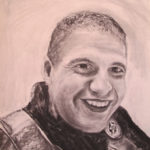
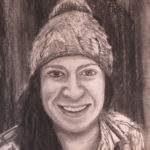
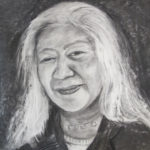
As 2015 came to a close, Juneau artist MK MacNaughton finished a yearlong art project that portrays 52 of her fellow community members — a portrait for each week of the year.
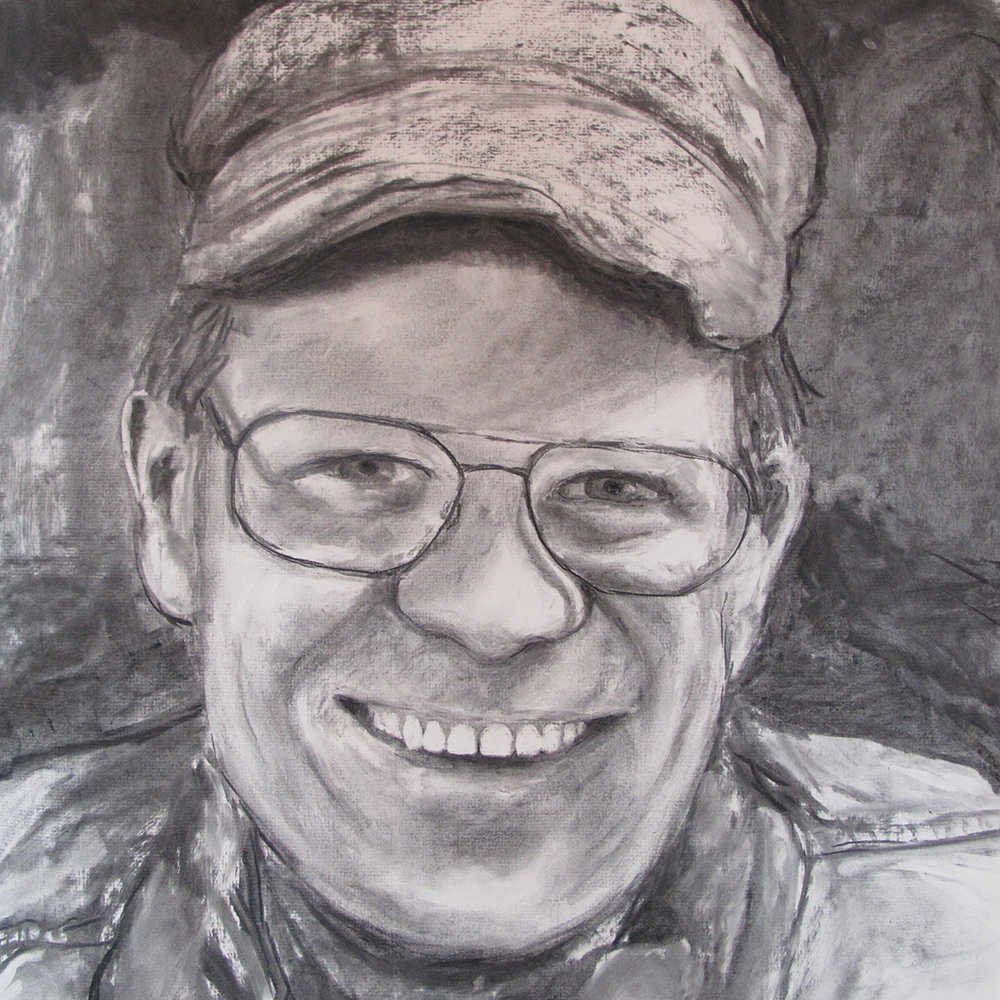
MacNaughton picked her subjects not for how they look, but for what they do, where they do it, and how hard they work at it. On 18- by 18-inch archival acid-free paper, she used charcoal to drawn portraits of a seldom recognized group of people.
A construction site in the middle of winter, in a city, in a rainforest, in Alaska, is a unique place to find inspiration for an art project.
“There were some guys working on the district building and it was January I think,” MacNaughton says.
It may sound lackluster, but she saw potential.
“It was like sideways rain, horrible snow, slush, windy, and they were there everyday. I drove by in my cozy little car, and went to my cozy little studio and I thought I should draw these guys.”
The possibilities multiplied from there. An electrician, a fisherman, a midwife, a hospital custodian, a landscaper, detox support staff, a postal carrier, a counselor, a welder — MacNaughton says her subjects work in professions that often go unrecognized all over Juneau and have “exceptional tenacity, or work ethic, or work hard jobs in the elements.”
She then conceived the portrait-a-week idea, which includes an interview and photograph of each person she draws. She started the project in the first week of 2015 and days later hung her first portrait at the Juneau Arts and Culture Center.
“I was kind of flattered really,” says Sherman Johnson. He’s portrait 33. Johnson was recommended to MacNaughton by Beth Weldon, a fire fighter who is the subject in portrait 17. Johnson has been welding, fitting and fabricating since he was a teenager. He says the work he does is hard to see because it make’s things look normal.
“Ideally, you shouldn’t tell I was there. It should look like it just came out, you know that things were just supposed to be like that,” Johnson says. “But I’m proud of my work and I’m proud of what I do. I try and do a nice job on things. You know, the quality of what I do is the driving thing for me.”
Among other jobs, AEL&P has hired Johnson to weld in the tunnels of Snettisham and to install a new valve on the Salmon Creek Dam. He’s repaired and modified countless fishing boats and is helping with the new State Library, Archives and Museum. He says a lot of work in the trades is like his — essential but invisible.
“I think that’s how a lot of these working people that MK found — that’s how they are. They get down and go do their stuff, and if it means putting on your rain gear, it mean’s putting on your rain gear. You realize there’s so much more of the world and so many people doing so many little things that your just don’t notice,” Johnson says.
Johnson says his portrait captures what he really looks like.
MacNaughton asked her subjects questions about their work, challenges in their lives and dreams for the future. Then she took a picture. She says knowing the person informed her drawings.
“This was a picture of where … I am most comfortable,” Johnson says. “It made me smile — still makes me smile. Makes me laugh everyday.”
MacNaughton says there’s usually a gift at the end of her projects, or the answer to something personal she’s trying to figure out. In this case, she decided the time was right to transition from working at a nonprofit to teaching and exhibiting fulltime.
“I think this project has been kind of a way to give myself the courage to keep doing what I love doing,” she says.
MacNaughton gave each portrait to her subjects for free. She says the portraits took about seven hours to create — which means the project altogether took about 364 hours. She didn’t have a grant, or make any money.
At least the next time she needs a welder, or an electrician, or a landscaper, she’ll know who to call. She may even get a good deal.
Union Electrician
1 of 52
Fisherman 2 of 52
Midwife 3 of 52
Bartlett Hospital Environmental Services 4 of 52
Artist 5 of 52
Detox Support Staff
6 of 52
Family Doctor and Ultra Bike Racer
7 of 52
Tribal Child and Family Counselor
8 of 52
Chef Stef 9 of 52
Retired Union Laborer 10 of 52
CBJ Solid Waste Coordinator 11 of 52
Anti-Tobacco Motivational Speaker 12 of 52
Education Coordinator at Lemon Creek Correctional Facility 13 of 52
Sound Design and Management 14 of 52
Cement Mason, Carpenter 15 of 52
Baseball Coach, Ski Racer 16 of 52
Retired Firefighter
17 of 52
Owner Northern Tea House and State of Alaska employee
18 of 52
Excavator Operator 19 of 52
Executive Director of Trail Mix 20 of 52
Bus Driver 21 of 52
KTOO President and General Manager
22 of 52
Heavy Equipment Operator 23 of 52
Owner and Operator of the Fishing Vessel San Juan 24 of 52
Conductor, Music Teacher, Theater Electrician 25 of 50
Chef and Restaurant Owner 26 of 52
Charter Boat Sailing Tour Operator and Cancer Survivor
27 of 52
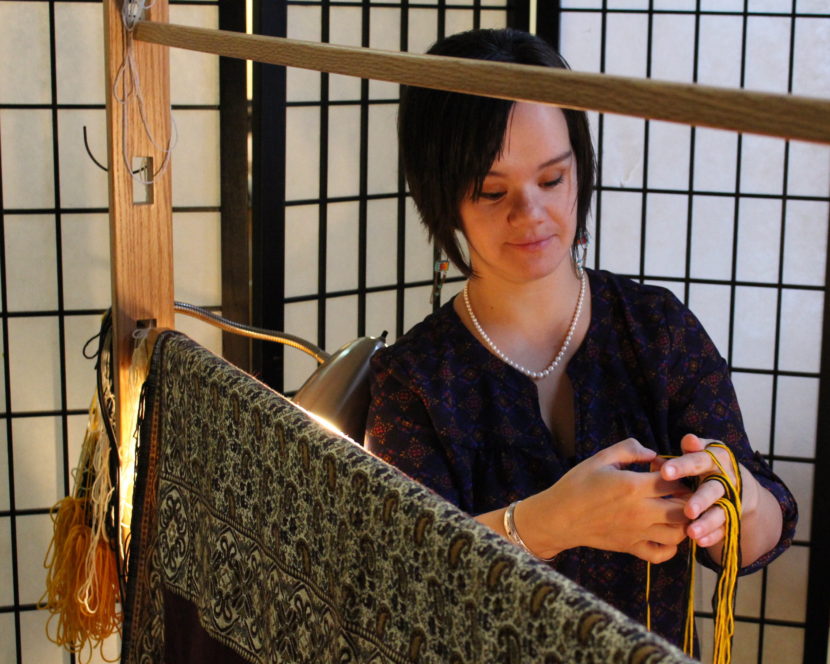
Keeping with tradition, Lily Hope covers her weaving. She won’t publicly share photos until the blanket is finished. (Photo by Elizabeth Jenkins/KTOO)
The Portland Art Museum in Oregon has commissioned a Tlingit Chilkat robe from a Juneau weaver — adding a fourth generation to a lineage of weaving students and teachers.
In a shop downtown, Lily Hope is weaving her first Chilkat blanket.
She sits in front of a 5-foot-long wooden loom carved by her father. It’s the second week of a year-long project, but the Chilkat robe is already taking shape. Chunky stripes of black and yellow.
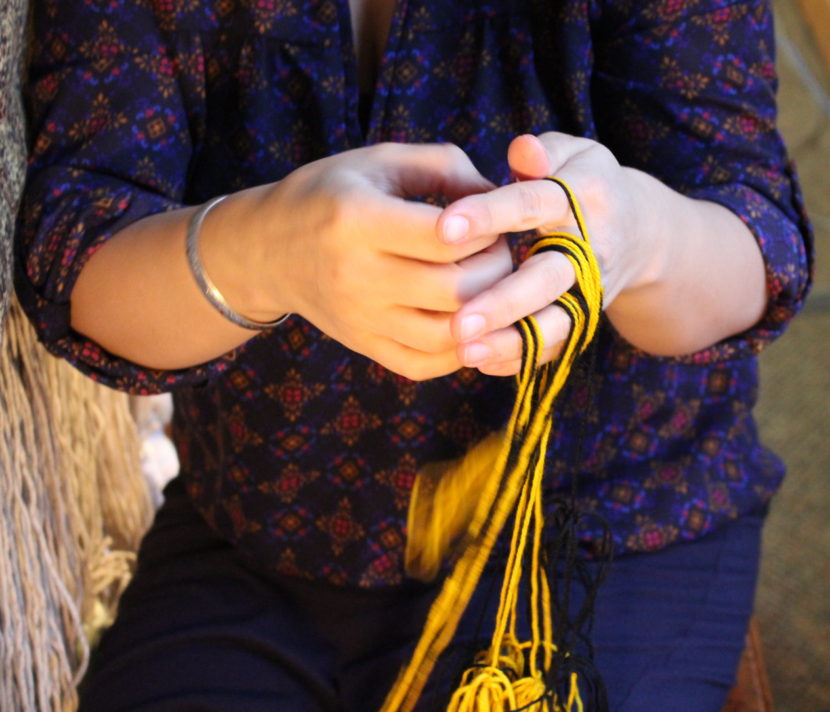
Hope weaves across the loom. A motion she describes as jumping jacks for her fingers. She says this is the first time in years she’s had regular hours away from her children.
“I don’t know about other moms who’ve gone back to work, but it’s pretty emotionally challenging,” Hope says. “Ultimately it’s gratifying, satisfying to be here to weave. But it’s a constant opportunity-cost of what am I giving up to be able to weave?”
Hope says Chilkat blankets are one of the most prestigious ceremonial dance robes.
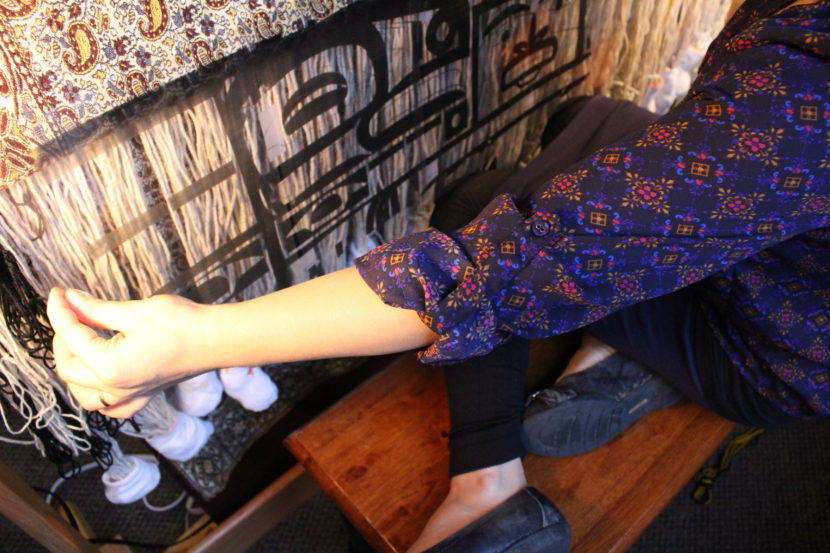
The warp hangs free, vertically on the loom. This warp is made of merino wool twined with strips of cedar. At the bottom, several strings are clumped together in a row of tiny socks. Actually, Hope’s kids socks. And her own from when she was a kid.
“I love having all of the generations, you know, sitting here. Hanging out. Little feet hanging out,” she says.
When Hope was about 6 years old, she remembers her mother learned to weave from Jennie Thlanaut.
“I don’t know if you’ve been in an elderly Native household, but it smelled like seal oil or like fibers. If I could go back in time and smell that again, I know that’d be so vivid in my mind.”
Her mom tried to teach her, but she says she thought it was dull as a teenager. In her 20s, she picked up Ravenstail weaving and later, Chilkat.
“It was interesting to return to it and to feel that similar time passing but not be bored by it,” Hope says.
Lily Hope dyed the yellow yarn herself. She was worried about it turning out orange, but it transformed into the “perfect Chilkat yellow.” (Photo by Elizabeth Jenkins/KTOO)
The Portland Art Museum has Chilkat robes from three generations of weavers, including Hope’s mom–Clarissa Rizal. Museum curator Deana Dartt says the blankets will be part of a traveling exhibit next year called The Art of Resilience: The Continuum of Tlingit Art.
“In showing the continuum, in this big exhibition, it made sense to me to commission a robe by one of Clarissa’s students and extend that genealogy to a fourth generation,” Dartt said.
That fourth generation being Hope. Dartt thinks no other museum in the country has a lineage of Chilkat robes like this. But she says the blankets don’t just belong to the museum. They belong to the tribes, too. That’s why the museum loans the items for ceremonial events.
“One of the things we’re really working on here, at the Portland Art Museum, is having those important objects be a part of the living culture.”
Dartt says she’d like to see Hope and her mom’s robe danced together someday.
Lily Hope holds up her pattern to the loom. The Portland Art Museum has a lineage of three Chilkat blankets weaved by Cora Benson, Jennie Thlanaut, and Clarissa Rizal. Hope’s blanket will become the fourth. (Photo by Elizabeth Jenkins/KTOO)
Back at the loom, Hope’s finishing up the border on the Chilkat robe. Soon, she’ll start the process of weaving Tlingit moieties in the design.
“So we’ve got the Raven teaching the Eagle, teaching the Raven, teaching the Raven,” she says. “So it’s a lineage robe honoring our teachers.”
Hope isn’t posting photos on Facebook or Instagram of her progress with the weaving. She’s keeping with tradition. The blanket won’t be seen by the masses until it’s finished.
Hope says she won’t weave when she’s angry. When she’s at the loom, she only weaves with a feeling of gratitude.
“How lucky am I to sit here in front of this piece, in front of this ancient art form and have my hands in this warp and be like, wow!” Hope says. “It’s a little overwhelming and kind of leaks into the rest of life to have gratitude to be able to do this but gratitude to go home and see my kids.”
At first she was afraid to spend the thousand hours it takes to weave the Chilkat blanket alone.
“What do you do with yourself all day with your thoughts? It hasn’t scared me as much as I thought it would. It’s not that scary.”
The Chilkat robes will travel with the exhibit around the country next year. Then possibly to Paris and back to Juneau in 2019 for a 10,000-square-foot exhibition.
The Anchorage Mayor’s office is throwing its weight behind initiatives to end homelessness, a problem the administration says has intensified in recent years. As social service providers gather data on homeless individuals, they’re pairing new technology with an increased level of political support.
Just after 8 a.m. Thursday morning, city homelessness coordinator Nancy Burke stooped toward a snowy tent in the woods by Chester Creek, waking 58-year-old Duane English, who’s been camping in the area for the last month.
An entrance to the Chester Creek Trail where Nancy Burke and others set out ahead of the annual point in time homelessness survey. (Photo by Zachariah Hughes/KSKA)
“My name’s Nancy,” Burke said. “I was wondering if we might visit with you?”
“Visit me for what?” English asked back from inside the tent.
Burke explained it’s part of a survey to figure out how many people are living outside of permanent shelter.
“Well why you gotta come now?” English asked, frustrated.
“We come in the morning because we wanna make sure people are in camp,” Burke responded almost cheerfully.
English tells her she should come back later. Burke is persistent, though, offering coffee and supplies.
“Can we leave some socks?” she asked towards the end of the short exchange, eventually handing a thick pair to English.
Burke and others are going to homeless camps across town to touch base with people about the upcoming point in time survey, an annual event where officials and volunteers try to get a census of who is living on the streets. This morning she’s joined by a small gaggle of guests, including two police officers, a radio reporter and Mayor Ethan Berkowitz.
“This is my first time doing the count,” Berkowitz said in a parking-lot by the trail as plows cleared away snow.
Berkowitz campaigned on overhauling how the city deals with homelessness. In the months since, his administration has directed money toward a supported housing project, re-established the homelessness coordinator position, and built capacity in city hall for coordinating with nonprofits.
When asked why he was here, Berkowitz said he wanted to see homelessness firsthand.
“Some administrations ignore problems hoping that they’ll go away. That’s not been a good solution for homelessness,” Berkowitz said. “Our effort is going to be to identify individuals who are on the streets or living in the camps, there’s only 300 or 400 people like that, we can get this done.”
That identification step is key in the administration’s strategy. Burke is in charge of an aggressive push towards the Housing First model, getting folks into homes and rental units as a starting point for plugging them into services, employment, and help.
Before all those steps, however, officials and nonprofit employees need solid information on how many people are are homeless and what their needs are.
“It will give us an idea of where folks are in the community,” Burke said, “so that we can allocate resources to do outreach and to find people and see what they need to get assistance back into housing.”
To get better at that information gathering, officials have switched from paper surveys to an app.
“So, your age, gender, race,” Burke said, scrolling through the app’s questions on her phone. “Homeless information: How long have you been homeless? And then we have some questions about whether people were homeless when they moved to Anchorage or moved to Anchorage and then became homeless.”
Individuals have to give a signature in a field at the bottom of the survey before the GIS mapping coordinates are transferred to the Homeless Information Management System. Location data cannot be gathered without explicit consent.
The administration’s model depends not just on identifying and mapping people, but knowing each person’s name and needs.
Terry Chubin supervises Homeward Bound, a transitional housing program within the Rural Alaska Community Action Program. She’s done outreach work for years, and said getting people plugged into resources comes from building a relationship.
“We just introduce ourselves. And sometimes it takes a few times going back and giving out a lot of socks, bus passes, McDonald’s gift-cards–whatever we have–and then just building that trust and that rapport with the person,” Chubin explained. “Because if you just go in and go ‘here you go’ and leave–you’re not doing anything.”
The point in time survey is Wednesday, Jan. 27. Information for volunteers can be found through the Anchorage Coalition on Ending Homelessness or by contacting the mayor’s office.
Capital City Fire/Rescue members demonstrate how to get out of the water after falling through ice in 2014. (Photo by Greg Culley)
This weekend, guests to the Mendenhall Glacier Visitor Center can see a safety demonstration on ice.
Laurie Craig, a forest service naturalist, said people fall through Mendenhall Lake every weekend hiking near the glacier. Typically, the frigid water only comes up to their knees, but Craig said it’s good to be prepared for the worst.
Members of Capital City Fire/Rescue will chainsaw a hole into a pond near the visitor center.
“And then they will get one of their suited up experts to go in as a victim and demonstrate how to get out,” Craig said.”This pond is 30 feet deep so they can’t just stand up and walk out of it.”
Craig said there will also be a demonstration on how to rescue a dog.
“They will not use a real dog. They will use a stuffed dog,” Craig said. “One of the reasons that’s important is often it’s the pets that go through the ice. And the owners rush out to save them and they go in as well.”
The visitor center didn’t have a demonstration last year. The ice wasn’t firm enough, due to the warm temperature.
This year’s ice safety training takes place at 1:30 Saturday afternoon at the Mendenhall Glacier Visitor Center.
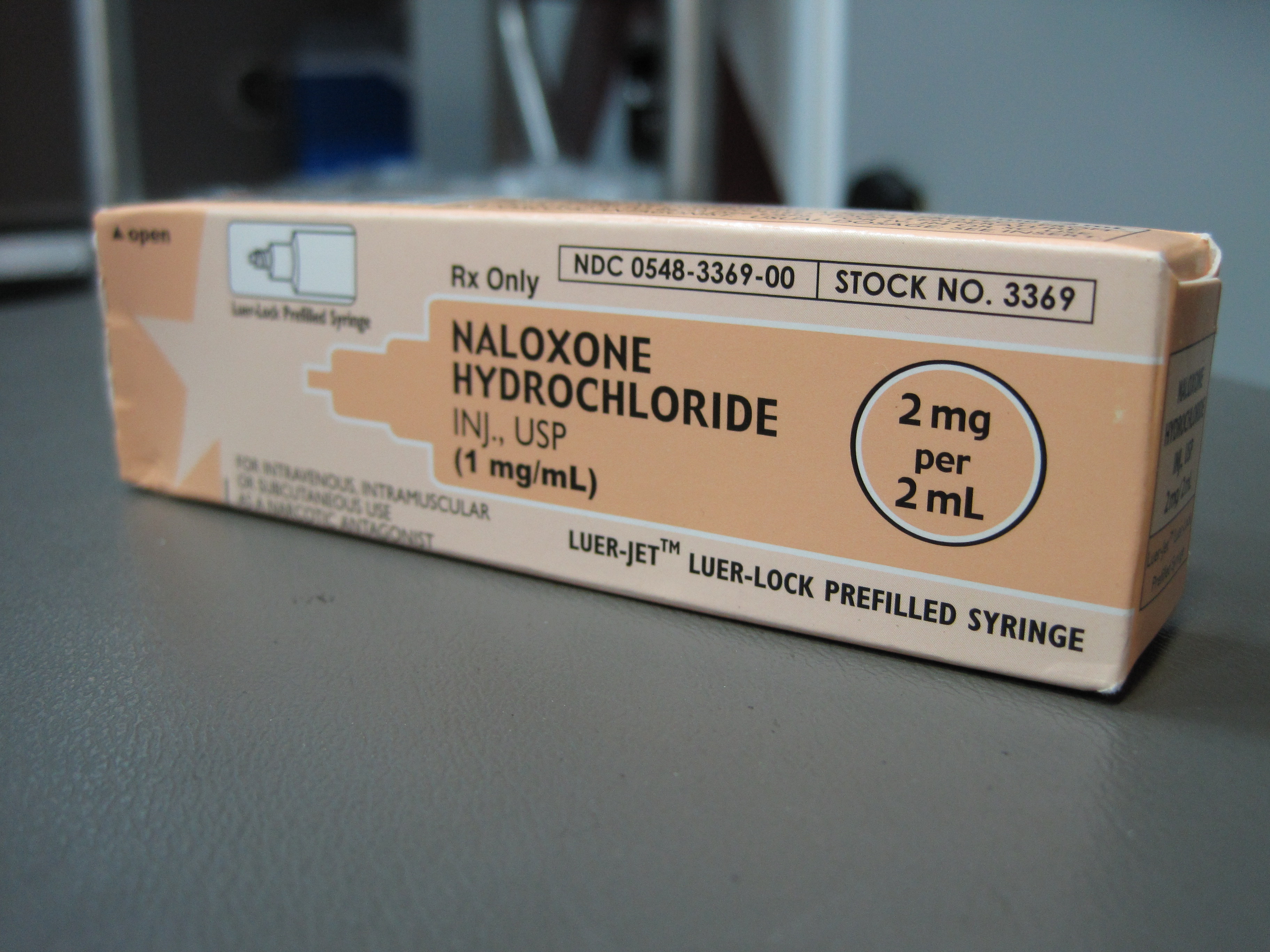
Naloxone HCl preparation, pre-filled Luer-Jet package for intravenous administration. (Creative Commons photo by Intropin)
A naloxone pilot project at Fred Meyer pharmacies down south could be expanding to Alaska. Eight stores in Washington have quietly rolled out access to a drug that stops opiate overdoses. The chain plans to eventually expand to all its locations. In Alaska, this largely depends on the outcome of Senate Bill 23.
Taelyn Coffee started using opiates about seven years ago. She says it started with OxyContin, after seeing her boyfriend and a family member become addicted to the drug. Then she switched to heroin when oxys became harder to find.
One night, she was hanging out with her friends in Juneau.
“We were laughing. We were high of course,” Coffee said.
She remembers one those friends had just finished shooting up and the girl’s lips turned blue. Coffee says they all panicked.
“Trying to shake her trying to get some kind of notion that she was still breathing or alive at this point. Nothing. We got nothing,” Coffee said.
She says they were afraid of being arrested if they took the girl to the hospital. Still, they knew they had to get their friend help. She was overdosing.
With the changes happening in Alaska that night could have gone differently. For starters, the good Samaritan law passed last year, could have protected Coffee and her friends when they called for help. And now, Fred Meyer pharmacies want to make it possible for people to have access to a drug that stops the overdose.
“We see naloxone as a fire extinguisher. We hope you never have to use it but it’s great to have just in case,” said Melissa Hansen, a pharmacy sales manager at Fred Meyer.
The Fred Meyer naloxone pilot project rolled out in October at some Washington stores, but it’s still getting off the ground. Other pharmacies that carry naloxone in Washington include Bartell Drugs, QFC and several independents. Hansen said people wanting to get their hands on the drug don’t have to go to a doctor.
“So they can just walk into any of our pharmacies and say, you know, I’d like to get some naloxone. Even if we know that they’re not the end user,” Hansen said.
Fred Meyer can’t prescribe naloxone sometimes called Narcan under its own pharmacy license. So they rely on something called a collaborative drug therapy agreement.
For people who need it, Hansen says this reduces some of the barriers to getting the drug. After a short consultation with a pharmacist, the person is given an injection kit or nasal spray. Medicaid and some insurance providers cover the expense in Washington. The out-of-pocket cost for the nasal spray is only $40.
Hansen thinks naloxone isn’t just for heroin users.
“The other thing we’re really working on is convincing the medical community that they’re not having risky prescribing habits but that these are risky medications,” Hansen said.
For example, cancer patients sometimes take high doses of opiates for pain. Hansen says it makes sense for them to also have naloxone and someone to administer it nearby.
Fred Meyer Pharmacies plan to start advertising the program at their Washington stores soon. The program expands to Idaho in February and eventually it could come Alaska. Whether Alaska Fred Meyers pharmacies will carry naloxone depends on if the state passes SB 23.
“As soon as this law passes in Alaska, they’re already on our radar to go up there,” Hansen said.
The law gives protections for people administering naloxone.
That night that Taelyn Coffee’s friend OD’d, the group got lucky. They were driving the girl to the hospital and performing CPR.
“Halfway through the trip we were just getting past the intersection from McDonalds and she came to,” Coffee said. “That first breath, I can’t even tell you how that made me feel, and everyone else was just so relieved.”
That was five years ago. Since then, Coffee has kicked her opiate addiction. She now works in an organization that helps women in domestic violence situations. She says naloxone isn’t going to stop heroin use in Juneau but it could save lives. She wouldn’t hesitate to have some on hand.
“I’ll be the first in line to buy some,” Coffee said. “I’m not an addict anymore but I know tons of people who are still.”
Fred Meyer representatives say the program could expand to their 11 pharmacies in Alaska by summer.
Close
Update notification options
Subscribe to notifications
Subscribe
Get notifications about news related to the topics you care about. You can unsubscribe anytime.