Community

Remembering the internment of 83 Alaska Natives during WWII

More than 70 years have passed since the U.S. government forced the people of Atka from their homes to an internment camp on Killisnoo Island in Southeast Alaska.

To protect them from Japanese invasion during World War II, they were moved 1,600 miles from the Aleutian Islands to an old whaling and herring village across the water from Angoon on Admiralty Island.

They have not been forgotten. A group of Southeast Alaskans traveled to Killisnoo last weekend to memorialize the Aleut people of Atka.

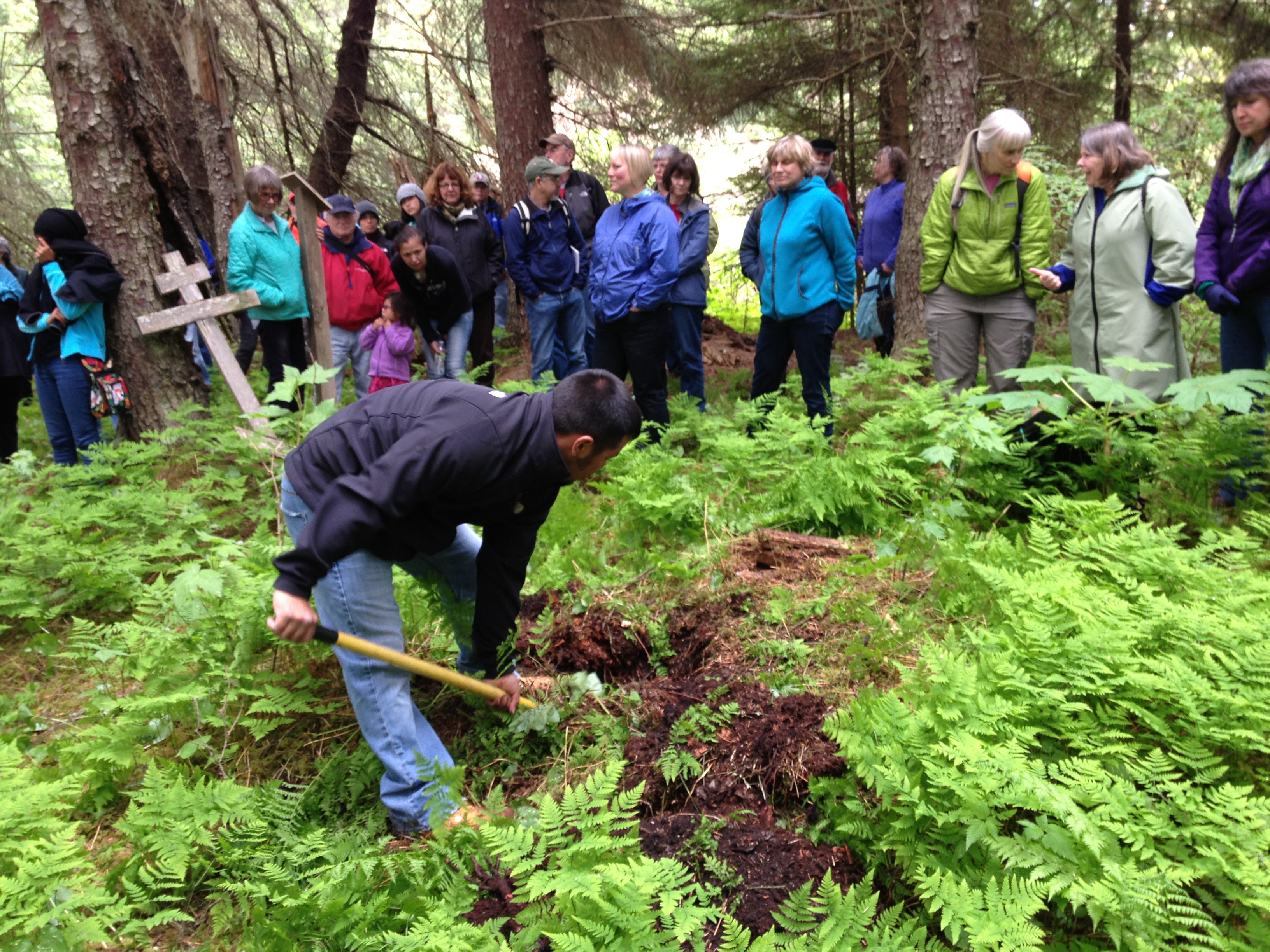
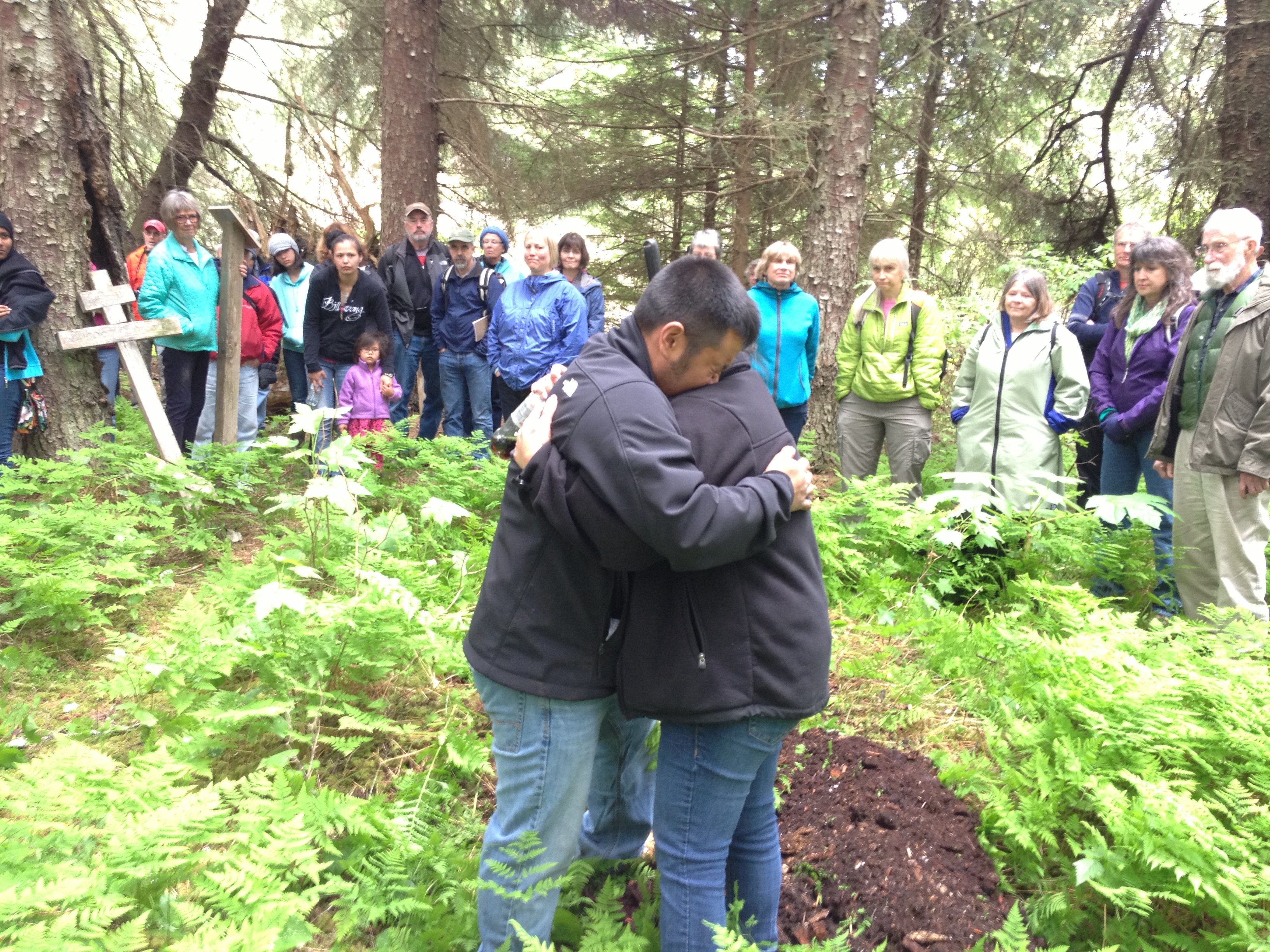
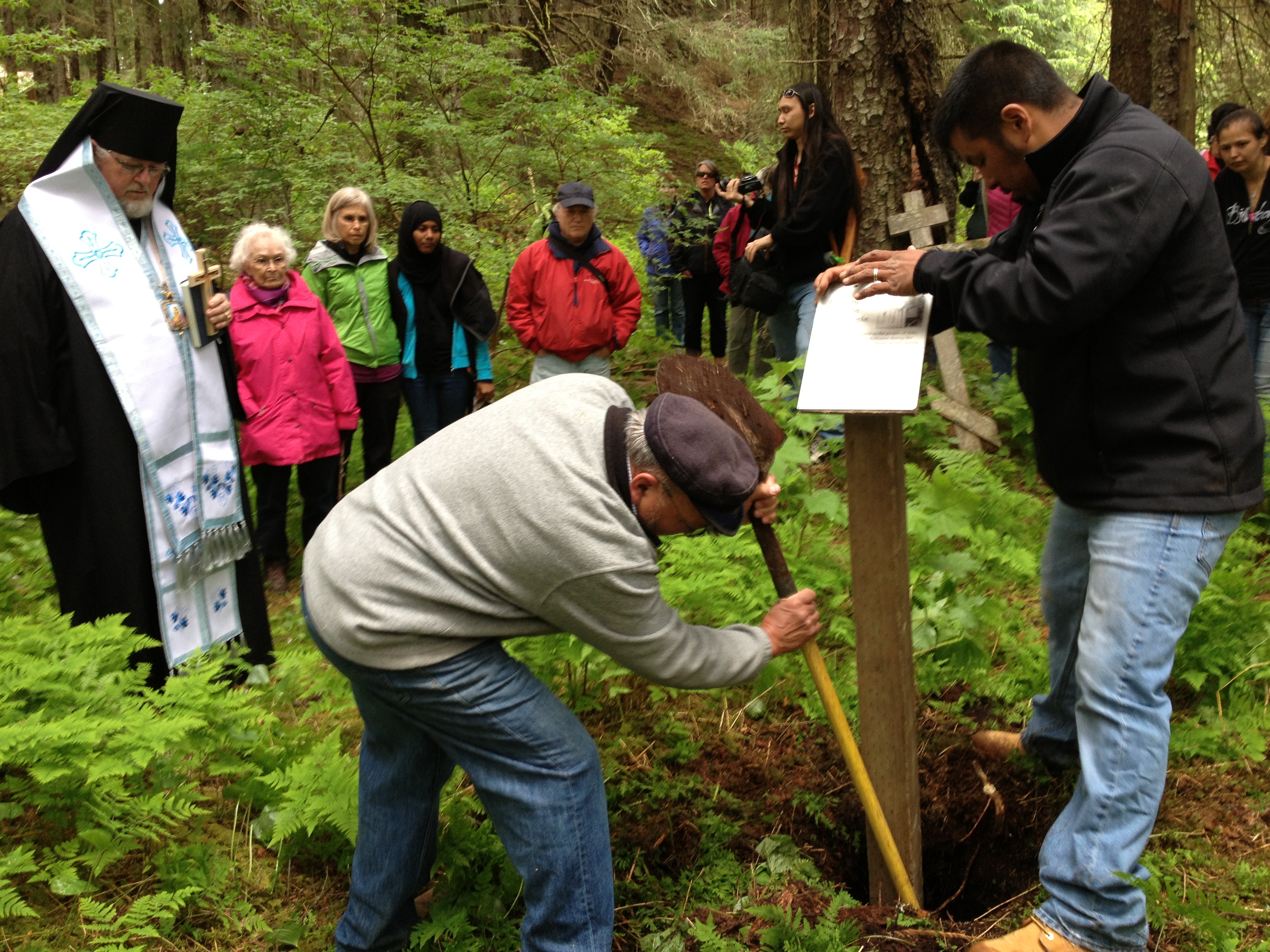
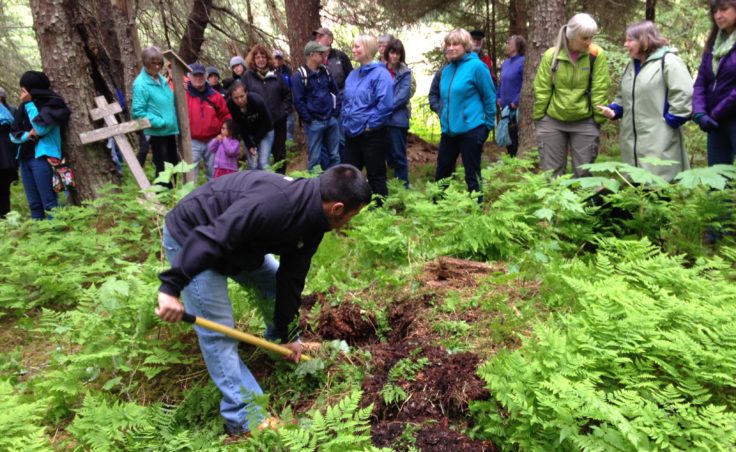
While digging a hole for a memorial plaque, Martin Stepetin breaks down in tears. His wife, Ann, comforts him with a long embrace before he continues digging. He said he felt like he was digging a grave.

Stepetin is from St. Paul in the Pribolof Islands. His grandparents were evacuated in June 1942 and brought to an internment camp in Funter Bay, about 50 miles north of Killisnoo. His father was born there.

He has come to Killisnoo with about a hundred people on a Friends of Admiralty Island tour. Most are from Juneau, some are past and present Angoon residents.

Though Stepetin’s family wasn’t in Killisnoo, he feels a profound connection to the Atka people interned here.

“They’re Aleuts just like us and we’re related to them and they went through very similar hardships like we did and it changed our entire history,” Stepetin says.

Stepetin heard about the Funter Bay internment camp all his life growing up in St. Paul.

“The things that come to my mind are the stories of the babies that were born there and didn’t have the medical care to live and they were just babies and they died because they couldn’t be taken care of,” he says tearing up.

Stepetin now lives in Juneau and visited Funter Bay for the first time three weeks ago. When he heard about the Friends of Admiralty trip to Killisnoo, he immediately joined.

“Coming here is the closest thing you can do to paying your respects. It’s the ultimate way for me to put closure on it,” Stepetin says.
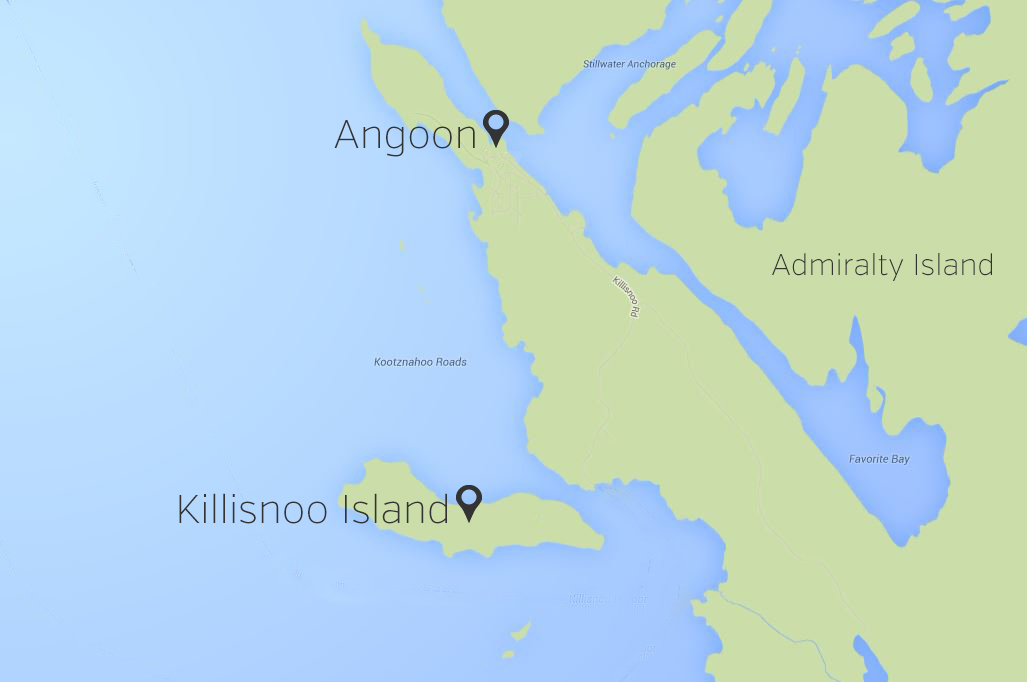
Map of Killisnoo Island and Angoon, Alaska.K.J. Metcalf helped start Friends of Admiralty Island in 1997 to advocate for the island’s cultural, historic and wilderness preservation. He was the first U.S. Forest Service ranger when Admiralty Island was designated a National Monument in 1978. Metcalf and his wife lived in Angoon for 18 years.

Funter Bay was more isolated that Killisnoo. Metcalf says the Atka Aleuts interned in the old Killisnoo herring factory had Tlingit neighbors a few miles north.

“These people were not provided any assistance at all – no medical help, no clean water, no sanitary conditions,” Metcalf says. “And the people of Angoon were incredibly important in their survival because they brought goods over and they helped take care of them.”

Dan Johnson grew up in Angoon hearing stories from his grandparents about the people of Atka and their time at Killisnoo. He says the two communities became close.

“They interacted on a daily basis so our people always talk about remembering the people that were here, and how they worked and helped each other. It wasn’t just our people helping them. It worked back and forth,” Johnson says.

While Johnson says the situation in Killisnoo was deplorable, he was told of lighter times as well.

“The happy moments, I guess, my grandparents used to talk about is that the people that were brought here loved their movies. Whenever they knew there was a new movie in town, they’d come rowing over to Angoon in their dories,” he says.

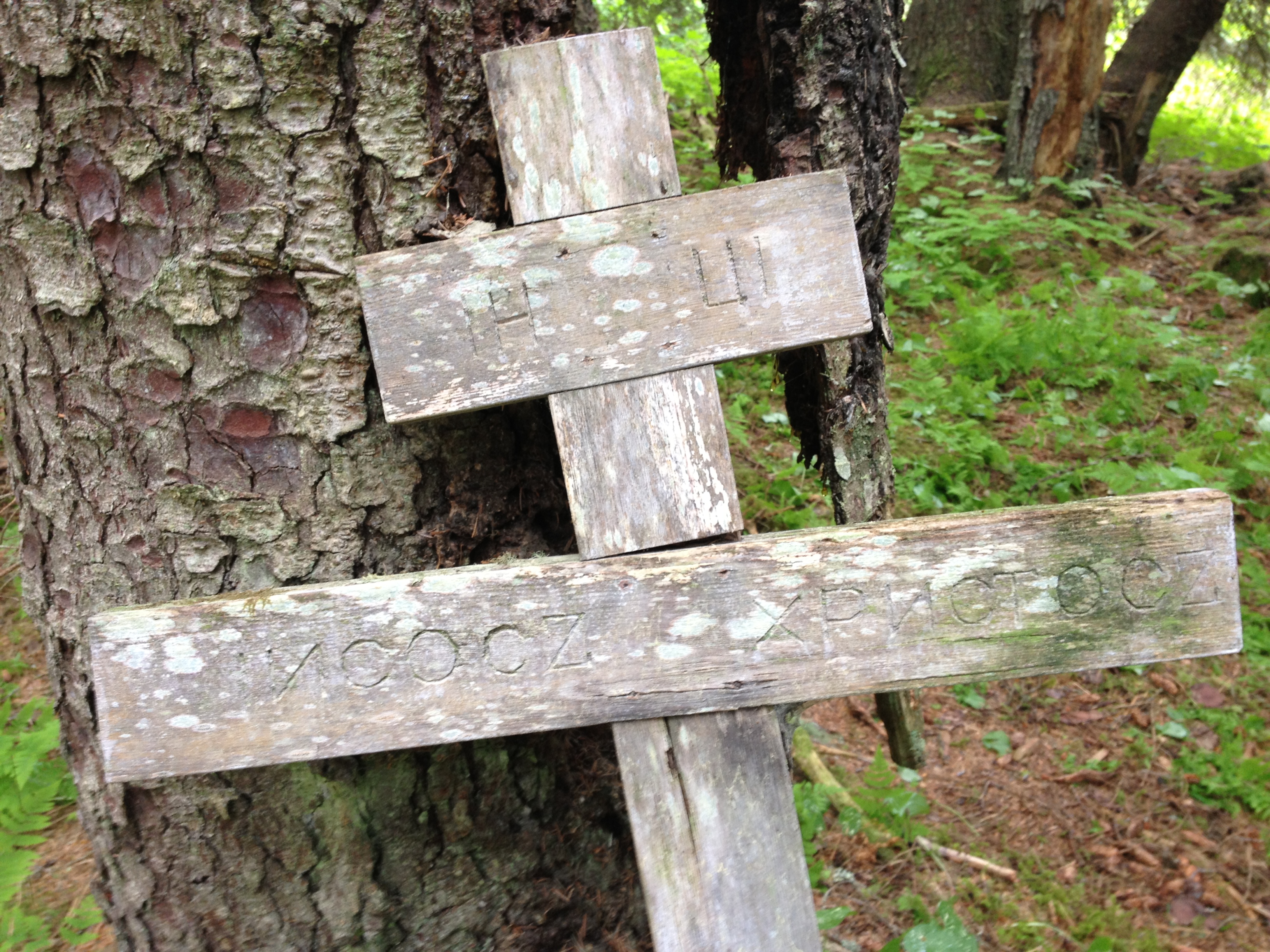
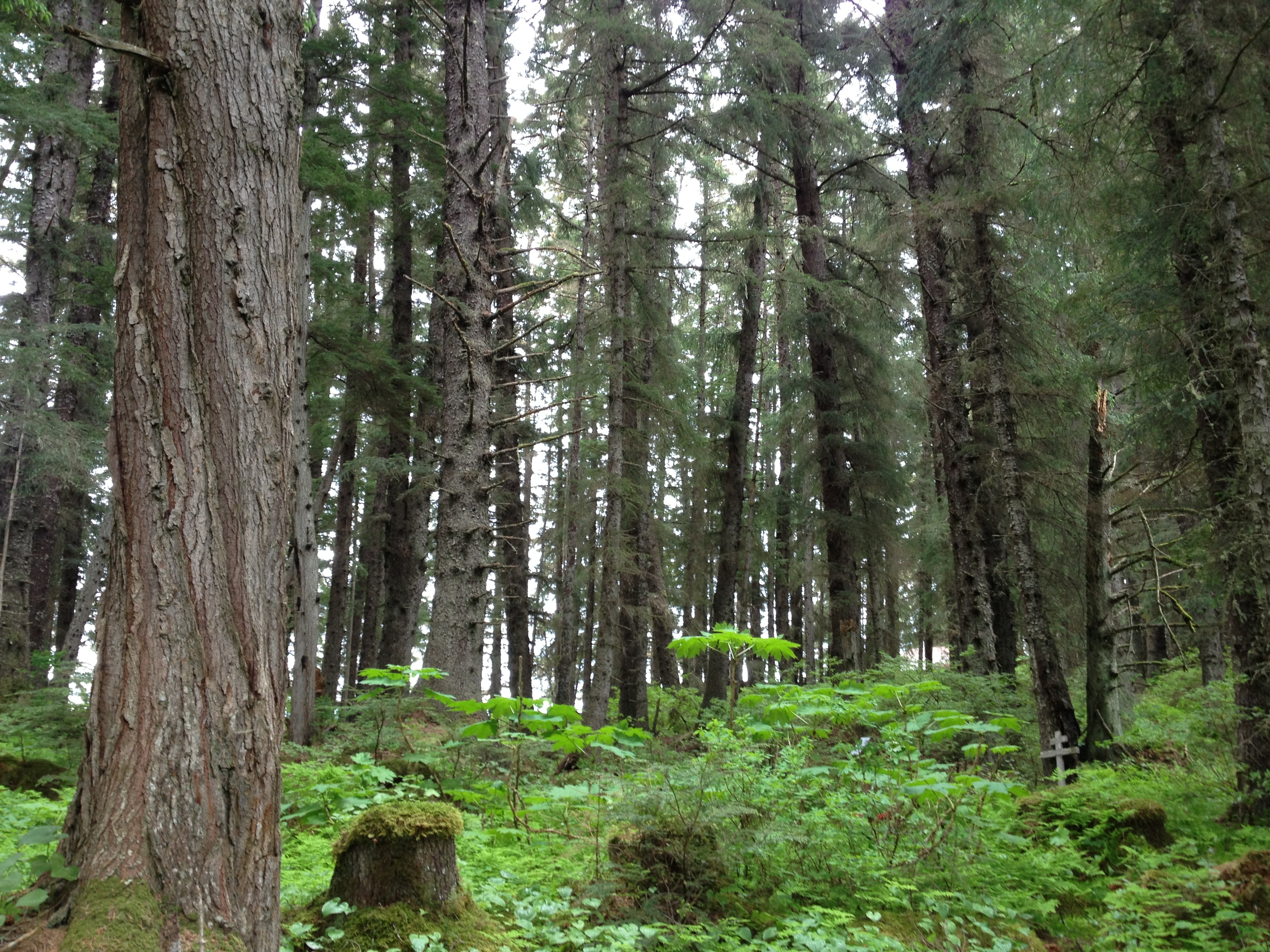
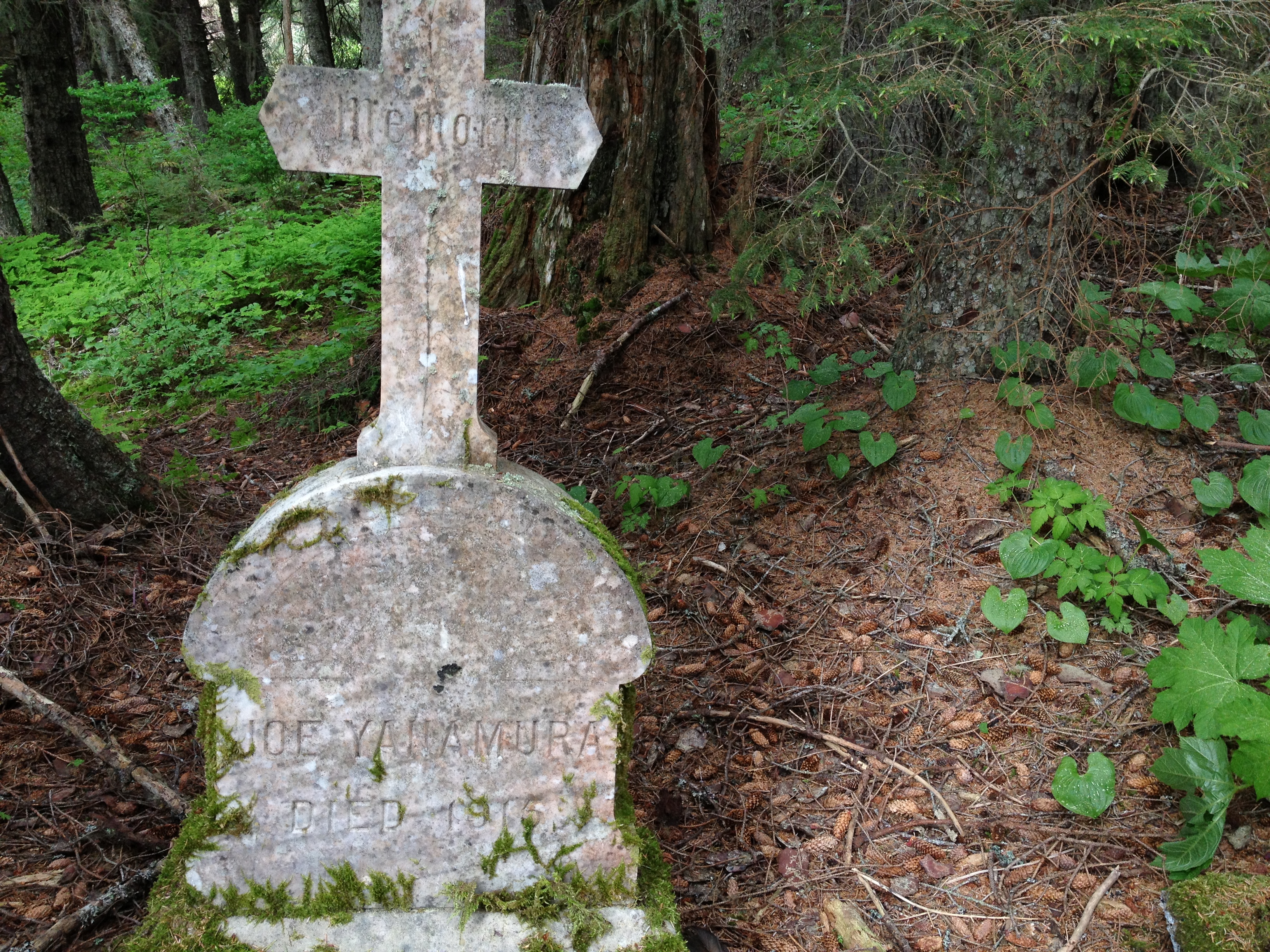
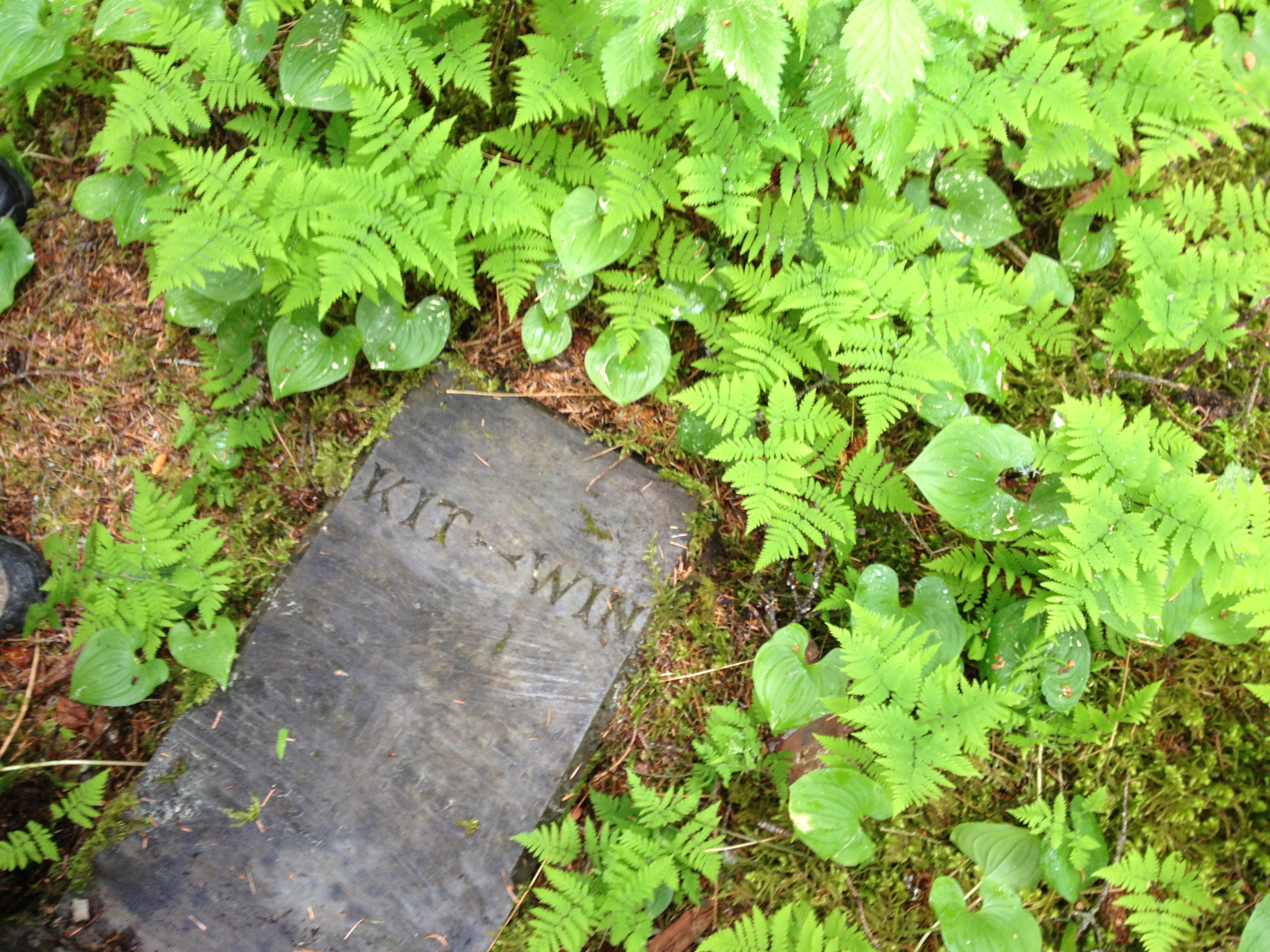
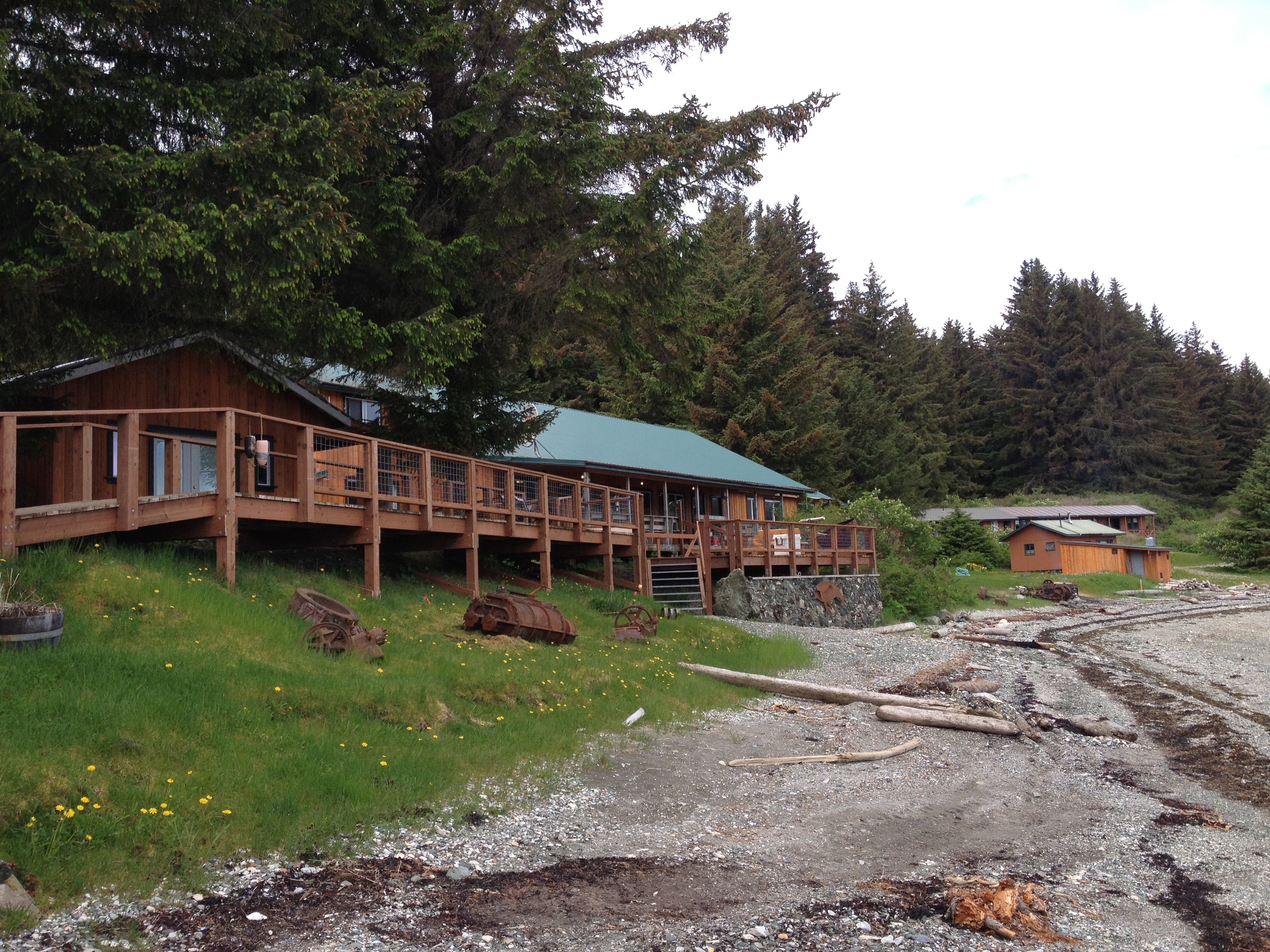
Few signs of the Killisnoo internment camp remain. The island now has a sport fishing lodge. It’s dotted with private homes, but on the south side is the cemetery where five wooden Russian Orthodox crosses mark the graves of Atka villagers.

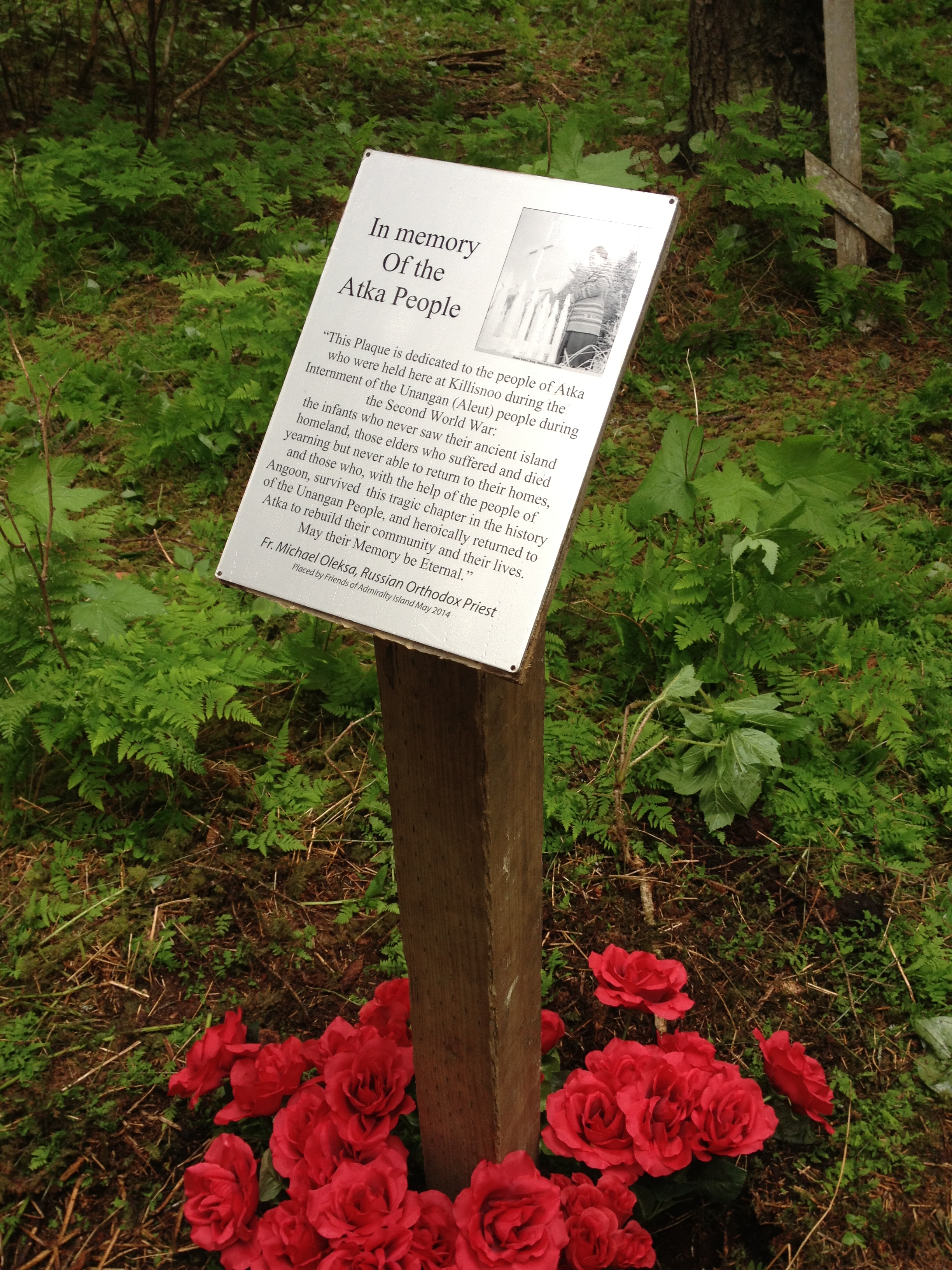
The new memorial plaque sits atop a wooden post among the graves. It tells the story of the Atka people in Killisnoo.

When the plaque is in place, Joe Zuboff cries out a Tlingit chant. Zuboff is of the Deisheetan Clan (Raven/Beaver) of Angoon and is caretaker of the Raven House. His chant stems from the story of a crab apple tree during a big storm.

“The tide came really high and it washed this crab apple tree away and all we could do is watch this crab apple tree drift away,” Zuboff says. “And this is how we refer to our loved ones that we lose. There’s nothing we can do but watch them float into the other world.”

A history of the World War II Aleut Relocation Camps in Southeast Alaska by Charles Mobley indicates 83 people from Atka were brought to Killisnoo in 1942. Before returning to Atka three years later, 17 of them died.

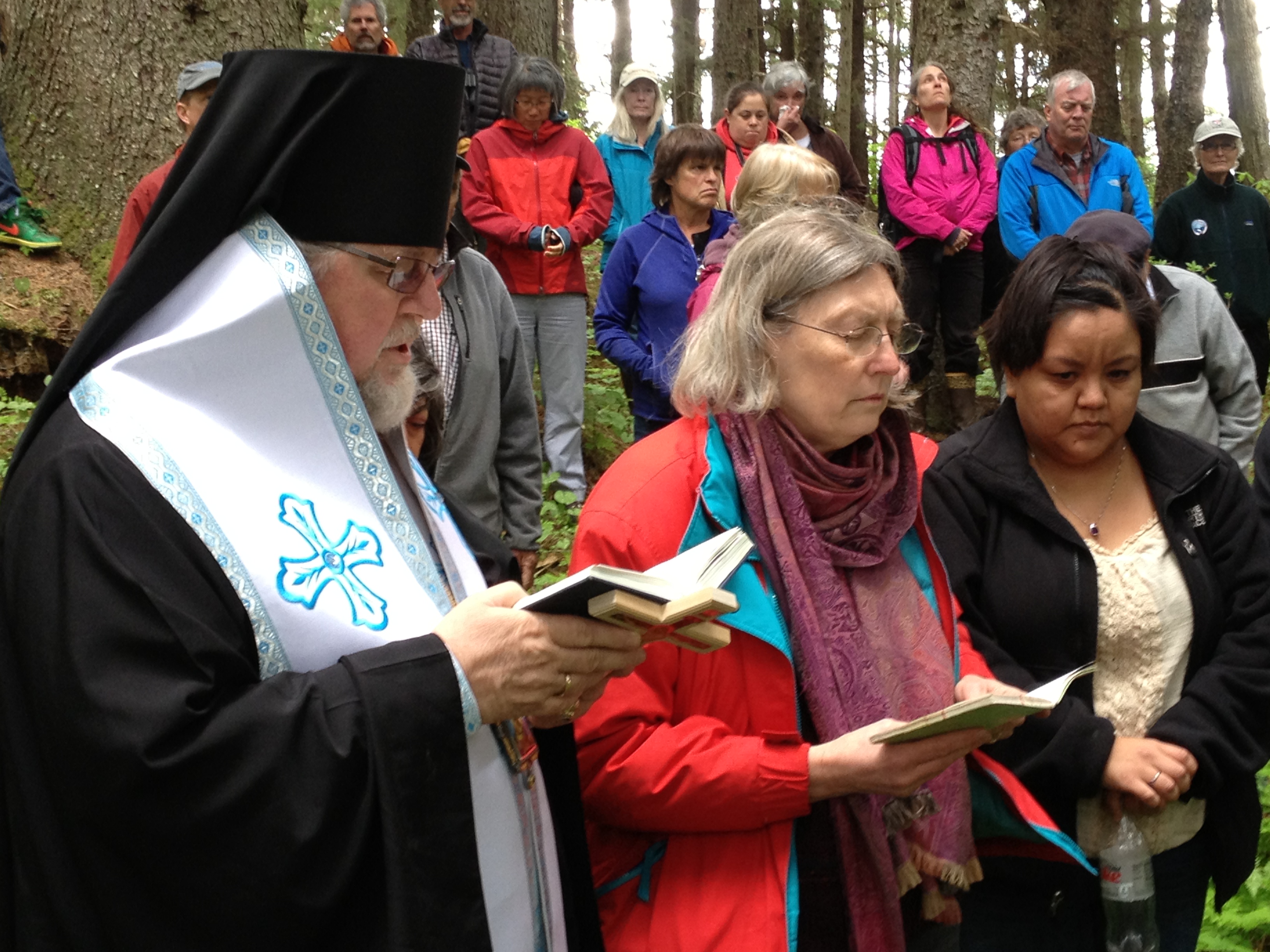
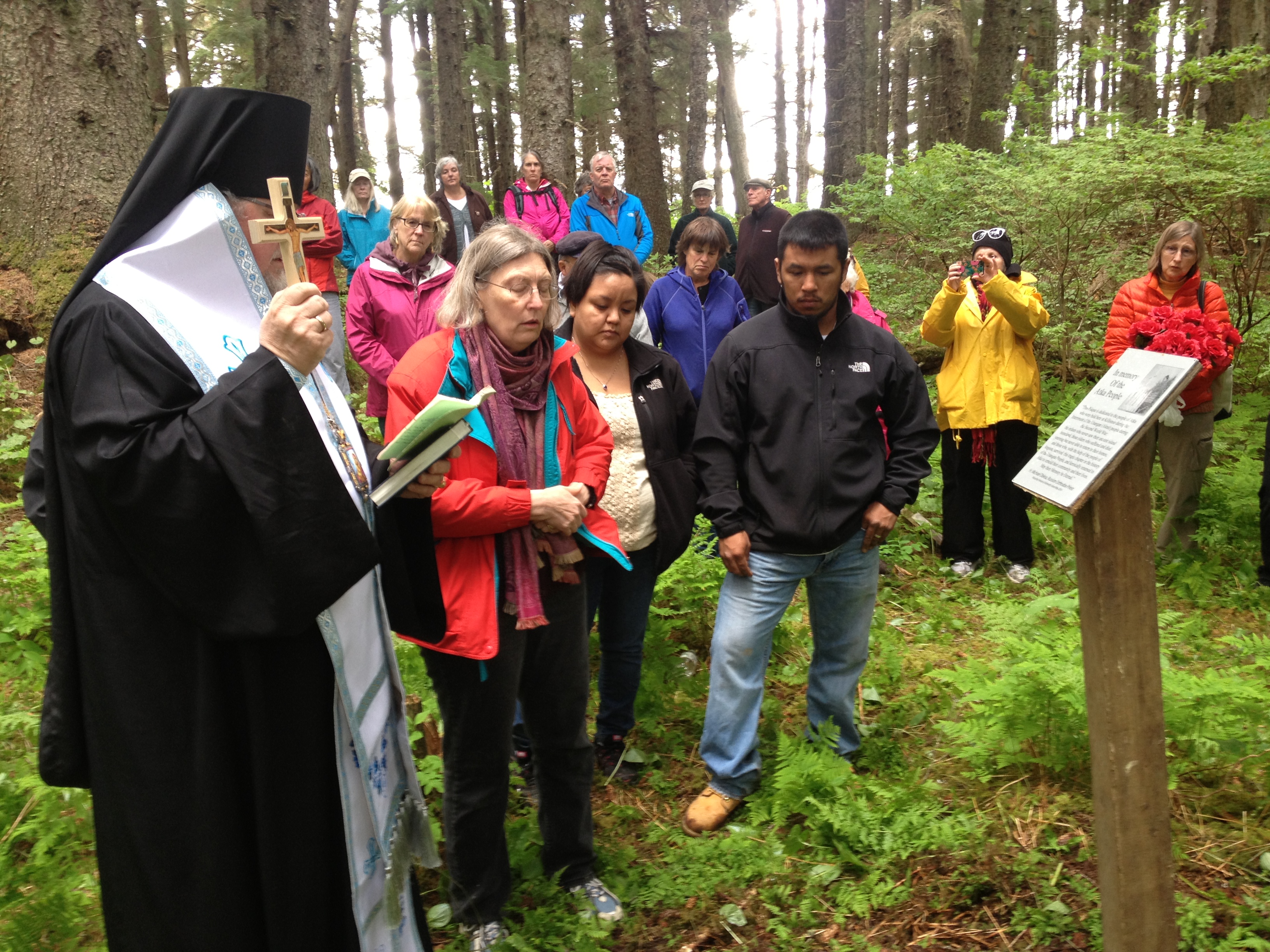
Back at the cemetery, Russian Orthodox Bishop David Mahaffey of the Alaska Diocese sprinkles holy water on the memorial plaque and the area around it. He leads a blessing of the graves.

The plaque in memory of the Atka people looks east. It’s Orthodox tradition for altars and memorial graves to face the rising sun.
Update: Earthquake shakes Southeast Alaska

Update | June 4 at 12:55 p.m. 

The epicenter apparently was near Rendu Inlet between the east and west arms of Glacier Bay. While there was no tsunami, Tom VandenBerg says 4 a.m. was kind of exciting in the town of Gustavus.

“Everything was shaking a little bit and our houses were rocking back and forth.”

VandenBerg is Supervisory Park Ranger for Glacier Bay National Park and Preserve. He says two groups of researchers up the east and west arms of the bay radioed some interesting accounts.

“We had a group of bear researchers up near Russell Island, who are staying on our ranger station, which is a floating raft. And they reported rocks coming down from some of the hillsides, some strange sounds from ice bergs and some rolling bergs and just kind of an eerie experience but no major outward damage,” VandenBerg says.

A backcountry ranger crew is camped near McBride Glacier in the Muir Inlet side of the bay.

“They said the McBride Glacier just started calving, pretty incessantly, apparently for about 15 minutes straight, so lots of ice coming out of that inlet probably over the next couple of days.”

VandenBerg says there were no signs of damage in the park.

Update | June 4 at 7:15 a.m.

The earthquake was about 49 miles west of Haines, and 60 miles west of Skagway.

Haines police reports no calls when it struck, but in Skagway, police dispatcher Willeke Burnham say she received a couple.

Skagway PD is close to the water. Burnham says it felt like she was on a boat.

“The building shook quite a bit and then it felt like I was on the water. And it lasted pretty long too, maybe about a minute, minute and a half,” she says.

Small aftershocks were still being felt in Southeast Alaska two and a half hours after the initial quake, according to the Alaska Earthquake Information Center.

Update | June 4 at 5:39 a.m.

The Alaska Earthquake Center tweeted this update:


The National Tsunami Warning Center says there is no tsunami danger at this time.

If you felt the earthquake, you can report your observations to the USGS here.

Original Post | June 4 at 4:43 a.m.

An earthquake shook some Southeast Alaska residents out of bed early Wednesday morning.

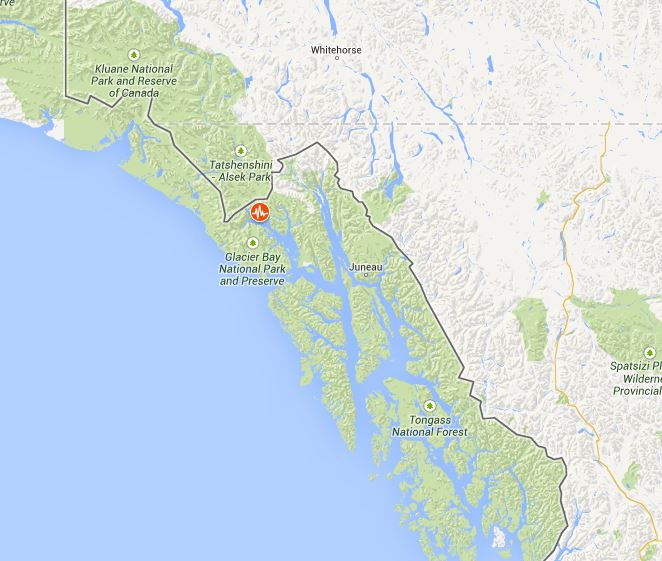
The 5.8 preliminary magnitude quake with a depth of about 14 miles hit just before 4 a.m., according to the Alaska Earthquake Information Center. It was centered about 100 miles northwest of Juneau, 66 miles northwest of Gustavus and 48 miles west of Haines. It was felt in the capital city and other Southeast communities.

Several smaller aftershocks were recorded in the region as well.

There were no immediate reports of damage.

This is a developing story. Check back for details.

The epicenter was roughly 100 miles northwest of Juneau. (Map courtesy USGS/Google Public Alerts)


Juneau man solves mystery of governor’s mansion photo

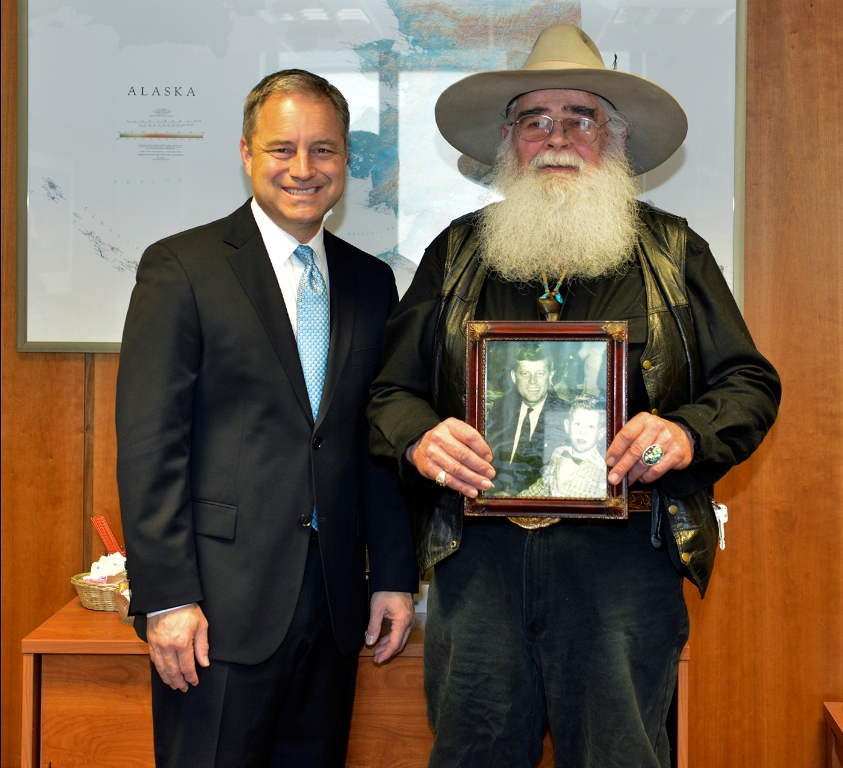
Gov. Parnell and Terry VanLeuven with Kennedy picture. (Governor's office photo)
Gov. Parnell and Terry VanLeuven with Kennedy picture. (Governor’s office photo)

The mystery of a picture found in the attic of the Alaska Governor’s Mansion has been solved, thanks to a Juneau resident.

Terry VanLeuven owns the original black and white picture of the late President John F. Kennedy shaking hands with a smartly dressed little boy.

Gov. Sean Parnell’s office last week asked the public if anyone could identify the child, thinking he was an Alaskan. During the 1960 presidential election, JFK made a campaign stop in Alaska.

When VanLeuven saw the picture in the Juneau Empire last week, he called the governor’s office and KTOO. He met with Parnell on Monday to tell him the story.

VanLeuven’s late wife took the picture when Kennedy was in Oregon, probably during a 1960 campaign stop. The boy in the picture is Brian Kennedy, who was 8 years old at the time and the son of a Myrtle Point, Ore. logging family.

VanLeuven moved from Oregon to Alaska 33 years ago, and brought the picture with him. It still hangs in his home.

In 1986, he gave a framed copy to newly elected Gov. Steve Cowper. He had his 21-year-old daughter Tracy present it to Cowper at the annual Christmas open house at the governor’s mansion.

Parnell spokeswoman Sharon Leighow says the picture will go to the Alaska State Museum and be included in the Cowper collection.

VanLeuven, who will be 76 in August, says he was really happy to hear that during his meeting Monday with Gov. Parnell.

 “Almost made me cry. I have no idea how that picture stayed with me 50 years in all the places I’ve been all over Alaska and some of the stuff I left behind, but I had that picture,” he says. “I guess that picture meant a lot to me or something, because I never lost it, you know.”

VanLeuven says the original picture was taken at the community building in Coquille, Ore.

Kennedy was the 35th U.S. president, elected in November 1960.  He was assassinated on Nov. 22, 1963 in Dallas, Texas.

No primary, only general election contest for Juneau legislators

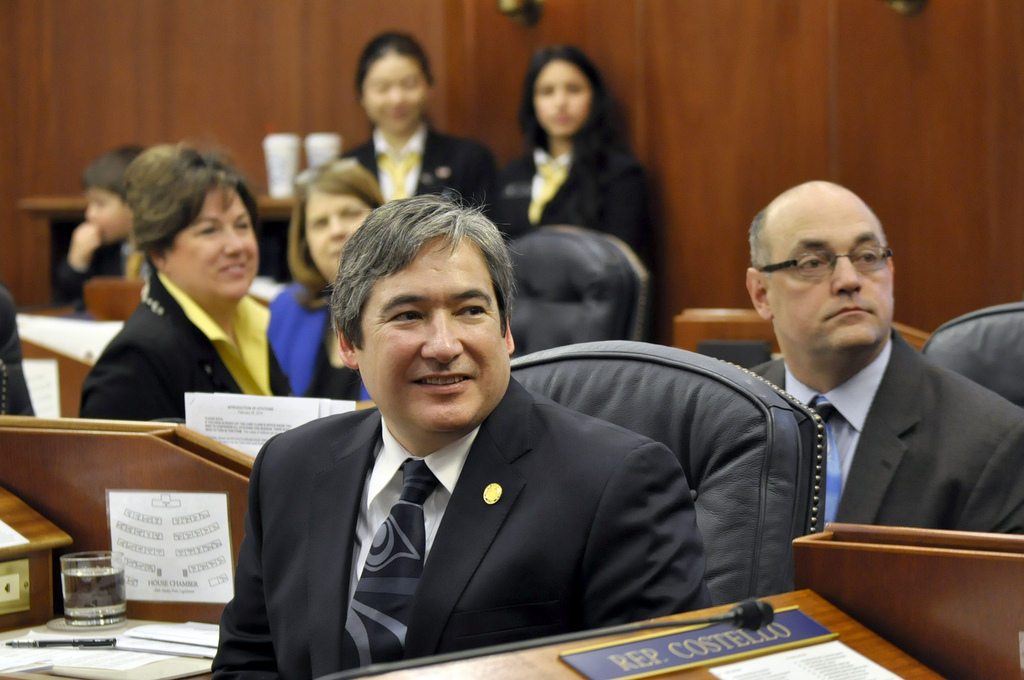
Rep. Sam Kito III
Sam Kito lll
Sen. Dennis Egan, D-Juneau, addresses the Alaska Senate, March 27, 2014. (Photo by Skip Gray/Gavel Alaska)
Sen. Dennis Egan
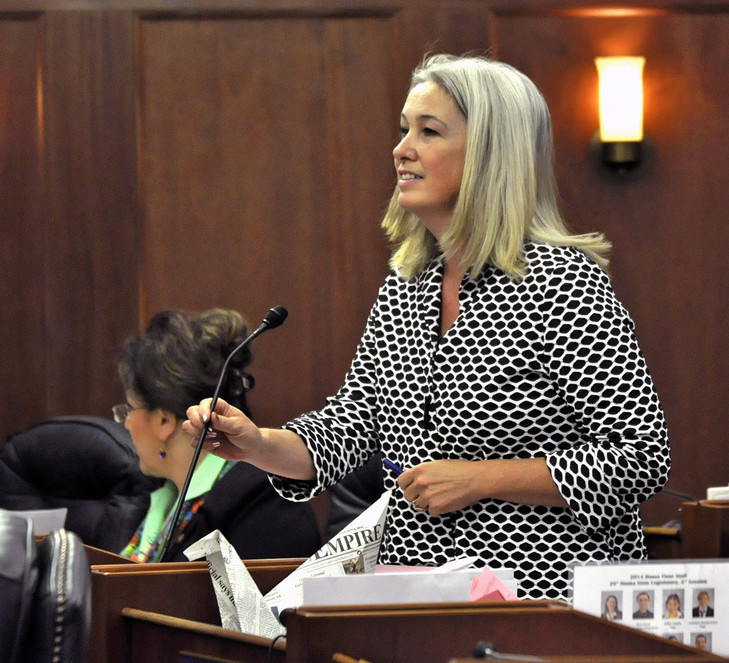
Rep. Cathy Munoz
Rep. Cathy Munoz

All photos by Skip Gray.

All three Juneau legislators will be challenged in the November general election, but not in the August primary.

The candidate filing deadline was 5 p.m. Monday.

George McGuan, 33, filed as a Democrat to run against Republican Rep. Cathy Munoz for House District 34 in November. Munoz currently represents House District 31, which encompasses the Mendenhall Valley and out the road. With redistricting, the number has changed, but not the geography.

Peter Dukowitz, 44, plans to run in November as a Republican against Democrat Sam Kito III for House District 33 (now HD 32). Kito was appointed in February to fill out the term of Beth Kerttula, who resigned her seat in January to take a fellowship at Stanford University. Kito’s new House district will include Juneau, Haines, Skagway and Gustavus.

Juneau Sen. Dennis Egan, a Democrat, will be challenged by Republican Tom Williams. Egan’s Senate District P will change to district Q in November, also encompassing Haines, Skagway, Gustavus and Juneau.

The primary is August 19. With no primary contest, the candidates can concentrate on the general election campaign.

Juneau Jet Ski riders practice personal watercraft safety at Auke Lake

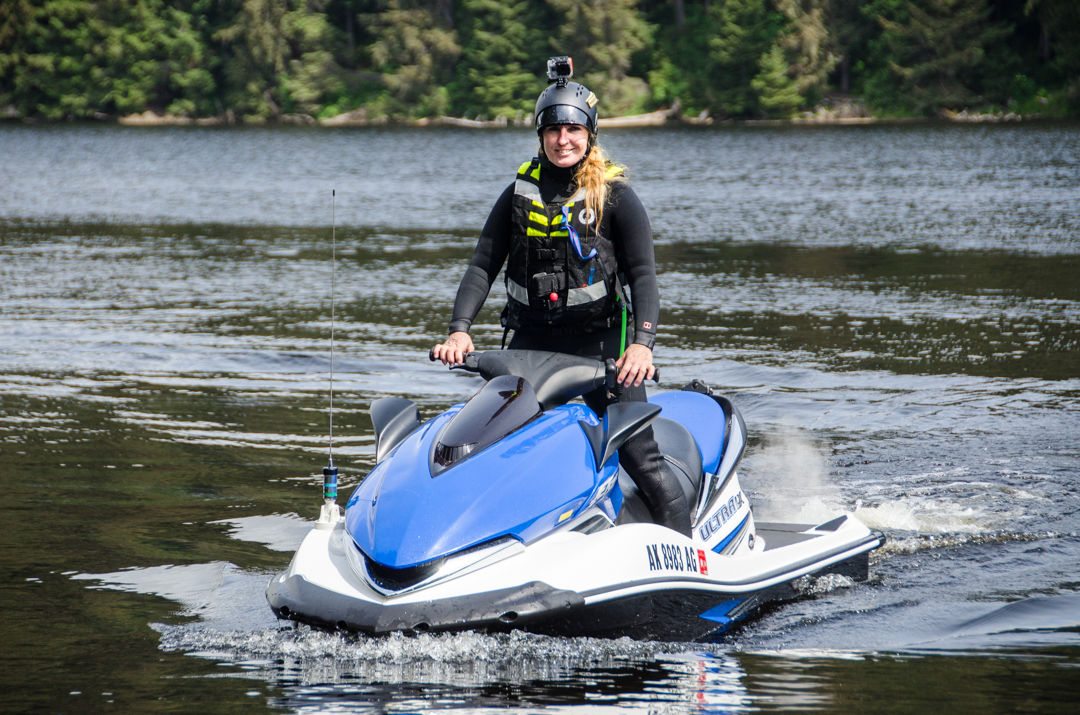
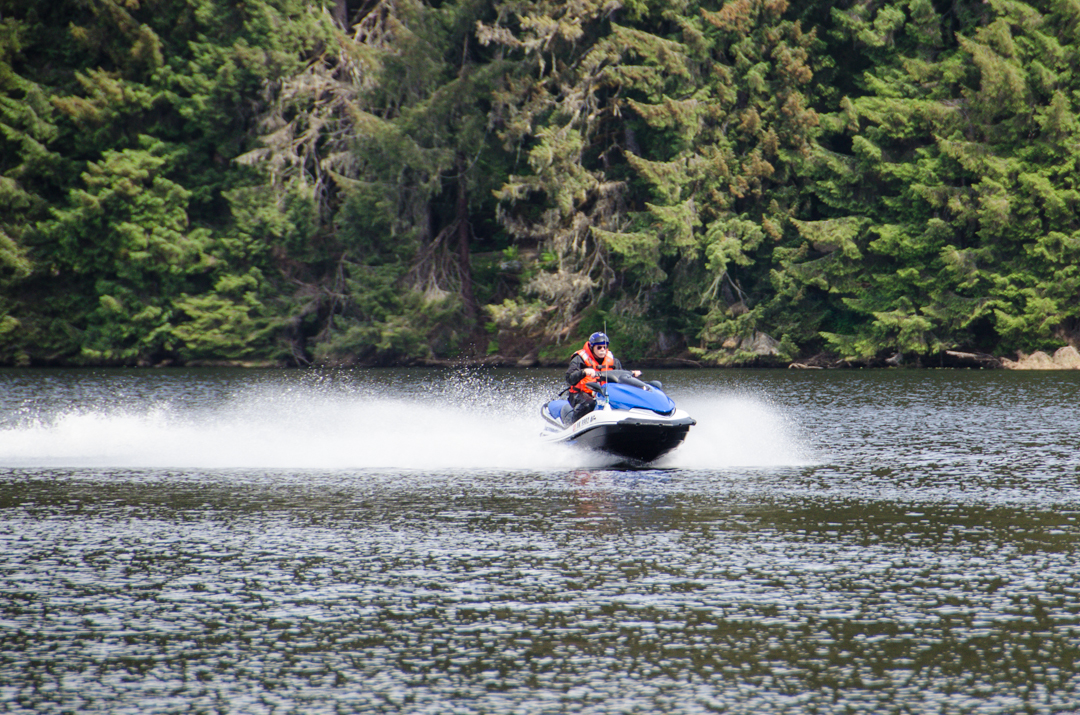
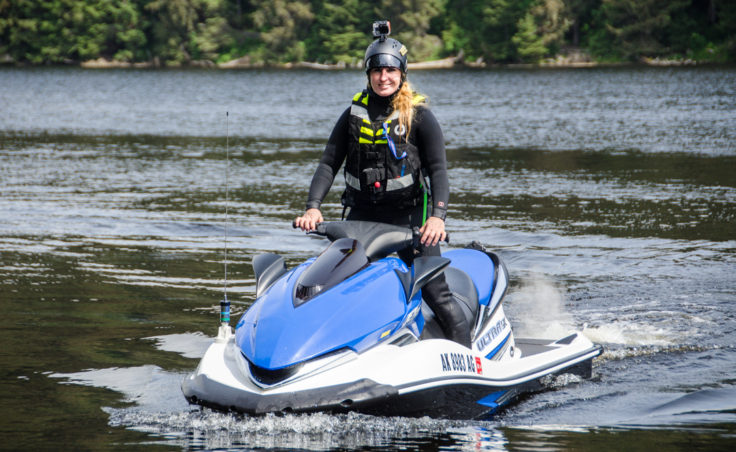
A familiar summer sound returned to Auke Lake this weekend as a group of Jet Ski riders took to the water.

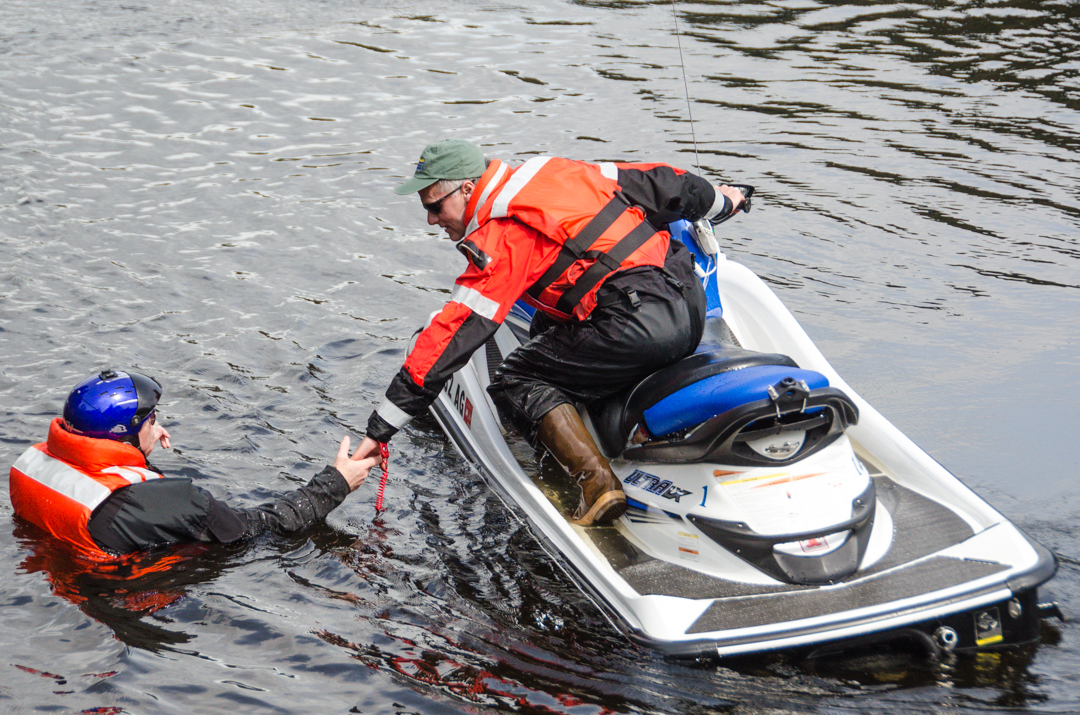
The outing wasn’t just for fun.  The handful of riders were there to learn about personal watercraft safety.

The training is part of Juneau’s plan to prevent accidents like the one in 2012 when high school student Savannah Cayce was severely injured while being pulled on an inner tube by a Jet Ski on Auke Lake. Two days later, she died of her injuries.

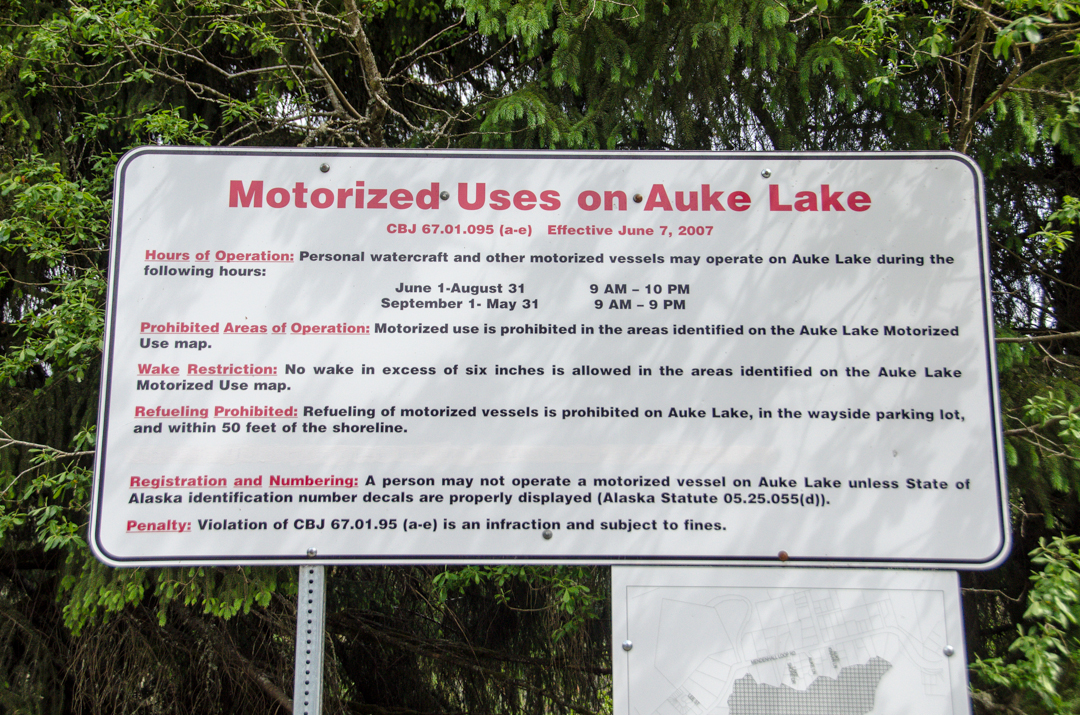
The Juneau Assembly later rejected a proposal to ban motorized watercraft on the lake,  opting instead to improve signage and water markers, and provide educational opportunities.

That’s where Shawn Alladio comes in. Alladio founded the boating safety education company K38 Water Safety. She works with boater education groups worldwide to teach safe practices.

“I think the personal watercraft community needs to take responsibility for their behavior and make sure that they’re accountable in their preparation, in their boat operation and in the safety of their passengers. They really need to take that seriously.”

Alladio says banning watercraft doesn’t solve the problem, it just causes users to move to new areas and continue bad habits. She says boater education helps save lives.

“I think that any time you have a problem the best thing is to approach it with solutions rather than ignore it or create a ban. I don’t care what the activity is,” Alladio says. “Because if a community bans a product or an activity, those users are not going to stop engaging an activity that they’ve invested money and time into. They’re going to migrate to other areas. And if those problems are not addressed, those problems from those behaviors of those enthusiasts will migrate to other areas. So it’s not really a solution to create a ban. The solution is to create reasonable and capable solutions that can be integrated into the waterway use.”

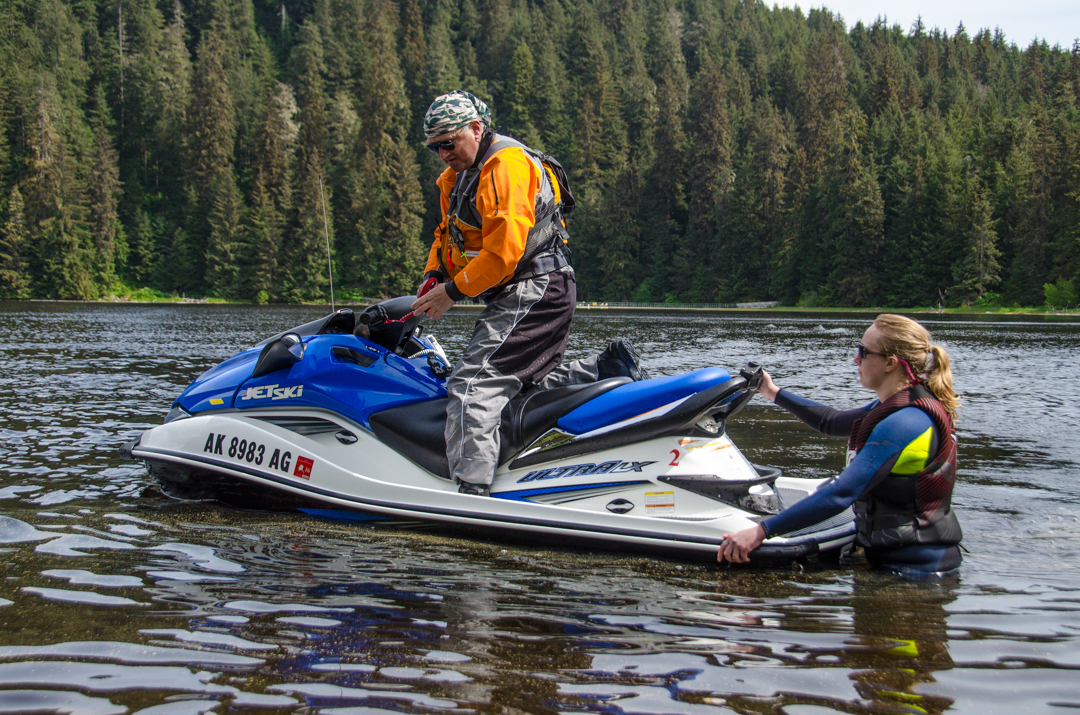
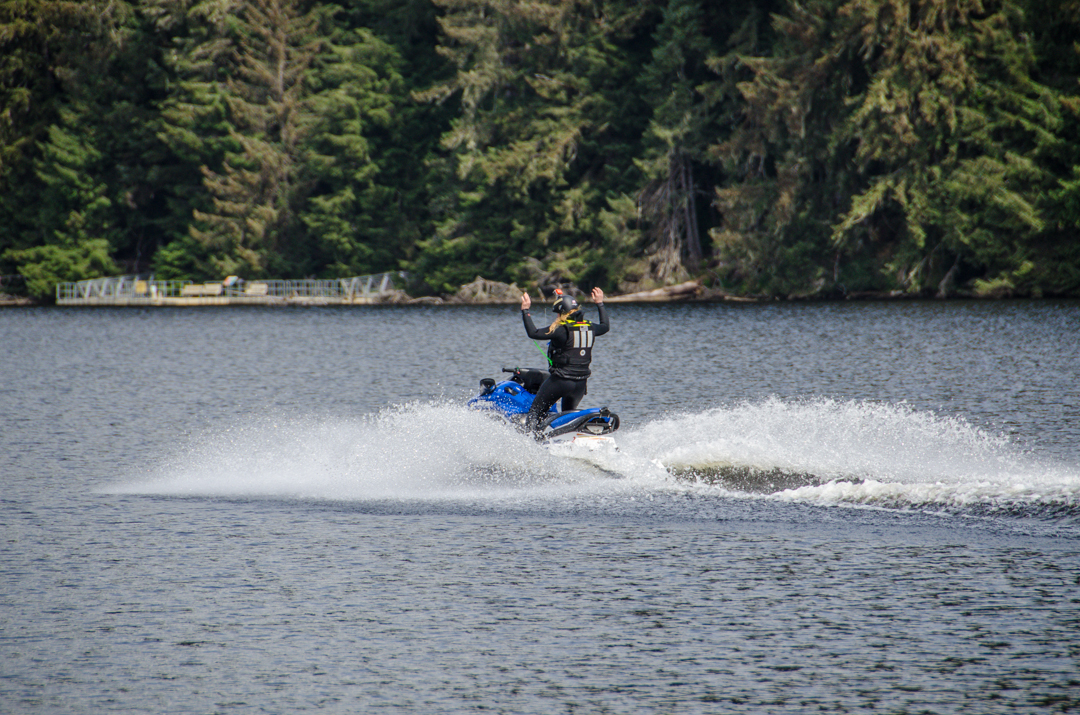
After a day in the classroom going over rules and regulations, Alladio spent Sunday on the lake with the riders demonstrating good techniques.

Juneau resident Noreen Folkerts has been riding jet skis for years, mostly on the ocean. She and her husband Mike both work for the Coast Guard and joined in the training session.

“These small boats are so easy just to jump on and hit the gas. They give you a thrill. It’s a thrill to ride them and it’s a thrill to ride them fast,” Folkerts says. “And it’s not necessarily the boat that’s the issue, it’s the people that get behind the steering and the attitude of those people. So if we push the safety part of it, it’s just going to be a safer activity for everybody.”

The workshop was a partnership between the Juneau Department of Parks and Recreation, the Coast Guard and the American Watercraft Association.

Parks and Recreation Director Brent Fischer says the department will gather data throughout the summer on lake use. A report is due to the Juneau Assembly this fall when members will again discuss the management plan.

Update: Juneau water watch; Salmon Creek back on line

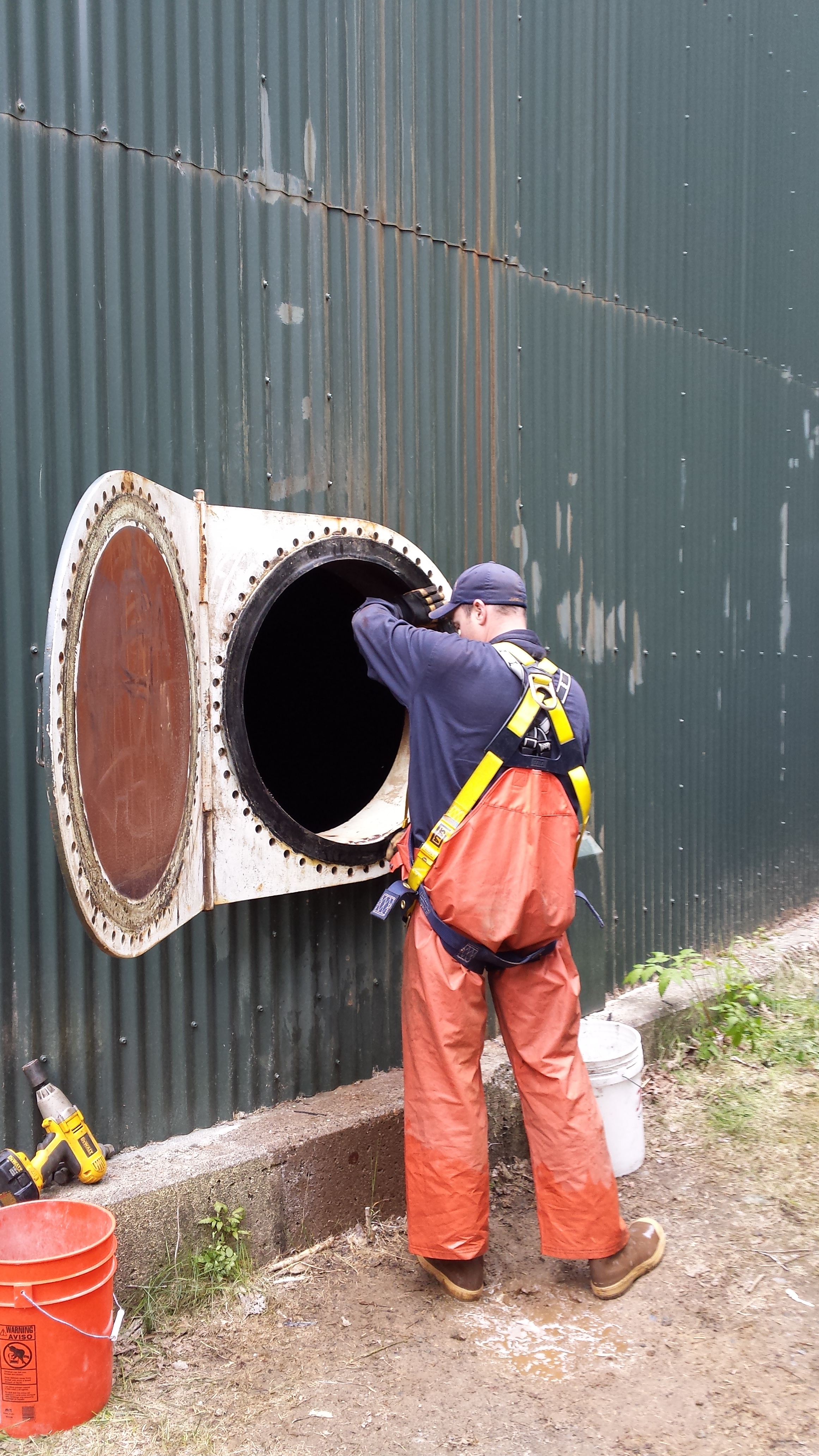
Steve Locks, Water Utility Operator, at the Salmon Creek water storage tank. (Photo courtesy Kirk Duncan)

Update: June 2, 2014

Juneau’s water supply is just about back to normal.

Salmon Creek reservoir is again part of the system. Over the weekend, the Salmon Creek water storage tank was filled and is now pushing water out to Mendenhall Valley reservoirs.

Salmon Creek was off line the last three weeks, due to sediment in the water. Valley reservoirs have been low, prompting the city to ask residents to conserve water.

The city and borough lifted that request Monday morning, with the reminder to monitor consumption. Don’t allow faucets to run if water is not being used.

Original story: May 30, 2014

Juneau residents should continue to conserve water this weekend.

But by next week, things should be back to normal, says CBJ Public Works Director Kirk Duncan.

Turbidity in Salmon Creek has dropped and the reservoir will soon be part of the city water system again.  Duncan says the water division started filling the the 2.3-million gallon Salmon Creek storage tank on Friday.

“It’ll take over the weekend to fill that up and that will start pushing more water out to the other valley reservoirs, so we anticipate Monday we should be in pretty good shape,” he says.

In the meantime, Duncan says, the reservoirs that feed the Mendenhall Valley are still lower than he likes. He hopes residents will continue to voluntarily conserve water until Salmon Creek is pumping water into the system.

Duncan admits there’s no crisis, but says a major event, such as a fire in the valley, could create one.

Site notifications
Update notification options
Subscribe to notifications