Community

School board will choose between three finalists for superintendent

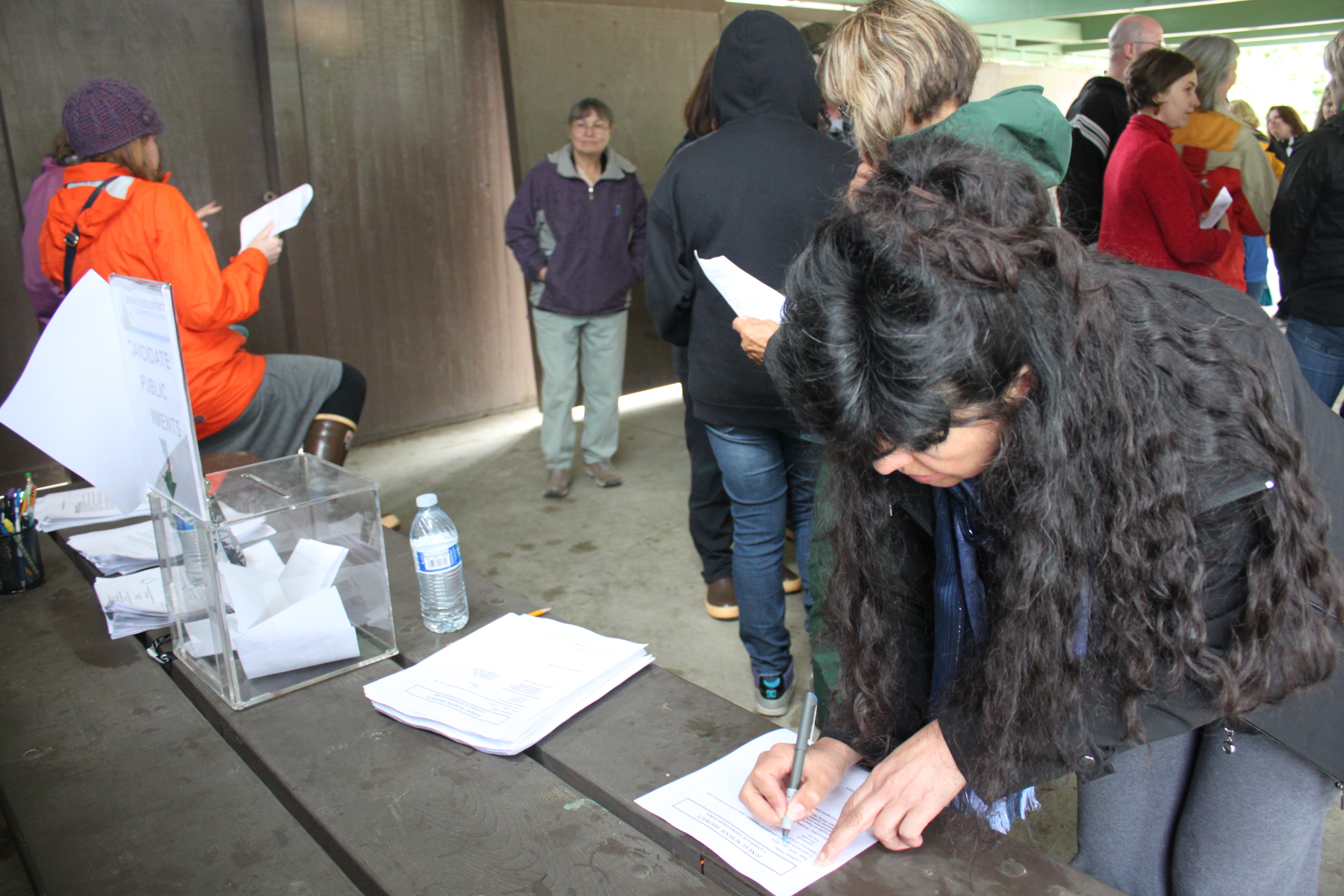
Members of the public write comments about the candidates during the superintendent finalist meet and greet at Savikko Park Sunday. The school board consider the comments during deliberations. (Photo by Lisa Phu/KTOO)
Members of the public write comments about the candidates during the superintendent finalist meet and greet at Savikko Park Sunday. The school board considers the comments during deliberations. (Photo by Lisa Phu/KTOO)

The Juneau School District is another step closer to finding a superintendent. Of 65 total applicants for the position, the school board interviewed three semi-finalists Saturday. Around 60 members of the public attended. All three were advanced to the final phase of the selection process. They are school administrators in California, Texas and Hoonah.

The public got to interact with the three candidates during a community meet and greet Sunday afternoon at Savikko Park. Parents, teachers, school administrators, board members, community members and a few students all waited their turn to have a few minutes of one-on-one time with the finalists. A steady rotation of people filled the Savikko Park shelter for two hours.

Angie Lunda
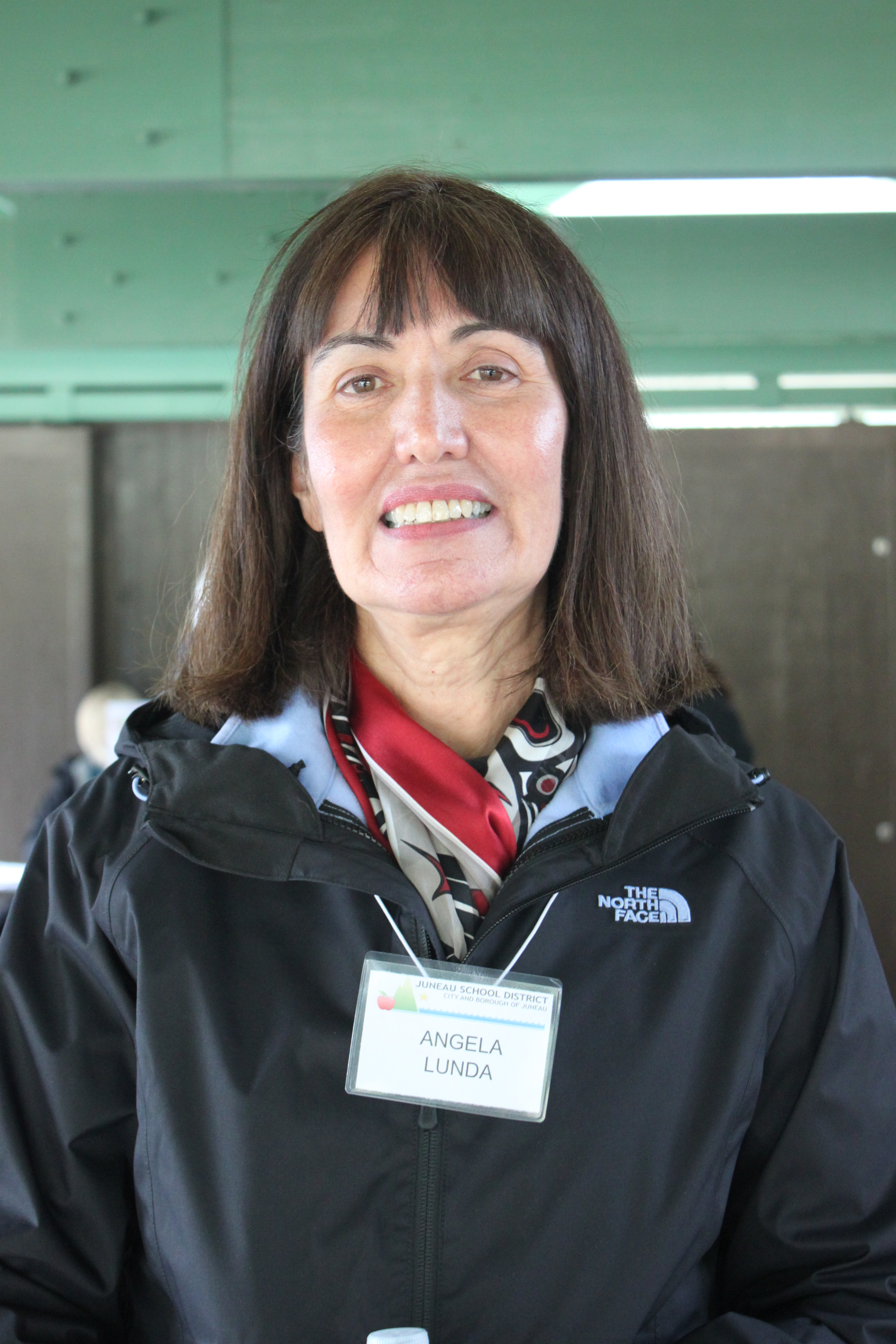
Angela "Angie" Lunda (Photo by Lisa Phu/KTOO)
Angie Lunda
(Photo by Lisa Phu/KTOO)

Angie Lunda is finishing her third year as superintendent of the Hoonah School District and says she’s ready to come home to Juneau. Lunda was born and raised in Juneau and spent 22 years in the school district as a teacher at Floyd Dryden Middle School and principal at Gastineau Elementary School.

She says her years as a teacher is one of the biggest strengths she would bring to the superintendent position.

“I still think of myself as a teacher. I think of the hard work that teachers do. They’re on the front lines. They’re the ones doing the hard work. I think administrators need to remember what it is to be a teacher and I have that,” Lunda says.

Hoonah School District has 104 students. Juneau has about 4,800. Lunda knows there will be challenges running a bigger school district but says running a smaller one with a limited staff gives her a unique perspective.

“I wear most of the hats of most of the roles in central office – special education director, director of curriculum and assessment, federal programs director – so I really have had the opportunity to do all of those jobs in the district,” Lunda says. “While in Juneau, there are other people doing those jobs, by having done them myself, I truly understand them to a depth that I don’t think anybody else could just stepping in.”

Mark Miller
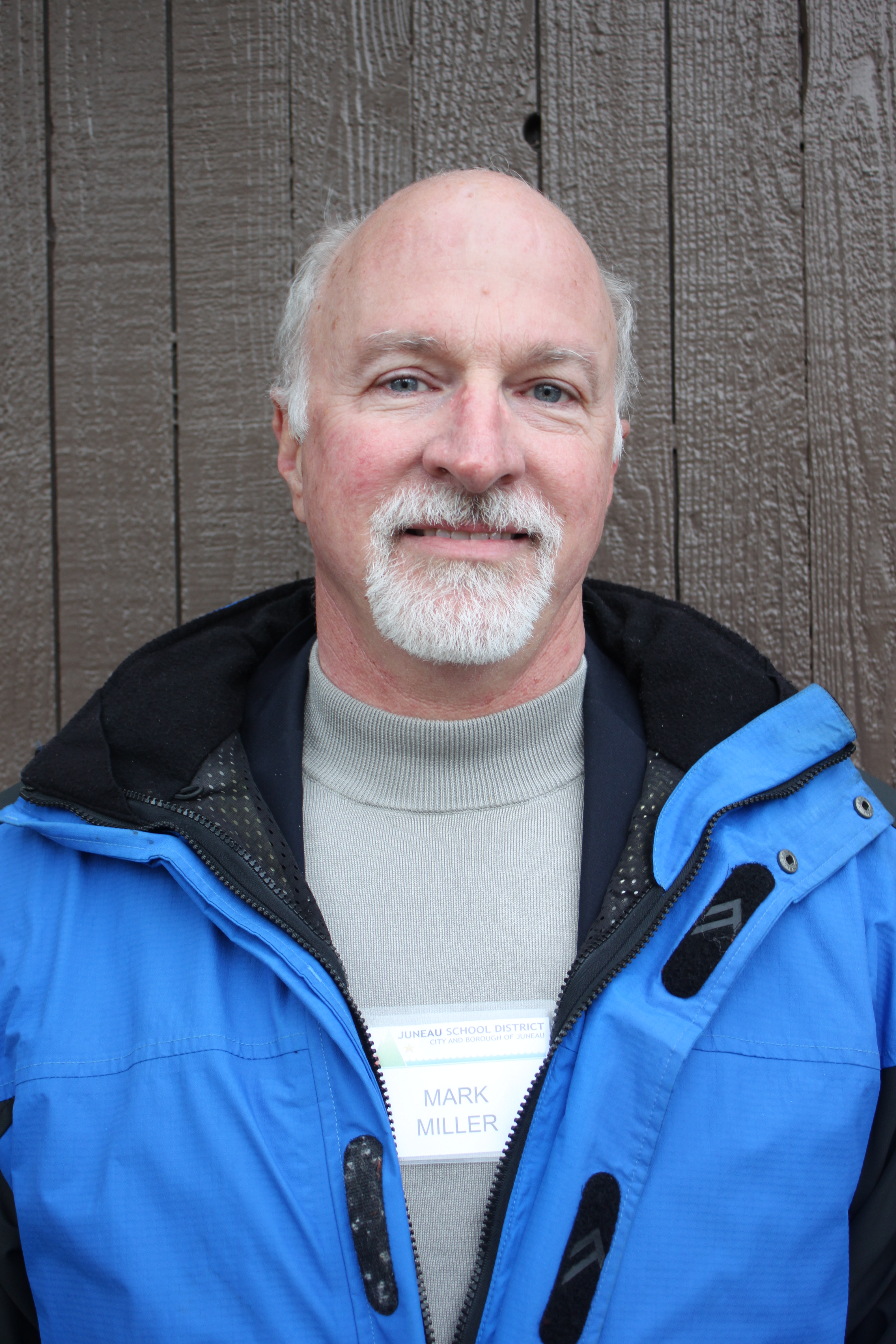
Mark Miller (Photo by Lisa Phu/KTOO)
Mark Miller
(Photo by Lisa Phu/KTOO)

For finalist Mark Miller, Juneau School District is smaller than what he’s used to. Miller is Assistant Superintendent of Human Resources in Hayward Unified School District in California. He describes it as a large urban school district with 21,000 students in 32 schools.

He’s held various positions in education and says his broad range of experiences is his biggest strength.

“I’ve done human resources for the last decade, so a lot of negotiation, a lot of contract language, some of the legal stuff that’s involved with that, as well as handling the tough personnel issues, which unfortunately come up from time to time. I also know what it’s like to run a high school. I know what it’s like to be an assistant principal. And then my first love will always be teaching. I spent 11 years in the classroom teaching kids chemistry and physics,” Miller says.

This would be Miller’s first superintendent position.

“I think the job of the superintendent is to make sure that the mission and vision of the school board is in line with the needs of the community. That’s the job. That’s the liaison. That’s the relationship that needs to occur,” he says.

Miller has three grown children and, if he got the job, would be moving to Juneau by himself. This is his first time in Alaska and he says he feels honored to be a superintendent finalist.

Rick Williams
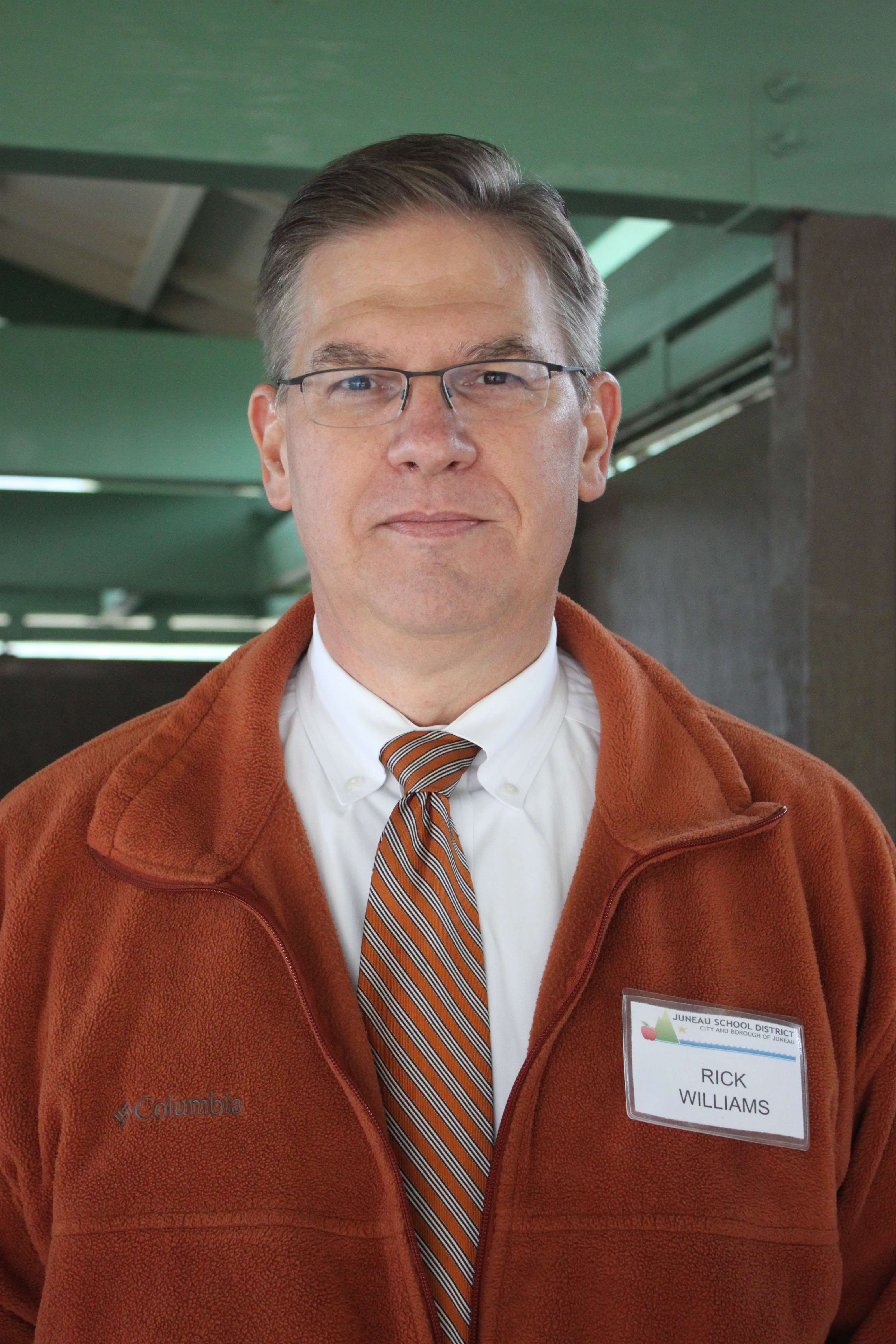
Rick Williams (Photo by Lisa Phu/KTOO)
Rick Williams
(Photo by Lisa Phu/KTOO)

Candidate Rick Williams first visited Juneau five years ago with his wife. They live in McKinney, Texas, and Williams is Director of Administrative Services in Region 10 Education Service Center. His division provides training and support for administrators in 80 different school districts.

He highlights his previous experience as a principal and superintendent.

“I have a lot of experience in strategic planning, a lot of teamwork activities, camaraderie, which all ends up elevating student achievement. Texas has a system just like Alaska where your schools are actually rated based on your test scores. We were able to significantly increase scores not only at the high school level as a high school principal but as a superintendent as well,” Williams says.

He favors small classrooms, but says it’s determined by how much money a district has to spend.

“Even though you might be in favor of small classrooms, if you don’t have enough money to hire enough teachers, that’s going to dictate the number of teachers you can hire. You do what you can with the amount of money that you have allocated,” Williams says.

If hired, Williams plans to move to Juneau with his wife and two children who would join the school district.

A tough decision

School board member Barbara Thurston was one of several board members at the meet and greet. She says choosing a superintendent from the pool of three will be a tough decision. One thing the board is looking for is someone who can build trust in the community.

“Somebody that people can say, ‘Boy, I don’t like this decision, but I think this person has the best interest of our children at heart and they’re doing the best they can and I’ll just live with it.’ It’s not trivial to build that,” Thurston says.

Thurston says she’s trying to keep an open mind for the remainder of the selection process, and, of the three candidates, doesn’t have a favorite yet.

Superintendent finalist interviews start at 1 p.m. Monday at Thunder Mountain High School library. The public is invited to attend and submit written comments to the school board. The board plans to make a final decision Monday afternoon or Tuesday.
Coast Guard Sector Juneau gets new leadership

U.S. Coast Guard Sector Juneau has a new commanding officer.

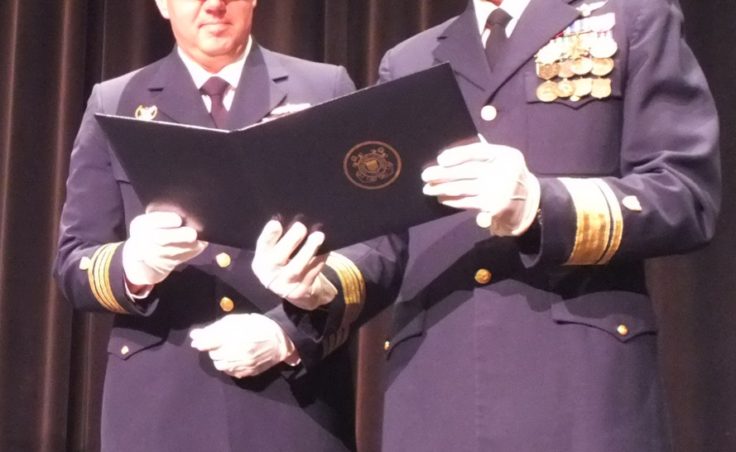
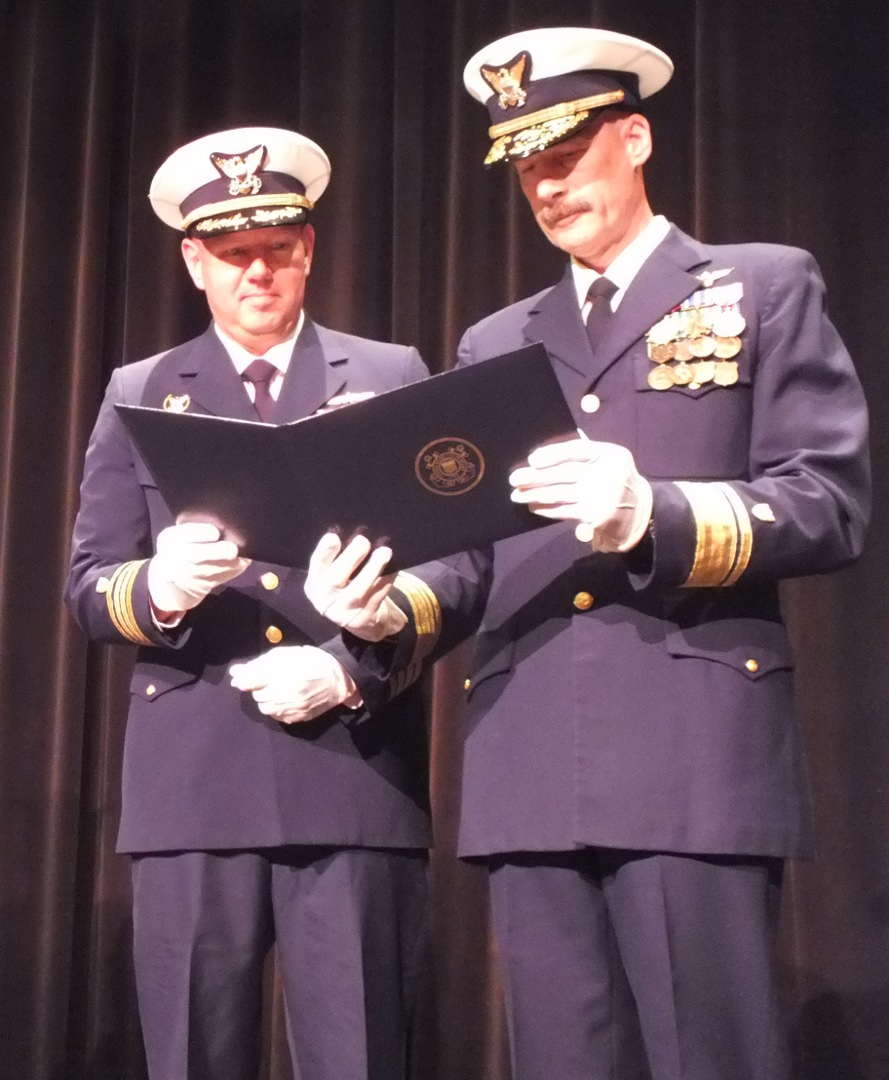
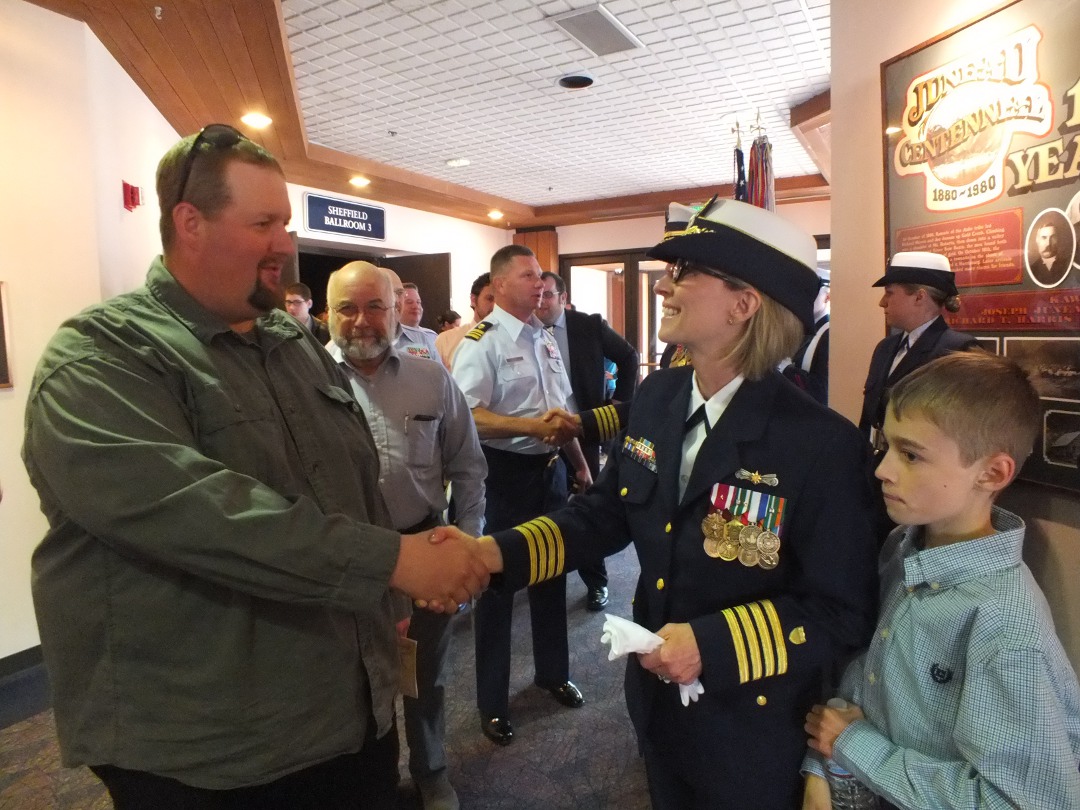
Capt. Shannan Greene took over for Capt. Scott Bornemann in a ceremony Friday at Centennial Hall.

Bornemann led Sector Juneau for the past three years. He said the men and women under his command during that time are the best the Coast Guard has to offer.

“I’d match them with any crew in the country,” he said, before listing some of their accomplishments.

“You sank a derelict Japanese fishing vessel,” Bornemann said, referring to the Ryou-Un Maru, which sailed across the Pacific Ocean without a crew following the 2011 Japanese earthquake and tsunami.

“You planned and conducted multiple unified command-based exercises that broadened stakeholder and tribal engagement and group participation with key agencies in search and rescue, security and natural disaster scenarios,” he said. “You also ensured the safety of the pristine marine environment in Southeast Alaska.”

Bornemann is staying in Juneau as Chief of Prevention for the Coast Guard’s 17th District. He’ll oversee maritime safety, maritime security and environmental stewardship for the entire state.

Greene most recently served as Deputy Chief of Incident Management for the Coast Guard’s 1st District in Boston, where she supervised hazard response and search missions for eight Northeast states. According to a Coast Guard biography, highlights of her tour there include coordinating responses to Hurricane Sandy and the Boston Marathon bombing.

Greene said she was impressed by all aspects of Sector Juneau during her transition week working with Bornemann.

“To our many partners throughout Southeast Alaska, we could not be successful without your expertise and involvement,” she said. “I look forward to continuing the robust relationship that already exists today.”

Greene’s husband is a Coast Guard commander. They have three young sons.

Coast Guard Sector Juneau has about 250 active duty, reserve and civilian employees.

District 17 Commanding Officer Rear Adm. Thomas Ostebo presented Bornemann with a citation for meritorious service to Sector Juneau. Ostebo has been promoted to a position in Washington, D.C. His change of command ceremony is June 12.

Volunteers still searching for missing Juneau hiker

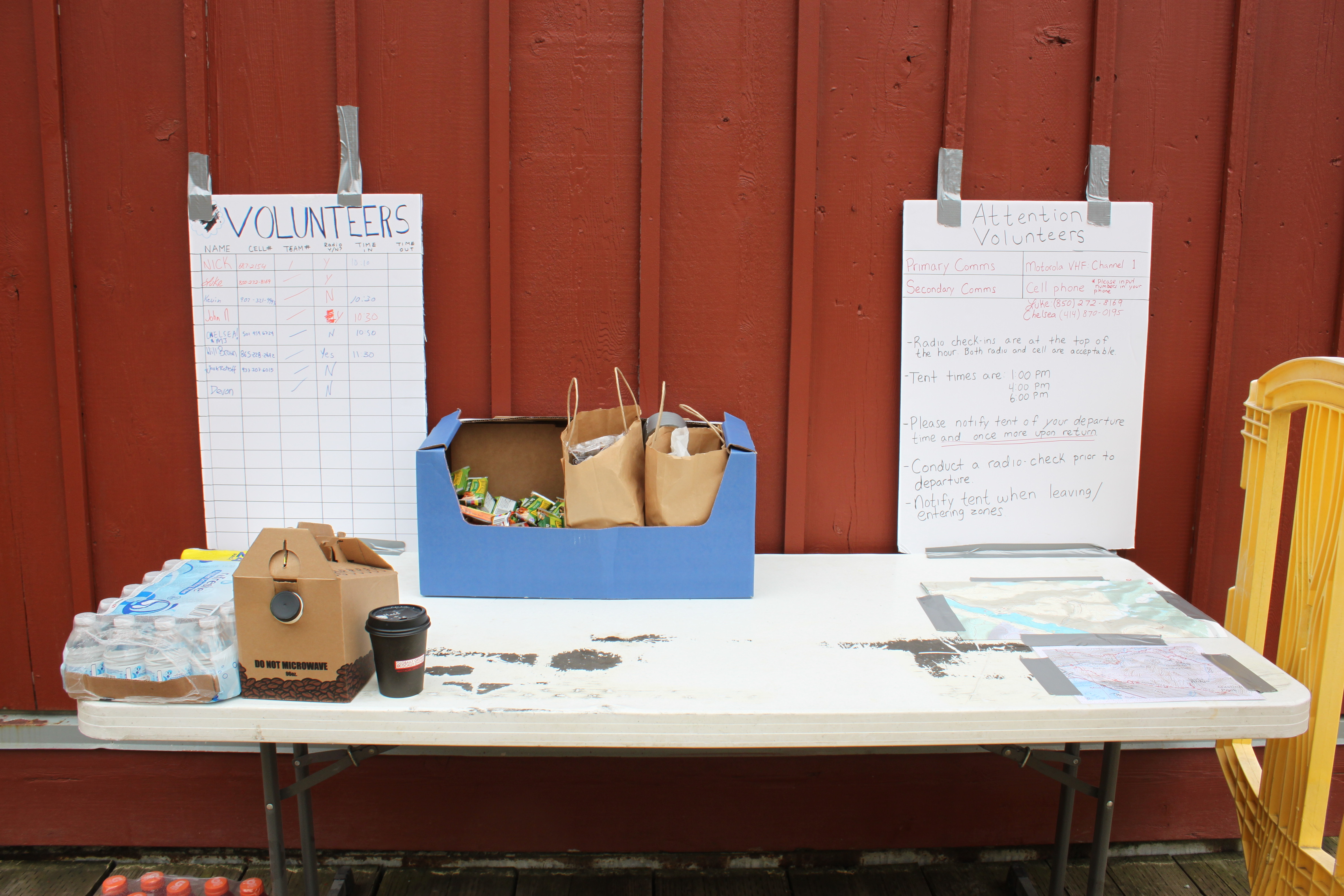
The volunteer search table is located behind the Mt. Roberts Tramway building. Volunteers are needed. The team will meet up Friday, Saturday and Sunday morning at 9 a.m. Volunteers can also contact Luke Holton on Facebook. (Photo by Lisa Phu/KTOO)
The volunteer search table is located behind the Mount Roberts Tramway building. Volunteers are needed. The team will meet up Friday, Saturday and Sunday morning at 9 a.m. Volunteers can also contact Luke Holton on Facebook. (Photo by Lisa Phu/KTOO)

Luke Holton doesn’t know 48-year-old Sharon Buis, but he’s helping to organize the volunteer search effort that started Wednesday, less than one week after Alaska State Troopers called off the official search.

“I’m an outdoorsman myself and I understand if I was out here in the cold, I wouldn’t want anyone to give up on me,” he says.

Holton and other volunteers have set up a search table at the bottom of the Mount Roberts Tramway and meet there each morning.

On Wednesday, three teams of three searched Granite Creek Basin and Perseverance Trail, getting off the trail as much as possible when safe to do so.

Thursday afternoon, Holton was on top of Mount Roberts, along with six other volunteers. They hiked to Icy Gulch and are sending skiers there by helicopter Friday.

These areas were covered extensively during the five-day search led by the Alaska State Troopers. But Holton says there’s no reason to give up hope of finding some sort of clue.

“It’s unlikely that we’ll find anything too positive at this point, but for the family’s sake, we want to keep looking no matter what we find,” Holton says.

Holton met with Buis’s brother and sister-in-law who came to Juneau from Ontario, Canada. He says they left Thursday but asked to be kept updated on the search.

One of Buis’s hiking friends said Buis owned a yellow backpack. It’s an unofficial lead, Holton says, but it’s something to look for. He hopes the volunteers can find anything that will restart the official search.

“The best option we would have is to find some of her personal property up here or anything else,” Holton says. “The further we go in, the less tracks you’re going to find in the snow, so once we get past Icy Gulch and you find tracks on the gulch or tracks on the peak of Gastineau, that could potentially also be enough evidence.”

Trooper spokeswoman Megan Peters says a decision to start searching again will be based on what’s found.

“It’s going to be evaluated based on what is located and if we can confirm it belonged to Ms. Buis or not. Certainly if they find something and it is identified as one of her possessions, it gives us a new place to look,” Peters says.

Buis is in the Alaska State Troopers Missing Persons Clearinghouse, a database for law enforcement only. Peters says any missing person in Alaska is entered into the database and stays there until they are found dead or alive.

She says a volunteer search group could help close a missing persons case.

“Troopers can’t always be everywhere. There are a lot of things that we have to go and put our attention to and our resources towards. Certainly with search and rescue cases, we want them to have a positive resolution. And finding somebody even if they’re deceased at that point, at least we can provide some type of closure. We can return them to their families,” Peters says.

When Troopers called off the search and rescue effort May 29, Juneau Police Department took over the case. Spokeswoman Erann Kalwara says detectives started working on it this week.

“The detective has started reaching out to the missing person’s friends and her family, just discussing things that had been going on in her life, talking about where they think she might be, if they have any ideas of any lead that he could investigate, just trying to ensure that if she was hiking and she went missing, that that’s truly what happened,” Kalwara says.

She says they have no reason to believe anything suspicious occurred although they haven’t ruled anything out.

Juneau police are in the process of collecting Buis’s dental and medical information to enter into a database of the National Crime Information Center.

Kalwara also says there’s no information to connect Buis’s case with Sandra Gelber, the 61-year-old woman who died May 4 after being found in the water off Salmon Creek Trail. Both women were physical therapists and both cases are linked to hiking trails.

Buis has been missing since May 24. When she didn’t show up for a planned group hike with the Juneau Alpine Club that morning, a friend reported her missing. Buis was last seen May 23.

The volunteer search effort for Buis continues this weekend. Community members interested in helping should meet at the bottom of Mount Roberts Tramway at 9 a.m. Friday, Saturday and Sunday. And look for Luke Holton’s messages on the Facebook group Juneau Buy ~ Sell ~ Trade.

Previous stories:

Search ends for missing hiker

No new leads as missing hiker’s family arrives in Juneau

Update: U.S Coast Guard takes another look for missing hiker

Scent of missing hiker found on trail but no cell phone trace

Search underway for missing hiker

Kerttula takes ocean policy job in Obama administration

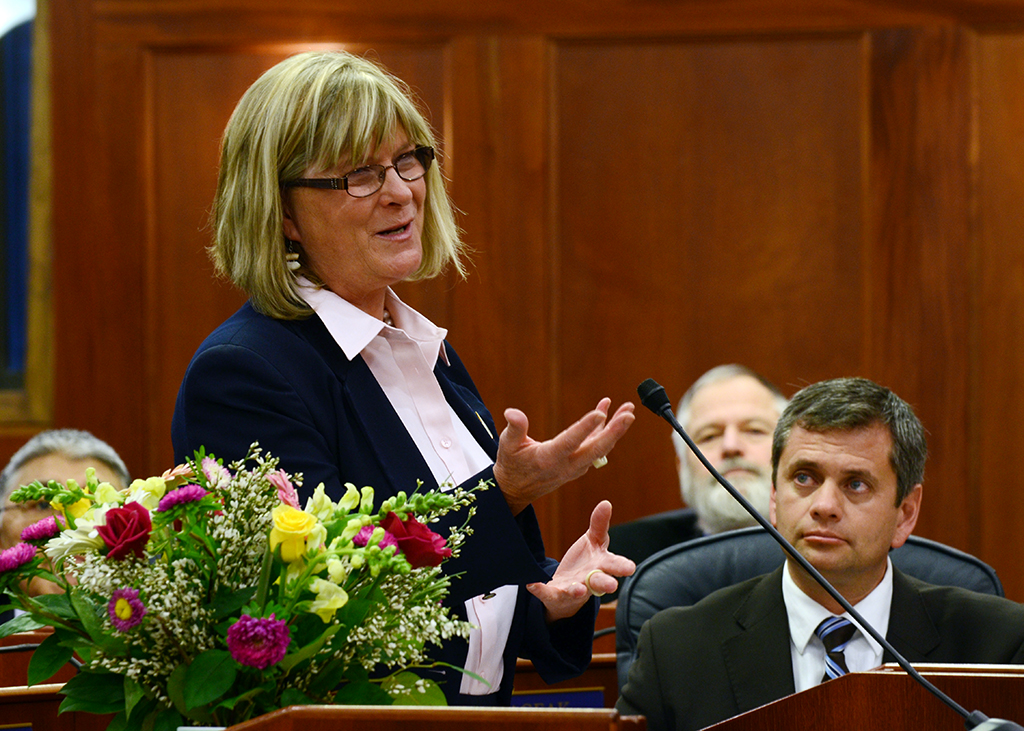
Beth Kerttula resigned her seat yesterday for a fellowship at Stanford. (Photo by Skip Grey/Gavel Alaska)
Beth Kerttula resigned her seat in January for a fellowship at Stanford. Now she is director of the National Ocean Policy Office. (Photo by Skip Gray/Gavel Alaska)

Former Juneau Rep. Beth Kerttula has joined the Obama Administration as Director of the National Ocean Council Office.

Since January, Kerttula has been a visiting fellow at Stanford University’s Center for Ocean Solutions. She was appointed to the federal job on Wednesday and is already at work in Washington, D.C.

The job was announced in an email to her Stanford colleagues, where Kerttula has been working on ocean issues. She has described her role there as a conduit between state legislatures and science policy makers, bringing them together to discuss ocean policies. In that job, she had worked with the National Ocean Council.

President Obama established the council by executive order in 2010. Kerttula will lead the office that supports it.

Former Alaska Attorney General Bruce Botelho says it’s a perfect fit for Kerttula, who was a coastal zone management lawyer in the law department when Botelho was AG.

“Given her background as a lawyer for the state, her years of involvement with coastal zone management in representing statewide council, but also being intimately involved in developing the regulatory and statutory scheme, she has the clear legal expertise in the area,” he says.

Botelho says her political experience also gives her a unique perspective for the federal job.

Kerttula represented Juneau in the state legislature for 15 years. She authored the first cruise ship pollution legislation in Alaska. In her last term, the district grew to include Petersburg, Gustavus and Skagway. During her tenure she served on several national boards dealing with environmental and coastal policy, including the Alaska Arctic Policy Commission.

Kerttula will be in the National Ocean Policy job for a year, with the option of continuing through the end of Obama’s term. Botelho says it can only benefit Alaska.

“I expect that Beth, not only having the responsibility of translating national policy around the country including to Alaska, will be serving as someone who can convey the issues that are directly impacting Alaska and what that means for the country as a whole,” he says.

Alaska boasts the largest coastal area in the U.S., but is currently the only state that does not have a coastal management program. In 2012, Kerttula worked on the failed citizens’ initiative to restore the Alaska Coastal Management Program. The Alaska Legislature in 2011 did not re-authorize the program.

A reporter passes the JPD physical fitness test

The Juneau Police Department is looking for a few good men and women.

The department is currently recruiting for 11 open officer positions. But the process of becoming a cop is not easy. There are background checks, written tests and physical requirements.

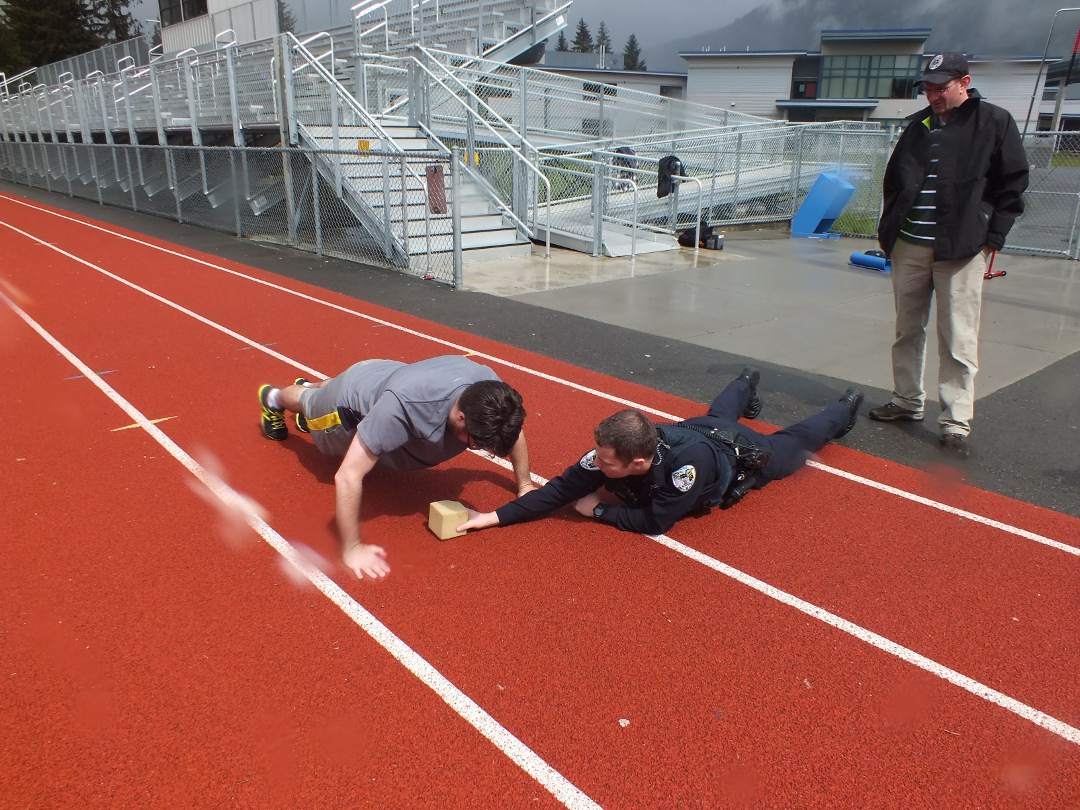
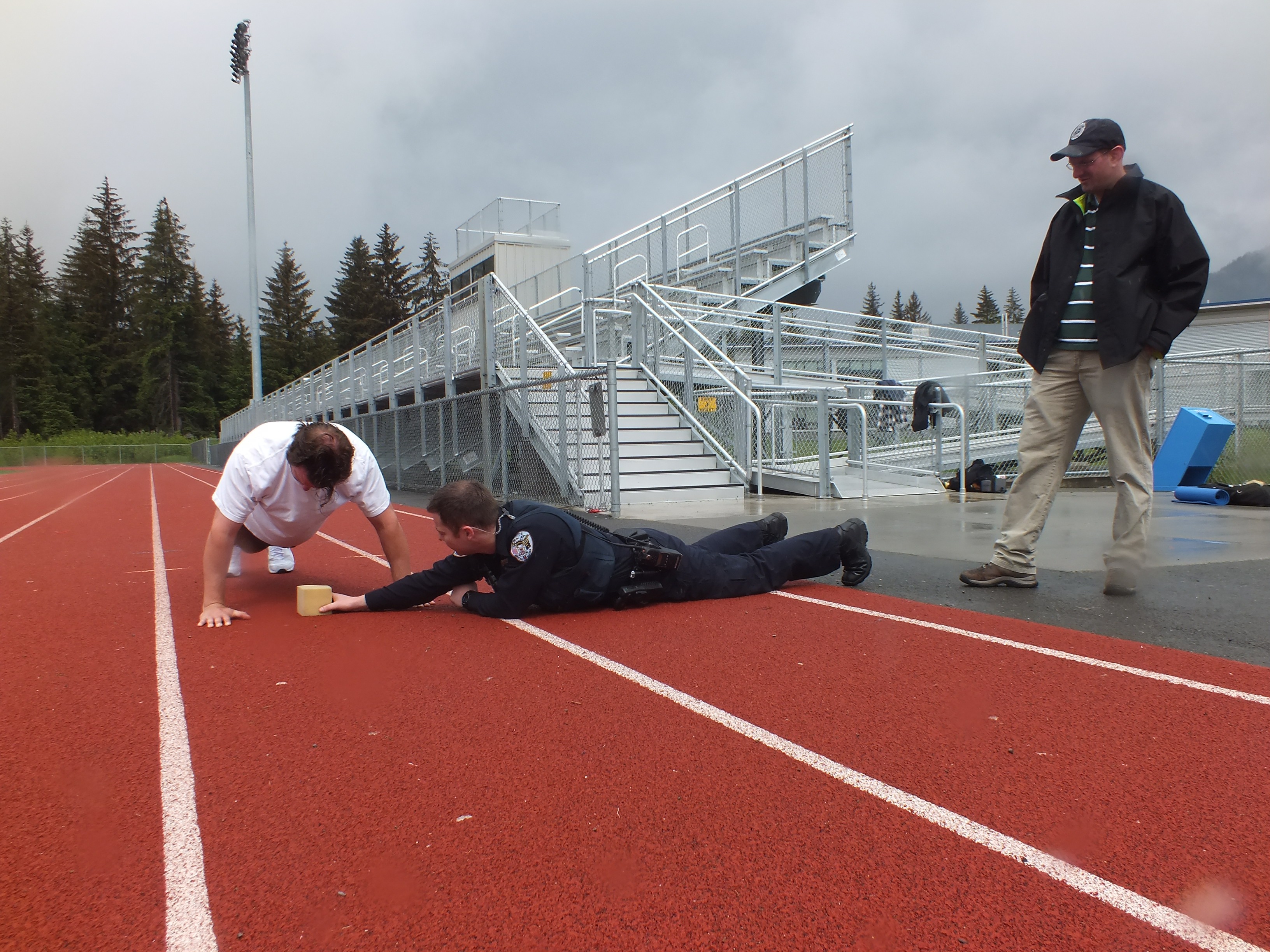
I’m not in the best shape, but I recently did a practice physical fitness test for those interested in becoming JPD officers.

I’m in my mid-30s. I try to hit the gym five times a week, but usually I’m lucky if I make it once or twice. As for diet, I prefer pizza and beer to salad and mineral water.

On the plus side, I’m pretty religious about taking vitamins and I quit smoking seven years ago.

JPD Lt. Kris Sell says many recruits approach the physical test with some consternation.

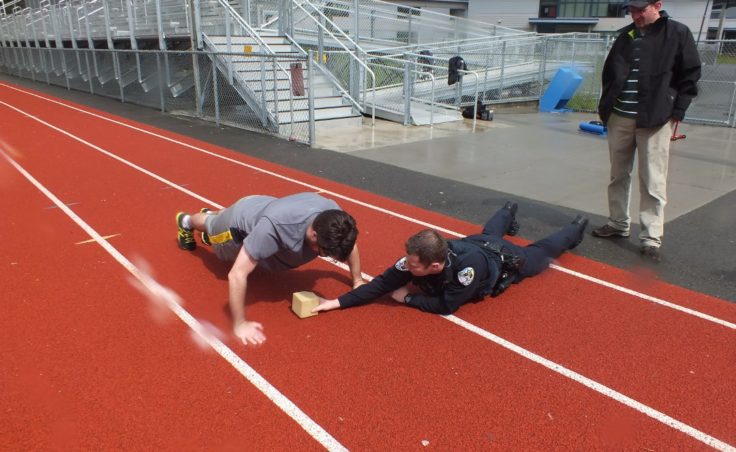
“So that’s why we’re having this practice test is to let people get a feel for it,” she says, as five of us gather on the Thunder Mountain High School track.

The test

Things get underway with a 300-meter sprint, which we must run in under 77 seconds.

“You might want to jog a little bit,” Sell says. “We’ve seen people pull a hamstring on this section. It will make for a long day if you do that.”

The other “recruits” and I line up, and Sell lets us know when to start.

On your mark, get set, go!”

About a minute later we all pass the finish line with plenty of time to spare.

The sprint tests our anaerobic capacity. Sell says that comes in handy when chasing bad guys.

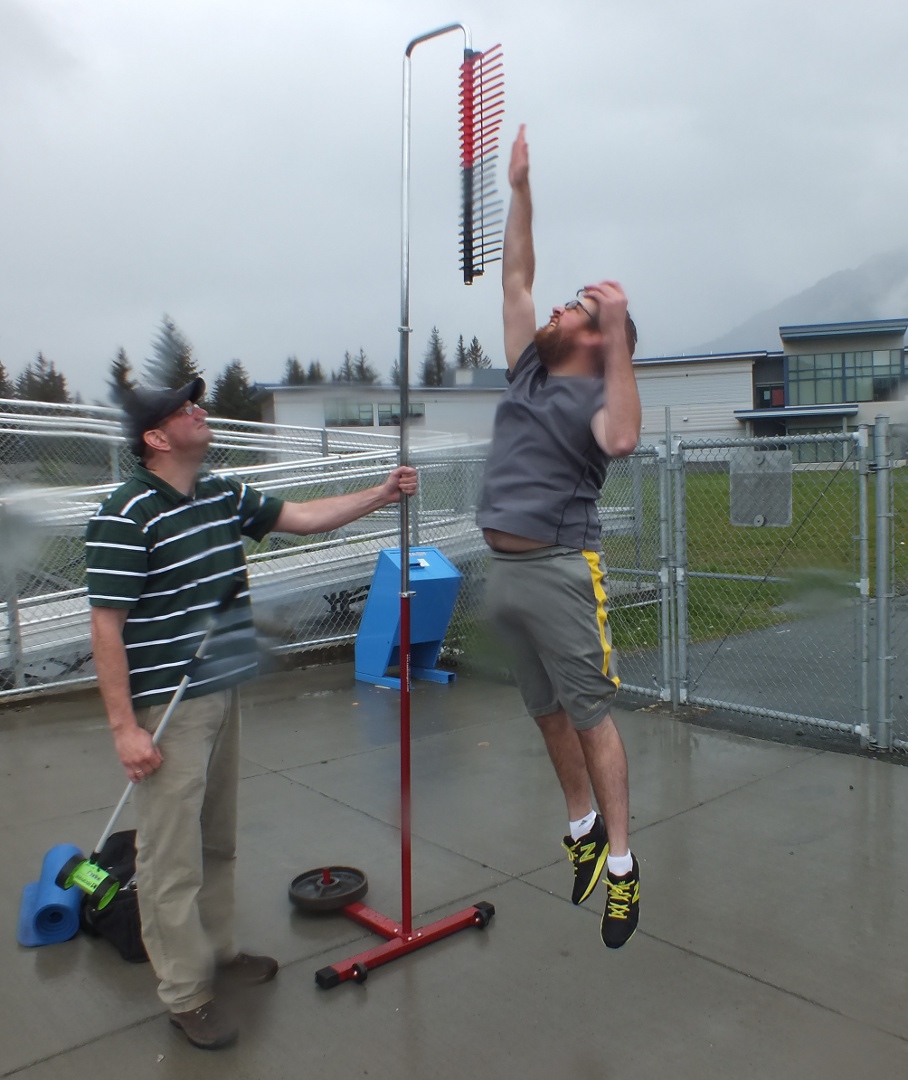
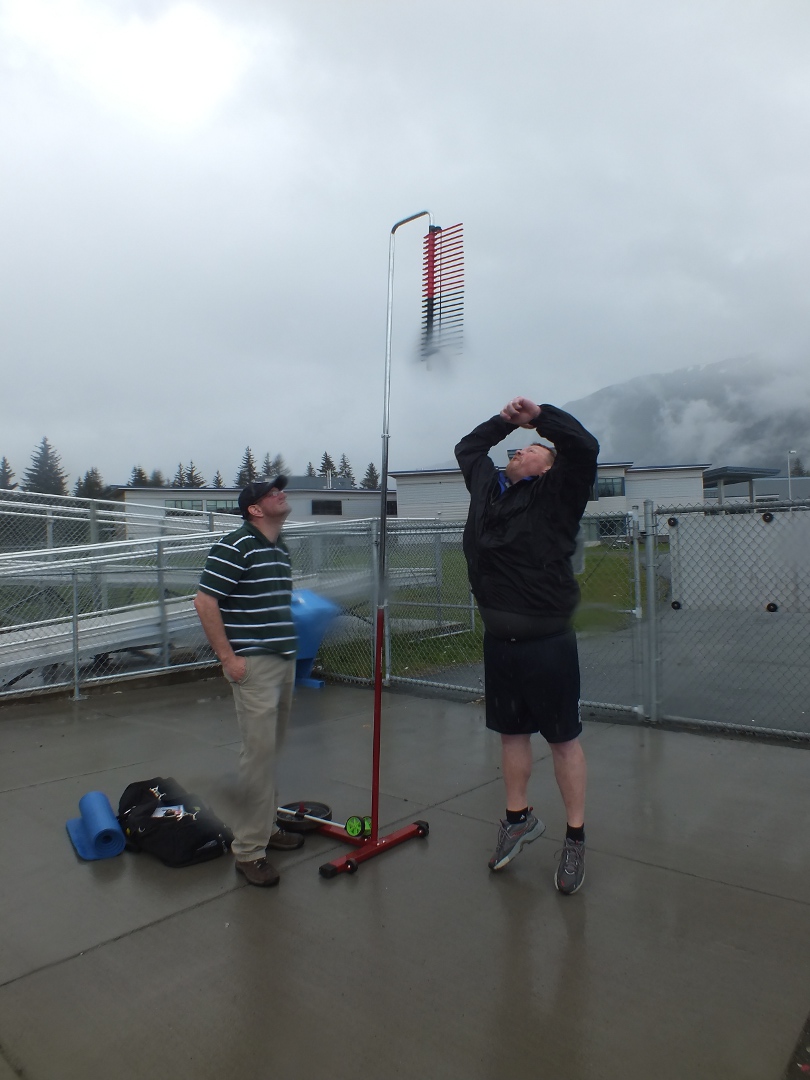
The vertical jump is next. It measures leg strength. To pass, we must jump at least 14 inches.

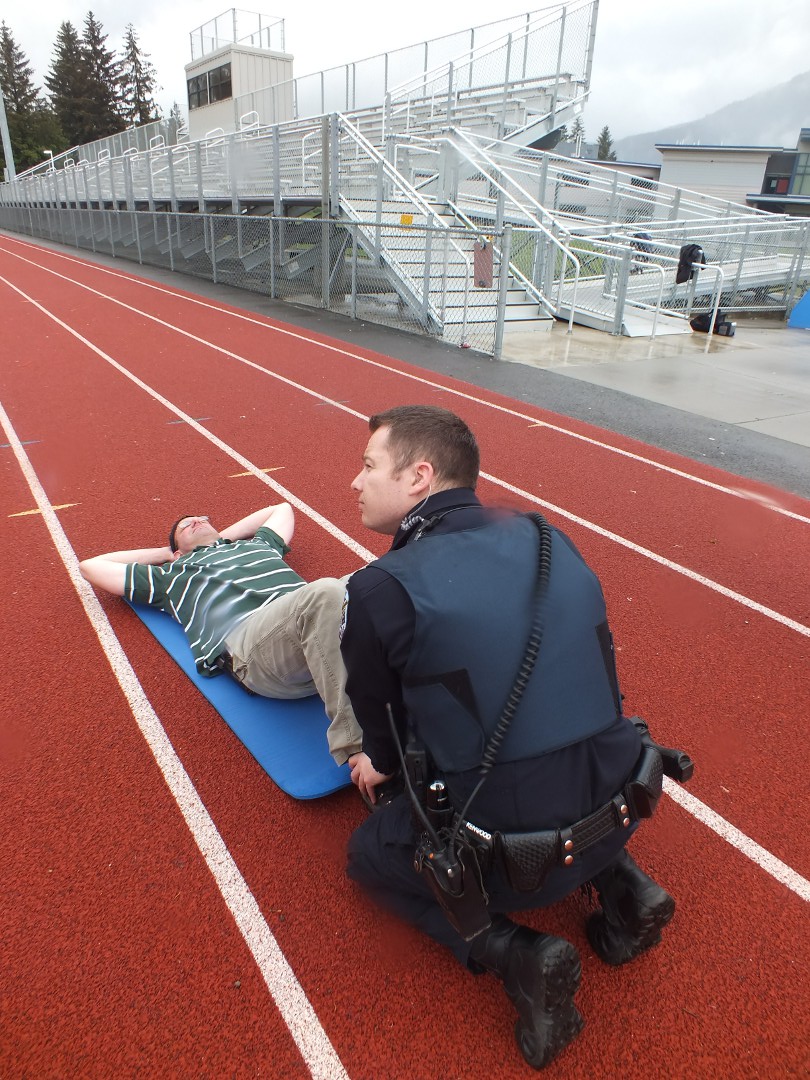
Measuring upper body strength requires we do at least 21 pushups. Then we try 15 sit ups in under a minute to test our core strength.

We finish with a 1.5 mile run in no more than 17:17.

“Try not to start too fast, but at a pace you can sustain for about 10 to 15 minutes,” Sell advises us. “You may walk, but walking will make it very difficult to meet the standard.”

I do end up walking part of two laps thanks to stomach cramps, but still finish in 15:29.

I cross the finish line with a flourish, and collapse on the track in mock exhaustion.

Minimum standard

The physical fitness test is JPD’s minimum standard. New hires are required to go through the Public Safety Training Academy in Sitka, where the physical demands only increase.

“Well, your day starts at 5:30, and sometimes you’re not done until 8 o’ clock that night,” says Officer Keith Byrne. “So you’re kind of going, going, going, and by the time you get into your bed you’re just sleeping.”

Byrne says he was in pretty good shape when he went to the academy in 2012, and in even better shape by the time he finished.

“I was running five minute miles,” he says.

Besides running and strength training, Byrne says there’s a heavy dose of swimming at the academy, including some uniquely Alaskan scenarios.

They do things where maybe you’re on the water edge and you might get a crab pot caught on your leg,” Byrne says. “And they throw you into the pool and you have a crab pot tied to your leg.”

Police Chief Bryce Johnson says there’s no ongoing physical fitness requirement for JPD officers, but they are encouraged to stay healthy.

“We have a really nice exercise facility at the police department, where we encourage our officers to workout,” Johnson says. “We have a fitness pin that we give officers. We give them points for a master officer program, where they can get paid more. So, we incentivize fitness, and a lot of officers go to the gym.”

“The whole thing is physically tough”

My fellow “recruit” Matt Ferster says the practice test gave him a good idea what he needs to work on to pursue a career in law enforcement.

Just the whole thing is physically tough,” Ferster says. “When you haven’t stayed in shape for 20 years, it’s hard to get back in shape, and so that’s where I’m at.”

Ferster, 44, says he has friends on the police force who are encouraging him to keep at it. He thinks being a police officer would be rewarding.

Chief Johnson says JPD is recruiting heavily to fill its 11 vacancies, about half of them to provide security at Juneau International Airport as part of new federal rules.

The police academy is held twice a year. The next one starts in August.

10,000 smolts ready for family fishing day

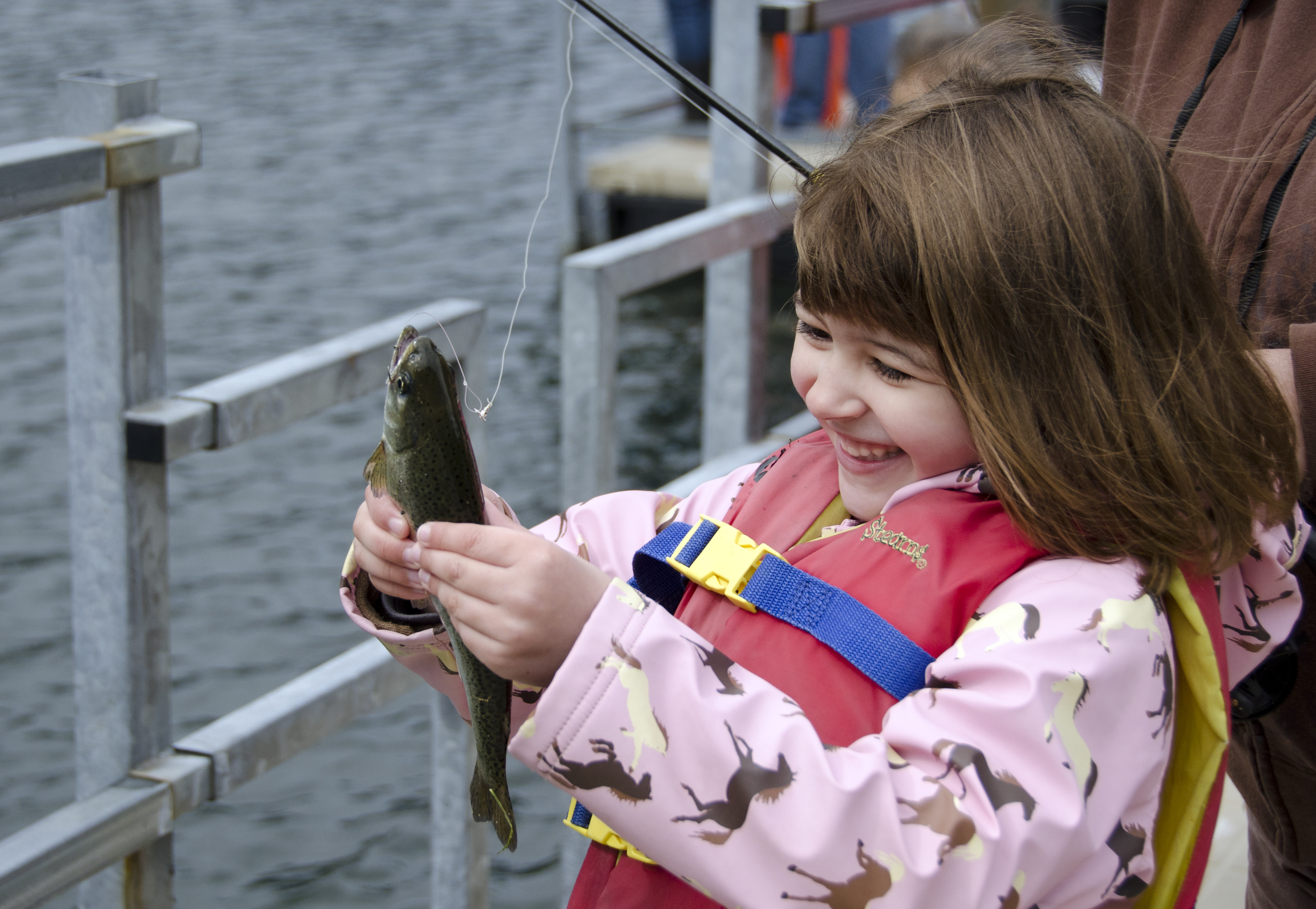
Dozens of families made their way to Twin Lakes on Saturday, June 2, for Family Fishing Day. Cheyenne Herline, 5, shows off her first fish.
Cheyenne Herline, 5, shows off her first fish from the 2012 family fishing day. (Photo by Heather Bryant/KTOO)

Young anglers will get their fishing poles out for the 25th Family Day at the Lake on Saturday. The event runs from 10 a.m. to 3 p.m. at Twin Lakes.

Family fishing day lets Juneau residents try fishing regardless of income, says event volunteer Laury Scandling.

“There are a lot of families for whom this experience would not otherwise be possible. Meaning, they don’t own fishing gear, they don’t own a life vest, they don’t have a rowboat, they don’t have a pleasure craft out at the harbor,” she says.

Personal equipment is welcome, but the Department of Fish and Game will provide rods, bait and expert advice. The U.S. Forest Service will provide rowboats.

The Juneau-Gastineau Rotary Club will sell hamburgers and hot dogs. There will also be fishing games, bean bag tosses and sack races to entertain landlubbers. Kids can make fish prints of their recent catch to commemorate the event.

The lake was stocked with 10,000 king salmon smolts from the hatchery at Douglas Island Pink & Chum earlier this week for family day.

Site notifications
Update notification options
Subscribe to notifications