Community

Front Street Community Health Center opens doors to all

The new Front Street Community Health Center sign. (Photo by Lisa Phu/KTOO)

Juneau’s Front Street Clinic is now providing service to the general public while also continuing care for the homeless.

Renamed the Front Street Community Health Center, it’s operating under a new business model after Southeast Alaska Regional Health Corporation severed ties at the end of April.

When SEARHC first announced the closure of Front Street Clinic last fall due to budgetary constraints, Front Street’s behavioral health specialist Mary Fitzgerald says the providers were worried.

“What are these homeless people going to do? The winter is coming on. They’re vulnerable. But then the community came forward and said, ‘No, this just can’t happen. What can we do?'”
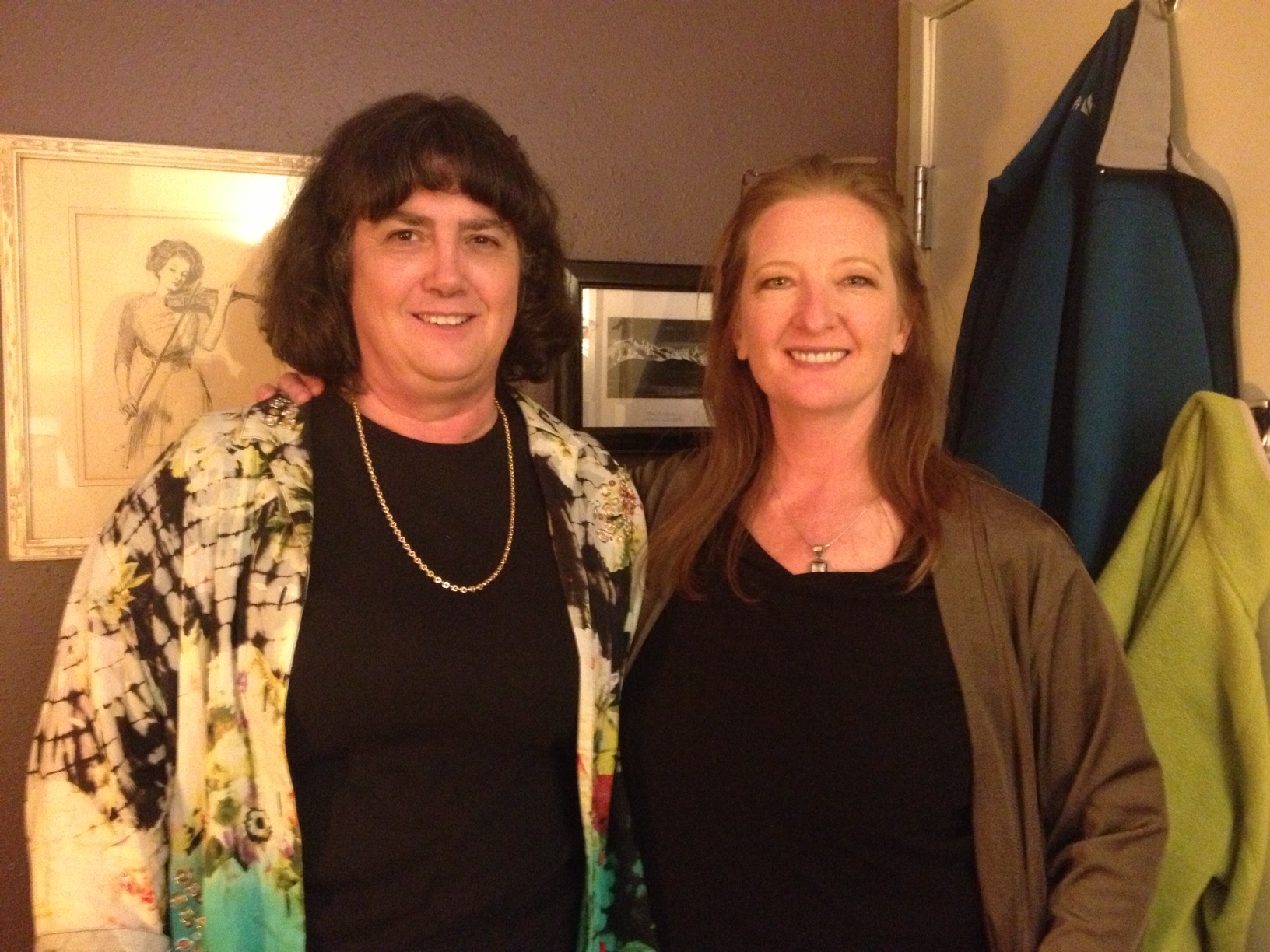
Janna Brewster is Front Street's main medical provider and manager. Mary Fitzgerald is the behavioral health specialist. (Photo by Lisa Phu/KTOO)
Janna Brewster is Front Street’s main medical provider and manager. Mary Fitzgerald is the behavioral health specialist. (Photo by Lisa Phu/KTOO)

Community donations kept the downtown clinic open while a new board of directors formed to take over for SEARHC.

Front Street Community Health Center is able to continue serving the homeless with the help of two major grants – one for $162,000 through the U.S. Health Resources and Services Administration and another for $121,000 through the Alaska Mental Health Trust Authority.

With a $500,000 budget, the difference will be made up by opening the doors to everyone – from the uninsured to the insured; even cruise ship passengers who have an urgent need.

Front Street has been known as a homeless clinic for ten years. Manager Janna Brewster is happy to continue that work but hopes Front Street can help others as well.

“We want people that don’t have insurance to have a place to go. That’s the biggest gap in services in any community – people who are working but they don’t have insurance,” Brewster says.

Brewster says they’ve had to turn away community members for years.

“Every day we get phone calls from people who are not homeless who can’t find a doctor in town or couldn’t find medical care and now we don’t have to say, ‘No,'” she says.

Front Street’s staff includes three full-time and three part-time employees. Brewster expects the staff will grow to meet demand.

“We have a pediatrician that might come join. We hope we can do more with kids and teens and really expand to just help out overall through the community,” Brewster says.

Throughout the seven-month transition, there was no interruption in medical service to the homeless.

Dean Smith suffered four strokes in 2010. He’s been going to Front Street for a couple of years for medical and behavioral health services.

“I’m not as nervous about my own health as I was prior to seeing them. Being diagnosed with arteriosclerosis in your head, that’s kind of an unnerving feeling. Basically that means you could have six seconds, six minutes, six hours – you never know,” Smith says.

Smith is happy he can still see Fitzgerald and Brewster now that Front Street is no longer in fear of closing.

Brewster says many patients were worried, especially when the old SEARHC sign was taken down at the end of April. The new sign wasn’t yet ready.

“During that time it was kind of quiet and the word was going around that we were not going to be here. In fact, someone even heard that we weren’t here anymore,” Brewster says. “But we put the sign back up and it’s like all of a sudden, everyone has calmed down. They know we’re here and they feel very happy that we’re still going to be able to help them. That’s the most wonderful part of all of this – there are people out there that are so grateful for what we do.”

The new Front Street Community Health Center sign is in place inviting new patients.

For more information or to make an appointment at the new Front Street Community Health Center, call 586-4230.

One year after Galena flood, rebuilding effort underway

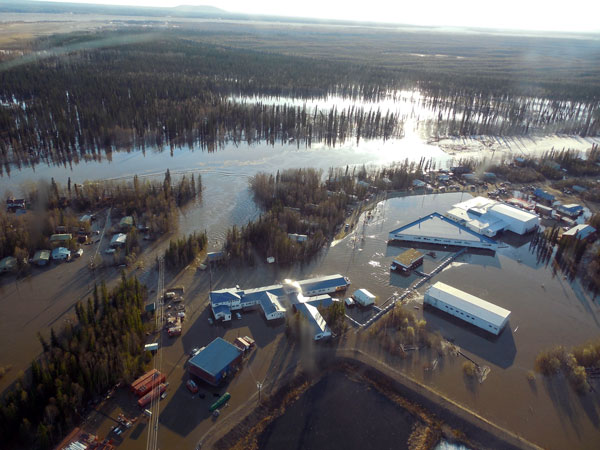
A relief effort coordinated by the Federal Emergency Management Agency is building nearly a dozen homes in Galena this summer. (Alexandra Gutierrez/APRN)

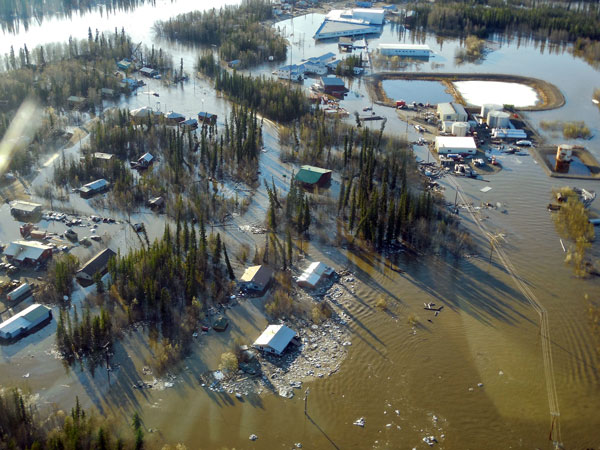
With warm weather here, construction projects are starting up across the state. In Galena, the sight of houses going up is particularly welcome. The 470-person village is still recovering from a catastrophic flood last year, when the break-up of an ice jam caused the Yukon River to overflow.

It’s a humid morning in Galena, and about a dozen workers are framing a house. They’ve been working at it for about four days, and already the place is taking shape. It’s a big two-story building, with a wide footprint and space for at least four bedrooms. The goal is to finish the exterior work within a week.

Decked in a red shirt and a camouflage cowboy hat, Doug Konetchy is sawing away at wooden boards.

“Right now we are building rafters for this particular house,” says Konetchy. “It’s not particularly complicated. We just make a lot of cuts.”

Konetchy is one of the hundreds of FEMA volunteers who will work on the construction effort in Galena this summer. He’s from North Carolina, and he’s part of a Christian relief effort called Samaritan’s Purse.

Galena Flooding
The flooding in Galena last year. (Photo courtesy National Weather Service)

Konetchy is working with a fellow tar heel named Hugh Honeycutt. Neither of them have been in Alaska before, let alone worked in the state. For one, you can’t drive to Home Depot if you need extra materials. And then there’s the rain.

“Down in the Lower 48, if it rains, you take the day off,” says Konetchy. “But here, if you take the day off, then you only have four days when you can build.”

“Or three, or two,” says Honeycutt.

So, they’ve gotten used to being damp.

“Put on a raincoat and keep going,” says Honeycutt.

The building process itself is also different. The house they’re building is striking not just for its massive size. It also happens to sit on tall steel pilings, elevated at least five feet off the ground.

“Where I live, we build them up off the ground, but not on stilts like this,” says Konetchy.

The 11 houses that FEMA volunteers are working on are raised like this. The flood came in hard and fast last year, swamping areas of town that should have been safe. So now, houses must be built above the high water mark to qualify for disaster relief.

“Everything’s up in the air,” says Konetchy. “I mean you have to lift everything up there. Every single piece, every single nail goes up.”

Steve Settle is a Galena resident who qualified for one of these elevated FEMA houses. Construction of his new place is underway as well, and its frame also rests on 25-foot pilings buried deep in the ground.

“So, this ends up being four feet something higher than the house I had before,” says Settle.

National Weather Service Photo.
(Photo courtesy National Weather Service)

Settle says the new place will be a lot different from his old one. On top of being built to survive a flood, it will also meet new cold climate housing standards, with thicker walls and other features to make it airtight.

“It’s going to be way smaller. They say way warmer,” says Settle. It’s always nice to be way warmer anyway, you know?”

Settle has lived in Galena for 33 years, and he says the flooding of the Yukon River last April was like nothing he had ever seen.

“It was just like a bathtub,” says Settle. “Pull the plug and it just went out.”

Even though his property is fairly inland, Settle’s home was basically destroyed.

“Back of the House sloughed off,” says Settle. “The only thing that was holding that house from floating off was the power line.”

Settle says he lost a lot in the flood. But he’s looking forward to moving into his new place this fall. Right now, he’s trying to figure out where his windows will go.

“It’s probably going to be four or five, you know, so it’s going to be well lit,” says Settle. “White walls, so it will probably really glow in there.”

And, he says, it should hopefully stay dry.

Weaving a journey of change

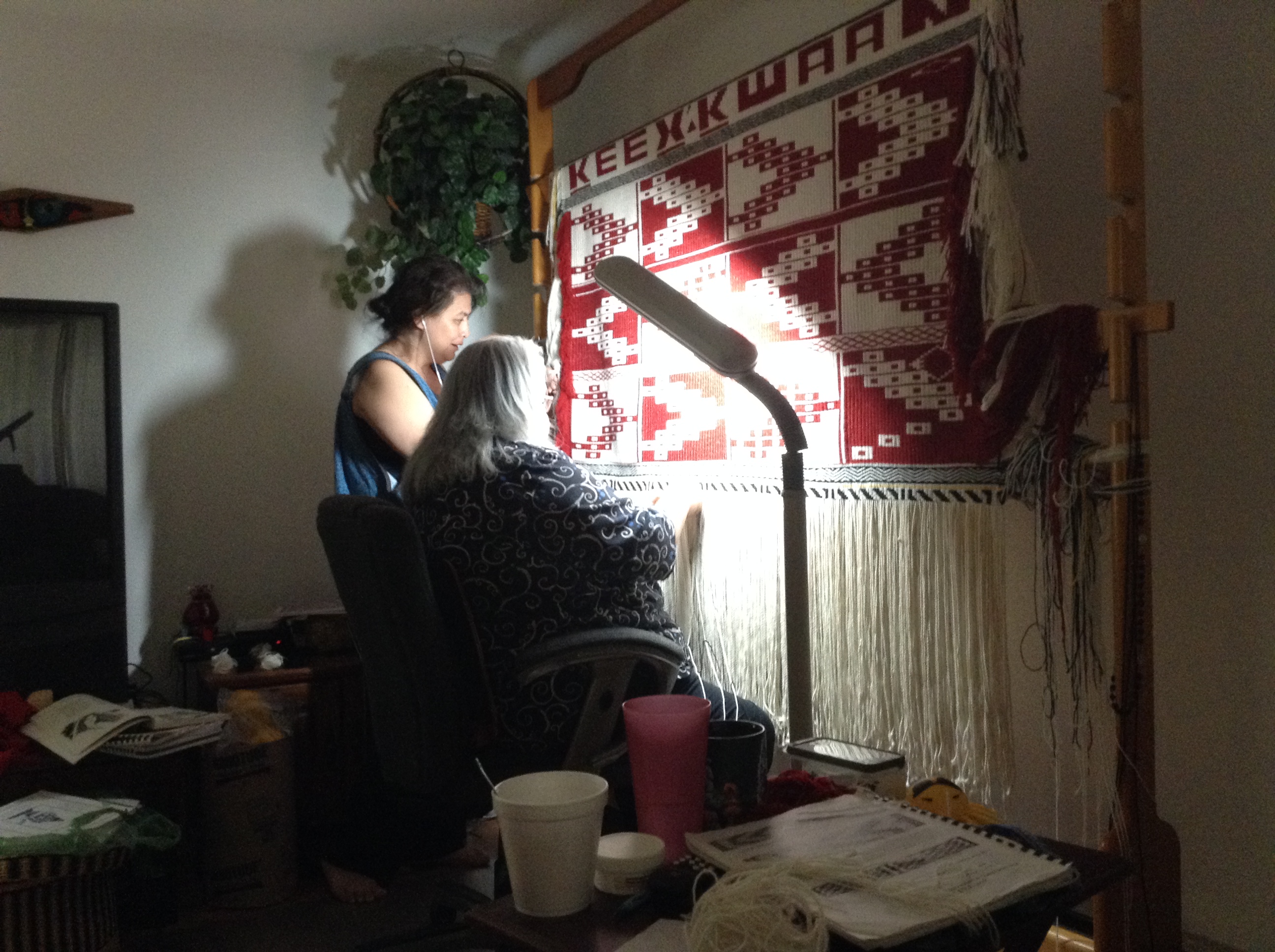
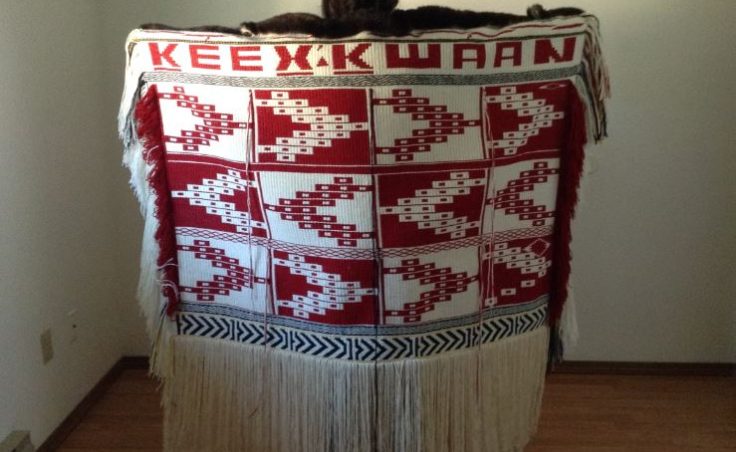
In early 2011, Della Cheney started weaving a Ravenstail robe for her daughter in honor of her doctoral degree. She had weaved about a quarter of it, when she began to feel not right.

“I knew something was wrong but I didn’t know, so I went to get my yearly test and they found something abnormal,” Cheney says.

She was diagnosed with endometrial cancer. She stopped weaving and had to have surgery and chemotherapy.

A year later, Cheney went back to the robe and started over. This meant undoing 14 inches of weaving, more than a year’s worth of work.

“You don’t want to have bad feelings in the robe. You don’t want to be weaving while you’re thinking bad things or in a bad place,” Cheney’s daughter, Gail Cheney, explains. “So can you tell yourself, ‘No, I want to start again’? That’s hard when you’ve gone down as far as she did when she took it back. In the midst of all her challenges, she held herself to a very high standard.”

Gail was in the process of getting her Ph.D. in leadership and change from Antioch University, a program focused on bringing about change in workplaces and communities.

She was also the Human Resources Director at Sealaska Corp., a position she still holds. Her dissertation explored the future of Native values at an Alaska Native corporation.

Gail says Sealaska has been working on integrating Native values at a corporate level for the past few years. She uses Haa Aaní, meaning ‘our land,’ as an example:

“We have a sense of what Haa Aaní means at a community level – subsistence, maintaining our resources,” Gail says. “What does that mean at a corporate level? Perhaps it means figuring out sustainable uses because we do need to use our land, but we need to use it in way that it’s there for future generations and for everyone’s use.”

Cheney’s challenge was how to show leadership and change in her weaving. She had to work with shapes like rectangles, triangles and squares, characteristic of Ravenstail weaving.

“So I chose to do the pattern called the flying geese pattern to show the change with the geese arriving in the spring and leaving in the fall and how the leadership changes when they’re flying in a flock. They take turns leading,” Cheney says.

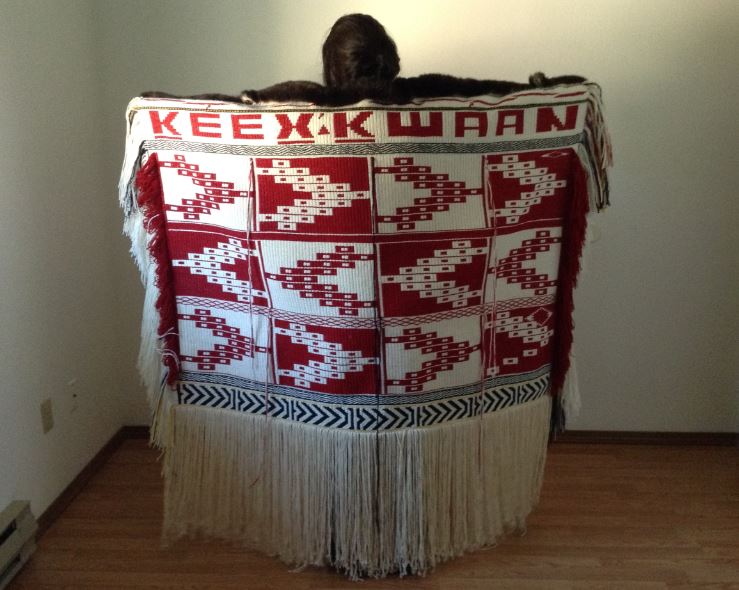
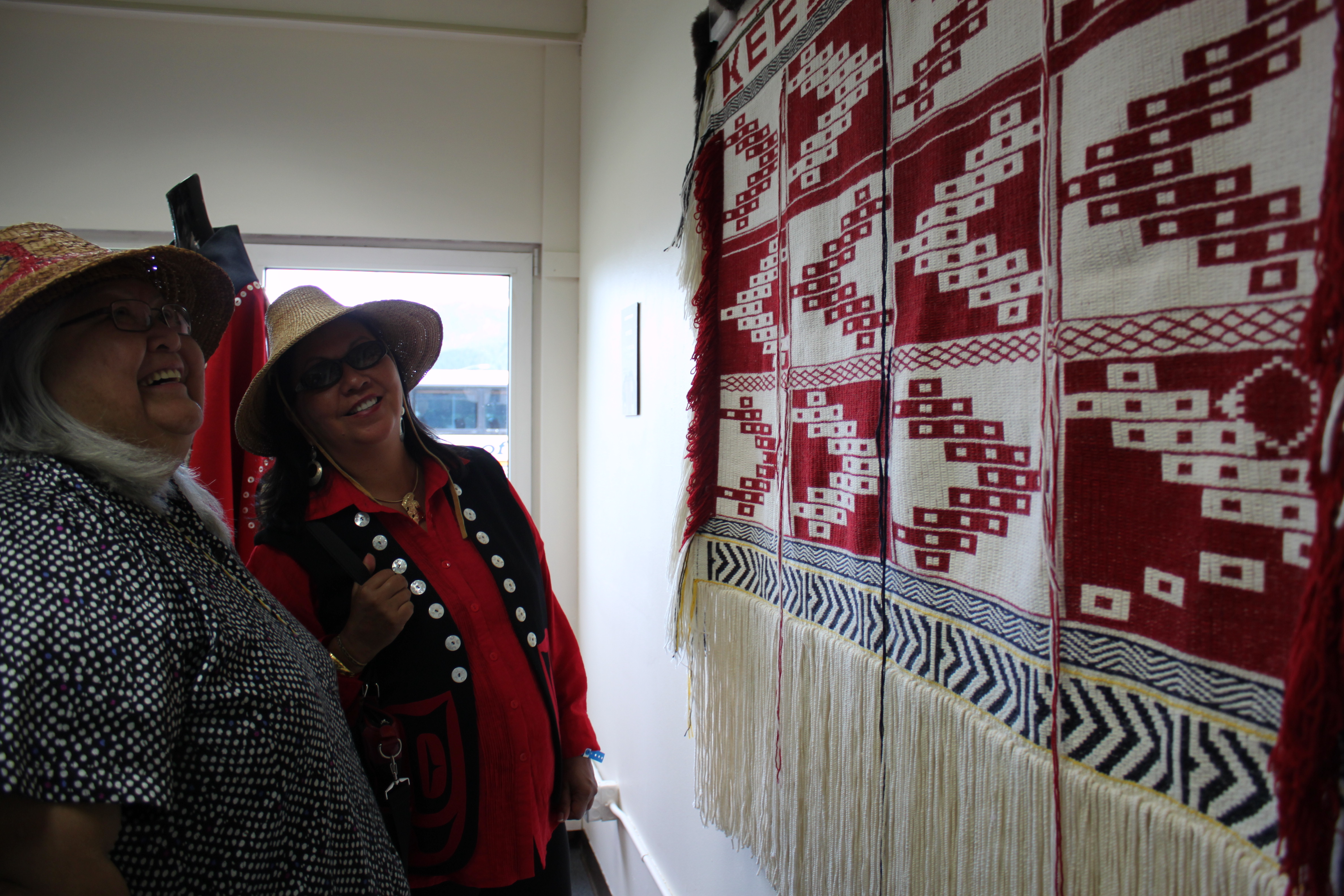
The robe shows three rows of geese changing direction, flying right and left, then right again. The prominent colors are red and white.

“The red color shows the power of change and the white color shows the integrity that needs to be followed in order for change to happen,” Cheney says.

On the bottom of the robe is a black design that Cheney calls, “All of Our Ancestors.” It’s the foundation of the robe.

“That’s where our lives started, was from our ancestors,” she says.

The black also represents loss.

“We had four of our family members pass away with cancer in the time I started the robe to the end,” Cheney says.

For Cheney, no evidence of cancer remains. She says weaving is a form of art therapy and helped her through the process of being OK again.

“There’s all that healing that goes on because of that long repetitive movement that you have across the 60-inch robe, going over and under. Each row is a long ways across, maybe 45 minutes to get across. And what do you think about during that time besides the pattern? Really it’s a healing time,” Cheney says.

On the top of the robe, Cheney weaved the words Keex’ Kwáan in big, bold letters, which is Tlingit for their home village of Kake. This was Gail’s idea.

“She has grown up with this love from our family in Kake, so every time she wraps the robe around her she is getting a hug from her family,” Cheney says.

After seven years of studying, Gail received her Ph.D. this past February and had the graduation ceremony in Kake to thank the community. It took her mother three years to finish the robe. In the final year, she brought the loom wherever she went. She weaved in Juneau and Kake. She even brought it to Anchorage.

Gail says the robe represents journeys they both finished.

“When I look at this I think, ‘I’m done, I’m really done.’ I still have a lot of work to do, but the piece that’s kind of been nagging at me for seven years, the wait’s gone. It’s nice to see it finished. I think she feels the same, ‘Oh thank God, I’m done.'”

The robe will outlive both of them, Cheney says. In 500 years, the robe will continue to tell their woven stories of leadership and change.

Crime Line: Thief steals film crew’s stuff from local hotel

Juneau police are looking for information about the theft of $2,000 worth of gear stolen from an international film crew visiting the capital city.

Police report electronics and personal items were taken from Guesthouse Inn and Suites near the airport when the documentary team from England was out.

The hotel was supposed to have locked the items in a conference room while crew members were shooting on Prince of Wales Island. When they returned, they found the room open and their stuff gone.

Lt. Kris Sell says police are asking anyone with information to notify Crime Line.

It’s a case I wanted to run for Crime Line because it’s kind of a cringe-worthy case as a Juneau citizen. You know you read it and you’re like, ‘Oh, that’s so embarrassing. So awful that it happened to visitors,’ ” she says.

Sell says it’s not clear if the hotel has compensated the film crew for the stolen items, which she describes as things the public should be able to identify.

“The person probably has the type of property that somebody else is going to notice with the iPods, the Apple DVD driver and then a whole bunch of the clothes; $350 worth of clothing would be something that would be kind of noticeable,” she says.

The film crew has returned to England.

Sell says anyone with information should log onto Juneau Crime Line.

New Coast Guard District 17 commander brings Arctic experience

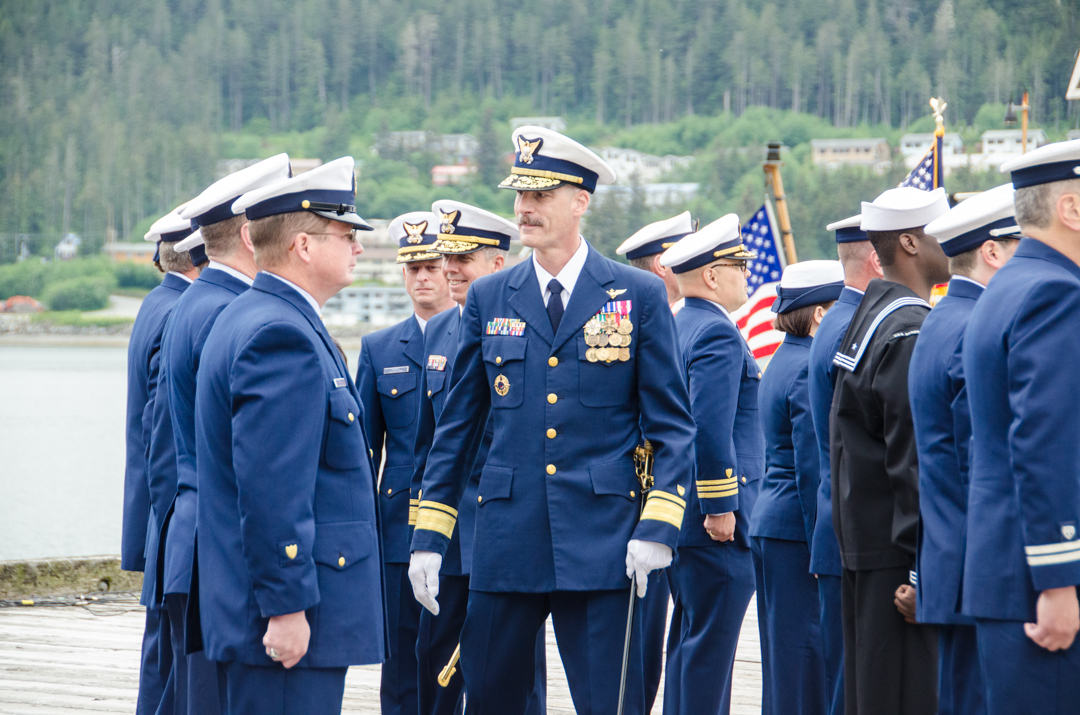
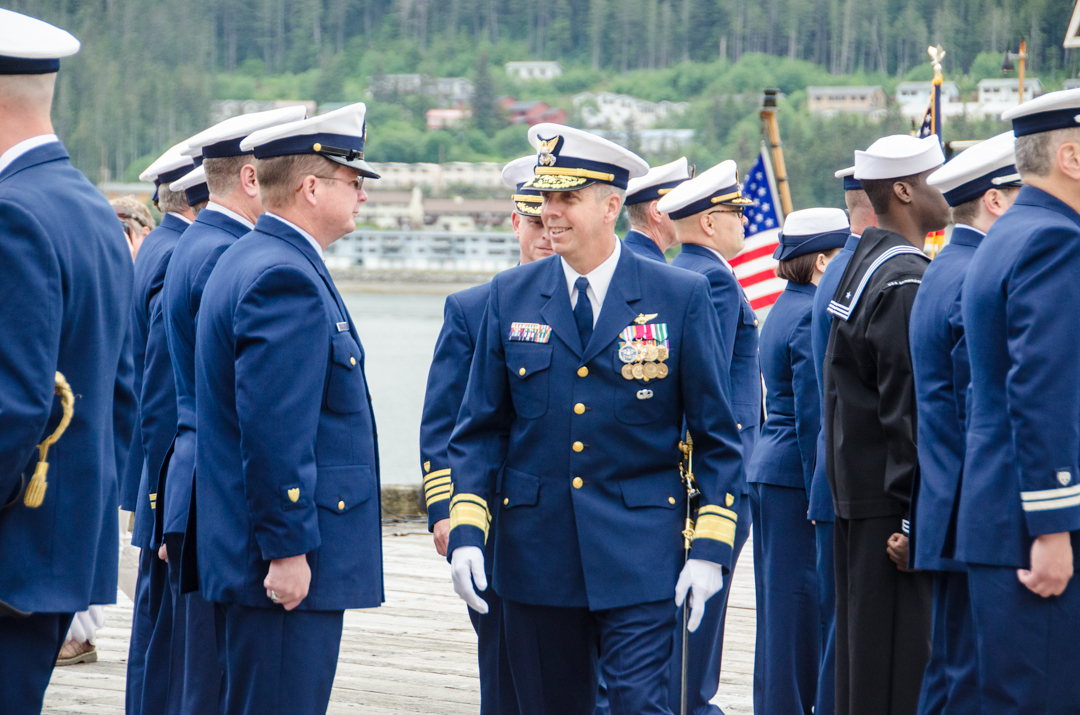
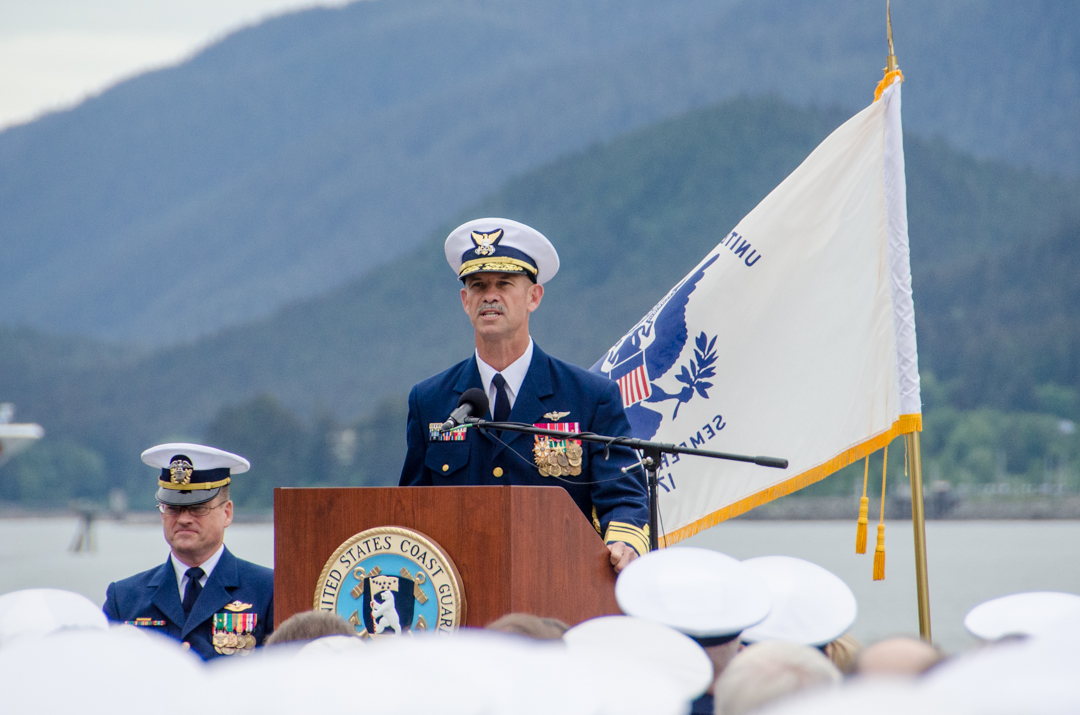
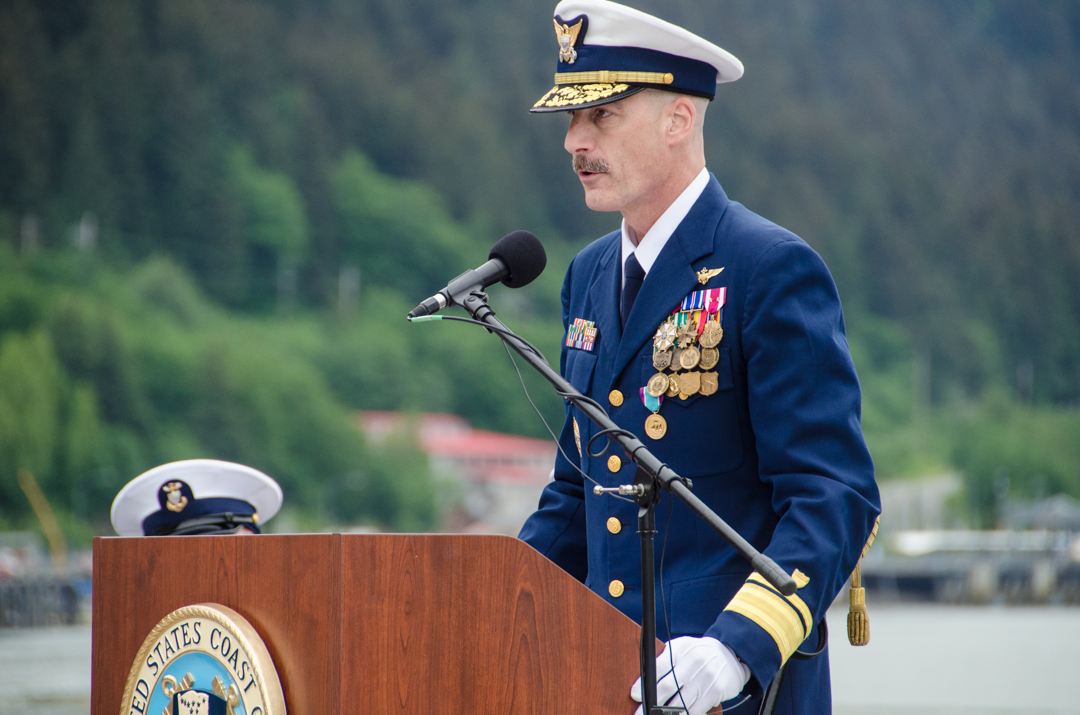
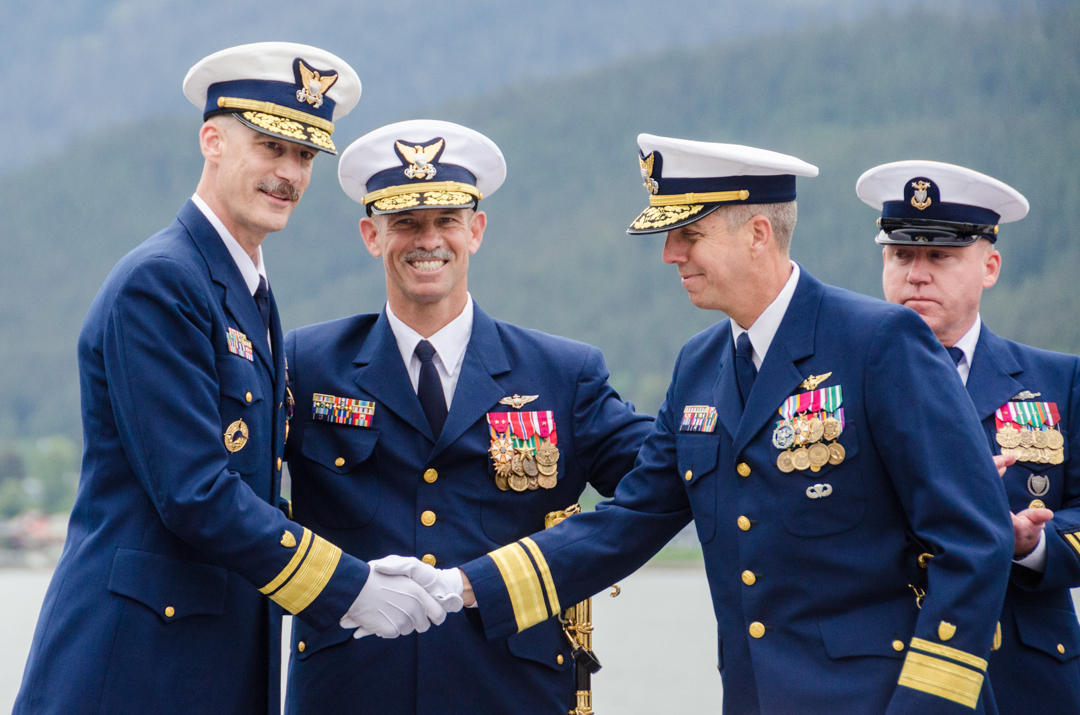
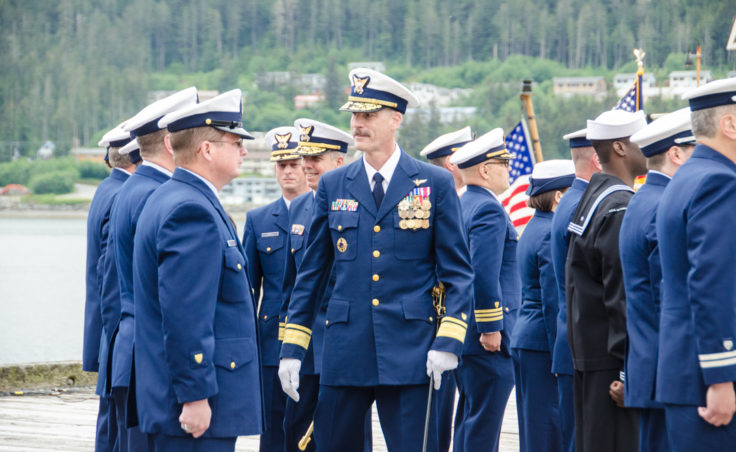
With the buoy tender Sycamore as a backdrop and Coast Guardsmen and women in their dress blues, Rear Adm. Tom Ostebo turned over Coast Guard District 17 command to Rear Adm. Dan Abel on Thursday.

Ostebo is known for his work in the Arctic, and Abel says he’s ready to continue what his predecessor started.

Pacific Area commander, Vice Adm. Charles Ray, praised Ostebo’s leadership over the past three years.

“Tom Ostebo has flown over, sailed across, walked the beaches more than any Coast Guardsman, I believe, in the history of this district,” Ray said.

During Ostebo’s tenure, the Coast Guard launched seasonal operations in the Arctic, where shipping traffic is on the rise. When a winter storm prevented a fuel delivery to Nome in 2012, he sent the icebreaker Healy to clear a path for a Russian tanker. He also supervised the Coast Guard’s response to the grounding of the Shell drill rig Kulluk near Kodiak in early 2013.

For these and other successes, Ostebo gave credit to the men and women under his command.

Every day you protect the nation’s commerce, you protect Alaskans, and you protect America’s greatest maritime resources,” Ostebo said. “And you do it better than anyone else, with efficiency and skill.”

Ostebo received a citation for exceptional meritorious service. He’s been nominated for a promotion to vice admiral and a post as the Coast Guard’s Deputy Commandant for Mission Support in Washington, D.C. The position is subject to Senate confirmation. Ostebo says it will allow him to continue focusing on the Coast Guard’s Arctic mission.

He says there’s still a lot of work to be done in that part of the world.

“It’s more than just exploration. It’s the maritime commerce piece,” Ostebo told reporters after the ceremony. “It’s what’s the Bering Strait is going to look like 10, 20 years from now? Will it look like the Straits of Hormuz or the Straits of Malacca? You know, one of these big international straits.”

This will be Abel’s first tour in Alaska, but he says he’s no stranger to the Arctic. In his previous command in Boston, he supervised the International Ice Patrol. That’s the Coast Guard program established to monitor icebergs in the North Atlantic to avoid another Titanic.

“We also supported Operation Nanook, which was practice mass rescue, environmental cleanup in the Arctic,” Abel said. “And the other thing we did, we supported the North Atlantic Coast Guard Forum to 17 nations that band together. Eight of those are the Arctic nations.”

Abel says he plans to travel extensively in Alaska and work with local communities to learn as much as he can about the state’s unique needs.

The far reaches at these high latitudes are going to be the challenge,” he said. “And I’m going to have to learn from the folks that’ve been standing watch a little longer than I.”

Abel is already planning to visit Nome, where Mayor Denise Michels says marine traffic has increased so much that the port, which used to close in October, is now open into November.

“Last year we had over 400 dockings in Nome,” Michels said. “Every year it’s more and more. We have more cruise ships this year.”

Michels hopes Abel can visit in July, when vessel traffic is at its peak.

“Safety is a concern, environmental issues is a concern,” she said. “The marine mammal migration through the Bering Strait, which is the choke point where we’re at, you know, it’s our front yard. So, to have him understand our concerns for subsistence, food security is going to be very important for his leadership for the next couple of years.”

The Coast Guard’s 17th District is based in Juneau. The commander leads 2,500 active duty, reserve, civilian and auxiliary personnel statewide, and manages operations over more than 3.8 million square miles and more than 44,000 miles of coastline.

Hearthside Books retains local ownership

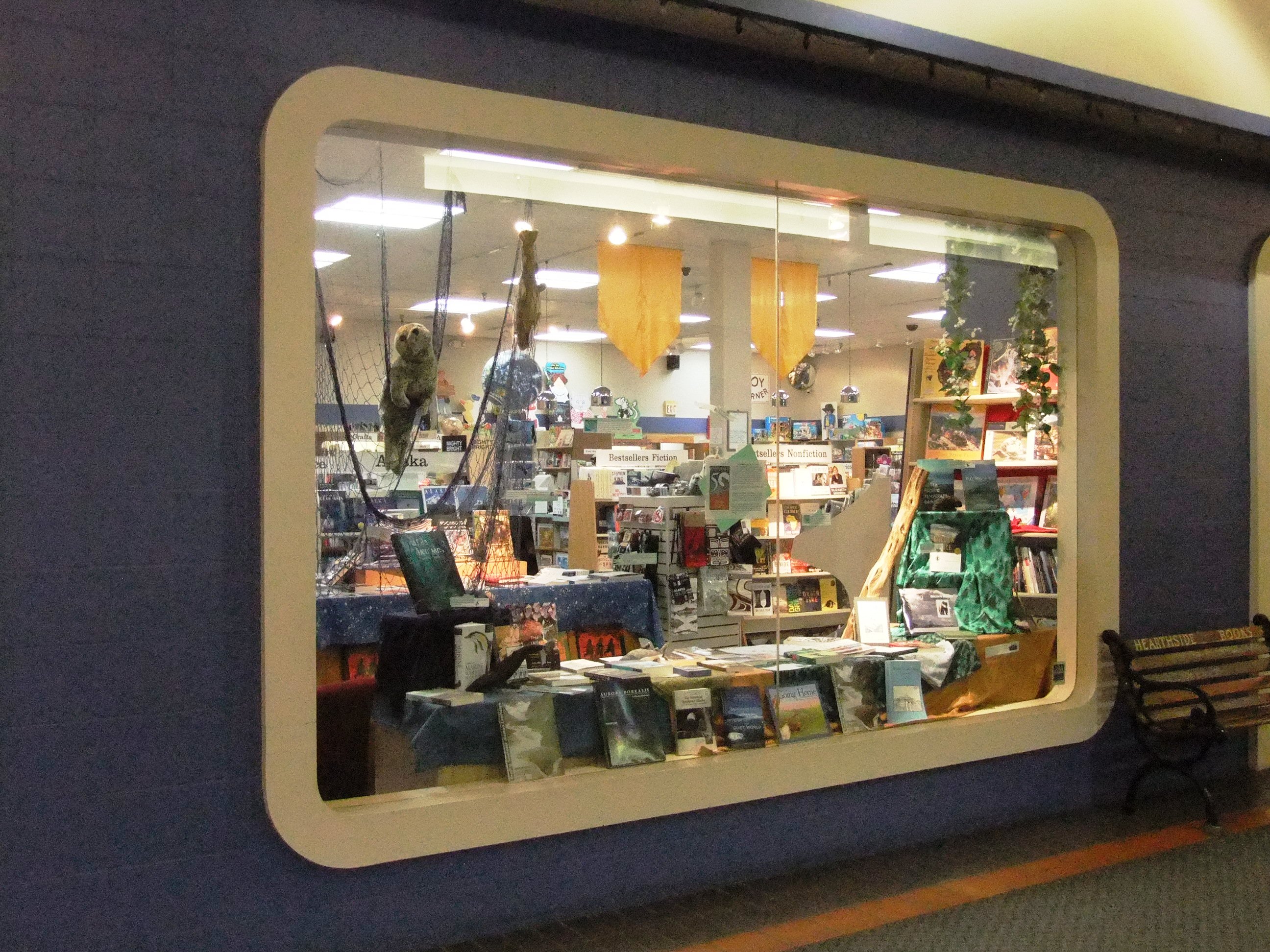
The Hearthside Books stores in Nugget Mall & downtown Juneau have been purchased by Brenda Weaver of Juneau.
The Hearthside Books stores in Nugget Mall & downtown Juneau have been purchased by Brenda Weaver of Juneau. (Photo by Rosemarie Alexander/KTOO)

Juneau’s Hearthside Books has been sold to a local teacher.

Brenda Weaver purchased the bookstore from co-owners Debbie Reifenstein and Susan Hickey. They announced the sale on Wednesday.

Reifenstein and Hickey opened the store in 1975 in Merchant’s Wharf downtown then moved to the corner of Franklin and Front streets. A short time later, they opened the Nugget Mall store.

“We both had been teachers and we resigned from teaching to get into business,” Reifenstein says.

The new owner is doing the same. Weaver worked in a bookstore for a dozen years before she went into teaching. Now she’s going back to the book business.

For the past 18 years, Weaver has been a teacher at Riverbend Elementary School. During all her years as an educator, she’s been involved with statewide and local literacy programs.

She will take over both the downtown and Nugget Mall stores, and says she will retain the current staff, because Hickey and Reifenstein have done a good job of hiring.

“I am dependent on them,” she says. “I’ve gotten to know them pretty well in the last couple of months and I totally want to keep all of them.”

Hearthside-local ownedWeaver says she’s not planning changes in the stores until she’s more familiar with the operation.

“It will remain the same size and grow slowly. There will be increased inventory by the end of the year and we’re hoping to have a couple of grand openings, one at each location, later on in the year,” she says.

Hickey and Reifenstein decided to retire last year. The company has been on the market for about 15 months.

Reifenstein says it was important to sell the store to a local owner, because an outside company would not know the Juneau market.

Susan and I just feel so indebted to the community for supporting us for 38 and a-half years. Juneau is a wonderful place to have a bookstore,” she says. “People are just real well-read here. Some of our sales reps are surprised at the market in Juneau.

Reifenstein and Hickey say they’ll help with the transition then consider themselves retired.

Site notifications
Update notification options
Subscribe to notifications