Community

Janice Sheufelt: “There isn’t a harder or longer race”

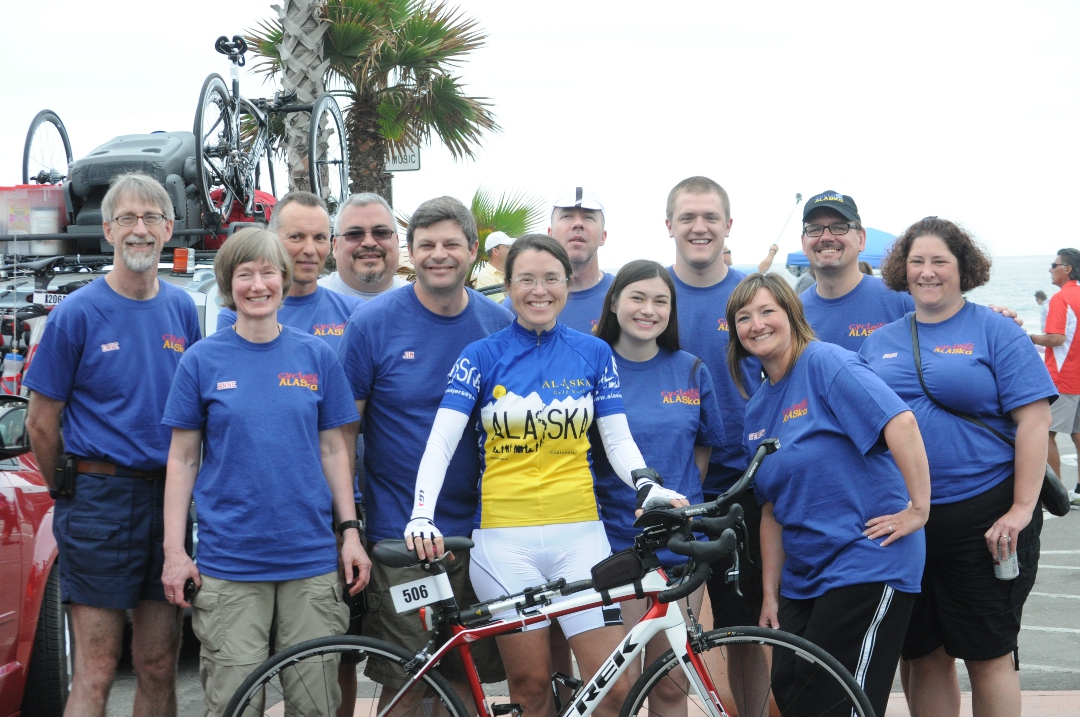
Janice Sheufelt 2014 RAAM
Janice Sheufelt (center) with her crew at the start of the 2014 Race Across America ultra-marathon cycling race. (Photo courtesy Janice Sheufelt)

After more than 3,000 miles on a bicycle in less than two weeks, Juneau’s Janice Sheufelt is back in the capital city with her second consecutive Race Across America title in hand.

Sheufelt won the premier ultra-marathon cycling event last year as part of a two-person mixed-gender team. This year she won the solo female division, finishing June 22 with a time of 11 days, 18 hours and 2 minutes. That’s despite a mid-race setback due to breathing problems.

There isn’t a harder or longer race, so I’m really glad to have won this one,” Sheufelt says.

After jumping out to an early lead in the non-stop bike race from Oceanside, Calif. to Annapolis, Md., Sheufelt started having difficulty breathing in the Rocky Mountains.
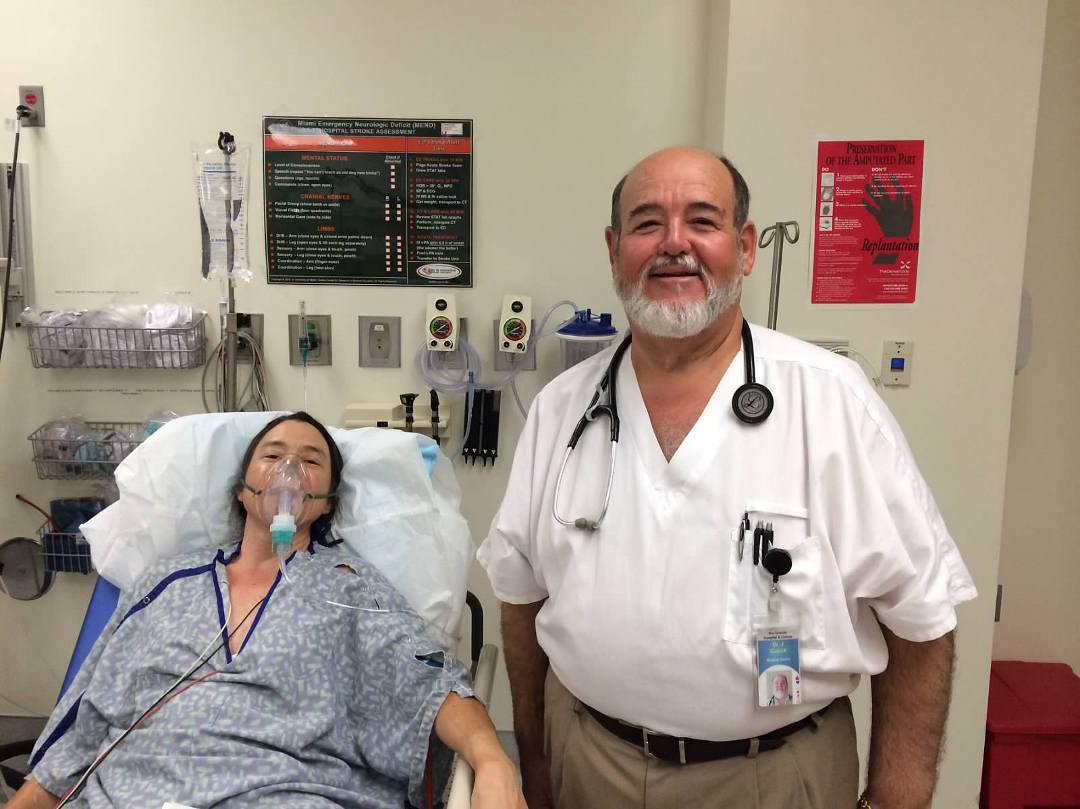
Janice Sheufelt 2014 RAAM
Janice Sheufelt with Dr. James Cusick at Rio Grande Hospital in Del Norte, Colo. Sheufelt developed breathing issues during the 2014 Race Across America that required nebulizer treatments. (Photo courtesy Janice Sheufelt)

“I was coughing and wheezing and the smallest little uphill I could barely get up it, because I couldn’t get any breath,” she says. “The crew said I sounded like a 90-year-old smoker. I just sounded terrible.”

Sheufelt says she’s never had asthma or other breathing issues. She tried using an inhaler, but that didn’t work. So after reaching the time station in South Fork, Colo., Sheufelt and her crew made their way to a local hospital.

Sheufelt is a family physician and was worried she might have fluid building up in her lungs due to the high altitude. Fortunately, a chest X-ray revealed otherwise.

“Because if I had had that, my race would have been over,” she says. “You can’t keep going with that.”

The emergency room doctor told her the breathing problems probably resulted from a combination of the dry desert air in the early stages of the race and too much exercise without giving her body time to recover. The doctor prescribed breathing treatments with a nebulizer and lots of rest.

“I told the doctor I wanted to get back on my bike within a few hours,” Sheufelt says. “And he’s like, ‘Well, you shouldn’t be back on your bike, period. But, you know, if you’re going to do the race, you need to at least give your body like 12 hours.'”

While she was off the bike, Sheufelt fell into third place. She says it was demoralizing and to make matters worse, she still felt terrible when she returned to the race.

At one point in eastern Colorado, you know, I just thought there’s no way I was even going to finish,” she says.

Sheufelt slowly began to regain form, moving into second place in Kansas. She and Canadian cyclist Joan Deitchman were neck-and-neck through most of Missouri, before Sheufelt re-took the lead for good.

She says a lot of back and forth is unusual in the Race Across America, where stronger cyclists tend to build leads and keep them.

“I was like, I really don’t want to be racing in Missouri,” she says with a laugh. “I just want to ride my bike my own pace.”

Janice Sheufelt 2014 RAAM
Janice Sheufelt cools off in a pool at the time station in Congress, Ariz. during the 2014 Race Across America. (Photo courtesy Janice Sheufelt)

Sheufelt says doing RAAM with a teammate last year contributed to the success of her solo race. About half of her 11-member crew this year did the race with her last year as well. Her husband, Jim, served as crew chief. He says even when Janice was feeling down, the crew tried to remain upbeat.

“She thought she was doing horrible. We didn’t feel that way at all,” Jim Sheufelt says. “We were amazed she was riding so well.”

Their daughter Megan was responsible for keeping track of the 8,000 calories a day that Janice ate during the race. Jim says the crew also featured Janice’s brother, Ted, a massage therapist, as well as some of her co-workers from the Ethel Lund Medical Center in Juneau.

“It’s definitely a team effort, because if the riders aren’t getting enough to eat and really being taken care of by the crew, they’re just not going to win,” Jim says. “So it was really nice to get the win from the crew perspective.”

Now that she’s won RAAM two years in row is Sheufelt planning to go for a three-peat?

I really don’t want to do Race Across America again,” she says. “Just because it’s so hard. The training itself is incredibly hard. So I’m just looking forward to riding my bike for fun.”

Her husband says she’ll find another way to challenge herself.

What do bagels and soccer have in common?

More than a hundred people watched the USA-Germany match of the FIFA World Cup Thursday morning at Silverbow Bakery. (Photo by Lisa Phu/KTOO)

During this time of year, they both can be found at Juneau’s Silverbow Bakery at 8 o’clock in the morning. For the FIFA World Cup, the bagel eatery turns into a community gathering space. Sometimes, only a handful of people are watching. Other times, like Thursday morning, more than a hundred people can be found glued to the game.

It’s half-time during the USA-Germany World Cup match. In Brazil, it’s about two in the afternoon. In Juneau, it’s 9 a.m. Most of the more than 100 spectators in the backroom of the Silverbow should be at work.

“You know, I should be, but I’ve forgiven myself these two hours and I’ll just stay late tonight,” says Juneau’s deputy city manager Rob Steedle.

He’s watching the soccer game with his daughter and son.

“My kids grew up playing soccer since they were five or so and I played, myself, in high school very, very badly,” Steedle says.

Chairs fill up quickly during some World Cup matches at Silverbow Bakery. (Photo by Lisa Phu/KTOO)

Silverbow is packed. Every seat is taken and many people are standing up, lining the walls. That doesn’t stop more people from filing in and finding a few inches of free space to watch the big screen.

Steedle says World Cup exemplifies Juneau’s close knit community.

“A lot of these people, I believe, could be watching at home, but they come here to be together,” he says.

Adults aren’t the only ones playing hooky.

“We got to skip swim practice and watch the game because it’s so important,” says 15-year-old Aidan Seid.

Aidan is part of Glacier Swim Club and practices three hours a day, six days a week. Even if he hadn’t skipped practice, Aidan made sure he wouldn’t miss the big match.

“I had the game recorded at home and I was planning on watching after, but this is much better, watching it live. It’s good to see a lot of people from Juneau in the same room all rooting for the same team,” Aidan says.

Marla Berg got to Silverbow around 7:30 for the 8 a.m. start time. She scored a table but says most had already filled up by then. She’s fiddling with her phone.

“I have a good friend who’s down in Brazil. I just texted her and she said she wasn’t at the game today. She was out in the Amazon eating fried piranha, watching the game on TV,” Berg says.

Silverbow Bakery turns into a gathering space for World Cup fans. (Photo by Lisa Phu/KTOO)
Silverbow Bakery is a gathering space for World Cup fans. (Photo by Lisa Phu/KTOO)

Watching World Cup at the Silverbow Bakery started eight years ago when some Juneau residents approached owner Jill Ramiel about showing the matches on a big screen ordinarily used for artsy movies. In 2006, World Cup was in Germany and games started at 6 a.m.

“And none of the bars were open, and they knew that we had this big screen and they asked us and I honestly thought maybe four people would show up and then there was like a hundred people there,” Ramiel says.

Back then, Ramiel and her husband lived in the space right above the backroom where the games were showing.

“And my husband and I would wake up to ‘Gooooaaaaaaal!'”

Since 2006, Ramiel has capitalized on Silverbow being a local hot spot to watch the games. For the USA-Germany match, she doubled the staff from four servers to eight. And they’re all needed to serve bagels, muesli, coffee, among other items.

“Our beer sales at 8 a.m. have never been higher,” Ramiel says.

Germany won by one goal and dominated the match. In the final minutes of the game, USA got in a couple solid shots. When neither materialized into goals, the crowd let out screams and exclamations of disappointment. But at least everyone was disappointed together.

Slideshow: The flying umiak

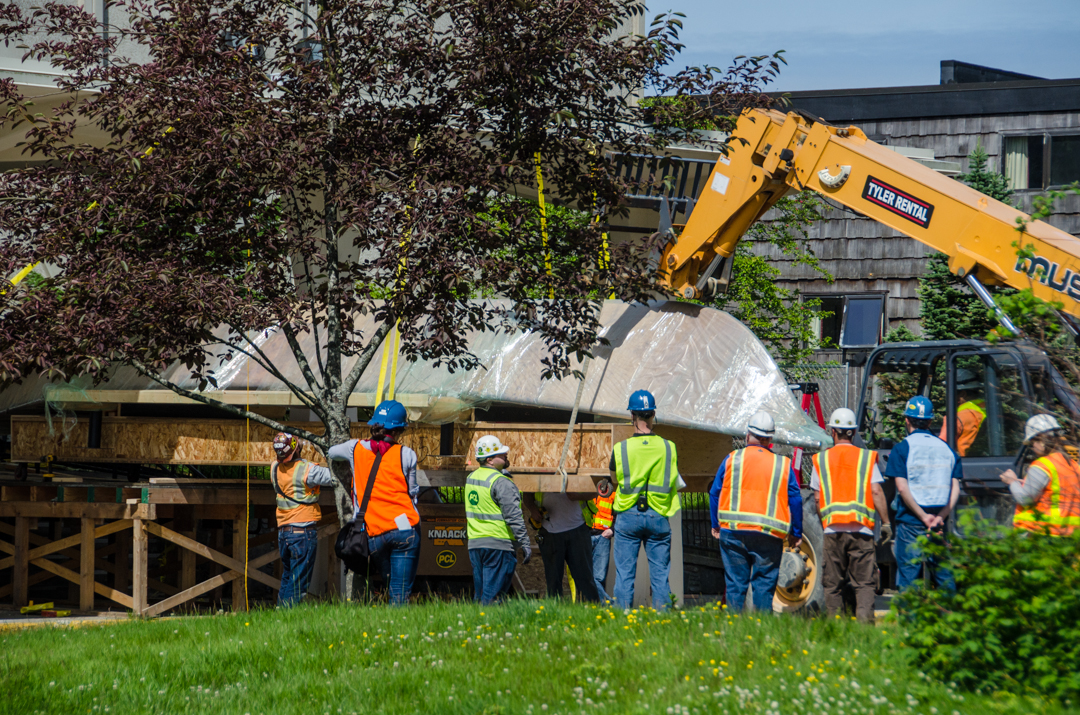
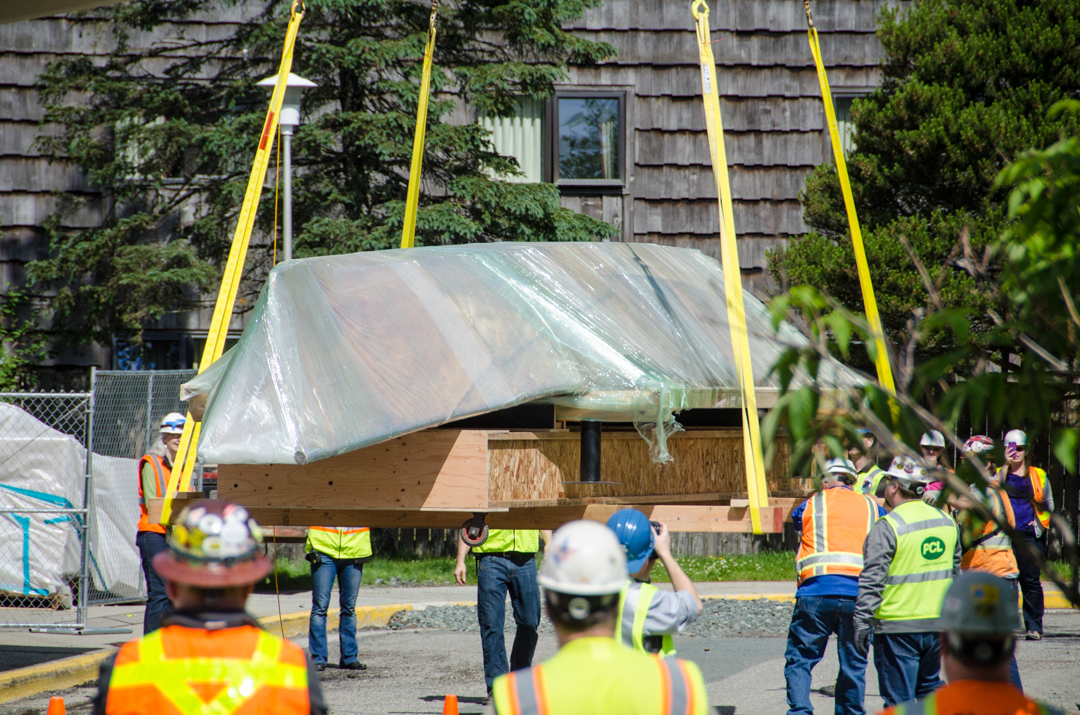
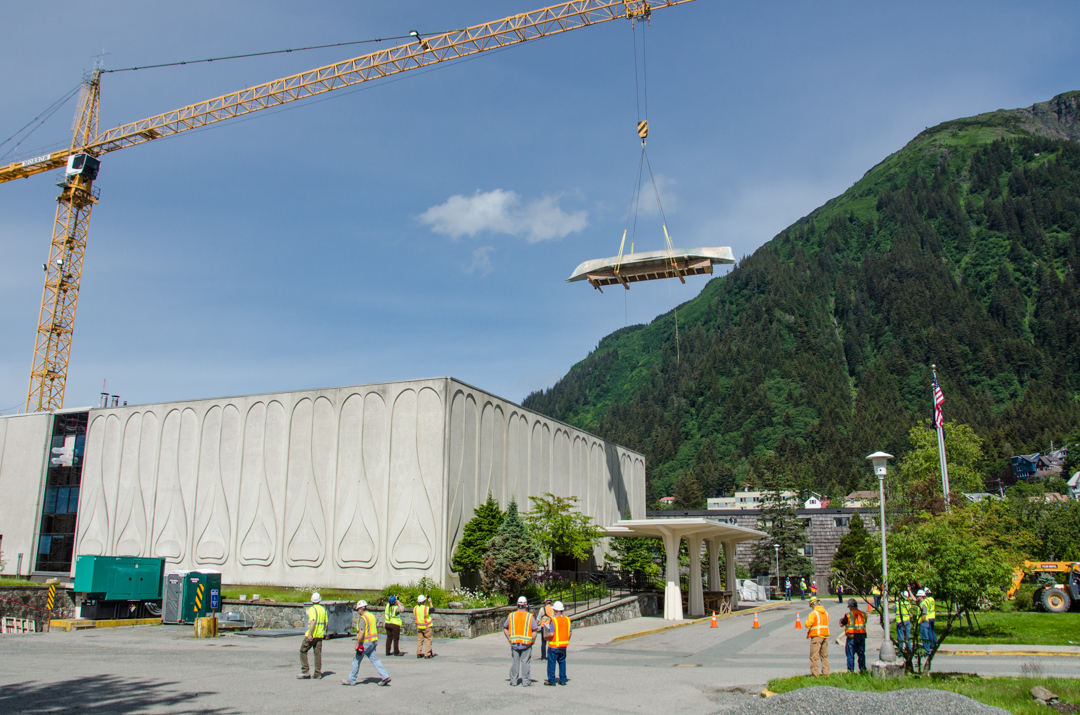
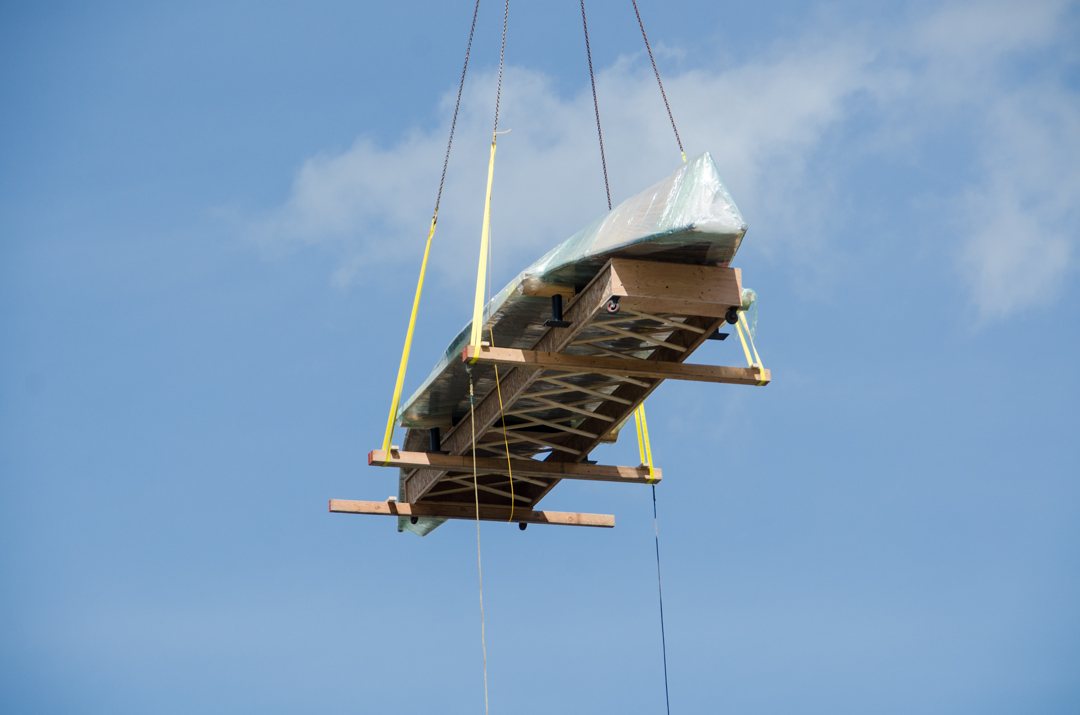
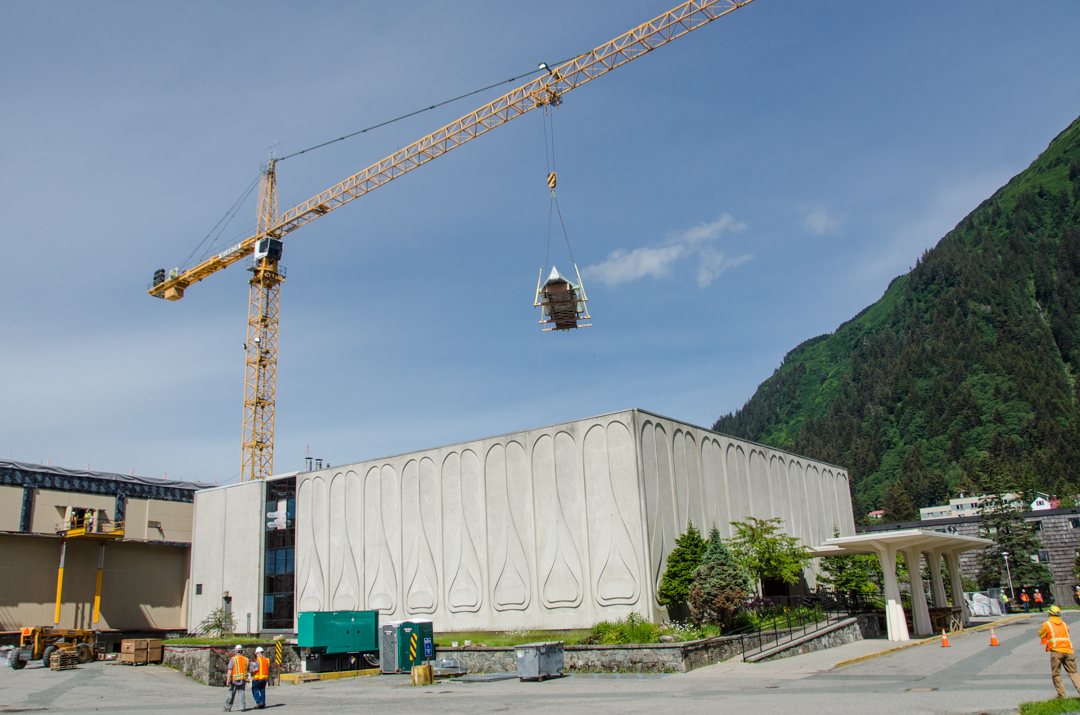
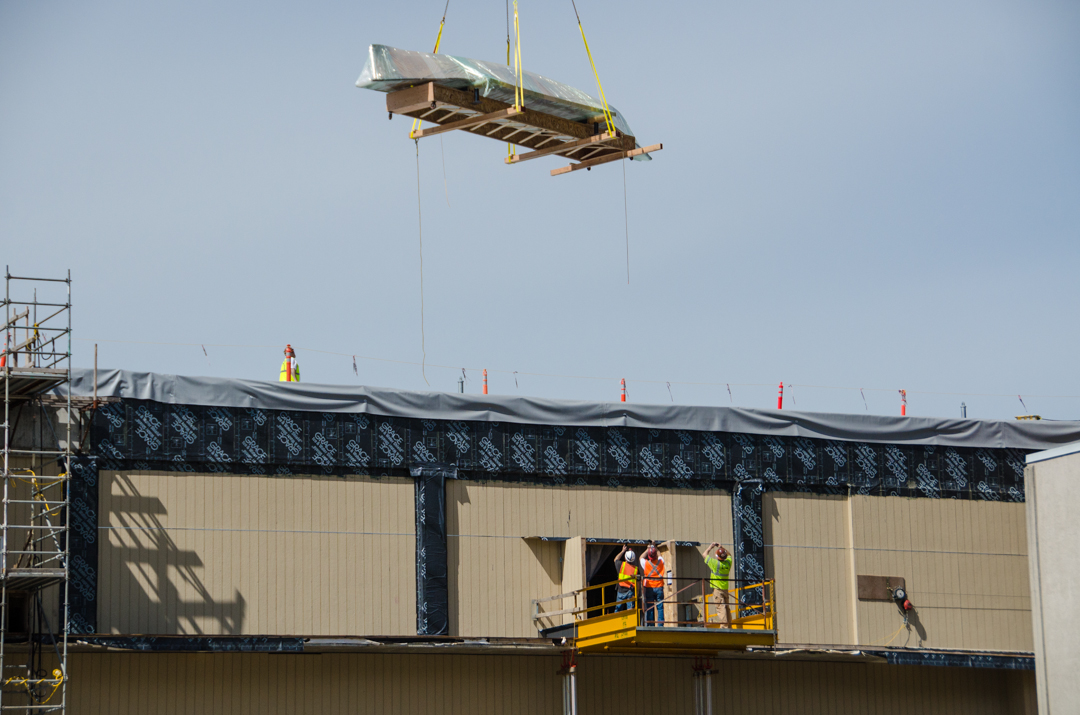
Earlier today, dozens of construction workers, museum employees and spectators gathered around the Alaska State Museum to watch crews carefully remove the 8-foot-wide, 45-foot-long walrus skin umiak from the old building.

The boat was originally constructed inside the building, making its removal a tricky affair. Situated on a protective wooden platform, the boat was removed through the front door before being hoisted up and over the building.

The new Alaska State Library, Archives and Museum will house the umiak along with the rest of the artifacts from the Alaska State Museum. The new facility is slated to be completed in 2016.

Alaska scores well on long-term care report card

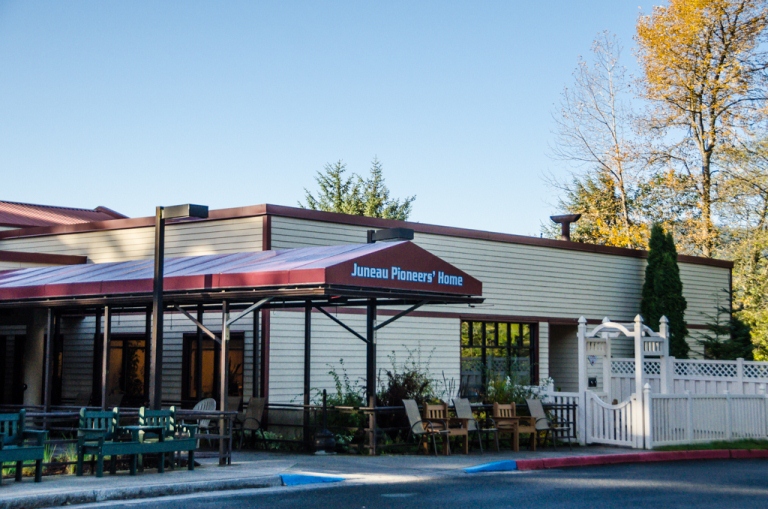
The Pioneer Home is the only assisted living facility for senior citizens in Juneau. Photo by Heather Bryant / KTOO.
The Pioneer Home is the only assisted living facility for senior citizens in Juneau. (Photo by Heather Bryant / KTOO)

Alaska ranked 5th in the nation in a recent state scorecard on long-term services for older adults, the disabled, and family caregivers. However, local experts say gaps in the system can cause big problems.

AARP, the Commonwealth Fund and SCAN Foundation developed the report released last week. Alaska’s high marks were for quality of care, choice of long-term care settings and providers, and effective transitions between home, hospital and long term care. However, Alaska AARP Interim state director Steve Hahn says Alaska doesn’t provide enough support to family caregivers – those helping a relative with, say, bathing, dressing or cooking:

“Really the areas we’re looking at are making it easier for people to not really have to make those difficult choices between keeping a job and providing care to someone they love.”

Alaska Long-Term Care Ombudsman Diana Winger says other states, such as Washington, provide broader support to caregivers, and she’d like to see a system similar to theirs here:

“I would really support a plan where we could go in and provide in-home assessments for those people and hook them into a system of family caregiver support that would be on-going in terms of their needs. And beyond just providing respite, providing counseling and other kinds of support services.”

After all, caregivers make a substantial contribution to the Alaska economy, according to Hahn:

“Family caregivers in Alaska contribute an estimated $1.1 billion dollars in health care costs that would have otherwise have to have been spent on nursing homes or other institutional care.”

There are 15 nursing homes in Alaska, and 632 licensed assisted living facilities – almost all on the rail belt. But Winger says the quality of care in assisted living facilities needs improvement:

“Currently our licensing requirements set a pretty low bar. And considering that we’re putting some of the sickest people, most frail people, in assisted living and having the most un-trained caregivers provide care to them, that, to me, is not a good situation.”

Alaska ranked 38th in affordability and access, quite low, considering the report found the cost of long-term care services and supports is unaffordable for middle-income families in all states. Winger says Alaska’s high costs have reduced access to long term care insurance:

“Because our skilled nursing services are so expensive up here, some of the insurance companies have been reluctant to offer services up here. They are not selling their product here. So it’s harder to get insurance. So what happens with families is they spend down what they do have of the senior’s assets. And they when they have pretty much run out, they apply for a Medicaid waiver. And it’s the Medicaid waiver that continues to pay for the services.”

Government funding can always be reduced, so Winger says counting on Medicaid isn’t a good plan. And Hahn says too often, people are trying to become informed and make arrangements when they already have their hands full:

“I think in general, people really aren’t prepared. They are usually confronted with a caregiving situation before they really seek the information they need.”

He says planning ahead can help people get what they want in their future, and help guide family decisions:

“I would give three simple words of advice: Decide, Create, Share. So that’s really decide what’s important to you when it comes to your own long term care needs. For so many of us, the goal is to age in place. People want to stay in their home. So if that’s the case, two, make that be known. So create your own plan and share that plan with people who’ll ultimately be responsible for your care.”

Hahn says the AARP website offers a wealth of information about long term care, and links to other resources.

Hospital employee survey shows room for improvement

Bartlett Regional Hospital (Photo by Heather Bryant/KTOO)

A Bartlett Regional Hospital survey shows employees think the atmosphere of trust in the organization is adequate – not excellent, not poor, but leaning towards needing improvement. This comes one year after the city hired an investigator to look into complaints of a hostile work environment.

During a regular meeting Tuesday night, the hospital board heard results of an organizational culture survey measuring areas like morale, information flow and customer service.

An organization conducts a culture survey to explore some key questions.

“When you come to work, how much of yourself do you really bring to work? How engaged are you?” asks Mila Cosgrove, human resources director at Bartlett Regional Hospital.

She says an organization with engaged employees has high rates of retention and low rates of workplace accidents and sick leave.

The survey information, she says, is good for management and leadership teams.

“Leaders tend to view their organizations more positively than line workers, so when you go out and you ask your employee population, ‘Hey, what do you think about working here?’ you get a different view, potentially, of how you might view the organization and I think there’s a lot of value in that as well. It helps us ascertain what we’re doing well, what we could be doing better,” Cosgrove says.

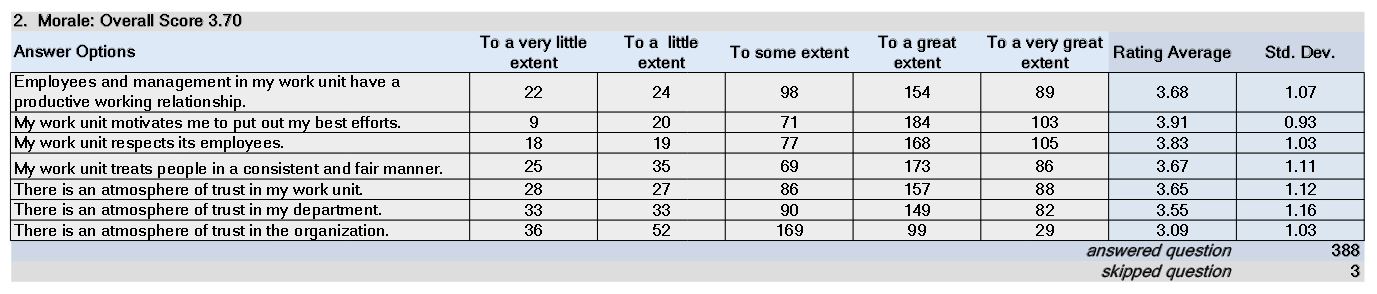
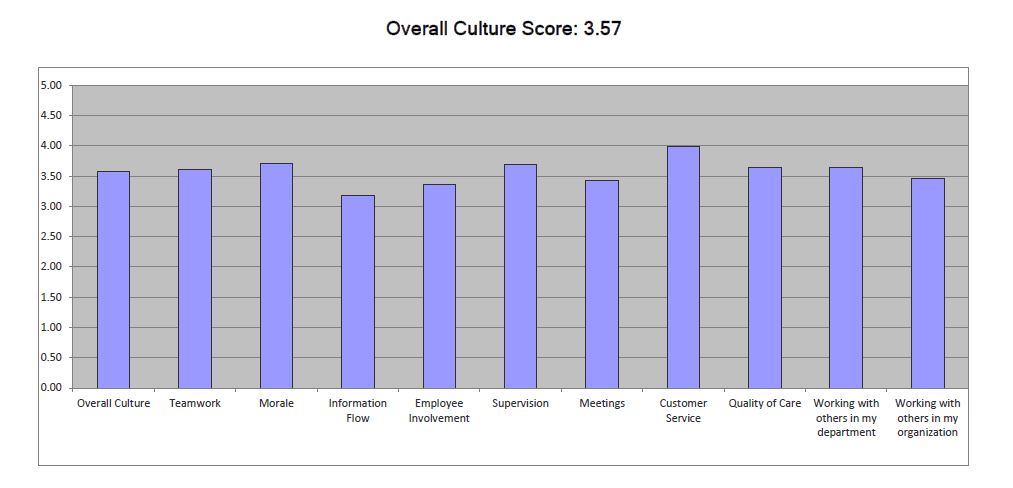
Scores ranged between one and five – one indicating serious problems and five indicating excellent performance. Of the seven questions in the morale category, the one on atmosphere of trust in the organization scored the lowest with an average of just under 3.1.

Morale is considered a critical area of the organization's culture. (Chart courtesy of Bartlett Regional Hospital)
Morale is considered a critical area of the organization’s culture. (Chart courtesy of Bartlett Regional Hospital)

New Bartlett CEO Chuck Bill says that’s an area he’s paying attention to and something he was asked about during interviews before he joined the hospital in mid-May.

“My intent obviously is to build a culture of trust and a culture of mutual support and I think we’re well down that pathway with the employees. I mean, we’ve got to focus on taking care of the patient. We obviously need great, engaged employees who love to come to work to do that do well,” Bill says.

One year ago, the hospital conducted a personnel investigation into allegations of a hostile work environment created by senior leadership officials. Bill says he hasn’t felt any remains of that sentiment.

“If it was out there, I think people did a really good job of putting that behind them and saying, ‘Let’s move forward enthusiastically together,'” he says.

Bill says it’s challenging to join a team that had leadership problems, but says outstanding personnel issues have been resolved and the hospital is moving forward productively. He did not identify what the issues were.

Of the roughly 500 employees at Bartlett, about 80 percent participated in the survey over a two week period in the spring. It was distributed though work email and employees filled it out online. Participation was anonymous.

Hospital employees were surveyed on various categories of work culture. The scores ranged from a low of 1.0 to a high of 5.0. (Graph courtesy of Bartlett Regional Hospital)

The category with the highest score was customer service, which, Cosgrove says, doesn’t surprise her, “because people are really rating their own care for others. That one always is higher on surveys that I look at, and that’s a good thing. You want people to take pride in their work.”

The category with the lowest score was information flow.

“Not surprising,” says Cosgrove. “It’s difficult in any organization to make sure that there’s enough communication.”

Following last summer’s personnel investigation, the board directed the CEO at the time, Chris Harff, to communicate better with employees and to the community.

The City and Borough of Juneau started doing culture surveys in 2002 and has done one annually since 2007. Cosgrove says the hospital conducted one a year and a half ago through Press Ganey, a patient experience improvement firm. This is the first time the hospital is doing one based on the city’s model. Cosgrove says it’s more cost effective and a better fit overall. This year’s results will establish a baseline.

Most of the eight categories scored above a 3.5, like teamwork, supervision and quality of care. The overall culture score is 3.6. This figure leads Cosgrove to think employees are generally happy.

“I think if you stopped a random employee in the hall and said, ‘Why do you come to work?’ I think they would be able to tell you that, that they value what they do and they make a difference,” Cosgrove says.

The survey results are useful but, Cosgrove says, what’s most important is how that information is used to move organizational culture from good to excellent.

CBJ looking for volunteers for boards and commissions

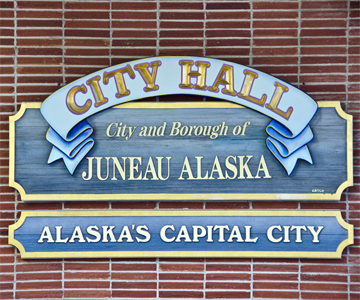
Juneau City Hall
Juneau City Hall sign. File photo.

Wednesday is the deadline to apply for a seat on several city and borough enterprise boards.

The Juneau airport, docks and harbors, Eaglecrest Ski Area and personnel boards are looking for volunteers.

Wednesday is also the deadline for the Commission on Sustainability and Historic Resources Advisory Committee.

Six other boards and commissions have vacant seats that are open until filled.

Deputy City Clerk Beth McEwen says selection is up to the CBJ Assembly. Once applications are filed, the full Assembly sits as a human resources committee.

They send out some advance interview questions then there’s a 5 to 10-minute interview with each one of the applicants conducted with all the Assembly members that can be present,” she says.

After the interviews, the Assembly deliberates in private to come up with a list of possible members. She says the Assembly often looks for “the strengths and weaknesses of the current board members and where there might be holes on the board” that can be filled with different expertise and professional knowledge.

McEwen says CBJ has a large number of boards and commissions and it’s sometimes difficult to fill all the seats. The Juneau Human Rights Commission, for example, has four openings. The commission has so few members it is unable to make a quorum to do business.

Interested in serving on a CBJ board or commission? Applicants can file on the CBJ website.

Site notifications
Update notification options
Subscribe to notifications