Energy & Mining

Congress divided over possibility of LNG exports

There’s a rift in Congress over whether the country should export its glut of natural gas. A new report released by the U.S. Department of Energy is bolstering the hopes of those who want to see more exports.

The report shows that controlled exports of liquefied natural gas would add revenue to the U.S. economy.

Fadel Gheit is a senior energy analyst with Oppenheimer. He says exports would increase profits of domestic gas producers.

“If it is managed well, I think it would be beneficial for the producer and it would encourage more supply. And it would have room for reasonably priced natural gas in the U.S. – competitive if I might add, compared to any other market in the world,” Gheit said.

Gheit said the report leaves some questions unanswered.

“How long it will take to get this program going. How much it’s going to cost. Will there be tax incentives? What the is the government role,” he asked.

The report did not examine Alaska’s export potential. The state already exports some Cook Inlet gas to Japan, and any increased North Slope production would ship to Asia, as well. Though, it would require a pipeline costing tens of billions of dollars to build.

There is some skepticism on Capitol Hill about how exports would affect domestic prices. And the report is unlikely to quell some fears. Oregon Democrat Ron Wyden, who will chair the Senate Energy Committee com January, has been vocally skittish of exports.

… Just the opposite of the top Republican on the Committee, Senator Lisa Murkowski.

“I think that works to incent additional production, which is good for other sectors, whether it’s the manufacturing sector. It’s good for jobs. It’s good for the balance of trade,” Murkowski said.

The report shows that large scale exports could force prices up as much as twenty-five percent – but the prices would still be cheaper than five years ago. Senator Wyden’s office issued a statement saying he’ll continue to question the Department of Energy over whether exports will increase costs to industries that rely on domestic gas – like chemical manufacturers.

The chemical industry is a major force in Louisiana … and so is the oil and gas industry. Democratic Senator Mary Landrieu says all industries would benefit from certainty.

“It might be helpful for Congress to make a statement that natural gas export is in the best, long-term interest of our country,” Landrieu said.

So far only one terminal in the Lower 48 has an export permit for LNG– in Louisiana. Analysts are now speculating the Department of Energy may now rule on the dozen or so pending applications for new ones.


Juneau Assembly passes resolution supporting electrical power extension

Mayor Merrill Sanford
Juneau Mayor Merrill Sanford backed a resolution expressing Assembly support for electrical power to Cascade Point at the end of Glacier Highway. Photo by Casey Kelly/KTOO.

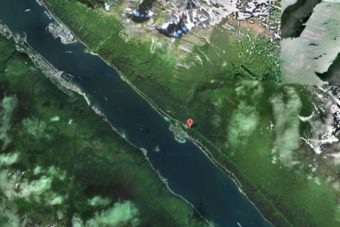
The Juneau Assembly is now on record as supporting an extension of electric power to Cascade Point at the end of Glacier Highway, also known as Veterans Memorial Highway.

A resolution adopted at a special meeting Wednesday says an extension of power would support economic and housing development, as well as public safety out the road, while reducing dependence on diesel fuel for power generation.

But Auke Bay resident Karla Hart criticized the measure for what it doesn’t say. Namely that extending power would also benefit the Kensington Mine and other mining developments in the area, as well as major landowners like Goldbelt Corporation.

“I just don’t see that this is well thought out in terms of public policy,” Hart said during public testimony on the resolution. “It feels very much like its being pushed through for some private special interests.”

Hart also criticized the lack of public input on the resolution. The idea was first floated by Mayor Merrill Sanford at an Assembly retreat in October. Deputy Mayor Mary Becker made a motion requesting a draft resolution last week, and a copy was first made public on Monday. Hart said she first learned that the resolution was coming up for a vote an hour before Wednesday’s meeting.

“This is tying in with a lot of things that you realize are pretty controversial in the community,” she said. “To just push this through and ask for it in a big hurry without any understanding of what’s going on by most of the community is irresponsible in my opinion.”

Mayor Sanford pointed to letters written to Juneau’s legislative delegation last session seeking state funding for an extension of electrical infrastructure. Officials from Kensington, Goldbelt, and the Juneau Building & Construction Trades Council were among those who wrote the letters.

Sanford says the project has been discussed on and off in various forums for years.

“At Southeast Conference we dealt with it as one of the options of getting out to the mine,” Sanford said. “So, we’ve had lots of opportunity to go through, and you can see by the people who have written or have supported this that there is a lot of support within the community.”

Hart replied that she still felt the resolution deserved more scrutiny.

“Most of us who are private individuals in the community are not members of Southeast Conference,” she said. “It’s an expensive organization to join as an individual, and it’s expensive to go to their meetings. So Southeast Conference, while it’s a venue for some of you, it’s not a public venue in the sense of a public-Juneau-citizen-voter-community discussion.”

Assembly member Loren Jones objected when Sanford asked if the Assembly wanted to adopt the resolution unanimously. Jones asked two questions, including how much it would cost to extend power to the end of the road.

For the answer, Sanford called upon Duff Mitchell, Vice President and Business Manager of Juneau Hydropower, Inc., who said he thought it would be about $20 million.

Juneau Hydropower is seeking to develop a hydroelectric project at Sweetheart Lake about 30 miles southeast of the Capital City. The company’s website says Juneau Hydropower “hopes to produce green renewable energy for the wholesale/industrial market.”

Jones removed his objection, and the resolution passed unanimously.

Link:
Letters of support for extension of electric power along Glacier Highway

Glacier Highway power resolution to go before Juneau Assembly on Wednesday

The Juneau Assembly will consider a resolution expressing support for electric power to the end of Glacier Highway at a special meeting on Wednesday.

A draft of the resolution was posted to the city’s website Monday afternoon. It mentions the economic benefits of electric power to residents and property owners in the area. It also says extending hydroelectric power to the end of the road would reduce carbon emissions and make the area more attractive to future housing development.

It does not mention potential benefits to the Kensington Mine and other mining development in the area, or the State of Alaska’s Juneau Access project.

This will be the public’s first and possibly only chance to comment on the resolution. The idea came out of discussions at two Assembly retreats, where public input was not allowed.

Members are trying to act fast, so Governor Sean Parnell can consider putting funding for a project in his state budgets for next fiscal year.

The special meeting will be held Wednesday at 5:30 p.m. in City Hall Assembly Chambers. It will be immediately followed by the Assembly Finance Committee meeting.

Link:
CBJ Resolution 2632

Shell’s oil spill containment gear ‘crushed like a beer can’ in testing

BSEE photo of damaged containment dome on board the Arctic Challenger
The Arctic Challenger’s containment dome, crumpled after a field test in Puget Sound. Credit: BSEE

Shell Oil has been building and testing equipment designed for the Arctic Ocean in Puget Sound.

In September, a key test of underwater oil-spill equipment was a spectacular failure.

It forced the energy giant to postpone Arctic oil drilling until next summer.

Shell and its federal regulators have been tight-lipped about the failed test. But freedom-of-information requests reveal what happened beneath the surface of Puget Sound.

Before Shell can drill for oil in the Arctic Ocean, it needs to prove to federal officials that it can clean up a massive oil spill there. That proof hinges on a barge being built in Bellingham called the Arctic Challenger.

The barge is only one component of Shell’s plans for handling oil spills off the remote north coast of Alaska. But the Obama Administration won’t let oil drilling get under way until the 36-year-old barge and its brand new oil-spill equipment are in place.

On board the Arctic Challenger is a massive steel “containment dome.” It’s a sort of giant underwater vacuum cleaner. If efforts to cap a blown-out well don’t work, the dome can capture spewing oil and funnel it to a tanker on the surface.

The Arctic Challenger passed several US Coast Guard tests for seaworthiness in September. But it was a different story when its oil-spill containment system was put to the test in 150-foot-deep water near Anacortes, Washington.

The federal Bureau of Safety and Environmental Enforcement required the test of the oil-spill system.

“Breached like a whale”

According to BSEE internal emails obtained by KUOW, the containment dome test was supposed to take about a day. That estimate proved to be wildly optimistic.

*Day 1: The Arctic Challenger’s massive steel dome comes unhooked from some of the winches used to maneuver it underwater. The crew has to recover it and repair it.

*Day 2: A remote-controlled submarine gets tangled in some anchor lines. It takes divers about 24 hours to rescue the submarine.

*Day 5: The test has its worst accident. On that dead-calm Friday night, Mark Fesmire, the head of BSEE’s Alaska office, is on board the Challenger. He’s watching the underwater video feed from the remote-control submarine when, a little after midnight, the video screen suddenly fills with bubbles. The 20-foot-tall containment dome then shoots to the surface. The massive white dome “breached like a whale,” Fesmire e-mails a colleague at BSEE headquarters.

Then the dome sinks more than 120 feet. A safety buoy, basically a giant balloon, catches it before it hits bottom. About 12 hours later, the crew of the Challenger manages to get the dome back to the surface. “As bad as I thought,” Fesmire writes his BSEE colleague. “Basically the top half is crushed like a beer can.”

Representatives of Shell Oil and of BSEE declined to answer questions or allow interviews about the mishaps. In an email, Shell spokeswoman Kelly op de Weegh writes:

[quote]”Our internal investigation determined the Arctic Challenger’s dome was damaged when it descended too quickly due to a faulty electrical connection, which improperly opened a valve.  While safety systems ensured it did not hit the bottom, buoyancy chambers were damaged from the sudden pressure change.”[/quote]

Environmental groups say the Arctic Challenger’s multiple problems show that Shell isn’t prepared for an Arctic oil spill.

Environmentalist Todd Guiton lives on Sehome Hill in Bellingham. His condo overlooks the Bellingham Shipping Terminal, where the Arctic Challenger has been under construction for a year now.

“Just look out our window, and there it is,” Guiton says.

He says the steel dome came back from its sea trial with its top half crumpled like a piece of paper. In the two months since, Guiton says, he’s been watching Shell contractors rebuild the dome and reinforce it with more steel.

[quote]“This has to be a very beefy operation to do what they claim it’ll do,” Guiton says. “It failed under very calm, tranquil conditions in the best time of year up here in the Pacific Northwest. If it can’t handle the best we have here, I really have my doubts it can handle even a little adversity in the Arctic.”[/quote]

Spokeswoman Kelly op de Weegh wouldn’t say what Shell is doing to fix the dome or when it would be ready for testing again.

Earlier in November, the Obama administration called for more research into handling oil spills in the far North.

The Arctic Research Commission said oil-spill experiments and tests need to be done in the Arctic Ocean and that federal regulators need more staff or more time to properly vet proposals for offshore drilling at the top of the world.

The BSEE internal e-mails obtained by KUOW

CBJ Assembly asks for resolution backing power to the end of Glacier Highway

The Juneau Assembly has asked the city’s Law Department to draft a resolution calling for an extension of electrical power to the end of Glacier Highway.

The idea came out of two Assembly retreats, where members discussed goals for the next year. Those goals have yet to be officially adopted, and public comment was not allowed at either retreat.

Deputy Mayor Mary Becker made a motion at Monday’s regular meeting asking for the resolution. She says extending power to the end of the road could open up development and benefit the Kensington Mine as well as other mining prospects in the area.

“It would at least start with something, and there would be benefits, cost savings, I think, with having electricity out there,” Becker says.

Other members did not object to the motion, and Becker thinks the idea enjoys broad Assembly support.

But Assembly member Jesse Kiehl says a lot will depend on who pays for it. He says he would not support a project that uses local CBJ tax dollars.

“It’s not my top priority for our taxpayer dollar,” Kiehl says. “But I think that the idea of getting more electricity – there are businesses out near the end of the road that are actually looking into generating their own power – so, I like the concept of getting electrical infrastructure to more parts of the borough.”

One idea is to get money inserted into the state operating or capital budget.

The resolution is supposed to come back to the Assembly as soon as December 10th, in time for a vote before Governor Sean Parnell releases his proposed budgets for the next fiscal year.


View Glacier Highway in a larger map

EPA suspends BP from future government contracts

Deepwater Horizon oil well in the Gulf of Mexico. (Photo courtesy Green Fire Productions)

Just weeks after BP accepted blame for the Deepwater Horizon oil spill in the Gulf of Mexico; the federal government is announcing more punishment for the company. The Environmental Protection Agency is suspending BP from future government contracts.

Less than two weeks ago, BP agreed to pay $4.5 billion and plead guilty to eleven criminal charges. The company still needs to settle the Clean Water Act violations from the spill, and that could total more than twenty billion dollars.

So yesterday’s news was yet one more blow. The EPA is suspending future contracts between the company and the federal government.

Ed Hirs is a professor of energy economics at the University of Houston. He says the contracts between the government and company can be wide-ranging.

“The arrangements would be entering into new lease holds with the federal government,” Hirs said. “So this would suspend BP from leasing new tracts to explore.”

“It could extend to BP entering into contracts to supply the government with fuel or to provide services.”

Services like transportation, refining and consulting. But Hirs says this is by no means a severe punishment.

GULF of MEXICO - Gas from the damaged Deepwater Horizon wellhead is burned by the drillship Discoverer Enterprise May 16, 2010, in a process known as flaring.  Gas and oil from the wellhead are being brought to the surface via a tube that was placed inside the damaged pipe.
GULF of MEXICO – Gas from the damaged Deepwater Horizon wellhead is burned by the drillship Discoverer Enterprise May 16, 2010, in a process known as flaring. Gas and oil from the wellhead are being brought to the surface via a tube that was placed inside the damaged pipe. U.S. Coast Guard photo by Petty Officer 3rd Class Patrick Kelley.

“I think this is just a window dressing on the part of the EPA,” Hirs said. “It’s really not going to have any business effect on BP in the long-run.”

Because, Hirs says, the government will continue to honor existing contracts. And the federal government has an interest in keeping BP profitable, because it wants to collect the billions of dollars in fines from the company.

Still U.S. Senator Mark Begich expressed concern that the administration is singling out the oil industry.

“I think if that’s the new issue, of criminal issues against companies, then there are a lot of companies we should be looking at,” Begich said. “If you look at the defense end, we’ve had companies have problems but they’re not barred from business.”

Neither the EPA nor BP would comment for this story. Both issued statements.

The EPA blasted the company for a “lack of business integrity.” It says suspensions typically last up to 18 months, but can continue as long as there are ongoing legal proceedings.

The announcement has not affected the value of the company yet. BP stock finished up three tenths of a percent yesterday.

Site notifications
Update notification options
Subscribe to notifications