Energy & Mining

One injured in Sitka Coast Guard boiler explosion

A civilian contractor was injured Wednesday at Coast Guard Air Station Sitka when a biomass boiler exploded in the station’s main hangar. This incident happened about 12:30 p.m.  The injured man was transported by local EMS to the hospital.

Commanding officer Ward Sandlin said Air Station Sitka personnel and local authorities are working with investigators to determine the cause of the explosion. The station’s other two biomass boilers have been shut down pending the results of the investigation.

Air Station Sitka is the first base in the Coast Guard to convert to the biomass system, which burns wood pellets instead of fuel oil.

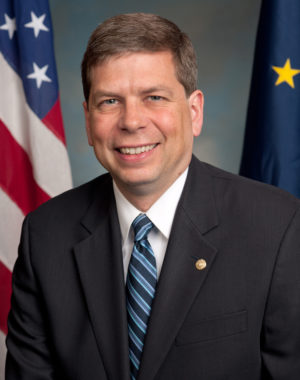
Wednesday’s incident comes less than a week after U.S. Senator Mark Begich toured the boiler and praised the project. Air Station Sitka was testing the new wood pellet system, and hoped to have it fully operational by November 1st.

U.S. Supreme Court rejects challenge to roadless rule

WASHINGTON (AP) – The Supreme Court has turned away an appeal challenging a federal rule that bars development on 50 million acres of roadless areas in national forests.

The justices on Monday decided to leave in place a federal appeals court decision that upheld the so-called roadless rule that took effect late in the presidency of Bill Clinton.

The state of Wyoming and the Colorado Mining Association challenged the rule, arguing that closing so much forest land to development has had serious consequences for residents of Western states and the logging, mining and drilling industries.

The challenge centered on the contention that that U.S. Forest Service essentially declared forests to be wilderness areas, a power that rests with Congress under the 1964 Wilderness Act. The Forest Service manages more than 190 million acres of land.

With the high court’s decision not to hear the case, the state of Alaska has the only pending lawsuit against the “Roadless Rule.” The state’s challenge is currently pending in federal court in Washington, D.C.

Chieftain seeks Chinese financing to open Tulsequah mine

A China-based engineering company and its Canadian subsidiary will acquire 30 percent of the Tulsequah Chief Mine in British Columbia at the headwaters of the Taku River.

Mine owner Chieftain Metals says is has a non-binding agreement with China CAMC Engineering Company – or CAMCE — and Procon Holdings of Alberta to build and operate the mine.

CAMCE will arrange long-term financing for 70 percent of mine development costs with a Chinese financial institution. The agreement calls for the CEO of Procon to join Chieftain’s Board of Directors, with the right to appoint a second director when the loaned is closed. Procon will invest nearly $10 million for more than 22.4 million shares of Chieftain Metals at $4 a share.

Mine officials did not return KTOO calls, but in a news release, Chieftain President and CEO Victor Wyprsyski says Procon’s investment will provide 2013 funding to complete a feasibility study and on-site projects. No details as to what the on-site projects would be.

Chieftain purchased the property about two years ago. Wypryski has said Chieftain plans to be operating the old multi-metals mine within the next three years. Tulsequah has been closed for more than 60 years, leaching Acid Rock Drainage into the Tulsequah River, a tributary of the salmon-rich Taku. The company appears to have a cash-flow problem. It recently shut down a water treatment plant due to high operating costs. That has put it in violation of its Environmental Management Act permit from the B.C. government.

Shell cancels fall drilling operations

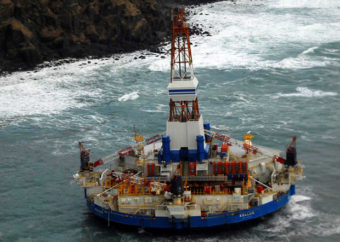
Royal Dutch Shell PLC says it no longer plans to try to drill deep enough to reach oil in exploratory wells off Alaska’s coast this year.

Shell says it is scaling back ambitions until next summer, after one of its containment systems failed during a test. The company says that in the time remaining this season it plans to drill shallow “top holes” for wells that may be further pursued in coming years.

The company was granted two exploratory drilling permits by the U.S. government after a long struggle with environmentalists who say seeking oil in the icy waters is too risky.

A several setbacks, including problems with a drilling safety system Shell Oil volunteered to put into place, are complicating the quest to reach oil-bearing rock during this season’s short open water season. Last week, the company was forced to delay drilling in the Chukchi Sea due to ice floe movements. And Royal Dutch Shell announced Monday that a containment dome being tested off the coast of Bellingham, Wash., was damaged Saturday night in its final test.

Time needed to repair the damage, as well as delays from ice and waiting for the Alaska Native whaling season to end, figured into the decision to cancel plans to complete exploratory wells this year in the Chukchi and Beaufort seas.

Shell Alaska spokesman Curtis Smith did not immediately have details as to how the dome was damaged.

Ice prompts Shell to halt Arctic drilling

Shell has paused its drilling operation in the Arctic just a day after starting. The Noble Discoverer drill rig cut into the Chukchi Sea floor Sunday morning but had to disconnect from the well site Sunday evening to get out of the way of a massive island of sea ice bearing down on the area.

“It’s about 30 miles long. It’s about 12 miles wide,” Shell spokesperson Curtis Smith says. “It’s moving about 0.3-0.5 knots. It varies in thickness of course, but in its thickest area it’s about 25 meters (82 feet) thick, so that’s pretty substantial.”

Operations could be shut down for several days while the ice moves past the drill site. Smith emphasized that this just part of working in the Arctic.

“When we worked in the Chukchi and the Beaufort in the 1980s and 90s, this happened then, so it’s not unusual. I think the key is just having a heads up approach and making sure you see what’s coming.”

Smith says Shell had been monitoring the ice island since it was about a hundred miles away from the drill site. A shifting wind brought it towards the company’s Burger prospect. On Monday afternoon it had moved to within 15 miles of the vacated drill site.

State wants Red Devil Mine on National Priority List

Cleanup at the Red Devil mine site is getting special attention from the state’s administration. Attorney General, Mike Geraghty, under the direction of the Governor is requesting that the old mercury mine site be put on the National Priorities List.

The mine is located on a small tributary of the middle Kuskokwim near the village of Red Devil.

In a letter to the Environmental Protection Agency, Geraghty wrote that the BLM “has been unwilling to consider State comments and recommendations.” He further wrote that the BLM has not fulfilled its responsibility to properly assess and mitigate impacts from the mine site.

Geraghty states that putting the Red Devil Mine on the national priorities list will provide consistent funding and will ensure that the State’s concerns are factored into cleanup efforts.

Jennifer Roberts, Federal Facilities Program Manager for the Alaska Department of Environmental Conservation, says the state’s concerns go back nearly 10 years.

“BLM has had some mixed cleanup through time. [They have] never really done a complete investigation,” Roberts says.

In 2006, the State asked for a two-party agreement so they could be more involved in the process which they found to be unsatisfactory, but BLM denied it, according to Roberts. Since that time, she says politics has gotten in the way.

“Apparently, there is some internal issues between BLM Department of Interior and the EPA at the headquarters level that for lack of better terminology, they seem to have some policy differences,” said Roberts.

And those differences, she says, have delayed the clean-up project.

She says the BLM did a partial removal of contaminated soil and built a waste disposal area. But the state did not agree with how it was done and where it was placed. She says there is still mercury in the sub-surface soil.

“What we’re concerned about is that they didn’t go far enough,” Roberts said. “And we have no idea really how those will move through and where those might end up. Our concern always is if it would get into the Red Devil Creek or into the Kuskokwim River.”

Fish in the creek are contaminated. Those findings came out this Spring when BLM started meeting with villages along the river to discuss their sampling projects which found that mercury and arsenic are being released into the creek.

BLM has found contamination in the Red Devil Creek and sediment in the Kuskokwim River, near the mouth of the creek. The State has issued a warning to residents not to collect subsistence foods near the mine. This warning followed a more general one for pregnant women and young children who are cautioned against eating a lot of large-sized pike and lush fish, predators that can accumulate mercury over many years.

The Kuskokwim watershed is within a highly mineralized area known as the Mercury Belt and has naturally occurring mercury and arsenic.

Site notifications
Update notification options
Subscribe to notifications