Energy & Mining

Brooks Range Council opposing ‘Road to Resources’ program

The Brooks Range Council is a grassroots movement opposing Governor Sean Parnell’s plan to develop a road to the Ambler Mining District.

The governor’s office has proposed nearly $29 million next year to advance his “Road to Resources” program, which includes $4 million for the planned road to Ambler. That money will be used for permitting and environmental work on the proposed roads, which the governor says will eventually allow access to resources near Umiat, Tanana and Ambler. The Ambler mining district is the proposed terminus of a 220-mile road from the Dalton Highway.

The governor calls the roads a chance to “grow economic opportunities” in rural Alaska and create jobs. But John Gaedeke, the chairman of the Brooks Range Council, says only industry will benefit from the roads.

The Ambler Mining District holds one of the largest undeveloped copper-zinc deposits in the world. A study commissioned by the Department of Transportation in September of last year estimated the cost of the Ambler road be $430 million, with annual maintenance costs over $8 million. The Brooks Range Council says the true cost could more than double that figure, and that the high-sulfide rock to be mined if the road is built would leech acid into the environment, harming wild fish populations and requiring costly annual cleanup long into the future.

Other critics of the road are also becoming more vocal. The community of Bettles in July passed a resolution officially opposing the road. Gaedeke says any road should be approved by the people who live there.

And to tell the governor “what they want,” the Brooks Range Council is collecting signatures for a petition calling on the governor to abandon the project.

So far, the Brooks Range Council hasn’t received any official response from the governor’s office. If the Ambler road project stays on schedule, DOT hopes to begin the permitting process for the road in October.

Groups sue EPA over oil spill dispersants

Environmental groups in five states are suing the federal government, claiming Environmental Protection Agency rules on chemical dispersants used in oil spills do not meet clean water requirements.

The lawsuit filed Monday in Washington, D.C., claims EPA has not published a schedule that identifies where dispersants can be used and how much can be used safely.

The groups say that during the Deepwater Horizon disaster in 2010, more than 1.8 million gallons of dispersants were dumped into the Gulf of Mexico with little knowledge of the toxic effect.

EPA spokeswoman Hanady Kader says the agency just received the lawsuit and would have no immediate comment.

Three environmental groups also sued the EPA and the Coast Guard over dispersants in April, claiming the effect on endangered species was not known.

Coeur reports strong second quarter, gold production triples at Kensington

The parent company of the Kensington Mine near Juneau is reporting strong second quarter sales and production figures.

Coeur d’Alene Mines produced about 4.9-million ounces of silver and more than 63,000 ounces of gold during the three-month period that ended June 30th. That translates to more than $254-million dollars in sales.

On a conference call for investors this morning (Tuesday), Senior Vice President of Operations Randy Buffington said Kensington gold production nearly tripled from the first quarter, to more than 21,500 ounces. He says recently completed infrastructure improvements at the Berners Bay mine led to a 50 percent reduction in operating costs, to $1,348 per ounce of gold produced.

“We remain focused on achieving sustainable production levels at Kensington, and expect cash operating costs per ounce to decline further to $900 per gold ounce by the end of the year,” Buffington said.

Coeur continues to look for new deposits at Kensington. Miners conducted nearly 15,000 feet of core drilling during the second quarter. Most of it was in an area called Raven, located about 2,000 feet west of the main ore body. Additional exploration drilling took place in an area called Kensington south.

The company also conducted a helicopter-borne geophysical survey to identify future drill targets.

Coeur’s other mines and assets are located in Mexico, Bolivia, Argentina, Australia and Nevada.

The company’s stock price closed up nearly a dollar on the New York Stock Exchange Tuesday, at $18.39.

AEL&P doing work on avalanche diversion

A Juneau utility says a hydro project will be off line for two days this month but no service disruptions are expected.

Debbie Ferreira, with Alaska Electric Light and Power Company, says diesel generators will be used to supplement power production.

The project is going off-line to allow helicopter clearance for materials for a new avalanche diversion structure. The structure, intended to direct the force of an avalanche from the tower base, will be similar to one installed in 2009 that was credited with preventing tower damage from an avalanche earlier this year.

The company included the estimated cost of diesel in the cost of power adjustment on customers’ bills. It says any savings or additional costs related to the diesel usage will be factored into the next quarter’s adjustment.

Study plan for Susitna dam project submitted

The Alaska Energy Authority has submitted to federal regulators a study plan for a proposed large-scale dam between Anchorage and Fairbanks.

The plan includes 58 separate studies that an AEA public outreach liaison says are intended to help AEA better understand the ecosystem and potential impacts from the proposed Susitna-Watana dam. Emily Ford says AEA will hold meetings with other agencies and stakeholders to discuss the study plan. She says the authority will have an opportunity to file a revised plan, taking into account comments from the meetings, in November. The Federal Energy Regulatory Commission will then weigh in on the plan.

Ford says information from the studies will be used in making a license application.

Separately, AEA is soliciting proposals for an independent cost estimate for construction.

EPA considering Shell permit change request

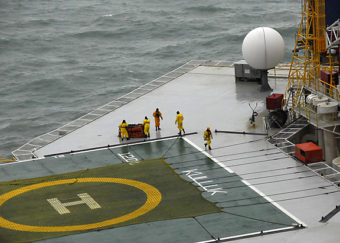
Shell Oil is seeking to changes to the air permit for one of its drill ships after a spokesman says generator engines tested slightly above permit levels for ammonia and nitrous oxide.

Curtis Smith says Shell is working with the U.S. Environmental Protection Agency toward a compliance order that would allow the Discoverer to operate this year. He says this would set in motion a review process for the permit changes for 2013 and beyond.

Shell hopes to begin drilling in the Arctic waters off Alaska in weeks.

Suzanne Skadowski, with EPA public affairs, says this is a major permit and the agency hasn’t decided how to proceed.

She says the regulations for such permits don’t talk about modifications so EPA is reviewing whether it’s appropriate to make revisions.

Site notifications
Update notification options
Subscribe to notifications