Fisheries

Alaska goes on charm offensive against Wal-Mart over salmon dispute

Wal-Mart executives tour DIPAC on January 8, 2014. (Alexandra Gutierrez/APRN)

For months, Wal-Mart and state officials have gone back and forth on whether Alaska salmon should be sold in their stores. The dispute is over a tiny blue sustainability label from the Marine Stewardship Council, which Wal-Mart requires for their seafood. A trip by Wal-Mart executives to Juneau has left state officials optimistic for a resolution.

As executive director of DIPAC, Eric Prestegard is used to giving tours. Every year, tens of thousands of people visit the hatchery in Juneau to see how they raise salmon.

Prestegard: This is the kind of thing you’re only going to see in Alaska. This is very unique to Alaska, what you’re seeing in here. These are incubators.

On Wednesday, his tour group is a little unusual. It’s made up of half a dozen Wal-Mart executives, fresh in from Arkansas to learn about Alaska seafood. Prestegard takes them to a dark room that looks like a server farm. Instead of computer equipment, the towers are full of tiny, young salmon with fresh water flowing through them.

Prestegard: So you can see the fry swimming in there … See ‘em?

Group: Oh, yeah!

Prestegard: And you see the little pink belly? So they still have their yolk sac. They’re not ready yet. See the pink belly?

DIPAC was just one of the stops for the Wal-Mart crew. They visited Alaska Glacier Seafoods; they talked with state biologists; and they ate a catered meal of — what else? — Alaska salmon.

This was all part of the state’s charm offensive to make sure Alaska salmon stays in Wal-Mart and Sam’s Club freezers. Since June, Alaska politicians have been at loggerheads with the company because of a policy to only carry seafood that has a Marine Stewardship Council logo on it. While nearly all of the state’s salmon fisheries have been certified by the MSC more than once, some Alaska seafood processors no longer want to pay the extra fee for their label. They think going through the Alaska Seafood Marketing Institute’s certification process should be enough to prove they operate sustainably, since those measures are based on United Nations guidelines. On top of that, the MSC has been slow to re-certify hatchery salmon in Prince William Sound, which has ruffled some in the industry.

While Wal-Mart’s executives weren’t available for reporter questions during the tour, Prestegard says the whole situation’s left Wal-Mart in a pickle, having to choose between the industry standard for sustainability and Alaska fish.

“Oddly enough, I feel a little bit bad for Wal-Mart, because I kind of like they’re in [between] a rock and a hard spot,” says Prestegard. “They have one side — these NGOs and whatnot — that are kind of hitting on them, saying, ‘You said you were going to do X, Y, and Z, sustainability, blah, blah, blah,’ and then they have the fact that they’re a huge U.S. retailer, and they can’t buy from the U.S. And I think that does go to their core.”

While this whole conflict has played out, Wal-Mart has continued to stock Alaska salmon. And now that the Wal-Mart executives who handle seafood and sustainability issues have visited the state, Commerce Commissioner Susan Bell is hopeful that they’ll keep on stocking it, even if it doesn’t carry an MSC label.

“They’re committed to Alaska seafood,” says Bell. “It’s important to their customers, and they’re not bound by to a single certifier.”

Keeping Wal-Mart as a customer isn’t just an important financial move for the state. While the company does buy millions of pounds of Alaska salmon, the reputational impact that would come from losing them might be as — or even more — vital than the dollars directly attached to their decision.

“We want to be sure that any cloud that comes over Alaska and the sustainability of our fisheries, that we address that immediately,” says Bell.

The flip-side of that is keeping Wal-Mart committed to MSC products is also important to the London-based sustainability organization. While MSC declined an interview for this story, they’ve traded volleys with the Alaska Seafood Marketing Institute over the past year over whose certification program is more rigorous.

For its part, Wal-Mart seems optimistic that they can carry Alaska salmon without going back on their sustainability pledge. In a statement, Vice President of Meat and Seafood David Baskin wrote that “Walmart has proudly sourced seafood from the state of Alaska for many years, and we continue to do so.”


Previous Coverage: Wal-Mart to carry only MSC-certified salmon
 

China bans northwest shellfish over PSP

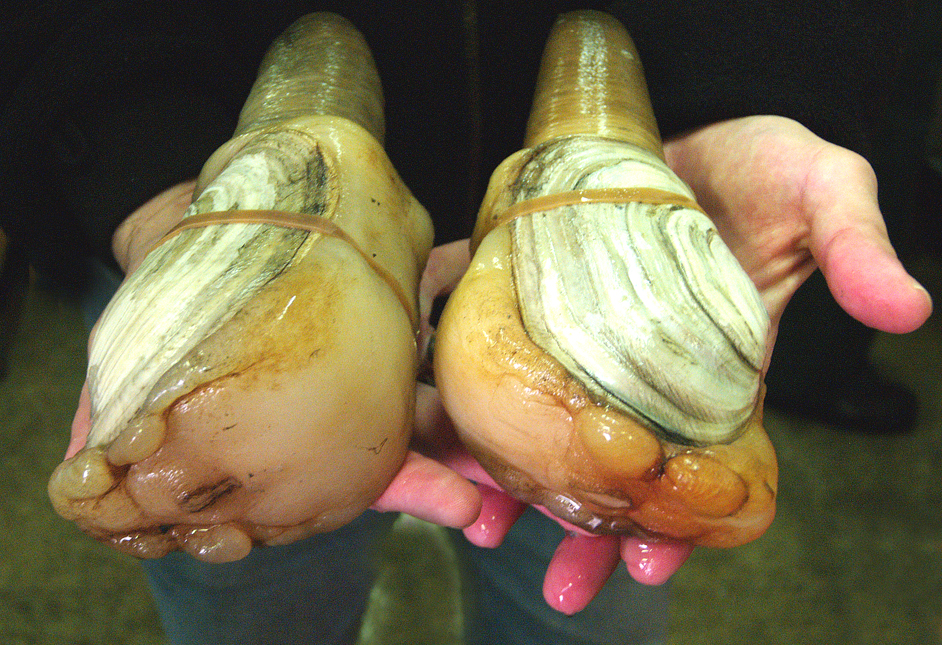
Geoducks are the largest burrowing clam in the world and can also live more than 100 years. (Photo courtesy USDA)

Environment and health officials in the U.S. say they are puzzled by China’s decision to ban shellfish harvested from Northern California to Alaska. State officials say their records don’t show the same unsafe toxin levels that were detected by a lab in China.

China says it found toxins in two shipments of geoducks. These giant clams harvested in Puget Sound and Alaska can go for $150 a pound. Washington’s shellfish industry overall is worth $270 million, and China is the top export market.

China reported that the shipments came from Ketchikan, Alaska, and Renton, Washington, in early October.

Rick Porso, who manages shellfish licensing with the Washington Department of Health, is handling the investigation. He said his agency has pulled two months of records and found no sign that the clams in question had unsafe toxin levels.

The toxin identified by the Chinese lab causes a sickness called paralytic shellfish poisoning, or PSP.

“The product appears to have come from open growing areas in good standing that are heavily monitored with low PSP values,” Porso said. “It just doesn’t match up.”

Alaska also routinely tests for PSP before allowing harvest, according to Kimberly Stryker, manager of the state’s Food Safety & Sanitation Program. She said the little information provided by China about its tests has hindered Alaska analysts’ own search for the source of the toxins.

“We’re in the midst of doing our investigation right now to try and track down potentially whether the lot actually did originate from Alaska and if so what location in came from,” Stryker said. “But with very little information we’re receiving it’s been difficult.”

U.S. seafood inspectors have asked China for more specifics about the tests that led to the seafood ban, according to Tim Hansen, Director of the Seafood Inspection Program at the National Oceanic and Atmospheric Administration.

“How many geoducks did you use for your sample? Did you use the whole animal or just the meat? Did you include the gutball, which is where the PSP would be? Can you explain your extraction methods? This sort of thing,” Hansen said.

Testing the whole geoduck, Hansen explained, can detect unsafe toxin levels because parts of the geoduck that aren’t eaten, like the gut, store most of the toxin.

The reasons for the tests that led to the ban are not yet known. State officials, NOAA and the U.S. Food and Drug Administration all said they were not aware of anyone who became ill because of the shipments.

China is the end point for a third of the $500 million U.S. shellfish industry. Hansen said China has increased monitoring for several of its seafood imports, including a closer inspections of East Coast lobster for levels cadmium as well Washington’s oysters for other toxins.

China has not said when it will lift the ban on West Coast shellfish.

Halibut catch-sharing plan about to begin

Charter halibut clients on board the Crackerjack Voyager out of Seward. (Courtesy Crackerjack Sports Fishing/Alaska Sea Grant Program)

Most halibut charter boat operators will be working under a new regulatory system next year. They expect their clients will get to keep fewer fish. But they’ll also be able to purchase the opportunity to keep more.

The National Oceanic and Atmospheric Administration just announced it will implement what’s called a catch-sharing plan starting next year.

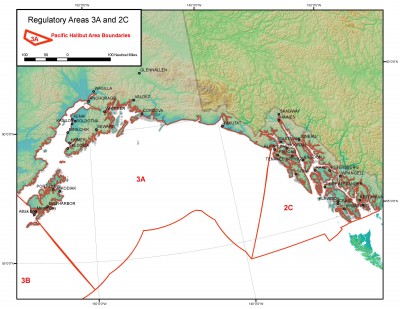
It covers charter halibut fisheries in Southeast and central Gulf of Alaska waters, known as regulatory areas 2-C and 3-A.

Julie Speegle is a spokeswoman for NOAA Fisheries.

The halibut catch-sharing plan is designed to provide fishery managers with greater precision in setting halibut catch limits and management measures. Those management measures then can be more responsive to changes in the halibut biomass and fishing effort,” Speegle says.

The current system sets a guideline harvest level for the charter fleet. Officials say that failed to prevent overfishing as the charter sector grew.

The new plan instead allocates that fleet a percentage of a combined catch limit, which also includes the commercial harvest. Commercial fishermen have long been regulated by such limits, which rise or fall each year depending on the estimated size of the halibut population.

Heath Hilyard is executive director of the SouthEast Alaska Guides Organization, a regional charter-fishing coalition. He says the plan will have an impact on his industry.

“And this year, even there’s been an uptick in abundance in area 2C, it’s still going to translate into somewhere in the neighborhood of about a 30,000-pound decline in our overall allocation for 2014,” Hilyard says.

That’s about a 4 percent reduction.

The halibut catch-sharing plan impacts Southeast, Area 2C, and the central gulf, Area 3A. (Courtesy NOAA Fisheries)

Hilyard says the catch-share plan will affect central gulf charters – from Southeast’s Cross Sound to the far end of Kodiak Island — more than those in the Panhandle.

“We’ve already taken a fair number of hits over the past four to five years. So they’re now facing today what we were facing five years ago,” he says.

For instance, Southeast charter clients have been limited to one halibut a day instead of two since 2009.

The catch-sharing plan has been on the table for years. It’s bounced back and forth between regulatory agencies and the courts – and continues to have critics.

Commercial fishing groups have pushed for the plan as a way to scale back the charter catch.

Kathy Hansen is executive director of the Halibut Coalition.

“The halibut catch-share is a compromise that was developed. And it’s as good as the commercial sector’s going to get for an allocation that reflects the abundance of the halibut resource between the two sectors,” Hansen says.

The plan also includes a provision allowing individual charter operators to expand their clients’ catch.

Linda Behnken is executive director of the Alaska Longline Fishermen’s Association.

“The catch-sharing plan includes a mechanism for transfer between sectors that allows a charter operator to lease a small amount of halibut quota from the longline quota shareholder to offer more harvesting opportunities to a client who may want to harvest a second fish when there’s a one-fish bag limit in place,” Behnken says.

The plan will take effect at the start of 2014.

Read earlier reports:

What would you do with 9 tons of salmon you can’t sell?

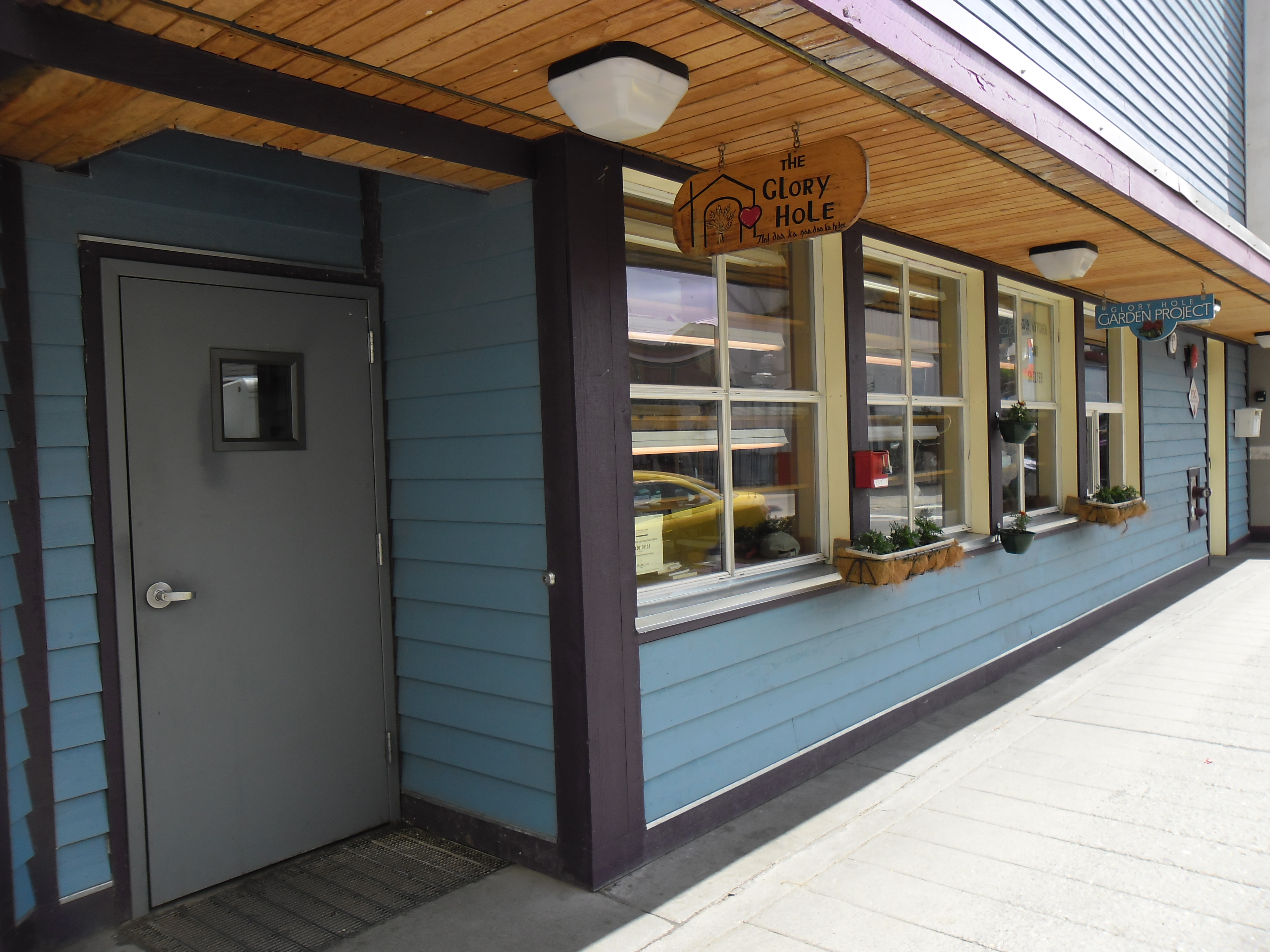
Juneau’s soup kitchen and shelter Glory Hole received the generous salmon donation from SeaShare, a non-profit based in Seattle. (Photo by Lisa Phu/KTOO)

Juneau’s soup kitchen and shelter recently received a donation of salmon with an estimated retail value of more than $100,000.

Nine tons of individually wrapped frozen salmon steaks sit in a container at Juneau’s Alaska Marine Lines. The fish has been donated to The Glory Hole, Juneau’s soup kitchen and shelter.

The donation was made by SeaShare, a non-profit based in Seattle that works with the seafood industry to help get food to people who are served by food banks and soup kitchens.

“Our role is we try to make it easier for fishermen and processers to donate and we’re able to bring in other companies who can help with freight or packaging or storage so the donating entity doesn’t have to bear the whole brunt of bringing them up there,” says SeaShare executive director Jim Harmon.

The salmon donated to Glory Hole is chum bycatch from the pollock trawl fishery in the Bering Sea.

“Fishermen have the opportunity to retain those fish and bring them into shore and donate them to SeaShare. We’re the only agency authorized to receive prohibited species catch. If they don’t retain them for us, they have to throw them overboard so there’s no economic incentive to them for retaining high value salmon while they’re fishing for pollock,” Harmon explains.

SeaShare will donate about 1.5 million pounds of fish this year – ten percent of that comes from the bycatch program; the rest is from seafood companies.

Harmon says the goal is to utilize fish that would otherwise be thrown overboard. SeaShare works with more than 120 boats, which Harmon says accounts for every boat in the Bering Sea pollock fishery and more than half in the Gulf of Alaska fishery.

“We make it clear that nobody is asking for bycatch, the people who work with us are some of the best fishermen who work the hardest to avoid it but when they do catch it, they want to see something good done with it,” says Harmon. “They want to utilize everything that’s in the net, so they donate it to us.”

SeaShare has also donated fish to Anchorage, Kodiak, Fairbanks, Kotzebue, Galena, Dutch Harbor, and St. Paul.

In February Juneau’s Glory Hole received 8,000 pounds of sockeye fillets shared among a few other organizations. Executive director Mariya Lovischuk says she was initially overwhelmed with the current donation of 18,000 pounds, “but then I figured that definitely if I called around our partner agencies we would be able to utilize the fish for sure, and I was right, so now all the fish is going to the right places.”

The fish is being divided based on need and freezer space. Glory Hole clients will help distribute the salmon to more than ten other organizations, including Southeast Alaska Food Bank. Manager Darren Adams says the food bank will get 5,000 pounds.

“That’s a very generous donation,” he says. “We can always use an influx of protein. We tend to get a lot of empty calories but it’s always nice to get stuff like salmon and other meats that allow us to offer something healthy to our clients.”

Adams says the food bank will distribute the fish to several organizations in Juneau as well as to individuals and families that pick up food on Saturdays. Last Saturday, that was 60 people but Adams says the number changes week to week.

According to Lovischuk, Glory Hole will keep 3,000 pounds of salmon. She says that’ll help feed the 60 to 100 people that go there for lunch every day. “I think it’ll probably be enough protein for us to do our lunch program for two months.”

Lovischuk says Glory Hole is almost finished with the coho salmon donated in September by Juneau hatchery Douglas Island Pink and Chum, so the SeaShare donation is coming at just the right time.


FDA To Announce Decision On Genetically Modified Salmon

Frankenfish
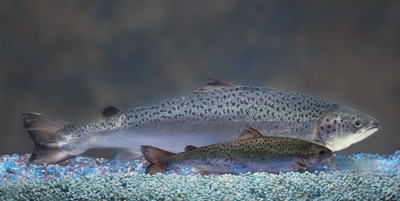
A genetically modified salmon seen next to a wild salmon. The fish are bio-engineered to grow twice as fast. Photo courtesy Rep. Geran Tarr.

Alaska’s Congressional delegation is bracing for an FDA decision on genetically modified salmon and Sen. Mark Begich has asked the head of the agency not to exploit the holiday season to release what’s expected to be an unpopular report.

At issue is a U.S.  company’s plan to create Atlantic salmon eggs for fish farms that include a Chinook salmon gene.

AquaBounty hopes to produce fish that grow to market size in half the time – Begich calls it Frankenfish.

“FDA has never approved anything of this nature, which is basically cloning, and from that perspective I don’t think they’re prepared to understand the potential long-term impacts.”

Last year, on the day after Christmas, the FDA officially announced its initial ruling in favor of gene-modified salmon.

Begich says it’s like they were trying to slip something by when Americans weren’t looking. An FDA spokeswoman, though, says they publish documents when they’re complete. In a letter last week, Begich asked that they avoid such surprises this season, and he says they assured him the document isn’t coming soon.

“At least they’ve responded, which is a good sign that they recognize how important this issues is and they can’t rush it through at the end of the year because they want to,” Begich said.

Nearly 38,000 people wrote comments to the FDA about AquaBounty’s plan. Most were against it. Begich, like Alaska fisherman, says the modified salmon could escape and damage the state’s wild stocks, and he says they’d hurt Alaska salmon in the marketplace.

AquaBounty says its fish will be sterile and reared inland, in Panama, so that they can’t escape and harm natural populations. Canada last month cleared the firm to produce genetically modified salmon eggs for commercial use at its hatchery on Prince Edward Island.

Climate change could affect Southeast salmon habitat

Climate change map
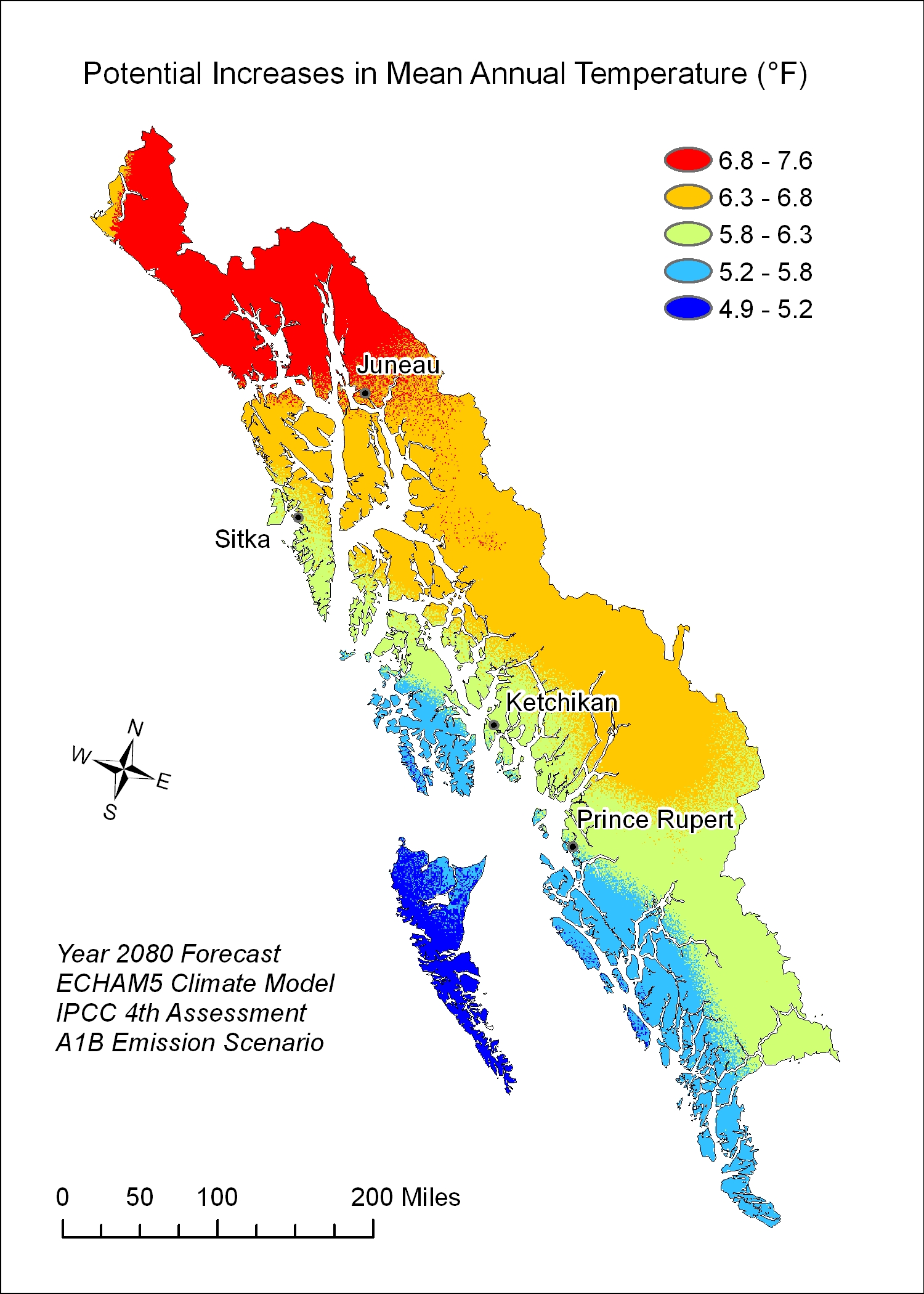
Map based on the latest climate change research shows a projected average annual temperature increase of 6.1 degrees Fahrenheit by 2080 which could mean more rain and less snowfall for Southeast Alaska and western British Columbia (Click to enlarge). Data map courtesy of Colin Shanley of The Nature Conservancy.

Researchers expect that salmon productivity could shift in Southeast Alaska streams over the next seventy years as temperatures rise and rainfall increases because of climate change.

Projections suggest that the average annual temperature for Southeast Alaska and western British Columbia coast would increase 6.1 degrees to just under 44 degrees Fahrenheit in the year 2080. Precipitation in the form of rain could increase over twenty inches to a total of 145 inches, while snowfall could drop about 30% to about 30 inches a year.

“There could be some serious differences,” said Michael Goldstein, a wildlife ecologist with the U.S. Forest Service in Juneau.

Goldstein was among a group of researchers who briefed attendees on the unpublished research at the recent Southeast Alaska Watershed Symposium in Juneau. A similar presentation on the impacts of climate change was made during the recent Al-Can Summit organized by the Juneau World Affairs Council.

Goldstein said the changes in temperature and precipitation would not be uniform throughout the entire Southeast Alaska and western British Columbia area.

So, temperature and precipitation had the greatest change in the northern mainland and the least change in the southern island provinces. Precipitation as snow had the greatest change in the southern mainland and the least change in the outer coast.”

It could mean warmer and drier extended summers, and warmer and wetter winters.

By 2080, Juneau could be like Prince Rupert. Projected average of 45 degrees Fahrenheit or thereabouts is similar to the average temperature of May 2013. I was looking around the internet and Alabama has an average winter temperature of 45 degrees as well.”

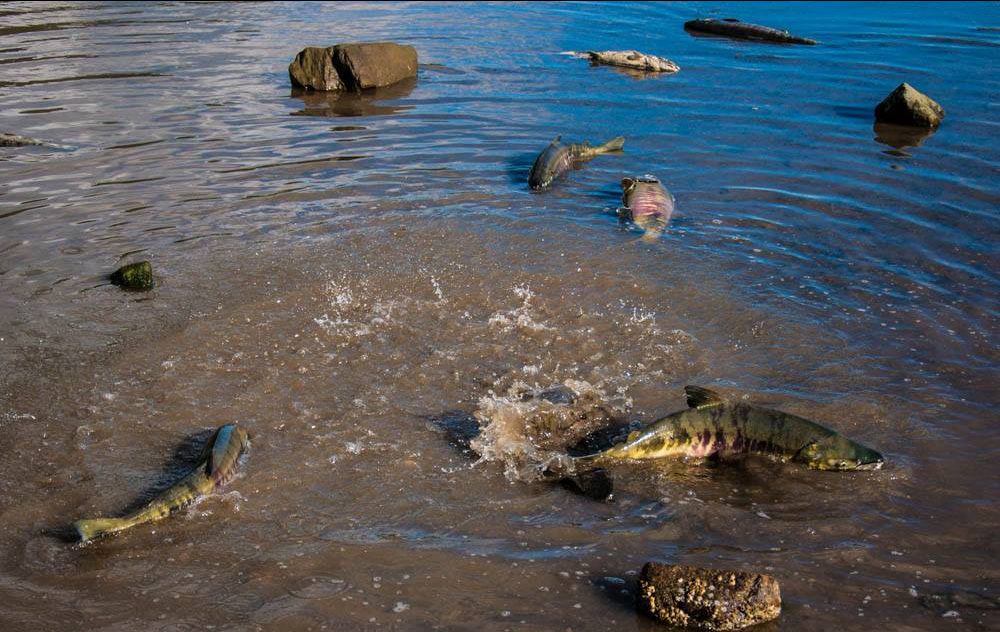
Returning spawning salmon near Salmon Creek in 2013. Photo by Greg Culley

The projections were presented in conjunction with separate research and modeling done by Colin Shanley, a planner and analyst with The Nature Conservancy in Juneau, in his effort to identify salmon habitat ranging from the most vulnerable to the most resilient.

This is watershed-based analysis. Not a cell-based analysis or estuary-based analysis. Basically, watershed area, monthly precipitation both present and predicted from the present climate model, same thing for monthly temperature, watershed elevation, percent lakes, and percent glaciers as well.”

Dr. Sanjay Pyare, associate professor of geography and environmental science at University of Alaska Southeast, said that climate change could play a crucial role in altering stream temperatures and episodic discharges from nearby glaciers and the ice field.

If you look at the overall discharge coming out of an area like Southeast Alaska and northern British Columbia annually compared to a place like the Mississippi River Basin, it’s actually something like two times the overall freshwater discharge. Obviously, it has a lower land mass overall. So, there’s a lot of water coming down the pipes in a place like Southeast Alaska.”

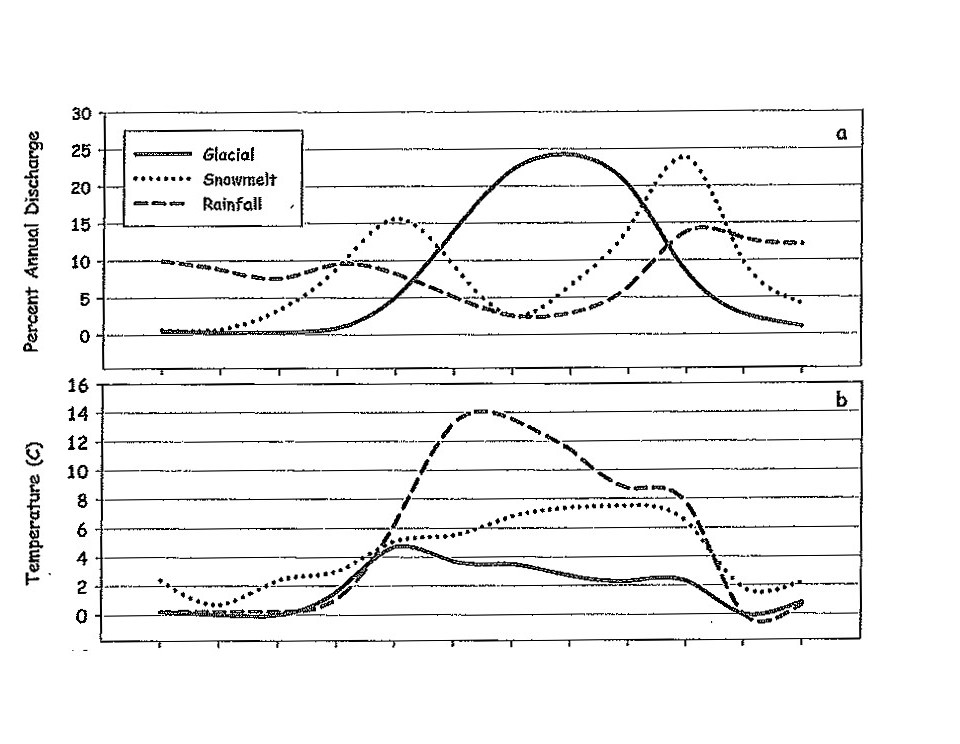
Watersheds that are predominately glacial-fed may, for example, have their peak discharge in mid-summer with colder water. Snow- or rain-fed watersheds may have two discharge peaks in the spring and early fall.


Discharge comparison small
Diagram showing differences in discharge timing and temperature over a calendar year among three main types of watersheds in Southeast Alaska. Latest climate change modeling and research suggests that rising temperatures and increasing rainfall in Southeast Alaska could eventually alter the discharge flows and temperatures of some salmon streams. Excerpt of data chart from North Pacific Temperate Rainforests: Ecology and Conservation, University of Washington Press, 2013, used with permission from co-author Rick T. Edwards.


So what does all this mean for Southeast Alaska?

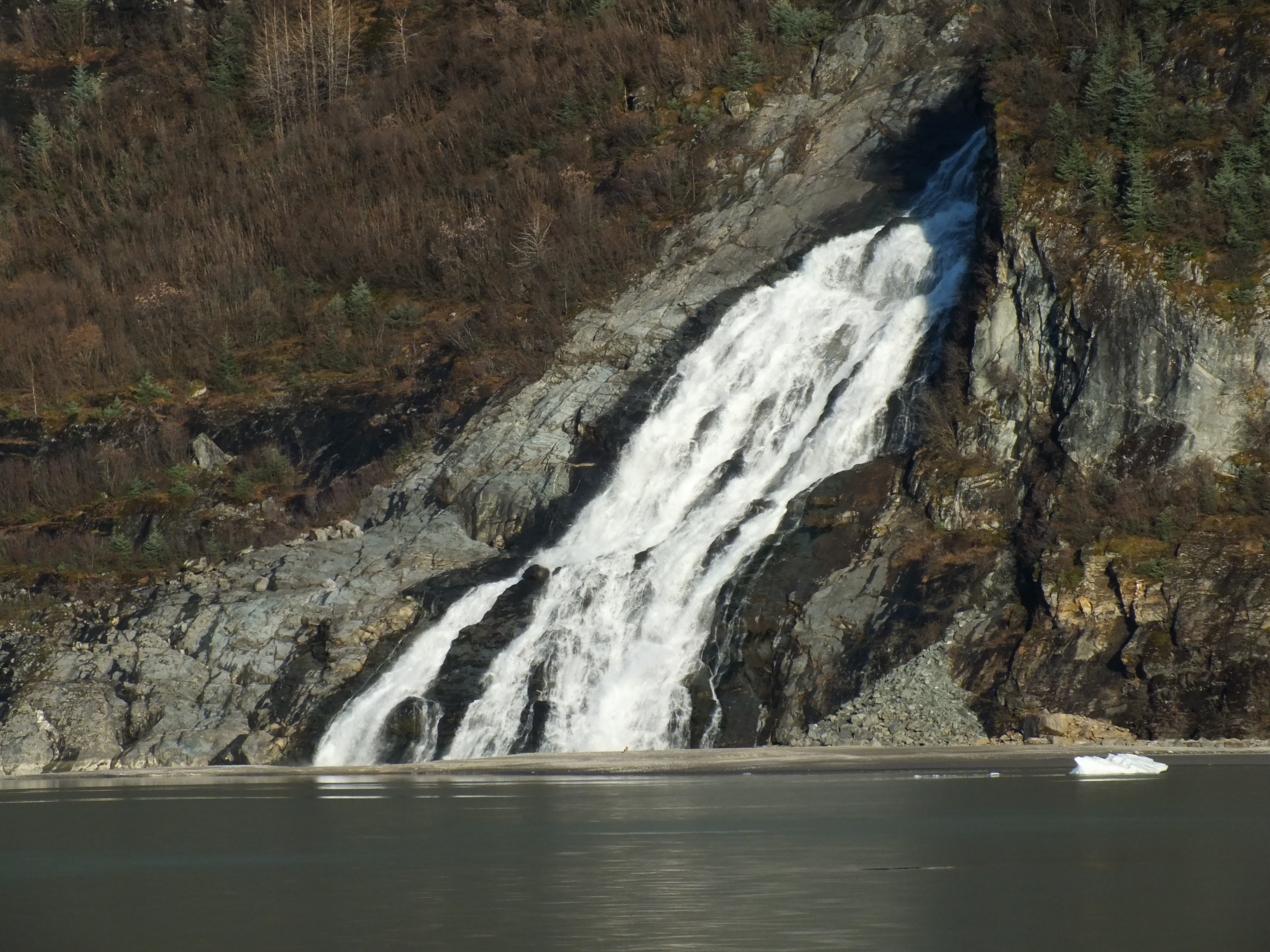
Nugget Falls as it empties into Mendenhall Lake. Photo by Matt Miller/KTOO News

The research suggests that an increase in temperature and rainfall levels brought on by climate change could alter the discharge timing and raise the summer water temperature of formerly glacial-fed watersheds.

The Forest Service’s Michael Goldstein expects that alpine temperatures will eventually exceed current sub-alpine temperatures. Along with a decrease by a third of accumulated snowfall, he said that elevation of the tree line could rise by as much 600 feet, and – referring to research by others – raise the lower sub-alpine boundary by 1200 feet.

Goldstein suggests that there would not be a significant increase in the fire danger. But there may be an increase in number and severity of insects and disease.

Projected increases in temperatures could expand lowland forest habitats in the winter. Ungulates, for example, could have reduce energetic costs if there is no deep, deep snow to go through. So, there’s a lot of different implications out there. A longer growing season may increase food availability for wildlife in the spring. So, that’s on one hand. But on the other hand, we clearly understand that could be some timing issues. Right? Rusty blackbirds eating dragonflies, dragonflies coming out later, rusty blackbirds not having higher nest success because there’s no food source when the chicks are being reared.”

Goldstein points to other research demonstrating that Auke Creek salmon runs have already occurred two weeks earlier than runs of thirty years ago. UAS’s Dr. Sanjay Pyare said a few degree change in water temperature could alter the growth and development of salmon at various points of its life cycle.

It’s critically important, in particular, to younger stages, juvenile stages. So, we know that incubation times are well known to be inversely related to stream temperature, and stream temperature through its affects on development, accelerating or slowing down basically the size of juveniles, can impact out-migration times. So, warmer temperatures influences out-migration or can accelerate out-migration. We have some initial thinking that at a regional level the stream temperature could be pretty important in terms of adult migration. So, we started to look at watersheds that are exhibiting some evidence of run timing shifts in adults.”

Mendenhall Lake icebergs
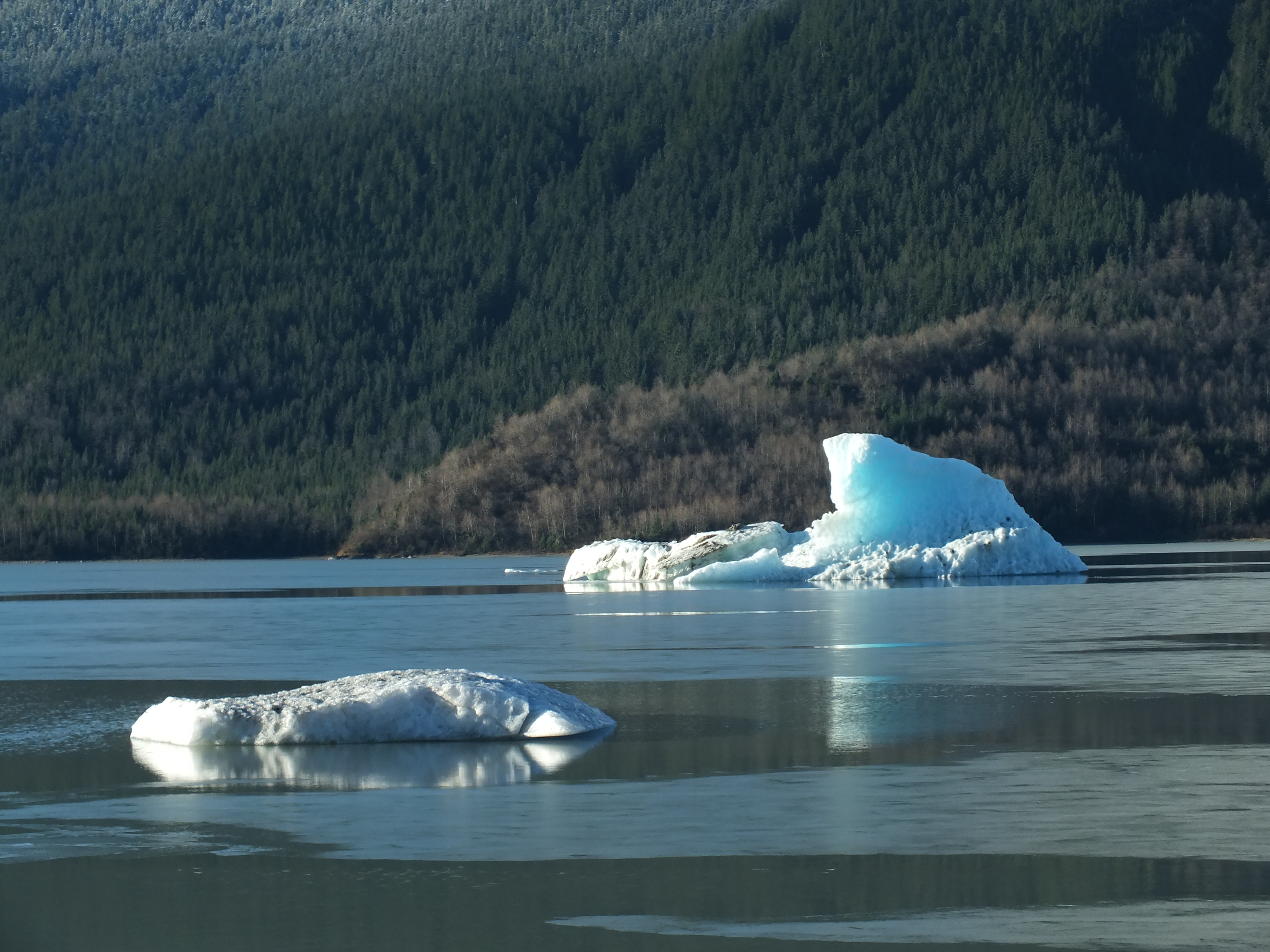
Icebergs on pre-freeze Mendenhall Lake in October 2013. Photo by Matt Miller/KTOO News

The Nature Conservancy’s Colin Shanley said another big worry among fisheries biologists includes changes in discharge flows.

With this transition from snow-fed watersheds to rain-fed watersheds, we’re going to see more rain on snow events, higher flows, (and) more scouring of salmon roe. So, salmon roe getting kicked up out of the gravel before they have time to incubate.”

While some streams would ‘blink off’ as productive salmon habitat because of climate change, others could very well ‘blink on’. Steams that currently do not have any salmon runs could someday become productive with subtle changes in temperature or discharge flow.

Besides the possible implications on salmon productivity and management, the researchers acknowledge that they are only now touching the surface of potential climate change impacts in Southeast Alaska and western British Columbia. There are a variety of other implications to explore that range from municipal planning of streamside setbacks to managing hydroelectric facilities and tourism operations.

Site notifications
Update notification options
Subscribe to notifications