Marijuana

Enterprising Girl Scout Sells Cookies Outside Marijuana Clinic

If there’s a merit badge for business savvy, 13-year-old Girl Scout Danielle Lei might well deserve one.

Danielle, who set up her table of Girl Scout cookies outside The Green Cross medical marijuana dispensary in San Francisco earlier this week, sold a whopping 117 boxes in a single day. She appears to have tapped into a niche market fueled by the drug’s well-known propensity to stimulate appetite.

According to a Facebook page for The Green Cross, Danielle had “to call for back-up Girl Scout Cookies” after 45 minutes.

Danielle’s mom, Carol Lei, tells Mashable that she usually has Danielle and her sister, who is also a Girl Scout, “set up shop at various points around San Francisco so they can learn about different environments while earning some cash. Plus, she figured this might be a good way to start a conversation about drugs and how some people use marijuana as medicine while others just get high.”

“They learn that they’re not drugged out,” Lei said, according to the East Bay ExpressLegalization Nation blog, which says it reports on “California cannabis culture.” “Many have serious needs, and are just a little different.”

Lei told Mashable that “I’m not condoning it, I’m not saying go out in the streets and take marijuana […] It also adds a little bit of cool factor. I can be a cool parent for a little bit.”

Mashable writes:

“‘Girls are selling cookies, and they and their parents pick out places where they can make good sales,’ Dana Allen, director of marketing and communications for Girl Scouts of Northern California, told Mashable. ‘The mom decided this was a place she was comfortable with her daughter being at.’ Later, she added, ‘We’re not telling people where they can and can’t go if it’s a legitimate business.'”

“The Girl Scouts of Colorado, though, have a different opinion — even though it’s a state where recreational marijuana is now legal in small quantities.”

“On Feb. 9, a poorly photoshopped photo of three girl scouts standing outside a medical marijuana clinic began circulating online:”

“So my mom’s friends live in Colorado and they set up a girl scout cookies stand outside of a medical marijuana store.”

In response, Girl Scouts of Colorado tweeted: “If you’re wondering, we don’t allow our Girl Scouts to sell cookies in front of marijuana shops or liquor stores/bars.”

Copyright 2014 NPR. To see more, visit http://www.npr.org/.image

Read original article – Published February 21, 2014 2:21 PM
Enterprising Girl Scout Sells Cookies Outside Marijuana Clinic

Marijuana initiative meets signature requirement

Marijuana
Wikimedia Commons

A measure that would regulate marijuana like alcohol has enough signatures to appear on the ballot. On Tuesday, the Alaska Division of Elections verified that over 31,000 of the signatures submitted come from registered voters. The lieutenant governor is expected to certify the initiative this month.
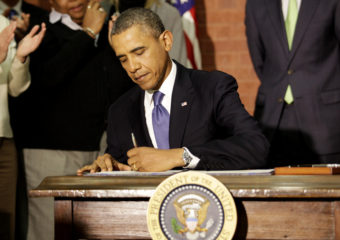
If the marijuana initiative is successful, Alaska will be one of the first states in the country to effectively legalize the drug.

Obama: Marijuana Is Not ‘More Dangerous Than Alcohol’

President Barack Obama. Getty Images

The New Yorker has just dropped an extensive profile of President Obama by David Remnick, who wrote a major book on the president published in 2011.
It’s nuanced and touches on issues like gay marriage and Israel and Palestine. But Obama also drops this bombshell about marijuana: “I don’t think it is more dangerous than alcohol.”

Obama goes on to add more nuance to the statement. Here’s the context for the statement:

“When I asked Obama about another area of shifting public opinion—the legalization of marijuana—he seemed even less eager to evolve with any dispatch and get in front of the issue. ‘As has been well documented, I smoked pot as a kid, and I view it as a bad habit and a vice, not very different from the cigarettes that I smoked as a young person up through a big chunk of my adult life. I don’t think it is more dangerous than alcohol.’

“Is it less dangerous? I asked.

“Obama leaned back and let a moment go by. That’s one of his moves. When he is interviewed, particularly for print, he has the habit of slowing himself down, and the result is a spool of cautious lucidity. He speaks in paragraphs and with moments of revision. Sometimes he will stop in the middle of a sentence and say, ‘Scratch that,’ or, ‘I think the grammar was all screwed up in that sentence, so let me start again.’

“Less dangerous, he said, ‘in terms of its impact on the individual consumer. It’s not something I encourage, and I’ve told my daughters I think it’s a bad idea, a waste of time, not very healthy.’ What clearly does trouble him is the radically disproportionate arrests and incarcerations for marijuana among minorities. ‘Middle-class kids don’t get locked up for smoking pot, and poor kids do,’ he said. ‘And African-American kids and Latino kids are more likely to be poor and less likely to have the resources and the support to avoid unduly harsh penalties.’ But, he said, ‘we should not be locking up kids or individual users for long stretches of jail time when some of the folks who are writing those laws have probably done the same thing.’ Accordingly, he said of the legalization of marijuana in Colorado and Washington that ‘it’s important for it to go forward because it’s important for society not to have a situation in which a large portion of people have at one time or another broken the law and only a select few get punished.'”

We’ll let you click over to read the whole piece. We’ll also note that Obama’s statement about how pot use is policed differently depending on class and race, is in line with his policy.

It was Obama, remember, who signed into the law the Fair Sentencing Act, which dealt with the disparity with which the justice system dealt with powder cocaine and crack cocaine. Obama also issued commutations to eight people who were convicted of drug crimes, saying their terms were unusually harsh in the pre-Fair Sentencing Act days.

In August, Obama’s Justice Department also issued guidance to federal prosecutors, telling them to “focus on cartels, criminal enterprises and those who sell the drug to children, not on casual marijuana users.”

Copyright 2014 NPR. To see more, visit http://www.npr.org/.image
Read original article – Published January 19, 2014 3:42 PM
Obama: Marijuana Is Not ‘More Dangerous Than Alcohol’

Canada Launches Billion-Dollar Marijuana Free Market This Week

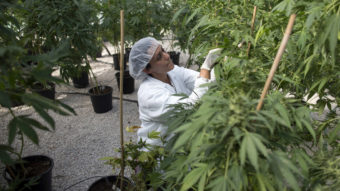
A new free market for medical marijuana in Canada will replace small growers with large-scale indoor farms, such as this one in Israel, seen in a photo from last year. Menahem Kahana/AFP/Getty Images

Canada is ushering in what it projects to be a $1.3 billion medical marijuana free market this week, as it replaces small and homegrown pot production with quality-controlled marijuana produced by large farms. The market could eventually serve 450,000 Canadians, according to estimates.

As Toronto’s Globe and Mail explains, a transition phase began today that will allow more price fluctuation and phase out home and small-scale production.

“In its place, large indoor marijuana farms certified by the [Royal Canadian Mounted Police] and health inspectors will produce, package and distribute a range of standardized weed, all of it sold for whatever price the market will bear,” the newspaper reports. “The first sales are expected in the next few weeks, delivered directly by secure courier.”

Large-scale growers have begun applying for licenses to produce marijuana — including one Ontario company that hopes to grow cannabis in an old Hershey chocolate plant, as Reuters reported last week. At least two large growers have already received their licenses.

The free market will likely establish a price of around $7.60 per gram of dried marijuana bud, according to “Marihuana for Medical Purposes Regulations” posted by Canada’s health department. [And if you’re wondering about that spelling, it follows a precedent set in Canada’s controlled substances law.]

The health agency projects that the legal marijuana supply industry “could grow to more than $1.3 billion per year in annual sales” within 10 years. Officials say the illegal cannabis market “represents a multibillion dollar per year industry.”

The Canadian government says the new plan will also reduce its own costs, on a website explaining some of the changes.

“The current program costs Canadian taxpayers millions of dollars each year because the $5/gram charged to program participants who choose to purchase from Health Canada is heavily subsidized,” Health Canada says.

Copyright 2013 NPR. To see more, visit http://www.npr.org/.
Read original article – Published September 30, 201311:01 AM
Canada Launches Billion-Dollar Marijuana Free Market This Week

DOJ won’t interfere with marijuana legalization

Marijuana
Wikimedia Commons

The Obama Administration has decided not to go after states with marijuana-friendly laws.
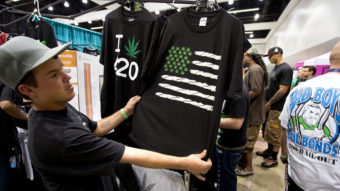
The Department of Justice announced Thursday that it won’t sue states like Alaska that allow medical marijuana. Not only that, it won’t sue Colorado or Washington for legalizing recreational use of the drug, something that Alaska might do next year.

That’s welcome news to Tim Hinterberger, who is sponsoring the ballot initiative to regulate marijuana like alcohol.

“I think it’s something that will reduce one of the arguments against an initiative like ours. People have said, well, it doesn’t matter what we do to change state law because the federal law would still supersede it. If they’re thinking of how they’re going to implement federal law differently, that will make a difference to us.”

Even though the Justice Department says it won’t stop legalization efforts, it still plans on monitoring states to make sure they’re staying in line with the administration’s enforcement priorities. While it will defer to states on things like sale and possession of the drugs, it wants federal prosecutors to target distribution to minors, cartel activity, drug-related violence, and underground trafficking. Hinterberger thinks the initiative language complies with those objectives.

“The point is if our initiative succeeds and is put into law, then that will eliminate underground trafficking because there will be no reason for it.”

Right now, the marijuana initiative is still in the signature gathering stage. The group behind it has collected over 15,000 names since their application was certified in June. While they have a full year to break the 30,000-mark, Hinterberger says they actually want to collect 45,000 signatures by December 1. That would give them a buffer against disqualified names and more time to focus on campaigning.

If the initiative meets all of the legal requirements, it will appear on the primary ballot next August.

U.S. ‘Ought To Respect’ State Marijuana Laws, Sen. Leahy Says

The Chairman of the Senate Judiciary Committee says he’s done waiting for answers about how the Justice Department will handle marijuana offenses in states that have legalized small amounts of the drug.

Vermont Democrat Patrick Leahy has asked Attorney General Eric Holder or his deputy to appear at a Sept. 10 hearing on Capitol Hill — and to be prepared to state the Obama administration’s policy on the issue. Leahy’s been asking questions ever since Washington and Colorado voters approved marijuana for recreational use in last year’s elections.

Holder has said for months that the Justice Department is studying how it will handle the state initiatives. And the Office of National Drug Control Policy hasn’t responded to Leahy’s now months-old letter asking about the issue, the chairman said.

“There’s only so many resources,” Leahy told NPR in a telephone interview. “And to waste time on going after simple marijuana cases in states where it’s either been legalized, or legalized for medical uses, seems like a bad use of our limited law enforcement dollars.”

Leahy says federal authorities should devote time to cracking down on violent crime and deadly drug cartels — and he says he wants assurances that state officials will not face criminal jeopardy for carrying out their duties to license marijuana exchanges in the 20-odd states where marijuana is legal for medical purposes.

“The federal government ought to respect” these decisions by states, Leahy says.

The conflict stems from the 1970 federal law known as the Controlled Substances Act, which continues to include marijuana among its Schedule I drugs — the most tightly regulated substances, considered to have a high potential for abuse and no currently accepted medical use.

In recent years, coalitions of drug reformers, including some former law enforcement officers, have called for a looser approach to regulating marijuana. But that stance has been unpopular, especially within the Drug Enforcement Administration.

Leahy says he’ll use the hearing next month to explore whether the change can be accomplished through executive branch action or whether Congress needs to legislate on the issue. At first blush, “this would require a national decision but it could be all taken care of by prosecutorial discretion,” he says. “It is a state and federal conflict and it’s one we don’t need.”

Copyright 2013 NPR. To see more, visit http://www.npr.org/.
Read original article
U.S. ‘Ought To Respect’ State Marijuana Laws, Sen. Leahy Says
Site notifications
Update notification options
Subscribe to notifications