Economy

With Western Alaska salmon runs weak, managers set limits on the pollock fleet’s chum bycatch

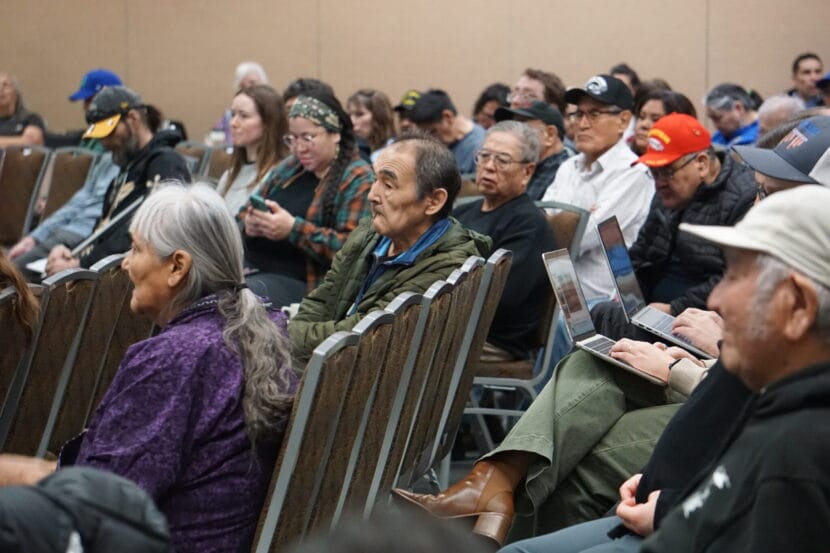
Audience listens to testimony Feb. 9, 2026, at the North Pacific Fishery Management Council meeting in Anchorage. Subsistence fishers from the Yukon and Kuskokwim river basins were among those attenting the meeting and giving public testimony about bycatch of chum salmon in the Bering Sea pollock fishery. Also attending the meeting were people involved in the pollock industry. Public testimony on the issue to the full council stretched over four days. (Photo by Yereth Rosen/Alaska Beacon)

Federal fishery managers have approved the first-ever mandatory caps on at-sea interception of chum salmon, a fish species critical to Indigenous communities along Alaska’s river systems.

The North Pacific Fishery Management Council on Wednesday voted in favor of new limits for the pollock fleet to reduce the amount of chum salmon accidentally caught in trawl nets, a phenomenon known as bycatch.
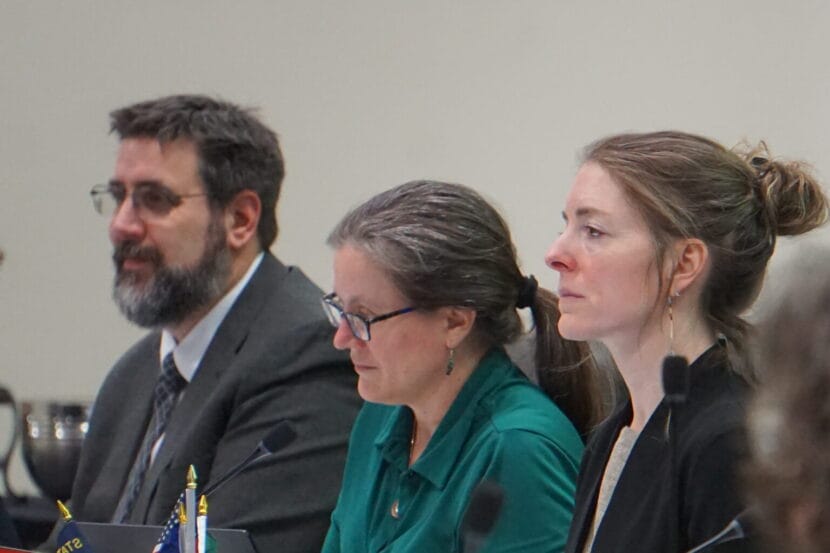
North Pacific Fishery Management Council member Nate Pamplin, Diana Evans, the council’s executive director, and council chair Angel Drobnica listen to testimony on Feb. 7, 2026, at the February meeting in Anchorage. (Photo by Yereth Rosen/Alaska Beacon)

The compromise, approved at the end of a 10-day council meeting, addresses a yearslong conflict that pitted the in-river salmon fishermen and their Indigenous cultures against the economically important harvesters of Alaska pollock, the top-volume U.S. commercial seafood.

Achieving effective safeguards for Western Alaska chum salmon while balancing needs of all parties amid environmental factors that are out of managers’ control was difficult, Angel Drobnica, the council’s chair, said just before the vote was taken.

“This is the most challenging issue I’ve worked on during my time in this process,” she said, referring to her three years on the full council and six years on the group’s advisory panel. “I believe this motion is durable and enforceable and reflective of input from both sides and has maintained a clear focus on Western Alaska salmon.”

Salmon bycatch is a hot-button issue in Alaska fisheries. Total amounts of chum salmon accidentally caught in the trawl nets used by the pollock fleet can number in the hundreds of thousands — though the vast majority of the chum salmon intercepted in the Bering Sea in this manner is not of Alaska origin, according to council data.

While bycatch limits have been in place for several years for Chinook salmon, this is the first time managers have imposed limits for chum salmon. Both Pacific salmon species are important to the Yukon and Kuskokwim river system communities, and both have collapsed in recent years, at times prompting complete fishing closures all the way into Canada’s Yukon Territory.
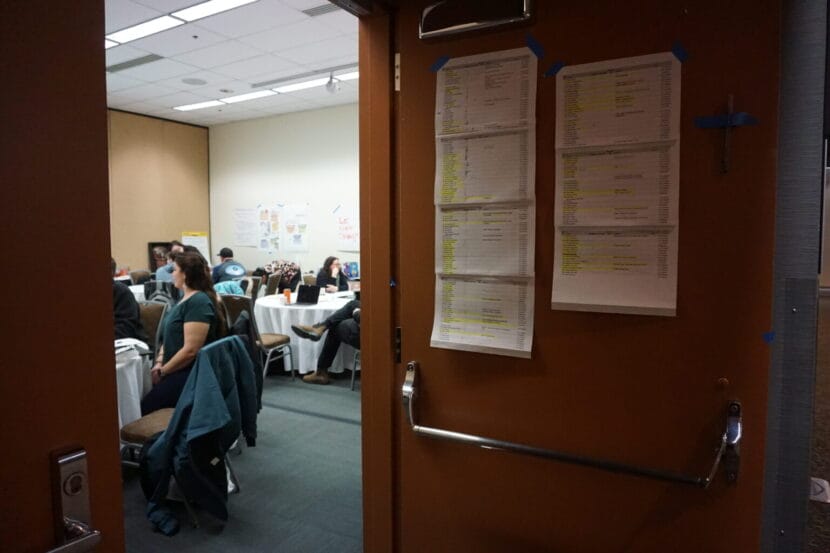
A list of people signed up to testify at the February meeting of the North Pacific Fishery Management Council is taped to a William A. Egan Civic and Convention Center room door on Feb. 9, 2026, The room, down the hall from the rooms where the council was convened, was reserved and used for the duration of the meeting by tribal oroganizations, including the Kuskokwim River Inter-Tribal Fish Commission and the Tanana Chiefs Conference. (Photo by Yereth Rosen/Alaska Beacon)

The measure imposing chum bycatch limits, years in the making, included several elements:

  • It sets an annual bycatch cap of 45,000 Western Alaska chum salmon.
  • It apportions the cap among the different pollock-fishing sectors: at-sea processors, catcher ships that deliver to onshore plants, catcher vessels that deliver to “motherships,” which are vessels that collects harvests; and Community Development Quota organizations, which represent rural and Indigenous communities have invested in the fisheries and are assigned shares of annual groundfish harvests.
  • It applies the cap to corridors in the Bering Sea that are known to be used by migrating Western Alaska chum salmon and to the summer months when bycatch of Western Alaska chum is concentrated, then when Alaskans are most affected. The use of corridors is intended to address the fact that the vast majority of chum salmon netted as bycatch in the Bering Sea are fish from Asian hatcheries rather than fish that swim though and spawn in Alaska rivers.
  • The approved measure contains triggers that would enforce area-specific pollock trawling shutdowns if bycatch levels are reached.
  • The approved measure mandates the use of bycatch-reduction technology and practices that are currently voluntary in the industry. Those include employment of salmon-excluding devices that allow salmon to swim free of nets holding pollock and enhanced communication and record-keeping to broaden knowledge among the fleet, tribal organiziation and members and the general public about potential bycatch hotspots and how to avoid them.
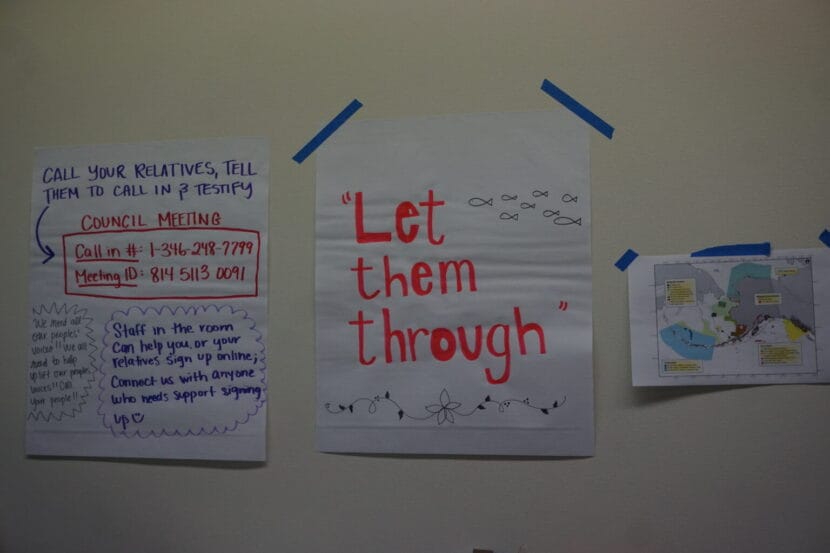
Signs seen Feb. 7, 2026, at a room in the William A. Egan Civic and Convention Center used by tribal organizations attending the North Pacific Fishery Management Council meeting. (Photo by Yereth Rosen/Alaska Beacon)

The measure is set to go into effect in 2028.

Managers approved it by an 8-3 vote. One of the dissenters, Seattle-based Jamie Goen, executive director of Alaska Bering Sea Crabbers, said the cap was too high.

“This motion is a license to kill 45,000 Western Alaska chum when we have information showing that every salmon that comes back to Western Alaska rivers counts,” she said Wednesday just before the vote was taken. “Every female salmon holds the potential to release thousands of eggs that can grow exponentially to feed in-river communities and keep their cultures alive.”

The reduction in pollock harvesting that would result from a lower cap would be “negligible,” compared to the losses suffered by river communities, she said.

Goen’s comments mirrored a slogan imprinted on wristbands, buttons and other items distributed by tribal groups attending the meeting: “Every Salmon Counts.”

Council member Jon Kurland, who is also director of the National Oceanic and Atmospheric Administration’s Alaska fisheries service, said that while the salmon crash has had “devastating effects” in Western Alaska with details that are “heartbreaking,” the socioeconomic benefits of the pollock harvests also need to be considered.
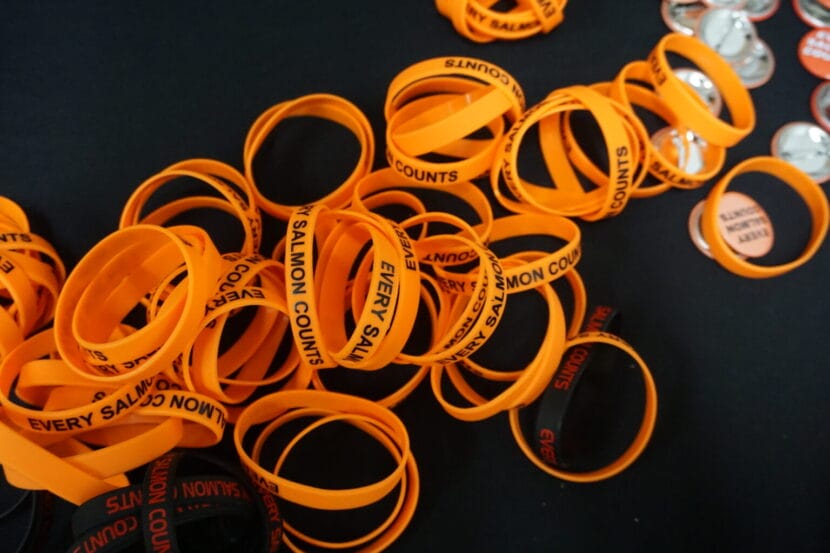
Wristbands and buttons bearing the slogan “EVERY SALMON COUNTS” are displayed on a table on Feb. 9, 2026. The wristbands and buttons were being distributed by tribal organizations attenting the North Pacific Fishery Management Council meeting in Anchorage. The slogan references the argument that every salmon that avoids bycatch and is able to swim to river spawning grounds is important to the population and to the people who depend on salmon runs. (Photo by Yereth Rosen/Alaska Beacon)

Those include “the family businesses that operate catcher boats, the seafood processing capacity in many remote areas that really needs a steady flow of pollock to process other species for smaller-scale fisheries and the ways that the community development quotas improve people’s lives in 65 Bering Sea communities,” he said.

After the vote, tribal representatives attending the meeting had mixed reactions to the council’s action. In some ways, it was a positive movement, they said.

“It’s a start,” said Charlie Wright, secretary and treasurer of the Tanana Chiefs Conference.

“The pressure is on,” said Eva Burk of Nenana, a tribal representative on the council’s advisory panel.

But Wright, from the Yukon River village of Rampart, and Burk said they were disappointed that the numerical cap was not lower and that the geographic area to which it will apply was not broader.

An organization representing the pollock industry said the council’s action was fair, decision was fair, even though it puts some more burden on pollock harvesters.

“The Council’s decision reflects the seriousness of the challenges facing Western Alaska chum salmon and the complexity of managing a dynamic fishery,” said a statement released by the Alaska Pollock Fishery Alliance. “The pollock industry respects the Council process and remains committed to working within this new framework while continuing to invest in science-based, real-time avoidance tools that have already delivered meaningful reductions in Western Alaska chum bycatch.”
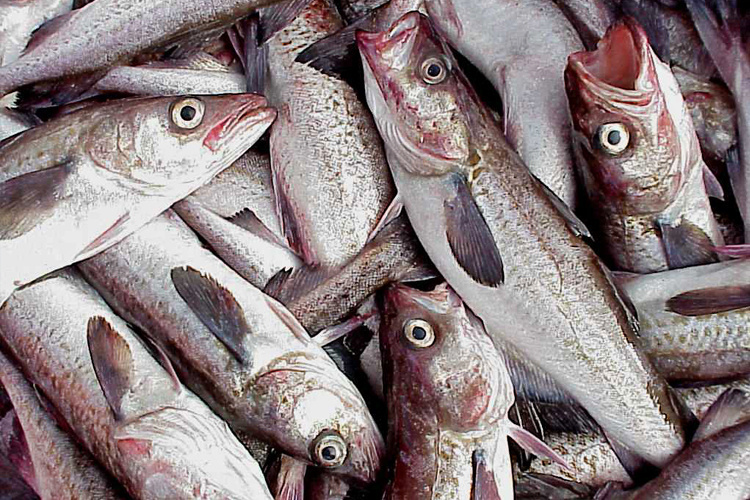
Alaska pollock, shown here from a harvest, make up the nation’s top-volume single-species commercial seafood catch. Each December, the North Pacific Fishery Management Council sets the next year’s harvest levels for pollock and other groundfish. Those decisions are based on scientific analysis that could be compromised this year by the federal government shutdown. (Photo provided by the National Oceanic and Atmospheric Administration)

Wednesday’s vote came after four days of often impassioned public testimony sessions that started on Saturday and ran through Tuesday afternoon. An estimated 170 people attending the meeting addressed the council during those days. They included subsistence fishers and leaders of tribal originations along the Yukon and Kuskokwim basins, small-scale pollock harvesters, representatives of fishing companies, Indigenous organizations with investments in the pollock fishery and others.

One of the tribal leaders testifying was Brian Ridley, chief executive of the Tanana Chiefs Conference, an organization of Interior Alaska Athabascan tribal government. TCC and other tribal groups have been seeking the strictest limits possible, he told the council.

For Yukon River communities, salmon fishing closures over the past years have resulted in “food insecurity, starvation, diabetes, cancer and cultural loss,” he said in testimony Saturday.

“Let me be clear: We’re not asking to shut down the pollock fishery. We’re asking for the first real step in sharing the burden of conservation, the same step Yukon fishers began taking decades ago. Our communities have carried the burden alone for more than 20 years. Today, we’re asking the pollock fleet to finally share the burden,” Ridley said.

There were more personal accounts, like one delivered Saturday by Julia Dorris of Kalskag, a village on the middle section of the Kuskokwim River.

“My dad had a dog team. Because of less chum and the restrictions, he no longer had his team. And had to get rid of all the dogs. It was heartbreaking to see a strong person quietly fading,” Dorris said.

The pollock trawl fleet had its defenders as well.

Those included Frank Kelty, a former mayor of Unalaska, and Victor Tutiakoff Sr., the Aleutian Island city’s current mayor. Tutiakoff mentioned that he himself is a subsistence fisher, so he understands subsistence needs. Kelty mentioned the Community Development Quota groups that, under a program established in 1992, comprise villages in different Western Alaska regions that have banded together to invest in Bering Sea and Aleutian Islands fisheries.

“The pollock fishery, as we all know, is the economic engine of Unalaska and other fishery-dependent communities in the Bering Sea region, including the six CDQ groups. A closed or reduced pollock season is devastating,” Kelty told the council.

Unalaska is “a one-horse town” completely dependent on commercial fishing, with the local government highly dependent on fishing-related taxes, he said. “If you have reduced or closed seasons, you see impacts throughout the community. The population reduces, employment at the plants goes away, the school population drops, clinic — it’s just a bad situation,” Kelty said.

Defenders of the pollock industry included Native organizations. One was the Qawalangin Tribe of Unalaska, which presented a recently passed resolution warning that hard caps on chum bycatch could cause “significant economic risk for Tribal members and for fishery-dependent communities.”

Although they sometimes disagreed about the role of bycatch, speakers on both sides of the debate agreed that the problems facing Western Alaska chum salmon, as well as the faltering runs of Chinook salmon, are myriad.

Climate change, with effects in both the ocean and in freshwater systems, is a major factor, speakers said. For example, Jacob Ivanoff of Unalakleet, representing the Nome Eskimo Community tribal government, described the masses of fish found dead of heat stroke in rivers in 2019, along with water temperatures that ranged up to 85 degrees during that year’s marine heatwave.

The growing presence of Asian hatchery chum salmon in the Bering Sea is a complicating factor. The flood of new fish, aside from competing with Alaska fish for food and potentially crowding Alaska fish out of the habitat, are dominant in the bycatch numbers.

In past years, genetic testing shows that only about a fifth of the chum salmon netted as bycatch by the Bering Sea pollock fleet has been from Western Alaska, council members said. Most of the rest is from Asian hatcheries, including hatcheries in Russia, though a small portion has also been composed of chum salmon from the state’s more southern Gulf of Alaska waters or from the Pacific Northwest region even farther south.

The total chum salmon bycatch in the pollock fishery in 2025 was about 151,000 fish, according to a report presented to the council early in the meeting. Most of that was hatchery fish. The percentage of bycatch that was fish from Western Alaska rivers was low, but it fluctuates from year to year and even from week to week during harvest seasons, according to genetics information presented by the Bristol Bay Science and Research Institute.

Bycatch concerns go beyond salmon. The term refers to any accidental netting, hooking, entaglement or crushing of an untargeted species. Several types of fish, birds and marine mammals are killed or injured through bycatch in different fisheries. NOAA keeps track of annual bycatch totals.
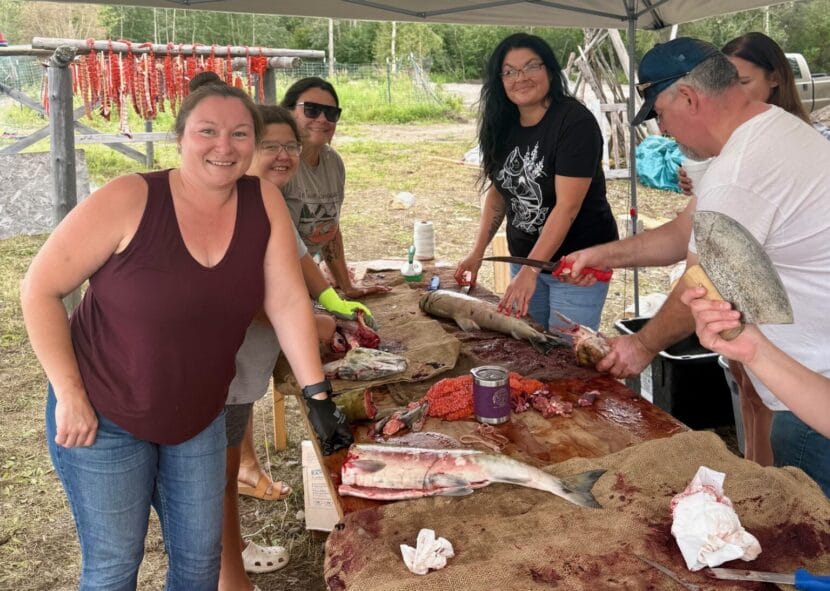
Eva Burk, Jessica and Rory Black, Ariella Bradley, Fatima Lord-Minano and Charlie Wright cut salmon during an August 2025 cultural camp held in Nenana. The youth and adults in the camp were able to harvest and process a few chum salmon in 2025, for the first time in several years. Burk, who is from Nenana, is a tribal representative on the North Pacific Fishery Management Council’s advisory panel. Wright is secretary and treasurer of the Tanana Chiefs Council. Both have argued for tighter restrictions on at-sea interception of Western Alaska chum salmon. (Photo provided by Eva Burk)

Alaska lawmakers go for a redo on vetoed corporate income tax bill

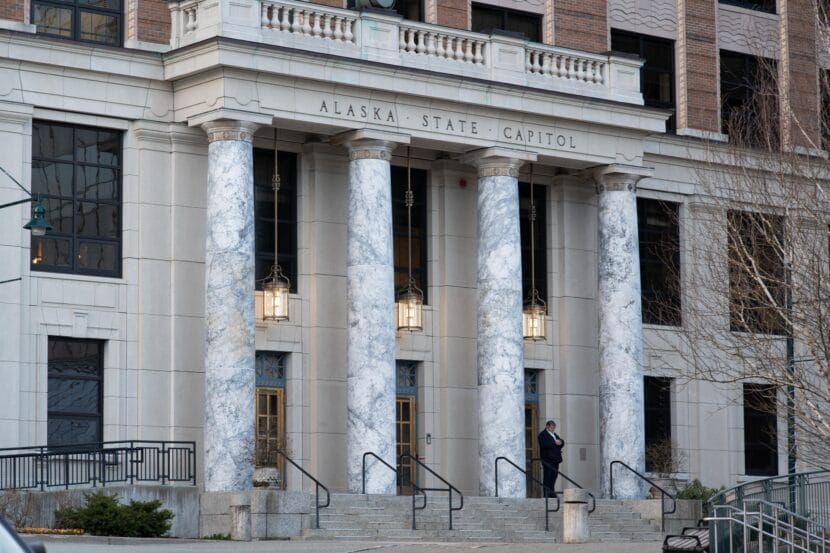
A legislative staffer waits outside the Alaska State Capitol in Juneau on March 20, 2025.
A legislative staffer waits outside the Alaska State Capitol in Juneau on March 20, 2025. (Eric Stone/Alaska Public Media)

Alaska lawmakers are going for round two on a bill Gov. Mike Dunleavy vetoed last year. The bill would change the way corporate income taxes are calculated, bringing in tens of millions of dollars in new revenue.

Lawmakers failed to override Dunleavy’s veto of the bill at the beginning of this year’s session.

Backers of the bill say it’s necessary with a tight state budget, and it’s similar to a proposal Gov. Mike Dunleavy included in his fiscal plan.

Rep. Calvin Schrage, an Anchorage independent who co-chairs the House Finance Committee, said at the bill’s first hearing on Friday that it’s an effort to bring the state’s tax laws into the digital age.

“Currently, there is a loophole in Alaska’s corporate income tax structure, and that loophole is that if you’re a highly digital business that doesn’t have a physical presence here in the state, you are not paying taxes to the state of Alaska. You’re paying those taxes to other states,” Schrage said.

The bill would make two substantial changes to corporate income taxes in an effort to attribute more of Lower 48 companies’ income to Alaska.

The first implements what’s known as “market-based sourcing.” That essentially means that large businesses would pay taxes based on where their customers are, rather than where the company does its work. It’s a change dozens of other states have made and one the governor included in his fiscal plan.

The second component would change the tax rules for so-called “highly digitized businesses.” That’s an effort to extract more tax revenue from companies like Netflix, eBay and others that do most of their business over the internet but don’t have a presence in the state. That change is not a part of the governor’s plan.

Last year, the state Department of Revenue estimated the bill would raise between $25 and $65 million each year.

Rep. Will Stapp, a Fairbanks Republican in the minority who voted for the bill last year but voted against overriding Dunleavy’s veto, said he’d like to see some technical changes. For one thing, he’d rather not make the bill retroactive to the start of this year. But Stapp said he’s open to supporting it after a few tweaks.

“No change in tax structure is perfect,” he said in an interview. “But there are impacts that we should actually understand, that the public’s going to expect us to kind of understand so we can articulate it.”

Even though the bill is similar to an element of Dunleavy’s fiscal plan, it’s not clear the governor would sign the bill if passed. His office declined to comment on the new bill. But Dunleavy has said repeatedly he opposes new revenue measures without stricter limits on how state money can be spent.

The Alaska House’s draft budget has no PFD. Here’s what that means.

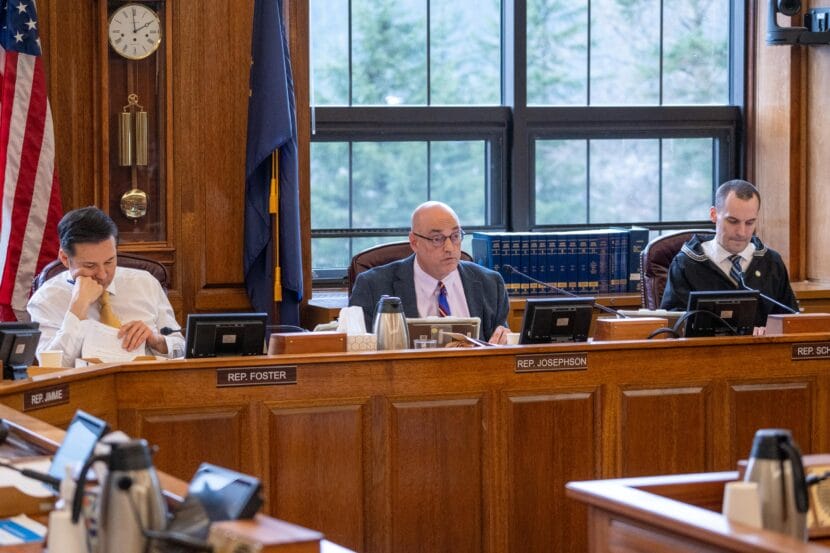
Rep. Andy Josephson, center, speaks during a House Finance Committee meeting alongside co-chairs Rep. Neal Foster, D-Nome, left, and Rep. Calvin Schrage, I-Anchorage, right, on Feb. 13, 2026.
Rep. Andy Josephson, D-Anchorage, center, speaks during a House Finance Committee meeting alongside co-chairs Rep. Neal Foster, D-Nome, left, and Rep. Calvin Schrage, I-Anchorage, right, on Feb. 13, 2026. (Eric Stone/Alaska Public Media)

The Alaska House Finance Committee adopted its first draft of the state’s budget. It makes a variety of smallish changes from the governor’s proposal, and one really big one: it removes the Permanent Fund dividend.

The change has attracted a lot of attention. So what does it mean?

Committee co-chair Rep. Andy Josephson, an Anchorage Democrat, said Alaskans shouldn’t panic — there will be a dividend this year.

The House’s first draft strips out everything new in the governor’s budget and represents essentially the status quo, minus the PFD. That provides a starting point for lawmakers to work from, he said.

But putting any PFD number into the budget right now could give Alaskans the wrong impression of what their legislators support and what a realistic dividend could be, Josephson said.

“Perhaps it’s counterintuitive, but sometimes starting at zero — because we are going to have a dividend — is the more honest place to start,” he said.

It’s also fairly typical, he said. House lawmakers have taken this approach for five of the past eight years, according to Josephson’s office. Members of the bipartisan House majority who control the committee approved the new draft in a caucus-line 6-5 vote.

Lawmakers on both sides have said they see Gov. Mike Dunleavy’s proposal to pay a roughly $3,600 dividend as unrealistic with low oil prices and a tight state budget.

But minority Republicans say they see removing the dividend from the budget at this stage as a worrisome sign. House Minority Leader Rep. DeLena Johnson, a Palmer Republican, said dropping the dividend from the working draft reduces pressure on lawmakers to cut spending and hold down expenses.

“If we don’t have some kind of PFD, then we’re just going to spend it, and we’re going to continue to spend, and then we are going to continue to spend into savings,” Johnson said at a news conference on Thursday.

Economists told lawmakers earlier this year that reducing the PFD to cover a deficit is akin to a regressive tax and hits low-income Alaskans the hardest.

Removing the PFD from this early budget draft also helps the majority avoid an uncomfortable vote that threatened to hold up progress on the budget last year. During the last legislative session, the budget briefly stalled when lawmakers were unable to muster the votes to reduce the PFD in a later draft.

The upper house of the Legislature is taking a different approach. The first-draft budget in the Senate includes everything the governor asked for, including the PFD. (There is one exception, Dunleavy’s proposal to create a Department of Agriculture, which is the subject of an ongoing lawsuit.)

Both the Senate and House are controlled by Democrat-heavy bipartisan coalitions.

How much the dividend will ultimately be is up in the air for now, but some key lawmakers have said they don’t expect much change from last year’s $1,000 PFD.

“My best guess is between $750 and $1,400,” Josephson said. “Personally, based on what happened last year, I think it’s going to be around $1,000, but it’s way downstream.”

The state operating budget officially sets the dividend, and it’s typically one of the last bills to pass before the end of the regular session in May.

Alaska Marine Lines, ferry system staff discuss options for safely transporting electric vehicles to Southeast Alaska

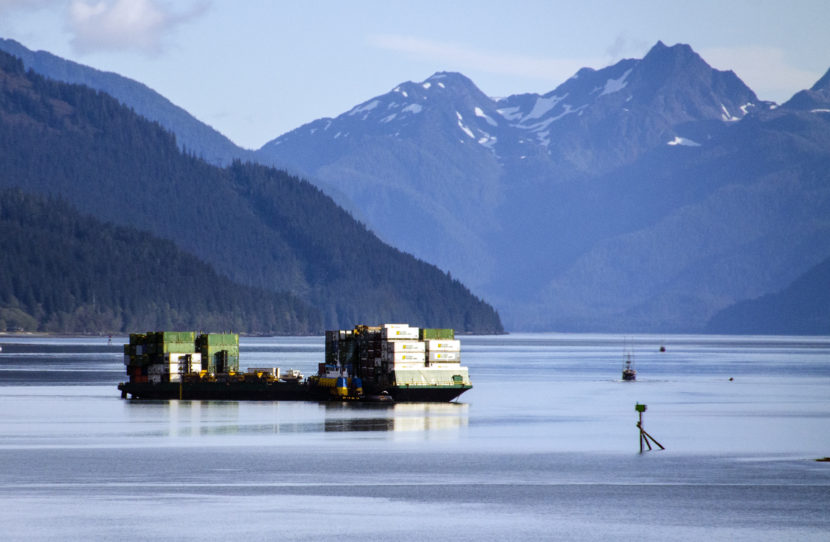
A barge departs from the Alaska Marine Lines dock in downtown Juneau.
A barge departs from the Alaska Marine Lines dock in downtown Juneau. (Heather Bryant/KTOO)

Staff from Alaska Marine Lines and the Alaska Marine Highway System discussed EV shipping safety during a panel held by Renewable Juneau, an advocacy nonprofit, on Wednesday. 

Electric vehicles have grown in popularity in Juneau over the years, but shipping safety concerns have now made it more difficult for people to bring them to Alaska or send them out for maintenance.

AML stopped shipping electric vehicles to Alaska last year due to the fire risk posed by lithium ion batteries. The decision came after another company’s cargo ship carrying hundreds of hybrid and electric vehicles caught fire in the open ocean off the coast of Adak, burned for days and sank. An AML spokesperson said at the time the company would reassess its policy as industry standards improve. 

During the panel, AML President Don Reid said he wished there were reliable safety ratings for the various lithium ion batteries on the market. 

“Every manufacturer you talk to wants to tell you that their product is perfectly safe,” Reid said. “And, you know, who are you supposed to believe?”

Reid said he wants AML to be able to ship all vehicles, but he’s spent a lot of time researching the issue and speaking with consultants, and said that shipping EVs that plug-in would be too risky for the company at this point. 

“What I need is the confidence that the thing’s not going to catch on fire on the barge. That’s really what it comes down to,” Reid said.

AML was the last barge company to pull EVs off its Alaska shipping routes after Matson and Tote Maritime. Now, EVs can be shipped two ways: on the road system, which doesn’t extend to much of Southeast, or two-at-a-time on the ferry — creating a bottleneck for consumers.

Craig Tornga, marine director for the Alaska Marine Highway System, said people who want to ship an EV on the ferry from Bellingham might wait around three months. 

To improve safety procedures, the agency hired a vessel firefighter with expertise in EV battery fires. The procedures include recommending EV drivers not charge the battery too much before boarding, placing EVs in areas of the ship easy for firefighters to access and repeatedly inspecting the vehicles while in transit.

“We have thermal infrared handheld cameras,” Tornga said. “We go around and we — every hour, on the hour — we shoot the battery to see what the temperature is and make sure we don’t see any changes.”

In addition to the handheld cameras, the ferry system plans to install other thermal cameras and purchased high-powered sprayers called Turtle Fire Systems that can flood a battery box to cool it down. 

Disclaimer: The panel was hosted at KTOO, with staff outside the news department contracted to produce the event.

Alaska lawmakers grill transportation officials over controversial ferry project

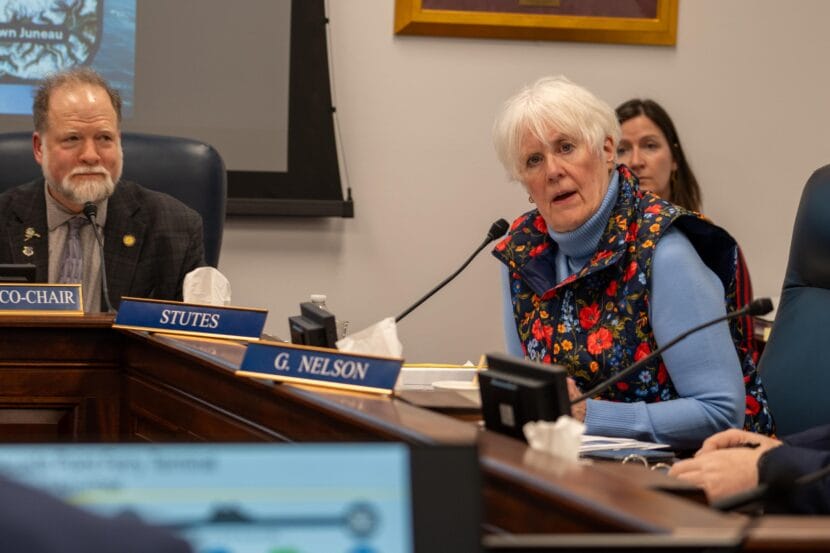
Rep. Louise Stutes, R-Kodiak, questions officials from the Department of Transportation and Public Facilities during a House Transportation Committee meeting in Juneau on Feb. 10, 2026.
Rep. Louise Stutes, R-Kodiak, questions officials from the Department of Transportation and Public Facilities during a House Transportation Committee meeting in Juneau on Feb. 10, 2026. (Eric Stone/Alaska Public Media)

Members of the House Transportation Committee slammed state transportation officials on Tuesday over a controversial ferry project that lawmakers said stands to benefit private interests but not ferry users themselves.

“The Alaska Marine Highway System was created for Alaskans — not for DOT — but for people and their usage. And you know, I don’t like to see you lose sight of that,” Rep. Louise Stutes, R-Kodiak, said during the hearing,

At issue is the Cascade Point ferry terminal project. The Alaska Department of Transportation signed a $28.5 million dollar contract over the summer to kickstart the effort, which aims to shorten the ferry route between Juneau, Haines and Skagway.

The project would entail building a ferry terminal 30 miles farther north of Juneau than the current one in Auke Bay. That means passengers would have to drive or use a shuttle service to travel between the remote terminal and town.

The contract ignited a wave of opposition from people in all three communities during a public comment period. During the hearing, Stutes noted that the vast majority of the more than 600 public comment letters opposed the project.

“92% of the people said, ‘We don’t want Cascade Point,'” Stutes said.

The pushback has largely centered around concerns that the new terminal would make regional travel less convenient and efficient – as opposed to more, as the state has argued. People have also argued the funds would be better spent on improving existing ferry service.

Christopher Goins is DOT’s southcoast region director. During the hearing, he acknowledged that the numbers Stutes cited are correct and that the project has sparked a lot of “fear” in the public.

But he added that the agency is taking public feedback seriously. He said that includes extending the original comment period and planning two additional rounds of public meetings in Haines, Skagway and Juneau.

“My staff is going to sit there, and we are going to listen to what people have to say, because we want them to be able to put that on the record,” Goins said. “That is fair and that is just. I think this project, of all the projects, needs that process.”

Goins acknowledged public concern over the state’s decision to move forward with the initial contract before soliciting feedback. Still, he said, the agency plans to go through the proper process.

“I think a lot of people got afraid because we hired a contractor to do a design-build process,” Goins said. “That doesn’t mean that the design, and the engineering, and the permitting, the consultation that comes with that process, is ignored. It is not.”

That answer didn’t appear to satisfy lawmakers.

“When you talk about there being controversy and welcoming the dialog, it doesn’t seem to jive with the fact that dollars are already dedicated towards this project,” said Committee Co-Chair Ashley Carrick, D-Fairbanks.

Lawmakers also grilled Goins and DOT Commissioner Ryan Anderson over concerns that the project stands to benefit private interests more than the communities that rely on the ferry system to get to Juneau for health care, groceries, air travel and more.

The new terminal is expected to benefit Grande Portage Resources’ proposed New Amalga Gold Project, which would likely use Cascade Point as its logistical base. But the terminal would also serve as a boon to Goldbelt Native Corporation, which owns the land.

“It feels very strongly to me like what’s really happening is Goldbelt is the primary beneficiary of a project the state is going to utilize federal dollars to support,” Carrick said.

Anderson, the agency’s commissioner, emphasized the importance of the private sector to the state’s economy and said working with industry can help promote economic development in Alaska.

Other lawmakers pressed agency officials over a controversial economic analysis of the project and about uncertainty around the new terminal’s overall cost and whether it would actually generate significant savings for the state.

Washington and other Democratic-led states drop lawsuit against Arctic Refuge oil drilling in Alaska

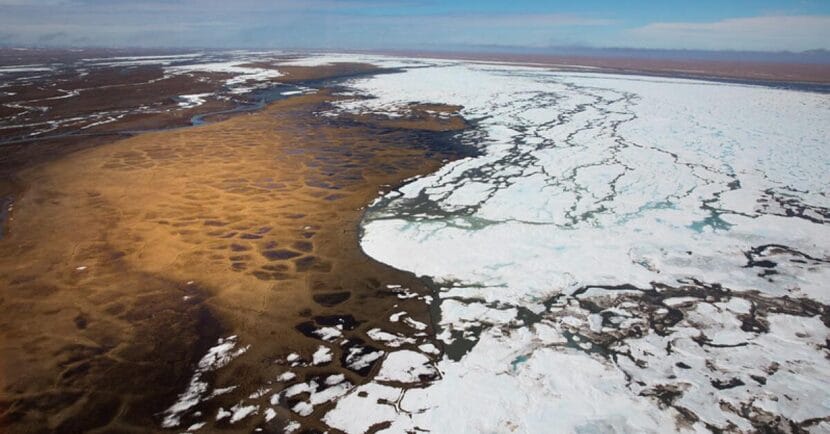
A tundra landscape half covered in ice
The Arctic Coastal Plain. (Department of Interior)

Fifteen Democratic-led states have dropped a six-year-old lawsuit challenging the legality of a federal plan that allowed oil and gas drilling in the coastal plain of the Arctic National Wildlife Refuge in Alaska.

The states announced their plans in a notice filed Monday in the U.S. District Court for the District of Alaska, where the lawsuit was filed in February 2020.

The state of Washington was the lead plaintiff. Mike Faulk, deputy communications director for the Washington State Attorney General’s office, confirmed that the states are dropping their case but said they will continue their opposition to ANWR drilling.

“Washington is proud to have led the multistate lawsuit challenging the 2020 actions regarding the Arctic Refuge,” he said. “New congressional and administration actions require a new course of action on our part. We are evaluating the best path forward to continue to advocate for a clean and healthy Arctic, including supporting the litigation of Alaska Native organizations and community groups.”

The coastal plain is to the east of the vast Prudhoe Bay oil deposits and is believed to hold similarly large amounts of oil and gas. The Trump administration has made drilling in the refuge a top priority as it seeks to expand American oil and gas production.

The other participating states were California, Connecticut, Delaware, Illinois, Maine, Maryland, Massachusetts, Michigan, Minnesota, New Jersey, New York, Oregon, Rhode Island and Vermont.

A group of environmental and tribal groups had filed suit in 2020 at the same time as the Democratic-led states. Last month, that coalition renewed their suit.

Faulk declined to say whether the Democratic states would be siding with the coalition.

While two oil and gas lease sales have taken place in the refuge and additional sales are expected, no oil drilling or seismic surveying has occurred to date.

The Alaska Industrial Development and Export Authority, Alaska’s state-owned investment bank, won several leases in the first lease sale, which took place in 2021, and is seeking to keep the refuge’s coastal plain open to development.

Last year, Judge Sharon Gleason ruled that the Biden administration had illegally canceled AIDEA’s leases. That ruling has since been appealed to the 9th U.S. Circuit Court of Appeals.

Those cases are separate from the lawsuits challenging the overall legality of the oil and gas program in the refuge.

Site notifications
Update notification options
Subscribe to notifications