Juneau Schools

Education ‘cafes’ connect communities, ideas and action

Juneau educators, students and parents met at two local libraries Saturday and discussed how to give every Alaska student a quality K-12 education. The grassroots group Great Alaska Schools organized the two Community Cafés, one in the Mendenhall Valley Public Library and one in the Juneau Downtown Library.

These meetings, or cafés, weren’t about money. The point wasn’t to recruit people to call their legislators and ask for K-12 funding. It wasn’t even about showing people a slideshow of facts and figures.
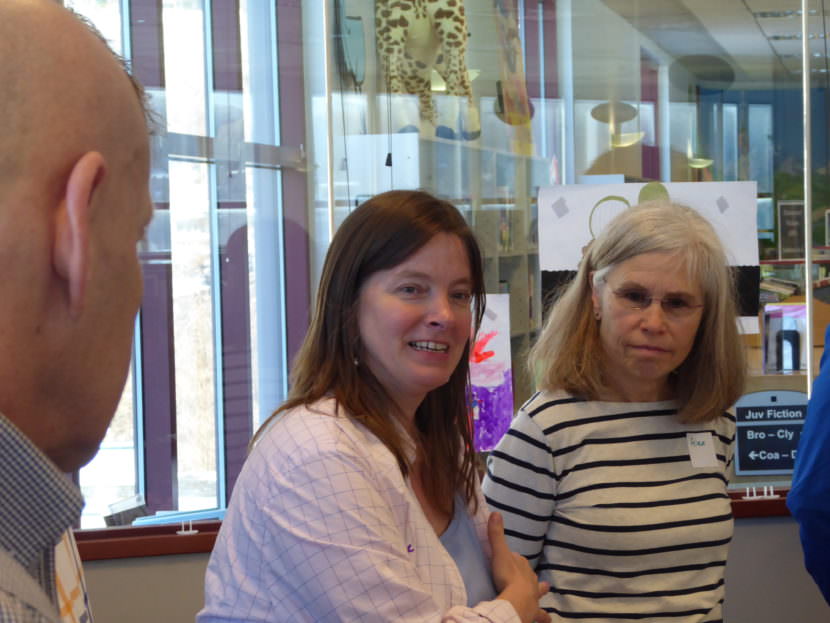
Alyse Galvin, middle, is the co-founder of Great Alaska Schools. She led the discussion.
Alyse Galvin, middle, is the co-founder of Great Alaska Schools. She led the discussion at the Juneau Downtown Library on Saturday. (Photo by Quinton Chandler/KTOO)

Alyse Galvin co-founded Great Alaska Schools and led the talks.

“Today’s conversation is about gathering the people that we talked about: the parents, the students — you noticed there are a lot of students in there — educators, community members, anyone who cares about kids being ready for life coming together and saying, ‘Well, what would that look like if public education was doing the right thing for every student?’”

The café in the downtown library was in a little room with a tiny fruit and veggie buffet and little tables dressed up in red and white checkered tablecloths. It drew about 20 people including a Department of Education official, the Juneau School Board president and a couple of Juneau principals. But, there were also former educators, students and concerned neighbors.

“And the beauty of this particular meeting, called a café – it’s really not a meeting-meeting, it’s purposely called a Community Café — is that people feel level,” Galvin said. “They’re at the same level no matter whether they have 28 years teaching experience, or they’re a student that’s a freshman in high school.”

Galvin said her group wants all these people to give the Department of Education ideas on how schools can improve for all Alaska’s students.
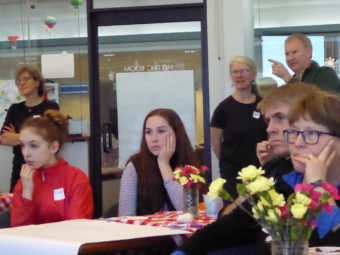
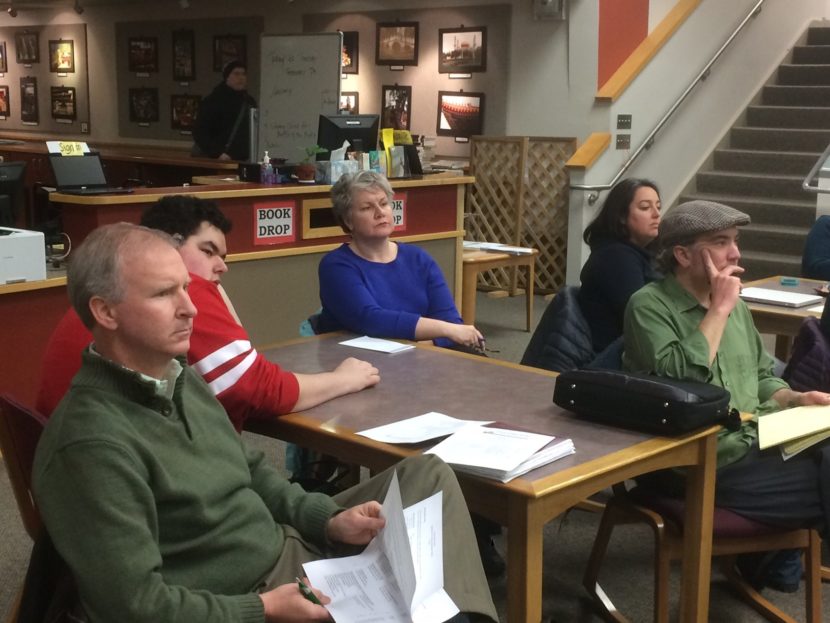
Participants listen during the Great Alaska Schools Community Cafe in the Juneau Downtown Library, Saturday.
Participants listen during the Great Alaska Schools Community Café in the Juneau Downtown Library on Saturday. (Photo by Quinton Chandler/KTOO)

One of the questions she asked the café’s patrons to think about was:

“If we’re doing the job right, how would every student look? What would they have? What would they know?” Galvin asked.

She said normally to answer that question we’d look up students’ grades in math or reading.

“But what I’ve heard this morning in our café is, ‘Actually, we also care about whether students know how to collaborate, do students know how to do simple ‘life hacks’ they called it, like changing a tire or balancing a checkbook,” Galvin said. “There’s some things that are living skills. Do students know how to have healthy relationships?”

Galvin said these are examples of measurable skills that don’t get measured.

Great Alaska Schools has held these community cafés before in communities around the state. Galvin said not only did people have great ideas, they also followed up on them. As examples, she remembered programs started in Fairbanks and Anchorage.

“And people come out with ideas I would have never thought of, things like, ‘I’m an elder, I’ll come in and share stories.’ ‘I’m a community member. I’ll help build sleds after school because I heard students say they want more hands-on learning,’” she said. “We’ve had after-school programs like Spanish club that started from two years ago — a café. We have things like parents tutoring students after school that started from a café years ago.”

Galvin isn’t sure any of that would have happened if people weren’t invited to sit down and talk about their ideas.

She also encouraged people to volunteer at their local schools and to take an online survey the state launched to identify Alaskans’ education priorities.

School counselors help with things from academic support to grieving

Juneau school counselors wear multiple hats.

They help with career readiness, relationship counseling and last year some students had an unfortunate reminder that their counselors can help them grieve.

Unexpected deaths can have a ripple effect in Juneau.

Last fall, a music teacher for both Floyd Dryden Middle School and Thunder Mountain High School died from a heart attack, and a 17-year-old Thunder Mountain student died from an accidental gunshot wound.

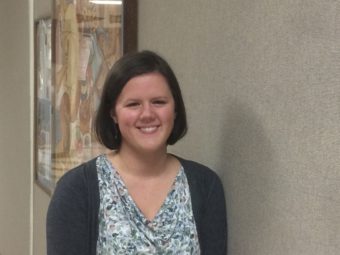
Kelly Hansen is the counselor at Floyd Dryden Middle School.
Kelly Hansen is the counselor at Floyd Dryden Middle School, Wednesday, Feb. 15, 2017. (Photo by Quinton Chandler/KTOO)

Kelly Hansen is the school counselor at Floyd Dryden.

“I think that whenever there is a loss or some sort of situation where there is a pretty large impact, it can really impact families, so there’ll be kids at the high school that have siblings at the elementary or at the middle school that might know the family or have a connection with the teacher,” Hansen said.

After the deaths, the district’s crisis response team comprised of counselors, psychologists and administrators offered support. Hansen said some of the kids at Floyd Dryden came looking for her.

“There was a few kids that kind of needed a quiet place to talk and to listen,” Hansen said. “I didn’t feel like it disrupted my day or my week more than normal. I feel like we responded and provided support where we needed to.”

She said during a crisis other staff also let her know which kids are having a hard time and she makes a point to check up on them.

Phil Merrell is the counselor at Thunder Mountain High School. He said schools are like small communities and anytime there’s a loss, emotions run strong.

“When one of those persons is lost, everyone is affected, everybody feels it to varying degrees,” Merrell said. “So for sure, there’s a change, there’s a sense of loss, but at the same time there’s a deepening sense of community, too, in that, ‘OK, we can come together, we can support each other.’”

Now it’s a new year and Merrell was reluctant to say his kids were back to normal, but he said there’s definitely a new sense of positivity in the school.

Phil Merrell is the counselor at Thunder Mountain High School.
Phil Merrell is the counselor at Thunder Mountain High School, Thursday, Feb. 16, 2017. (Photo by Quinton Chandler/KTOO)

While the recent deaths highlighted the role school counselor’s play in a crisis, Merrell said that’s not the only part of their jobs.

“It’s not easy to be in school, it’s not easy to be a young person in our culture,” he said. “… That generation Y, this idea of when do you become an adult, what is adolescence is just stretching and stretching a whole lot.”

Merrell said he serves as a bridge for students. He said he tries to support them socially, emotionally, academically and in finding future careers.

Hansen added that counselors can serve to boost morale throughout the school.

She said that she meets with kids and parents to talk about their classes, issues at home or at school.

She helps connect families with services they might need – everything from introducing them to the right administrators to helping them find food.

She serves as a mediator, she’s a case manager for kids with disabilities, and she said counselors are just a safe place for kids.

“Kind of going back (to) kids knowing that they have someone they can talk to that will keep their confidence and that they won’t break confidentiality unless it had to do with the safety of them or someone else,” Hansen said.

In a recent budget meeting, multiple residents and school principals asked the Juneau School Board to make funding for counseling staff and social-emotional needs a priority in their budget.

Middle school sports travel is back on the school board’s agenda

The Juneau School Board is revisiting its 2013 travel ban for middle school sports.

The 2013 school board disappointed a lot of people in Juneau when it voted to stop middle school sports teams from traveling out of town. At the school board meeting Tuesday, Superintendent Mark Miller said he read dozens of pages of documents to wrap his head around the previous board’s decision. Miller wasn’t working for the district when the decision was made.

Juneau Schools Superintendent Mark Miller at a Juneau School Board meeting on in December 2016. (Photo by Quinton Chandler/KTOO)
Juneau Schools Superintendent Mark Miller at a Juneau School Board meeting in December. (Photo by Quinton Chandler/KTOO)

“Well, there are a number of issues around it. One was equity. It seemed that as the number of students that were able to travel went down that the socioeconomic status of the students who was traveling went up.”

He also said that it looked like the middle school travel program was “dying” over time.

“If you look at the numbers it went from 120 to something around 60, to something around 30 over three years,” Miller said. “So I think it was a matter of equity, impact on student instruction, (and) impact on the number of days the kids and teachers were missing.”

He said the board decided the costs were too high.

More than three years have passed, five of the board members who voted on the issue are gone and the hard feelings in the community haven’t gone away. That’s why Miller said the current school board asked him to take another look.

After his investigation, Miller asked the board to consider whether middle school travel would hurt student learning and teacher instruction and other questions.

“Is it going to be equitable? Can we ensure that any student who wants to travel for middle school sports can, regardless of whether they can afford it or not?” Miller asked. “What is the impact on the community? I have people come to me hour — day after day saying, ‘We can’t have another raffle or another car wash, you’re tapping us out.’”

Miller also made rough estimates on the cost of a travel program. He estimated $25,000 per year to pay for students who couldn’t afford travel rates, $20,000 to $40,000 in administration costs and about $10,000 for contingency planning. He also estimated another $50,000 to $70,000 would have to be raised by the community, the City and Borough of Juneau, or the school district.

After hearing Miller’s report, the board decided to review the travel issue at its March 14 meeting. Policy Committee Chair Emil Mackey said his committee would review the travel policy’s language and highlight changes the board might want to make.

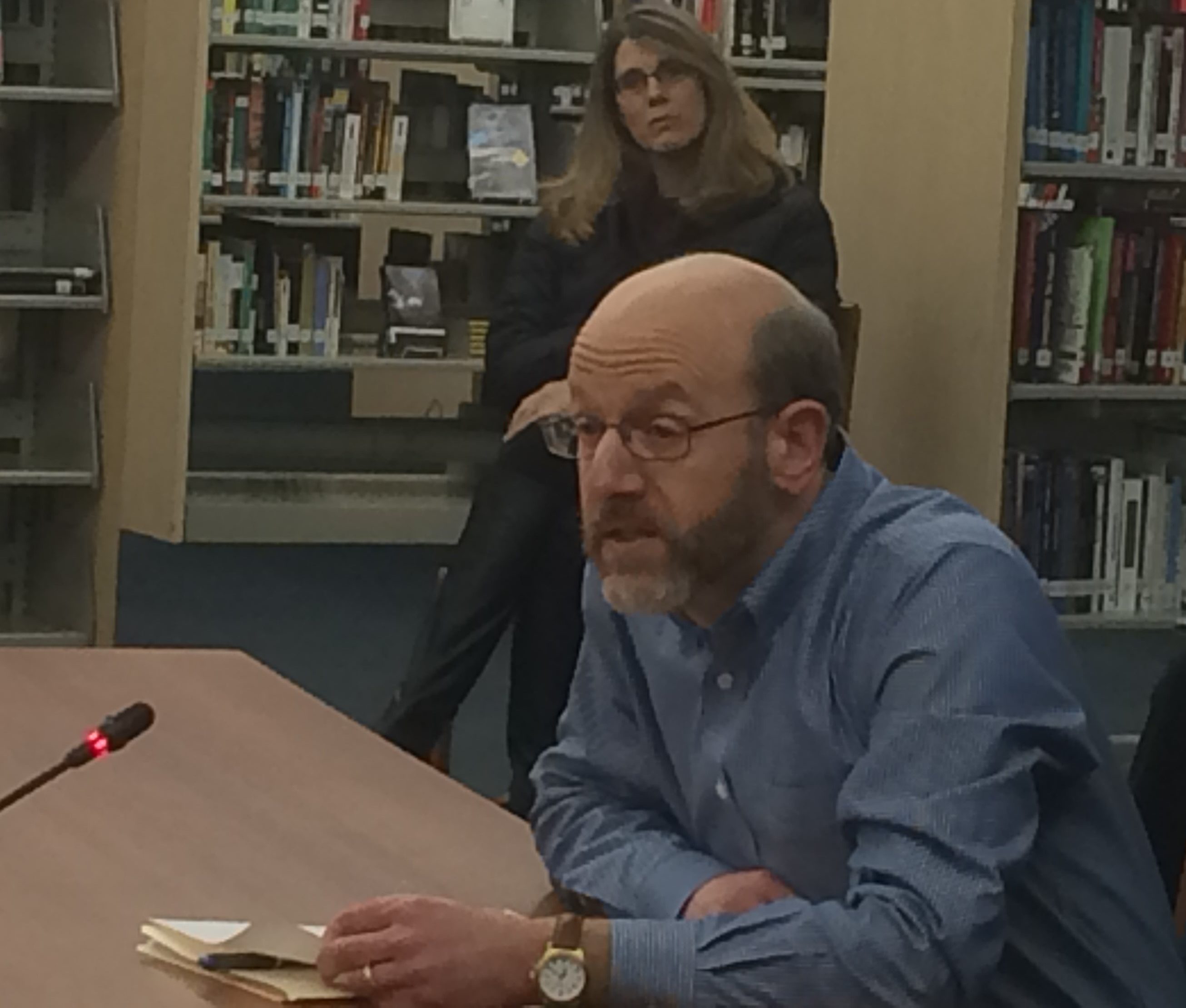
Jon Kurland speaks at the school board meeting Tuesday.
Jon Kurland speaks at the school board meeting Tuesday. (Photo by Quinton Chandler/KTOO)

Jon Kurland served on an independent committee formed after dozens in Juneau objected to the 2013 school board’s decision to end middle school sports travel. He looked at Miller’s report to the school board and agreed with the superintendent’s concerns for equity and the effects on classroom instruction, but he slightly disagreed on some of the cost estimates.

“I think he was filling the role that the superintendent should fill in trying to give a reasonable sense of what the costs would be,” Kurland said. “I think he was in some cases looking at a worst case, assuming that every middle school sports team would want to travel every single year.”

Kurland said based on his conversations with parents and coaches, that’s not really realistic. He hopes the district does vote to let middle schoolers travel again. He said that those travel opportunities offer incredible life experiences that the kids shouldn’t miss.

Residents talk class sizes and other needs at school district budget meeting

Nicole Wery is really hoping class sizes and school counselors aren’t affected by the school district’s budget for next school year. She has three kids in Juneau schools: two at Juneau-Douglas High School and one at Glacier Valley Elementary.

“PTR (Pupil-Teacher Ratio) is over 30 kids in classes. It’s so hard to be able to teach because we have kids that come from all facets of the world,” Wery said. “Some people are really advanced and some people aren’t, so just the knowledge base that a teacher has to teach to is large.”

Wery said it’s also critical that the district can bring drug and alcohol counseling into schools, and keep the regular school counselors it has on duty. She believes they play a huge role in preparing kids for the future.

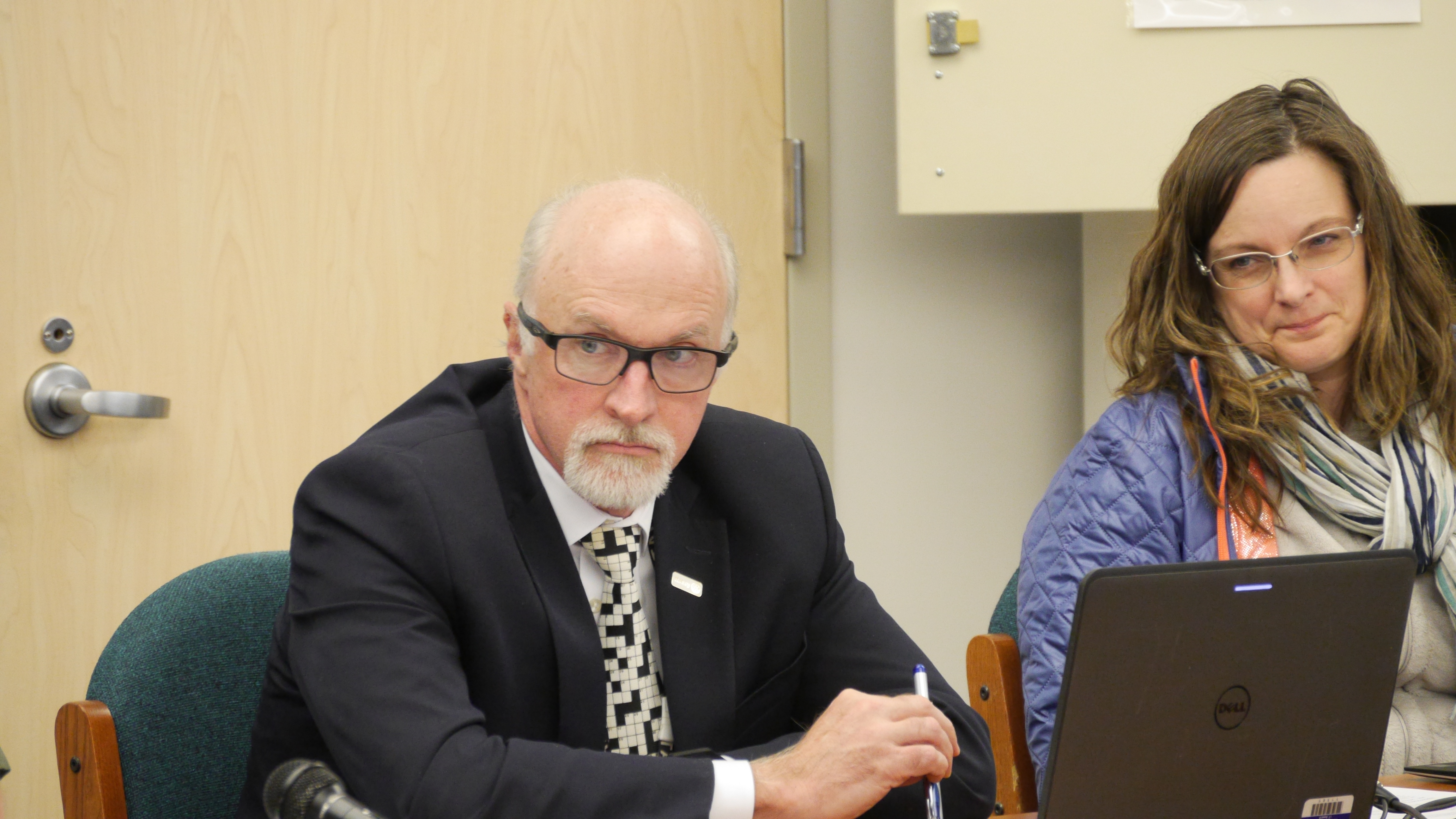
School Board President Brian Holst, left, and other audience members listen during the meeting.
School Board President Brian Holst, left, and other audience members listen during the meeting on Tuesday, Feb. 7, 2017. (Photo by Quinton Chandler/KTOO)

The Juneau School Board is working on a months-long budget process and board members decided to give the public a chance to comment. Almost a couple of a dozen people attended one of two school district budget meetings on Tuesday, Feb. 7.

Seven people spoke during the meeting. Nearly all of them said they were most worried about class sizes.

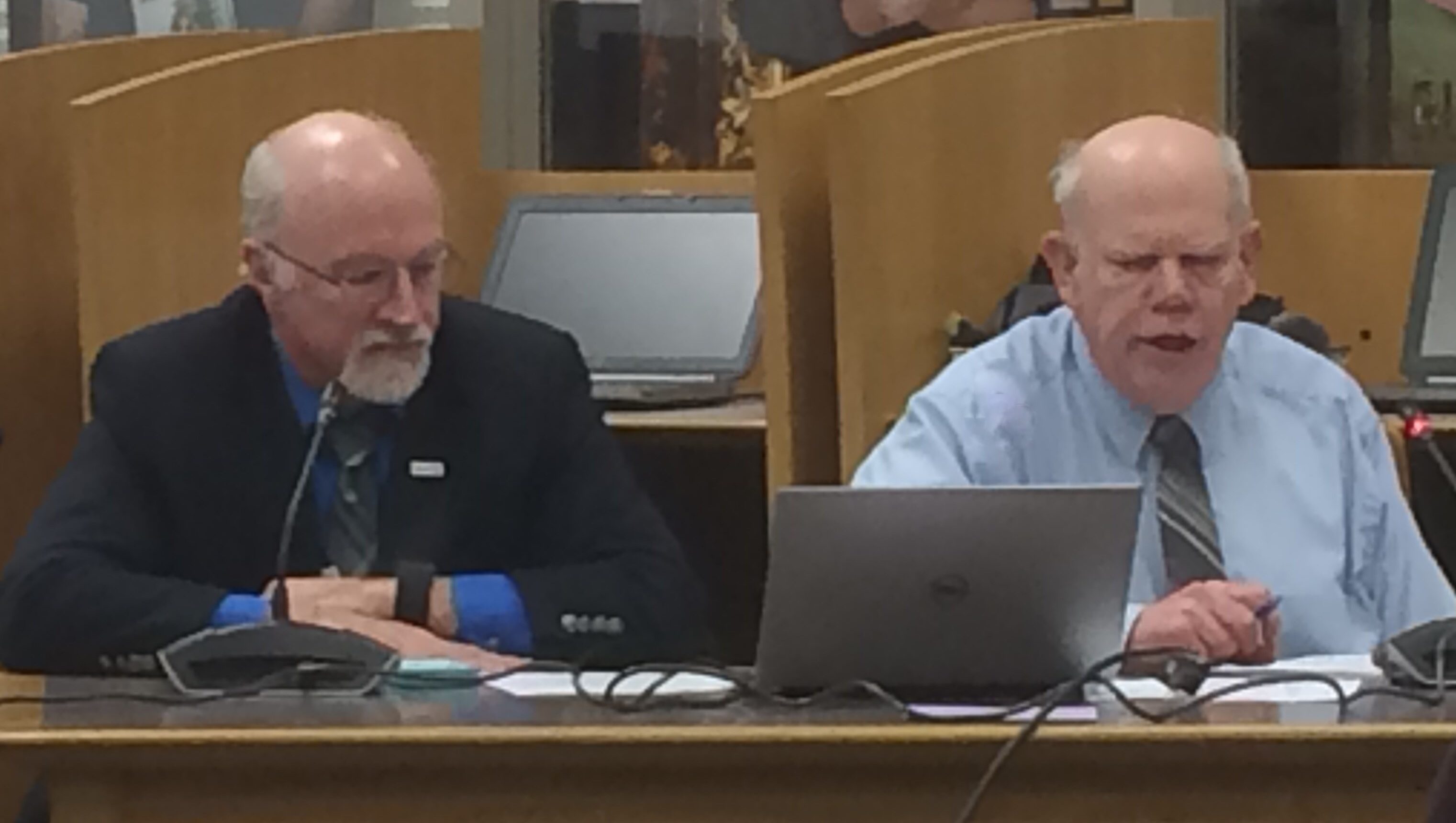
Superintendent Miller, left, and Director of Administrative Services, David Means, right, during the budget meeting on Tuesday, Feb. 7, 2016.
Superintendent Mark Miller, left, and Director of Administrative Services David Means during the budget meeting on Tuesday, Feb. 7, 2017. (Photo by Quinton Chandler/KTOO)

District Superintendent Mark Miller said he doesn’t think class sizes will grow for the 2017-2018 school year.

“Well, we’ve been financially conservative. So what I’m expecting is that we will have enough in carryover and what we get from the state to not have to make cuts for the first time in years,” Miller said.

He said in the last couple of years, cutting administrative positions and increasing class sizes were the only ways to balance the budget. But, he says it’s a balancing act.

“As I say, ‘When you find yourself at the bottom of a hole, stop digging.’ So we’re going to work really hard this year, I believe, to make sure that we don’t make the problem any worse,” Miller said.

He added that there is a little bit of money that the district might be able to use to reverse past cuts, but he stressed that compared to the overall budget, it’s a very small amount.

Some people attending the meeting also asked for more counseling staff, electives and vocational classes. Several said the district should pay for renovations at Mendenhall River Community School right away. They complained about plumbing problems and accessibility for special needs students.

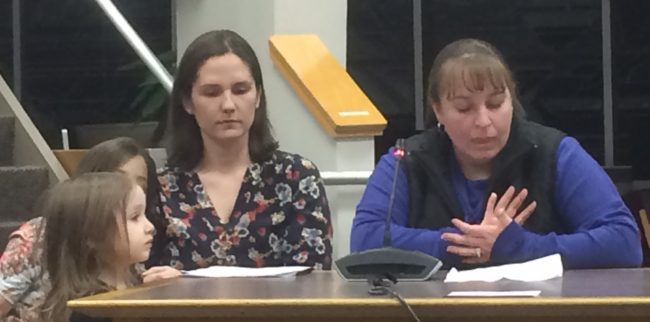
Two women with the Mendenhall River Community School Parent Teacher Organization speak to the school board during the budget meeting.
Two women with the Mendenhall River Community School Parent Teacher Organization speak during the budget meeting. (Photo by Quinton Chandler/KTOO)

While Miller doesn’t think the district will have to make cuts, he said there’s probably not going to be money for big renovations.

He said, “right now we’re in Band-Aid mode and we’re going to continue in Band-Aid mode until the state helps, comes back and helps us out with major bond debt reimbursement so we can afford major repairs.”

Last June, Gov. Bill Walker vetoed more than $30 million for school construction debt reimbursement and over $10 million for rural school construction funding from the state budget. In 2015, the Legislature also decided not to reimburse schools for any new construction debt until July 2020.

Four principals and a volunteer from local schools also spoke at the budget meeting. They all said one of their top priorities was lowering or maintaining class sizes. They asked the board for more special education specialists, pre-school programs, resources for electives, building renovations for Mendenhall River Community and Dzantik’i Heeni Middle School and counseling staff; including career counselors, drug and alcohol counselors.

And almost all of them asked for special teacher training ahead of implementation of the district’s new science curriculum.

The school board will send a budget to the City and Borough of Juneau at the end of March. Miller said a lot will depend on the solutions the state finds for its own financial dilemma.

And Nicole Wery said she’ll be watching the Legislative session to see whether the district will get the money for those counselors she’s rooting for.

School board invites public to budget meetings

This week the Juneau School Board is inviting the public to give their take on the school district’s budget for the next fiscal year.

Kristin Bartlett, the Juneau School District chief of staff, said the district adds items to its budget one piece at a time.

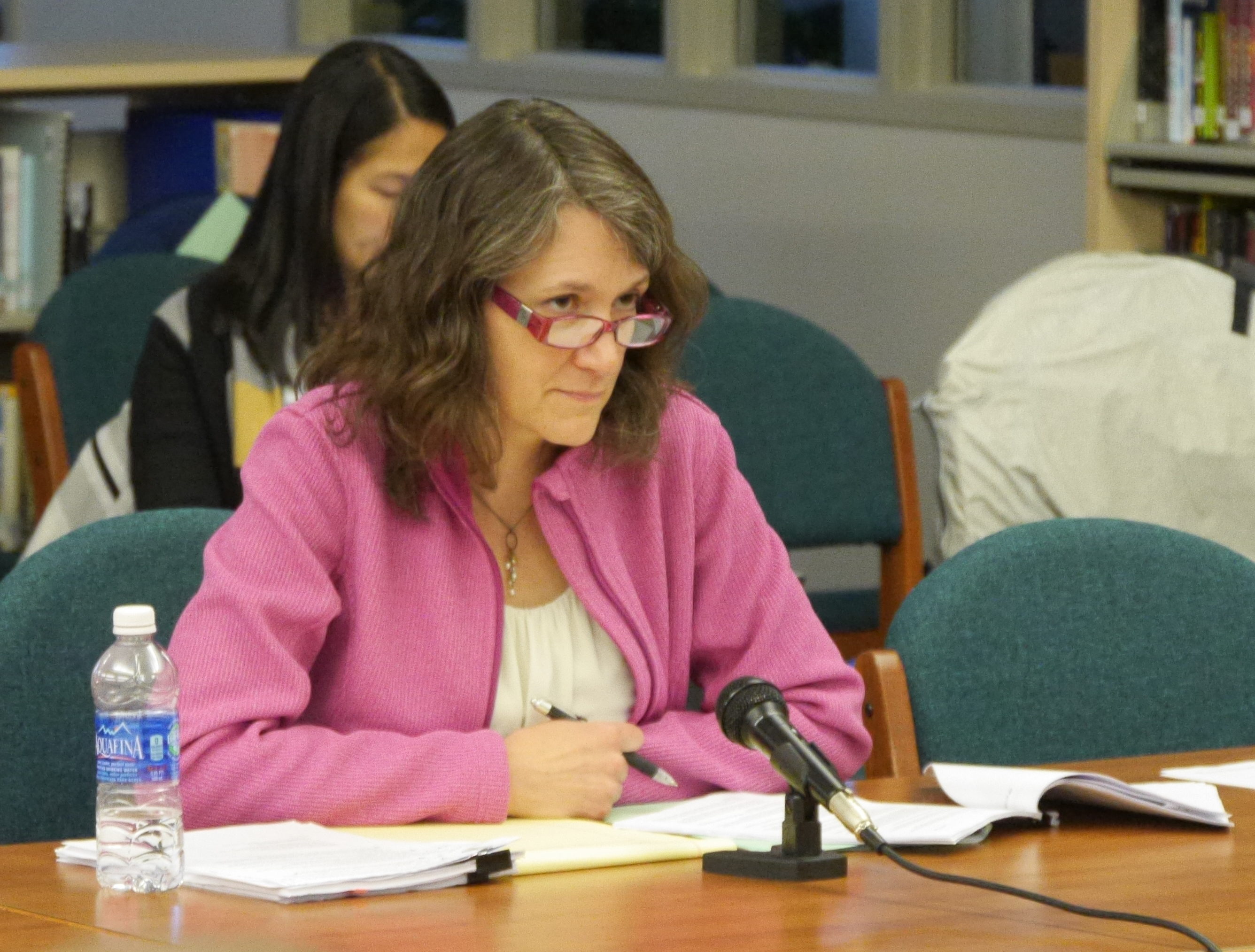
Juneau School District Chief of Staff Kristin Bartlett at the Jul. 9 School Board Meeting.
Juneau School District Chief of Staff Kristin Bartlett at the Jul. 9 School Board Meeting. (Photo by Quinton Chandler/KTOO)

“Rather than cutting, which is a process that was used in the past,” Bartlett said. “So, what the school board starts with is prioritizing programs and spending lists so that they can build this budget in an organized fashion.”

There will be two budget meetings – one at 6 p.m. Tuesday in the Juneau-Douglas High School library and one at 6 p.m. Wednesday in the Thunder Mountain High School library.

A Juneau School District news release said the board wants to hear the community’s opinions on funding priorities and on what works in local schools.

Principals from district schools will share their recommendations at both meetings.

“On Tuesday, the school board will be hearing from Auke Bay, Mendenhall River, Gastineau, Harborview, Dzantik’i Heeni and Juneau-Douglas High School,” Bartlett said.

On Wednesday, she said principals from Montessori Borealis, Yakoosge Daakahidi, Riverbend, Glacier Valley, Floyd Dryden and Thunder Mountain will speak.

Bartlett said the school district will submit its budget to the City and Borough of Juneau at the end of March.

She said the district doesn’t expect revenue from local, state and federal governments to increase, but it does expect an increase in operating costs and a slight enrollment increase.

The district’s budget documents are on its website.

If you can’t make it to the meetings, you can email your thoughts to budgetinput@juneauschools.org.

Charity for school kids just underneath fundraising goal

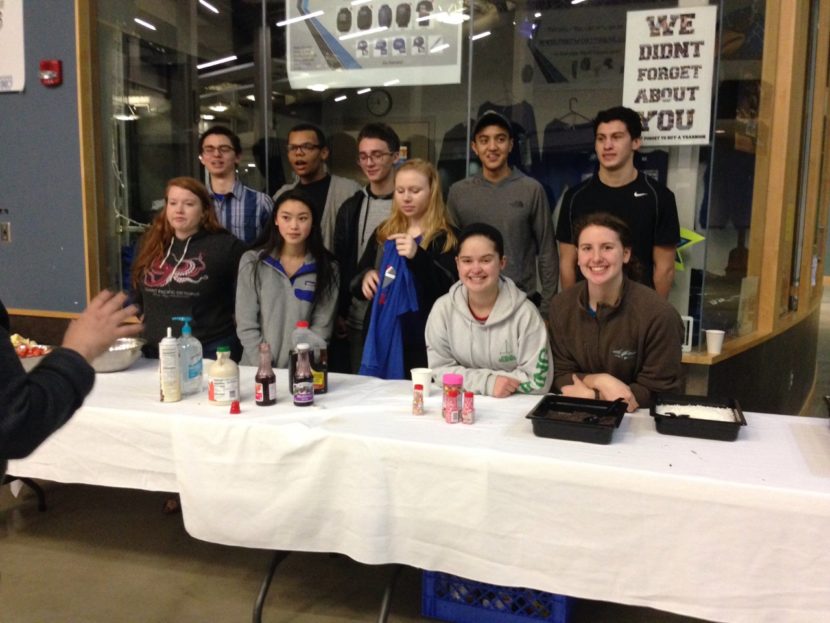
National Honor Society students helped serve food at the pancake dinner at Thunder Mountain High School on Sunday, Jan. 29, 2017. (Photo by Quinton Chandler/KTOO)
National Honor Society students helped serve food at the pancake dinner at Thunder Mountain High School on Sunday, Jan. 29, 2017. (Photo by Sharon Lowe)

Feeding Juneau’s Future raised more than $900 from about 72 people by the end of a pancake dinner in the Thunder Mountain High School commons.

The group hoped the event would be the last push they needed to reach their goal.

Cindy Gaguine, a coordinator with the group, said the Benito and Frances C. Gaguine Foundation, which her husband runs, has promised to match their donations up to $10,000.

“And with a Go Fund Me that we have going on right now and local donations, we have raised $8,000. So we’re getting close to our goal,” Gaguine said.

Counting the money raised at the dinner, that’s almost $9,000 total.

Feeding Juneau’s Future is a group that gives food to school kids who might not eat regularly at home. They’re nearing the end of their first “big fundraiser” just short of their $20,000 goal.

The group spends almost $2,000 per week on a couple of their programs for school kids of all ages.

According to Sharon Lowe, another of the charity’s coordinators, one of their most expensive efforts is the backpack program.

“We do the backpack program, which is a nationally recognized program, where we send home food over the weekend to kids who have been identified in the schools by either the school nurse, the counselors or their teachers as having food insecurities,” Lowe said.

Lowe said the program had modest beginnings in Juneau about three and a half years ago and just began operating citywide last school year.

She said the bags of food can help keep kids in school and paying attention.

“And not worried about when lunch is going to be because it’ll be the first time that they might have been fed, or they haven’t gotten enough over the weekend and they’re waiting for the school lunch to appear,” Lowe said.

The group also serves breakfast in Dzantik’i Heeni and Floyd Dryden Middle Schools, which Lowe said don’t get the same free breakfast Juneau School District gives most of the elementary schools.

She estimates they feed 40 to 50 kids breakfast at the two middle schools every day and they give out over 400 bags of food every week.

The group also stocks pantries in the two main high schools.

Site notifications
Update notification options
Subscribe to notifications