Weather

Attorneys in Sockeye fire case ask for more time to prepare

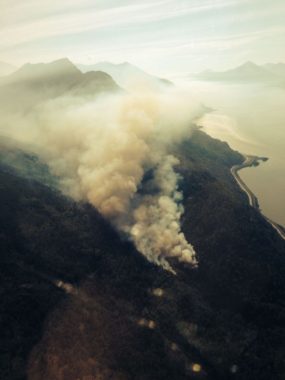
The Sockeye Fire which devastated Willow in 2015.
The Sockeye Fire which devastated Willow in 2015. (Public domain photo courtesy of the Mat-Su Borough)

Attorneys for the two defendants in the Sockeye fire case have asked for more time from the court to prepare a case for trial.

Today, Judge David Zwink granted their request from the bench in Palmer. According to attorney Kevin Fitzgerald, who represents Greg Imig, the state has made an offer. But Palmer District Attorney Roman Kalitiak, would not comment on what that offer might be. Kalitiak says he is reluctant to discuss details of the case, but if the state is to resolve it, there would have to be an acceptance of criminal negligence and restitution of the part of the defendants.

Greg Imig and co-defendant Amy DeWitt have been charged with negligence in connection with the fire’s start in Willow on June 14 of last year. The charges against them are misdemeanors. Kalitiak says negotiations typically concern charges and sentencing, but in this case, the question of restitution is important, because of the enormity of the damages.

He said on Friday that “the defense has a good knowledge of what would be acceptable to us (the state). We are not going to give this case away.”

The next pre-trial hearing is set for June 10 in Palmer, almost a year after the start of the wildfire.


Meeting federal regs, Sitka treats water with UV light

Project engineer Stephen Weatherman explains how all of Sitka’s water is run through the 24-inch pipes in the plant. (Photo by Robert Woolsey/KCAW)

Some of the best drinking water anywhere may be just a little bit better now.

Sitka officials on the 19th of May cut the ribbon on a new, $8 million dollar ultraviolet disinfection plant for the town’s water supply.

The great thing about Sitka’s water is how easy it is to trace. It literally falls from the sky into Blue Lake and the surrounding watershed, and maybe just a few days’ later flows out our taps.

A subalpine lake, Blue Lake water has never been filtered — only chlorinated.
A subalpine lake, Blue Lake water has never been filtered — only chlorinated. (Photo courtesy KCAW)

But for the US Environmental Protection Agency that is not enough. Thanks to the Enhanced Surface Water Treatment Rule, Sitka’s water now takes a detour through an innocuous gray building with a blue metal roof at the Sawmill Cove Industrial Park.

On the ground floor of the UV Disinfection Facility are offices and storage rooms for chlorine and fluoride. Not much to write home about.

But down in the basement it’s a plumber’s paradise.

City engineer Stephen Weatherman leads a small group of residents into a room of massive blue pipes — each 24 inches in diameter — and steers us toward three silver-colored ultraviolet reactors.

“This is where all the action takes place,” Weatherman said. “There are tubes in here, nine of them, just like a fluorescent light except they put out ultraviolet — which is really dangerous. It’s why it’s all enclosed. We have special masks upstairs people have to wear if they come in here and they’re on. But it’s no different than the ultraviolet you get from the sun. It’s just more intense.”

“This is where the action takes place…”. Weatherman points out the three UV reactors in the plant.
“This is where the action takes place…”. Weatherman points out the three UV reactors in the plant. (Photo by Robert Woolsey/KCAW)

The ultraviolet light targets cryptosporidium, a microscopic parasite that is the leading cause of waterborne illness in the United States. Cryptosporidium have an outer shell that allows them to live outside of humans and animals — and also makes them resistant to chlorine disinfection.

Right now about 2,500 gallons of water per minute are flowing through just one of three UV reactors in this plant. That’s less than a second of exposure for any cryptosporidium.

So how well is it working?

Deputy environmental superintendent Shiloh Williams can’t really say — yet.

“We generally don’t do a lot of UV testing that isn’t required,” Williams said. “We have this UV facility here as a barrier for cryptosporidium. The cryptosporidium test is quite expensive. So we haven’t actually tested it post-UV. We haven’t had any reason to at this point.”

Back outside the plant, in the warm sunshine, Sitka’s environmental superintendent Mark Buggins believes it’s better to be safe than sorry. Blue Lake was already a very clean source of surface water — even before the new EPA rules.

“Certainly you don’t know,” Buggins said. “If cryptosporidium is there and someone gets sick from it, you probably just don’t know. You get an upset stomach and diarrhea and attribute it to something else. Twice we’ve tested for cryptosporidium in Blue Lake’s water and found very small amounts — like one, out of a thousand gallons. So the dosage is really low. You need to drink more than one or two cryptosporidium spores to get sick. But the people who get affected — who you’re really protecting — are the immunocompromised, people who are on chemotherapy, people who are sick already, and dehydrated. It can really hurt you.”

Both chlorine and fluoride are added to the water after UV treatment.
Both chlorine and fluoride are added to the water after UV treatment. (Photo by Robert Woolsey/KCAW)

Even at $8 million, ultraviolet disinfection was the lesser of three options for Sitka to comply with the Enhanced Surface Water Treatment Rule. Installing granular filtration — like a huge swimming pool filter — would have run to $24 million. Membrane filtration would have cost $46 million.

State grants paid for over $6 million of this project, the rest was covered by loans, and about $20,000 from Sitka’s water fund. Operating costs for the UV plant — including electricity bought from the city — will run about $360,000 a year.

Buggins said electrical engineers are integrating the computer controls of the UV plant and the existing water system. Soon, water employees will be able to control everything from a laptop — even at home.

For Buggins, who’s been running Sitka’s water for 26 years and has plans to retire, this is an intriguing possibility. He even joked he may be asked to keep his password if he does retire.

And will UV treatment make Sitka’s water taste any different? Once the state has signed off on the new UV plant, Buggins said it likely will be easier to meet disinfection standards with lower amounts of chlorine — just enough chlorine to be detectable at the extremities of Sitka’s water system.


Coast Guard rescues two from foundering troller Rosalyn

Coast Guard H-60 Jayhawk
A Coast Guard H-60 Jayhawk helicopter from Air Station Sitka, returns to the Canadian Coast Guard’s Seal Cove Station during a search and rescue exercise on April 30, 2013, held off the coast of Prince Rupert, B.C. (Photo by Cpl. Jennifer Chiasson/Courtesy 19 Wing Comox, Royal Canadian Air Force)

Two people are reported safe and uninjured after their fishing vessel started taking on water outside of Southeast Alaska.

The crew of the 47-foot troller Rosalyn issued a mayday call about 2:30 a.m. Tuesday from the Fairweather Grounds northwest of Sitka. The crew reported that the vessel had minimal propulsion and lost steering. The vessel’s homeport was not determined.

A Coast Guard H-60 helicopter was dispatched from Air Station Sitka to rescue two unidentified crewmembers and bring them back to Sitka.

Search and rescue controller Vince Grochowski at Coast Guard’s Sector Juneau said seas in the area were 8 to 12 feet and winds were blowing at 40 knots. The two crew had donned survival suits before abandoning ship, but the weather was too rough to deploy a life raft.

As of Tuesday morning, a C-130 aircraft from Air Station Kodiak was headed to the scene to check on the vessel’s status and any potential pollution.

Time and tides wait for no Isuzu

This week’s monster high tide in Dillingham claimed this truck left overnight at Kanakanak Beach.

High tide Kanakanak Beach Dillingham, May 10 2016
A Dillingham man launched a skiff and parked an Isuzu pickup truck and trailer on Kanakanak Beach on Monday. On Tuesday, the Nushagak River saw one its biggest tides of the year and swamped the truck. (Photo by Dave Bendinger/KDLG)

The driver launched a skiff for Clark’s Point on Monday night and parked an Isuzu pickup truck and trailer on the beach.

Parking far up the beach is often suitable for most tide changes. A vehicle’s tires may get wet on a 20-foot tide. But on Tuesday, the Nushagak River saw one its biggest — and one of its lowest — tides of the year, and this Isuzu’s swamped interior can now attest that parking up the road would have been the wiser course.

Beachgoers Tuesday afternoon were shocked to see the outline of the truck appearing as the water receded on the afternoon ebb, and called police. The surf, fueled by 30 mph southwest winds, continued to pound the truck until police and harbor staff were finally able to tow it out around 2:15 p.m. Tuesday.

Isuzu pickup truck caught by tide Kanakanak Beach Dillingham, May 10 2016
(Photo by Dave Bendinger/KDLG)

Initially, police suspected the vehicle might have been stolen and left on the beach after a joyride. It took just a few phone calls after the license plate became visible for the owner to clarify that wasn’t the case. The vehicle had been parked Monday night to launch a boat, was apparently swamped on the Tuesday morning high tide, and dragged perhaps 75 yards seaward with the ebb.

According to NOAA’s Tides and Currents page, the Nushagak River’s high tide Monday night was 18.5 feet at 5:47 p.m. The low tide went down to negative 2.8 feet at 12:29 a.m., one of the lowest tides of the year. At 6:55 a.m., a monster 24.1-foot high tide smothered beaches and climbed shorelines, including several feet up Kanakanak Beach. That tide receded to 3 feet by 1:26 p.m. Tuesday, revealing the missing truck.

The skiff trailer wasn’t immediately found.

‘The Beast Is Still Up’: Alberta Wildfires Rage; Evacuees Told To Wait It Out

Fort McMurray, Alberta wildfires
The size of the fires around Fort McMurray, Alberta, is now more than 210,000 acres. The blaze is seen here from a distance on Thursday. The province of Alberta is under a state of emergency. (Photo by Cole Burston/AFP/Getty Images)

Days after they fled a powerful wildfire, more than 80,000 people who live in and around Fort McMurray are told that “it will not be a matter of days” before they can return home. Gusting winds have helped the fires spread farther, and more evacuation plans are being formed.

“We’re still here, we’re still battling,” regional fire chief Darby Allen told residents in a video update last night. “Things have calmed down in the city a little bit, but guys are out as we speak, fighting fires, trying to protect your property. The beast is still up, it’s surrounding the city. And we’re here doing our very best for you.”

Conditions remain extreme — a total of 49 wildfires are now burning in Alberta, the government said last night. Of that number, seven are listed as out of control — and 18 were started Thursday. As of last night, the size of the combined fires in Alberta was 85,000 hectares — or more than 210,000 acres.

The effort to stop the fires, or at least to protect crucial infrastructure, now includes more than 1,110 firefighters, 145 helicopters, 138 pieces of heavy equipment and 22 air tankers, the government says.

Damage to the Fort McMurray community is extensive, and regional leaders said it will be many days before it’s safe. Last night, Alberta Premier Rachel Notley refused to speculate on when residents might return to see what’s left of their homes — but she added, “unfortunately, we do know that it will not be a matter of days.”

Reporting for NPR’s Newscast unit, Dan Karpenchuk says, “The Alberta government says it’s working on a transitional housing plan for families who have lost everything.”

The fires around Fort McMurray have generated startling scenes of evacuees trying to escape the flames that threatened neighborhoods and towns. The Calgary Herald is highlighting a sequence of dashcam videos from Michel Chamberland, 25, who threw a few essentials into a bag after seeing smoke and hearing the crackle of flames from his front door.


“Oh, my God, I can feel the heat!” Chamberland says at one point in the video. At another point, what seems to be the darkness of night — with cars slowed to a crawl, hazards blinking — is revealed to be the result of thick black smoke.

Chamberland tells the Herald that he has licensed his video through YouTube to raise money for the recovery effort in Fort McMurray.

Copyright 2016 NPR. To see more, visit http://www.npr.org/.

Spring breakup begins weeks early in Elim

Elim
Elim in winter. (KNOM photo)

Breakup has begun in Elim. Village officials are warning residents to stay off the sea ice as they travel around the Eastern Norton Sound and the southern coast of the Seward Peninsula.

“We have to travel inland now if you want to go the Golovin way,” said Robert Keith of the Elim tribal office. “And you’d have to be pretty daring to go travel toward Koyuk on the ice from Elim.”

Keith said ice conditions deteriorated over the weekend with high winds and warmer temperatures.

“We’ve got a lot of loose ice that broke up,” he said. “It’s melting really bad and really quick over here.”

While ice is still solid near Moses Point, a spit located east of Elim, Keith said most shorefast ice is already starting to break away — something that usually happens in May.

“I think it’s probably three weeks or maybe four weeks early,” he said.

For safety, village officials are urging snowmachiners to use overland trails when traveling to and from Elim.

One snowmachiner has already gone missing while traveling between Elim and Koyuk. Local residents are still searching for Roger Hannon of Koyuk, who went missing two weeks ago in blizzard conditions. Searchers found his snowmachine in open water on the edge of the sea ice east of Elim.

Site notifications
Update notification options
Subscribe to notifications