Federal Government

Juneau considers setting aside money to support Mendenhall Glacier Visitor Center staffing

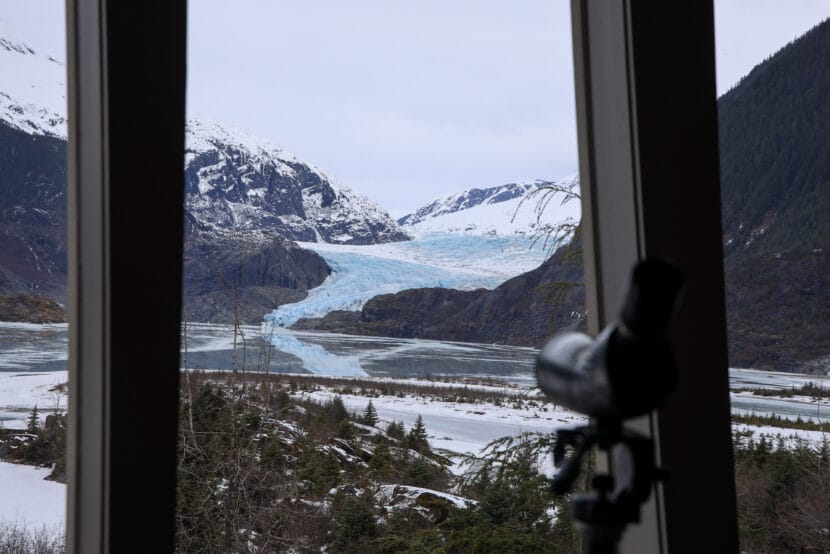
The Mendenhall Glacier seen from the Mendenhall Glacier Visitor Center on Friday, Feb. 21, 2025. (Photo by Clarise Larson/KTOO)

With Juneau’s cruise ship season less than two weeks away, Juneau officials are proposing to set aside city money to hire staff for one of the city’s main tourist attractions: the Mendenhall Glacier Visitor Center.

The jobs were formerly filled by federal workers, and city leaders say the proposal would act as a safety net in the face of further uncertainty at the federal level.

Juneau’s Visitor Industry Director Alix Pierce asked the Assembly Finance Committee to set aside $200,000. The money could be used to fund positions at the visitor center from State Commercial Passenger Fees collected from cruise ship visitors if more federal employees are laid off. She’s hoping it won’t come to that, though. 

“This appropriation would be money to the manager’s office to use at the discretion of the City Manager, if there’s another issue affecting staffing, to try to create some level of continuity out there, given all the uncertainties,” Pierce said. 

In February, a wave of federal firings left one remaining staff member at the visitor center. In a typical summer, there are about a dozen on site at any given time to serve the one million visitors who come each year. 

Last month, the U.S. Department of Agriculture reinstated employees who were terminated because an independent federal board ruled that the firings were unlawful. It issued a 45-day stay on the positions, but thereʼs still uncertainty about what happens next. U.S. Forest Service officials say they can’t provide a staffing schedule or plan for the visitor center at this time. 

Pierce says about half of the visitor center staff took their jobs back. Others had already found jobs elsewhere. But even for those currently back at the glacier, the job is unstable. And, sheʼs heard from Forest Service staff that more cuts may be coming from the White House in the future.

“There is still some uncertainty,” she said. “There are discussions of another reduction in force. We don’t know what that looks like. We don’t know how it would impact operations here in Juneau.”

The city manager could use the money to pay other organizations that operate at the glacier to quickly hire some of the terminated staff. 

One of those is Discovery Southeast, a nature and science education nonprofit that already has a presence at the glacier.

Shawn Eisele is the director. He said the city funding is a good stop-gap, but he’s upset they have to step in at all. The Mendenhall Glacier Visitor Center was self-sustaining as it was before the Trump administration cut staff.

“It worked really well. It ‘s good paying jobs in our community. It worked great. It doesn’t make sense that it’s been kind of artificially collapsed right now,” he said. “Like, we’re not looking for a good solution. We’re just looking for the least pain in the short term to hopefully bridge a better solution in the long term.”

But Eisele said the organization is prepared to be a part of that bridge.

“If there’s an opportunity for us to step in in the short term and keep things going, we’re prepared to do this,” he said. 

The proposal will be introduced at Monday’s assembly meeting, and voted on at the next. 
Murkowski votes to oppose Canada tariffs, Sullivan votes in support

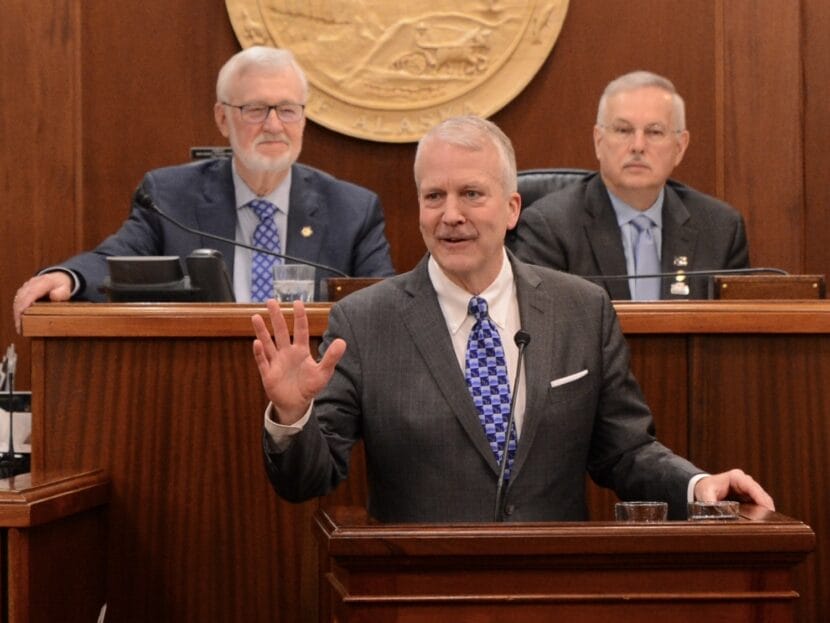
U.S. Sen. Dan Sullivan, R-Alaska, speaks to the Alaska Legislature on Thursday, March 20, 2025. (Photo by James Brooks/Alaska Beacon)

Alaska’s two U.S. senators split Wednesday on a vote against President Donald Trump’s economic tariffs against Canada.

The U.S. Senate voted 51-48 to approve a resolution that would end the presidentially declared emergency that allowed Trump to impose tariffs on Canada.

The vote was largely symbolic because the resolution has almost no chance of passing the U.S. House, where the Speaker of the House has already taken action to prevent the emergency from ending.

Sen. Lisa Murkowski, R-Alaska, joined Senate Democrats and three other Republicans in voting to end the presidential emergency. The other Republicans were Susan Collins of Maine, Mitch McConnell of Kentucky, and Rand Paul of Kentucky. Paul co-sponsored the resolution.

Sen. Dan Sullivan, R-Alaska, joined all other Republicans in voting to oppose the resolution and support Trump’s decision.

Murkowski’s vote had been expected; in the days preceding the vote, Trump issued a statement asking her and other Republicans to “get on the Republican bandwagon, for a change.”

After her vote, Murkowski explained her reasoning in a statement on social media.

“While not all Canadian trade practices are fair, I’m keenly aware of the negative impacts in store for Alaskan families and businesses should tariffs drive up the costs of essential goods,” she wrote.

“In Alaska, this relationship matters. We share more than 1,538 miles of border with Canada – some of our communities share schools and churches. Our best-known road is the Alcan (Alaska-Canada) Highway. We are friends, neighbors, partners, and allies when it comes to our economies, our mutual defense, our cultures, and, yes, our trade.”

In enacting the tariffs, Trump cited the flow of illegal drugs from Canada to the United States. Statistics published by the Canadian and U.S. governments show 0.2% of the illegal fentanyl sold in the United States comes from Canada. More fentanyl flows from the United States to Canada than vice versa.

“Like any relationship, there are certainly areas for improvement. I support the President’s efforts to block the flow of fentanyl in our country, but we should remember the old saying that the U.S. and Canada are ‘neighbors by geography, and friends by choice.’ In that same spirit, I’m certain we can find a better way to mutually secure our borders and address fentanyl trafficking than by starting a trade war,” Murkowski wrote.

Sullivan’s office, in a statement released after his vote, said, “Last year, U.S. Customs and Border Protection seized enough fentanyl crossing the northern border to kill more than 9 million Americans.”

“Senator Sullivan believes that we should not accept any amount of deadly fentanyl coming in from either our Southern or Northern border,” said the emailed statement. “For the last two years in a row, Alaska has experienced the largest increase in drug overdose death rates of any state in the country. Senator Sullivan believes we need to do everything we can to stop the poisoning of Alaskans and Americans, including using tariffs as leverage to get Canada, Mexico and China to put more resources into stopping this deadly drug from coming into our country. The senator doesn’t believe the President’s goal is to have these particular tariffs in place forever, but rather they should drive our nations toward greater cooperation on this critical challenge. The senator will be evaluating the results of this strategy and its impact on Alaskans in the weeks and months ahead.”

In response to Trump’s policies, British Columbia’s government has introduced legislation to permit the province to levy a toll on vehicles traveling from the Lower 48 to Alaska.

At Senate confirmation hearings, Sullivan asks to make a point

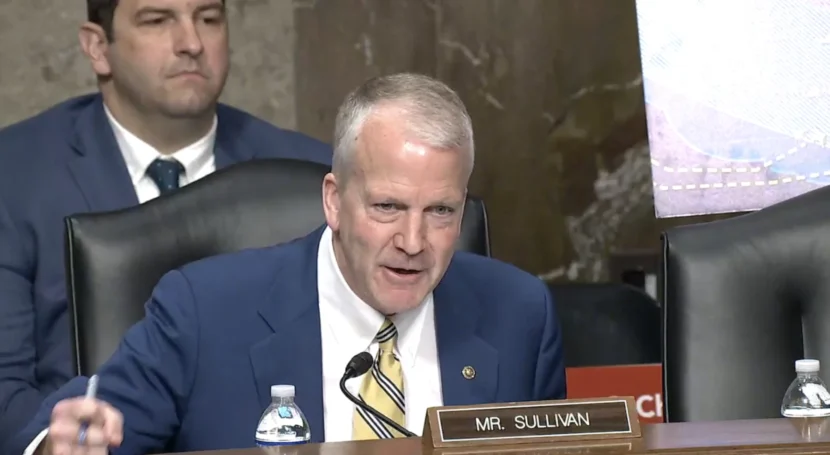
Sen. Dan Sullivan questions a nominee at the Senate Armed Services Committee, April 1, 2025. (Screenshot from U.S. Senate Video)

President Trump’s nominee to be chairman of the joint chiefs of staff, Gen. Dan Caine, faced the Senate Armed Services Committee Tuesday. That gave Alaska U.S. Sen. Dan Sullivan five minutes to ask, in public, anything of the man likely to soon be the nation’s most senior military officer.

Sullivan called out what he sees as the liberal agenda of the Biden administration’s appointees.

“I think the military was politicized in a huge way, particularly from the civilian leaders who were pushing left-wing theories on the military, pushing climate change over ship-building,” Sullivan said. “The undersecretary for policy came before this committee and told us that our military is, quote, systemically racist. It’s ridiculous, right? Do you believe our military is systemically racist?”

Sullivan often disparages the idea that the military is imbued with institutional discrimination. He spent some time on it at Caine’s hearing. The nominee had only to provide the briefest response:

“No, senator.”

Confirmation hearings can reveal a lot, and not just about the nominees. They are ostensibly a chance for senators to ask nominees about their background, policy views and how they intend to fulfill the duties of the position. That does happen. But senators often use these proceedings not to extract information but to deliver it — to the nominee, to other senators and to the C-SPAN-viewing public. Sullivan sticks mostly to the second mode.

At this hearing, Sullivan’s point about liberal agendas served as a bit of counterprogramming, since it was interspersed between Democratic senators asking Caine what he’d do if Trump tried to use the military against civilians or to carry out domestic political goals.

Sullivan quickly moved on to a topic any regular observer of these proceedings knew was coming.

“I’m not going to let this hearing go by without a famous quote from the father of the U.S. Air Force, Billy Mitchell, who was talking about a certain place in the world,” Sullivan said, leading Caine down a rhetorical path that he’s taken with many prior nominees. “He said, Whoever controls this place, controls the world. It is the most strategic place in the world. What place was Billy Mitchell talking about, General?”

Caine knew the answer: Alaska

“You agree with Billy Mitchell’s incredibly insightful analysis?” Sullivan continued.

“Mitchell was a brilliant air power …,” Caine started to say, but Sullivan wanted to hear just one word.

“That’s a yes, I assume you’re saying?” he pressed.

Caine took the hint: “Yes, sir.”

Sullivan raises Billy Mitchell to argue for more military assets in Alaska. He spoke at the hearing of repeated Russian and Chinese incursions in the North Pacific, near Alaska. He talked about the value of re-opening the military base at Adak. He also made a plug for 8(a) contracting. The 8(a) program allows the federal government to sign sole-source contracts with certain types of businesses, and some Alaska Native Corporations have done well with it.

When Sullivan’s five minutes in the Armed Services Committee were up he moved on to another confirmation hearing, in the Veterans Affairs Committee. There he raised another issue he’s passionate about — capping attorneys’ fees for law firms representing Marines exposed to toxic drinking water at Camp Lejeune. Sullivan grew frustrated as the nominee to be general counsel for the V.A., James Baehr, equivocated.

“I think the issue of representation and making sure that folks have aggressive representation, helping them …” Baehr began.

“You’re getting ready to lose my vote here,” Sullivan interjected. “That’s the wrong answer.”

Sen. Angus King’s turn came next. King, I-Maine, said the discussion about fine points of veterans policy seemed like playing music on the deck of the Titanic, given that the Trump administration has fired thousands of employees at the VA and intends to fire tens of thousands more.

“And we’ve got the (VA) secretary telling us that this is going to produce better service,” King said. “I don’t think that passes the straight-face test.”

He said the committee should quit considering nominees until they get answers from the department about how the firings and cancelled government contracts are going to impact service to veterans.

But, for the most part, nominees before the Armed Services and the Veterans committees did not face stiff opposition, so confirmation is likely.

Alaska Native advocates say new Trump election order would further disenfranchise rural voters

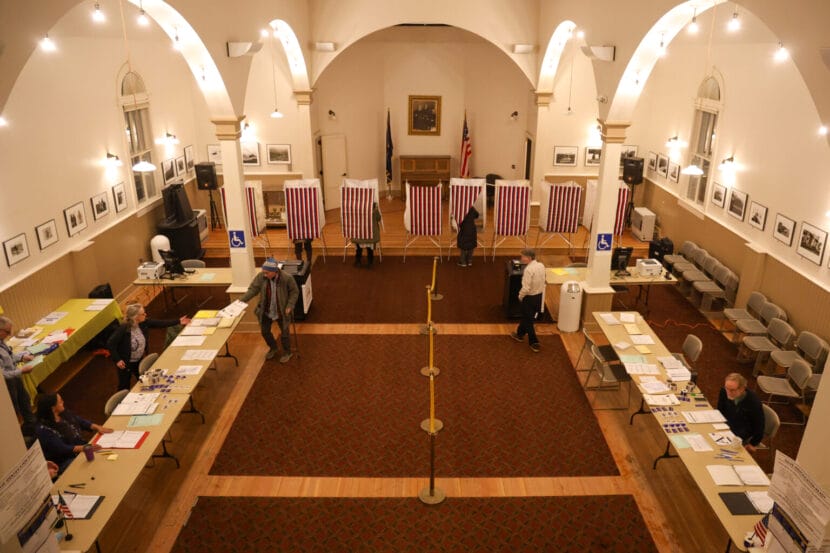
A steady trickle of voters cast their ballots at Old Saint Joe’s in Nome early Tuesday, Nov. 5, 2024. (Ben Townsend/KNOM)

President Trump last Tuesday issued an executive order to reshape U.S. elections.

The order, among other things, mandates absentee and mail-in ballots to be received by Election Day. It also requires proof of citizenship for registering to vote in federal elections.

The changes might further disenfranchise voters in rural communities and lead to a drop in voter turnout for Alaska Native residents, said Jackie Arnaciar Boyer, program adviser for the Rural and Indigenous Outreach Program, which focuses on civic engagement.

“I think it’d be pretty devastating to rural vote,” said Boyer, who is Cup’ig and has roots in Mekoryuk.

In Alaska, mailed ballots must be postmarked no later than Election Day, and can be received up to 10 days later – or 15 days for voters overseas. The timeline is helpful because hundreds of communities – predominantly Alaska Native – are accessible only by air.

Denise Louisaac is a poll worker in Dillingham who oversaw early absentee voting there for the last two presidential elections. In 2020, she said it took 10 days after Election Day for the last batch of early voting ballots to get from Dillingham to Anchorage to her regional election office in Nome. She said the new federal voting timeline would be tight for Dillingham – and even tighter for smaller villages that need to get their ballots to their hub community first.

“If early absentee voting goes until the Monday before Election Day, there is no way possible for the mail to deliver that ballot to Nome in time,” Louisaac said. “It will definitely disenfranchise smaller rural communities.”

Louisaac said she saw most absentee ballots cast in the week before the election. She said that an earlier cutoff would mean that some residents have less voting time – and less time to decide who to vote for.

“If we at villages don’t have the same access, then their voice is diminished,” she said. “If they don’t want those people to have a vote, you make it harder for them to vote. If you want them to have a voice, then you make it easier for them to vote. That’s democracy.”

Rural Alaska Native villages regularly experience challenges during elections. Storms can prevent planes from coming in and out of the villages for days or weeks, and ballots often arrive late – first, to villages and then to an election office. With the lack of volunteers, training and outreach to residents, polling places sometimes open late or don’t open at all, and mail-in votes get rejected.

The president of the First Alaskans Institute, who goes by both Apagzuk Roy Agloinga and Apagruk Roy Agloinga, said the combination of challenges makes it difficult to count votes from the rural Native communities.

“It’s just not fair, right?” Agloinga said. “I mean, to exclude an entire population because of where they live in the country, and to make it difficult for them to participate in this really important process that is a part of our civil liberties.”

The voter turnout for Alaska Native residents – who represent about 20% of the state population – peaked back in the 1980s at about 66%. It has been decreasing ever since, to about 28% in 2022, according to data that nonpartisan organization Get out the Native Vote presented at the Alaska Federations of Natives conference in October. This doesn’t match statewide turnout trends.

The new executive order also mandates people to show proof of their citizenship – such as a passport or state-issued ID – to register to vote in federal elections.

In Alaska, eligible residents are automatically registered to vote when they apply for the Permanent Fund Dividend. Agloinga said that many Alaska Natives use tribal IDs because there’s nowhere in their village or region to get a passport or state ID. The state Division of Elections does not track how many residents use tribal IDs to register to vote.

“Any number of voters that you miss in a community makes a big difference,” Agloinga said.

Democratic Rep. Robyn Niayuq Burke, who represents the North Slope and Northwest Arctic boroughs in the Alaska Legislature, said she’s looking into the legality of the executive order.

Alaska Division of Elections spokesperson Stephen Kirch said in an email last week that the division is reviewing the new executive order and will work with the state Department of Law on any potential changes to policies. Kirch said that at this time, division staff don’t know if there will be any impact in Alaska.

Alaska’s public health programs lose millions in federal grant funding

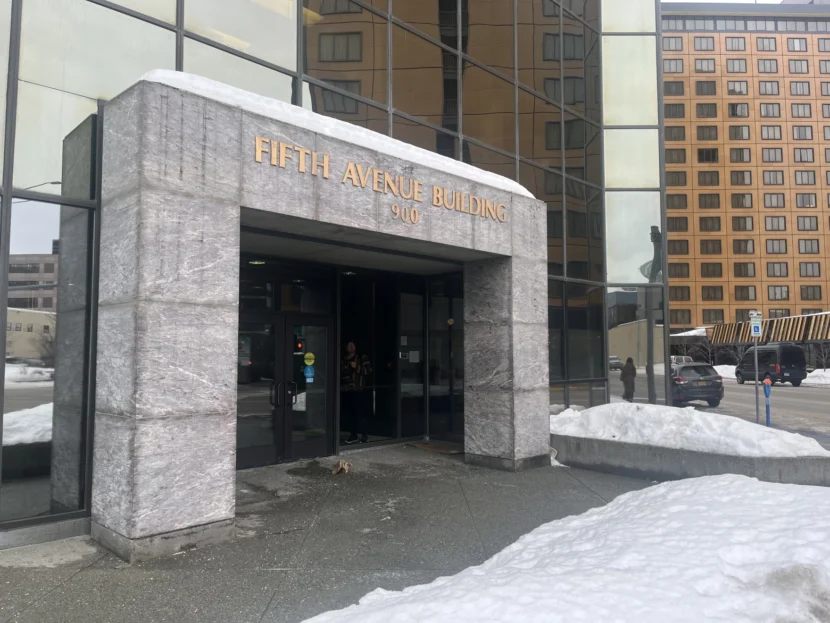
The frontier building in Anchorage houses the state’s division of public health. (Rachel Cassandra/Alaska Public Media)

The federal government notified the state that Alaska’s division of public health won’t receive millions of dollars in public health grants it was expecting over the next two years.

The state department of health, which oversees the division, did not agree to an interview for this story, but spokesperson Alex Huseman said by email that the grants were terminated March 24.

“The funds were meant to address the continued impact of COVID-19 on the economy, public health, state and local governments, individuals, and businesses,” Huseman said. “The Department is actively assessing potential impacts and next steps for our staff, programs, and activities.”

Dr. Anne Zink, who led the state’s response to the COVID 19 pandemic as chief medical officer, said the money was also intended to reduce the impact of future disease outbreaks and pandemics.

“I worry that without letting [the projects] finish, we will be set back tremendously again,” Zink said. “It’s hard to know for sure, but it feels like decades of lessons learned are going backwards if we lose this.”

In a meeting last week, leaders in the division of public health announced the federal government had cut the funds because the COVID pandemic is over, according to a source who works in the division. The source, who did not want to be identified because they’re not authorized to speak to the media, said a major aim of the funding was to protect the state against future pandemics or public health emergencies.

The state did not give an estimate of the total amount of funding lost, but the source provided documents showing the grants amounted to $25 million in funds already allocated by Congress. An additional $18 million has already been awarded to state organizations and contractors, they say, and the future of those funds is uncertain and complicated legally.

Zink said stopping the funding partway through projects is a waste of money and effort.

“The money that was already spent may not be realized in its benefit to Alaskans, because we may not be able to finish the project, or we started something and can’t get it done,” Zink said.

One of the state projects that is losing funding is an electronic records sharing system, which is partially finished.

Zink said the system would allow for data sharing between public health and the broader healthcare system to help them communicate and work better together.

The division source said the COVID-era funding was also focused on reducing health disparities across the state, especially in rural Alaska, and such major cuts will have a devastating ripple effect throughout all Alaska public health programs.

“Everybody is going to feel this,” they said. “People who are trying to quit smoking, they are potentially going to call for that resource and it’s not going to be there anymore. People who are seeking to have extra Narcan doses through Project Hope might find that they can’t get the doses they need.”

Project Hope is an organization that distributes free opioid reversal treatments like Narcan.

The source said about fifty people, ten percent of the division’s staff, are employed fully with funds from the eliminated grants. They said the state aims to cover some of the missing grants with other federal funding sources.

The source said the division directs these grants to organizations working in communities, and on projects communities identify as important for public health reasons.

A majority of the funding, they said, has gone toward expanding rural health access, but the Anchorage Health Department has also received a big chunk of funding to reduce disparities in urban areas.

Michelle Fehribach, a spokesperson for the Anchorage Health Department, said they “don’t currently have enough information to ascertain how the [municipality of Anchorage] may be impacted by this decision.”

Zink said the grants were aimed at the biggest public health concerns in Alaska.

“These dollars were very tailored to what Alaskans need and want, and these were not federal dollars telling us how to practice or what to do,” Zink said. “Alaska got the opportunity to decide if we were going to apply for them or not, and apply for them, in ways that met the department’s goal of the health well being and self-sufficiency of Alaskans. And to have those dollars cut, which are Alaskan taxpayer dollars, is going to hurt Alaskans, and that is hard for me to watch.”

It’s unclear whether the state will be able to pay the contracts that have already been promised to organizations and communities across the state.

Editors note: Anne Zink is a host of the program Line One: Your Health Connection on Alaska Public Media.

Alaska’s HIV and AIDs support nonprofit says cuts to federal health department could have deadly consequences

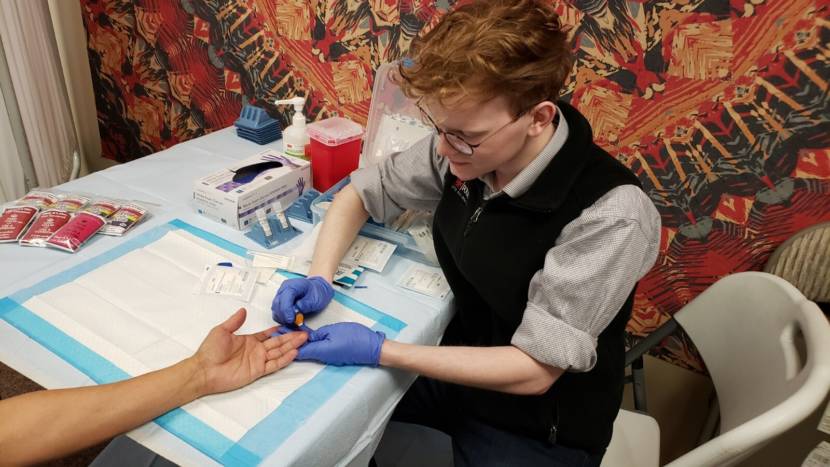
Four A’s testing outreach (Photo Courtesy of Alaskan AIDS Assistance Association, also known as Four A’s)

The Trump administration announced Thursday it would shrink U.S. Department of Health and Human Services staff by almost a quarter, and has suggested that it will dissolve the Centers for Disease Control and Prevention division that focuses on HIV prevention. 

Amid the uncertainty, Alaska organizations aren’t sure if the federal funding they rely on will still exist. One of those organizations is the Alaskan AIDS Assistance Association, or Four A’s. 

Its director, Robin Lutz, said losing federal funding could make the AIDS epidemic get much worse in Alaska — and more deadly. 

“We have the opportunity to end the epidemic,” Lutz said. “We will not be able to do that if this administration continues to act in the way it has.”

In her nearly 30 years working with HIV-positive people, Lutz has seen major improvements to awareness, prevention and treatment of HIV and AIDS. But she says losing federal grant funding means the state would lose progress in fighting the disease. 

The nonprofit helps Alaskans who are HIV-positive with housing and access to life-saving medication. It also helps people get tested to know if they are HIV-positive, which helps curb the spread. Roughly 700 people are living with HIV in the state. Threats to Medicaid could further endanger Alaska’s HIV-positive population. 

The Trump administration plans to cut the federal health department by nearly 25 percent. Local organizations say there has been little to no information about the impact these changes will have on federal grants.

“Over a third of people living with HIV in the state don’t have the resources they need and deserve to manage their health without support, and it’s basically economic support,” she said. 

And Lutz said Alaska is a uniquely difficult place to access HIV testing and prevention medications. Accessing preventative care is already a challenge for Alaskans, due to misinformation and stigmatization of HIV. 

Site notifications
Update notification options
Subscribe to notifications