State Government

Unopposed Kerttula works new district

Juneau Democratic State Rep. Beth Kerttula has been getting to know the residents and issues in her new district this fall.  House District 32 encompasses Juneau, Petersburg, Kupreanof, Gustavus, Tenakee and Skagway.

Beth Kerttula
Rep. Beth Kerttula. Photo courtesy Alaska State Legislature.

During a recent visit to Petersburg, Kerttula toured the city’s crumbling police station and walked aging North Harbor floats, the community’s top two capital project priorities. She also met with city officials and visited with residents for hours at a coffee shop. Kerttula has been on the campaign trail this year, but not for her re-election. She does not have an opponent in the Nov. 6election, which she calls fortunate.

“Not that I don’t believe in running hard or having opponents; in a democracy that’s what you do. But I worked really heard this summer on the coastal management initiative which we lost, but it was a valiant effort. After getting outspent 10 to one, I think we did well especially considering that most of the coast supported it,” Kerttula says.  “That was a good experience. Initiatives are very hard to do. So I was campaigning, I just wasn’t campaigning for myself this year.”

The 56-year-old Democrat has represented Juneau in the state house since 1998. She’s served as minority leader in the House since 2007 and welcomes the chance to represent other communities outside the capital city.

“For me, after being in the legislature for a long time now, it’s just really exciting to get to represent a new area,” she says.  “I love my home, I love Juneau, but I also love the rest of Southeast, so getting the opportunity to grow like this is really terrific.”

Kerttula is an attorney, was an assistant attorney general for the state and an assistant public defender. Her father Jay Kerttula served in the state legislature and was House speaker and Senate president during his legislative career.

Petersburg officials unsuccessfully challenged the state’s redistricting plan, asking instead to remain in a district with Sitka and other smaller towns in the region. Petersburg voters have helped elect Wrangell Republican Peggy Wilson six times to her House seat. Kerttula says she understands that opposition.

“One of the first lessons I really learned in the legislature is it’s not personal, it really was not about me. Not about not wanting Beth Kerttula.  And if I had lived in Petersburg I wouldn’t have really wanted the reapportionment either. But having said that, it is really a great opportunity to have a really terrific district. I mean this district is one that can bring the rest of Southeast together,” she says.

Kerttula says she wants to continue in a leadership position in the upcoming legislature. The former oil and gas attorney says the most important issue remains the state’s oil tax structure.

“We cannot give away our resource. That’s what really runs the public works capital projects, the roads, the schools. It’s 98 percent of our budget and without a reasonable tax we can join the recession like the rest of the country. So we are really lucky in Alaska but we have to continue to be strong on that,” she says.

Oil taxes will likely again be a big topic for the state legislature, which has opposed the governor’s plans for lowering taxes. Gov. Sean Parnell continues to argue his case about the need for lower taxes. In an interview this summer, he said increased production would be the by-product of lower taxes on the industry.

“And when we lower taxes and we get commitments for increased investment in the state, we have more jobs, we have more economic opportunity, we have more production in the pipe,” Parnell said.

Beyond oil taxes, construction of a natural gas pipeline will also be on the agenda for the governor and legislators. Kerttula says she also wants to pass a bill limiting class size in public schools. And she thinks the switch to a defined contribution retirement system for public employees was a mistake and should be changed.

She has plans for her staff to visit the smaller communities during the session or maintain offices outside of Juneau. Kerttula does not officially start representing the new district until she’s sworn in at the start of the next legislative session.

French-Bell Senate race draws APOC complaints

The Alaska Public Offices Commission has refused to be drawn into a tightly contested Senate race this year.

The commission says it will not fast track a hearing to take up a Republican Party complaint against Anchorage Democrat Hollis French.

Republican Party leaders last week charged that French had violated campaign laws in coordinating his advertising campaign with an independent election group, Putting Alaskans First.

French is running for reelection against Republican Senate candidate Bob Bell.

Republican Activist Bernadette Wilson filed the urgent complaint last week.  In a news conference, party operatives claimed that Putting Alaskans First shared some vendors.  They said one person representing several clients is equivalent to coordination – especially when the messages are similar.

They wanted APOC to hold an expedited hearing and order French and the group to stop all advertising between now and the election.

In an initial hearing  Monday, APOC chose not to vote on the question, or hear more of the complaint, until after the election.  The APOC plans to schedule the complaint for a regular board meeting after a complete investigation takes place.

APOC recently fined Bob Bell for refusing to disclose the names and amounts of money he received from business clients, among them B-P, which paid him a million dollars for his work.  Bell owns an engineering consulting firm in Anchorage.

He claimed that APOC gave him bad information on what needed to be disclosed.


Task force to gather testimony on sex trafficking in Alaska

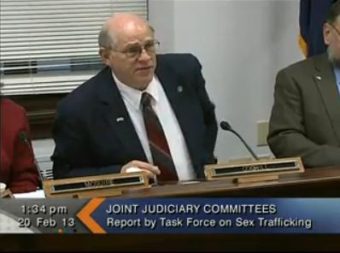
Gathering information about the scale of the problem of sex trafficking in Alaska will be the focus of a state hearing on the issue next week. The lengthily titled State of Alaska Task Force on the Crimes of Human Trafficking, Promoting Prostitution and Sex Trafficking will hold hearings in Anchorage and Bethel. Cori Badgley is an assistant Attorney General with the state. She says domestic violence and sexual assault of children are usually in the backgrounds of victims of sex trafficking. She says it’s important for Alaskans to weigh in on this crime.

“We just would really encourage those that have something to say on this topic to either give us their written comments, come in and testify before the task force or call in to one of our hearings because we really do want to hear perspectives around the state.”

Badgley says many Alaskans don’t realize sex trafficking is an issue within the state.

Today on the statewide call in program Talk of Alaska, the topic was sex trafficking and Internet prostitution. Sergeant Kathy Lacey who heads up the Vice unit for the Anchorage Police Department said Alaska was one of the first states to prosecute a sex trafficking case in 2003. Segeant Lacey says APD received a federal grant to address foreign born victims of trafficking in 2005.

“But what we were seeing, in Anchorage, on the streets of Anchorage were the girl next door was working and being trafficked. So domestic sex trafficking was far larger than anyone had an idea, but that’s what we found. We found run away kids being trafficked right on the streets of Anchorage. So it kind of changed the way we looked at it and the internet changed the way that we did business, it’s just incredible the amount of sexual exploitation that goes on on the internet.”

Lacey says online trafficking has made it easier for pimps or traffickers to hide their businesses. She says although prostitution may involve adult women, sex traffickers target young girls, bringing them in to a life of misery at 14 or 15 years old. She says the problem is enormous.

“It is literally everywhere and I’ve said to people, it’s almost as basic as if you have men and women, you’re going to have prostitution and if you have prostitution, you’re going to have sex trafficking. It’s almost that basic.”

The task force hearing on human and sex trafficking will be held at the legislative information office in Anchorage on Monday November 5th. Another is scheduled for Bethel in December.

Juneau Assembly declines to get involved in Auke Bay speed limit issue

Cars heading approach the curve around DeHart’s as seen from Mendenhall Loop Road.

The Juneau Assembly this week decided not to request lower speed limits as part of an Alaska Department of Transportation project in the Auke Bay area.

That means the section of Glacier Highway from Auke Lake to the intersection with Back Loop Road will continue to be designed for a 40 mile per hour speed limit. However, DOT may consider other changes to encourage slower traffic in the area just north of the Auke Bay business district.

DOT Southeast Region Director Al Clough told the Juneau Assembly Committee of the Whole Monday night that it wouldn’t make sense to build a road that was either under or over design.

“If we were going to lower the speed limits we would readjust the road footprint accordingly to be the appropriate design standard for those speeds,” Clough said. “That would be a pretty significant change in the project as it’s already been scoped, as it’s been designed, and as it’s gone out to the public.”

Clough estimated up to a year delay if the project had to be redesigned and put out for further public review.

Pressure from the public was the main reason the Juneau Assembly asked CBJ staff in September to take a look at the project and recommend whether the city should get involved.

Glacier Highway from Auke Lake to Back Loop Road is currently posted at 35 miles per hour. Engineering Director Rorie Watt said an increase to 40 would be acceptable, because of the state’s plan to straighten the curve at the Auke Bay Laboratory.

“From our meeting with Planning, Engineering and Manager’s staff, we viewed their proposed improvements in that corridor as pretty good solutions,” Watt said.

The speed limit in the business district is also 35 miles per hour, except when kids from Auke Bay Elementary School are in the area. Then it’s a 20 mile per hour school zone. At about Waydelich Creek, it picks back up to 45 miles per hour.

Clough said a DOT study from two and half weeks ago showed people driving about the speed limit or little a faster through the entire area.

“Essentially right now people are driving 35 to 40 around the curve and within spitting distance of 35 through past the school and such, except when the school zone’s active,” he said.

Clough and Watt said it would be easier to make changes to the project north of the Auke Bay business district. One suggestion was to put a traffic island in the middle of the road to encourage drivers to slow down.

Clough said DOT would keep exploring its options, but offered no promises.

“We’re continuing to look at other traffic island or pedestrian island opportunities,” Clough said. “But with the driveways and such it’s not looking good to add too many more. But we’ll continue to look at that and some other potential changes.”

While some Assembly members still expressed frustration about the speed limits, there was reluctance to slow the process down.

The next step for the project is to go to the city’s Planning Commission for permits, and Assemblyman Randy Wanamaker said that’s the appropriate place to deal with the issue.

[quote]”We have city staff and DOT that can work together through the Planning Commission process to do whatever is necessary to hammer out the details. I do not believe this body needs to take official action and potentially cause delay.”[/quote]

Clough said the first phase of the project – a roundabout at Glacier Highway and Back Loop Road – is expected to break ground next spring. Construction on the area between Auke Lake and the intersection had been expected next summer, but Clough said it might be postponed by a few months due to what he called “other issues” unrelated to the speed limit discussion.

Parties back Wilson and Olsen, ignore Johansen

From the left, Democrat Matt Olsen, Republican Peggy Wilson and Independent Republican Kyle Johansen appear at an Oct. 23 Ketchikan radio forum. They are running to represent House District 33, including Wrangell, Ketchikan and northern Prince of Wales Island. Photo by Leila Kheiry/KRBD.

Kyle Johansen has represented Ketchikan in the state House since he was first elected in 2006. He’s been a Republican Party regular, working his way up to majority leader, a position with significance in the GOP’s House majority.

But about two years ago, he broke with his caucus over another lawmaker’s committee assignments. That left him out of favor, out of the majority, and on the outs with Ketchikan party officials, who attempted a recall.

This election, Johansen is running as an independent. And he’s doing it without his former party’s backing. In a recent interview at KRBD in Ketchikan, he said it’s one of the reasons he’s only brought in about $6,000.

“I didn’t ask the party for any money. I am basically registered as a Republican and the party is backing Wilson, and that’s as far as it goes,” Johansen says.

Wilson is Wrangell’s Peggy Wilson, who’s represented her hometown, Petersburg and Sitka in the state House for about 10 years. Redistricting moved Wrangell into Ketchikan’s district, setting up an incumbent-vs.-incumbent race.

Wilson has the largest bank account in this race, with a bit more than $37,000 raised. (Scroll down for links to all candidates’ finance reports.)

“I’ve had a fund-raiser since then and I did get some money. I think I’ll be getting some more in. Hopefully $38,000 $39,000 [or] $40,000. I hope that will be enough,” Wilson says.

That’s six times Johansen’s total, and close to double the amount raised by Democrat Matt Olsen, according to state finance reports.

Close to a fourth of Wilson’s money comes from Republican political action committees, GOP legislators and party notables. That includes former Governor Frank Murkowski and his wife Nancy.

The Democratic Party is also strongly backing its candidate, Ketchikan City Council member Olsen. It’s provided about a sixth of his approximately $20,000 in campaign funds.

House District 33 candidates speak at a recent Ketchikan Chamber of Commerce forum. Photo by Leila Kheiry/KRBD.

He says he would welcome additional contributions. But he thinks he has enough.

“More money in the campaign does always make you feel better, but I feel like the campaign that we’ve had and that we’ve run has been well-financed,” Olsen says.

Other political action committees play a significant role in both party-supported campaigns. (Hear a forum with the three candidates.)

About a quarter of Olsen’s funds come from government employee, teacher and construction unions. PACs, including Democratic groups, make up about 40 percent of his fund-raising total.

Almost all the PAC money is from outside House District 33.

“When you talk to Anchorage legislators, they raise their money pretty much in their district because of the high volume of highly-paid people. Ketchikan doesn’t have a lot of people who make a lot of money who can afford to give you that money. So, campaigns cost money and you have to reach out,” Olsen says.

Contractors, seiners, oil company employees and others contributed about another $4,000. That, plus the party money, makes up a bit more than a third of the Wrangell Republican’s campaign total.

“I didn’t turn to anybody for any support. That came voluntarily and I didn’t go asking for it,” Wilson says.

Ketchikan’s Johansen has only one political action committee contribution, from the construction industry group Alaska Build.

About half his approximately $6,000 raised comes from outside the district.

“I accept money from people who think I do a good job from all over the state and around the country if need be,” he says.

Overall, around $60,000 has been raised by House District 33 candidates, according recent finance reports.

That’s less than half the amount brought in for the House District 34 race. That district combines Sitka with Haines, Craig, Angoon and other small island communities. Haines Republican incumbent Bill Thomas and Sitka Democrat Jonathan Kreiss-Tomkins are seeking that seat. (Hear a report on the candidates’ campaign finances.)

It’s also about two-thirds of what Angoon Democrat Albert Kookesh and Sitka Republican Bert Stedman raised. Those incumbents are seeking election to Senate District Q, which includes House Districts 33 and 34. (Hear a report on the candidates’ campaign finances.)

Find out more:

Read Peggy Wilson’s most recent APOC finance report.

Read Matt Olsen’s most recent APOC finance report.

Read Kyle Johansen’s most recent APOC finance report.

Check other candidate campaign forms.

House District 33-Q is at the lower right-hand corner of this map. Courtesy Alaska Redistricting Board.


Finance reports: Thomas tops Kreiss-Tomkins

Candidates for state House District 34 Bill Thomas (l) and Jonathan Kreiss-Tomkins at a recent Sitka Chamber of Commerce forum. (KCAW photo/Robert Woolsey)

More money is going into the House District 34 campaign than any other race in Southeast.

Changing legislative boundaries combined Sitka with much of the old Southeast Islands House District to create District 34. The Islands District is the one that includes Haines, Craig, Metlakatla, Hoonah, Angoon, Kake and some other small cities.

State campaign finance reports show incumbent Haines Republican Representative Bill Thomas in the lead, with about $83,000 in contributions. That’s about 40 percent more than his Democratic opponent, Sitka’s Jonathan Kreiss-Tomkins.

Together, they’ve raised around $130,000, making this the most expensive Southeast race. (Scroll down for links to recent campaign finance reports.)

Thomas lost Yakutat, Skagway and Cordova from his old district. But he gained Sitka, where half the new area’s constituents live, including his opponent.

He says that means a more expensive advertising campaign.

“You know, we didn’t lose any newspapers. We ended up gaining more newspapers and bigger towns and other things that we haven’t done before. So, it’s going to be spendy,” he says.

This is Kreiss-Tomkins’ first legislative race. So he also needs to raise a significant amount of money to make his presence known.

His approximately $48,000 campaign war chest is far behind Thomas’. But he says it’s not as large a gap as it seems.

“What you’re really seeing is the advantages of incumbency. And you can raise $40,000 before you have an opponent. And that’s the reason why there’s this cash discrepancy. If it started from June 1st, which is when we filed, we’d be up a few thousand,” he says.

Democratic Party organizations gave Kreiss-Tomkins $8,000. State employee unions, teachers and other political action committees contributed another $4,000.

Together, they add up to about a quarter of his overall campaign contributions.

Kreiss-Tomkins’ acknowledges he has less to spend in the House District 34 race. But he says his cadre of volunteers is giving him more bang for his buck.

“We have a grassroots-oriented campaign. It’s basically people talking with people, which we feel is also the kind of politics we believe in,” he says.

Kreiss-Tomkins points to a higher percentage of district contributions than Thomas, many of them relatively small.

The Democrat’s gotten money from the Southeast Alaska Seiners and the United Fishermen of Alaska. And he’s claimed more from individual commercial fishermen, since he filed.

Republican Thomas — a gillnetter, longliner and shrimper — disagrees.

“He claims he has more fish money. But then you look [and] … it’s been raised since [his] general campaign. And I’ve raised almost 11 grand from the fishermen over two years. But it depends on when you report it. He’s playing words pretty good,” he says.

Campaign finance reports from the full fund-raising season show Thomas with more donations from individual fishermen.

The Haines incumbent attracted more than $17,000 from his party’s and other groups’ political action committees. About a fifth of that came from the GOP. The rest included labor organizations, oil PACs, dentists, contractors and the hospitality industry.

Overall, PACs and the party contributed about 20 percent of Thomas’ campaign funds. That’s a larger total, but a smaller percentage, than Kreiss-Tomkins.

Those figures do not include executives or other employees of those groups or companies, so they could be larger.

Despite his incumbency and higher campaign war chest, Thomas thinks of himself as the underdog in the race. Among other things, he has knee problems that limit one-on-one campaigning, a major part of Kreiss-Tomkins’ strategy.

“He was able to bang on all the doors this summer because I was fishing and I don’t think he was working. [That’s a] big difference in lifestyles,” he says.

Kreiss-Tomkins say he did work, though he wasn’t paid, managing a pair of nonprofit programs that bring college students to Sitka to volunteer and share their skills.

As the campaign wraps up, Thomas says his main job is to convince voters of the power of incumbency. That includes his budget-writing duties as co-chairman of the House Finance Committee and his record of funding community projects.

Kreiss-Tomkins says he’ll bring a new approach to representing the new district, and will take different stands on education and other parts of the budget. And, he’s close to his goal of meeting the majority of its population.

“To be representative, I think it’s really important you know who you’re going to represent . And this door-to-door component of the campaign in every community, knocking on every door that’s possible, has been a central component of the campaign,” he says.

Thomas says he’s met with his district’s leaders and other constituents during his four terms in office. And he’s reached out to Sitkans during this campaign.

The most recent campaign reports, released earlier this month, show a significant part of the $130,000 or so Kreiss-Tomkins and Thomas raised was spent on travel, including room and board.

That total is more than double the funds raised in the southern Southeast House race, between Republican Peggy Wilson, Democrat Matt Olsen and independent Kyle Johansen.

It’s also almost a third more than the Senate District Q race, between Republican Bert Stedman and Democrat Albert Kookesh.

Read Thomas’ most recent APOC finance report.

Read Kreiss-Tomkins’ most recent APOC finance report.

Hear a forum with Kreiss-Tomkins and Thomas.

House District 34 Communities:

• Sitka

• Haines

• Craig

• Hoonah

• Hydaburg

• Kake

• Kasaan

• Klawock

• Klukwan

• Metlakatla

• Pelican

• Angoon

• Covenant Life

• Elfin Cove

• Game Creek

• Lutak

• Mosquito Lake

• Mud Bay

• Port Alexander

• Whitestone Logging Camp

Site notifications
Update notification options
Subscribe to notifications