State Government

Stedman fund-raising twice Kookesh total

Bert Stedman and Albert Kookesh are running for Senate District Q. On the map, it's shown as House Districts 33-Q and 34-Q. Courtesy Alaska Redistricting Board.
Bert Stedman and Albert Kookesh are running for Senate District Q. On the map, it’s shown as House Districts 33-Q and 34-Q. Courtesy Alaska Redistricting Board.

Redistricting shoved Sitka’s Bert Stedman and Angoon’s Albert Kookesh into an incumbent-vs.-incumbent Senate race.

The most recent campaign finance reports from the Alaska Public Offices Commission show Republican Stedman with the most money. He brought in about $31,000 since the August Senate District Q primary. That’s about six times more than Democrat Kookesh’s $5,000.

Overall, Stedman leads with around $64,000 raised this and last year. That’s almost twice Kookesh’s $33,000.

Still, Stedman says he’s hoping for more.

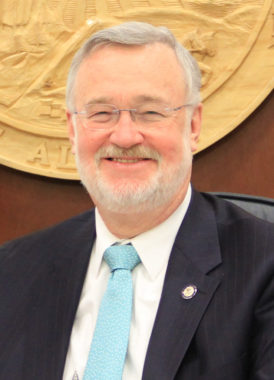
Sen. Bert Stedman, a Sitka Republican.

“It would be nice to get that dollar amount up to about $80,000 to run a good Senate campaign. It’s just expensive to travel around. [With] advertising and stuff like that, it has a funny way of adding up,” he says.

The district includes Ketchikan, Haines, Wrangell, Sitka, Craig, Metlakatla, Hoonah and Klukwan, plus numerous smaller communities. It’s about three-quarters of Stedman’s old district and one-quarter of his competitor’s.

Kookesh continues raising funds. But unlike Stedman, he says he has what he needs. Still, it’s been hard.

“It’s really been hard to raise money because so many people are running this year. Every House seat and every Senate seat, except for one. I’ve even seen Anchorage legislators coming down here for fund-raisers in Juneau. So they must have dried Anchorage up pretty good,” he says.

Both are members of the state Senate’s bi-partisan majority, which blocked Governor Sean Parnell’s plan to lower oil taxes. Neither got money from Alaska’s major petroleum companies, or the political action committees they fund.

Here’s some of the campaign finance details (Scroll down for links to detailed APOC reports):

Stedman’s campaign did attract $1,000 from top officials at Armstrong, a Colorado-based, independent oil and gas company with Alaska investments. He also brought in $250 from the ConocoPhilllips Employee PAC.

But he’s not getting much help from his party.

“Each Senator can get up to $15,000 from the party. I’ve gotten $250 from the Sitka Republican Women, and that’s it. I expect no party support out of Anchorage at all,” Stedman says.

Kookesh got a little more party money, $500 from Juneau’s Democratic organization.

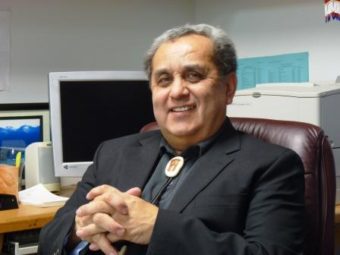
Sen. Albert Kookesh, an Angoon Democrat.

Both candidates have raised significant amounts from unions and their PACs.

Kookesh brought in $7,250 from six state employees’ and teacher’s groups, plus two constriction unions. All of Kookesh’s PAC money came from labor groups.
Stedman raised half as much as his opponent. He got $3,600, from three construction labor groups. (Hear a forum with both candidates.)

Five other PACS, including seiners, dentists and hospitality businesses, for a total of $6,600.

Kookesh did bring in about $3,000 from board members and employees of regional Native corporation Sealaska, where he’s board president.

“I got some money from individuals who work for Sealaska. But, no, they don’t have a PAC and they haven’t spent any money on a PAC. And if they had a PAC they certainly didn’t spend it on me,” Kookesh says.

Meanwhile, Stedman got $500 from the president of Sitka’s Native corporation.

The candidates have met with business, community and tribal leaders as they’ve traveled from Metlakatla to Pelican and points in between.

Kookesh says voters have asked about education funding and energy prices, among other issues.

“There’s a lot of talk about the ferry system and the need for replacing ferries. The road to resources has a lot of discussion because of the Prince of Wales mines that are going in down there,” Kookesh says.

Stedman says he’s hearing much of the same, from just about all communities.

“The issues haven’t changed or don’t change when you move from one island to the others. The major hurdles are energy and transportation,” Stedman says.

The candidates’ numbers have changed since their most recent finance reports, filed earlier this month.

At that time, Stedman had spent about $31,000 and still had around $26,000 left. Kookesh had spent around $11,000, with $22,000 remaining.

Want more details?


Supreme Court says state business can be conducted on private email

On June 10, 2011 the national press descended on Juneau to review more than 24,000 pages of emails from former Governor Sarah Palin’s private Yahoo account. The Alaska Supreme Court on Friday ruled that the use of private email accounts to conduct state business does not in and of itself obstruct state public records laws. (Photo by Casey Kelly/KTOO.)

State employees can’t use private e-mail accounts to hide their work communication from public record laws. The State Supreme Court issued a decision on the matter on Friday, that largely affirms an earlier Superior Court Ruling. The case dates back to the Sarah Palin Administration and addresses the tricky question of whether the state records law is keeping up with communication technology.

Citizen activist, Andree McLeod originally sued the state in 2008, after she discovered Governor Palin was using a Yahoo account to conduct state business. McLeod wanted the court to make it illegal for state employees to use private e-mail accounts for work. And said if they did, those e-mails should be preserved for the public record.

The Supreme Court agreed private e-mails regarding state business should be part of the public record. And McLeod’s Attorney, Donald Craig Mitchell calls the decision a victory.

“All in all, I think this is an important development for vindicating the public interest in Alaska during the new telecommunications, e-mail age,” Mitchell said.

But the court did not agree with McLeod that state employees should be barred from using private e-mail at all for their work. Mitchell says that’s unfortunate. But he says the point may not matter given that Governor Sean Parnell has ordered any state business conducted on private e-mails to be copied to the state e-mail system so it can be preserved.

Dave Jones is an Assistant Attorney General with the Department of Law. He says the state is pleased with the court’s decision, which he says can be boiled down this way:

“What really determines whether something is a public record is its content not the means through which it’s transmitted,” Jones said.

Jones says in principal, the Supreme Court’s decision would also apply to text messages. A former state employee has accused the Parnell Administration of using text messages to hide state business from public records requests. Jones says he doesn’t know whether employees are engaging in that practice, but they shouldn’t be.

“Most text messages are by their nature going to be transitory, that is not something that is not appropriate for preservation,” Jones said. “But a state employee could not try to avoid the effects of the public records act by using a text message as a substitute for a public record.”

But Andree McLeod’s attorney, Donald Craig Mitchell, says even if the intent of the Supreme Court’s decision is clear, the public records law needs to be updated. He says state law on the issue hasn’t been revisited in more than two decades. And he says that means there’s a lot of confusion over how state employees should be using new communications technology.

“If anything comes of this, I hope it would be the legislature stepping up to the plate and reviewing this entire area and making some adjustments to the Alaska Public Records Act that would bring that act into the 21st century,” Mitchell said.

Senator Hollis French, an Anchorage Democrat, agrees the law may need some tweaking.

“The question is are we collecting those private e-mail accounts? Are we collecting text messages? Are we collecting new modes of communication? Facebook messages for example. How do we make sure that those get pulled into the permanent public record files so the citizens are sure their business is being done appropriately?” French said.

He expects lawmakers to take a look at the law during the next legislative session.

To read the Supreme Court’s ruling, click here [PDF].


Stedman – Kookesh debate tonight

Senators  Bert Stedman and Albert Kookesh debate at 6 o’clock tonight for the Southeast Senate District Q seat.  Kookesh, an Angoon Democrat, and  Stedman, a Sitka Republican, will talk with reporters and answer listeners’ questions from the studios of our sister station, KRBD in Ketchikan.  Senate District Q includes most of Southeast outside Juneau, Petersburg and Skagway.

Ask questions during the show at 1-800-557-5723 or email: news@krbd.org.

Click here for the live stream.


Court upholds parental notification law

The Anchorage Superior Court released a decision upholding Alaska’s parental notification law on Monday. In the process, it also reversed itself on a controversial provision allowing doctors to be prosecuted for knowingly providing abortions to minors without the notification of at least one parent.

The law was passed in 2010 through a ballot initiative, and Planned Parenthood sued, calling the law unconstitutional. Judge John Suddock did not agree, and upheld the law because of a “compelling state interest” in promoting family involvement.

But even though Suddock kept most of the law intact, he was critical of many of the state’s arguments. He determined that “parental involvement advances no compelling state interest in the health of minor women,” and that it didn’t protect minors from “illicit relationships.”

He also described the criminal and civil sanctions included in the law troubling. Under the parental notification law, a knowing violation could result in a 5-year jail term and a $1,000 fine for a doctor who provides an abortion to a minor without notice to her parents. Suddock called this “draconian,” but allowed this part of the law to go through after the state argued that the statute wouldn’t be enforced. Suddock tossed out a different portion of the law that would open doctors up to civil penalties who violated one of the parental notification statues without realizing it.

Planned Parenthood has not yet decided whether it will appeal the decision, according to attorney Janet Crepps.

Health care to lead job growth through 2020

Source: Alaska Department of Labor and Workforce Development, Research and Analysis Section

Alaska is expected to add nearly 39,000 new jobs over the next decade, with nearly a third in the health care and social service industry.

The state Labor Department’s employment forecast through 2020 estimates that nearly all job sectors will gain, for a total growth of 12 percent.

As Alaska’s population ages, it will drive demand for health care and social assistance jobs, a sector that has been steadily growing in the state for years.

State Economist Dan Robinson says the projections are based on existing trends.

“Our projections don’t assume radical changes to existing trends,” he says. “And the main trend is a lot more health-care related openings — some of that growth, some of that turnover, and a lot of it increased demand based on the baby boomers aging up and just Alaska’s 65-plus population getting a lot bigger.”

State economists project the second-highest growth will be in mining, at 19 percent. Mining doesn’t include oil and gas, where 5 percent growth is expected.

The ten-year state outlook can be found in this month’s Alaska Economic Trends magazine.

U.S. Supreme Court rejects challenge to roadless rule

WASHINGTON (AP) – The Supreme Court has turned away an appeal challenging a federal rule that bars development on 50 million acres of roadless areas in national forests.

The justices on Monday decided to leave in place a federal appeals court decision that upheld the so-called roadless rule that took effect late in the presidency of Bill Clinton.

The state of Wyoming and the Colorado Mining Association challenged the rule, arguing that closing so much forest land to development has had serious consequences for residents of Western states and the logging, mining and drilling industries.

The challenge centered on the contention that that U.S. Forest Service essentially declared forests to be wilderness areas, a power that rests with Congress under the 1964 Wilderness Act. The Forest Service manages more than 190 million acres of land.

With the high court’s decision not to hear the case, the state of Alaska has the only pending lawsuit against the “Roadless Rule.” The state’s challenge is currently pending in federal court in Washington, D.C.

Site notifications
Update notification options
Subscribe to notifications