State Government

Juneau Rep. Sara Hannan talks about what a successful session looks like

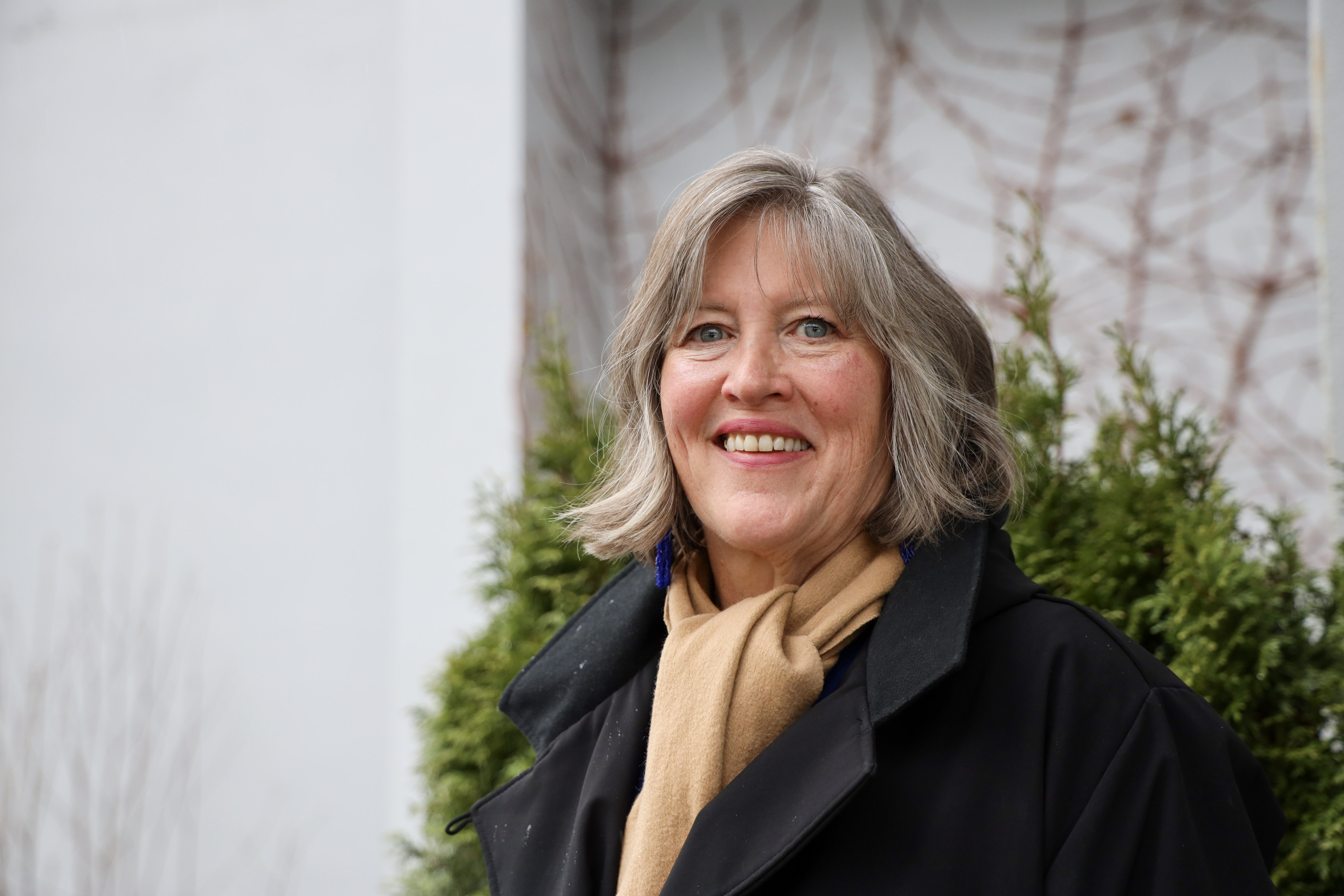
Rep. Sara Hannan, D-Juneau, smiles for a photo at KTOO on Wednesday, Jan. 14, 2026. (Photo by Clarise Larson/KTOO)

With the second regular session of the 34th Alaska Legislature just kicking off, it’s a good time to check in with members of Juneau’s delegation to talk priorities and plans for the session. Rep. Sara Hannan (D-Juneau) spoke with KTOO’s Mike Lane last week just before the session started. 

The following transcript has been lightly edited for clarity.

Mike Lane: How you are feeling about going into the second regular session of the 34th Alaska legislature?

Rep. Hannan: Well, you know, I came out of a education background, so I always like to say the start of session feels like returning to school and, you know, seeing friends you haven’t seen for a while. It’s always a good pace, of course. As a junior representative, this is my year-round office. I’m in the Capitol Building 12 months a year. But it gets kind of quiet in the fall, you know. The summer, we have all those summer visitors, but the pace has picked up. The building’s alive with new people, bright eyes, all the college interns who are, you know, here to to change the world in 120 days. And that’s always really good energy.  

Mike Lane: Is there anything that you are particularly looking forward to for this session? And is there anything that you’re not looking forward to for this session?

Rep. Hannan: Well, we have got to address our big fiscal issues in this state and we have got to figure out a path to pay for the things we need. Things haven’t gotten cheaper and our disasters have continued to grow in cost and scope, and keeping the lights on will be a struggle, but we have got to keep the state functional and the roads plowed and the ferries running and schools operational and public safety people eligible to respond and get people working in Alaska, keep people working in Alaska. So there are a lot of tough political discussions to have, and it’s the second half of a two-year session, so it makes it a challenge to get complex policy addressed, and then it’s a big political election year. You know, as a member of the House, every two years is an election year, but this is one of those where it’s gubernatorial and, you know, a high profile U.S. Senate seat, as well as every member of the House of Representatives.

Mike Lane: When it comes to the budget, where do you believe cuts are necessary?

Rep. Hannan: I don’t see a lot of areas for cuts. We have squeezed and cut the budget for over a decade, and so when we start talking about cuts, we are talking about basic services not being able to be delivered that people have an expectation of. You know, we can’t put more equipment on the road to keep our roads plowed without paying workers to drive them. And we compete with private sector. You know, operators and engineers, they can go to the private sector and make more money, and in variety of places, we can’t keep up with the services we need, so I don’t see a lot of places to cut.

Mike Lane: And what does a successful session look like for you? 

Rep. Hannan: Well, when it comes to personal legislation, you always want to see improvements on that. If I could get House Bill 242 passed, that would be good. I see this as a bill with very little policy dispute because it’s very narrow in scope. We’re modernizing the sexual assault consent in this from knowing to unknowing being irrelevant. I think that in the 21st century, we understand the dynamics about how people respond in sexual assault cases and make it prosecutable, because it’s pretty horrific that medical providers could assault someone and not be prosecuted. I have a couple pieces of personal legislation that I think we can get passed. Tax on vape tobacco – that’s a bill I’ve been sponsoring since I first got in, but the Senate version of it is sponsored by Senate President Gary Stevens; that’s Senate Bill 24. It’s all the way over in House Finance. I believe that we are positioned to get that because, right now, vaped nicotine in Alaska is not taxed by the state. Our tax state statutes on tobacco specified type, so cigars, cigarettes, chew, snuff, et cetera, and the last time we amended that statute, vaping wasn’t a thing, so it’s not listed. Then there’s a little bill of just sort of local interest on charitable gaming, a snow classic, that we’ve gotten out of the house and is in the senate. We have charitable gaming in Alaska, classics being, you know, the Nenana Ice Classic is the one that people most know about. A fiscal plan would be helpful; that would be that would be a real success. But that’s pretty optimistic for 120 days.

Lawmakers return to Juneau with four months to address a packed agenda

Lawmakers including Rep. Genevieve Mina, D-Anchorage, Rep. Zack Fields, D-Anchorage and Rep. Chuck Kopp, R-Anchorage, sit in the House chamber in the Alaska State Capitol in Juneau on Jan. 20, 2026.
Lawmakers including Rep. Genevieve Mina, D-Anchorage, Rep. Zack Fields, D-Anchorage and Rep. Chuck Kopp, R-Anchorage, sit in the House chamber in the Alaska State Capitol in Juneau on Jan. 20, 2026. (Eric Stone | Alaska Public Media)

The Alaska Legislature is back in session. Lawmakers in the House and Senate gaveled in this afternoon.

At the Capitol Tuesday, the atmosphere was a bit like the first day of school — lots of smiles and hugs, some what-did-you-do-this-summers. Blue delphiniums and yellow roses adorned the dais in the House chamber.

Despite the sunny mood, though, there’s a cloud over this year’s session.

“We know we’re facing even tighter revenue constraints than before. We know that demands will continue to rise, as they always have,” said Senate President Gary Stevens, a Kodiak Republican.

Lawmakers have the next four months to act on a multitude of issues facing the state, from energy prices and the possibility of a gas pipeline to the perennial question of how the state will pay its bills.

For years, Alaska has had a structural deficit: the state treasury takes in less money than it pays out. Last year, lawmakers approved a Permanent Fund dividend of just $1,000, an all-time low when adjusted for inflation.

So this year, members of the bipartisan majority leading the state Senate say raising revenue is their top priority. Sen. Lyman Hoffman, a Democrat from Bethel who co-chairs the Senate Finance Committee, said at a news conference Tuesday that even a $1,000 dividend would present a challenge this year with oil prices persistently low.

“One way or another, if we are going to continue to provide the services that people of Alaska have been accustomed to, that is the million dollar question,” he said. “Can we come up with revenue measures this session?”

Lawmakers and Gov. Mike Dunleavy have repeatedly butted heads on the best ways to raise money for state government and, of course, how to spend it.

Last year, Dunleavy vetoed the sole significant revenue-raising bill to reach his desk, saying he wanted lawmakers to make fiscal reforms part of a larger package. The bill would have tweaked the state’s corporate income tax structure to capture more revenue from out-of-state businesses. It wouldn’t have solved the revenue shortfall, though it would have eased the pressure a bit.

The state House and Senate plan to consider overriding that veto Thursday morning after a two-day delay at Dunleavy’s request, but it’s unclear whether lawmakers will be able to muster the necessary supermajority.

Palmer Republican Rep. DeLena Johnson, who leads the all-Republican House minority, says she’d like to see lawmakers consider something more comprehensive.

“I think we need to take up things as a whole, not as just individual items,” Johnson said.

And they may have a chance this year. Dunleavy told reporters in December that he’s planning to roll out a fiscal plan that would serve as a bridge to brighter days ahead. Growth in the Permanent Fund and a potential gas pipeline will eventually ease the pressure, but the coming years could prove a challenge, he said.

“I think the next five years, we’re going to have to be real careful, and we’re going to have to have in place things that will pay for government,” Dunleavy said at his holiday open house in December.

Dunleavy may provide some clues in his final State of the State address on Thursday.

But it’s not just fiscal issues facing the state this year. The possibility of a natural gas pipeline connecting the North Slope and Southcentral Alaska moving forward will also be a topic of interest, lawmakers say. The developer of the project, which has been a dream for decades and is now a priority for the Trump administration, has said it plans to make a final investment decision early this year.

That’ll be the top issue in the Senate Resources Committee this year, said committee chair Sen. Cathy Giessel, an Anchorage Republican.

“The Resources Committee will be looking at the resource itself and its impact and the project’s impact,” she said. “Then, we’ll be sending it on to the Finance Committee that will dig even deeper into the finances.”

And more urgently, lawmakers say they’d like to craft a funding package for a variety of infrastructure projects Dunleavy vetoed from last year’s budget. Trade groups recently sounded the alarm and asked lawmakers to quickly approve $70 million in construction funding, saying the vetoes risked as much as $700 million in federally backed construction projects.

House Speaker Bryce Edgmon, a Dillingham independent, said lawmakers plan to dig into the issue promptly.

“I think there’s a lot riding on that decision, and I expect us to spend an ample amount of time, right from the opening moments, looking at it closely and figuring out what and how we’re going to approach it,” Edgmon said.

And that’s still not all — there’s education, health care, elections, a state pension plan, all priorities for various legislators in the coming session.

What will get done, though, is an open question. Sitka Republican Sen. Bert Stedman says lawmakers likely won’t be able to address everything.

“We’ll have to prioritize that list,” Stedman said. “There’s only so much bandwidth in the Legislature.”

They have until May 20 to get it done.

After party breaks up, Alaskan Independence members will get official notice from state

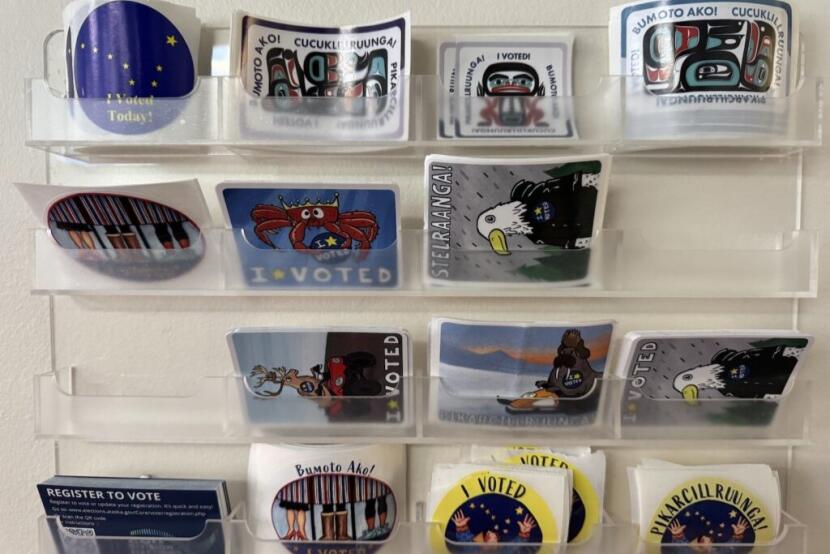
'I voted' stickers are seen on display in the headquarters offices of the Alaska Division of Elections in Juneau on Tuesday, Nov. 12, 2024.
“I voted” stickers are seen on display in the headquarters offices of the Alaska Division of Elections in Juneau on Tuesday, Nov. 12, 2024. (James Brooks | Alaska Beacon)

After the dissolution of the state’s third-largest political party, the Alaska Division of Elections is sending out notices to the 19,117 members of the former Alaskan Independence Party, warning them to update their voter information.

“In the coming weeks, the DOE will inform the voters registered as affiliated with the AIP that the party is no longer recognized,” the department said in a notice published Wednesday. “These voters will have the option to select a new party or group affiliation if they wish. If they do not update their registration — by phone, email, in person, or through the online form — within 30 days of receipt, the Division plans to change their registration status to ‘undeclared.'”

The Alaskan Independence Party’s leadership formally dissolved the organization in a vote on Dec. 7, then released a statement at the end of the year about the decision.

That statement said the party elected a new board of directors in April 2024, and that board analyzed the state of the party.

“The board carried out its work and found that the current party membership is either apathetic to the goals of the party, believes that the party is a branch of the Republican party, or is registered to the AIP by mistake,” the statement said in part.

“The party has for some time been legally alive yet spiritually dead,” the statement said.

The AIP’s origins date to the early 1970s, when interior Alaska gold miner Joe Vogler attempted to rally opposition to federal land control after statehood.

Vogler ran for governor as an independent in 1974, and the AIP developed out of his Libertarian-like vision for the state — local control, limited government, and a new statewide referendum on whether Alaska should be a state, commonwealth, territory or fully independent.

For decades, AIP members contended that Alaska’s 1958 statehood vote was not valid because it did not present Alaskans with a full set of options.

The party peaked in 1990, when conservative Republicans abandoned their support of Sen. Arliss Sturgulewski for governor, who they deemed too moderate on abortion and environmental issues.

Former Republican Gov. Wally Hickel replaced John Lindauer on the AIP’s gubernatorial ticket, and Sturgulewski’s lieutenant governor candidate, Jack Coghill, defected to serve as Hickel’s lieutenant governor candidate.

Hickel and Coghill won the three-way election with just under 39% of the vote, marking the AIP’s sole statewide electoral win.

That was the party’s high-water mark; Hickel governed as a Republican in all but name and rejoined the Republican party before his term ended.

Vogler was murdered in 1993, and the party became an annual also-ran in statewide races. In 2024, when John Wayne Howe ran as the party’s candidate for U.S. House, he received just 4% of Alaskans’ first-choice votes.

Alaska lawmakers return to Juneau on Tuesday. Here’s what to expect.

Speaker of the House Bryce Edgmon, I-Dillingham, speaks to a nearly empty floor at the Alaska State Capitol on Tuesday, Aug. 19, 2025.
Speaker of the House Bryce Edgmon, I-Dillingham, speaks to a nearly empty floor at the Alaska State Capitol on Tuesday, Aug. 19, 2025. (Clarise Larson | KTOO)

Lawmakers return to the Alaska State Capitol on Tuesday and, as always, they’ve got a long agenda to tackle, from health care and energy to the state’s persistent budget struggles.

Alaska Public Media’s state government reporter, Eric Stone, will be tracking the session in Juneau. He joined Wesley Early on Alaska News Nightly to give a sense of what the session will bring.

The following transcript has been lightly edited for clarity.

Wesley Early: So, Eric — lots to do, only four months to do it. What are lawmakers prioritizing ahead of the session?

Eric Stone: Well, Wesley, as you said, there’s a lot to do. And there will always be some surprises. But what’s not a surprise is how difficult the budget will be this year. We heard a lot last year about how this might be a painful year.

Maybe this will set the tone — last year, we had a $1,000 Permanent Fund dividend, the smallest ever when you adjust for inflation. And this year, what I keep hearing is that even a $1,000 dividend will be a challenge. Here’s Fairbanks Republican Rep. Will Stapp — he sits on the House Finance Committee.

Rep. Will Stapp, R-Fairbanks: At the current level of spending and revenue, I don’t see how that’s possible without large savings draws, and I don’t know how people are going to feel about that.

ES: This has been an issue for years, of course. Lawmakers and the governor have worked to cut state spending in a variety of areas, though there’s some dispute about how much there is left to cut.

Stapp says he’d like lawmakers to take a closer look at department budgets with something known as zero-based budgeting. Basically, rather than starting from a baseline of “what did we spend last year,” this would be starting at zero and building the budget from scratch. Stapp included an amendment in last year’s budget asking the governor’s office to try that for one department of their choice, but he says as far as he can tell, that didn’t happen.

So he says he’s renewing his efforts this year.

Stapp: Because you don’t really want to tell people the state needs a lot more money in terms of taxes … when you can’t really articulate where the money goes initially and what the money does.

ES: Gov. Mike Dunleavy’s budget, as usual, contains what he calls a statutory PFD, $3,800 or so. But that, and the expenses they have to catch up on from this current year, mean that the governor’s budget would require spending more than half of what the state has in savings.

But it’s a bit incomplete. The governor has said he plans to introduce a fiscal plan. Last we heard, when he released his budget in December, it was still a work in progress. But the governor has his last State of the State speech this session — usually those come pretty early in the session, so a fiscal plan would be something to watch for there. Then again, a few years ago, Dunleavy said he was planning to introduce a sales tax and never did.

Democratic Anchorage Rep. Andrew Gray says he hopes Dunleavy does propose some kind of tax.

Rep. Andrew Gray, D-Anchorage: He’s not running for reelection, so he can afford to take that risk …. He could, going forward into the future, have established a reliable source of revenue to fund our state. I mean, there could be no more worthy legacy for him. It would be monumental.

ES: Gray says he’d prefer an income tax — he says that would be fairer to low-income Alaskans — but if the governor proposes a sales tax, Gray says he thinks lawmakers would have to find a way to get it passed. He says he thinks lawmakers on both sides would be willing to discuss just about any solution to secure the state’s financial future.

But it’s an election year, and a fiscal plan requires some hard votes, so it’ll take some gumption for lawmakers and the governor to actually come together rather than kick the can down the road yet again.

WE: Alright, so we have the perennial budget debate with a bit more urgency this year. That’ll be something to watch. What else is on your radar?

ES: This one came up recently — health care. You might have heard of this Rural Health Transformation Program. That’ll send more than a billion dollars to the state over the next five years to, essentially, improve health care. There are a bunch of restrictions on how it can be spent, and most of that decision-making will happen inside the executive branch in the Department of Health.

But Health Commissioner Heidi Hedberg said on a call with reporters recently that there is a role for the Legislature to play. To make Alaska’s grant application more competitive, the state said it would do a bunch of things by the end of 2027. Those include expanding what pharmacists are allowed to do, and joining a variety of “license compacts” for EMS workers, nurses and a few others. The deal is, if you’re licensed in some states, you can also practice in Alaska without a need for retraining.

That’s an issue the Legislature has not made a focus in past years, though there are some pending bills. And Gray says he could see those scrambling caucus lines.

Gray: In terms of where people land and what they support, I think that it’s not going to be clear-cut. It’s not going to be a majority-versus-minority. I think that that it’s going to be all over the place.

ES: But Gray, who is also a physician assistant, says he supports the policy changes.

Stapp, for his part, says he’s on board — he says he’s still reviewing what all is needed, but he says from what he’s seen so far, he doesn’t see why those policy changes will be a problem.

WE: Finally, Eric, what about the Alaska LNG project? Are you expecting movement on that front?

ES: That one is interesting. The gas pipeline developer, Glenfarne, has yet to announce what’s known as a final investment decision — a green light to move forward. Lawmakers heard last year from its consultants about a variety of changes they could make to ensure the project is profitable enough and stable enough to go forward. We could see some movement on that — for instance, Gov. Dunleavy says he’d like to see lawmakers offer some property tax relief to the gas line project to help it pencil out. And a lot of lawmakers say they support efforts to help the gas line move forward — but I think they’ll approach that question with some caution. They don’t want their home communities to get taken to the cleaners, so to speak.

Proposed surcharge on oil would help pay for responses to climate-related disasters in Alaska

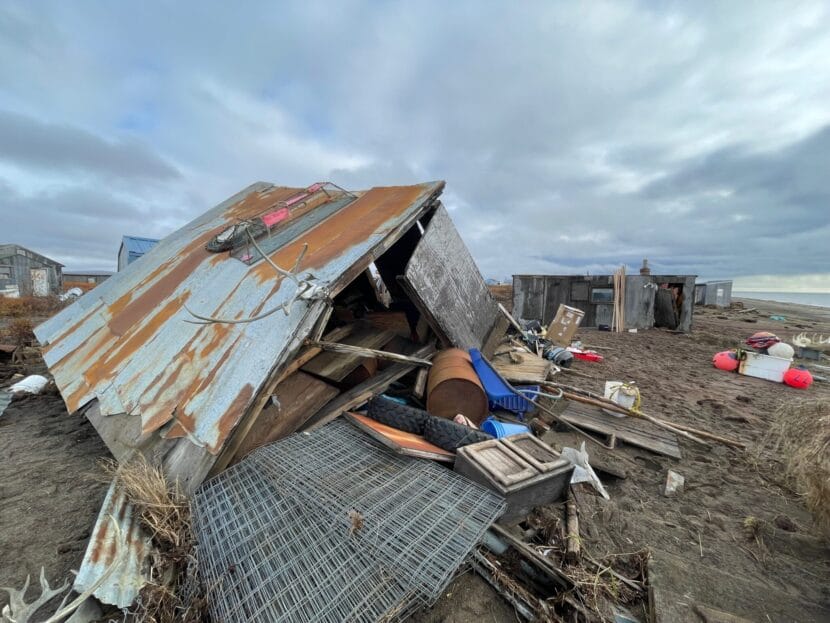
A fish camp in the Nome area, seen on Sept. 24, 2022, shows damages wreaked by the remnants of Typhoon Merbok. The day before, then-President Biden declared a major disaster for a vast stretch of western Alaska that had been slammed with high winds and floods caused by the remnants of that typhoon. The storm is among several recent disasters in Alaska that scientists link to climate change. (Photo by Jeremy Edwards/Federal Emergency Management Agency)

Landslides, storm-driven floods, infrastructure-damaging permafrost thaw and intensifying wildfires are among the expensive disasters that scientists link to Alaska’s rapidly changing climate.

Now a state legislator is proposing to levy a 20-cent surcharge on every barrel of Alaska-produced oil to fund programs that respond to and prepare for disasters related to climate change.

Rep. Andy Josephson, D-Anchorage, introduced the measure, House Bill 247, in advance of the legislative session scheduled to start on Jan. 20.

To explain why the state needs such a fund, Josephson ticked off a list of recent disasters in Alaska that imposed heavy costs — and, in some cases, killed people. Those events, which include deadly landslides in Southeast Alaska, landslides that have blocked roads, severe flooding in Western Alaska last October from the remnants of Typhoon Halong and similar damage in 2022 from the remnants of Typhoon Merbok, all had some links to climate change that is caused by greenhouse gas emissions from fossil fuel burning, he said.

“It’s a true statement that a lot of the disaster dollars we need right now are related to climate change. That, in my opinion, is sort of inarguable,” he said.

Disasters like those that have occurred in recent years are expected to continue in the future, he said: “We’re in a new normal.”

The bill is logical from a fiscal standpoint, Josephson said.

As of now, the state’s disaster relief fund is “basically a sub-fund of the general fund,” and it gets whatever lawmakers are able to appropriate, he said. But if there is a new stream of money as proposed by his bill, “we would free up those dollars we’re otherwise spending in the disaster relief fund.”

At 20 cents per barrel, the proposed surcharge would raise about $30 million a year, he said.

In comparison, Gov. Mike Dunleavy in December proposed that lawmakers approve a $40 million appropriation for the state’s existing disaster relief fund. The need could increase from that total if the Trump administration fails to reimburse 100% of the costs for Typhoon Halong relief rather than the normal 75%. The Biden administration in 2022 approved 100% reimbursement for Merbok-related costs.

As introduced by Josephson, the bill would give the Alaska Department of Environmental Conservation oversight over the money generated by the surcharge. It would distribute fund money in the form of grants to local governments and other entities for purposes like disaster response, disaster preparation and upgrades that make infrastructure better protected against climate change.

The surcharge idea has precedent in Alaska. The Department of Environmental Conservation already administers another fund with money coming from a per-barrel fee on oil produced in the state.

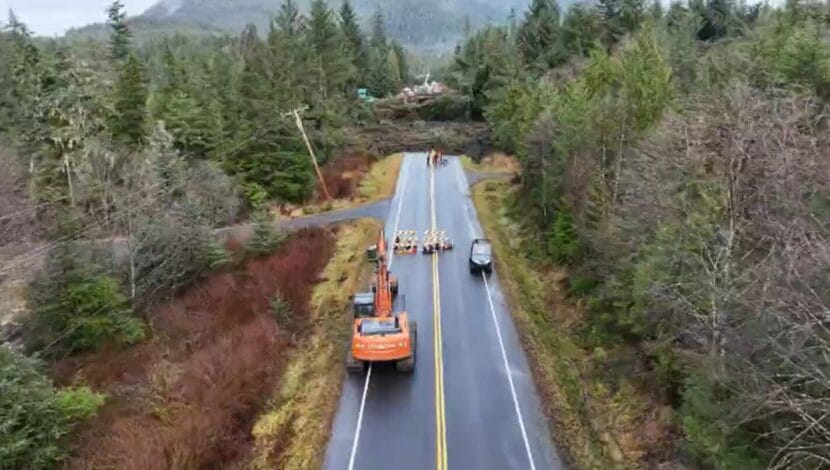
Debris dovering the Zimovia Highway in Wrangell is seen in the aftermath of the deadly landslide that struck on Nov. 20, 2023. (Photo provided by Alaska Department of Transportation and Public Facilities)

After the 1989 Exxon Valdez oil spill, the state began levying a 5-cent-per-barrel surcharge on oil that goes into the state’s Oil and Hazardous Substance Release Prevention and Response Fund. The fund itself was created by the legislature in 1986, with the surcharge established after the disastrous Prince William Sound spill.

That surcharge and rules concerning the fund’s operations have been modified over the years, broadening the purposes for which the fund can be used and boosting DEC’s reporting requirements, according to the department.

In its current configuration, each 5-cent-per-barrel surcharge sends 1 cent into a spill response account, to be used for spills that have been officially declared disasters. The other 4 cents goes into a spill prevention account, which can be used to address spills that have not been declared disasters, among other functions.

In 2015, refined petroleum products were added to the program. The state added a small surcharge, 0.95 cents per gallon, on refined fuel projects sold, transferred or used at the wholesale level, according to the DEC.

The idea of a similar levy to raise money for climate change preparedness and response is not new.

Rick Steiner, a retired University of Alaska marine conservation professor who founded and leads an environmental organization called Oasis Earth, has been advocating for the approach for several years.

“The legislature has so far seemed unable or unwilling to connect the dots between the many climate-related disasters we are experiencing — typhoon Merbok, wildfires, landslides, floods, coastal erosion, permafrost thaw, storm damage, infrastructure damage, subsistence impacts, commercial fishing impacts, etc..– to see the larger picture of the threat and costs these interrelated climate disasters pose,” he said in a letter to lawmakers sent last September. “The money to address these issues will have to come from government.”

In advocating for what he called an Alaska Climate Resilience Fund, Steiner said funding issues have become more pressing because of federal cutbacks.

The climate-response surcharge idea is not unique to Alaska, either.

Hawaii has put its version of a climate surcharge into law, a measure that seeks to raise money for responses to future disasters like the deadly 2023 Lahaina wildfire on the island of Maui.

In May, Hawaii Gov. Josh Green, a Democrat, signed a bill that increases the state’s hotel and lodging tax by less than a percentage point. The increase is applied to the state’s Transient Accommodations Tax, known at TAT. The governor said the increase would amount to an additional charge of about $3 on a $400-a-night hotel room fee. It is expected to generate about $100 million a year, according to state officials.

Alaska kicks off billion-dollar effort to ‘transform’ rural health care

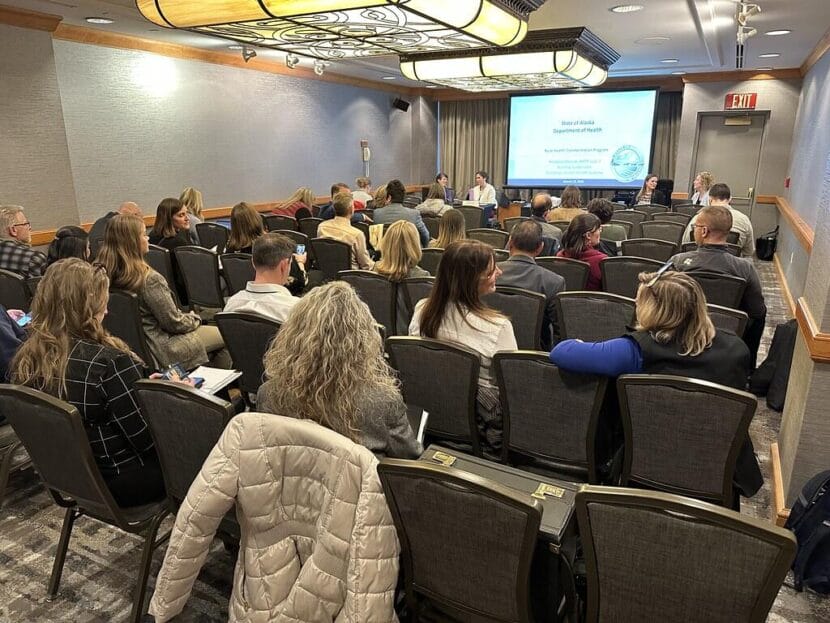
Attendees watch during a breakout session at the kickoff of Alaska's Rural Health Transformation Program in Anchorage on Jan. 15, 2025.
Attendees watch during a breakout session at the kickoff of Alaska’s Rural Health Transformation Program in Anchorage on Jan. 15, 2025. (Alaska Department of Health)

Hundreds of health care workers and government officials descended on Anchorage this week for the kickoff of a five-year, $1.3 billion program aimed at reimagining medical care across Alaska.

The money comes from the Rural Health Transformation Program created by President Trump’s signature tax- and spending-cut legislation passed last summer — the same legislation that pares back Medicaid.

The problem the funding seeks to solve is no secret, the state’s former chief medical officer, Dr. Anne Zink, said on a call with reporters and state officials. Zink is working with the state Department of Health on the program, she said.

“We consistently see that people who live in rural areas — Alaska and beyond — have worse health outcomes with increased cost,” she said. “This is an opportunity to rethink the way that care is delivered to make sure, no matter where you live, you have access to quality, timely, effective care.”

States across the country are racing to develop plans to spend the influx of cash. They have until October to obligate the first tranche of cash and another year to spend it.

Alaska is building its version of the program around six goals, from improving maternal health, preventive care and access to healthcare to strengthening the workforce and rethinking how doctors and hospitals charge for care.

That last point — what the state is calling “pay for value” — is a big one. Most medical care is what’s known as “fee for service,” for example, when a patient goes to a doctor and pays the doctor for their time, whether they get healthy or not.

With pay for value, the idea is to pay for results.

But given the fragmented nature of health care in Alaska, where many patients have to travel hundreds of miles from home for care, “the realities of making that transition take time,” said Deputy Health Commissioner Emily Ricci.

“It’s very challenging, and it will look different for every community and every provider and the provider types,” Ricci said.

Another example: Say you have a rash. You go to the doctor. The doctor sends you to the dermatologist, who sends you to the pharmacy for a medicated lotion.

Does your primary care provider know what your dermatologist prescribed? Does your dermatologist know your regular doctor tried that same medication with the hard-to-pronounce name six months ago?

And does anyone know if you eventually get better?

Maybe not. And that’s an issue standing in the way of a transition to value-based care that the state would like to address, Ricci said.

“How can we use this funding to begin now, over the next five years, building out the infrastructure, the concepts, the protocols, the data that providers need in order to kind of make that transition?” Ricci said.

So technology is one focus for the first of what the Department of Health said will be a series of workshops in Anchorage.

The meetings — known as “convenings” — are an effort to get as many stakeholders involved as possible, from cities and tribes to hospitals, medical providers and vendors, Health Commissioner Heidi Hedberg said.

“This funding is really to support what the community and region need,” Hedberg said. “Every community, and every region, needs something different.”

Alaska will receive roughly $273 million per year for five years as part of the $50 billion nationwide program. Hedberg calls it “generational.”

But the elephant in the room, of course, is that the same tax cut legislation that created the program could also push many Alaskans away from the health care system, said Alaska Hospital and Healthcare Association head Jared Kosin.

“I see the bright side and the good things looking ahead,” Kosin said. “I talk about coverage disruptions with these enhanced premium tax credits expiring. We talk about coverage disruptions with the tightening of Medicaid eligibility right around the corner.”

State officials have downplayed the spending law’s impact on Alaskans on Medicaid. But Kosin is worried the changes will push health care costs up, he said, because when people can’t pay, hospitals have no choice but to shift those costs onto those who can.

Kosin said he’s also concerned that the transition to a new administration after Gov. Mike Dunleavy’s term ends in December could throw a wrench in the state’s plans.

State officials, though, say they’re building sustainability into their plans. Ricci, the deputy health commissioner, said that the state Health Department was “acutely aware” of the challenges involved in standing up a program that will span at least two governors’ administrations over half a decade.

“The key to that, I think, is bringing in the communities and the partners and the healthcare entities into the discussion from the beginning and into that structure,” Ricci said.

Put more simply, “this is a project for Alaskans by Alaskans,” said Zink, the state’s former chief medical officer.

“The sustainability will be dependent on Alaskans,” she said.

Alaska Public Media’s Rachel Cassandra contributed reporting.

Site notifications
Update notification options
Subscribe to notifications