Family

Legal Medical Abortions Are Up In Texas, But So Are DIY Pills From Mexico

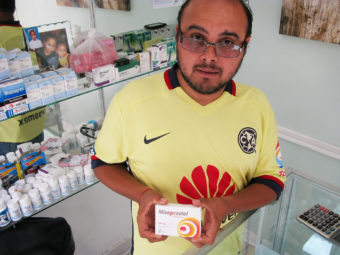
Luis Alberto de la Rosa says he sells lots of misoprostol, a drug used in abortions and in ulcer treatment, to women from Texas who come to his Miramar Pharmacy in Nuevo Progreso, Mexico. John Burnett/NPRLuis Alberto de la Rosa says he sells lots of misoprostol, a drug used in abortions and in ulcer treatment, to women from Texas who come to his Miramar Pharmacy in Nuevo Progreso, Mexico. John Burnett/NPR
Luis Alberto de la Rosa says he sells lots of misoprostol, a drug used in abortions and in ulcer treatment, to women from Texas who come to his Miramar Pharmacy in Nuevo Progreso, Mexico.
John Burnett/NPR

Women who want an abortion in deeply conservative Texas have slightly more choice these days than they had a few months ago. In March, the Food and Drug Administration simplified rules on abortion medication, allowing patients to take the standard regimen of abortion drugs later in a pregnancy.

However, the recent spike in the number of women choosing legal, non-surgical abortions in U.S. clinics has not slowed brisk sales of abortion drugs south of the border, in Mexican pharmacies. One of the two medications in the regimen — misoprostol — is easy to get without a prescription in Mexico and significantly less expensive there.

More and more young women from Texas are walking across the international bridge for risky, do-it-yourself medical abortions with misoprostol that lack the second drug, mifepristone, and also lack the guidance and supervision by a doctor that the women would get in the U.S.

A surgical abortion ends an undesired pregnancy by removing the fetus and placenta from the woman’s uterus. A medical abortion in the U.S. is usually prescribed as a combination of mifepristone (Mifeprex) and misoprostol that, when taken in a two-step process over 48 hours or so, stops a pregnancy from developing and induces a miscarriage. (These drugs are not to be confused with the emergency contraception often called the morning-after pill or Plan B.)

The two-drug combination, when taken in this way, has a 95 percent success rate, studies show.

A 25-year-old child care worker who asks to be identified by her initials, H.D., has opted to terminate her seven-week pregnancy under a doctor’s care in San Antonio. She sits in a black easy chair in a room with soothing mauve walls at a Whole Woman’s Health clinic.

Like more and more women who choose abortion in Texas, she’s decided against surgery.

“The reason that I would choose the pill versus the surgical procedure is the comfort of your home,” she says, “without you having to deal with coming to the office and then being hounded outside by protesters or what have you. And a lot of times you don’t want too many people knowing what’s going on. With the pill I feel like it’s more to-yourself.”

Texas is hostile territory for abortion rights. In 2013, the Republican-controlled statehouse passed the Texas Omnibus Abortion Bill, imposing sweeping new restrictions on surgical and medical abortions.

The Texas law requires clinics that perform abortions to meet the same strict standards as ambulatory surgical centers, and requires doctors at the clinics to have admitting privileges at a nearby hospital. And, according to the law, all abortions — medical as well as surgical — must be done at the clinic.

The Texas law, which is now before the U.S. Supreme Court, had the effect of closing more than 20 clinics that performed abortions in the state.

Believing the longtime FDA rules on abortion pills were plenty strict, the Texas legislators also included in the law a requirement that doctors strictly follow the agency’s guidance.

The lawmakers’ strategy worked. Use of the abortion drug regimen in Texas fell sharply after the law passed.

But the FDA’s current label on abortion medication, updated in March, now requires fewer doctor visits, meaning women can take most of the pills at home. The dosage of mifepristone is lower. And they can take the medication regimen up to 10 weeks into a pregnancy; before, it was only seven weeks. Effectively, the FDA’s updated labeling gave Texas women an end-run around the state Legislature’s anti-abortion posture.

The response was immediate.

Staff of Whole Woman’s Health, which has three Texas clinics that perform abortions, say they have seen requests for medical abortions jump from 1 in 10 patients to more than half of all patients.

And Planned Parenthood has noted a fourfold increase in women seeking the abortion drug regimen at its five clinics in Texas.

“Many women felt that it was a more natural feeling, a more personal experience that didn’t have to be so clinical and surgical,” says Rachel Bergstrom-Carlson, manager of the Planned Parenthood clinic in Austin. “They were in their home; they were in charge of their own bodies.”

Mifepristone was first available in Europe as RU-486 and was approved by the FDA in 2000 for use in medical abortions in the United States. Today, in the U.S., just over a third of women who get abortions in the first nine weeks use medication, according to the Guttmacher Institute, a nonprofit that studies abortion issues. And the number is climbing. Researchers say more women are asking for it, and more abortion providers are offering it.

To abortion foes, both procedures are equally bad. On a recent weeknight, a group of Catholic women march around the Whole Woman’s Clinic in McAllen, Texas, praying the rosary.

“We’re against abortion in any way. We’re against the pill,” says Rosita Rodriguez, wearing a red T-shirt with the words “Keep Calm and Pray On.” “We’re against anything that goes against the moment of conception. That’s why we’re praying.”

Meanwhile, embattled abortion rights advocates in Texas and outside groups that support them see the FDA’s updated guidelines as a rare bit of good news.

“This is definitely a positive step for women — the FDA label change and increased availability of medication abortion,” says Janet Crepps, senior counsel at the Center for Reproductive Rights in New York. “But it’s not addressing the root problem, which is all of the unnecessary regulations that are closing clinics and placing obstacles in the path of women seeking abortion.”

The heavy regulations on Texas clinics that provide abortions, coupled with the cost of an abortion — medical or surgical — is driving some women in South Texas to cross the Rio Grande to visit one of an estimated 200 pharmacies in the city of Nuevo Progreso, Mexico.

In the crowded, chaotic sidewalks, it’s all here for the asking: dental work, eyeglasses, pirated DVDs, tequila shots, prostitutes and cheap, plentiful medicine. Drugs that are highly restricted in the U.S. — like Xanax, Ritalin, and Valium — are sold like aspirin in Nuevo Progreso pharmacies. Misoprostol is a big seller.

A fleshy man with gold caps on his teeth named Roberto Gonzales says he worked as a clerk in a Nuevo Progreso pharmacy until recently. He remembers the constant stream of customers asking for misoprostol — sold here under the brand-name Cytotec.

“We sold it like hot bread,” he says, chuckling. “The girls in Texas came over to buy this treatment — eight to 10 tablets for a pregnancy of nine weeks. It works the fastest.”

Gonzales now makes a living washing cars and hustling on the streets of Matamoros. But for the eight years he worked in Nuevo Progreso, he says, he learned a few things about the drugs he sold.

“They’d ask me how to use it, and I tell them what I’d heard,” he continues. “Many times the instructions inside the box tell them how to do it, how to induce an abortion. I would warn them it’s dangerous. Lots of times there’s heavy bleeding.”

Gonzales’ advice to customers highlights the risks of improvised, do-it-yourself abortions.

Instructions inside boxes of the drug sold in Mexico actually only explain how to use it for treating gastric ulcers, and don’t say anything about how to take Cytotec to abort an embryo.

Because abortion is illegal in every state in Mexico, Cytotec is only sold as an ulcer medicine. That leaves customers to pick up instructions from friends, off the Internet, or from untrained pharmacy employees like Gonzales.

“Now I’m looking for work in another pharmacy,” he says, before walking back to his parking lot.

“That’s just a terrifying state of affairs — that women would turn to someone like that to give them that advice,” says Crepps, upon hearing Gonzales’ story.

“It’s the 2016 version of the back-alley abortion,” she says. “And it’s a very sad state of affairs.”

Misoprostol-only abortions — the kind offered in Mexico — are “significantly less effective” than the two-drug, combination regimen prescribed in the U.S., according to the American Congress of Obstetricians and Gynecologists.

Priscilla found this out the hard way. She’s a law student in Matamoros, Mexico, who says she was 18 years old when she bought some misoprostol to “bring my period back.” NPR has agreed to use only her first name, to protect her privacy.

“I was at home and I took the pills, then I started to hemorrhage,” she says. “I felt awful. I thought the medicine was working, but it didn’t.”

In Mexico, women have been prosecuted for going to a public hospital showing symptoms of an attempted abortion. So, Priscilla says, she found a doctor in her town who performs surgical abortions confidentially.

“He took me into a room,” she says, “put me to sleep, and terminated the embryo. I was so scared, so confused.”

Medical and surgical abortions are, of course, legal in the United States. So if there’s a clinic performing abortions in the border city of McAllen, Texas, why are U.S. women going to pharmacies in Nuevo Progreso?

First, it’s a matter of cost. The Rio Grande Valley of Texas is one of the poorest regions in the country. A medical or surgical abortion in McAllen costs $500 compared to a pack of pills in Mexico for under $50. Second, some women may not want to put up with all the abortion regulations in Texas. They have to get an ultrasound and have the doctor describe what he sees, and they have to see the same doctor for three appointments.

Finally, women in South Texas may not be aware that the McAllen clinic is still open. After the Texas Legislature passed the abortion law, the clinic was forced to close. Eleven months later, a federal judge told the center’s staff they could reopen.

“The point is you’re pregnant and you don’t want to be,” says Andrea Ferrigno, corporate vice president of Whole Woman’s Health. “And what are the options available to you next? The last thing you heard is that the clinic is closed and there’s some sort of case before the Supreme Court about it. It’s confusing.”

The Texas Legislature passed the anti-abortion law with the stated goal of protecting the health and safety of Texas women. Critics say it’s having the opposite effect in South Texas.

I asked Joe Pojman, executive director of Texas Alliance for Life and a big supporter of the state’s anti-abortion law, if he was concerned that the harder it is to get an abortion in Texas, the more women will cross the border to get do-it-yourself abortions without a physician’s care.

“I just don’t see a time when abortion is not readily available in Texas,” Pojman says. “That is just not our goal. We have a goal of protecting innocent human life from conception until natural death, using peaceful, legal means and by promoting compassionate alternatives to abortion.”

Both sides in the abortion battle are watching the U.S. Supreme Court closely, awaiting a landmark ruling on the constitutionality of the Texas Omnibus Abortion Bill — a decision is expected this month. Abortion rights supporters say if the justices uphold the law, regardless of the FDA label changes, more clinics will close, and the Mexican pharmacies will get even more business.

Copyright 2016 NPR. To see more, visit http://www.npr.org/.

Legislature passes 2 bills aiding children in foster care

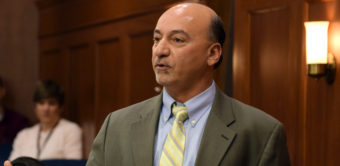
Rep. Les Gara addresses the Alaska House of Representatives, Feb. 4, 2015. (Photo by Skip Gray/360 North)

The legislature took three actions this week that will help foster care children — passing two bills aiming at finding kids adoptive homes and adding money to the budget to help keep struggling families together.

House Bills 27 and 200 both passed the Senate on Tuesday. They work in tandem to get kids out of the foster care system more quickly and into permanent homes. They also focus on keeping children with family members by reducing barriers for extended family to apply for placement preferences. Representative Les Gara, who sponsored HB 27, said the bills will keep kids from bouncing from foster home to foster home.

“Our bill sort of helps find adoptive families for youth so they don’t bounce in the foster system when they weren’t going to be reunified with their families anyway. And the governor’s bill speeds up the adoption process,” Gara said.

HB 200 streamlines legal proceedings allowing one judge to look at multiple aspects of a family’s case.

The legislature also added $2.3 million to the budget for family reunification and retention. Gara said it will go toward programs that aim to keep families together so they don’t have to enter the foster system in the first place.

“If we can keep families together it’s frankly more humane and it’s cheaper than paying for a foster care system for a child that could have stayed with a family that could get their act together,” Gara said.

Alaska has the nation’s second-highest number per capita of foster youth awaiting permanent homes. Both bills are headed to the governor’s desk to sign.

Preventing child neglect through social networks

Foster care in Alaska is the state’s last resort for helping kids who have been abused or neglected—and the number of kids in the system is at a record high. Nearly 3,000 kids are in out-of-home care. One foster care worker says part of the solution is in prevention – helping families before maltreatment ever starts. A new program in Anchorage and the Mat-Su Valley is doing just that.

Last fall, Ana Maria Balcazar learned she needed to have a mass removed from her ovary. After the surgery she wouldn’t be able to lift anything for six weeks, including her 2-year-old daughter.

“I talk to the doctor and said, ‘Can we wait maybe six more months or one more year?’ And she said, ‘No. Absolutely not. We have to do it now because it’s very dangerous.’”

But Balcazar didn’t have anyone to take care of her two young daughters. Her family is in Peru, and her friends couldn’t help.

“The few friends I have are in my same situation. They are single mothers with two, three kids and they don’t have (anybody) to help them. Working, go back to take care of the kids then pick up the kids, running, go to sleep.”

Balcazar was desperate – she asked people at her daughter’s school, fellow church members she hardly knew. She even considered calling the Office of Children’s Services. Then her pastor told her there was a new program in town that might be able to help – Safe Families for Children.

“The way that it works is very much centered on old school hospitality and people taking care of their neighbors,” explains Charity Carmody, who coordinates the Anchorage branch of the international organization.

Here’s how it works: families volunteer to take in children for a short period of time while the parents work through a crisis, like homelessness or hospitalizations. The program started in Chicago in 2003 and has since spread around the US, Canada, the United Kingdom, and Kenya. According to the national program’s website, so far more than 20,000 children have been in the program in the United States. Ninety percent of them have returned to their parents.

Carmody says the faith-based program helps families before a crisis leads to child abuse or neglect.

“Most child maltreatment happens as a result of social isolation. Parents simply don’t have anybody to call in a time of crisis. So we’re trying to create an outlet that they know is safe. We’re just trying to give them the ability to make the call themselves before something happens and maybe they put their child in a harmful situation.”

Ben Hemmila and his wife heard about the program through their church and decided to apply to be a host family. It took months to get background checks, home visits, and final approval. Hemmila says the program seemed logical.

“If we had friends across the street or neighbors or somebody from church who needed help, we would watch their kids for them. So why wouldn’t we just help somebody in our community?” he asks. “Because they are part of our community and they are in need so obviously we would want to help out.”

The couple took in Ana Balcazar’s two children for part of the six weeks. They don’t have kids of their own yet, and they say it was just as valuable a learning experience for them as it was a way to give back.

Hemmila says he thought he was so on top of things one morning – he had the toddler in the car and was off to work on time. Then he reached into his briefcase and pulled out a squishy dirty diaper instead of his thermos of coffee.

“Pride comes before the fall, right?” he says, smiling. “It’s just that respect for what parents go through each and every day. And you don’t think of that until you have kids of your own or you’re able to be around that.”

The Hemmilas say taking in the girls wasn’t a burden. A network of people from Safe Families and their church donated diapers, toys, and dinners and helped pick up the kids from school.

And all of the host families made sure the girls talked to their mom every day. Balcazar says she needed that.

“They know my heart was broken because I don’t have them. And they tried to heal at the same time my heart. Like you know, make me call them and see them by FaceTime.”

After six long weeks apart, Balcazar is reveling in having her kids back. She shows off her older daughter’s school binder full of completed homework and translates one of her younger daughter’s favorite books from Spanish to English.

“And she loves it because I have to say, ‘”Frooogy!” say mama. “Whaat?” say Froggy. “Come and brush your teeth!”’” She shouts and laughs as she reads, just as she would for the girls.

Balcazar says her kids came home spouting instructions from their host families on behavior and parenting techniques – and she loved it. She was instructed on proper teeth brushing and the necessity of reading books together for 30 minutes at bedtime. Before she told them stories from her imagination but now they read together.

The program was a lifeline and a lesson for Balcazar and she says she’s ready to give back as soon as she can.

Safe Families for Children currently offers help for families in Anchorage and in the Mat-Su Valley, though they hope to expand the program statewide.

House Bill would help keep children in state custody closer to home

Christy Lawton, Office of Children's Services director. (Photo courtesy State of Alaska)
Christy Lawton, Office of Children’s Services director. (Photo courtesy State of Alaska)

The first bill to come out of the legislative special session may be one that streamlines the handling of children in state custody.

All the testimony Wednesday before the Senate Judiciary Committee supported passage of House Bill 200.

The bill sprang from a lawsuit involving a grandmother in the southwest Alaska village of Tununak who testified in court that she wanted to adopt her granddaughter with the understanding her testimony would give her standing under the Indian Child Welfare Act. ICWA gives preference to the relatives, family, or tribe of Native children in custody and adoption cases.

However, after a 2013 ruling by the U.S. Supreme Court, the Alaska Supreme Court ruled a petition to adopt filed by a non-Native family outweighed the grandmother’s verbal statement. Office of Children’s Services director Christy Lawton said HB 200 would provide an easier first step.

“This bill really provided that consideration that we have something less formal than a written petition for adoption that really is not necessary at the beginning of the case, but that all people would eventually have to file if they became the adoptive identified parent,” Lawton said.

Tribes say filing a petition to adopt in state court is hard to accomplish in remote villages, and requires the services of an attorney. Lawton said filing a proxy would be easier.

“All they have to do is let us know, they can do that via email, via fax, they can stand up in court, at a meeting,” said Lawton. “And that will then begin a process by which we will formally notify the parties and assess them. And the court will recognize them as relatives and that will be preserved on the record.”

In their testimony, people described delays in children’s cases moving from one court to another, and often requiring subsequent judges to become educated about a child’s situation. Carla Erickson is the Child Protection Services supervisor in the Alaska Department of Law. She said HB 200 would put several legal procedures before the same judge.

“We’ve been calling this kind of the one judge one family notion, rolling in the adoption, and guardianship proceedings, and civil custody proceedings as well,” Erickson said.

Tribal Administrator Lawrence Armor of Klawock was one of several people who said it’s important to keep Native children close to their roots.

Sen. Peter Micciche chairs a Senate Finance Health and Social Ser
Sen. Peter Micciche. (Photo by Skip Gray/360 North)

“By making it easier for a family member to let the court know that they are willing to raise their relative, and by leaving it with one judge that has been following the case, I think it will help people save money and help keep children close family, community and culture,” Armor said. “It’s just really difficult to see people in our small communities, people that we love, struggling to keep their families whole.”

Sen. Peter Micciche of Soldotna said it took his family a year and a half to adopt a child abandoned at birth, so he doesn’t want to be overly lenient to absent or deadbeat parents, but he asked OCS director Lawton if a streamlined process would still protect the rights of parents. She said the bill would have no effect on parental rights.

“We’re still required by law to give them every opportunity to work their case plan to be successfully reunited,” Lawton said. “So this doesn’t expedite us moving toward a goal other than reunification any differently than we are now.”

HB200 puts emergency regulations issued last year by Gov. Bill Walker into law and clarifies that proxies can be used in cases of adoptions by non-Natives as well as Natives. Judiciary Committee Chair Lesil McGuire said she expects HB 200 to quickly move to the Senate floor for consideration.

For First Time In 130 Years, More Young Adults Live With Parents Than With Partners

crowded bird nest
A crowded bird’s nest. (Creative Commons photo by Julie Falk)

For the first time in more than 130 years, Americans ages 18-34 are more likely to live with their parents than in any other living situation, according to a new analysis by the Pew Research Center.

In that age group, 32.1 percent of people live in their parents’ house, while 31.6 live with a spouse or partner in their own homes and 14 percent live alone, as single parents or in a home with roommates or renters. The rest live with another family member, a nonfamily member or in group-living situations such as a college dorm or prison.

Pew notes that this is not a record high percentage for the number of young people living at home — in 1940, for instance, approximately 35 percent of people in that age range lived at home.

But back then, living with a spouse or partner was even more popular than that. Today not so: More people choose an alternative living situation, and out of the crowded field of choices, life with Mom and/or Dad has become the top pick for millennials.

Well — some millennials. Men, for starters.

American men ages 18-34 live with their parents 35 percent of the time, and with a spouse or partner 28 percent of the time. For women, the numbers are nearly reversed; 35 percent live with a partner, while 29 percent live with their parents.

Less educated young adults are also more likely to live with their parents than are their college-educated counterparts — no surprise, Pew notes, given the financial prospects in today’s economy.

Black and Hispanic young people, compared with white people, are in the same situation.

For black people in particular, the “new” milestone isn’t so new at all. Black young adults have been more likely to live with their parents than in any other situation since 1980. Today, 36 percent of black millennials live with their parents, while 17 percent live with a spouse or partner.

Meanwhile, taken as a whole, women, white people, Asian/Pacific Islanders and people with bachelor’s degrees are still more likely to live with spouses or partners than with their parents.

But the overall trend is the same for every demographic group — living with parents is increasingly common.

(Young Americans are still less likely to live with their parents than their southern European friends. In Macedonia, more than 70 percent of 18- to 34-year-olds reportedly live at home, Pew says.)

For many millennials, Pew’s conclusions might seem both unsurprising and easy to explain: The Great Recession happened, of course!

But the rise in the number of young adults living at home started before the economic crash — and so did the possible contributing factors. Male unemployment has been on the rise for decades, Pew says. Even those who have jobs are making less than they would have in their parents’ day — for young men, Pew notes, inflation-adjusted wages have been falling since 1970.

And then fewer young people are married than in decades past. Even accounting for the increased popularity of cohabitation, there are just fewer paired-up 20-somethings and 30-somethings than there used to be.

In general, the study shows how dramatically the living situations of 18- to 34-year-olds have changed since 1880, when the data begin.

Living alone, as a single parent or with roommates — once a rarity — is now the choice of 14 percent of people in that age group. And a full 25 percent of young men are now living with other family, nonfamily or group quarters.

Male prosperity rose steadily, and more and more men left the nest — until the ‘u60s and ’70s, when wages started to drop and more men stayed home.

And women? For decades women who worked were more likely to live with their parents than with a partner or spouse — because wives were discouraged from having jobs, per Pew’s straightforward interpretation.

But now more and more young women have jobs, and it’s unemployed women who are more likely to live with their parents. And yet, even as female prosperity rose, so did the number of young women living at home.

Pew speculated it might because of men’s lower earnings keeping women from marrying and moving out. Seem plausible? The question might make for a fruitful conversation in households across America tonight … just ask Mom to pass the peas and the theories.

Copyright 2016 NPR. To see more, visit http://www.npr.org/.

States Urged to Reduce Pregnancy-Related Deaths

States are being asked to collect data on the deaths of pregnant women and new mothers to determine how to reduce maternal mortality rates. AP

The relatively high percentage of American women who die as a result of pregnancy, which exceeds that of other developed nations, is prompting a new national prevention campaign that is relying on the states to take a leading role.

The key element in that effort is to encourage all states to go beyond the information provided on a typical death certificate by having mortality review panels investigate the causes behind every maternal death that occurs during pregnancy or in the year after delivery.

The hope is the investigations will reveal systemic causes for at least some of the deaths and lead to preventive measures to save the lives of more would-be or new mothers.

A number of studies suggest that one in three maternal deaths is preventable.

“It’s hard to do anything about a problem if you don’t have the problem fully defined,” said Cynthia Shellhaas, an associate professor in the division of maternal-fetal medicine at the Ohio State University Wexner Medical Center.

The campaign is led by the Association of Maternal & Child Health Programs (AMCHP), a public health advocacy group, and the U.S. Centers for Disease Control and Prevention.

AMCHP and the CDC want every state that doesn’t have one already to create a maternal mortality panel of medical and forensic experts. They want the panels to collect as much information as possible related to every maternal death, including matters related to prenatal care, other health conditions, use of medications, drug and alcohol abuse, violence and medical procedures performed.

They also are encouraging states to standardize the data they collect. And they will provide a digital application to help them collect it, to make it easier to analyze the data for possible trends and remedies.

About half the states — including California, New York and Texas — already have panels, although each currently devises its own ways of classifying information and determining which cases to investigate.

For example, some consider as maternal any death up to 42 days after a pregnancy. Others examine any death up to a year after delivery.

High U.S. Rate

In the U.S., there are 18.5 maternal deaths for every 100,000 live births, according to the Institute for Health Metrics and Evaluation at the University of Washington, which tracks mortality trends worldwide. (For African-American women, the rate is three times higher, according to the CDC.) The CDC says that about 700 maternal deaths occur in the U.S. every year.

The rate is down from a recent peak — in 2009, when it was 22 deaths per 100,000 — after rising steadily for more than a decade.

But preliminary numbers suggest that maternal deaths are again on the rise after 2013, the institute said. The death rate is significantly higher in the U.S. than in other developed countries. For example, the rate is 8.2 in Canada and 6.1 in the United Kingdom and Japan.

States Urged to Reduce Pregnancy-Related Deaths


There are several possible reasons for the higher U.S. rate, including better reporting, mothers giving birth at older ages (increasing the odds of pregnancy-related complications) and the growing percentage of expectant mothers with untreated chronic conditions such as obesity, hypertension and diabetes. The upsurge in opioid overdoses also may be a factor.

Maternal deaths often signal broader health problems among expectant and new mothers.

The Joint Commission, a nonprofit that accredits health care organizations and programs, calls maternal deaths “sentinel” events. “For every woman who dies, there are 50 who are very ill, suffering significant complications of pregnancy, labor and delivery,” Dr. William Callaghan, a senior CDC scientist who studies maternal morbidity, said in the Joint Commission’s 2010 alert.

Renewed Effort

The notion of investigating the deaths of mothers to prevent them isn’t new.

Medical societies in some large cities and states began establishing maternal mortality panels in the 1930s, when the maternal mortality rate was more than 600 deaths for every 100,000 live births.

Even then, there was a strong sense that many of the deaths could be prevented through improved medical and hygienic practices.

The work of those panels, combined with the Social Security Act of 1935, the advent of antibiotics, advances in obstetrics and medicine in general, and the trend toward more hospital births, led to a precipitous drop in the mortality rate through the early 1960s.

Many of the review panels disappeared. But as rates started rising again the late 1990s, panels began to resurface. David Goodman, the senior scientist for the CDC’s Maternal and Child Health Epidemiology Program, estimates that at least 20 states have panels and another dozen are creating them. Some states, including Illinois, have additional maternal mortality panels that focus on violent deaths.

Most of the mortality panels are appendages to state health departments, although Goodman said most operate with little state revenue. They rely instead on the financial contributions and participation of its volunteer members, which usually includes doctors, coroners, lawyers and even police officers.

Some states also have mortality review panels for fetal, infant and child deaths.

Beyond Death Certificates

Although death certificates usually provide a cause of death, the quality of the information varies greatly from state to state.

The certificates lack the level of detail that would help hospitals and other providers make adjustments that could prevent recurrences, Goodman said.

For example, he said, a death certificate may indicate that a new mother might have died as a result of an infection. But a deeper examination of her case and similar ones could reveal deficiencies in the sterilization of surgical equipment in hospital obstetrics units.

Something like that happened in California. Evidence revealed by the California mortality review panel led to revised protocols in the handling of post-delivery hemorrhages in all California hospitals beginning in 2008.

Barbara O’Brien, program director of the Office of Perinatal Quality Improvement at the University of Oklahoma Health Sciences Center, said that evidence collected by her state’s mortality review panel has led to the use of compression devices for all pregnant women undergoing cesarean sections to reduce the risk of developing a deep vein thrombosis — a blood clot, usually in the leg, that can be fatal.

The panels turn to many sources of information, including autopsies, hospital and provider medical records, and, in some cases, records from police and social service agencies.

Some states have laws that give the panels access to those records, but not always. “If you want to go to the provider’s office who provided prenatal care [in Oklahoma] they aren’t required to give you the records,” O’Brien said.

Dr. Shellhaas of Ohio, who oversees her state’s maternal mortality panel, said it usually waits two years before delving into a case to allow any civil lawsuits to be resolved, which removes an impediment to getting the necessary documents.

AMCHP and the CDC are testing the new data collection system in a dozen states. Eventually it will be made available to all states, thanks in part to funding from the pharmaceutical giant Merck & Co. Inc., which is engaged in a $500 million, worldwide campaign to improve maternal health and reduce maternal deaths.

AMCHP also plans to create an internet portal to help states communicate with each other on issues related to maternal health and mortality, said Lori Tremmel Freeman, AMCHP’s CEO.

Read original article
States Urged to Reduce Pregnancy-Related Deaths

Site notifications
Update notification options
Subscribe to notifications