Family

Juneau first stop on gay cruise’s trip around Alaska

RSVP patrons enjoy the drag performances during Monday night's event.  (Photo by Lakeidra Chavis/KTOO)
RSVP patrons enjoy the drag performances during Monday night’s event. (Photo by Lakeidra Chavis/KTOO)

On Monday afternoon, nearly 2,000 people arrived in Juneau for their first stop on the 30th anniversary RSVP Vacations cruise. The cruise line caters exclusively to gay and lesbian people.

The Southeast Alaska LGBTQ+ Alliance, also known as SEAGLA, hosted an event for cruise patrons at the Imperial Saloon downtown. Nearly 200 patrons mingled, drank and played billiards during the 2-hour event.
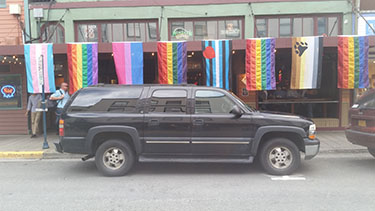
SEAGLA decorated the outside of the Imperial with various gradient flags from the LGBT community, including the pride, bisexual, transgender, leather, bear flags. (Photo by Lakeidra Chavis/KTOO)

“It’s just important to remember that we are in the community, that we’re neighbors, but also to welcome people who are traveling, who might be looking for community,” says Lauren Tibbitts-Travis, SEAGLA outreach coordinator.

She helped organize the event.

“It’s one thing to go somewhere that you’ve never been and see the sights, but if you’re going there [and you] immediately identify with [the place], that makes it a much better experience. That’s what we’re trying to do at these events,” Tibbitts-Travis says.

This week’s cruise will take tourists to Glacier Bay, Sitka, Ketchikan and Victoria, British Columbia. Although the passengers are predominantly male, the cruise caters both to gay and lesbian people.

Ticket prices ranged from $900 to almost $3,000. Joe Fallon and his husband David Rodes says the cruise was worth it.

“We’d never been to Alaska and we’d always wanted to do an Alaska cruise, but a straight cruise never seemed like that much because we figured we’d be with a lot of old people,” Fallon says.

Fallon and Rodes, who are both in their late 50s, decided to take the cruise to celebrate paying off their mortgage.

“We met working in the same shopping center when we were like 17 and 18 years old.” Fallon says.

They’ve been together for 39 years, says Rodes.

Both men says they’re most excited to see Glacier Bay.

Sam Wilson, 47, sits in the Imperial with his best friend, who he came on the RSVP cruise with. (Photo by Lakeidra Chavis/KTOO)
Sam Wilson, 47, sits in the Imperial with his best friend and travel partner. (Photo by Lakeidra Chavis/KTOO)

For 47-year old Sam Wilson, he decided to go on the cruise because it’s something his best friend has always wanted to do.

“He actually wanted to go for a very long time, and we finally found time to go. We travel a lot, this is like my fourth cruise. I did a couple in the Caribbean and a Mediterranean one, so this was like on the bucket list — definitely one to come and see,” Wilson says.

Wilson and his friend have traveled everywhere from Egypt to Greece. He says the cruise is like a party every night and there’s always a chance to meet new people.

Halfway through the event, four local drag performers took the dance floor to entertain the crowd. Performer Vanessa LaVoce-Kellie — who preferred to be identified by her stage name — was one of them.

For her the event symbolized a larger effort to create a more inclusive community.

“I performed tonight because there’s not very many opportunities to do drag here in Juneau; it’s been getting a lot better. We’ve been having more exposure, but any chance that I get to step out in face and give somebody a show, I’ll take it,” La-Voce-Kellie says.

For LaVoce-Kellie, the bigger the drag queen presence in Juneau, the better.

“These events give people that safe place, and help us to build the conversation for more acceptance and tolerance. The more you can do for love the better,” LaVoce-Kellie says.

The cruise left late Monday night to travel to its next destination, Sitka, before making a stop in Glacier Bay.

Murkowski votes to move bill defunding Planned Parenthood

Sen. Lisa Murkowski, R-Alaska, in Ketchikan on April 29.
U.S. Sen. Lisa Murkowski, R-Alaska, in Ketchikan on April 29, 2013.

A bill to defund Planned Parenthood failed a procedural vote in the U.S. Senate today. Sen. Dan Sullivan is a co-sponsor. Sen. Lisa Murkowski voted to advance the defunding measure also, but she says she doesn’t want to see Planned Parenthood’s funding removed without an investigation.

“A move to wholesale defund Planned Parenthood is just not smart,” she said just outside the Senate chamber after a procedural vote on the defunding bill.

Murkowski says she wanted the bill to advance so she could vote for an amendment offered by Republican moderates Susan Collins of Maine and Mark Kirk of Illinois. That measure would have required the Justice Department to investigate whether Planned Parenthood or its affiliates violated federal law regarding the harvest of fetal tissue. The Collins-Kirk measure would have cut off funding just to the facilities, if any, that profited from that practice. (Today’s procedural vote split Collins and Kirk. Collins voted to advance the defunding bill with hopes of amending it. Kirk was the only Republican to vote against advancing the bill.)

The reasons Murkowski is giving for her vote are nuanced and likely to be lost in the heated debate. After the vote, the Alaska Democratic Party issued a statement headlined “Murkowski Abandons Alaska Women.” On the other side, Jim Minnery of Alaska Family Action, has been urging his anti-abortion followers to tell Murkowski to support the bill.

Murkowski, who is up for re-election next year, has had a complex stand on abortion and women’s health issues since her days in the Alaska Legislature, and she has alternately pleased and angered both sides of the abortion debate.

Murkowski says she knows people will read a lot of meaning into today’s vote. She says she believes Planned Parenthood does good work and she notes that it provides health care to 21,000 Alaskans.

“What I’m opposed to is any measure that would completely defund … important services to men and women.  Unless, unless there has been illegal action,” she said. “And we don’t know if there has been.”

She says she was repulsed by the videos taken by anti-abortion activists in which Planned Parenthood officials seem to discuss compensation for providing fetal tissue for research and methods of collection. Murkowski today asked the U.S. attorney general for an investigation.


Former NICU parent helps other families navigate a stressful time

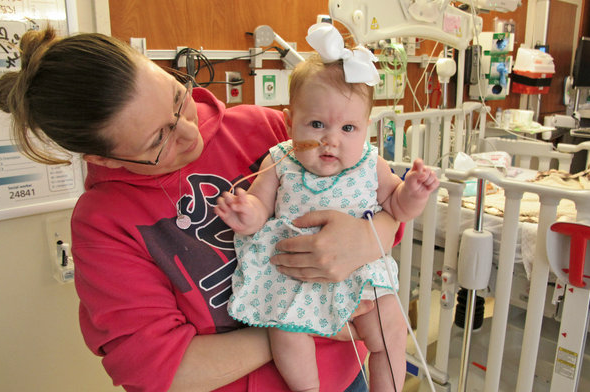
Emily Bressler spent 127 days in the NICU at the Children's Hospital at Providence. Her mom liz stayed in her room the whole time. (Photo by ANnie Feidt/APRN)
Emily Bressler spent 127 days in the NICU at the Children’s Hospital at Providence. Her mom liz stayed in her room the whole time. (Photo by ANnie Feidt/APRN)

Most people working in a Newborn Intensive Care Unit have some type of advanced medical degree. But one employee at The Children’s Hospital at Providence in Anchorage has a very different set of qualifications. Ginny Shaffer spent more than three months in the NICU as a parent, with her daughter who was born at 23 weeks. Now she helps other parents through one of the most stressful times of their lives as a Parent Navigator.

A mini chalk board outside Emily Bressler’s NICU room playfully charts her ‘escape attempts’ from the hospital. Her mom Liz says she’s come close to going home at least a dozen times in the last four months.

“Someone would come into the room and they’d say well you could be outta here in two weeks, she’s doing good right now,” Bressler says. “And then at the end of two weeks, something would happen, I called them her medical temper tantrums and it was just enough to keep her here.”

Emily had her first medical temper tantrum the day after she was born- a hearty eight pounds, one ounce- in Fairbanks. She started vomiting, couldn’t poop and was medevaced to the Providence NICU in Anchorage. Emily was diagnosed with Hirschsprung’s Disease, which affects the colon. She needed surgery- three in all- to be able to pass stool.

Bressler’s husband had to stay home in Fairbanks, caring for the couple’s three other young kids.

“I kind off keep my sanity by cracking jokes. And we make the best signs,” Bressler says. “Emily has one that says ‘kiss my little red wagon’, and ‘if you wake me, you take me.’ And it’s great to have that lightness.”

The other half of that ‘we’ Bressler is talking about is NICU Parent Navigator Ginny Shaffer.

“If I can make her smile with a sign, then we’re going to make as many signs as possible,” Shaffer says.

Shaffer has also helped Bressler find a spot for her espresso machine, a vital piece of equipment when your home is a hospital room. And then there’s the tougher stuff. Shaffer is someone Bressler can talk to when Emily has surgery or a setback. She also helps Bressler advocate for Emily’s unique care needs with doctors.

Shaffer says every family needs help in different ways.

“I want to walk into a room and I want somebody to see that there’s somebody that’s going to help them and it’s just their needs I’m looking to support,” Shaffer says.

Ten years ago, Shaffer was the one who needed support. She was 23 weeks pregnant with twins- a boy and a girl, when she felt funny and went to the hospital. Her tiny babies (both weighed less than 1.5 pounds) were born five hours later. Her son Bryson experienced seizures, brain bleeds and problems with internal organs. When he was 45 days old, Shaffer and her husband made the difficult decision to remove life support.

The day after Bryson died, a nurse suggested a first bath for their daughter, Holland.

“And they got out this little bitty pink hospital basin, this little tub that was too big for her and this heat lamp and we got this really great photo,” Shaffer remembers. “The nurse said, ‘how many people does it take to give a two pound baby a bath?’ And we’re all smiling- ‘five!’ And that was a really pivotal moment in our life because I didn’t really know how to go forward.”

Holland spent 99 days in the NICU. After that experience, Shaffer was glad to be home, but she missed the daily connections with hospital staff and other NICU families. When Holland was two years old, the NICU Parent Navigator job opened up and it seemed like a natural fit for Shaffer, even though her background is in real estate, not healthcare.

Eight years later, Shaffer’s office- with huge glass windows, is the first thing you see walking into the unit. It’s filled with stuffed animals, infant clothes and a bowl of chocolate to entice parents to sit down and talk. Shaffer also works to get families connecting with each other:

“We try and get creative with some of our offerings,” Shaffer says. “We’ve done National Fried Chicken Day- a quirky celebration, but it kind of creates a giggle and then people are curious, ‘the NICU’s celebrating National Fried Chicken Day? Let’s go see what it’s about.’ And connections are made.”

Another piece of Shaffer’s job is advocating for families with hospital administrators. She helped design the new NICU that opened two years ago to be as parent- and baby- friendly as possible. Right now, she’s pushing for a more relaxed visitors policy. No visitors are allowed at shift change, when confidential information is exchanged. It’s a holdover from the days when the unit was open, with no private rooms.

“If my neighbor is here and she’s my best friend and she can help me or get me a tissue or a drink, then why not let her stay? You can shut my door and give me some privacy and then I won’t overhear the confidential exchange of information that happens at shift change,” Shaffer says.

But one of best job perks for Shaffer is celebrating family milestones. And a recent day brings a big one. A parade of doctors and nurse are stopping by Emily Bressler’s room to say goodbye and take pictures. After 127 days in the NICU, she is finally making her escape.

Bressler is thrilled to be going home to her husband and kids, but sad too- to say goodbye to the support network of Shaffer and all the NICU staff. She says it’s a little like trading one family for another.


Ishmael Hope recrafts a family tale in “Never Alone” follow-up

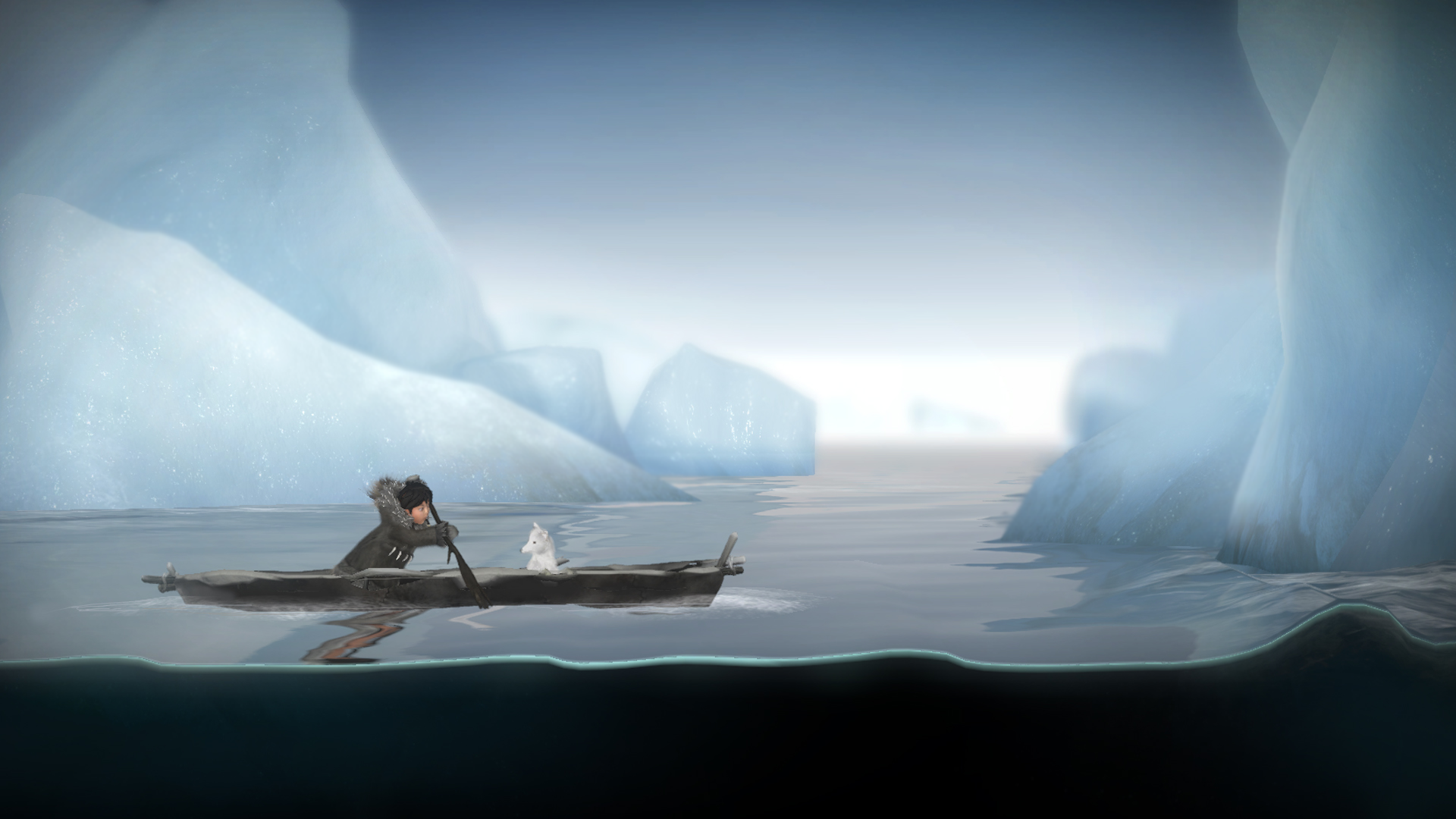
In "Never Alone: Foxtales," Nuna and Fox navigate on an umiak. They start in the Kotzebue area and eventually find themselves on the Noatak River. (Image courtesy Upper One Games)
In “Never Alone: Foxtales,” Nuna and Fox navigate on an umiak. They start in the Kotzebue area and eventually find themselves on the Noatak River. (Image courtesy Upper One Games)

With “Never Alone,” Cook Inlet Tribal Council and game developers combined indigenous storytelling with video gaming in a way that appealed to mass markets.

Its success has led to the follow up “Never Alone: Foxtales,” released on July 28. Juneau writer Ishmael Hope relied on his uncles, Alaska Native elders from Kotzebue, to write the game’s narrative.

Willie Goodwin Jr. narrates the videogame Foxtales. In Iñupiaq, he tells the story of two friends who emerge from their sod homes after a long winter.

“At springtime,” Goodwin says, “everything comes alive.”

Goodwin is an elder from Kotzebue. He’s also the uncle of Ishmael Hope, the game’s writer.

Hope says the two friends, Nuna and Fox, start chasing a little mouse.

“And then suddenly, in the middle of their chase, they’re stranded out in the ocean. They find themselves in an old umiak, a boat. They’re just out, and then they have to navigate their way all the way through,” Hope says.

In Nuna and Fox’s journey, “They get a little too exuberant, like young people will,” Hope says. “They’ll make little mistakes, but then they have to learn a lesson about how to respect all things, the values of being Inuit, Iñupiaq. It’s something that they had to learn.”

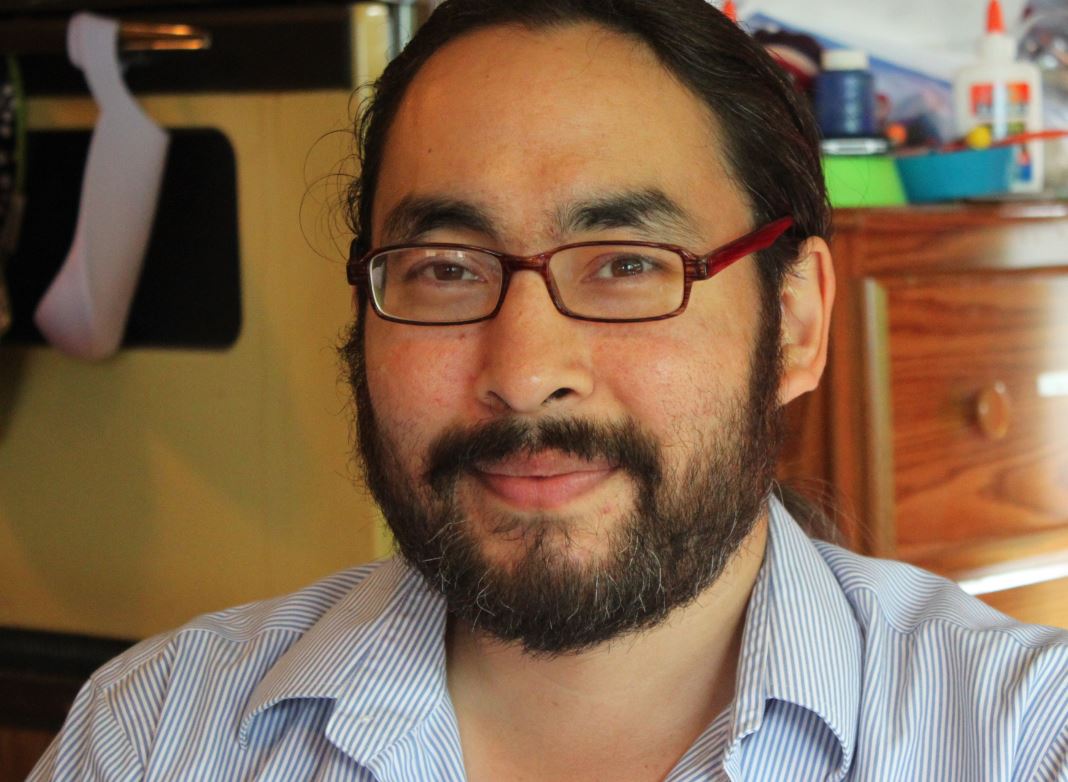
Ishmael Hope is the writer of "Never Alone: Foxtales." (Photo by Lisa Phu/KTOO)
Ishmael Hope wrote “Never Alone: Foxtales.” (Photo by Lisa Phu/KTOO)

Foxtales is based on a story told by Hope’s late grandfather, Willie Panik Goodwin. It’s a story about fighting a giant mouse. Goodwin told the story “The Two Coastal Brothers” during an archaeological trip with a team of scholars, including Wanni Anderson who transcribed it in a short story collection, “Dall Sheep Dinner Guest.”

Hope used a lot of his grandfather’s direct words when writing the game’s script. He also collaborated extensively with his uncles who live in Kotzebue, where Foxtales begins.

The game, like its predecessor “Never Alone,” is narrated in Iñupiaq with English subtitles.

“Even if people are absorbed in the game, there’s something really special about the elder’s voice, them speaking in the language. So even if you’re not following everything, you’re getting a sense of that world and that spirit,” Hope says.

Hope says it’s that spirit that gives identity. Hope is Iñupiaq and Tlingit. He says his uncles Elmer Goodwin, Willie Goodwin Jr. and John Goodwin taught him a lot about Iñupiaq culture. Hope says working with them was key to making Foxtales.

“They know how to hunt, they know how to fish, they know how to be in the land. They have so many stories of survival, of reading the landscape, observing the landscape, sensing the spirits and the life of everything around us. They have that knowledge and they were able to impart that a little bit with us,” Hope says.


Foxtales is a celebration of Iñupiaq culture, something Hope thinks young people playing the game need.

“It’s one instance where they get a positive image of themselves reflected back on them. And when you’re in pop culture and you have almost no images or it’s all horrible stereotype, it’s really nice to kind of break through just a little bit,” Hope says.

Videogames have been seen as separating the young generation from the old, but Hope wants Foxtales to do the opposite.

“For young people everywhere, it allows them to create the bridge to their mom and their dad and their uncles, their aunties and their grandparents who may tell them, ‘Oh you know I know a story just like that, so let’s sit down and let me tell it to you,'” Hope says.

Hope doesn’t know if Nuna and Fox will go on any more adventures, but he says with the title Foxtales, there’s a possibility for more.

“Never Alone: Foxtales” is available for the Xbox One, PS4 and PC and Mac. It requires the original “Never Alone” to play.

North Pole lawmaker seeks investigation into state Office of Children’s Services

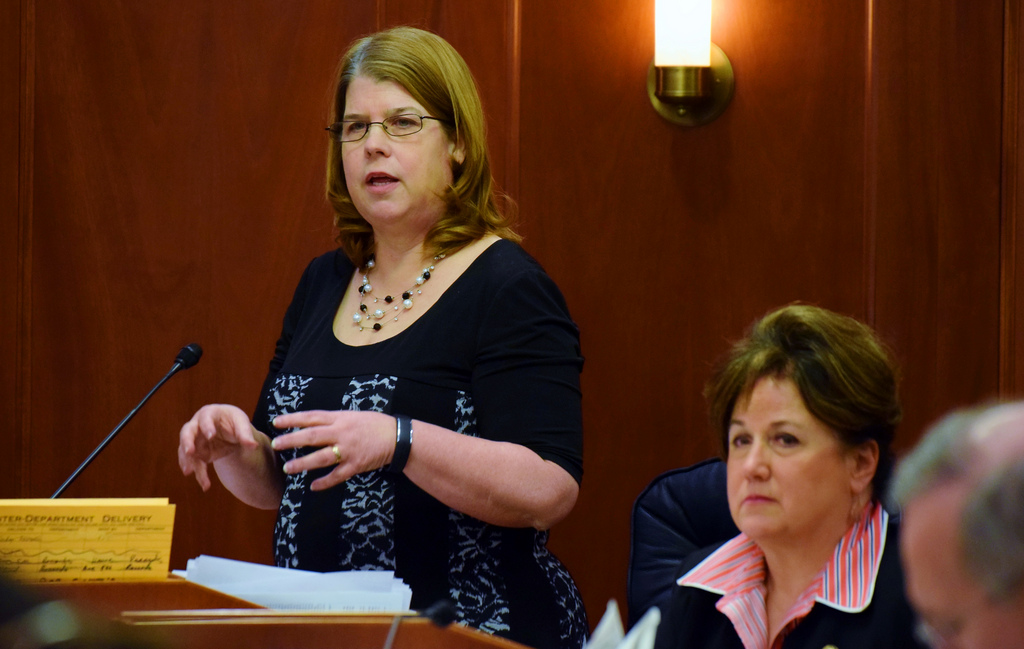
Rep. Tammie Wilson addresses the Alaska House of Representatives, March 12, 2014. (Photo by Skip Gray/Gavel Alaska)

Statewide there are more than 2,500 children living with relatives or in foster homes. More than 40 percent are in Anchorage and about of quarter of them live in Southcentral. It seems clear to Rep. Tammie Wilson, R-North Pole, that the policies governing the Office of Children’s Services need a second look. Wilson is a member of the House Health and Social Services Finance Subcommittee.

“We’re investigating many cases that have come to my office showing a pattern of abusive discretion of their department,” says Wilson.

Wilson says her office is still collecting evidence to justify an investigation. She claims she’s heard hundreds of problematic stories, many with common elements: caseworkers removing children without evidence of a threat to safety, not giving biological families priority when placing children in a new home, and constantly changing criteria for families to regain custody of their children.

Wilson says when she began investigating these stories she expected that finding evidence to support removing a child from a home would be the easiest part.

“They take the children from just an allegation and we can’t even figure out how they’re substantiating it. We do know that once an allegation is made, it becomes the parents’ obligation to prove that it didn’t happen,” says Wilson.

Amanda Metivier is the director of Facing Foster Care in Alaska, an advocacy group for foster kids. Metivier is a former foster child and now a foster parent. She says in Alaska a case worker’s opinion is all it takes to remove children from a home, but she also says reasons for removal are usually legitimate.

“The reason why children come into the child welfare system is because of issues of safety at home,” says Metivier.

Those issues include neglect, abuse and substance abuse.

“The caseworkers that come to work for OCS are not in it because they hate families. They’re in it because they care and they want to do the right thing. It’s really hard to keep up when you have 20-30 cases,” says Metivier.

She says on average caseworkers at OCS last about 18 months. She adds that nearly half of children who enter the system do go back home. State employees are tasked with helping families solve their problems so their kids can return, but federal standards only leave them one to two years to reach that point.

“So if children are in foster care for … 15 of the most recent 22 months (as determined by federal law), then the state has to move towards termination of parental rights, and then move toward adoption to ensure that children are moving into permanent families,” says Metivier. “Every case is unique but I feel like the goal is always for a child to go home; but there are lots of reasons why a child might linger in the system.”

Wilson says this is where it seems the state is falling short.

“Making sure that the classes are available to the parents; making sure it’s clear exactly what it’s going to take to (go from) supervised visits, to unsupervised visits, to finally getting them back in the home,” says Wilson. “Just as we seem to have gotten everything done that is requested, all of the sudden there’s a whole other list that we need to do.”

Metivier says parents do see inconsistencies for a number of reasons. Alaska is young and the child welfare policies are underdeveloped compared to in other states, caseworker turnover is extremely high and there’s a shortage in people trained to be social workers. But these problems are not secrets.

“Every couple of years the federal government does what is called the Child and Family Services review and they measure based on federal standards: safety, permanency and well being,” says Metivier.

The review compares Alaska to a national standard, and then a plan is generated to show how the state can improve. In 2014, the state adopted a plan built on results from a 2008 last federal review. Metivier thinks a grand jury investigation would mirror many of the conclusions drawn during that 2008 review. Wilson is convinced an investigation is necessary but it’s going to take several weeks for her to collect enough evidence to justify assembling a grand jury. The Office of Children’s Services was contacted for this story but did not return a request for comment.

Site notifications
Update notification options
Subscribe to notifications