Health

Towns take on new federal maritime emission limits

Smoke comes out of a Celebrity Cruise Line  ship stack as it sails into Juneau today (July 30). New EPA rules require cleaner fuel and fewer emissions.

Some Alaska communities are pushing back against a new requirement that ships sailing within 200 miles of the coast burn cleaner fuel. They say the rule, which goes into effect Wednesday, Aug.1st, will hurt cruise traffic and increase shipping costs.

One community is Skagway, where tourism dominates the summer economy.

“It takes years to get a cruise line. And it takes a second to drive one away,” says Steve Hites, owner of the Skagway Streetcar Company and a member of the town’s Port Commission.

He’s telling Skagway’s assembly about new air-emission limits set by the federal Environmental Protection Agency. They cover ships in coastal Emission Control Areas, also called ECAs.

Hites says cleaner fuel is more expensive, and cruise lines will pass that on to customers.

“The cost of the ECA on a cruise ticket could be $150, or three times the cost of the Alaska head tax. We lost five big ships because of the head tax. By extrapolation, will we lose 15 ships?” he asks.

Click here for iFriendly audio

Skagway’s assembly passed a resolution Hites asked for by a unanimous vote. It calls for state officials to fight the new requirement, which lowers sulfur dioxide emissions within 200 miles of shore.

The northern Lynn Canal community is not alone. Haines and Sitka are among other Southeast towns passing similar resolutions. (Read the Sitka resolution.)

Anchorage Mayor Dan Sullivan also issued a statement saying the rules could impact barge traffic. And U.S. Senator Lisa Murkowski took to her chamber’s floor to point out that rural Alaska would see the highest price hikes from more expensive shipping.

“The EPA’s one-size fits all approach to environment regulation. Perhaps you can’t quite shoehorn that in, in all situations,” Murkowski says.

The statements and resolutions came after the Parnell administration sued the EPA and other federal agencies to block or amend the rules.

The industry is also fighting the EPA. Alaska Cruise Association President John Binkley says ships might shift to other countries without such regulations.

“Alaska is an expensive destination because there are long distances to travel. So fuel becomes a much more important component of the overall cost of the ship,” Binkley says.

The EPA wouldn’t provide anyone for an interview. But a press release says sulfur pollution from bunker fuel, used by cruise ships and some barge lines, has been linked to respiratory illnesses. It says children, the elderly and asthmatics are among those most at risk. (Read some history of the emissions issue.)

Some Alaskans support that approach.

“Compared to having a tremendous amount of air pollution in Alaska waters, personally, I think that it’s worth it,” says Gershon Cohen, a Haines clean-water-and-air activist who’s been involved in cruise ship issues.

“It’s not going to come out of the cruise industry’s pocket one way or another. They’re going to pass that cost on the consumers. And for the thousands that the consumers are spending, I don’t think they’re really going to ever notice,” Cohen says.

Cohen says the real issue should be reducing dangerous pollution. He says it’s clearly visible as ships sail between Skagway, Juneau and points south and west.

“There is a pall over Lynn Canal. There is a tremendous amount of air pollution there. A lot of folks in Skagway are concerned. They saying the air pollution is killing the trees above Dewey Lake. So, if we’re killing people in our coastal communities from air pollution from ships, that this is probably like a pretty good idea to take care of it and make them use cleaner fuel,” he says.

The cruise industry says it will comply, but wants the EPA to enact an alternative plan that would cost less money.

While some barge lines, such as Totem Ocean Trailer Express, will be affected, others will not.

“In the Southeast market, Ketchikan all the way to Haines and Skagway, no,” says Kevin Anderson, president of Seattle-based Alaska Marine Lines. “Our tugboats burn diesel and these regulations are not going to affect us. So there’s not going to be an added fuel surcharge because of that.”

The state ferry system is also not affected. Marine highway chief Mike Neussl says the change was made years ago.

“It wasn’t a big switch and the switch that the marine highways made was not in direct response to this upcoming implementation of the ECA,” he says.

There’s another way the emission limits could affect shipping and travel. Binkley of the cruise association suggests they could increase competition among buyers.

“There will be more competition for the ultra-low-sulfur diesel, like is burned in trucks and whatnot. Presumably the price will go up for that as there’s more demand for that part of the barrel of oil that’s refined,” Binkley says.

Canada and a number of other nations are also imposing the new standards, which are part of an international treaty.

Opponents worry that impacts will be far worse in 2015. That’s when the EPA will further limit fuel sulfur content by a factor of 10.


BRH earns accreditation

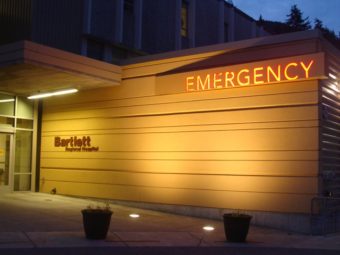
Bartlett Regional Hospital has earned accreditation through the Joint Commission.

The non-profit independent organization accredits more than 19,000 health care organizations and programs in the U.S.

The Joint Commission has given the city-owned hospital its trademarked “Gold Seal of Approval” for compliance with the Commission’s national standards for hospital quality and safety.

According to Joint Commission spokesman Bret Coons, the Bartlett survey was unannounced and took place earlier this month. He said the Joint Commission conducts on-site surveys every 18 to 36 months and last visited Bartlett in 2009.

“Ideally this is enough of an unannounced time frame that the organization is working to constantly keep their accreditation standards in full compliance,” he said.

Once on-site, Joint Commission surveyors rate a range of hospital functions from the care environment to emergency services, medication management, medical staff, and treatment as well as a number of other criteria, Coons said. The surveyors also follow a patient through care, in what’s called Tracer Methodology.

“The tracer allows the surveyor, or surveyors, to actually follow a patient’s experience at the organization. Now whether that’s done through files or actually a patient that is being treated onsite at the time the survey is going on is up to the surveyors and the organization as well,” he said. “Obviously you’d have to get permission from the patient.”

Among other benefits, the Joint Commission says accreditation strengthens community confidence in a health care organization, helps recruit staff, and is a prerequisite for insurance reimbursement for some procedures.

Trauma Center certification
Earlier this week, BRH was certified by the Alaska Department of Health and Social Services as a Level IV Trauma Center. That means the Juneau hospital can provide initial evaluation, stabilize critical patients and transfer them to higher level trauma centers.

Data indicates a 25 percent increase in survival rate of seriously injured patients when they are treated at a designated trauma center, according to HSS. The highest designation in Alaska is level two at the Alaska Native Medical Center in Anchorage. Alaska has the second highest trauma death rate in the U.S.

Parnell administration rejects state-run health insurance exchange

Alaska Governor Sean Parnell is rejecting the idea of a state-run insurance exchange under the federal Affordable Care Act.

An exchange is a marketplace that provides information on various coverage options.

Parnell says using state funds and personnel to design and implement a program would be the most expensive means of establishing an exchange in Alaska. The governor says federally mandated programs should be paid for with federal dollars.

In 2011, the Parnell administration declined to apply for a federal grant that would have provided up to $1-million to help the state set up an exchange. At the time, the governor cited his belief that the Affordable Care Act was unconstitutional.

Alaska was one of the states that sued to strike down the act, most of which was recently upheld by the U.S. Supreme Court.

Under the health care overhaul, the federal government could step in and establish exchanges in states where none exist.

‘Flesh-eating bacteria’ infections rare, hospital official says

Bartlett Regional Hospital’s Infection Prevention Coordinator says Juneau residents have no reason to be concerned about a case of necrotizing fasciitis – the so-called “flesh-eating bacteria” – discovered in a patient recently.

Kim Vermedal says the deadly condition results when one of several different types of bacteria gets into the body and produces toxins and enzymes that destroy skin tissue. She says one type of bacteria associated with the infection is the same kind that causes strep throat.

“What can happen is you can get a wound, like a cut, and the bacteria then can enter our bodies, and that sets up a whole process where you get the necrotizing fasciitis,” Vermedal says.

Fortunately, full-blown infection is extremely rare. Not only do you need to have an open sore for the bacteria to get inside your body, but people with healthy immune systems are usually able to fight off the disease.

In most cases, Vermedal says simple hand washing can all but eliminate the risk of developing necrotizing fasciitis.

“The most important thing that people can do to prevent any kind of infections is wash your hands often. And always keep cuts and scrapes and burns and bug bites clean,” Vermedal says. “Sometimes people get a cut, and it’s, you know, the next day they think about cleaning it. So that’s something you don’t want to let go. You want to clean that right away.”

Vermedal says Bartlett has other precautions in place to prevent the spread of infections. That includes isolating patients with certain symptoms, like diarrhea or flu-like conditions. She says all hospital employees are required to get regular training on infection control, including proper hand washing practices.

“During new employee orientation, they’re given information about how we handle our infection prevention here in the hospital, and we have ongoing education that’s required,” she says.

Privacy laws prevent Vermedal from discussing the specific case of Juneau resident Ruben Pereyra, who was medevac’d from Bartlett two weeks ago with symptoms of necrotizing fasciitis. But she says she’s unaware of any other cases of the infection in Juneau.

A spokeswoman for Seattle’s Harborview Medical Center would only say Pereyra remains in satisfactory condition.

Despite drop, Alaska STD infection rates still higher than national average

The Department of Health and Social Services released a health bulletin on June 21 documenting changes in the rates of chlamydia and gonorrhea infections in Alaska.

Alaska had the highest chlamydia infection rates in the United States in 2010 and 2011, and has consistently had the first or second highest rate in the nation since 2000, according to the report.

In 2011, there were 5,813 cases of chlamydia infections reported. Of those cases, 84 percent were under the age of 30.

The report also noted that despite being one of the highest rates in the nation this is a decrease of 5 percent from 2010 and the largest annual decrease ever recorded for Alaska.

Rates of infection declined everywhere in the state except the Gulf Coast region.

Chlamydia infections often coincide with gonorrhea infections.

Alaska saw an outbreak of gonorrhea in 2008 which peaked in 2010 and declined last year with 993 cases reported.

While Alaska still has rates higher than the national average, it was a 22 percent drop in cases between 2010 and 2011.

However, while reports decreased around the state, the number of cases increased in Interior Alaska and the Gulf Coast.

Both infections can result in pre-term labor, pelvic inflammatory disease, ectopic pregnancy and infertility in women and men among other problems.

The Department of Health and Social services recommends people at risk of sexually transmitted diseases use condoms correctly and consistently and limit the number of sexual partners.


New Bartlett CEO ready to learn ‘lay of the land’

The new CEO for Juneau’s Bartlett Regional Hospital doesn’t plan to make major changes right away.

Chris Harff was named to the city-owned facility’s top post Friday by the hospital’s board of directors, which is appointed by the CBJ Assembly. She’ll start in mid-August, and says there will be a learning curve as she transitions into the job.

KTOO’s Casey Kelly has more.

Chris Harff says quick changes aren’t her style. She says she’ll need some time to get up to speed and used to things at Bartlett.

“This is going to be a big adjustment, just with new leadership alone,” says Harff. “But I think the lesson of the day is to learn as much about Bartlett, the community of Juneau, learn the lay of the land before any changes are made. Because I don’t think coming in and changing anything for change itself does any good.”

Based on what she knows from interviewing for the job, Harff believes Bartlett is a solid organization in a stable financial position. But in general, she says the health care community owes it to the country to reduce costs and be more efficient.

“All rocks need to be lifted and uncovered,” Harff says. “And you got to look at it and kind of figure out where it is in particular for Bartlett.”

Harff has a nursing degree and an MBA from the University of Minnesota, and a law degree from William Mitchell College of Law in St. Paul, Minnesota.

The 50-year-old has been CEO at the 25-bed Sanford Medical Center in Thief River Falls for the past seven years. The small hospital also has a 10-bed behavioral health unit and two outpatient clinics. By comparison, Bartlett has 43 acute care, 12 Mental Health, and 16 chemical dependency beds.

Before Sanford, Harff was chief operating officer at another hospital in Minnesota. She’s also been director of nursing at two facilities. Early in her career she was a trauma nurse at Seattle’s Harborview Medical Center, where she says she learned the value of connecting with patients and families on a personal level.

“After the patient is stabilized, then it’s working with families and getting the pieces picked up so they can go back to as much of a normal life as possible,” says Harff.

Kristen Bomengen, who led the hospital board of directors’ search committee, says members wanted a CEO who had worked in a clinical setting.

“We were hoping to get in someone who was experienced at balancing the many different factors that a CEO will have to balance,” Bomengen says. “And someone who could speak the language so to speak about the clinical experience. We were able to find both of those in this particular candidate.”

The Bartlett board decided late last year to hire its own CEO after more than two decades of an outside management company running the hospital. Bomengen says the board wanted the hospital’s leadership to be more responsive to the local community.

Harff was one of three finalists for the top job. The other candidates took their names out of consideration before the hiring process was complete. Still, Bomengen says Harff really impressed the board during the final assessment center interview, where she was asked to solve simulated problems in a real life setting.

“We knew that all of the candidates were well-qualified and were reasonable for us to consider,” says Bomengen. “And then it was simply a matter of getting to know more about their style and their approach to things to determine what the best fit would be. And I think we have the best fit.”

Harff and her husband have two daughters in high school and a son in college. She’ll be paid $262,000 a year, which Bomengen says is about average for a hospital CEO in Alaska.

Site notifications
Update notification options
Subscribe to notifications