Military

Missile-defense system contractor Boeing hails successful test of new ‘kill vehicle’

Alaska Guardsman train, conduct missile defense missions.
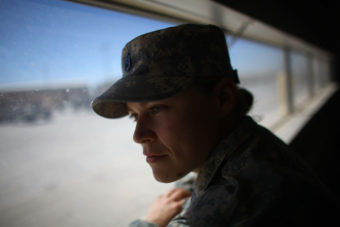
A Military Police Officer with Alpha Company, 49th Missile Defense Battalion, conducts a hasty traffic control point on the Missile Defense Complex as part of the recent force protection exercise on Fort Greely, Alaska. The Soldiers participating in the exercise are able to train on this operational missile defense site and concurrently sustain real world mission operations. (Photo by Sgt. Jack W. Carlson III, 49th Missile Defense Battalion)

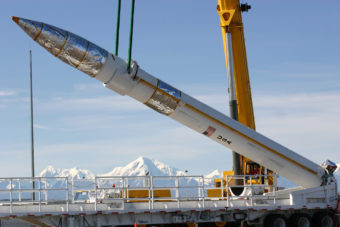
The U.S. Missile Defense Agency successfully tested an anti-missile warhead over the weekend. The test marked the first time in over two years that missiles like the ones at Fort Greely have been launched. It sets the stage for missile-defense contractor Boeing to conduct a full-scale test later this year.

Boeing spokeswoman Jessica Carlton says Saturday’s test of the ground-based interceptor rocket and its so-called “kill vehicle” that destroys incoming enemy missiles, was a smashing success – even though the test didn’t involve smashing a target in space, as it’s designed to do

“Getting back to flight testing has been the number-one priority for us,” she said, “and we’ve been working closely with our customers as well as our industry teammates to get to yesterday’s test.”

Missile Defense Agency officials declared the test successful because it proved the operability of a new-generation kill vehicle that is launched from the ground-based interceptor missile when it reaches outer space. The kill vehicle is designed to collide with and destroy an incoming enemy missile in space.

The missile defense base at Fort Greely is the hub of the nation’s Ground-based Midcourse missile-defense system. About 25 interceptor missiles are based at Greely.

The last time the system was tested, in December 2010, the kill vehicle malfunctioned and failed to intercept the dummy target missile. According to Bloomberg News, the $35 billion ground-based midcourse defense system hasn’t successfully intercepted a target missile since 2008. Bloomberg says the system has logged a 53 percent rate of success during several years of testing.

Carlton says even though testing had been suspended over the past couple of years, the system has remained up and running.

“Throughout our work, and throughout returning to flight, throughout the design solutions, GMD has always remained on alert,” she said. “This system is 24/7/365.”

Missile Defense officials say they’ll test the new and improved kill vehicle in upcoming testing involving a target missile later this year.

Bloomberg News says 10 of those missiles at Greely have been fitted with the new-generation kill vehicle that was successfully tested Saturday.

Retired USCGC Storis added to National Register of Historic Places

Storis
The retired USCGC Storis (middle) sits in storage at the National Defense Reserve Fleet shipyard at Suisun Bay, California. Photo courtesy Storis Museum and Educational Center.

The retired U.S. Coast Guard Cutter Storis was recently added to the National Register of Historic Places, perhaps bolstering its chances of becoming a museum on Juneau’s downtown waterfront.

While the listing does not guarantee anything, Joe Geldhof with the nonprofit Storis Museum and Educational Center says it’s another step toward bringing the ship to the Capital City.

“It’s an acknowledgment that the Storis is a truly historic ship, worthy of preservation and protection,” Geldhof says.

The Storis is currently mothballed at a shipyard in California.

Since being decommissioned in 2007, Alaska’s Congressional delegation has made several attempts to transfer ownership of the ship to the museum group. Geldhof thinks this is the year it finally clears the political gridlock in Washington, D.C.

“Things seem to be breaking free. So, we’re optimistic that in 2013 Congress will come through and authorize transfer,” he says.

The Storis is a medium endurance cutter, launched in 1942, and originally assigned to the North Atlantic during World War II.

She was homeported on the East Coast until 1948, when the Coast Guard transferred her to Juneau.

In 1957, the Storis became the first American flagged ship to sail the Northwest Passage through the Arctic Ocean. Following that journey, the Storis was transferred to Kodiak, which remained her homeport until being decommissioned.

The ship was officially added to the National Register of Historic Places on December 31st. Geldhof says it may help the museum group with fundraising when and if ownership is transferred.

Crew assesses inside of Kulluk rig

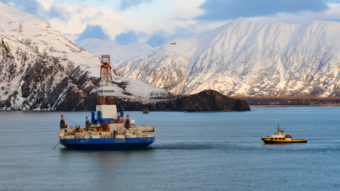
A salvage team aboard the conical drilling unit Kulluk moves an emergency towing system delivered the Kulluk by a Coast Guard MH-60 Jayhawk helicopter Wednesday, Jan. 2, 2013. The Kulluk is located 40 miles southwest of Kodiak City, Alaska, on the shore of Sitkalidak Island. U.S. Coast Guard photo by Petty Officer 1st Class Travis Marsh

A five-person assessment team spent about three hours aboard the grounded Shell drilling rig Kulluk yesterday (Wednesday) afternoon. Weather conditions around Sitkalidak Island improved enough that a Coast Guard helicopter was able to lower the men and an emergency towing package by hoist to the deck of the rig.

Shell’s Alaska Venture Operations Manager Shawn Churchfield said the preliminary report from the crew showed a mostly intact interior.

“The salvage team was able to get to some areas below the decks. They were time limited, so they did not do the full assessment. They were able to check into some of the voids and some of the tanks. They looked into the fuel,” he said. “The full report and the full assessment is being worked at the moment. Most of the tanks were mostly intact, but they did see one that was sucking and blowing a little bit one of the void spaces.”

That would indicate a breech into the void, or empty, space where wave action was causing air to rush in and out. There was no indication it was a fuel tank.

Steve Russell of the Alaska Department of Environmental Conservation was on an overflight of the rig on Wednesday afternoon.

“The Kulluk was drawing approximately 30 feet of water when it went aground, so it is in a deeper water there,” he said. “The beach behind the Kulluk I would say is a large cobble beach, with mixed sand and gravel. In that area there’s not huge rocks, at least that were visible, on the beach.”

He said on the overflight that no fuel spill was spotted and the only wildlife seen was a few birds:

Rear Adm. Thomas Ostebo, commander, 17th Coast Guard District, and D17 Incident Management Team commander, peers out the window of a Coast Guard Air Station Kodiak, Alaska, HC-130 Hercules airplane as the crew flies over the grounded conical drilling unit Kulluk on the southeast side of Sitkalidak Island Jan. 1, 2013. Ostebo, the first senior federal official to visit the site, flew aboard two Coast Guard aircraft to ensure he had full situational awareness of the incident, which occurred in his area of responsibility. U.S. Coast Guard photo by Petty Officer 3rd Class Jonathan Klingenberg.

“We did not observe on our flight anyway, any wildlife in that area at all,” he said. “And then approximately one mile, one-and-a-half north of the platform we got pretty close to the beach to try and identify anything that would give us a sign of any environmental impact, whether that was debris from the platform, as the captain has spoken [of]. We did see the lifeboats there. We did not see any other debris that we could identify back to the rig.”

Russell said the lifeboats from the Kulluk gave him a good idea of currents in the area, and where any potential pollution might travel.

Captain Paul Mahler, the federal on-scene coordinator, said it was too early to speculate on a time frame for getting the Kulluk off the beach or even how that might be accomplished.

The Unified Command yesterday named Smit Salvage as the company that will attempt to free the Kulluk. Smit worked on the salvage of the Selendang Ayu on Unalaska Island in 2004, and assisted in the Costa Concordia cruise ship salvage off the coast of Italy last year.

A second evaluation team will be landed on the Kulluk today, weather permitting.

Tug towing Shell’s Kulluk drill rig experiences engine problems

Shell's Kulluk drill rig
Shell Oil’s Kulluk drill rig in Dutch Harbor. Photo courtesy Shell Oil.

Problems continue for Shell Oil’s mobile drilling rigs in Alaska waters. This time it’s the Kulluk, which left Dutch Harbor last Friday.

The tug towing the drilling rig is having engine trouble about 50 miles south of Kodiak Island.

Coast Guard Spokesman David Mosley in Anchorage says the tug Aiviq began experiencing engine problems late last night. Mosley says it has enough power to maintain its current position, about 48 hours from landfall.

The Kodiak-based cutter Alex Haley arrived on scene early this morning and is standing by to assist if the situation deteriorates. Mosley says two tugs – the Guardsman and the Nanuk – are on their way from Seward, and should arrive by early afternoon.

Current weather on scene includes 40 mile per hour winds and 20 foot seas.

Engine troubles haven’t been the only issue on this voyage. Earlier Thursday the tow line between the Aiviq and Kulluk snapped in rough seas, but Mosley says the crew was able to re-establish the tow.

The other drill rig leased by Shell this year, the Noble Discoverer, was held by the Coast Guard in Seward until last week because of safety and pollution control issues. It was released on December 19th, but remains in Seward.

Coast Guard finds safety violations on Shell rig

The oil drilling ship Noble Discoverer, seen April 5, 2012 in the Port of Seattle before its trip to Alaska for the summer Arctic drilling season.
The oil drilling ship Noble Discoverer, seen April 5, 2012 in the Port of Seattle before its trip to Alaska for the summer Arctic drilling season. (Photo by James Brooks)

Shell’s Noble Discoverer drill rig has had several high-profile mishaps in 2012. Now, the Coast Guard says it found problems with the rig’s on-board systems during an emergency inspection in Seward.

Chief Petty Officer Kip Wadlow says the vessel was on the Coast Guard’s radar because of a stack fire that broke out while the rig was tied up in Unalaska in November. Then the Noble Discoverer headed for Seward, where Wadlow says it had problems with its propulsion system. Those two incidents, in such close proximity, prompted the Coast Guard to send safety inspectors aboard.

The inspectors flagged 16 items, including threats to crew safety and the marine environment.

“There were two main issues,” Wadlow says. “Number one, they had several issues concerning the safety of the crew being able to conduct their duties on board the vessel. And then, the second issue was discrepancies with the pollution prevention equipment on board the vessel. That also had to be addressed.”

Wadlow says the violations are still under investigation, so he couldn’t give any more details.

The Coast Guard ordered a “port state control detention” for the Noble Discoverer, meaning that the vessel wasn’t allowed to leave Seward until it was repaired. Wadlow says the crew brought the rig up to code, and the detention was lifted on December 19, after three weeks.

The Noble Discoverer is still in Seward, getting ready to head to a Seattle-area shipyard for the rest of the winter.

Shell spokesman Curtis Smith says that ten safety problems are still outstanding, and they’ll be fixed before the vessel heads back to the Arctic again. Smith says Shell is taking the violations seriously, but he stresses that they all concern the rig’s marine systems, and not Shell’s drilling activity.

The Swiss-based Noble Corporation, which owns the Discoverer rig, says it’s started an internal investigation. The company says it will work with Shell and the Coast Guard to upgrade its vessel management procedures before the start of the next drilling season.

Shell has reserved the Noble Discoverer through February 2014, renting it at a rate of $240,000 a day.

Congress passes the National Defense Authorization Act

Congress has once again passed the National Defense Authorization Act. It’s the annual defense policy bill.

The act authorizes continued missile defense operations.

In 2010 the Defense Department tested its missile defense shield. The goal is to intercept any incoming warheads – most likely form Iran or North Korea. The test two years ago failed when the missile missed the dummy warhead.

So this year, Congress authorized increased funding to study what went wrong…and to fix the problems. That’s good news for Fort Greeley, which is home to one of two U.S. based missile defense systems.

The authorization calls for an increased role at the Army installation near Fairbanks, with the chance to add to the total amount of interceptor missiles there.

The bill grants the go-ahead for a Pentagon study on building a new missile defense site on the East Coast of the continental U.S.

The President still needs to sign off on the conference report.


Site notifications
Update notification options
Subscribe to notifications