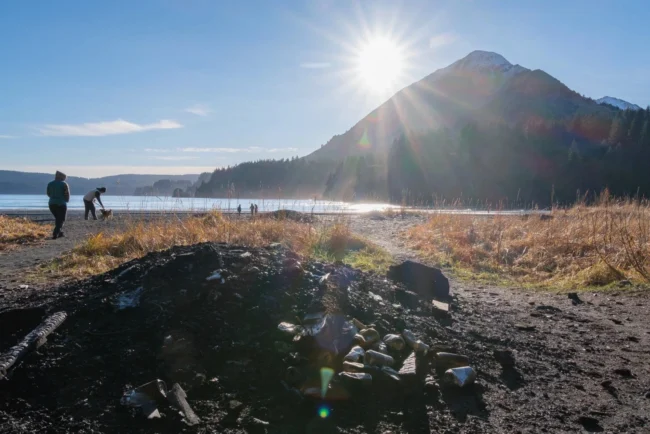
One of several ash piles near the entrance to White Sands Beach near Kodiak. The beach is a popular spot for bonfires, fishing, bear watching, walks, or letting dogs run around off-leash. (Brian Venua/KMXT)
A Kodiak grand jury has indicted a 16-year-old in connection with an explosion last month at a popular beach that injured 11 teenagers.
The state Department of Law said in a press release that Kavik Skonberg, a high school junior, was indicted Thursday on felony charges. He’s being charged as an adult for multiple counts of first- and third-degree assault for allegedly causing the explosion at a party at White Sands Beach in Kodiak.
The indictment comes after about a month-long investigation from Alaska State Troopers. The incident occurred at a popular recreation area after a 55-gallon fuel drum was thrown into a fire in the early morning hours on Nov. 10, causing five teens to be medevaced to Anchorage for severe burns. Some have already returned to the island, however others are still being treated in Anchorage.
Several fundraisers have been held locally to support the victims. It is unknown if Skonberg will also be held responsible for any of the treatment or counseling costs on top of the criminal charges.
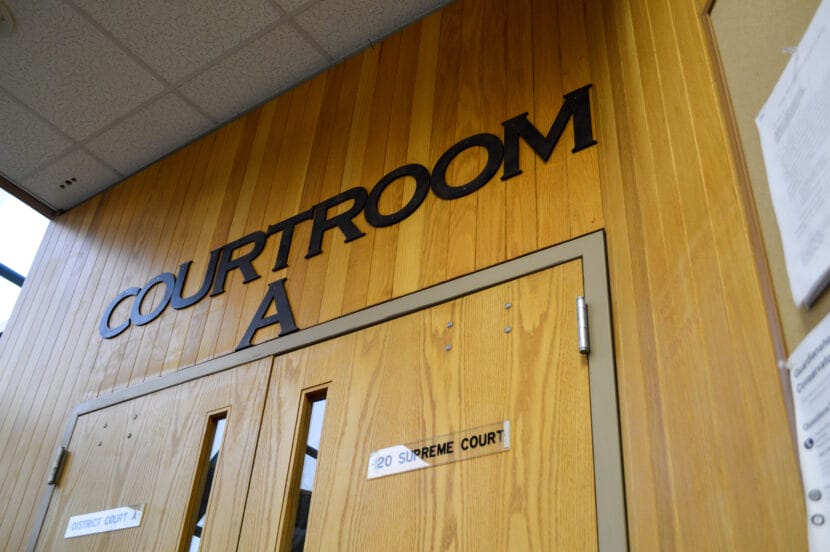
Courtroom A at the Dimond Courthouse in Juneau on Dec. 11, 2024. (Photo by Yvonne Krumrey/KTOO).
The criminal case against Jeffrey Fultz, the chiropractor accused of assaulting more than a dozen women under the guise of medical care, is on track to go to trial in February after three years and 32 readiness hearings.
At a hearing Wednesday, Assistant District Attorney Jessalyn Gillum said the repeated delays in this case have taken a toll on the alleged victims who call in to testify at most hearings.
“The idea of just sort of delaying for delay’s sake does sometimes have an adverse effect on witnesses’ willingness to participate,” she said. “They get tired, they get fed up.”
Police arrested Fultz in 2021 on three charges of sexual assault. Those charges are based on accusations that he assaulted patients who sought chiropractic care while he worked for Southeast Alaska Regional Health Consortium. More women have come forward since. A total of 14 women have now accused Fultz of assault. Some of the crimes date back more than a decade.
A number of factors have delayed the trial, including the case’s complexity, the number of witnesses, and a backlog of criminal cases in Juneau during the COVID-19 pandemic. Over the last three years, the first judge assigned to the case retired, the investigating Juneau police officer died, and Fultz’s attorney was deemed “mentally unable” to continue with the case.
Fultz has been living in Colorado since he posted bail three years ago. He has made one in-person appearance in court since.
Fultz’s attorney James Christie took on the case last January. He has requested that the witnesses who call in to court to testify be publicly identified and has filed a motion to request broader access to witnesses’ medical records. The judge denied both requests.
Christie has also argued at each hearing that his team hasn’t had enough time to review the case.
“I understand that everyone on the line has rights here and my client’s constitutional right to a fair trial trumps all of them,” he said on Wednesday.
Presiding Judge Larry Woolford scheduled hearings around a Feb. 18 trial date.
Gillum acknowledged that this isn’t a simple case, but said the case has been delayed for three years and it has to go to trial.
“It is the court’s responsibility at the end of the day, I think, to ensure that all the rights of individuals involved are being protected and also balanced,” she said. “Defendants have the right to a fair trial. They have the right to a speedy trial. Victims also have rights under the Victim’s Rights Act.”
One alleged victim called in to Wednesday’s hearing. She said she has been waiting for this trial to happen for a long time, and it’s been hard on her.
“Each time we have these hearings and it keeps getting continued, it is just a constant retraumatization of the victims,” she said. “It feels like it’s never going to be resolved and the longer it goes the more it feels like we don’t matter. It also feels like he gets to live his life and be happy.”
Judge Woolford scheduled a readiness hearing for Dec. 27 at 9 a.m. He says he has blocked out a five week trial starting on Feb. 18, 2025.
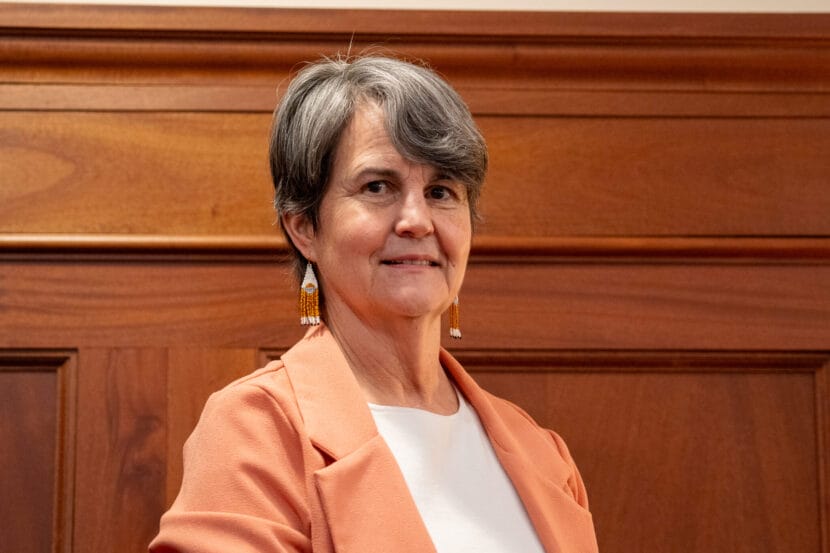
Alaska Supreme Court Justice Susan Carney stands during Chief Justice Peter Maassen’s State of the Judiciary speech to the Legislature on Feb. 7, 2024. (Eric STone/Alaska Public Media)
The Alaska Supreme Court will have a new chief justice early next year. Justice Susan Carney will replace outgoing Chief Justice Peter Maassen when he retires in mid-January.
Carney is a Harvard Law School graduate who clerked for former Alaska Supreme Court Justice Jay Rabinowitz in the late ‘80s. She spent a decade as an assistant public defender in Anchorage, Fairbanks and villages in Interior Alaska. In 1998, Carney moved to the Office of Public Advocacy before being appointed to the Supreme Court. She replaced former Justice Dana Fabe, who in 1996 became the first woman appointed to the Alaska Supreme Court and was later its first female chief justice.
Like all judges in Alaska, Carney was selected by Walker from a shortlist of nominees produced by the nonpartisan Alaska Judicial Council. That’s the independent commission that names potential candidates for the bench under the Alaska Constitution.
Carney will serve a three-year term as chief justice after winning a majority vote of the five-member Alaska Supreme Court. She’ll serve as the administrative head of the Alaska Court System and will likely preside over the first majority-female Alaska Supreme Court, since all three attorneys nominated to replace Maassen are women. Carney will also be the only judge on the bench not appointed by Gov. Mike Dunleavy.
State judges in Alaska face mandatory retirement when they reach age 70. Maassen will retire on January 13, one day short of his 70th birthday.
Juneau Police Department vehicles park in downtown Juneau on Thursday, June 13, 2024. (Clarise Larson/KTOO)
A Juneau man has been charged with second-degree murder after a 1-month-old infant in his care died from a head injury earlier this year.
Police arrested 44-year-old James White on Friday. He was already at Lemon Creek Correctional Center after being arrested for an alleged domestic violence assault a day prior.
According to the Juneau Police Department, emergency responders were called to a hotel in Juneau in April after receiving a report that an infant wasn’t breathing.
After the baby girl arrived at Bartlett Regional Hospital, she was pronounced dead due to “significant physical injuries to the head.” An autopsy showed blunt force injury of the skull as the cause of death.
White was the infant’s caregiver at the time and was in the hotel room with her and three other children. According to charging documents, police said he smelled of alcohol. He denied any wrongdoing at the time and was not arrested.
According to an investigation by police, White believed the infant was not his biological child and was upset about taking care of her. He was in a relationship with the infant’s mother who was working at the time of the incident. During an interview with White last week, police say they confronted him about his role in the infant’s death and that he admitted it was not premeditated.
Deputy Police Chief Krag Campbell said in an email Monday that White’s arrest seven months after the baby’s death comes after “an extensive amount of interviews, evidence collection, and planning to develop a solid case that meets probable cause requirements.”
White made his first appearance for the murder charge at the Juneau courthouse on Friday. A preliminary hearing is scheduled for Nov. 25.
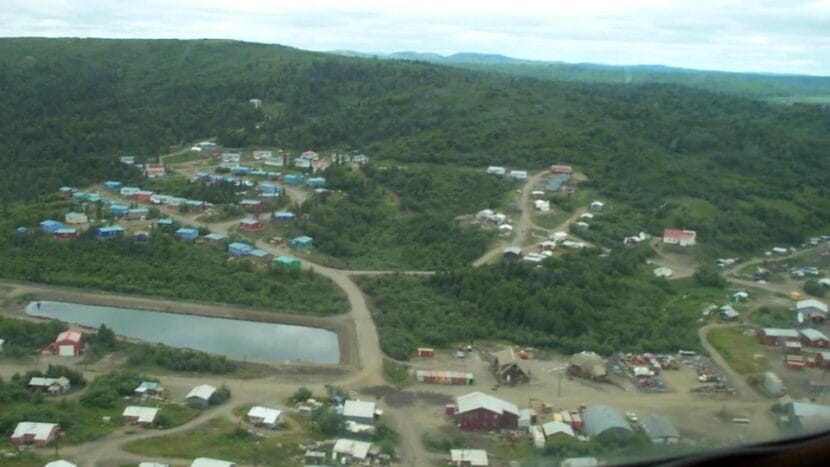
The lower Yukon River community of Pilot Station is seen in 2005. (Courtesy Amy Clapp/ARCUS)
The former mayor of the Yukon River community of Pilot Station has pleaded guilty to felony election interference.
As part of a plea agreement accepted on Nov. 14, 68-year-old Arthur Heckman Sr. faces five years of probation for one count of unlawful interference with an election. The charge relates to inducing or attempting to induce an election official to fail in the official’s duty by force, threat, intimidation, or offers of reward.
Heckman Sr. began serving as acting mayor of Pilot Station in May 2022 following the death of then-mayor Nicky Myers, according to the state Office of Special Prosecutions. Assistant Attorney General Erin McCarthy, who prosecuted the case, said that Heckman Sr. broke state election laws in both of the municipal elections that followed.
“After the October 2022 election in Pilot Station, Heckman directed that the ballots be placed in a locked filing cabinet and not counted,” McCarthy said. “And then in October 2023, Heckman directed officials not to hold an election at all.”
Pilot Station City Clerk Ruthie Borromeo was indicted alongside Heckman Sr. in July, and still faces eight felony counts for alleged violations of state election laws for the same time period. Her next hearing is scheduled for Dec. 5 in Bethel Superior Court.
Borromeo is still serving as city clerk for Pilot Station. On Nov. 14, she confirmed that Heckman Sr. had resigned as acting mayor, and that a new mayor and new city council had been elected in municipal elections held on Oct. 1.
McCarthy, with the Office of Special Prosecutions, said that the community deserves recognition for bringing the election violations to light.
“It was investigated by the (Alaska) State Troopers, but the reason that this came to law enforcement attention was because the citizens of Pilot Station and the Pilot Station City Council brought it to their attention. And I think that’s really commendable,” McCarthy said.
The state dismissed seven other felony counts related to election violations as part of Heckman Sr.’s plea agreement. If he violates his probation, he could face up to a year in prison.
Heckman Sr.’s sentencing is scheduled for March 18 in Bethel Superior Court in Judge Nathaniel Peters’ courtroom.
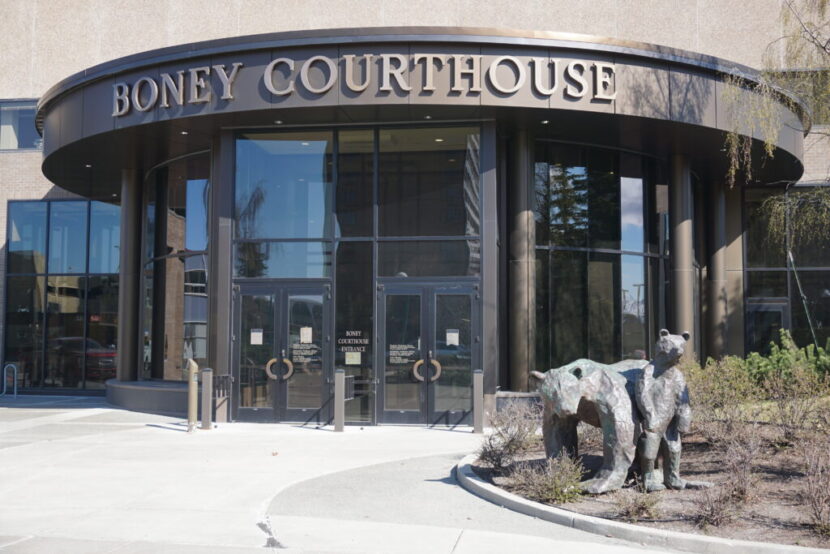
The Boney Courthouse building in Anchorage holds the Alaska Supreme Court chambers. (Photo by Yereth Rosen/Alaska Beacon)
The Alaska Judicial Council has nominated an Anchorage judge, an assistant attorney general and an expert in utilities law for an upcoming vacancy on the Alaska Supreme Court.
When Gov. Mike Dunleavy picks one of the three, he will create the first majority-female Supreme Court in Alaska history.
Kate Demarest, Josie Garton and Aimee Oravec were each nominated in unanimous votes by the six-member council, which will forward their names to Dunleavy for a final selection within 45 days. One member of the council recused themselves from voting on Oravec, who was nominated 5-0.
One of the three nominees will replace Justice Peter Maassen, who is scheduled to retire at the start of 2025. Maassen currently serves as chief justice, a position that’s elected by the court’s five members to a three-year term.
As chief justice, Maassen sits on the judicial council but votes only in case of a tie. That rare occurrence happened Thursday when the council split 3-3 on approving attorney Holly Wells as a fourth nominee. Maassen voted no, and Wells’ nomination was rejected.
Neither the council members nor Maassen explained their votes on Thursday. The council opened public testimony on Wednesday afternoon, but no one spoke for or against any of the nominees.
Demarest, an Alaska resident for 14 years and attorney for 16, is a senior assistant attorney general with the Alaska Department of Law, and has frequently represented the state in high-profile cases dealing with environmental and social issues.
She has a degree in chemical engineering, was a Peace Corps volunteer in South Africa, and worked as a commercial whitewater rafting guide in Utah.
Garton has been an attorney and an Alaska resident for 24 years and was named to a seat on the Anchorage Superior Court in 2018 by then-Gov. Bill Walker.
Before working as a judge, she was an assistant public defender and an attorney representing low-income victims of domestic violence in rural Alaska. In one pro bono case, she represented a torture victim who successfully applied for asylum in the United States through Catholic Social Services.
Oravec, an attorney and Alaska resident for 25 ½ years, is the lead attorney for Doyon Utilities LLC in Fairbanks. She’s the only one of the three nominees to live outside Anchorage.
She served for six years on the Judicial Council as an attorney member, ending her service in 2018. She was nominated by the council in 2022 for a prior opening on the Alaska Supreme Court, but Dunleavy declined to select her at that time.
As part of the review process, the council commissioned a statewide survey of registered attorneys, who are asked to rate the nominees’ fitness to serve as a judge.
Garton received the highest overall rating — 4.6 out of 5.0 — and had the most respondents to the survey, indicating that the score wasn’t the result of a low turnout.
Oravec scored a 4.2, and Demarest a 4.1.
Kate Vogel, who applied but was not selected as a nominee, scored a 4.3, the second-highest overall rating. Vogel is the first assistant United States attorney at the U.S. Attorney’s office in Anchorage.
When Dunleavy names Maassen’s successor, it will end a wave of retirements on Alaska’s high court. Between 2020, when the wave began, and February 2025, four of the court’s five members will have been termed out by the Alaska Constitution’s requirement that judges retire at age 70.
Close
Update notification options
Subscribe to notifications
Subscribe
Get notifications about news related to the topics you care about. You can unsubscribe anytime.