Public Safety

Missing Juneau woman is declared dead by court after 6 years

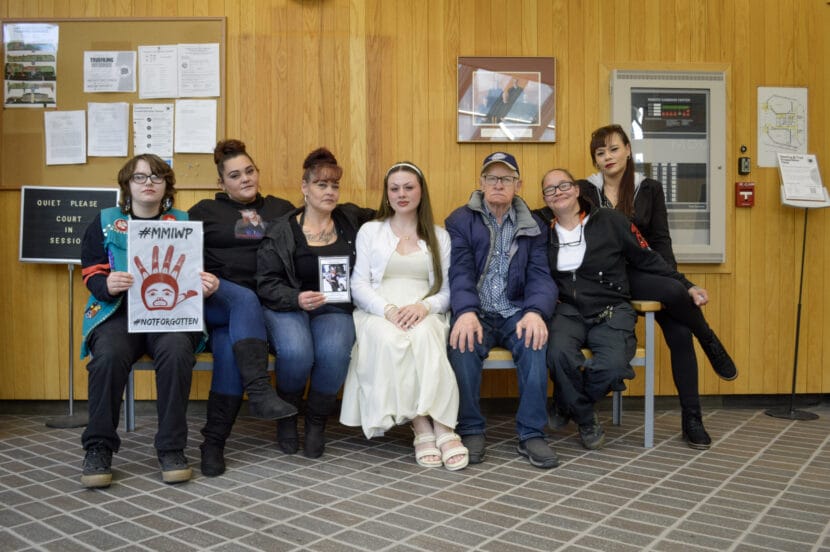
Tracy Day’s family at the Dimond Courthouse after the court declared her legally dead on June 17, 2025. (Photo by Yvonne Krumrey/KTOO)

A Juneau court declared a woman who has been missing for six years legally dead Tuesday, at the request of her family.

Her case was never solved. They sought the death declaration in the hopes of getting a chance to ask police about their investigation in front of an official audience, but that didn’t happen.

Tracy Lynn Day’s family hasn’t heard from her since Valentine’s Day 2019.

Six years later, in a Juneau courtroom, Judge Peggy McCoy presided over a jury of six through the proceedings to declare Day legally dead. 

“You’ve been called in as jurors today for a presumptive death hearing to consider the circumstances of the disappearance of Tracy Lynn Day and to determine whether she should be presumed dead,” McCoy told jurors. 

Day’s daughter Kaelyn Schneider petitioned for the declaration. She said the death declaration would help her family settle her estate but that’s not the main reason she came to the courthouse. She came in the hopes of getting answers from the Juneau Police Department and the justice system. 

Over the last few years, Schneider has been using social media to bring attention to her mother’s case by connecting it to Missing and Murdered Indigenous Peoples’ cases nationwide.

Day was Lingít and experiencing homelessness when she went missing. But Schneider said Day stayed in contact with her regularly. 

“We just wanted to tell her story in a legal setting and make JPD answer our questions,” she said to KTOO after the hearing. “That’s what this was about.” 

In the courtroom, Judge Peggy McCoy called Juneau police Detective Frank Dolan to the stand. He wasn’t the detective who originally investigated the case. The investigating detective is no longer with JPD. A spokesperson for the department said in an email that no officer is currently assigned to this case, but if there is new information, a detective will be assigned. 

McCoy asked Dolan questions about his knowledge of the case, and he summarized the evidence in the files. He said there was no evidence of Day leaving Juneau or of anyone seeing her after February 2019, and he testified that he doesn’t believe she is still alive based on the evidence he read. 

Schneider and her family planned to also ask Dolan questions themselves. But Judge McCoy said that in a death declaration hearing, only the judge and jury are able to question witnesses.

“All we’re trying to establish today is there’s no reason to believe that she’s still alive,” she told Schneider. 

McCoy also asked Schneider and other members of Day’s family about the last time they spoke to her and if they believe she is dead. They all said they haven’t seen or spoken with her since that Valentine’s Day, and they believe her to be dead.  

Later, Schneider said she had been preparing to give the court testimony and ask questions about parts of the case she doesn’t understand.

“I had all these questions that I was gonna ask,” she said later to KTOO. “I stayed up all night. I’ve been working on this for weeks.”

Schneider said police have denied her requests to access the police files about her mother’s case. JPD’s spokesperson said the department’s policy is that they don’t share police reports in open cases.

The family also wants to know if the case is still open or if the declaration will affect its status. Juneau police say that missing persons cases stay open until the person is found, and Day’s legal status as dead or alive does not change the case’s status.
2 men scammed over $100K from Petersburg resident, police say

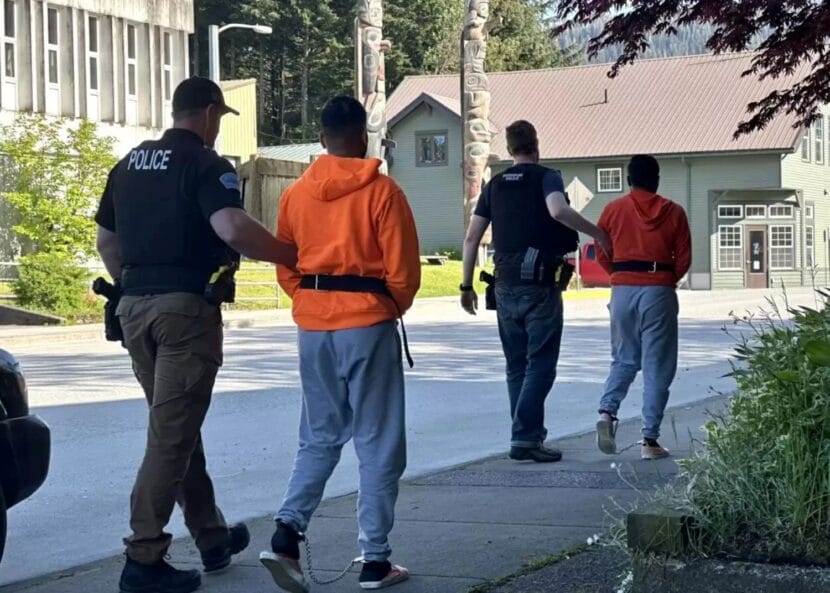
Petersburg police officers escort Shubham Patel, 24, and Harshilkumar Patel, 22, from the Petersburg Courthouse after their June 10, 2025 joint first appearance on felony fraud charges. (Photo by Olivia Rose/KFSK)

Petersburg police have arrested two men in a six-figure fraud scheme against a senior in the Southeast Alaska town, after a sting operation last week with assistance from the FBI.

Court records show Shubham Patel, 24, and Harshilkumar Patel, 22, face felony state charges of scheme to defraud and first-degree theft in the case, involving losses of nearly $130,000. The men are unrelated citizens of India.

According to charging documents in the case, police got a report on June 2 that a resident had first been targeted in mid-May by phone scammers posing as federal officials. The victim told investigators that a fake Drug Enforcement Administration agent using the alias “Sean Watson” said her identity had been stolen, and convinced her to wire them nearly $80,000.

They then allegedly convinced her to hand-deliver an additional $50,000 in cash to a person posing as a government agent in Petersburg on May 20. Investigators later identified that person as a third suspect, who hasn’t yet been charged according to court records.

The victim was contacted by “Watson” again later and told to deliver an additional $60,000 cash to another “undercover agent,” according to the charges. Her family alerted local authorities, which arranged the sting operation.

Investigators said in the charges that they saw Shubham and Harshilkumar Patel arrive at the Petersburg airport on June 9 and scope the meeting place before redirecting the victim somewhere else.

Harshilkumar got the cash from the victim, and then law enforcement arrested both men.

According to investigators, Harshilkumar said he was recruited by Shubham shortly before traveling to Petersburg in June, but had reservations about being involved and claimed not to know the people giving him instructions for the exchange or what the money was for.

But the investigation found Shubham’s name connected to a May hotel stay in Petersburg with the third suspect, a U-Haul rental and thousands of dollars in gift cards and USPS money orders purchased locally in Petersburg.

Through a translator, the Patels heard their charges on Tuesday during a joint first-appearance hearing at the Petersburg Courthouse. They remain in custody in Juneau.

Petersburg Magistrate Judge Rachel Newport set Shubham’s bail at $300,000; he opted to find his own legal representation. Newport set Harshilkumar’s bail at $100,000 total, noting his alleged later involvement; he opted to have a public attorney assigned to his case. The public defender’s office in Juneau did not immediately respond to a request for comment.

The victim didn’t wish to speak for the record during the hearing. She has asked not to be named publicly at this time.

The Patels’ next court appearance is scheduled for Friday in Petersburg.

Petersburg police said their investigation into the case is ongoing, with additional arrests possible. In a press release, the department credited the FBI, Ketchikan District Attorney’s Office, Juneau District Attorney’s Office and other agencies for their cooperation.

Resources for avoiding scams are available online from the FBI.

Juneau fire department offers paid internships to spark new hires

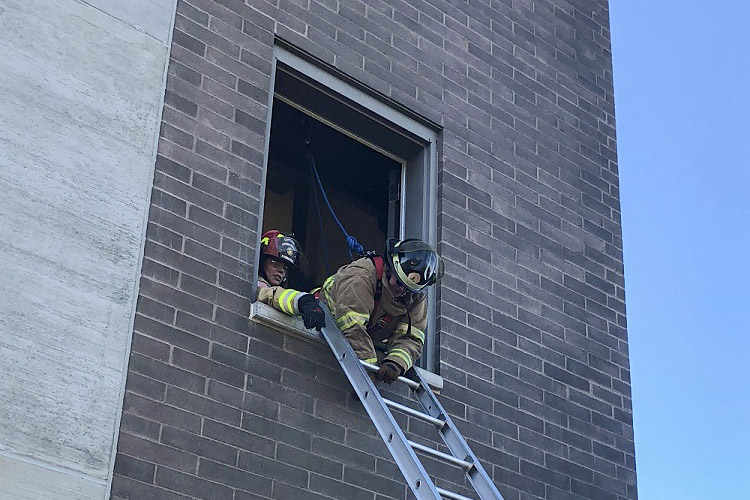
Firefighter Meg Thordarson exiting building via ladder in 2020. (Photo courtesy of Meg Thordarson/CCFR)

Juneau’s fire department is piloting a paid internship program this year that equips locals with certifications and skills needed to work in the field. It’s a long-term investment in the department’s future after years of understaffing woes.

CCFR plans to hire six interns who will earn emergency medical technician and firefighter certifications over a period of 10 months. The program will qualify them for a permanent position with the department. 

Capital City Fire Rescue’s Sam Russell leads the program and said he wants to hire more people with roots in Juneau. 

“I can see, in the long term, this being a really good way to keep the community protected by locals, and not have to bring people in from the outside to do things,” he said.

Since the program covers a lot of training and eligibility requirements, Russell said he’s looking for applicants that have the right personality—self-motivation and the ability to get along with others.

“And so we’re looking for those things, as opposed to certifications or past job history or anything in particular,” he said. “We’re really looking for that right attitude, right person.”

Russell said he wants to see more people from all of Juneau’s communities working as firefighters, too. He says Alaska Native and Filipino people are underrepresented in CCFR staff.

“The fire department really should be a representation of the entire community, and we should be fairly diverse,” Russell said. “And I’m hoping the internship program gives people the opportunity to get into the service when they might have thought that they couldn’t.”

He said that for some, taking time away from work and families to get certified isn’t feasible. This internship breaks down that barrier by making the certifications part of the job. Interns will make roughly $3,700 a month

The application period is open until all the spots are filled. But Russell said he plans to start interviewing people on June 27. 

The Juneau Career Firefighters union is in negotiations with the City, and it says there are currently extreme levels of mandatory overtime and injured staff. Union representatives said earlier this year that the department needs higher wages in order to be more competitive with other departments who are hiring. 

A retiring Juneau first responder says mobile crisis units get care to the community

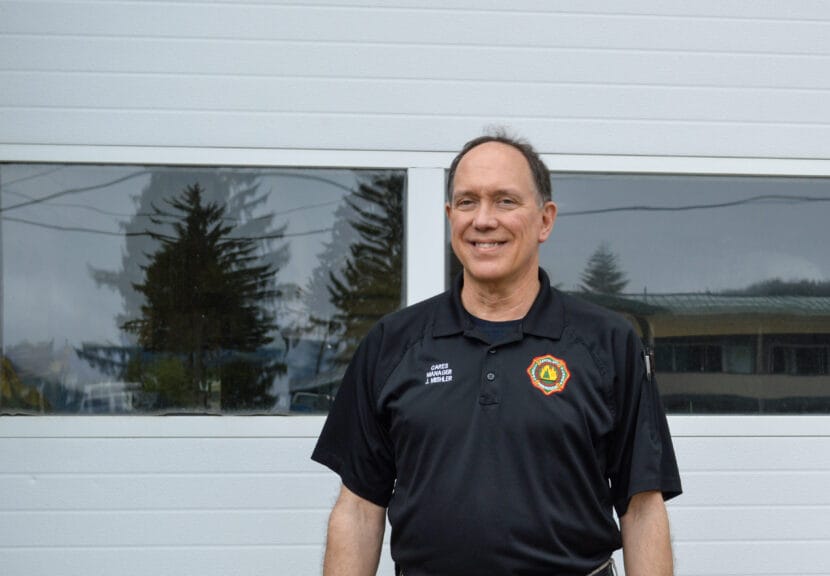
Joe Mishler has managed Capital City Fire/Rescue’s CARES program for the last six years. He’s retiring this month and he says the program helps people connect with what they need, instead of repeated emergency room visits. June 5, 2025. (Photo by Yvonne Krumrey/KTOO).

Joe Mishler has been an emergency responder for more than 40 years, about half of which he spent in Juneau. He’s retiring at the end of the month to take care of an aging family member. 

Mishler has spearheaded a team of mobile response units called Community Assistance Response and Emergency Services, or CARES, that address needs that can fall through the cracks. Things like follow-up medical care, housing support or substance use treatment. He says the program evolved out of in-home care during the COVID-19 pandemic. 

The teams can meet people where they are — at home, at a shelter, or on the street. 

KTOO’s Yvonne Krumrey met him at his office at the fire station to ask about what he learned, and what mobile response units do for the community.

The following transcript has been lightly edited for clarity.

Joe Michler: Basically, I oversee all of — it’s kind of like the non-emergency portion of the fire department. 

And basically we call it MIH, the Mobile Integrated Healthcare program, developed out of that. I think part of the reason it’s accepted and been as successful as it has is because it’s basically needs driven.

We identify needs. We identify from case management, from the hospital and from the clients. We talk to our patients and we determine what it is that they need, versus saying, “Hey, we have a program and we’re going to put this out onto the community.” It’s basically grown from the community.

Yvonne Krumrey: And I think one thing that really stands out about these this program is that it’s essentially kind of, I think, filled a lot of the gaps that sometimes city services can have with a little bit more as you say that it’s both medical care, social work and emergency response kind of in the same moment. And I feel like there’s not a lot of services that can often provide exactly that for somebody. And I’m wondering, how has the response been?

Joe Mishler: The response has been tremendous. Been very well received by the community.

We have some clients that we see that there’s really no other service for them, but we’re continuously getting referrals. 

We look at why they’re using the emergency services, and then try to try to help them solve their problem and make them self sufficient, so that we’re not continuously being their resource. 

So anyhow, there’s a lot of the times the resources are already here. People just don’t know about them. 

And you know, the biggest thing is, we think that we as paramedics save lives, and really, if we would approach—that’s where burnout comes from—because so much of what we do on the ambulance Isn’t life saving, but what we really do is we help people. 

Every crisis is different. But that’s what’s neat about this program, is so often in the ambulance, we simply pick them up, you’re not dying, shuffle you to the ER, there you go, go back out and do it again. Do it again and do it again. And here we actually get to try to figure out what’s going on and stop the cycle. We actually try to help people resolve things, you know?

Yvonne Krumrey: You know, do you get to see a lot of that, like resolutions for folks? 

Joe Mishler: Yeah, yeah. It’s very rewarding work. Since we’ve started, we’ve had very, very little turnover. The people really like the job they’re doing: meeting the people and developing relationships.  And a lot of the people we’re taking care of are very seriously ill. Many of them are at the end of life. And so we’ve had many of our clients over the years, over the last few years that have passed, and that’s that’s difficult. 

Yvonne Krumrey: Are there any moments you’ve had over the last 40 or so years that really stood out to you, like why this work matters so much? That really reinforced why you do what you do? 

Joe Mishler: One of the things that kind of stands out in my mind is over the years that I found out that little things that I’ve done, they really were, in my mind, no big thing. But someone else, it was huge. And I’ve had people thank me for things, or come back or or even talk about things, but a lot of times it’s the little things and just being nice, nice to people and helping them take care of them when they’re having a really, really, really bad day, that probably does as much in helping people as all of the medical training and everything else that we do.

National Guard to hold multi-day emergency response training in Juneau

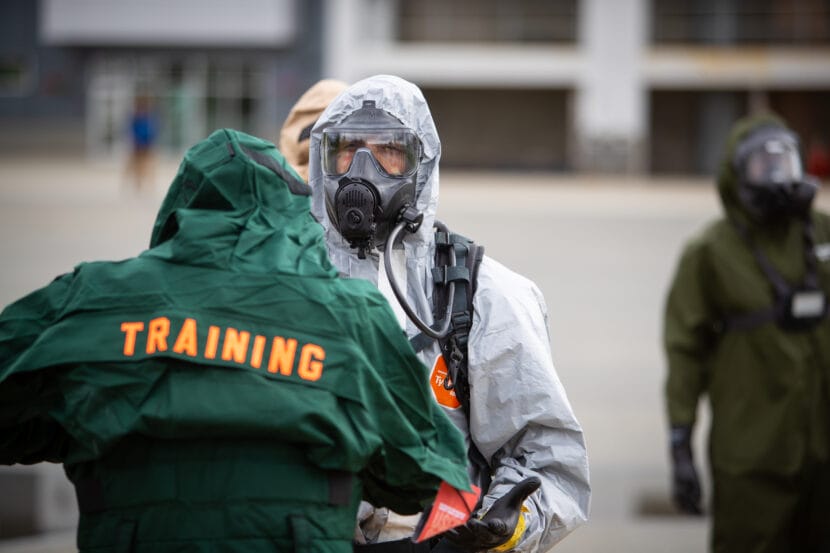
An agent with the Anchorage FBI Evidence Response Team gets help removing his biohazard suit at the Anchorage Fire Department Fire Training Center in Anchorage, Alaska, June 13, 2023. (Alaska National Guard photo by Robert DeBerry)

This weekend, the U.S. National Guard will begin conducting emergency preparation drills throughout Juneau. 

The exercise is called Operation ORCA. Capt. Kyle Rehberg with the National Guard said it’s meant to prepare Alaska cities to respond to emergencies of national significance. Those may involve weapons of mass destruction, like chemical, biological, or explosive threats. 

“It’s one of those things in which we hope we never have to respond in full force with this exercise like we’re doing. But we can’t think that it’s not going to happen,” he said. “We prepare for the worst possible day in Alaska.”

The training is held every other year in different parts of Alaska. This year, the exercise is in Juneau and will take place this Sunday through next Thursday.

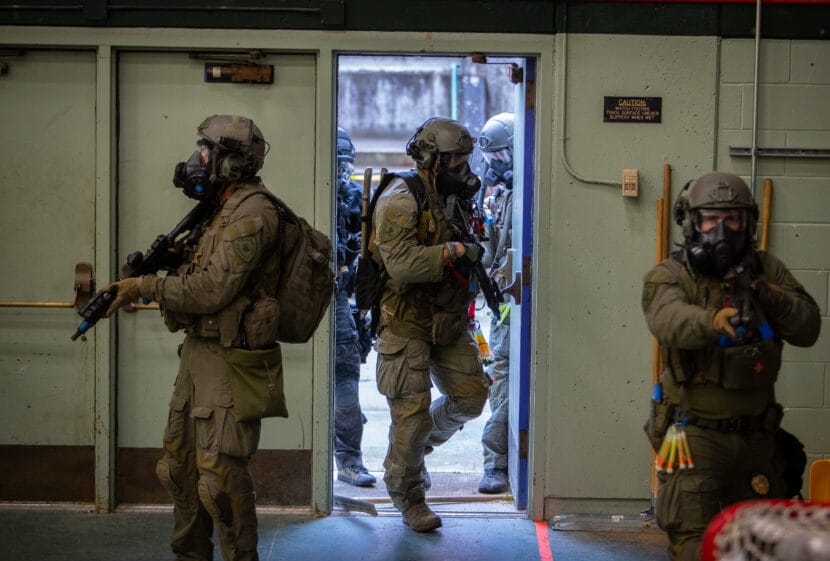
Members of the Anchorage Police Department SWAT unit work through an active shooter/hostage scenario on the UAA campus June 13, 2023. (Alaska National Guard photo by Robert DeBerry)

Rehberg said that means some streets will be closed downtown near the Alaska State Capitol. There will also be activity near the downtown cruise ship docks and the airport. He said the National Guard will put up signs to warn people who might be in those areas.

Rehberg said residents can expect to see specialized vehicles and equipment, people in hazmat suits and increased military aircraft operations. Residents may hear sirens. It’s only a drill, but he said it’s extremely important that Juneau is prepared if an emergency like this occurs. 

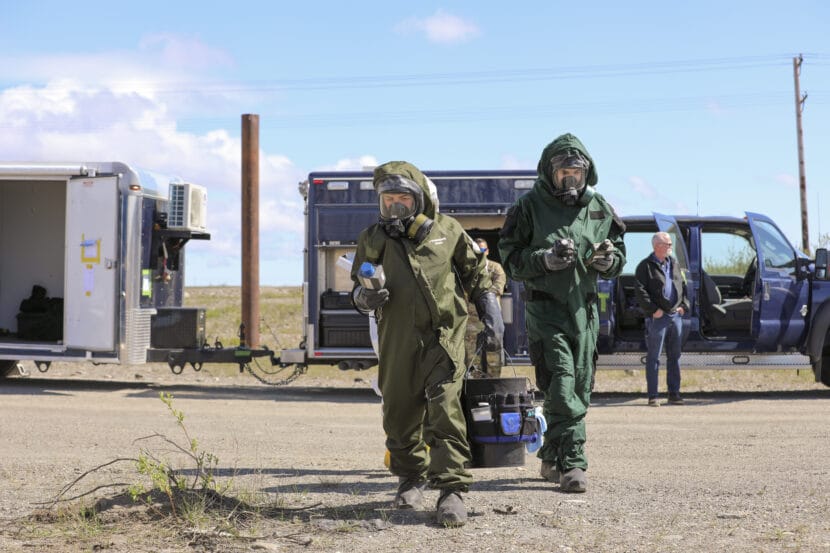
Alaska Army National Guard Staff Sgt. Fabiana Kirtley, left, survey team chief, and Alaska Air National Guard Tech Sgt. Conrad Slocum, survey team member, prepare for initial entry into a notional lab believed to be capable of manufacturing biological weapons at the Nome, Alaska, Fire Training Center as part of Exercise ORCA 2023, June 12. (Alaska National Guard photo by Balinda O’Neal)

“We just want to make sure we’re constantly staying on our toes and that we are ready to deploy anywhere in the state, whether it’s Southeast or the Interior,” he said. 

The National Guard will coordinate with local, state, tribal and federal agencies for the exercise.

Residents can find more information about the closures and potential impacts of the training by looking at the social media accounts of participating agencies, like the Juneau Police Department or the local U.S. Coast Guard sector.

British Columbia wildfire disrupts traffic on the Alaska Highway

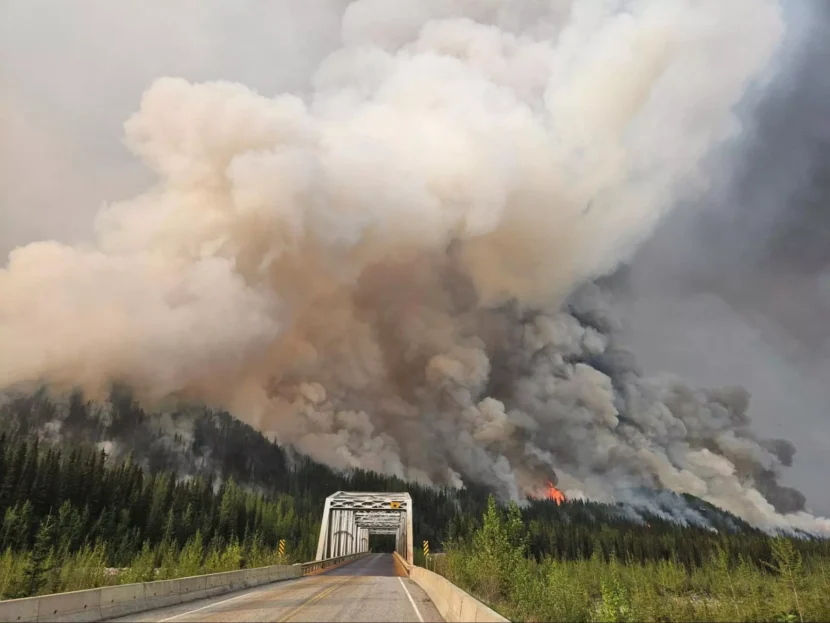
A planned ignition lit by British Columbia firefighters near the Alaska Highway to contain the Summit Lake Wildfire, seen on June 3, 2025. (Photo by B.C. Wildfire Service)

A wildfire in northeastern British Columbia has led to intermittent closures on the Alaska Highway since it started burning last week.

The 70-mile stretch of highway west of Ft. Nelson had reopened to single-lane traffic as of Wednesday afternoon, but the BC Wildfire Service says circumstances could change quickly depending on how the Summit Lake Wildfire behaves.

Cell service is limited in much of the burn area. The wildfire service urges travelers to prepare for delays and consider downloading the BC Wildfire app for updates on conditions.

The fire has torched over 6,000 acres in the Northern Rockies since it started on May 28, and it’s nowhere close to being contained, according to the fire service.

Forty-seven firefighters are on the scene with helicopter support. The wildfire service suspects that lightning ignited the fire, which has spread quickly due to a multi-year drought.

There are a number of other fires in the area, and the wildfire service expects them to spread farther as windy weather moves in later this week.

Site notifications
Update notification options
Subscribe to notifications