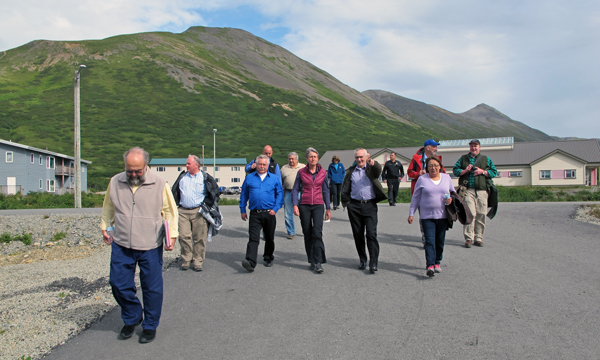
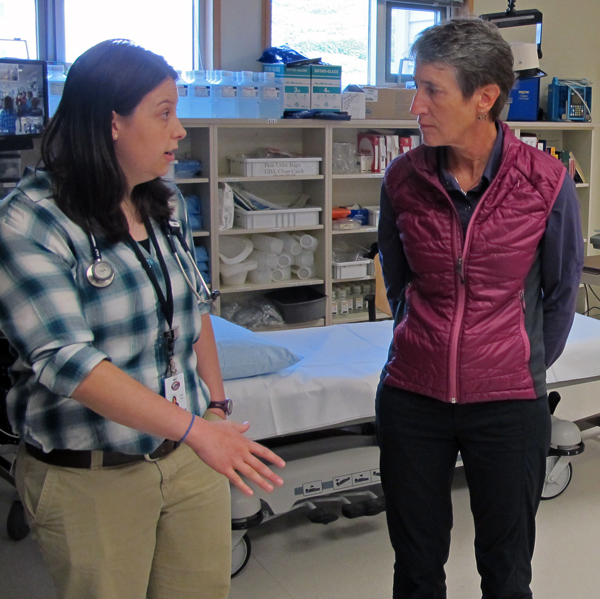
Interior Secretary Sally Jewell in King Cove. (Photo by Annie Feidt/APRN)
Alaska’s legislature is still searching for ways to connect King Cove and Cold Bay by building a road through a federal wildlife refuge.
Their latest effort is a joint resolution introduced by Aleutians representative Bob Herron. The six-page resolution urges Interior Secretary Sally Jewell to reconsider a land swap plan she turned down in December.
The state of Alaska and the King Cove Corporation are still offering 61,000 acres of land. In return, they want 1,800 acres in and around the Izembek National Wildlife Refuge.
King Cove would build a gravel road through that parcel to the town of Cold Bay, where more reliable commercial medevacs are available.
That’s one reason why Herron calls the rejection of the land deal “heartless and cold” in his resolution. It advanced after a hearing in Alaska’s House Resources Committee Monday afternoon.
Senator Lisa Murkowski called in from Washington to offer praise.
“I think this resolution will help affirm that as Alaskans we are united in opposition to the secretary’s decision, and that we’re united to protect the health and safety of those who live in King Cove,” Murkowski said.
Murkowski has criticized the Interior Department’s approach on multiple occasions.
During her testimony, Murkowski reminded the Alaska House Resources Committee that Interior Secretary Jewell pledged to find a different solution when she rejected the road almost three months ago.
“But there has been no idea, no proposal transmitted thus far,” Murkowski said. “Not one employee that I can find at Interior has done anything to improve the situation. And each day, each day that passes, the people of King Cove are further put at risk because of a decision that our own federal government has made.”
Jewell based her ruling on testimony, studies, and site visits by Interior staff — including her own trip last summer. Jewell said the road would do irreversible damage to land and wildlife in the Izembek refuge.
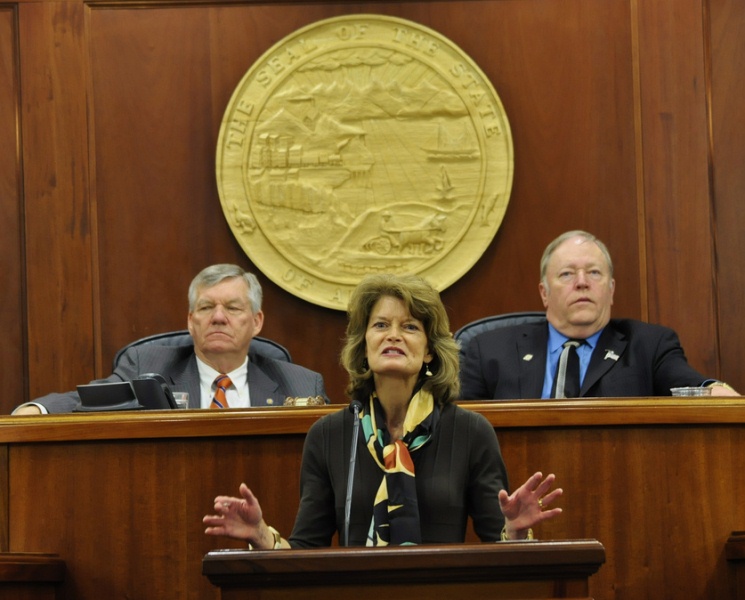
Sen. Lisa Murkowski, R-Alaska, addressed a joint session of the state legislators on Wednesday. Photo by Skip Gray/Gavel Alaska.
Sen. Lisa Murkowski has promised to continue fighting for a road connecting King Cove to Cold Bay.
In her annual address before the State Legislature on Wednesday, Murkowski described the Interior Department’s decision to block the project as “heartless and wrong.” She called it an extreme case of federal overreach.
“Now the King Cove decision is more than a road,” Murkowski said. “I think we all recognize it is more than a road. It is emblematic as to how the federal government believes that it has to somehow protect Alaska from Alaskans.”
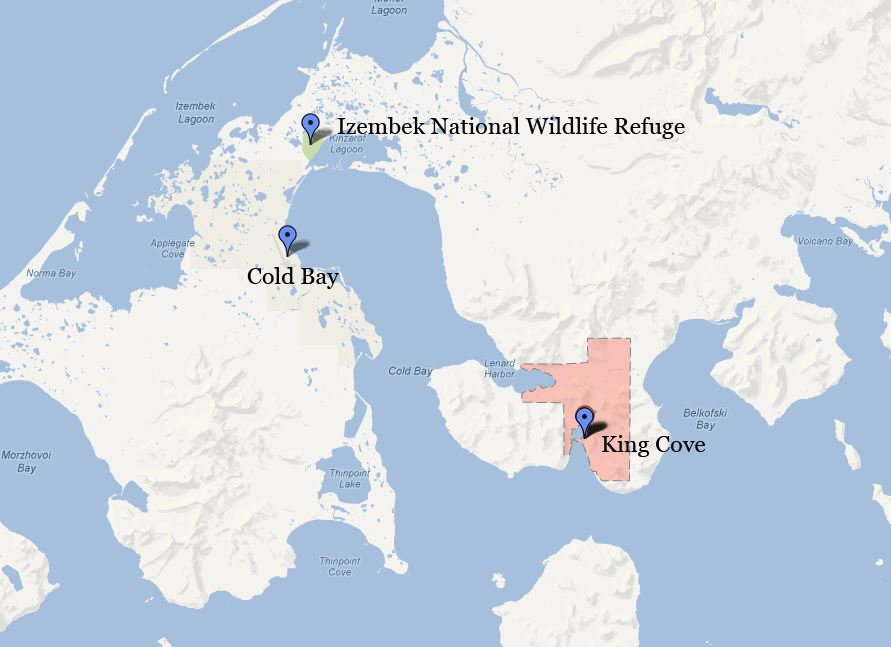
The contentious 10-mile gravel road would run through the Izembek National Wildlife Refuge. King Cove residents have long asked for the connection to a nearby airport as a matter of public safety. The Interior Department and environmental groups believe the road would damage bird habitat and set a bad precedent for refuges.
Murkowski has made construction of the road a major priority, recommending a land swap that would allow the project to go through. Last year, she escorted Interior Secretary Sally Jewell to King Cove to show her how difficult it is to medevac people from the remote community.
Murkowski got applause from state lawmakers when she said she plans to keep the pressure on.
“I have been told to get past this issue. Let’s just get past this issue. Let me tell you: That is not going happen,” said Murkowski. “In addition to my role as mediator, and ambassador, and all that, I can also be a hell-raiser. And I am going to be a hell-raiser on this. I am going to channel my inner Ted Stevens, and we are going to get this road.”
After her speech to the Legislature, Murkowski told reporters she may put holds on future nominations by President Barack Obama until the road issue is addressed.
Arctic representative
Sen. Murkowski said she also is closely watching the upcoming appointment of an Arctic representative.
Secretary of State John Kerry last week told Murkowski and Sen. Mark Begich that he planned to name a Special Representative for the Arctic Region. He said it would be a “high-level individual of substantial stature and expertise,” and asked for the delegation’s input.
“We are all Ambassadors as we talk about the U.S. as an Arctic nation because of Alaska,” Murkowski told lawmakers.
She said the U.S. Arctic representative shouldn’t be relegated to the “kids’ table.”
If the U.S. is to be viewed as a leader on Arctic issues, Murkowski said, the person who holds the new position must have gravitas, be a recognized authority on all-things Arctic and have the authority within the Obama administration to act.
She said she wants to ensure the person is sitting at the table and on par with other nations’ Arctic ambassadors.
Watch U.S. Senator Lisa Murkowski’s address courtesy of Gavel Alaska:
Interior Secretary Sally Jewell has a difficult decision ahead of her.
She was in King Cove Friday to visit with residents about a road they want to build through the heart of Izembek National Wildlife Refuge.
Residents say the road is necessary to access emergency medical treatment, but a road has never been built through a wilderness area and environmental groups say it would set a bad precedent.
When an emergency call wakes up Bonita Babcock in the middle of the night, one of the first things she does is check the weather:
“How bad is it blowing?,” she asks.
Photo by Annie Feidt, APRN – Anchorage.
Babcock is a lifelong resident of King Cove and a community health aide. It’s her job to help stabilize patients with traumatic injuries, heart attacks or other emergencies and get them ready to fly to the nearest hospital in Anchorage, 600 miles away.
“We’re looking and it’s like, most of the time, it’s going to have to be a medevac and we’re wondering what are we looking at here, what are we looking at?,” Babcock said. “Are they going to be able to get them out?”
About 30 percent of the time, the answer is no. High winds frequently shut down King Cove’s small gravel airstrip.
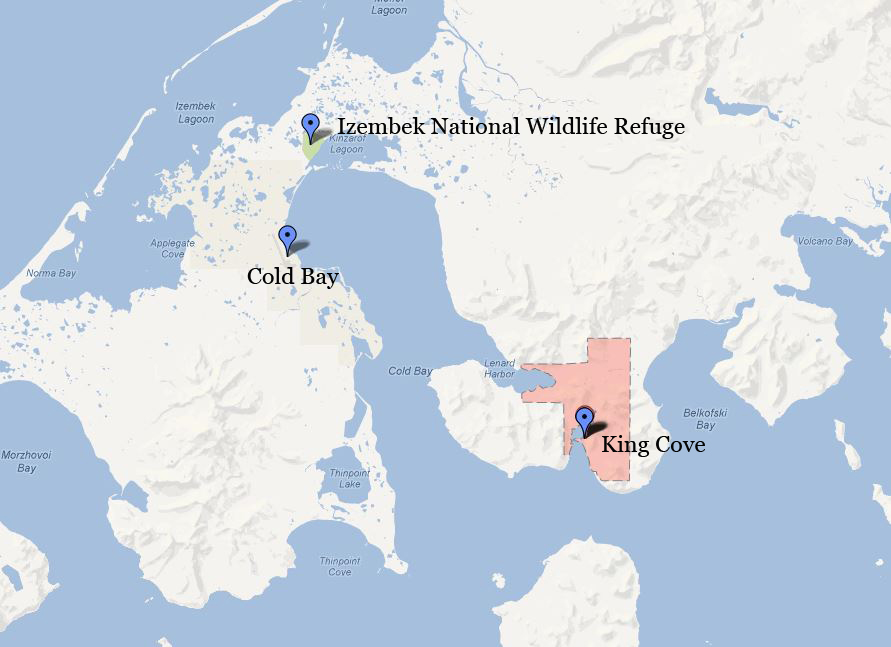
Cold Bay, 30 miles away, has an all-weather airport, but with no road between the communities, King Cove residents have to take a two-hour boat ride in choppy seas to reach Cold Bay when flying isn’t an option.
King Cove has been asking for a road for more than two decades, but Friday was their first chance to make their case directly to an Interior Secretary.
Babcock toured Sally Jewell around the King Cove Clinic. Jewell heard stories of medical close calls – like a baby who couldn’t breathe and had to be rescued by a Coast Guard helicopter. And she heard about the daily hardship of unreliable transportation out of or into the community.
Babcock told Jewell the clinic sometimes has to make do without essential medication.
Babcock: “Last week, six days it sat in Cold Bay you know, one of our patients meds.”
Jewell: “And there’s no boat running back and forth?”
Babcock: “The postmaster would have to go over by boat.”
Jewell: “I see.”
Babcock: “And she won’t. They’ve only done that maybe once and it was a mess.”
But the 11 mile one-lane gravel road that could make life safer in King Cove would also slice through the center of Izembek National Wildlife Refuge.
Environmental groups say that would set a precedent that could make it easier to build roads through other wilderness areas.
Nicole Whittington-Evans, with The Wilderness Society says it’s an important sanctuary for bird species like the black brant and tundra swan.
“When you are in Izembek and you look around at the breathtaking coastal mountains and this incredibly vibrant and ecology rich area, you know this is a global resources we should be protecting,” Whittington-Evans said.
Whittington-Evans says the road would take more than two hours to drive and she’s skeptical it would be the fastest way to evacuate people with medical emergencies. And King Cove residents acknowledge the road isn’t just about health and safety; it would make it cheaper to fly to Anchorage, for instance, and high school sports teams could more reliably compete against other villages.
Secretary Jewell says she wants to find a solution that works both for the wildlife and the people of King Cove.
“I think that there have been efforts to talk about a tradeoff between human safety and wildlife and the reality is I think we want both so I understand the interests on both sides, it’s difficult and I don’t think that’s a reasonable tradeoff,” Jewell said. “I think we need to look for solutions that address both.”
Jewell hasn’t set a time line for making a decision. If she comes out in favor of the road, she’ll be going against the recommendation of the U.S. Fish and Wildlife Service. But Etta Kuzakin, who is president of the Agdaadux Tribal Council in King Cove, is hopeful that’s what she’ll do.
“It’s easy to say no when you see it on writing on paper, but it’s not easy to say no when you see and you know and you look at the eyes of the people who have been through these tragic situations,” Kuzakin said.
Five months ago, Kuzakin went into premature labor in King Cove when the winds were howling. She made it out of the community later that day on a Coast Guard helicopter. She has a healthy daughter now named Sunny Ray but she worries about future emergencies that may not have a similarly happy ending.
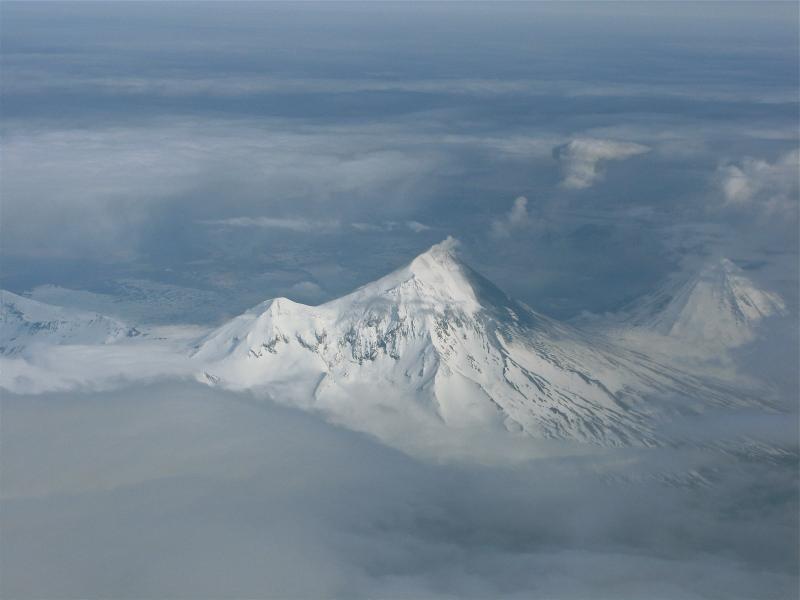
Pavlof Volcano, on the morning of May 22, 2013. At the time this photo was taken, there was very little ash emission. Photo courtesy of Ryan Hazen and Brandon Wilson/AVO
The eruption at Pavlof Volcano, on the Alaska Peninsula, has picked up again. The volcano is spewing ash to 28,000-feet, the highest it’s reached since the unrest started in early May.
That’s not high enough to interfere with international air traffic, but it does have communities in the region on alert.
In the village of King Cove, there were reports of ash fall this morning, but resident Pam Mitchell says it wasn’t particularly noticeable.
“It’s nothing like what you see on TV. It’s literally like if I aerosol-sprayed something. Gritty. That’s it.”
The increased activity also prompted PenAir to cancel its flights into Cold Bay. Marketing director Missy Anderson says it didn’t impact the airline’s other routes though.
“Cold Bay is typically used as our primary alternate for our Dutch [Harbor] and Prib[ilof Island] flights. But in this particularly case we were able to use our secondary, which is King Salmon, so those flights were able to get to their final destinations.”
The volcano isn’t showing signs of letting up. Dave Schneider is a geophysicist with the Alaska Volcano Observatory. He says seismic tremors at Pavlof started intensifying around midnight.
“And then it escalated over the next couple of hours to a pretty high level, where it has continued. It’s sort of plateaued.”
Pavlof is the most active volcano in Alaska, and has previously erupted for weeks, or even months, at a time, although it typically cycles through periods of intense activity like the current one.
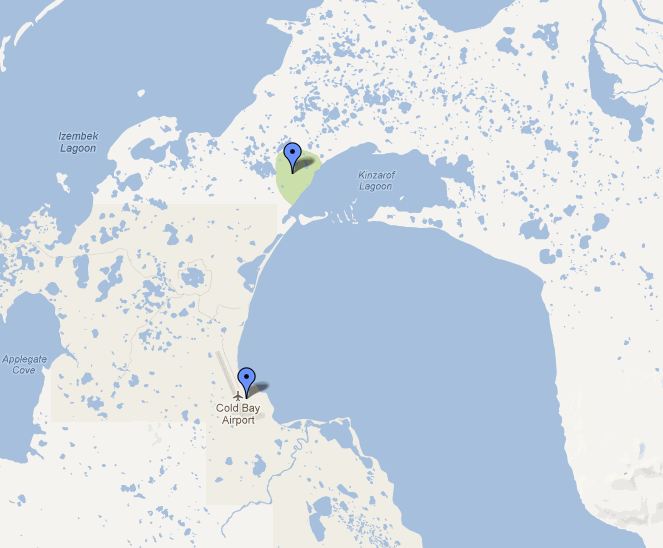
Izembek National Wildlife Refuge lies north of Cold Bay, Alaska
Secretary of the Interior Ken Salazar has decided to reevaluate a Fish and Wildlife Service decision to prevent construction of a road through the Izembek National Wildlife Refuge.
The Interior Department will send its next secretary and undersecretary for Indian Affairs Kevin Washburn to King Cove.
They’re expected to meet with local leaders who want the Interior Department to reverse the Fish and Wildlife decision.
Senator Lisa Murkowski says this is the first step to overturning that ruling:
“Fact of the matter is, this process that the secretary has laid out, doesn’t get the residents of King Cove their road tomorrow. But it was does allow for is a reassessment, a re-look, of what Fish and Wildlife did with their assessment.”
And this new assessment could take months, if not years, to complete.
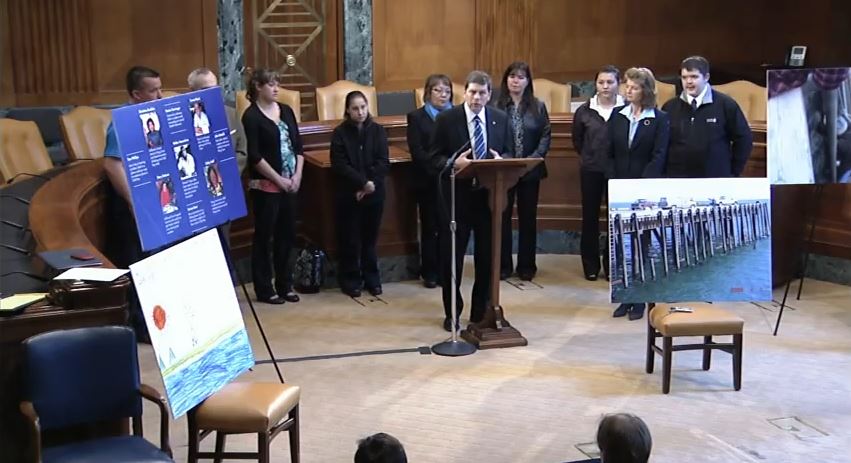
Senators Mark Begich and Lisa Murkowski held a press conference with residents of King Cover to push their support for the road.
The saga has been going on for decades, and Wednesday evening, the dozen or so residents in D.C expected nothing more than a photo-op with Secretary Salazar.
They were pleasantly surprised Thursday morning.
“We’re closer now than we ever have been,” said Stanley Mack, mayor of the Aleutians East Borough.
By Mack’s count, he’s been fighting for a connector road from King Cove to Cold Bay for thirty years.
Standing outside the Interior Department Thursday morning, Mack called the meeting with Salazar excellent, saying he’s confident Secretary Salazar will reevaluate a Fish and Wildlife decision that blocked the land transfer.
It’s not certain he’ll reverse the decision. Mack called Salazar a hard negotiator, and even harder to read.
Della Trumble said Secretary Salazar needed to hear the human factor; that the environmental review had not taken lives into consideration.
She said she’s more optimistic now, if for no other reason, the meeting went longer than planned.
“We initially had half an hour meeting, but he did allow us a little over an hour,” she said. “And I feel, just optimistic, that hopefully he’ll take a closer look at this issue. He said he understands it a lot better from us being here.”
The Borough and city of King Cove paid for the trip to Washington.
The state would cede 41,000 acres, and the King Cove Corporation would cede 16,000 more. In exchange, they’d receive a 200 acre easement in the wildlife refuge. That easement would allow for the construction of a ten mile, one lane, gravel road.
Residents say they need it for emergency medical services; that flying in and out of King Cove is too dangerous and too often cancelled.
Trisha Trumble’s point, another King Cove resident in D.C., said weather in the Aleutians can change on a dime, making one flight safe, and the next dangerous. She recounted to Secretary Salazar the crash she survived in 2010.
“The pilot stated that we were coming in and getting ready for landing. We were going about 60, we hit an air pocket and it dropped, it made the whole plane drop, he looked at the speedometer and we’re going 120. He was lucky enough to bring it up and crash that plane perfectly on the runway which then turned sideways. We went down the runway sideways,” she said.
She drove the point home by stressing how close death was.
“And then there was fuel shooting out, and if we didn’t have a gravel runway and it was pavement, any spark would made the plane blow up.”
The residents would be allowed to use the road for everyday use, but it could not be used for commercial purposes. There would be a cable barrier preventing people from driving off road on ATV’s to hunt birds.
Nicole Whittington-Evans is the Alaska Regional Director for the Wilderness Society.
King Cove, Cold Bay and Izembek National Wildlife Refuge
“A one lane gravel road with a 10, 15, maximum 20 miles per hour limit on it, from King Cove to Cold Bay will be approximately 35-40 miles, it’s going to take an hour and a half to two hours for a person to drive that road, in good weather,” she said by phone Thursday afternoon.
She said the federal government paid for a hovercraft that could take residents from King Cove to Cold Bay in twenty minutes. The Borough stopped operating the hovercraft in Cold Bay, and moved it to Akutan.
Mayor Stanley Mack said the hovercraft cost more than $1 million dollars per year, and it was unsafe in high seas and strong winds.
“The 1.2 million hovercraft was just the sporadic operation of the hovercraft. We could not operate it. It was costly and unreliable – totally,” he said.
The Department of Interior will not decide the fate of the road before Salazar’s 30 day public interest review deadline of March 18th. He could resolve the issue before the Senate confirms his successor, Sally Jewell.
Senator Lisa Murkowski, who supports the road, met with Ms. Jewell Wednesday morning, a normal part of the confirmation process. Senator Murkowski said she did not ask for any assurances on the land transfer.
“I want Secretary Salazar to do the right thing, plain and simple. I don’t think he should let this hang over and let … He needs to right this wrong that his agency has put forward. And I want him to correct that,” she said.
Even though she puts the onus on Secretary Salazar, Ms. Jewell could feel the punishment. If Secretary Salazar does not override the decision before stepping down, Senator Murkowski threatened to hold up the nomination of Ms. Jewell.
Parliamentary rules allow any Senator to stall any proceedings.
Della Trumble said even though she’s optimistic after the meeting with Secretary Salazar, she’s prepared to continue fighting.
“We’ve always maintained, before you make a decision on this, please, please talk to us,” she added. “And the other point is, we can send a plane load this large every week, because there are so many stories about why this road is so important.”
They’re unlikely to get another meeting with the Interior Secretary.
Close
Update notification options
Subscribe to notifications
Subscribe
Get notifications about news related to the topics you care about. You can unsubscribe anytime.