Adelyn Baxter

Digital Content Director, KTOO

"I help inform KTOO listeners, viewers and readers by finding creative ways to bring our content to our audience wherever they are."

Assembly committee to revisit ‘new JACC’ funding proposals

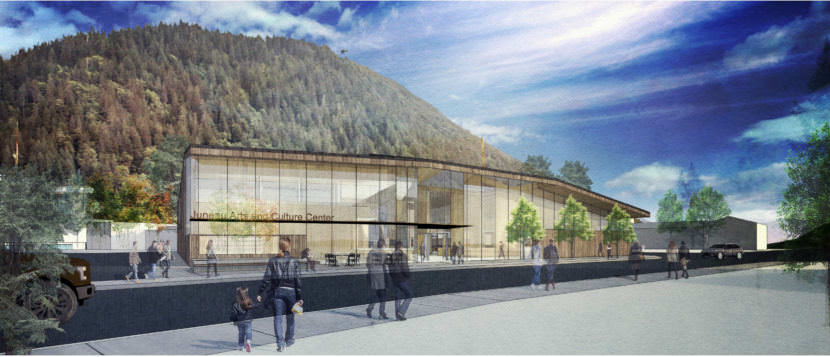
This design rendering shows how the new Juneau Arts and Culture Center may appear from the Andrew P. Kashevaroff Building.
This design rendering shows how the new Juneau Arts and Culture Center may appear from the Andrew P. Kashevaroff Building. (Courtesy Juneau Arts and Humanities Council)

Public financing for the “new JACC” may still be on the table.

Options for funding the construction of a new Juneau Arts and Culture Center — budgeted to cost $26.4 million — will be taken up by the Juneau Assembly Public Works and Facilities Committee this spring.

At a Wednesday Finance Committee meeting, Mayor Beth Weldon said she had met with stakeholders and decided there was more work to do.

“We’re not ready to talk about a financial package yet. We’re still trying to come up with a concept that people can get behind,” Weldon said. “If we can agree on a concept, then we worry about the money.”

In August, the Assembly rejected two proposals related to the project. Voters would have been asked to approve municipal debt to partially fund the project.

One involved a $12 million bond that would have funded construction of the “new JACC” and upgrades to Centennial Hall. The other was a $7 million bond just for rebuilding the JACC.

Katharine Heumann, executive director of the partnership board working on the project, said she looks forward to working with all the groups involved, including Travel Juneau and the Greater Juneau Chamber of Commerce.

After the meeting, she said she hopes things get moving again on the project.

“Any delay sets back the project in the sense that the longer it takes for us to break ground and begin construction, the more costly it could be,” Heumann said.

The Public Works committee plans to review options and send its recommendation to the Finance Committee by mid-April, so the Assembly will have time to decide whether to bring the topic back to voters in October.

Correction: A previous version of this story overstated new Juneau Arts and Culture Center cost estimates. According to Program Manager Bob Banghart, the New JACC project is budgeted to cost $26.4 million. Additional costs would occur if the city combined upgrades on a separate project.
Who will they choose? Meet the candidates vying for Jesse Kiehl’s Juneau Assembly seat.

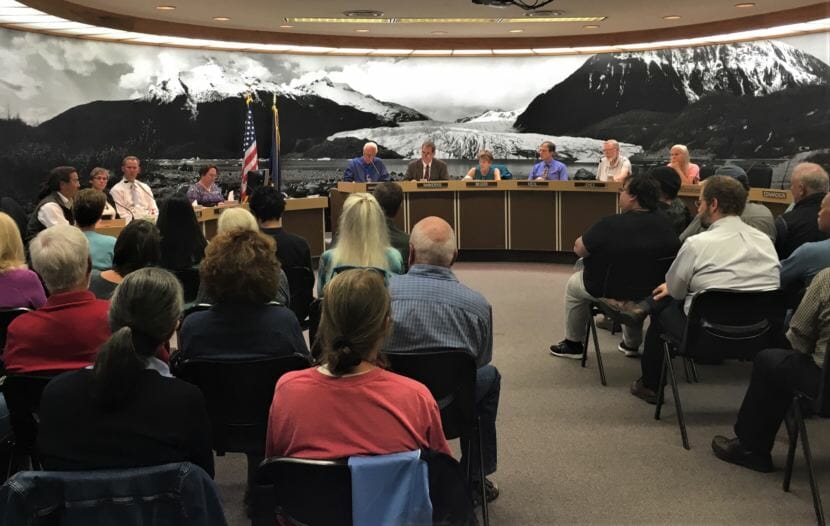
Members of the Juneau Assembly listen to public testimony on the New JACC during a Committee of the Whole meeting on Aug. 21, 2018. (Photo by Adelyn Baxter/KTOO)
Members of the Juneau Assembly listen to public testimony during a Committee of the Whole meeting on Aug. 21, 2018. (Photo by Adelyn Baxter/KTOO)

The Juneau Assembly Human Resources Committee will interview candidates Thursday for the District 1 seat Jesse Kiehl is vacating.

Seven candidates applied for the job. One will be appointed by the Assembly to serve until the next municipal election in October. Then voters will decide who will finish out the final year of the term.

The candidates must live in either downtown Juneau, Douglas, North Douglas, Lemon Creek or the airport area.

The candidates who applied for Kiehl’s seat are Eric Forst, Alicia Hughes-Skandijs, Christopher Peloso, Meilani Schijvens, Theresa Yvette Soutiere, Martin Stepetin Sr. and Kate Troll.

Their interviews with the committee will be public at 5:30 p.m. Their applications can be viewed on the city website.

After Thursday’s interviews, the committee will forward its recommendation to the full Assembly.

Kiehl will officially resign his seat at a special Assembly meeting on Monday. Then the remaining Assembly members will appoint his replacement. Whomever they choose will be sworn in immediately after the vote.

Here’s a brief rundown of the candidates.

Eric Forst (Photo courtesy of Eric Forst)
Eric Forst

Eric Forst is a partner in the Red Dog Saloon. He has been a member and president of Juneau Glacier Valley Rotary, previously served as vice president of the Juneau Downtown Business Association and is currently on the board of the Greater Juneau Chamber of Commerce. He wrote in his letter of interest that he hopes to represent the tourism industry on the Assembly.

Alicia Hughes-Skandijs (Photo courtesy of Alicia Hughes-Skandijs)
Alicia Hughes-Skandijs

Alicia Hughes-Skandijs moved to Juneau to attend the University of Alaska Southeast and works as a grants administrator for the state. She’s held leadership positions with the Alaska State Employees Association and also serves on local boards for the Alaska Folk Festival and the League of Women Voters of Juneau.

Christopher Peloso (Photo courtesy of Christopher Peloso)
Christopher Peloso

Christopher Peloso is an attorney who worked as an assistant attorney general for the state for seven years. He says he left to pursue private practice so that he could work on a wider variety of cases and participate more in the community.

Analyst Meilani Schijvens. (Photo by Ed Schoenfeld/CoastAlaska)
Meilani Schijvens

Meilani Schijvens runs Rain Coast Data, a research firm based in Juneau that publishes analysis of local and regional economic indicators. She’s a lifelong Juneau resident who has also worked for the state, in the mining industry and for local consulting firms. She has served on multiple boards and commissions and wrote in her letter of interest that she has always wanted to run for the Assembly, but she didn’t want to commit to a full term while raising two young children.

Theresa Yvette Soutiere (Photo courtesy of Theresa Yvette Soutiere)
Theresa Yvette Soutiere

Theresa Yvette Soutiere is an attorney. She spent seven years as a public defender with the state, working in communities across Alaska. She recently decided to leave state work and set up her own law firm to work in a wider range of practice areas. She’s also an avid hiker and a licensed pilot.

Martin Steptin Sr. (Photo courtesy of Martin Steptin Sr.)
Martin Stepetin Sr. 

Martin Stepetin Sr. has worked at both Kensington and Greens Creek Mine and as a union laborer on multiple construction projects in Juneau. The father of four regularly testifies at the state Capitol and school board meetings and says he enjoys advocating for community interests.

Kate Troll is running against Bill Peters for the areawide assembly seat, the only contested race in the October 1st municipal election. (Photo by Lisa Phu/KTOO)
Kate Troll. (Photo by Lisa Phu/KTOO)
Kate Troll

Kate Troll comes from a background leading trade organizations and nonprofits and has owned three small businesses. She previously served one term as an areawide Assembly member from 2013 to 2016, but she was defeated when she ran for re-election. She writes that she continues to want to serve her community on the Assembly.

Correction: A previous version of this story incorrectly stated the interviews with candidates for District 1 will be private. They will be open to the public.

Assembly will consider making Juneau pools board permanent

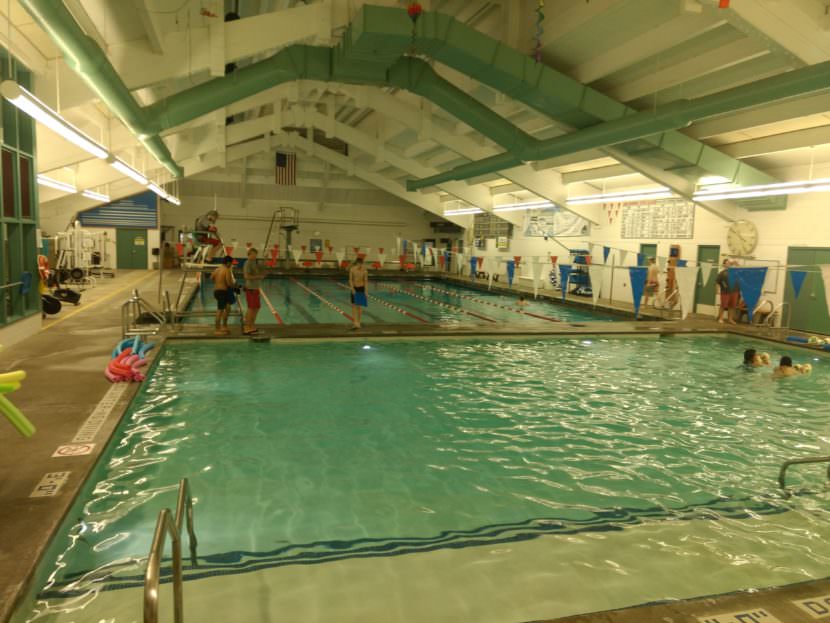
Students from Juneau-Douglas High School use the pool for an athletics program on May 3, 2017.
Students from Juneau-Douglas High School use the pool for an athletics program on May 3, 2017. (Photo by Jacob Resneck/KTOO)

The civic board tasked with governing Juneau’s municipal pools may not dissolve in July as planned.

Voters created the Aquatics Board in 2014 through a ballot proposition following concerns over a proposal to close the downtown pool. The board’s charter was originally set to expire in May 2018, but the Juneau Assembly voted last year to extend it for another year. Now it may become permanent.

The board’s power has been a point of conflict from the start. Although it was originally envisioned as an empowered board with the ability to hire and fire its own CEO, the Assembly left the Parks and Recreation director in charge instead.

At Monday’s meeting of the Assembly Human Resources Committee, City Manager Rorie Watt said he said he thinks this proposal will finally bring peace to the issue.

“I think it’s fair to say that the board would have preferred to become an empowered board. I think it’s also fair to say that, in my opinion, the scope and duties of the aquatics program doesn’t match up well with an empowered board. Slowly the board came around to accept that view,” Watt said.

Watt said he believes many of the concerns that led to the creation of the board have been resolved and that the pools are being run better today.

“The criticisms that were levied against the program some years ago, about not being responsive enough to users and not being efficient enough in tracking costs and revenue collections, I think they were fair,” he said.

Under the proposal, the seven-member board would add two seats: one for the Juneau School District and another for Glacier Swim Club. The Parks and Recreation director will also have a non-voting seat on the board.

The board will still be able to propose regulations and fees for pool facility use and review annual operating and capital budgets.

After the meeting, Parks and Recreation Director George Schaaf said the board plays an important role in helping the city run its pools.

“The voters voted to establish an Aquatics Board, and what we want to do as staff is make sure that we’re representing the public interest in how the pools are operated and run, and boards are a great way to do that,” Schaaf said.

The Assembly will hold a public hearing on the proposal before voting on it at the next Assembly meeting.

It will also consider a proposal involving changes to the Treadwell Arena Advisory Board‘s mission.

Editor’s Note: George Schaaf sits on KTOO’s Board of Directors.

Juneau Assembly updates city smoking restrictions, including vaping

Vaping (Creative Commons photo by Lindsay Fox)

The Juneau Assembly approved changes to the city’s anti-smoking law Monday that include increasing the smoking buffer around businesses.

Smoking tobacco is already illegal in and around most businesses in Juneau. The new rules bring the city into compliance with a statewide anti-smoking law passed last year, much of which already aligns with city code.

At a Monday meeting, Assembly member Loren Jones proposed an amendment adding language that includes vape pens and other electronic smoking products.

He said he wanted to bring the city into compliance with another state law related to restrictions for vaping.

“So if you look at Senate Bill 15, it talked about vaping with nicotine products, and it added to that the use of electronic smoking product so that you got to that expanded definition that if it didn’t contain nicotine, it’s still smokable, still vapes,” Jones said during the meeting.

City Attorney Robert Palmer explained that city code already addresses some electronic smoking products, but not all.

“So it’s a little bit broader there. There is a little bit of redundancy because our current code does currently prohibit certain vaping types of smoking,” Palmer told the Assembly.

Both Jones’ amendment and the ordinance passed unanimously.

One thing the ordinance does not address is the use of marijuana products.

Last month, the state Marijuana Control Board approved regulations for onsite marijuana consumption for approved retail stores. The rules still need to be reviewed by the state Department of Law before they are final.

Under current city code, smoking marijuana products is not allowed in private clubs or retail shops. The Assembly is expected to discuss onsite marijuana consumption at a meeting next month.

Why Mount Jumbo won’t be logged anytime soon

Mount Jumbo, also known as Mount Bradley, from the trail. (Photo by Adelyn Baxter/KTOO)
Mount Jumbo, also known as Mount Bradley, seen from the trail. A land exchange between the Alaska Mental Health Trust Authority and the U.S. Forest Service will transfer ownership to the federal government. (Photo by Adelyn Baxter/KTOO)

The Alaska Mental Health Trust Authority board approved its largest land exchange to date Thursday.

Through the deal, up to 40,000 acres of land in and around Southeast communities will change hands between the Trust and the U.S. Forest Service.

The land exchange is the culmination of more than a decade of work by stakeholders and took acts of both Congress and the Alaska Legislature to make it happen.

Once all is said and done, about 18,000 acres of land owned by the Alaska Mental Health Trust Authority will be swapped for roughly 20,000 acres of U.S. Forest Service land.

“We don’t know the exact acreage because it’s based upon equal value, so we’ll see in the end,” said Wyn Menefee, executive director of the Trust Land Office.

The Mental Health Trust owns land all over Alaska, and its goal is to use them to generate money to pay for services for beneficiaries.

Often, that means earning funds through logging and mining. But some of the trust’s lands in Southeast border residential neighborhoods and sites for outdoor recreation.

That includes 2,689 acres around Mount Jumbo, also known as Mount Bradley, a scenic hiking destination in Juneau.

The same goes for Deer Mountain overlooking Ketchikan and similar parcels near Petersburg, Sitka and Wrangell.

Those lands will now be owned and protected by the Forest Service.

“All the lands that we’re receiving are going to be lands that people can access or recreate on,” said Forest Service spokesman Paul Robbins Jr. back in November. “Whether it’s remote recreation or semi-remote recreation, we are supposed to manage these lands for that, including the development and maintenance of recreational trails.”

In exchange, the trust receives federal lands on Prince of Wales Island for logging. They also have a contract with Viking Lumber on Prince of Wales — one of the last working sawmills in Alaska.

With that deal, the trust expects the 10-year sale of old-growth timber to generate up to $15 million for the trust.

But that’s just some of the land involved. Menefee said the entirety of the land they’re getting from the Forest Service will generate millions more in the decades to come.

He said the exchange is a win-win — they gave up lands communities did not want to see logged, and now they can use existing logging infrastructure on Prince of Wales.

“So this puts us in a situation where we can actually make revenues from lands that we get through this exchange, which will help the beneficiaries,” Menefee said.

While residents in those communities may be relieved that nearby lands will be protected, some on Prince of Wales view the exchange as just another instance where they bear the burden of resource development.

Cheryl Fecko has lived in Craig, Alaska, for nearly 40 years. She said she and many of her neighbors are concerned by the impact logging has on species like salmon and deer, which many people rely on for food in the remote community.

“We have over 1,000 miles of road and a patchwork of clear cuts in various stages of regrowth, but honestly I think that’s kind of reason to maybe not go immediately to Prince of Wales instead of always using it as the ‘sacrificial lamb of the Tongass,’” Fecko said.

Menefee said the smaller first phase of the land exchange — which involves two mountains near Ketchikan and timber lands on Prince of Wales — should finalize later this month.

He said Viking could begin processing lumber by February.

Seven people apply for Kiehl’s soon-to-be vacant Juneau Assembly seat

Senate District Q candidate Jesse Kiehl, a Democrat, talks to a supporter on Election Day, Tuesday, November 6, 2018, in Juneau, Alaska. (Photo by Rashah McChesney/Alaska’s Energy Desk)
Senate District Q candidate Jesse Kiehl, a Democrat, talks to a supporter on Election Day, Tuesday, Nov. 6, 2018, in Juneau, Alaska. (Photo by Rashah McChesney/Alaska’s Energy Desk)

Seven people have submitted applications to be considered for the District 1 Juneau Assembly seat of outgoing member Jesse Kiehl.

Voters elected Kiehl to the Alaska Senate in November. That means Kiehl must resign his Assembly seat. He was re-elected to a third three-year term on the Assembly in October 2017.

Kiehl said he doesn’t plan to endorse anyone. He won’t vote on his replacement either.

“I’m not going to be particularly involved in their selection — the remaining members’ selection of a replacement — and I think that’s important,” Kiehl said Thursday. “It needs to be the other folks elected by the people to serve on the Assembly who choose that replacement to serve.”

Candidates for Kiehl’s seat must reside in District 1, which includes downtown Juneau, Douglas, North Douglas, Lemon Creek and the airport area. The application closed Wednesday.

According to the city clerk’s office, the candidates who submitted applications are Eric Forst, Alicia Hughes-Skandijs, Christopher Peloso, Meilani Schijvens, Theresa Yvette Soutiere, Martin Stepetin Sr. and Kate Troll. Their applications can be viewed on the city website.

The Assembly Human Resources Committee will interview each candidate next Thursday.

Kiehl will resign at the special Assembly meeting on Jan. 14. Then the remaining eight members of the Assembly will vote on the new member.

Whomever they choose will serve until the next municipal election in October. Voters will then decide who finishes out the final year of the term.

Kiehl said he will continue working with his colleagues on the Assembly in his new role.

“It’s incredibly rewarding work, and I’m looking forward to taking it on at the state level. But I’m really heartened at the group of people who will continue to do that at the city as I move elsewhere,” he said.

Kiehl will officially take his Senate seat when the Alaska Legislature convenes on Jan. 15.

Site notifications
Update notification options
Subscribe to notifications