Alaska Beacon

Alaska Beacon is part of States Newsroom, a network of news bureaus supported by grants and a coalition of donors as a 501c(3) public charity. Alaska Beacon maintains editorial independence. Contact Editor Claire Stremple for questions: info@alaskabeacon.com. Follow Alaska Beacon on Facebook, Bluesky and Twitter.

Two more people die after a short time in Alaska Corrections custody

""
This symbol is inside of the Alaska Department of Corrections office on Sept. 7, 2022, in Douglas, Alaska. (Photo by Lisa Phu/Alaska Beacon)

Two people died this week after a short time in Alaska Department of Corrections custody, bringing the total number of in-custody deaths this year to 14.

Lewey Matoomealook, 37, was pronounced dead on Sept. 25 at Alaska Regional Hospital after 13 days in Corrections custody, becoming the 13th person to die in the state’s prison system this year.

The next day, Marcus Gillion, 48, was pronounced dead on Sept. 26 also at Alaska Regional Hospital after seven days in Corrections custody. Gillion was the department’s 14th in-custody death for 2022, according to a Corrections press release.

Of the 14 deaths to occur in Corrections custody so far this year, several have taken place after only a short time in state care. Two deaths in August occurred after less than 24 hours.

Next of kin for Matoomealook and Gillion have been notified and no foul play is suspected in either death, the Corrections release said.

The number of in-custody deaths so far this year had already surpassed the nine in-custody deaths that took place last year. Within the past 10 years, Corrections saw the most deaths in 2015; 15 people died in custody that year.

The Troopers investigate every in-custody death and the State Medical Examiner’s Office determines the cause. Citing confidentiality, Corrections does not release medical information.

This story originally appeared in the Alaska Beacon and is republished here with permission.

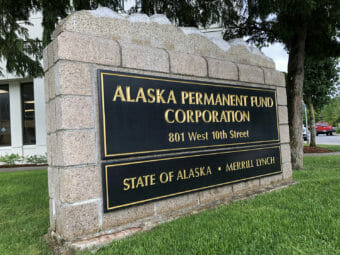
Special investigation finds Gov. Dunleavy wasn’t involved in firing of former Permanent Fund CEO

The Alaska Legislative Budget & Audit Committee meets shortly before voting to approve hiring a law firm to investigate the firing of Angela Rodell as the executive director of the Alaska Permanent Fund Corp., on Jan. 27, 2022, in the Alaska State Capitol in Juneau, Alaska. (Photo by Andrew Kitchenman/KTOO and Alaska Public Media)

Alaska Gov. Mike Dunleavy did not orchestrate the firing of former Alaska Permanent Fund Corp. executive director and CEO Angela Rodell, a special investigation has concluded.

“The governor’s office had no impact or influence upon the decision,” special investigator Howard Trickey told members of the Legislative Budget and Audit Committee on Thursday.

Trickey’s investigation, ordered by the committee in January, found Rodell’s firing was at least partially based on a “deficient” evaluation process but could be justified by trustees’ personal experience and a lack of confidence in Rodell’s leadership.

“A loss of confidence in the chief executive of an organization such as the APFC is a sufficient legal reason under the legal standards applicable to at-will employment in Alaska,” the investigation concluded.

Five of six Alaska Permanent Fund Corp. board members voted for Rodell’s removal in December, following the corporation’s most successful year on record. Since then, two of the members who voted for removal have left the board, as has the member who did not.

A spokesperson for the Permanent Fund Corp. said the agency is reviewing the legislative report and will respond after its review.

Rodell did not respond to a text message seeking comment.

This week, the corporation released the results of a third-party investigation ordered by the board that said “deviations from APFC processes were minor” and would not have changed trustees’ decision.

“Governor Dunleavy always said he had no involvement or knowledge of the Permanent Fund Corporation’s Board of Trustees’ decision to release its executive director, and is satisfied with that finding,” said Jeff Turner, Dunleavy’s deputy communications director, when asked about Thursday’s report.

The report concluded that trustees lost confidence in Rodell for a variety of reasons, including a belief that Rodell had made public comments at odds with the governor’s administration.

Members of the committee said they didn’t see Rodell’s comments in the same light.

“It was a general breakdown in the relationship between the executive director and the board,” said Rep. Neal Foster, D-Nome, and a member of the committee.

“There was no true objectivity regarding the removal of her, and it ended up leaning to more subjectivity, and that’s of concern to me,” said Sen. Lora Reinbold, R-Eagle River.

Sen. Natasha von Imhof, R-Anchorage and the chair of the committee, used the release of the report to advocate changes in the makeup of the corporation’s governing board, saying that although the report found no illegal activity, it did identify problems that should be resolved.

Rep. Andy Josephson, D-Anchorage, and a member of the committee, introduced legislation earlier this year to change the board’s membership. That bill failed to advance.

Thursday’s report resolves nine months of uncertainty that began with Rodell’s firing.

The reasons for her removal were unclear at the time, and Rodell claimed it was an act of “political retribution” by the Dunleavy administration, which had proposed a plan to increase spending from the Alaska Permanent Fund. That plan was later abandoned.

The governor and the chairman of the Permanent Fund’s board of trustees denied Rodell’s accusation. Public records, including a review of Rodell’s state personnel file, showed years of friction between her and board members, with some negative reviews predating Dunleavy’s term of office.

The $74 billion Alaska Permanent Fund Corp. was designed to be politically neutral, but members of the Legislature said they were concerned by Rodell’s claims and a lack of answers from trustees.

Investment earnings from the corporation’s assets provide between half and two-thirds of the state’s general purpose revenue, depending on the price of oil.

Citing their concerns and the importance of the Permanent Fund, members of the Legislative Budget and Audit Committee authorized up to $100,000 for an unusual special investigation. That figure was later increased to $150,000.

When trustees balked at voluntarily speaking with the special investigator, the committee sought and obtained subpoena powers from Senate President Peter Micciche, R-Soldotna, and Speaker of the House Louise Stutes, R-Kodiak.

Trustees, after threatening to challenge the committee’s legal authority, agreed to voluntary interviews that were conducted in June.

During those interviews, trustees outlined their reasons for discontent, which included a summer 2021 press release outlining plans for the corporation’s shutdown if legislative budget negotiations failed.

Corri Feige, commissioner of the Alaska Department of Natural Resources and a member of the board of trustees, said in a deposition that Rodell’s statement about the shutdown was “wildly inappropriate,” in part because it wasn’t reviewed by the board.

“I had no idea where this came from. It had, I think, an adverse impact on the fund because it unnecessarily frightened the public, and I thought it was absolutely out of bounds,” Feige said.

Other board members had similar reactions when asked about the issue.

Rodell made the statement a week before the shutdown deadline, before the governor’s office released a list of which offices would be affected.

Feige was one of two members of Dunleavy’s cabinet who also sat on the corporation’s board and voted for Rodell’s removal.

The other was Revenue Commissioner Lucinda Mahoney, who said she was concerned by an October 2021 board of trustees meeting in which Rodell hired a mediator to work between her and the board on issues of executive pay.

“Toward the end, obviously, I questioned her leadership at the end,” Mahoney said.

Board member Ethan Schutt, now the board’s chair, expressed similar concerns about the October meeting, during which Mahoney and Feige supported an unsuccessful move to eliminate some proposed Permanent Fund staff pay.

Mahoney had expressed concern about the optics of raising staff pay when the state wasn’t paying Alaskans the Permanent Fund dividend amounts under the formula in a 1982 state law.

Mahoney organized an employee-satisfaction survey that showed significant disapproval of Rodell among investment staff. Trustees generally credited investment staff, rather than Rodell herself, with the fund’s performance in 2021, and discounted Rodell’s influence in hiring members of that staff.

The special investigation found flaws in the conduct of the employee survey, but concluded that even without the survey, trustees had sufficient reasons to fire her.

“Their consensus was lack of confidence. They all had an independent and separate reason for lack of confidence,” Trickey said.

Asked whether the investigation was worthwhile despite its cost, von Imhof said she believes it may be, if it inspires changes in the system.

Rep. James Kaufman, R-Anchorage, and a member of the budget and audit committee, said he believes it was worthwhile in the same way that a clean audit is worthwhile.

“You do that for assurance purposes, and that’s OK in the world of auditing,” he said.

Correction: Three of the trustees on the board at the time of Rodell’s firing are still on the board. The initial version of this article incorrectly stated that four of the six had since left the board.

Typhoon Merbok spotlights Alaska’s need for science and climate-resilient infrastructure

Two buildings at a fish camp, one badly damaged and the other knocked over
A fish camp in the Nome area, seen on Sept. 24, shows damages wreaked by the remnants of Typhoon Merbok. The day before, President Biden declared a major disaster for a vast stretch of western Alaska that had been slammed with high winds and floods caused by the remnants of that typhoon. Federal Emergency Management Agency Administrator Deanne Criswell, Rep. Mary Peltola and Sen. Lisa Murkwoski were among the officials who surveyed the damages in and around Nome. (Photo by Jeremy Edwards/FEMA)

When the remnants of Typhoon Merbok were barreling toward western Alaska to unleash what turned out to be the region’s strongest storm in more than half a century, meteorologists knew what was coming. What they could not predict was the exact level and location of flooding – devastation that prompted a federal disaster declaration on Friday by President Joe Biden and a whirlwind Alaska tour over the weekend by Federal Emergency Management Agency Administrator Deanne Criswell.

“The large-scale weather models nailed this storm, days in advance. The storm surge models were crap — not complete crap, but a lot of crap,” said Rick Thoman, a climate scientist with the Alaska Center for Climate Assessment and Policy at the University of Alaska Fairbanks.

Chalk that up to huge gaps in the knowledge about nearshore areas along the 1,000-mile stretch of coastline holding communities that were inundated by floodwaters.

It’s among several long-term lessons that policy experts are already considering in the storm’s immediate aftermath, including infrastructure needs.

There are only four year-round water-level stations maintained in western and Arctic Alaska by the National Oceanic and Atmospheric Administration, according to the NOAA-affiliated Alaska Ocean Observing System, which aims to use ocean data to improve safety. Only two of those stations, located at Nome and Unalakleet, are found in the wide swath of western Alaska hit by the storm.

It is a glaring deficiency that has been highlighted by the Merbok disaster, Thoman said.

“Certainly, in my opinion, we need to improve our near shore, the community-scale monitoring in real time. And we have to have that tied into a national database. We need to know what those numbers mean,” he said.

AOOS, which is part of NOAA’s Integrated Ocean Observing System, says neglect plays a role in those knowledge gaps. “Unfortunately, Alaska coasts have historically received less attention than the rest of the continental U.S. in terms of real-world observations, and as a result suffer from a higher degree of uncertainty in terms of understanding coastal water level, current and wind-wave simulation capacity,” AOOS says on its website.

NOAA has funded a project, led by the University of Notre Dame,aimed at filling in some of those gaps. NOAA is also playing catchup with its studies of the Alaska seafloor, a science known as bathymetry. Alaska bathymetry knowledge is notoriously sparse. As of early 2021, more than 70% of Alaska’s waters remained unmapped, according to NOAA’s Office of Coast Survey. Shape and features of the ocean floor affect the way that water moves onto land, Thoman said.

Deanne Criswell, administrator of the Federal Emergency Management Agency, speaks at a Sept. 23 news conference in Gov. Mike Dunleavy’s Anchorage office. Behind her are Dunleavy and U.S. Rep. Mary Pelotla. Criswell traveled from hurricane-stricken Puerto Rico to Alaska to survey the damage inflicted by Typhoon Merbok on the Bering Sea coast. (Photo by Yereth Rosen/Alaska Beacon)

The Alaska Division of Geological and Geophysical Surveys is another agency trying to piece together information to make local-scale flood forecasts. Much baseline information needs to be gathered for the first time, a difficult task because Alaska’s coastline is so extensive, is changing so rapidly and is affected by “some of the highest rates of erosion in the world,” according to the division’s website.

Repairs and rebuilding efforts spotlight another long-term need: Infrastructure improvements that will be resilient to repeat occurrences of strong storms like Typhoon Merbok.

The flooding and winds ripped houses off foundations, destroyed sections of road, scattered boats and vehicles, wrecked subsistence fish camps and, in some places, exposed sections of permafrost that will now thaw and likely erode quickly.

In the Inupiat village of Golovin, home to about 180 people and one of the hardest-hit communities, the storm has added urgency to existing plans to relocate infrastructure and homes to higher ground, said Mayor Charlie Brown.

The power plant, bulk fuel tank farm, school and water and sewer system are all in vulnerable locations, including the end of a spit, Brown said.

“Another two to three storms with this magnitude, everything will be washed out there,” he said. Water and sewer is particularly worrisome. The community has a 1.2-million-gallon water tank directly in harm’s way, he said.

Aside from relocating structures and facilities uphill, there is a possibility of protecting structures “that are still livable” by elevating them, and by also erecting a rockwall to protect the coast, Brown said.

Even before the storm, relocation of houses and community infrastructure to higher ground was seen as a pressing need in Golovin and other communities. It and five other Alaska communities were awarded grants in March by the U.S. Department of Agriculture’s Natural Resources Conservation Service to help pay for that relocation work.

A fish camp in the Nome area, seen on Sept. 24, shows damages wreaked by the remnants of Typhoon Merbok. The day before, President Biden declared a major disaster for a vast stretch of western Alaska that had been slammed with high winds and floods caused by the remnants of that typhoon. FEMA Director Deanne Criswell, Rep. Mary Peltola and Sen. Lisa Murkwoski were among the officials who surveyed the damages in and around Nome. (Photo by Jeremy Edwards/FEMA}

Rep. Mary Peltola, in a Sept. 19 media briefing, said there are plenty of signs that current infrastructure is too weak to withstand the powerful storms that are likely to become more common as the climate warms. She noted that the storm tossed around huge rocks that were arrayed to protect shorelines. “I’m not sure that we have been building things for storm surges that see 90-mile-an-hour winds,” she said.

That appears to have been the case in the Inupiat village of Shaktoolik. In that community of 210, where residents years ago opted against a relocation plan, estimated to cost $290 million, in favor of a beach-protection berm constructed with gravel and driftwood at an estimated cost of under $1 million. Typhoon Merbok obliterated that berm.

The Alaska disaster is tied directly to climate change, Thoman said. It formed over a region in the Pacific that lies well east of the usual birthplace of typhoons, he said. Those waters there have heated dramatically, he said. “We had this water that historically would not have supported tropical storm formation. Now it does,” he said. From this new origin site, Typhoon Merbok was able to travel a shorter distance and hold more of its power when it reached Alaska than previous storms, he said.

Sen. Lisa Murkowski, speaking Saturday in an interview with Nome radio station KNOM, acknowledged the role of climate change and said there is a need to prepare for that:

“Is this kind of our new normal here? And if that’s the case, we’ve got to be thinking about the longer-term view of how we provide for the resilience of these communities,” she said, mentioning more seawalls and emergency evacuation routes as possibilities.

The bipartisan Infrastructure Investment and Jobs Act signed into law last November – and authored in part by Murkowski — includes money that is specifically for Alaska village relocation and protection against flooding and erosion linked to climate change.

In the immediate term, FEMA and other agencies are racing to beat the arrival of the winter freeze expected in a few weeks and trying to figure out how to assist the people in the region who depend on harvests of wild foods.

Many residents of the storm-hit and largely Indigenous communities have lost boats, all-terrain vehicles, smokehouses and other items needed to conduct those traditional harvests. Some lost entire stockpiles of fish and other wild foods gathered over the summer and intended to last through the coming winter.

A member of the Alaska Organized Militia clears storm debris in Golovin, Alaska as part of Operation Merbok Response Sept. 26, 2022. More than members of the Alaska Organized Militia, which includes members of the Alaska National Guard, Alaska State Defense Force and Alaska Naval Militia, were activated following a disaster declaration issued Sept. 17 after the remnants of Typhoon Merbok caused dramatic flooding across more than 1,000 miles of Alaskan coastline. (Alaska National Guard photo)

It’s not the normal category of losses that FEMA tallies in natural disasters occurring in places like hurricane-stricken Florida or the tornado-prone Midwest. For now, the Department of the Interior is releasing $2.6 million through the Bureau of Indian Affairs for immediate assistance to pay for replacements.

“As we continue to work with our Tribal partners to identify and address long-term needs, these initial funds will help purchase critical food, supplies and water for those impacted by the storms,” Bryan Newland, assistant Interior secretary for Indian affairs, said in a statement.

Peltola, at a news conference Friday in Gov. Dunleavy’s Anchorage office, said she wants FEMA officials to understand who that property is needed to conduct subsistence harvests.

“I know ‘cabin’ has a recreational sound to it, I think, if you’re not from Alaska. But Alaskans recognize that ‘cabin’ means place where you’re gathering food for your family and your extended family and your community,” she said.

The same goes for the snowmachines, all-terrain vehicles and boats that were damaged, destroyed or lost, she said. “These are not recreational vehicles. These are critical for being able to provide food security for your family,” she said.

This article originally appeared in the Alaska Beacon and is republished here with permission.

Public can weigh in on how Alaska should use millions of opioid settlement money

Bottles of opioid pills, drugs
Members of the public have until 5 p.m. on Friday, Sept. 30, to submit written comments on what the state should do with the settlement.(Creative Commons photo by K-State Research and Extension)

The Alaska public has a chance through the end of September to weigh in on how the state should spend its share of a landmark settlement over pharmaceutical companies’ role in the nation’s opioid epidemic. The total amount coming to state and local governments in Alaska is $58.5 million from drug manufacturer Janssen/Johnson & Johnson, along with three other companies.

A state advisory council has made draft recommendations on how a large portion of that money should be used to help Alaskans recover from opioid abuse and addiction. Members of the public have until 5 p.m. on Friday, Sept. 30, to submit written comments. You can also give verbal comments during a virtual public comment session from 3 p.m. to 4 p.m. on Thursday, Sept. 29.

Anchorage Sen. Tom Begich is a member of the Governor’s Advisory Council on Opioid Remediation, which produced a report with draft recommendations on how the settlement money should be used. The council started deliberating in December 2021.

Begich said public comments are important and hopes a wide range of Alaskans look at the report: “Those who have had relatives who have suffered from opioid abuse or if they themselves have – they should be looking at this for sure because they are directly impacted by this.”

“If you are an agency or an entity that is dealing with opioid addiction, you should be looking at this. If you’re an employer who might have an insight into how opioid addiction is affecting your workplace, you should look at this. And frankly, any public entity ought to be looking at it as well,” he said.

According to the report, Alaska, in 2021, experienced the largest percent increase in overdose deaths of any state in the United States, losing at least 253 people to overdose, with 196 deaths attributed to opioid overdose.

Begich said the council had lengthy discussions on what the best process would be to create the most sustainable approach to opioid addiction.

In the settlement, the money would be distributed over the next 18 years. Of the State of Alaska’s share of the settlement, the council recommends accepting a one-time lump sum payment instead of the smaller future payments. That money would be deposited into a new account, along with any supplemental legislative appropriations made during the 2023 legislative session, and invested.

“You could either take the money for 18 years at approximately $2 million a year or you could do a lump sum payment, which is slightly less, but would allow you to invest it and then take the money out, like a dividend if you will, sort of very similar to the dividend concept,” Begich said.

The lump sum payment option would allow the money to last even after 18 years have passed, he said.

“We could produce roughly anywhere from initially $1.5 million to $1.75 million to eventually, as the thing grew, as much as $2 million or $2.5 million annually in perpetuity to address opioid addiction, opioid approaches,” Begich described.

Another recommendation outlined in the report is for the Legislature and governor to support a one-time state general fund match up to 100% of the opioid settlement amount.

The report recommends that the state Department of Health be responsible for allocating and distributing the funds. “The council would work with the department to develop the process for equitable allocation that accounts for the diverse geographic and demographic makeup of Alaska,” the report says.

The report also has recommendations on how to choose which evidence-based and culturally appropriate opioid remediation activities to fund and on how to incorporate feedback from Alaskans on the overall process. Read the full report here.

Written and verbal comments on the recommendations in the report will be reviewed by the council in October. The council may incorporate the comments in its final recommendations.

This story was originally published by the Alaska Beacon and is republished here with permission.

Alaska Rep. Eastman remains on ballot but could be disqualified after election

Rep. David Eastman speaking on the Alaska House floor
Rep. David Eastman, R-Wasilla, speaks on the floor of the Alaska House of Representatives on Monday, May 2, 2022 at the Alaska State Capitol in Juneau. (James Brooks/Alaska Beacon)

An Anchorage Superior Court Judge ruled Thursday that Wasilla Republican Rep. David Eastman is likely ineligible for public office but ordered that he remain on the state’s Nov. 8 election ballots, pending the result of a trial in December.

Eastman is heavily favored in the general election, but if he wins in November and the trial concludes that his membership in a far-right organization is a violation of the Alaska Constitution’s “disloyalty clause,” the second-place finisher would take his position in the Alaska Legislature. If he loses in November, the case is moot.

Whether December’s verdict falls against Eastman or in his favor, attorneys involved in the case say they believe it will be appealed and will not be final.

Thursday’s order is the result of a lawsuit filed by former Matanuska-Susitna Borough Assembly member Randall Kowalke against Eastman and the Alaska Division of Elections. Kowalke challenged Eastman’s eligibility and sought a preliminary injunction removing him entirely from the ballot.

Judge Jack McKenna declined to remove Eastman from the ballot but instead told the Division of Elections to delay certifying the result of the Nov. 8 election in Eastman’s district until after December’s trial.

McKenna’s decision is based on a legal standard that requires a plaintiff to demonstrate a “clear probability of success” at trial in order to receive a pretrial preliminary injunction.

“This situation is unprecedented and the court must attempt to balance the competing rights and interests implicated by this litigation. Among the options available, the relief prescribed in this Order most appropriately maintains the status quo, protects the rights of the parties, and allows for the voters in House District 27 to select their representative regardless of the specific outcome of this litigation,” he said.

Joe Miller, the attorney representing David Eastman, did not return a message left at his office seeking comment. The Alaska Department of Law, which represents the Division of Elections, also did not comment before 7:30 p.m. Thursday evening.

Attorney Savannah Fletcher represents Kowalke and said her client was “thrilled” by the outcome, even though Eastman remains on the ballot.

“We think this is a very elegant solution. I was just on the phone with my client, and he was really thrilled with this decision,” Fletcher said, explaining that Kowalke does not want to disenfranchise voters.

“Ranked -choice voting does allow for this accommodation,” she said of McKenna’s order.

Under Alaska’s ranked -choice voting system, voters may pick second, third or fourth options for a given office, depending on the number of candidates.

If Eastman is disqualified in December, voters who pick him first will instead have their votes go to their second choice.

If Eastman is certified the winner but later disqualified, the governor in office at the time would pick a replacement. Attorneys representing the Alaska Division of Elections had argued that would disenfranchise voters.

McKenna’s decision sidesteps the problem by delaying certification until after the trial, which begins Dec. 12. He acknowledged in Thursday’s order that there will be a short timeline for appeals between the post-trial verdict and the start of the legislative session in January.

Kowalke’s case is based on the Alaska Constitution’s disloyalty clause, which states: “No person who advocates, or who aids or belongs to any party or organization or association which advocates, the overthrow by force or violence of the United States or of the State shall be qualified to hold any public office of trust or profit under this constitution.”

Members of the Oath Keepers, including the group’s founder, have been accused of various crimes associated with the Jan. 6, 2021, insurrection at the U.S. Capitol. Several have pleaded guilty and are cooperating with federal prosecutors.

Eastman has said he paid for a lifetime membership in the group in 2009. Kowalke argues that membership is still active and that the Oath Keepers have sought to overthrow the US government by force.

McKenna said Thursday that the evidence at present supports those arguments, but speaking to whether the Oath Keepers sought to overthrow the US government, he said, “The court emphasizes that this analysis is based upon a limited record and after the testimony of no witnesses, and it does not represent a final decision in this case.”

During oral arguments, McKenna asked Miller whether Eastman would argue that he is no longer a member of the Oath Keepers. If he is not a member, he does not violate the clause.

Miller responded by saying that it’s up to the plaintiffs to prove that he remains a member.

Could Eastman simply end the case by disavowing the group and saying he is no longer a member?

“Yes. And it’s very telling to us that he’s not done that. And it seems that was telling to the judge as well,” Fletcher said.

At Alaska governor candidate forum, Gara and Walker advocate tax changes

Bill Walker and Les Gara, both standing behind lecterns, appear to listen to someone off to their left
Independent Alaska governor candidate Bill Walker (right) and Democratic candidate Les Gara (left) listen to a question from the debate moderator Wednesday, Sept. 21, 2022 at the Alaska Chamber gubernatorial forum in Fairbanks, Alaska. (Photo by James Brooks/Alaska Beacon)

In a Wednesday candidate forum hosted in Fairbanks by the Alaska Chamber, Democratic governor candidate Les Gara and independent candidate Bill Walker said that if elected, they would seek new state revenue to pay for a variety of projects and reverse years of cuts to state services.

Both men are seeking to unseat incumbent Republican Gov. Mike Dunleavy, who has advocated service cuts and opposes taxes not approved by a statewide vote. Also competing in the Nov. 8 general election is Republican candidate Charlie Pierce.

Neither Dunleavy nor Pierce appeared at Wednesday’s forum. Pierce did not respond to invitations from the Alaska or Fairbanks chambers, and Dunleavy was touring storm damage in western Alaska.

Gara and Walker have repeatedly criticized Dunleavy for failing to attend candidate forums and events but withheld criticism of his absence on Wednesday, saying that his decision to focus on the aftermath of Typhoon Merbok is appropriate.

Dunleavy finished first in the Aug. 16 statewide primary, followed by Gara and Walker. The incumbent’s absence left his challengers with an open forum.

“This is a state that 20,000 more people have left in the last three years under this governor than have moved here,” Gara said, explaining the need for a change in policy.

“And part of that has been the decimation of the capital and construction budget that puts people to work,” he said.

Thanks to a surge in oil prices due to the Russian invasion of Ukraine, state lawmakers this spring approved almost $1 billion in state spending on renovation and construction projects statewide.

That’s a huge change from recent years, when the state spent as little as $107 million.

Gara and Walker each said the state needs a stable fiscal plan in order to reliably pay for services, including construction and maintenance. Counting on the Russian invasion isn’t a fiscal strategy, Gara said.

During Wednesday’s debate, a member of the audience asked what the candidates would do to address the closures of bathrooms at roadside highway pullouts. The question garnered quiet laughter from some attendees, but Gara and Walker addressed it earnestly.

“That started on my watch,” Walker said, speaking about his first term in office.

During that term, which ran from 2014 through 2018, oil prices plummeted and Walker directed service cuts, including to the maintenance of roadside bathrooms.

That made many Alaskans unhappy.

“I found out how many people in Valdez had my cellphone number,” Walker said, drawing laughs.

“But that’s a terrible message to send to our visitors, and it is a terrible burden on the roadhouses,” he said.

“We need to stop being a 19th century state,” Gara said of the closures. “We need to bring sanitation across the state. We need to have the amenities that people love in the state, that make people want to live here. And that is not free.”

Another member of the audience asked the obvious followup question: How will they pay for their ideas?

Gara’s proposal is to reform the state’s oil tax system by eliminating a system of credits paid to producers. Doing so, he said, could save $1.2 billion per year and free up revenue for a variety of programs.

“We should be equal partners with our oil industry. They’re good neighbors, but right now, we’re junior partners,” he said.

Though Dunleavy was not present, he has advocated cuts to services and a smaller payout formula for the Permanent Fund dividend. He opposes even small tax increases without a statewide vote. This year, when the Alaska Legislature voted to increase a tax on e-cigarettes, Dunleavy vetoed it.

Walker said he thinks a “hard look” at tax credits is warranted, but he doesn’t want to promise something he can’t deliver. A proposal similar to Gara’s failed to receive a hearing in the Alaska Legislature this year, he noted, and legislative action would be needed to implement Gara’s system.

He said he prefers multiple smaller revenue changes rather than “pulling one lever all the way down.”

He said he would support “broad-based revenue options,” a term that some legislators have used as a euphemism for a statewide income tax or sales tax.

“You know, there’s only so many ways you can earn revenue for our government,” Walker said. “One is resources, which we’ve been doing. And the other is to capture some sort of sales or income taxes, some sort of use tax, something seasonal.”

During his prior term as governor, “we talked about a seasonal sales tax. We looked at everything under the sun, and it’s just a matter of what is palatable to the Legislature that we can work collaboratively and get through,” he said.

Site notifications
Update notification options
Subscribe to notifications